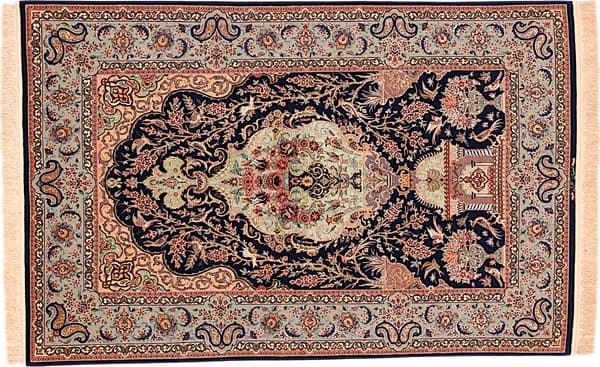
Exclusive
Nain | Exclusivewith silk
243 × 164 cm
3.600 €
Masterpieces from the Royal Capital
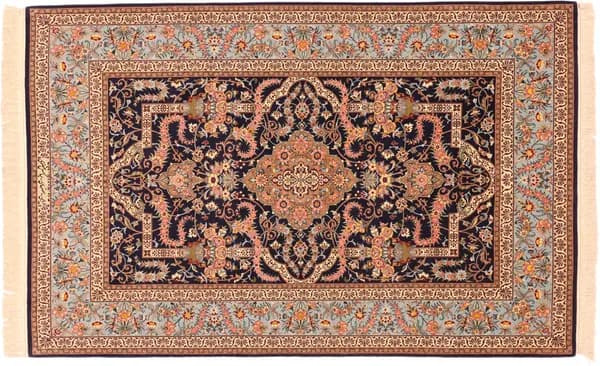
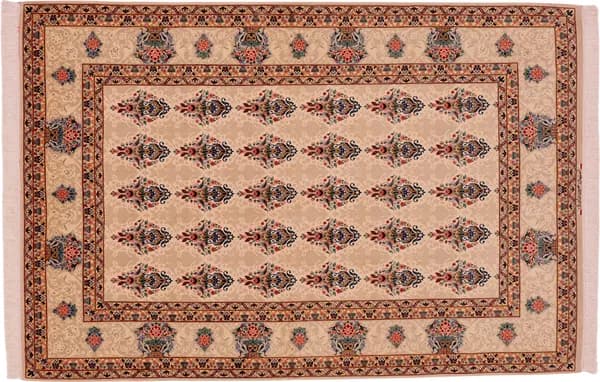
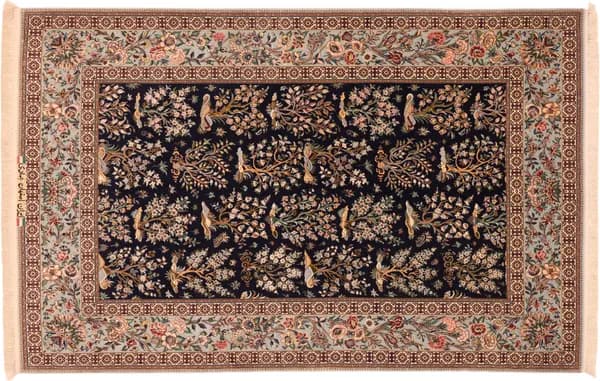
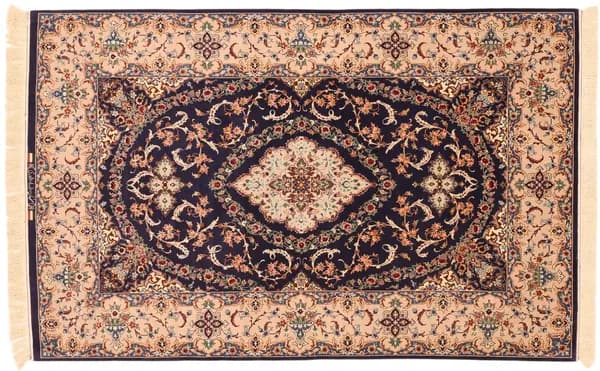
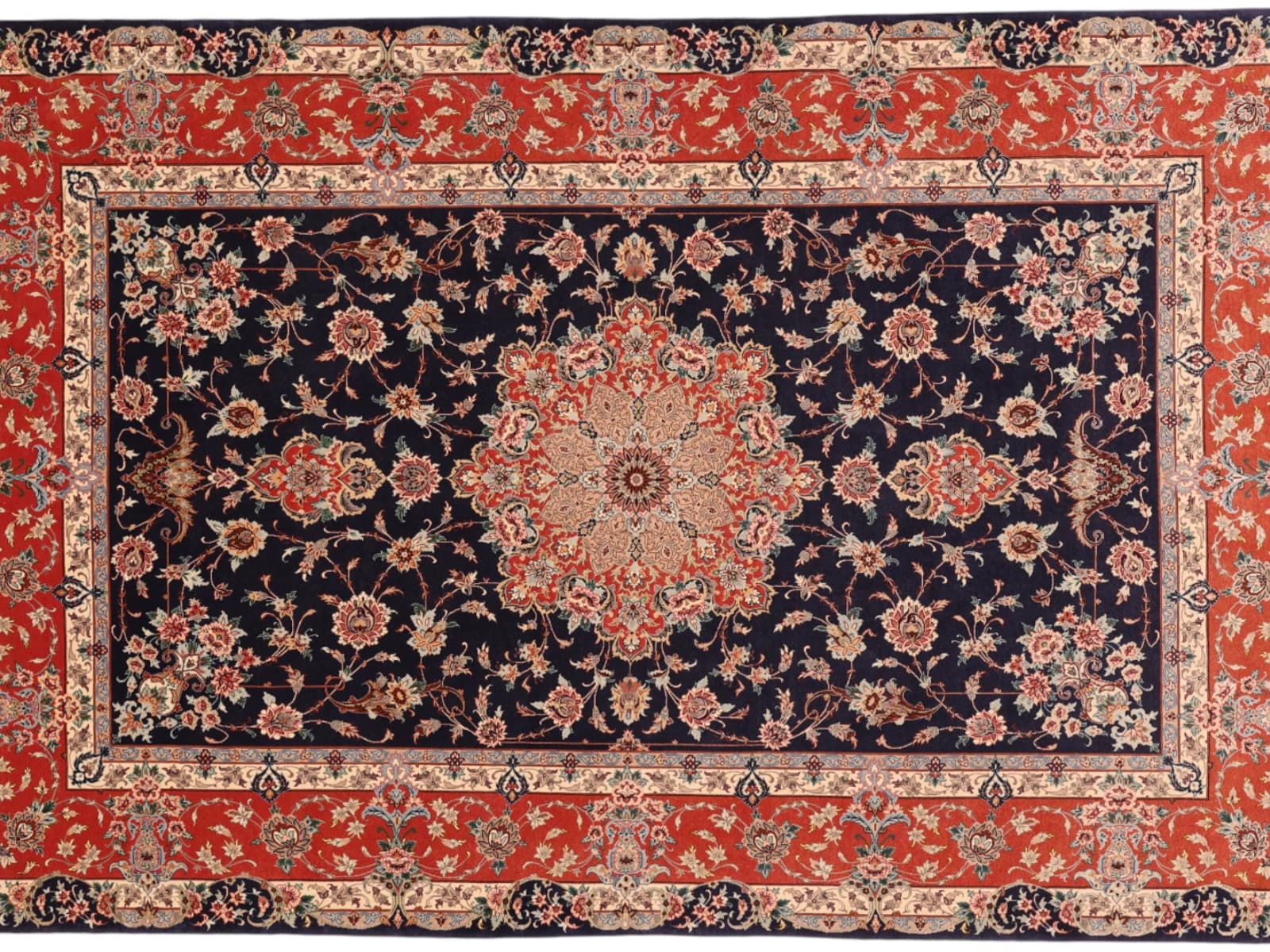
Isfahan was the imperial capital of the Safavid dynasty (1598–1722) under Shah Abbas I, who established royal carpet workshops that set the template for Persian city weaving. Isfahan rugs use the asymmetric Persian knot on a cotton foundation, with kork wool (from the softer neck and underbelly of the sheep), the finest, most lustrous wool in the Persian tradition. Knot density is high in quality pieces, often 500,000 knots per square metre and above, with silk highlights adding shimmer to arabesques and palmettes. The Seirafian family workshop is the most celebrated in the modern city.
The design vocabulary draws directly from the Safavid court aesthetic: the Garden of Paradise (chahar-bagh), Shah Abbas palmettes, curvilinear arabesque scrollwork, and hunting carpet compositions. These motifs mirror the mathematical perfection of Isfahan's mosques and gardens, every element in precise harmonic balance. The palette tends toward jewel tones: deep blues and reds against ivory grounds, with occasional gold and green accents.
Isfahan rugs are collector grade. The finest examples with full silk highlighting and dense kork pile are among the most prestigious Persian rugs available today. They suit formal living rooms, libraries, and dining rooms where their quiet authority can be properly appreciated.
Also known as
Esfahan, Ispahan, Isphahan
Nain · Kashan · Qom
More to Explore