
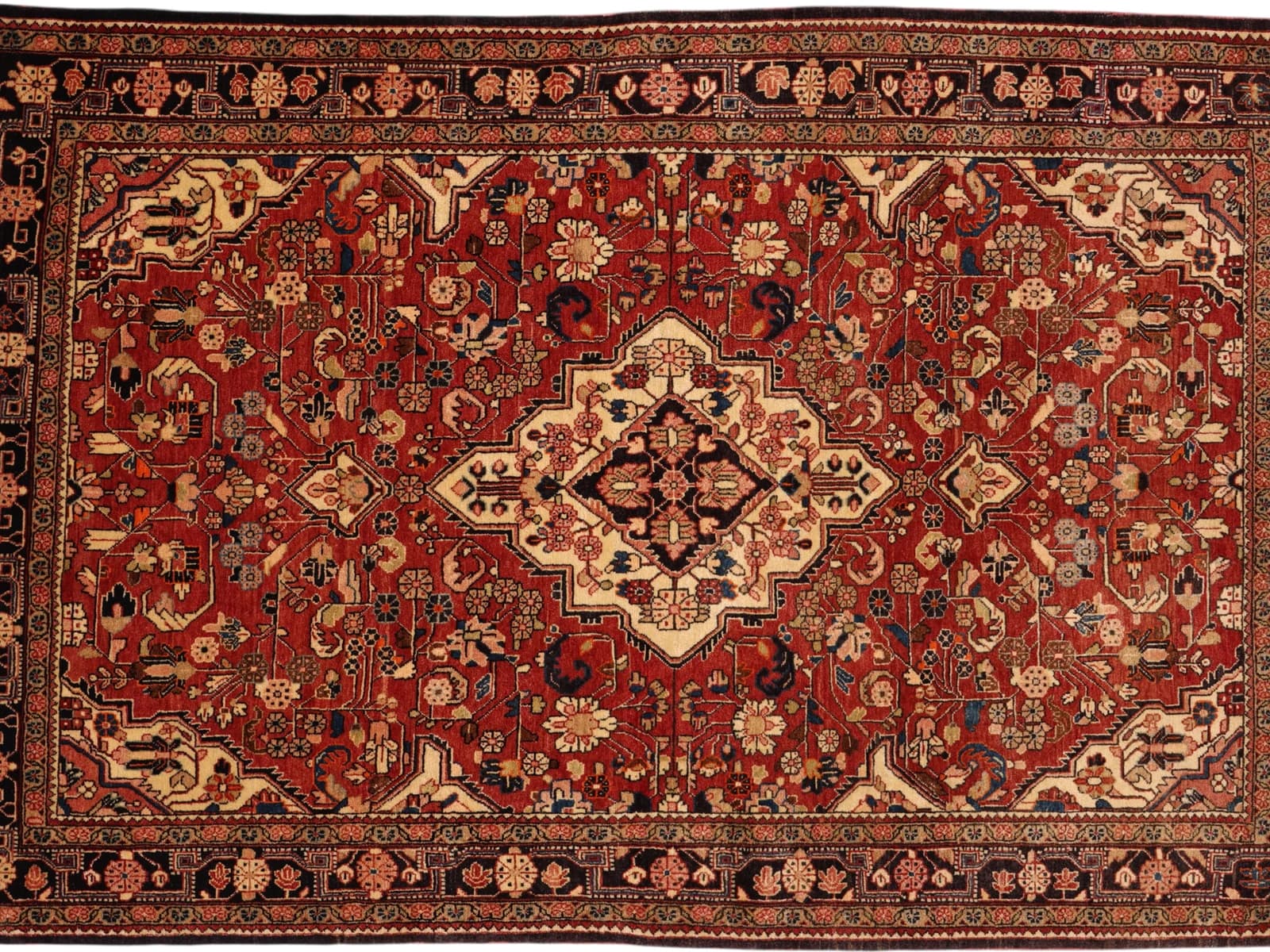
Malayer Rugs
Where Hamadan Utility Meets Sarouk Refinement
The Story
Malayer is a city in the Hamadan region of western Iran that occupied a fascinating geographic and artistic crossroads: positioned between the robust geometric traditions of Hamadan and the refined floral aesthetics of Sarouk and Farahan. The rugs that emerged from this cultural intersection have a hybrid character, they carry tribal geometric directness but with a more nuanced drawing and finer detail than typical Hamadan village work.
In Malayer and the surrounding villages, production was historically focused on smaller rugs, mats, and runners made by individual weavers in the 19th and early 20th centuries. Antique Malayer rugs are particularly collected for their unusual design variations, which sometimes incorporate Persian garden layouts alongside bold Kurdish-influenced geometry.
A hand-knotted Malayer rug is for those who want something genuinely different, a piece that can't quite be placed in a single category and is all the more interesting for it.
Characteristics
- Crossroads of Hamadan and Sarouk-Farahan traditions
- Hybrid character, geometric meets refined floral
- Historically produced as mats, runners, and smaller rugs
- Unusual design variations, hard to categorize
- Particularly collected in antique market
Also known as
Malayer, Malayir, Malaier, Melayer, ملایر
More to Explore