Signed
Azerbaijan
326 × 201 cm
7.350 €

Technical Precision Meets Artistic Mastery
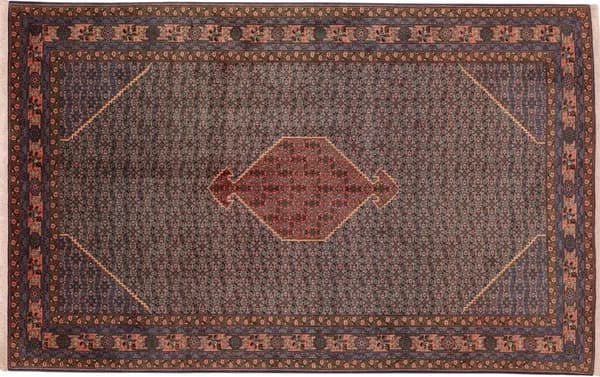
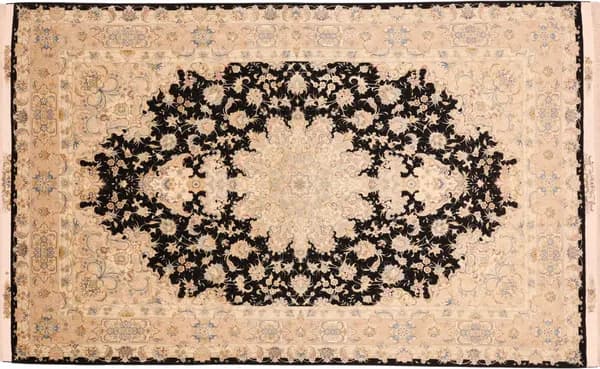
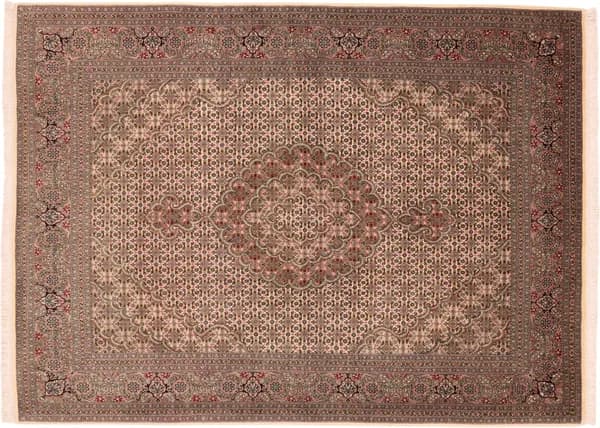
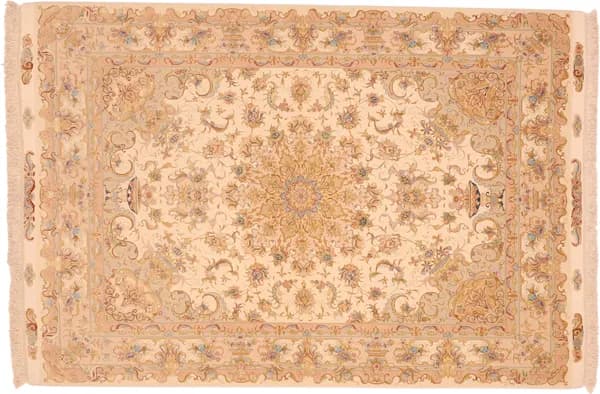
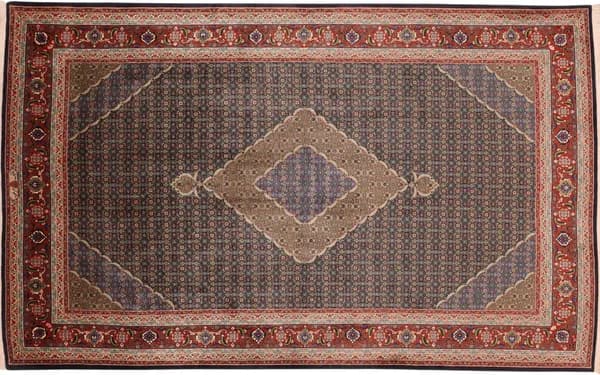
Tabriz is one of Persia's great weaving capitals, the commercial hub of northwestern Iran and the first major Persian rug city that European traders encountered. Tabriz rugs use the symmetrical (Turkish) knot on a cotton foundation, producing a tight, firm fabric with exceptional definition. Quality is measured in "Raj", the number of knots counted across 7 cm of warp: a 40 Raj Tabriz works out to roughly 300,000 knots per square metre, while 60 Raj and finer reach 600,000 to 800,000 knots per square metre, placing them among the finest rugs woven anywhere. Kork wool (from the softer neck and underbelly of the sheep) is used in the finest examples.
For over five centuries, Tabriz has set the standard for Persian carpet excellence, producing pieces that have graced royal courts from Istanbul to St. Petersburg. The famous Hajijalili and Tabatabaie workshops produced some of the most celebrated 19th-century pieces, now held in museum collections worldwide. The city's design vocabulary is the most varied in Persia, classic medallions, pictorial scenes, "Four Seasons" compositions, hunting carpets, and garden designs.
A Tabriz rug rewards a discerning eye: the higher the Raj count, the finer the detail and the more demanding the craftsmanship. Entry-level 40 Raj pieces offer excellent quality for daily use, while 60 Raj and above with kork wool rank among the most refined, collector-grade examples of the city's weaving.
Also known as
Täbris, Tabris, Tebriz, Tebris
Heriz · Ardabil · Azarbayedjan
More to Explore