Workshop work, and what that means
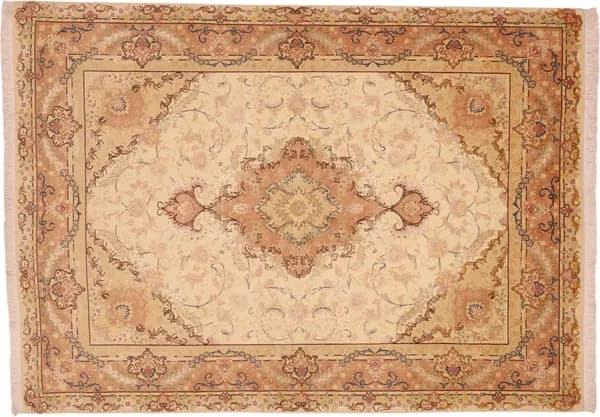
A Tabriz begins as a drawing. A designer sets the pattern out square by square on squared paper, and the weaver works from that cartoon rather than from memory. Every repeat is planned, every border corner resolved before a single knot is tied.
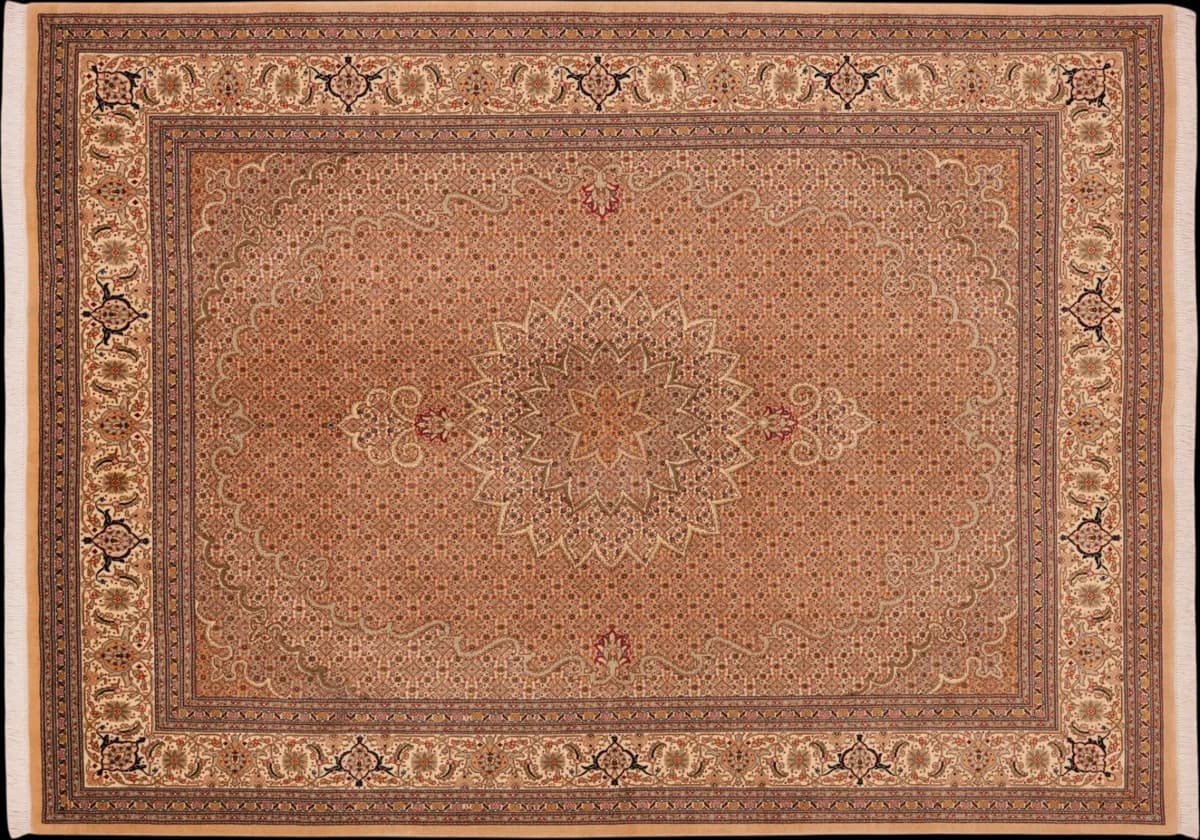
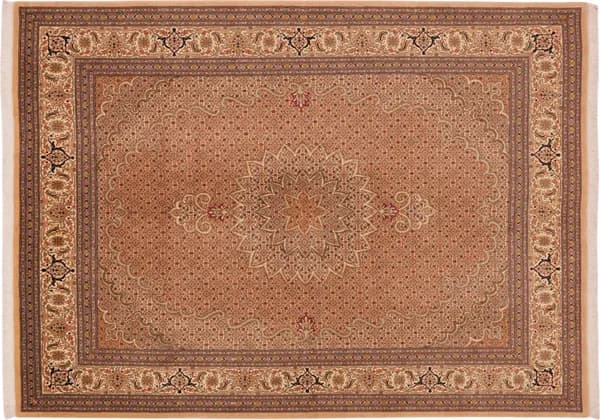
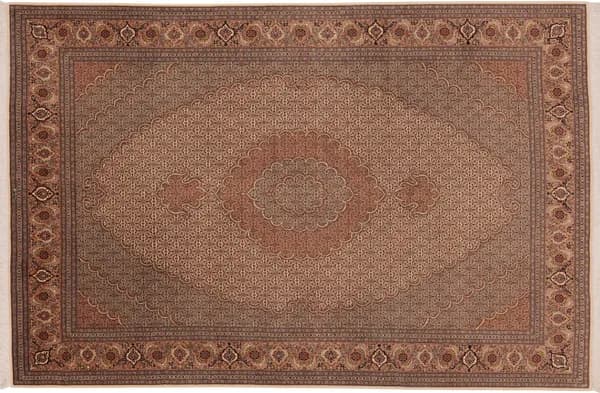
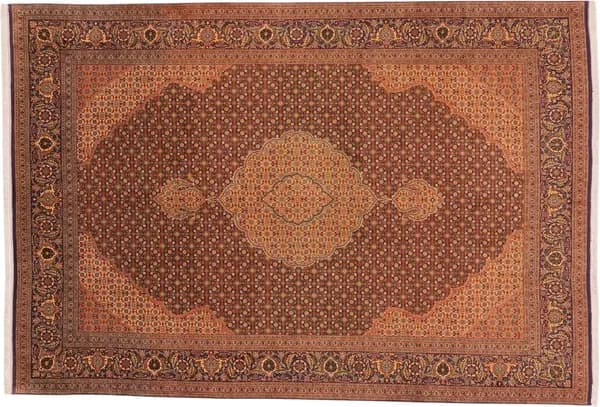
The result is symmetry you can measure. The two halves of a border match, the medallion sits in the centre, the four corner spandrels are identical. Where a village rug shows the record of a hand making decisions, a Tabriz shows a plan being executed.
Neither is better; they are different objects. But it does mean that a Tabriz with a medallion visibly off-centre is a warning sign rather than charm — in this tradition the drawing was supposed to be exact.
The Mahi pattern
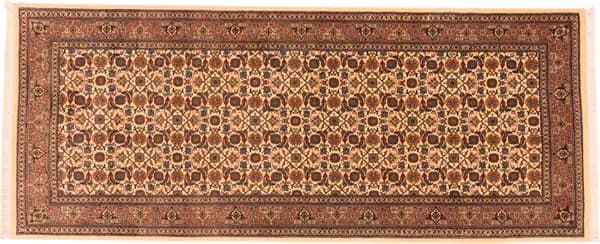
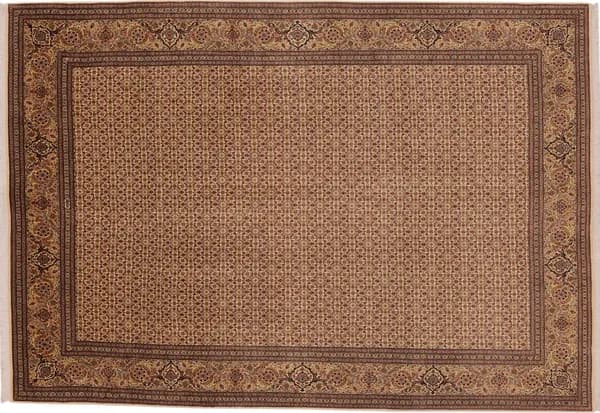
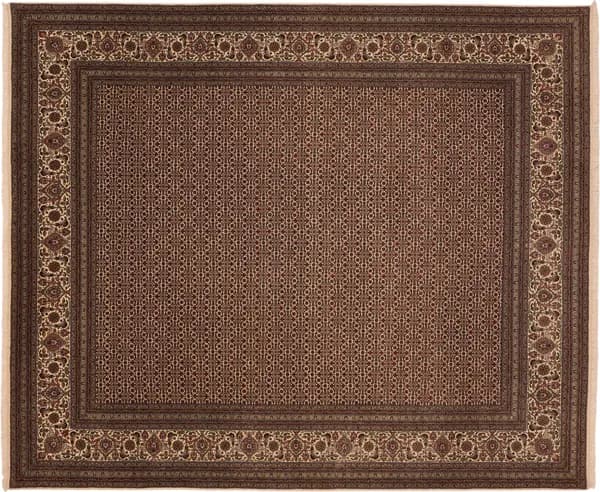
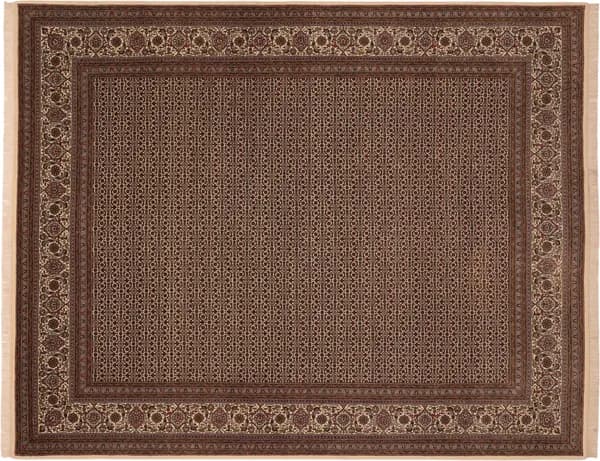
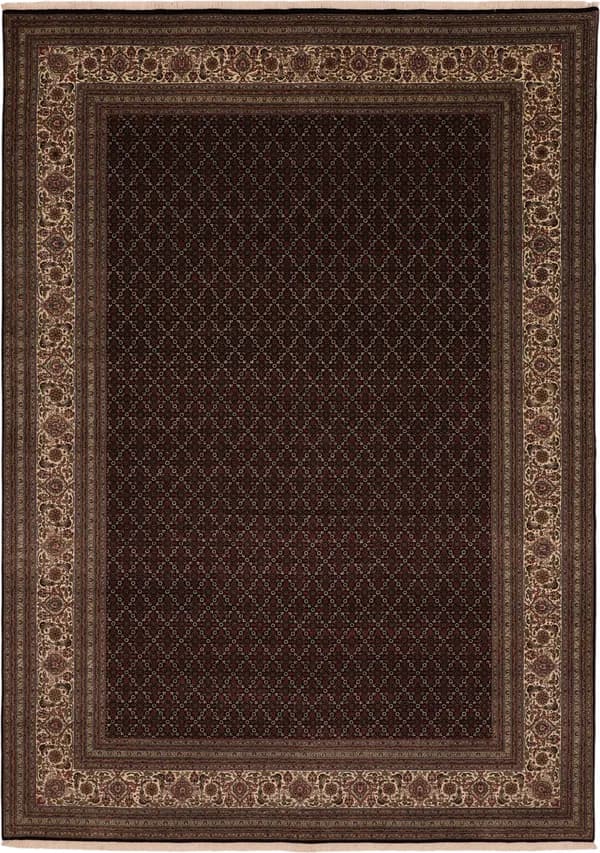
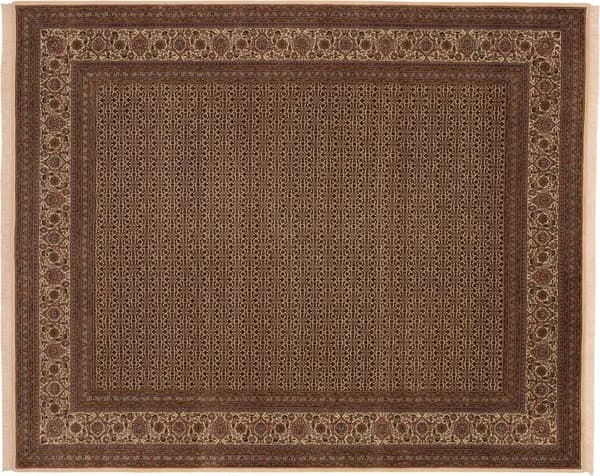
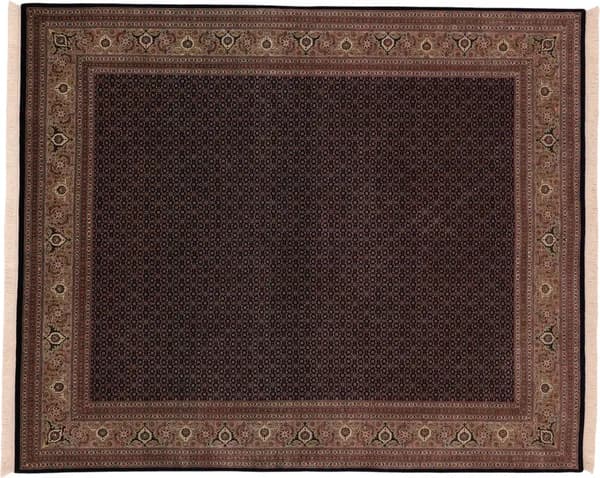
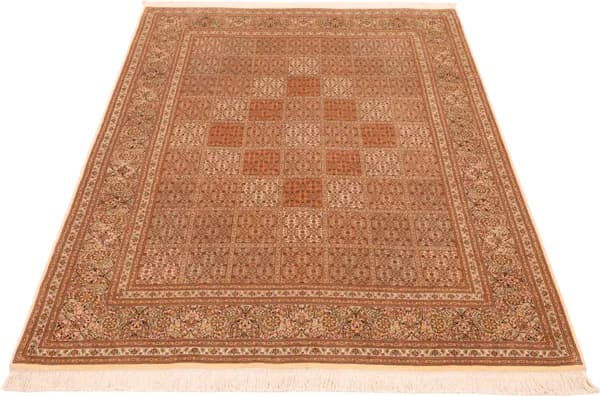
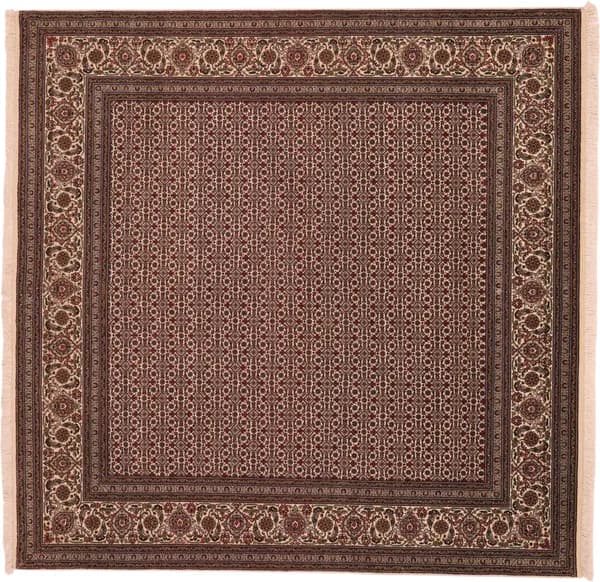
Mahi means fish. The pattern is a lattice of small diamonds, each holding a rosette with four curved leaves at its corners — leaves that read as fish circling a pond, which is where the name comes from.
It is the layout most associated with Tabriz, and it is a demanding one. Each diamond has to keep its proportions across the whole field, and the curved leaves need enough knots to stay curved rather than stepped. At half the density the pattern would visibly coarsen.
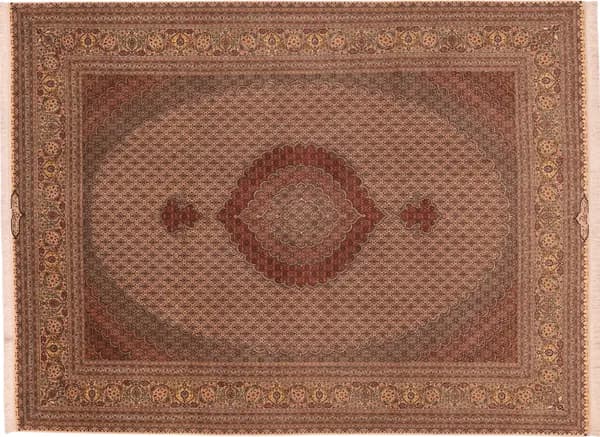
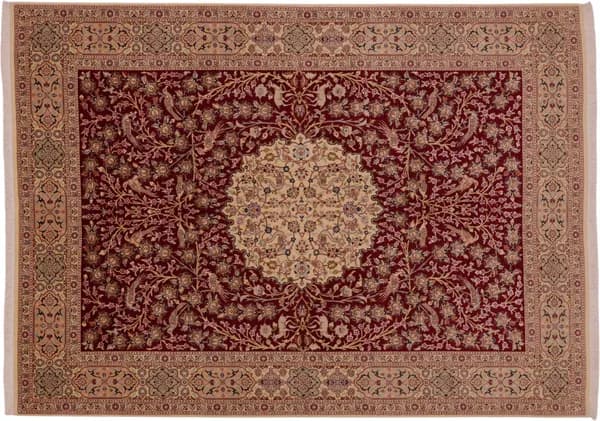
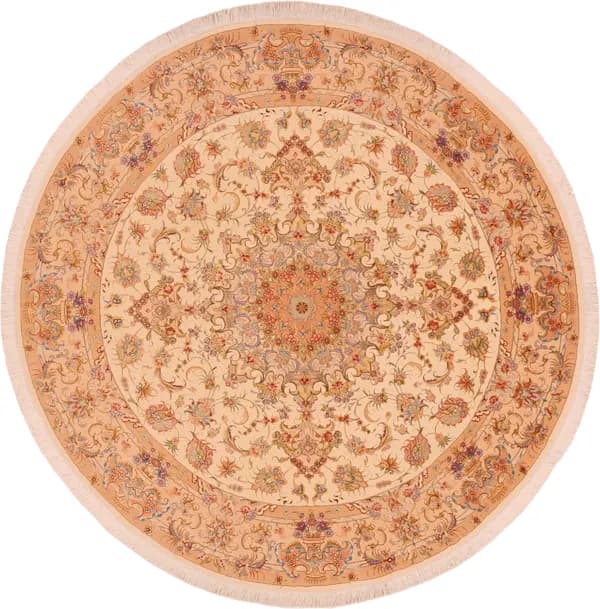
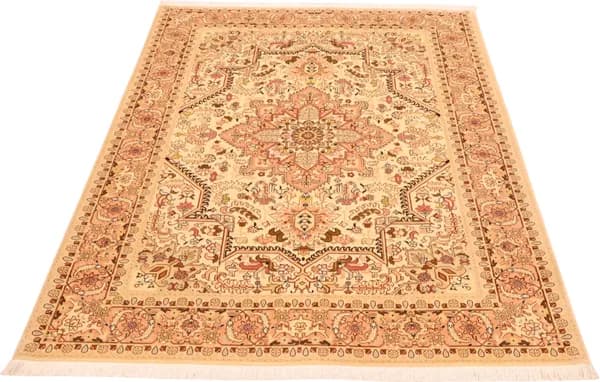
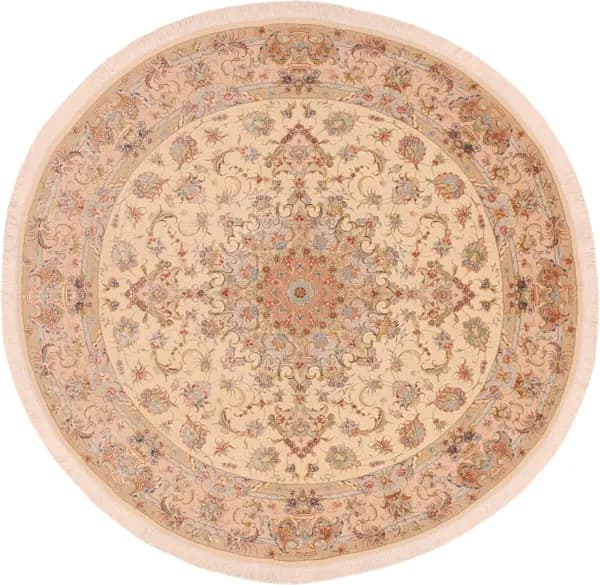
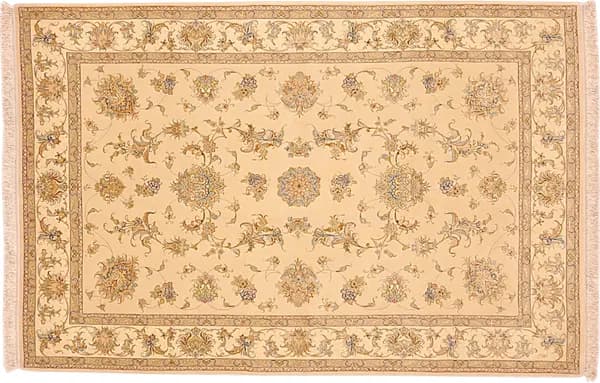
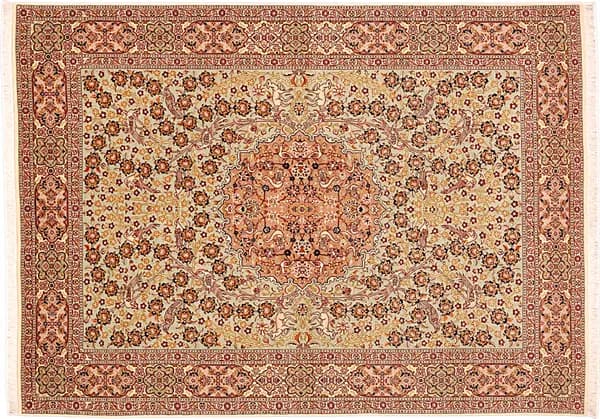
Tabriz also weaves medallion compositions with elaborate corner spandrels, and pictorial hunting scenes with figures and animals — the latter a speciality of the city and rarely attempted elsewhere at this scale.
- Exact symmetry — matching borders, centred medallion, identical spandrels.
- Mahi lattice, medallion or pictorial hunting scene.
- Silk used in contour lines, catching light against a matt field.
- Short pile of 7 to 11 mm keeping the drawing sharp.
- Cotton warp with smooth, light fringes.
Which room a Tabriz suits
The common format around 250 by 168 centimetres sits in front of a sofa or under a small dining table. Larger pieces exist and carry a full seating group.
The short pile is practical: chairs run over it rather than sinking in, and it builds up little under a door. It also shows footfall less than a deep pile, because there is less wool to lie over.
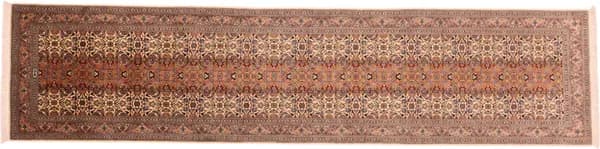
A medallion Tabriz wants its middle visible. If a sofa is going to cover half the rug, choose a Mahi field instead — the lattice repeats and loses nothing where furniture stands on it.
Care
Vacuum along the pile and without a rotating brush. On a short pile with silk contours the brush is particularly worth avoiding: it lifts the finer silk fibres out of the surface.
Blot spills at once with clear water and a light cloth, working from the outside in, and never rub.
Keep it out of permanently direct sun. Silk contours fade faster than the wool around them, and once the outlines go pale the drawing loses the definition it was made for.
Tabriz or Nain?
Both are fine Persian workshop rugs at a similar density. The difference is temperament: one is present, the other recedes.
| Criterion | Tabriz | Nain |
|---|---|---|
| Knot density | typically 441,000–500,000 / m² | typically 441,000–500,000 / m² |
| Pile height | 7–11 mm | 8–12 mm |
| Palette | broad, often warm and strong | restrained: ivory, blue, beige |
| Silk | in the contours, as accent | in the contours, throughout |
| Effect | present, pattern-forward | quiet, light, receding |
Common questions
What is a Mahi pattern?
A lattice of small diamonds, each holding a rosette with four curved leaves at its corners. Mahi means fish, and the leaves read as fish circling a pond. It is the layout most closely associated with Tabriz and needs high density to keep its curves.
Why is silk only in the outlines?
Because that is where it does the most work. Silk reflects light differently from wool, so a contour drawn in silk separates one field of colour from the next visibly, at any angle. Using it throughout would cost far more and make the rug too delicate to walk on.
Should a Tabriz be perfectly symmetrical?
Yes — this is workshop production from a drawn cartoon, and exactness is the point of the tradition. A visibly off-centre medallion is a warning sign here, unlike in a village or tribal rug where it is simply the record of freehand work.
What does 50 Raj mean on a Tabriz?
Knots counted across seven centimetres of width, the count used in the region. As a working guide 40 Raj is around 250,000 knots per square metre, 50 Raj around 400,000 and 60 Raj above 600,000. It describes resolution, not grade.
Is a Tabriz hard-wearing?
Yes for normal household use. The dense weave and short pile take footfall well. What it does not tolerate is permanent direct sun, because the silk contours fade before the wool does.