The palette, and why it is so narrow
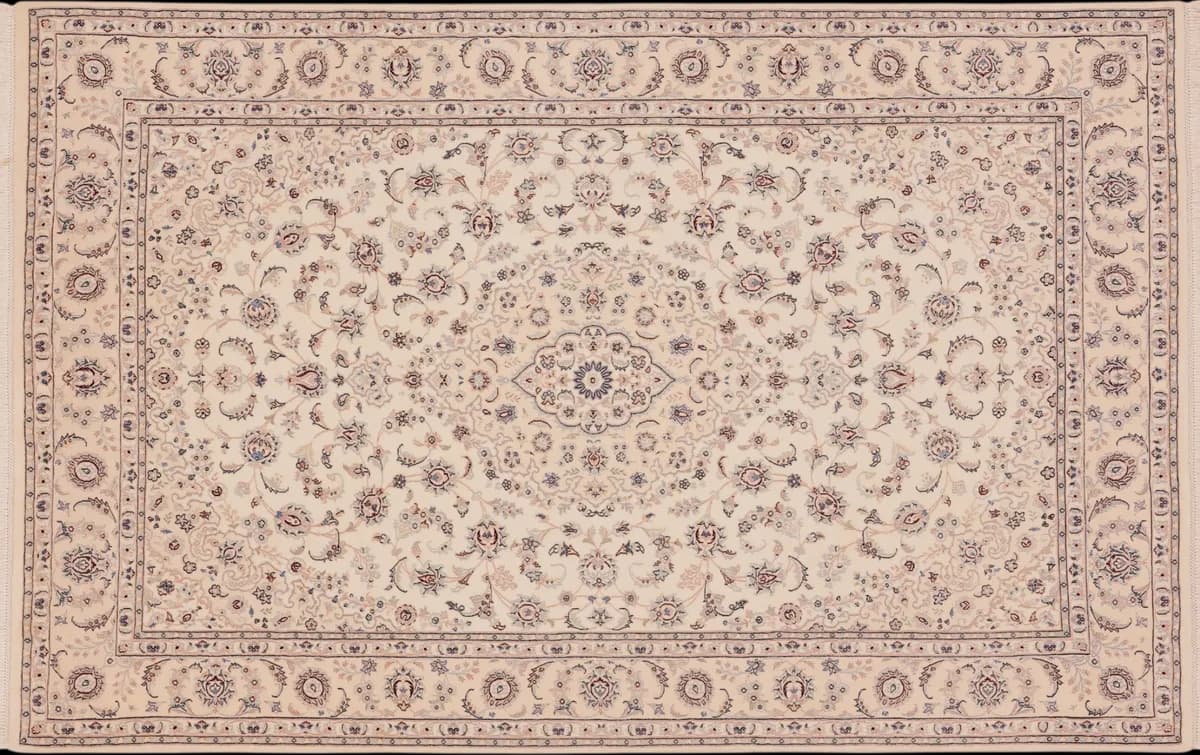
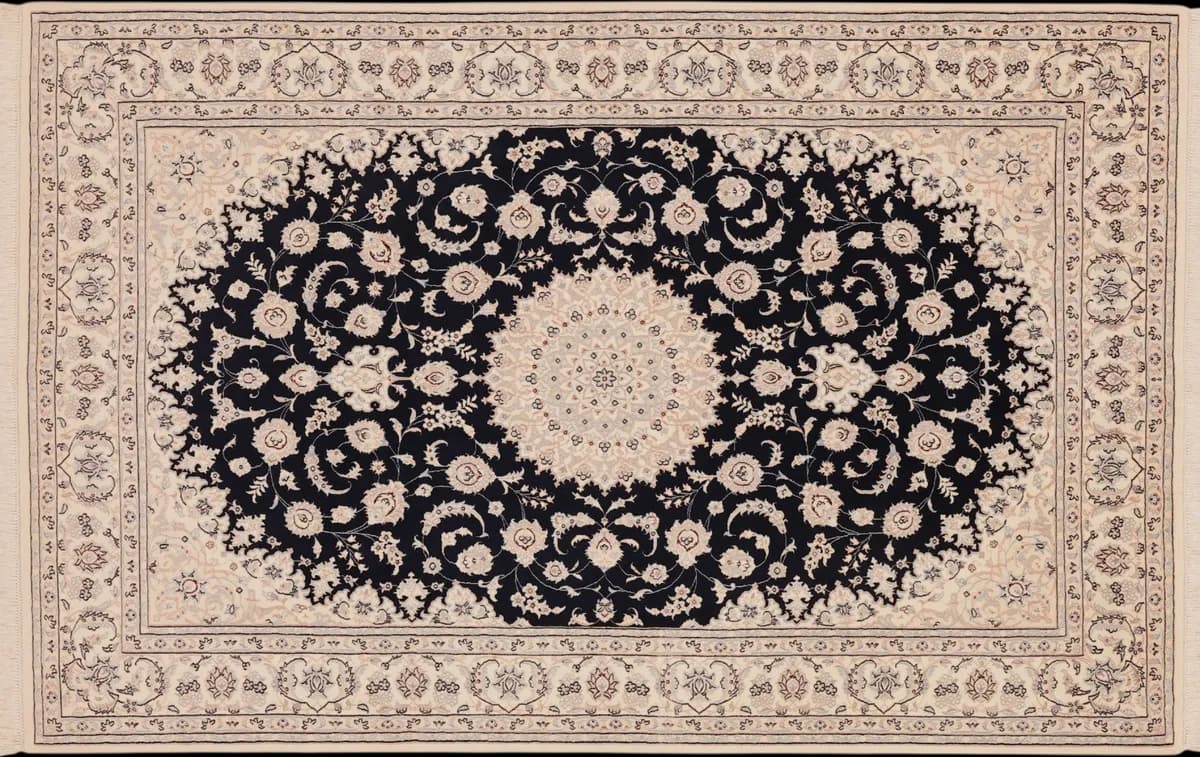
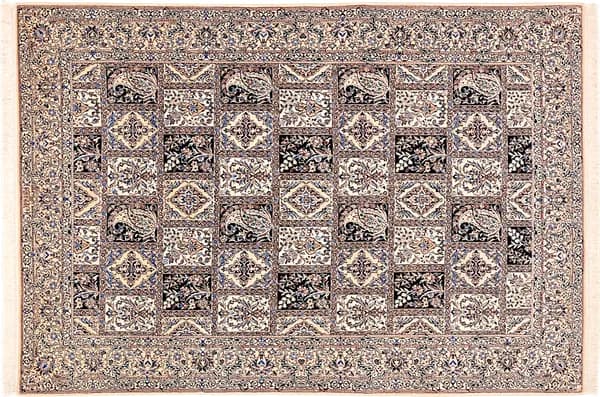
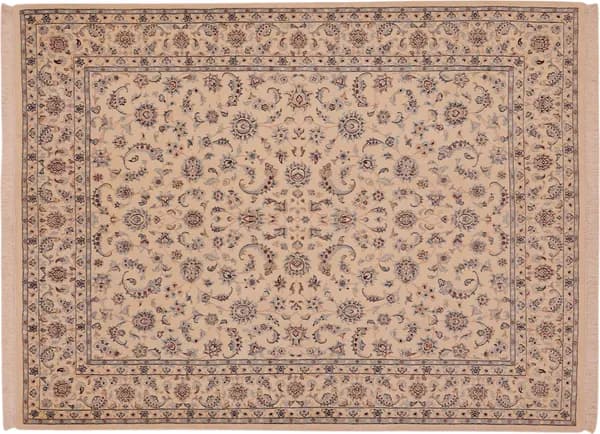
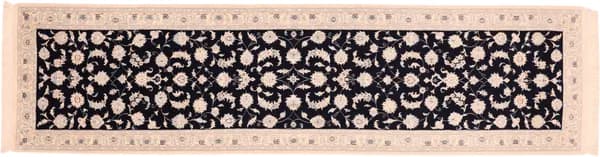
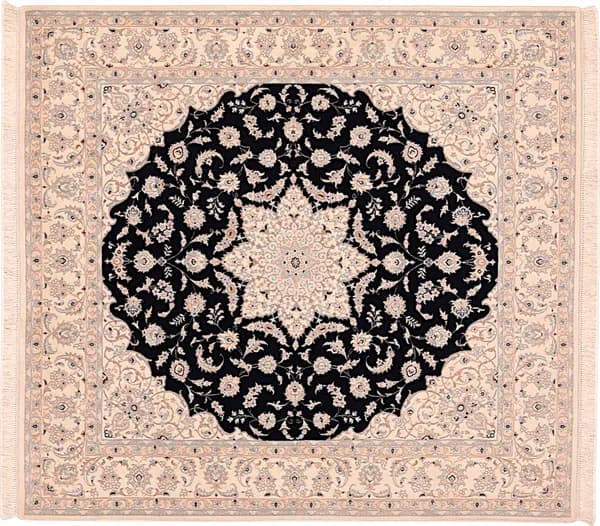
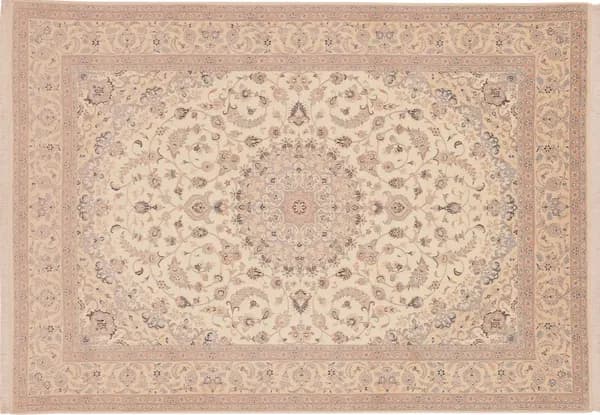
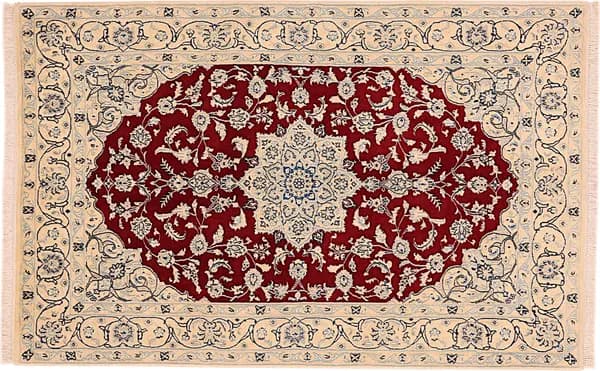
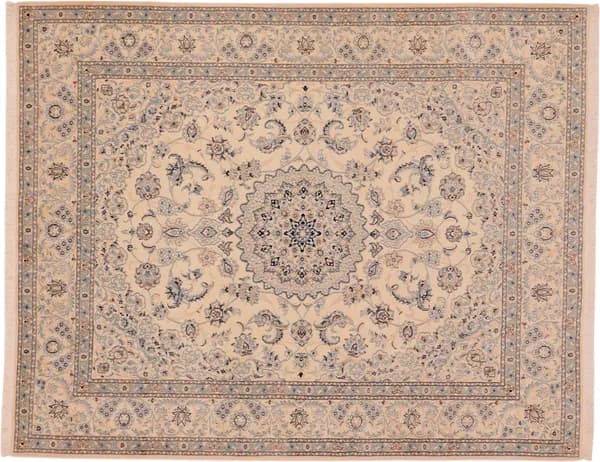
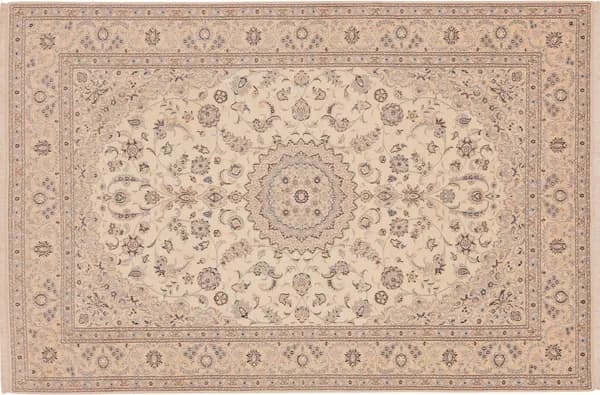
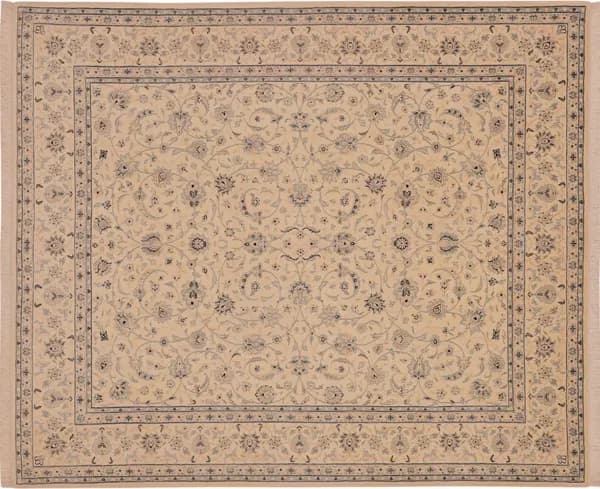
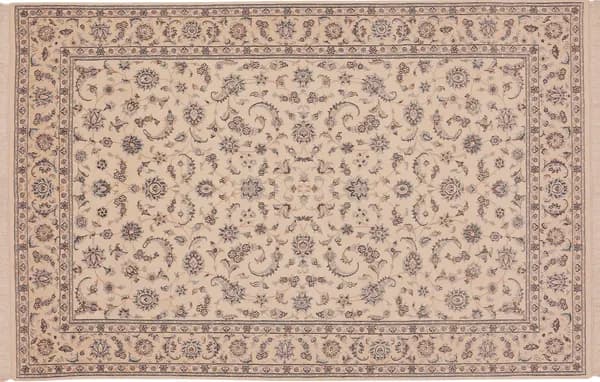
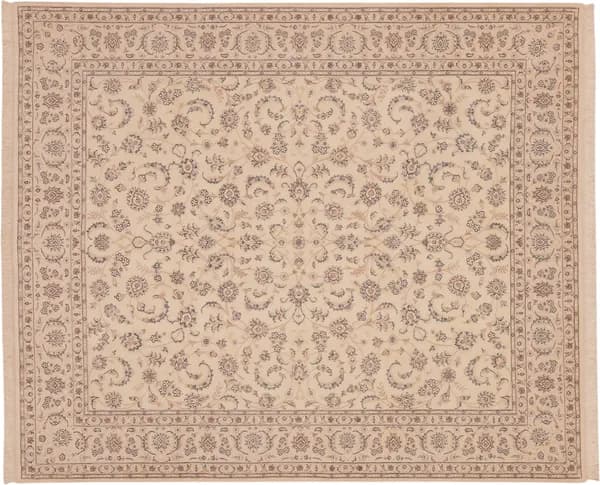
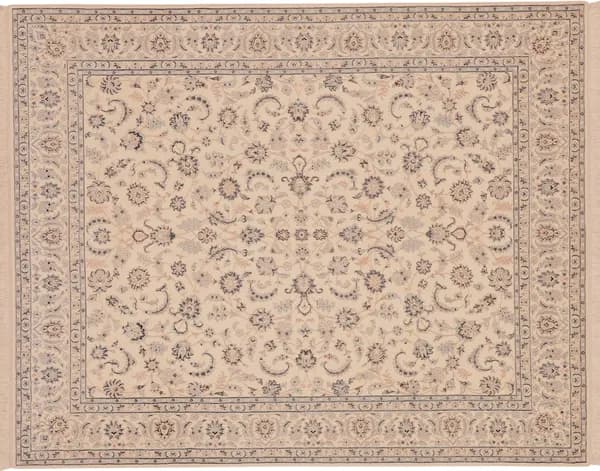
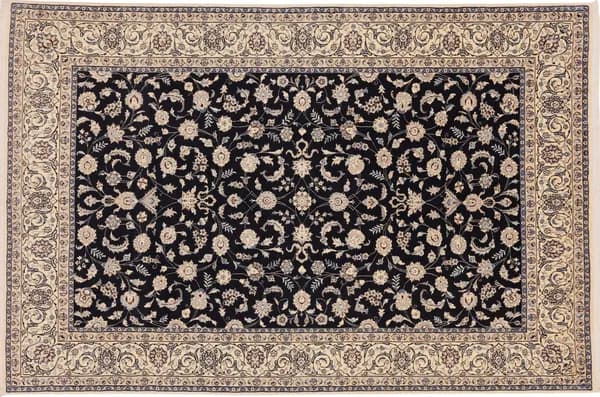
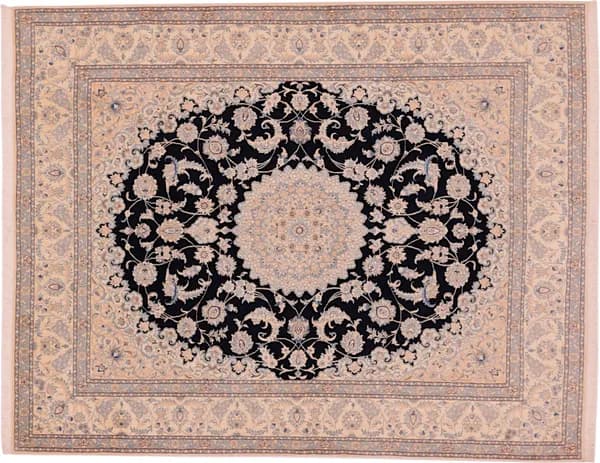
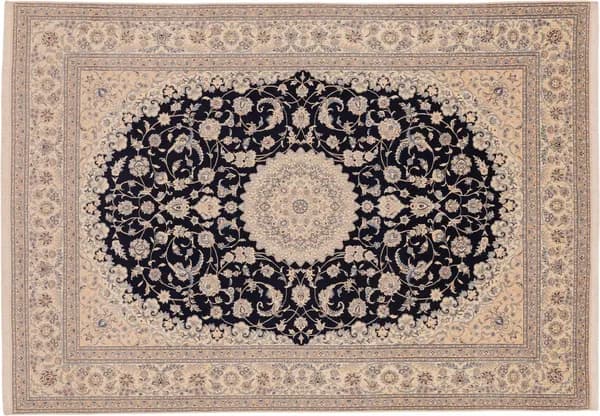
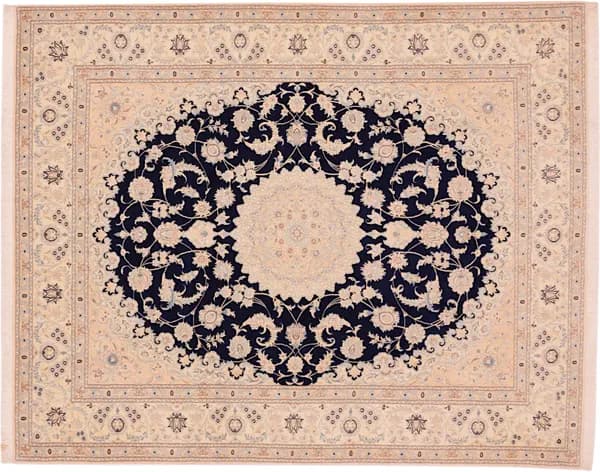
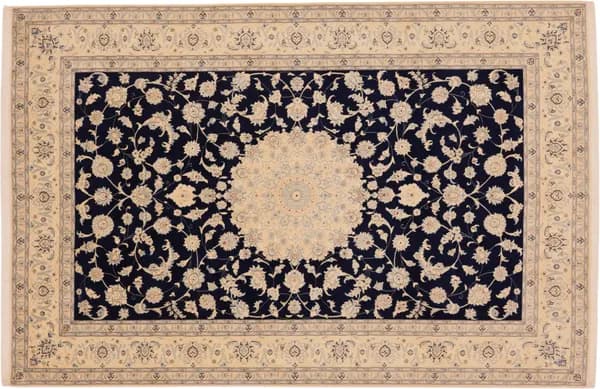
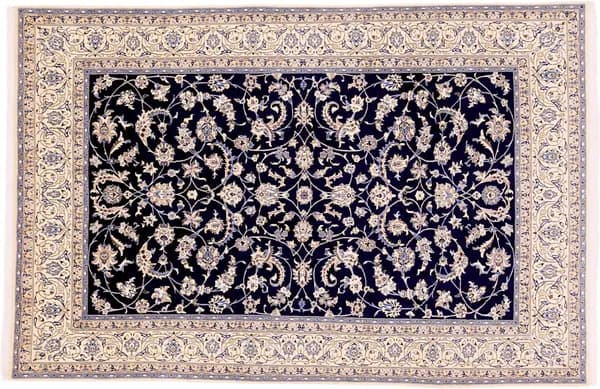
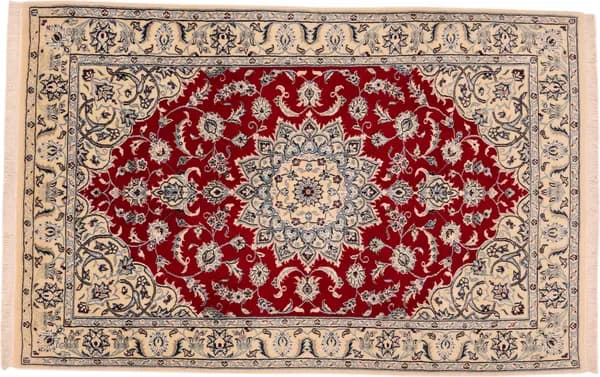
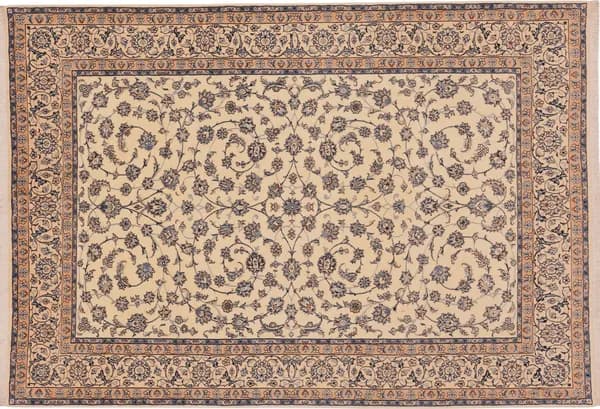
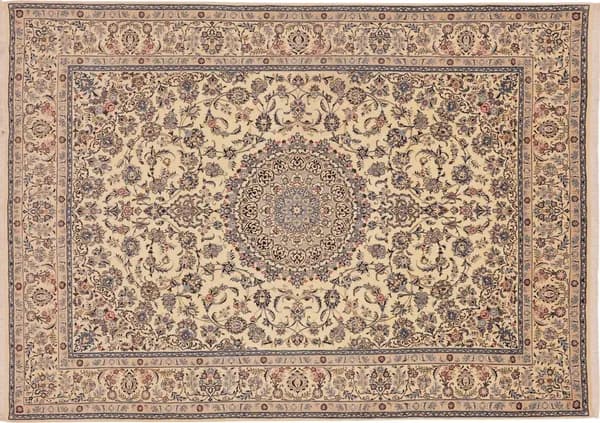
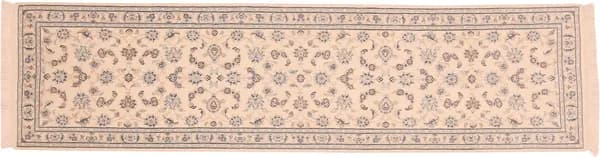
Most Persian origins can be identified by motif. Nain can be identified by colour alone: an ivory or soft beige ground, indigo drawing, and small quantities of a muted rose or green. Nothing loud, nothing warm-red.
That restraint is deliberate and it is recent. Nain began weaving in the twentieth century, at a point when the market for Persian rugs in Europe and America was moving toward lighter interiors, and the town built its reputation on exactly that gap.
The practical consequence is that a Nain recedes. In a room that already has a focal point it sits quietly and lets the room work; a Tabriz or a Kashan in the same spot would compete. It also means a Nain shows dirt earlier than a dark rug — the ivory ground is unforgiving.
Kork wool, silk contours, and La
Kork is the fine undercoat wool taken from the neck and shoulders of the sheep. It spins thinner than ordinary fleece and takes dye more evenly, which is what allows the Shah Abbasi vines — long, curving stems with palmette flowers — to be drawn at this scale.
The contours are silk, and in Nain they run through the entire drawing rather than appearing as an accent. Every stem, every leaf edge is outlined in a thread that catches light differently from the wool beside it. Move around the rug and the whole pattern shifts slightly.
La is the local count: the number of threads twisted into each warp. Fewer threads make a thinner warp, so more knots fit — 6La is finer than 9La. It describes resolution rather than quality, in the same way Raj does around Tabriz.
- Ivory or beige ground with indigo drawing — the fastest identifier.
- Silk contour threads throughout, not only as accent.
- Kork wool — fine undercoat, spun thin.
- Shah Abbasi vines with palmette flowers.
- 6La is finer than 9La — fewer warp threads, more knots.
Which room a Nain suits
The common format around 283 by 199 centimetres carries a seating group with the front legs of sofa and chairs on the rug, or sits under a small dining table with the usual 80 centimetres of clearance.
It belongs in a room where you want the rug to be quiet. Against pale walls and light wood it reads as part of the architecture rather than as an object placed in it.
The one caution is the ground colour. An ivory field in a hallway or under a dining table with small children will show every mark. In a bedroom or a formal sitting room it is a different proposition entirely.
Care
Vacuum along the pile without a rotating brush — the silk contours are the first thing a brush lifts out.
Blot spills at once with clear water and a light cloth, working from the outside in. On an ivory ground speed matters more than on any dark rug: a mark left to dry in stays visible.
Keep it out of permanently direct sun. The indigo is the first colour to shift, and once the drawing pales against the ground the whole composition loses its definition.
Nain or Tabriz?
Both are fine Persian workshop rugs at a similar density. The difference is temperament, not technique.
| Criterion | Nain | Tabriz |
|---|---|---|
| Palette | light: ivory, beige, indigo | broad, often warm and strong |
| Pattern | Shah Abbasi vines, filigree | Mahi, medallion, hunting scenes |
| Effect in a room | receding | present |
| Pile height | 8–12 mm | 7–11 mm |
| Sensitivity | shows dirt earlier | more forgiving of marks |
Common questions
What does 6La mean?
The number of threads twisted into each warp. Fewer threads make a thinner warp, so more knots fit into the same width: 6La is finer than 9La. Like Raj around Tabriz, it describes resolution rather than quality.
Is the silk in a Nain real silk?
In a good piece, yes — used in the contour lines throughout the drawing. It is easy to check: silk catches light differently from wool, so the outlines flash as you move around the rug while the field stays matt.
What is kork wool?
The fine undercoat from the neck and shoulders of the sheep. It spins thinner than ordinary fleece and takes dye more evenly, which is what allows the fine vine drawing Nain is known for.
Does an ivory Nain get dirty quickly?
It shows marks earlier than a dark rug — the ground gives them nowhere to hide. In a bedroom or formal sitting room that is rarely a problem; in a hallway or under a dining table with small children, choose a darker origin.
Why is Nain so recent compared with Tabriz or Kashan?
Weaving in Nain began in the twentieth century, centuries after the classical centres. It reached the front rank within a few decades by building its reputation on exactly what the market was moving toward: light, restrained rugs for lighter interiors.