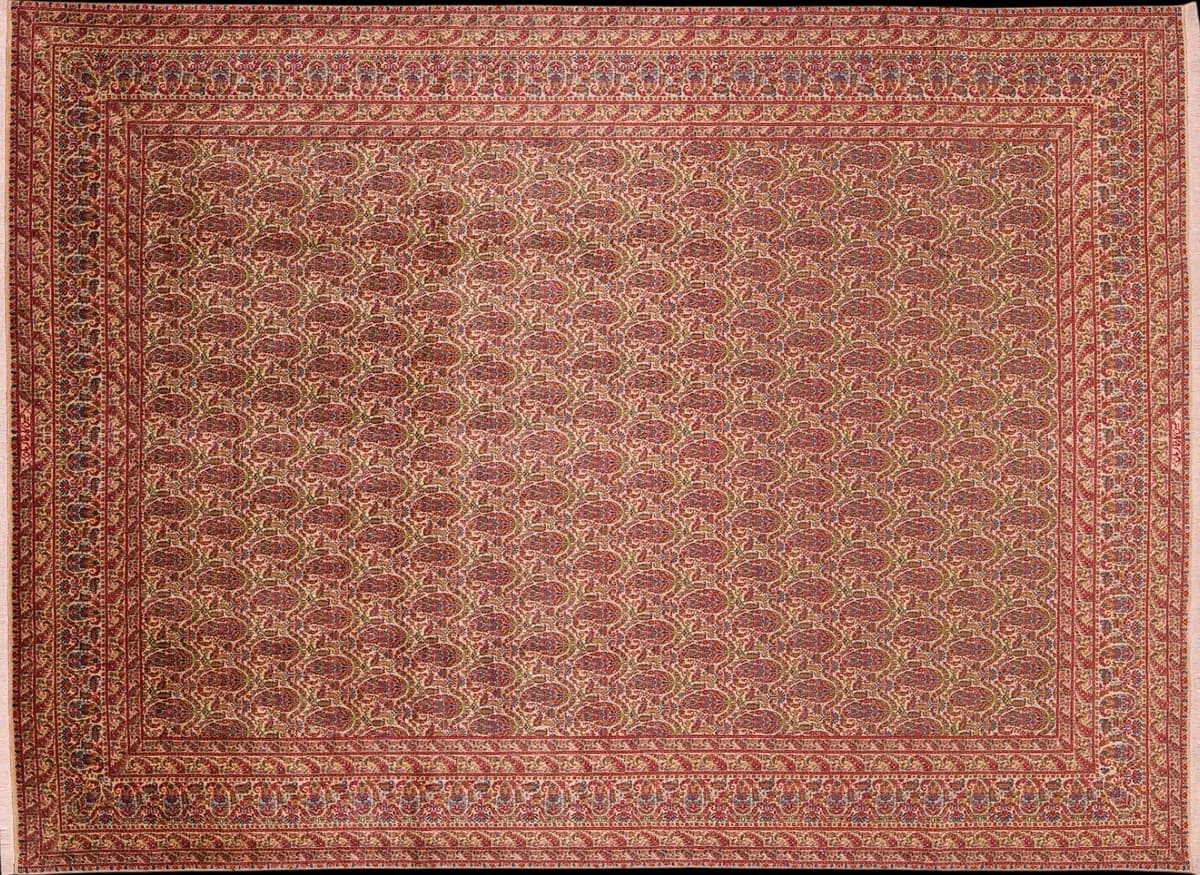
Why an open field is the difficult option
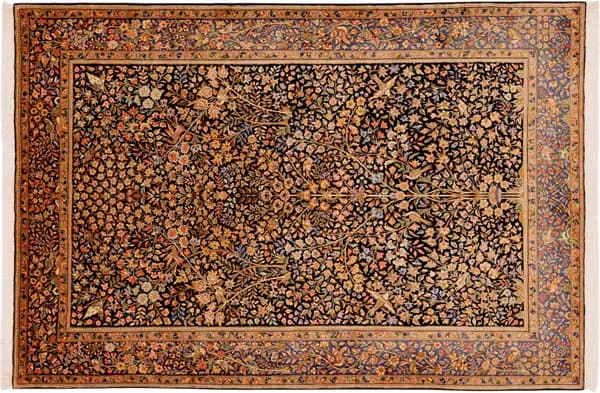
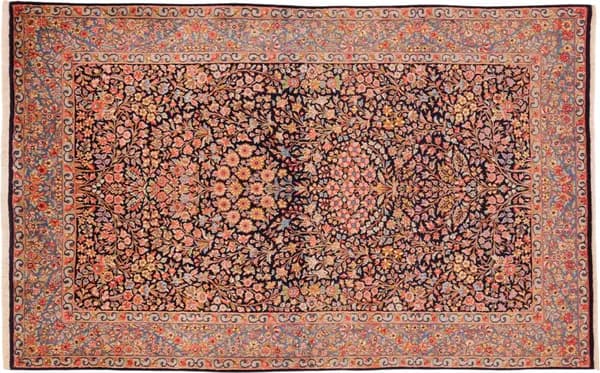
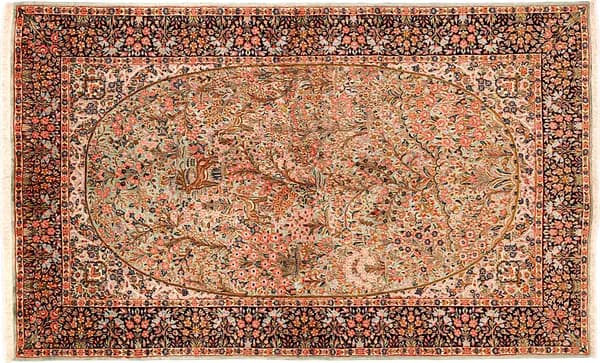
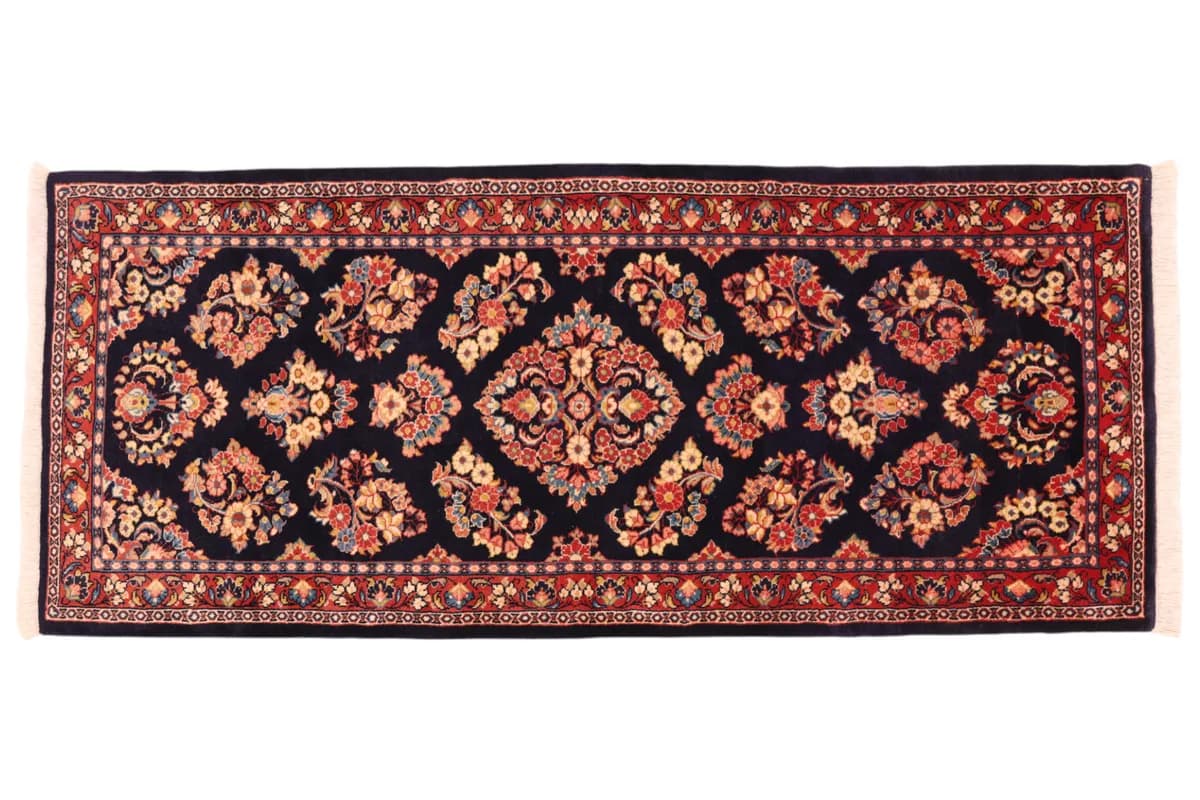
Most Persian traditions fill the field. A dense ground of vines, rosettes or lattice work hides a great deal: a slightly uneven row, a knot count that drifts, a colour that shifts between dye baths. The eye reads pattern and does not notice.
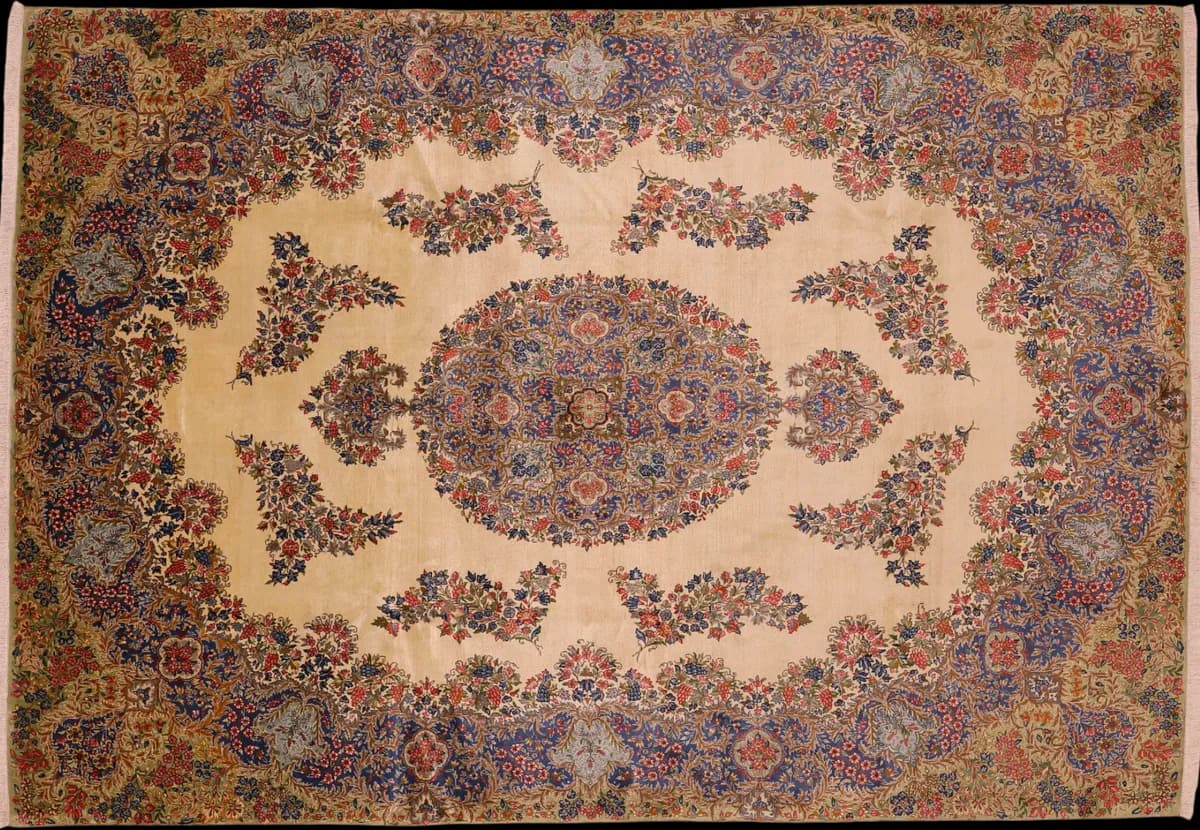
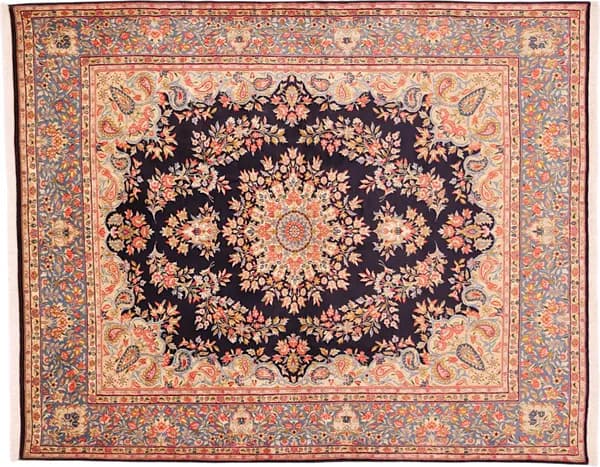
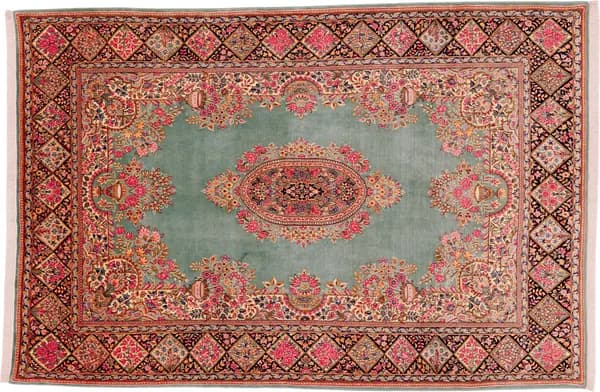
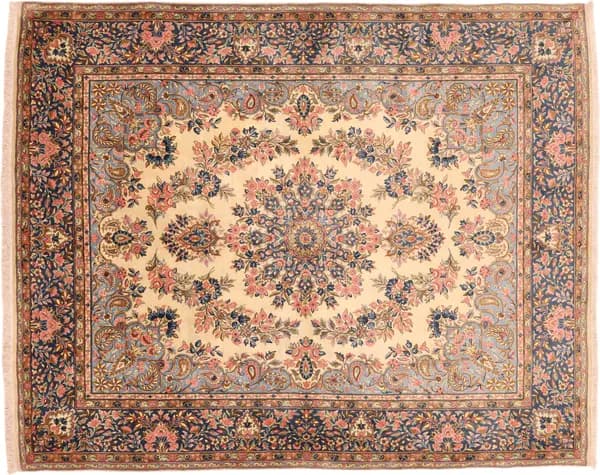
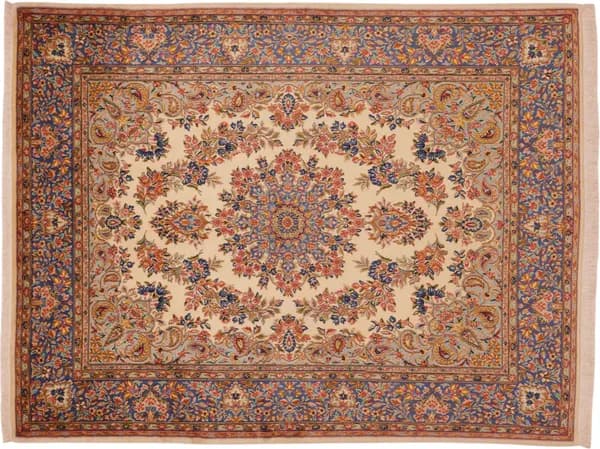
Ravar leaves the field open. A medallion sits on a ground with very little drawn on it, and every irregularity in that ground is visible. An uneven row shows as a line; a change of dye bath shows as a band. There is nowhere for a mistake to hide.
That is why the open field is a claim about skill rather than a saving of effort. It costs the same wool and roughly the same time, and it only works if the weaving is even enough to bear the exposure.
The Kerman handwriting
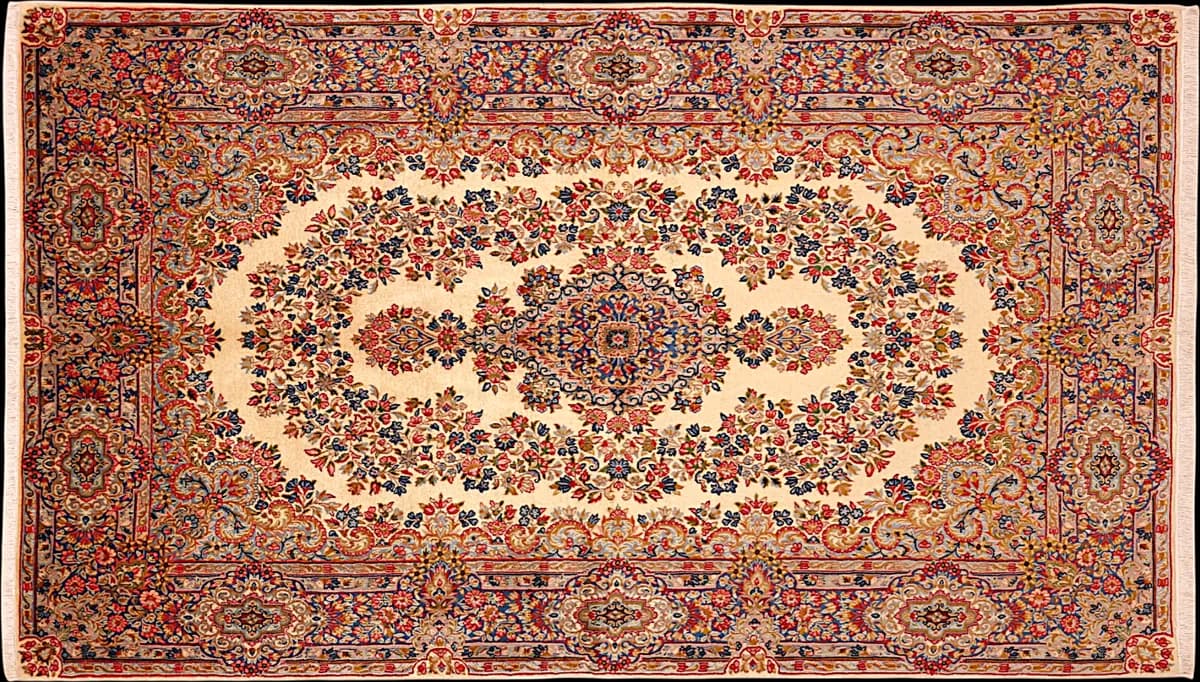
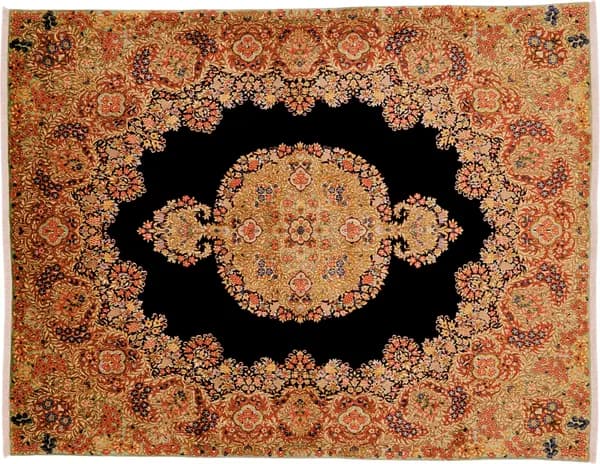
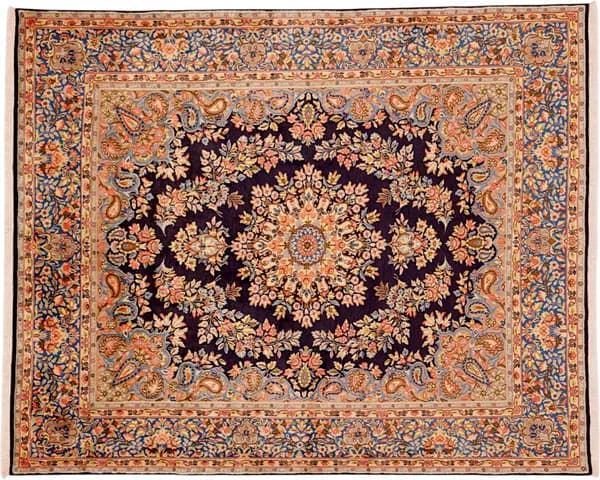
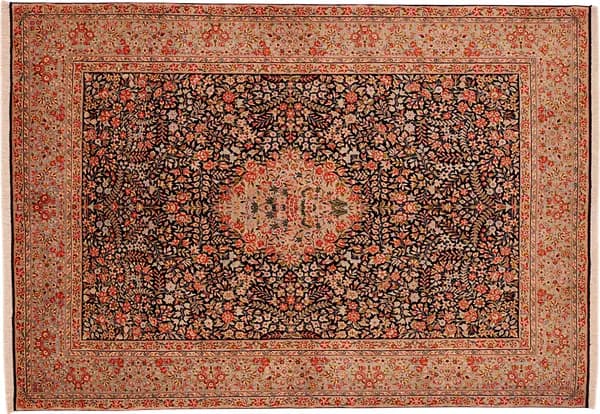
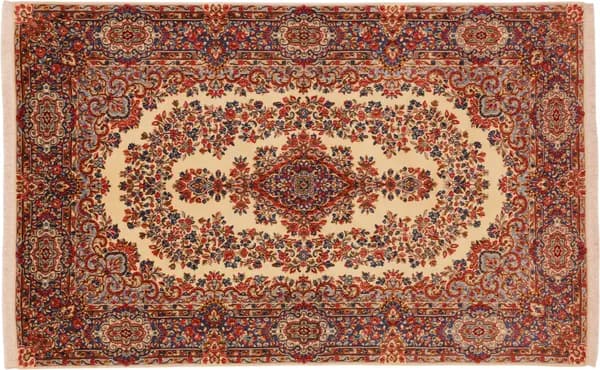
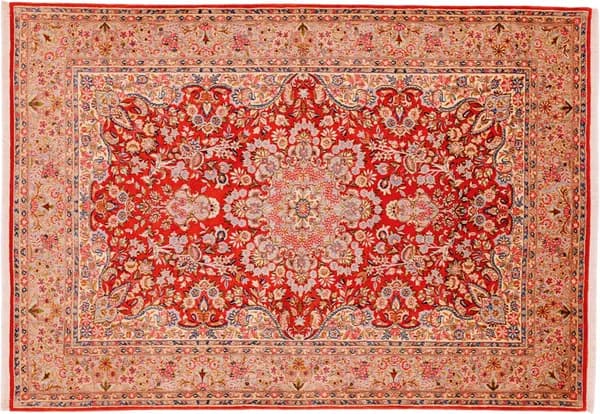
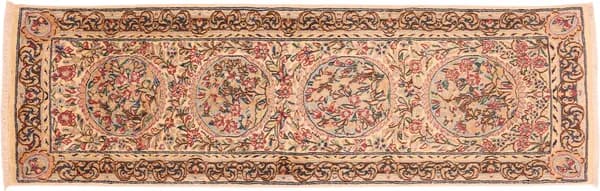
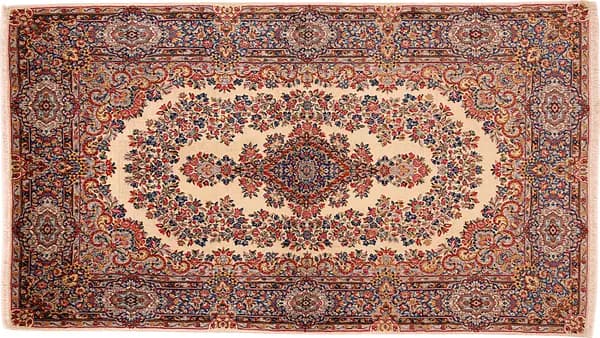
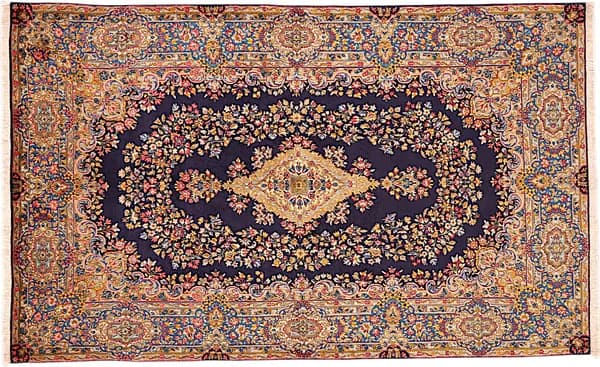
Kerman is one of the great Persian weaving provinces, and its handwriting is floral: curving stems, palmettes, rounded forms. Where Kurdish and tribal work is angular, Kerman is drawn in curves.
Ravar takes that vocabulary and thins it out. The medallion keeps the floral drawing, the corner spandrels answer it, and the space between is left largely to the ground colour.
At 321,000 to 380,000 knots per square metre the curves stay curved — enough density that a palmette reads as a flower rather than as a stepped approximation, without going to the extremes of a silk-warp city rug.
- Medallion with corner spandrels on a sparsely drawn ground.
- Curved floral vocabulary, no angular geometry.
- Even ground colour — the point of the composition.
- Cotton warp, handspun wool pile at around 12 mm.
- Often spelled Lavar on older labels.
Which room a Ravar suits
The common format around 245 by 160 centimetres sits in front of a sofa, in a bedroom, or in a study. It is not a whole-room rug.
The open field needs to be seen. This is the wrong rug to push half under a sofa: the composition depends on the space around the medallion, and covering it removes exactly what you paid for.
In a busy room the light ground is a consideration in the same way a Nain is. It works best where it is looked at more than walked on.
Care
Vacuum along the pile, without a rotating brush.
Blot spills at once with clear water and a light cloth, working from the outside in. On an open field a mark has nothing to hide behind, so act quickly.
Turn the rug once or twice a year. Uneven fading is more visible on a plain ground than on a patterned one, and by the time you notice it, it is difficult to correct.
Ravar or Nain?
Both are fine, light, restrained Persian rugs. The difference is where the restraint sits.
| Criterion | Ravar | Nain |
|---|---|---|
| Region | Kerman, south-east | Isfahan province, centre |
| Knot density | typically 321,000–380,000 / m² | typically 441,000–500,000 / m² |
| Restraint | in the empty field | in the palette |
| Silk | rare | in the contours throughout |
| Pile height | around 12 mm | 8–12 mm |
Common questions
Ravar or Lavar?
The same town near Kerman. Lavar is the older trade spelling and still appears on antique labels; Ravar is the current form. Both describe the same weaving tradition.
Why is the field so empty?
It is a deliberate composition and the harder one to execute. A densely patterned field hides uneven rows and dye-bath changes; an open one exposes them. Leaving the ground bare is a claim about the evenness of the weaving.
Is a Ravar a Kerman rug?
It belongs to the Kerman weaving landscape and shares its floral handwriting. Ravar is the town and historically the fine tier of that region — a more specific name for a rug that would otherwise be sold simply as Kerman.
Can I put a sofa on it?
You can, but it defeats the design. The composition depends on the open space around the medallion, and covering half of it removes what distinguishes a Ravar from any other Kerman rug. Choose an all-over field if furniture will sit on it.
How fine is 350,000 knots?
Fine enough for curved floral drawing without visible stepping at the edges, and well above village work at 150,000. It is short of the silk-warp city rugs at 640,000 and upward — the range where the visible gain starts to flatten anyway.