Kerman
252 × 195 cm
3.600 €


3.450 €
Incl. VAT
In Stock · Ready to Ship
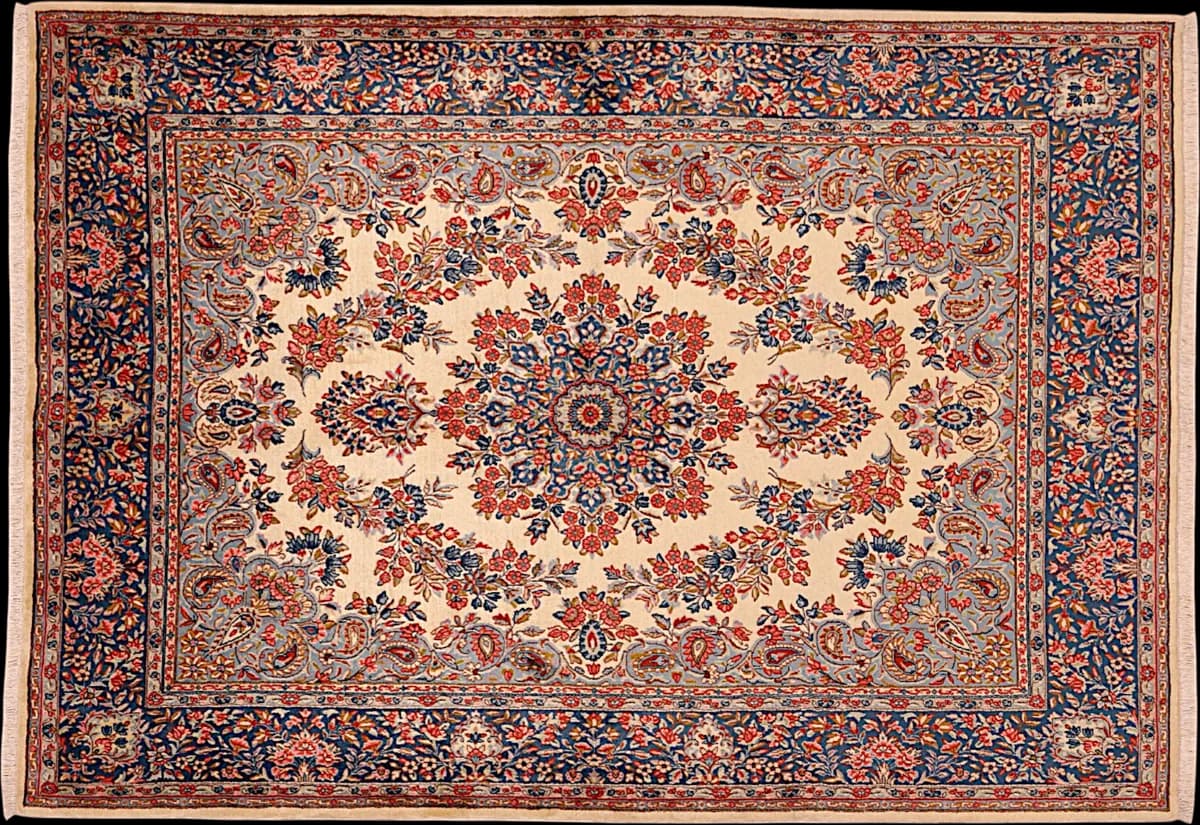
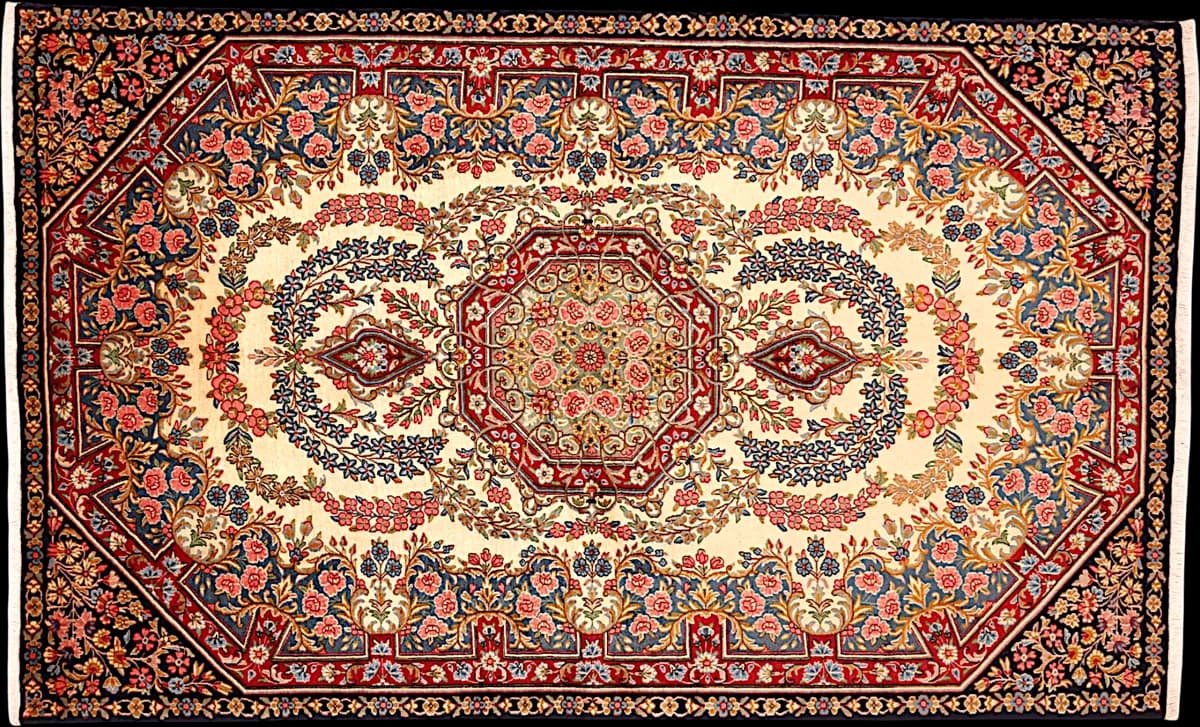
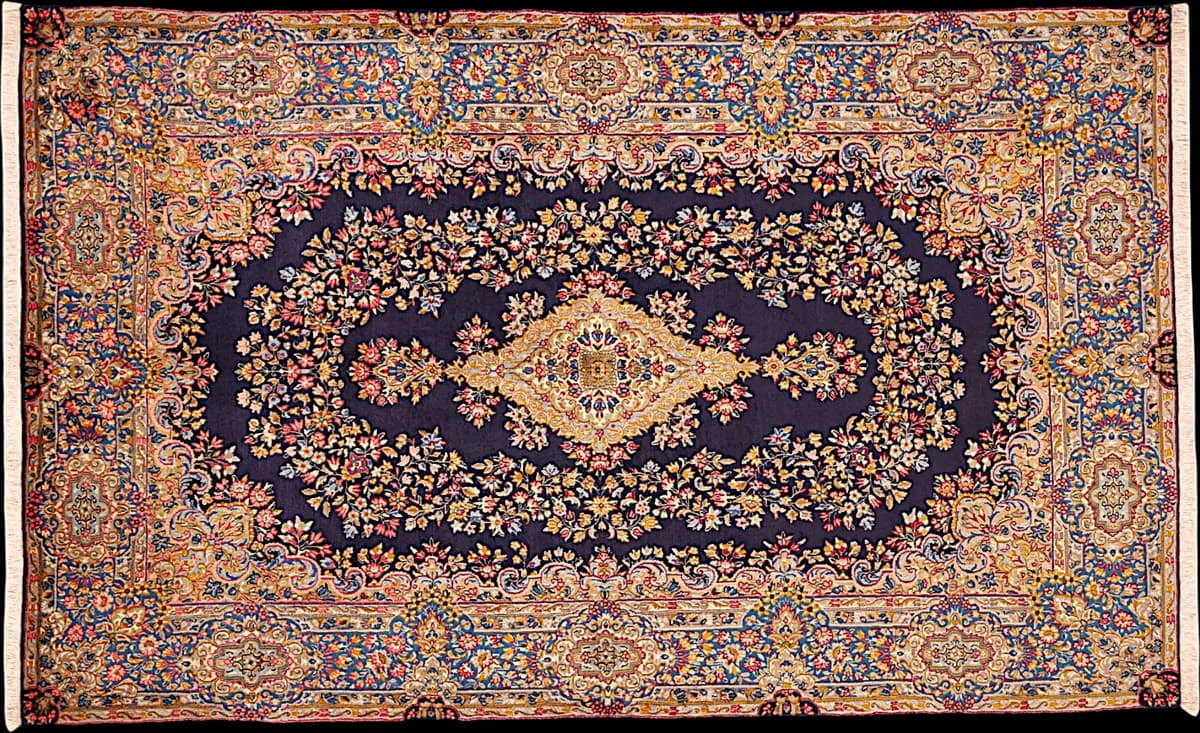
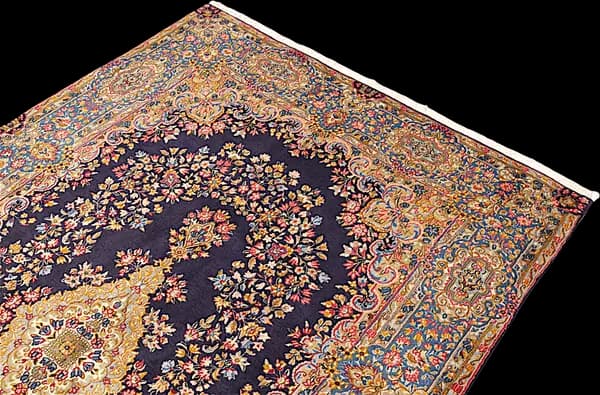
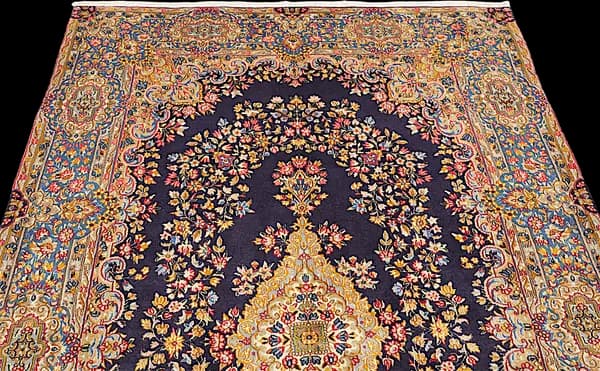
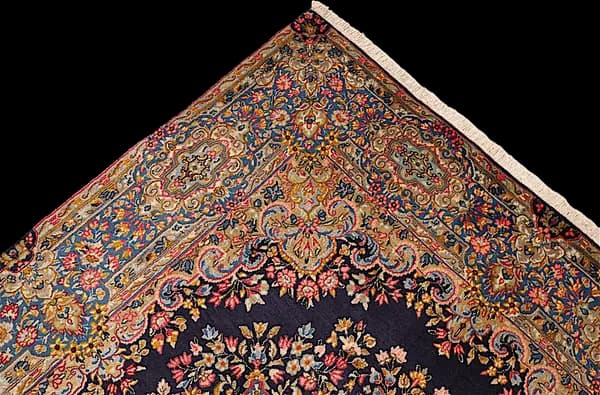
Ravar, often traded under the name Lavar Kerman, is a small town near the city of Kerman that has produced some of Persia's finest workshop weaving since the Qajar era. This piece measures 240 x 147 cm (7'10" x 4'10"), a size drawn from a design tradition prized for fine detail and a balanced composition of central medallion, ornate border and neat corner fillings.
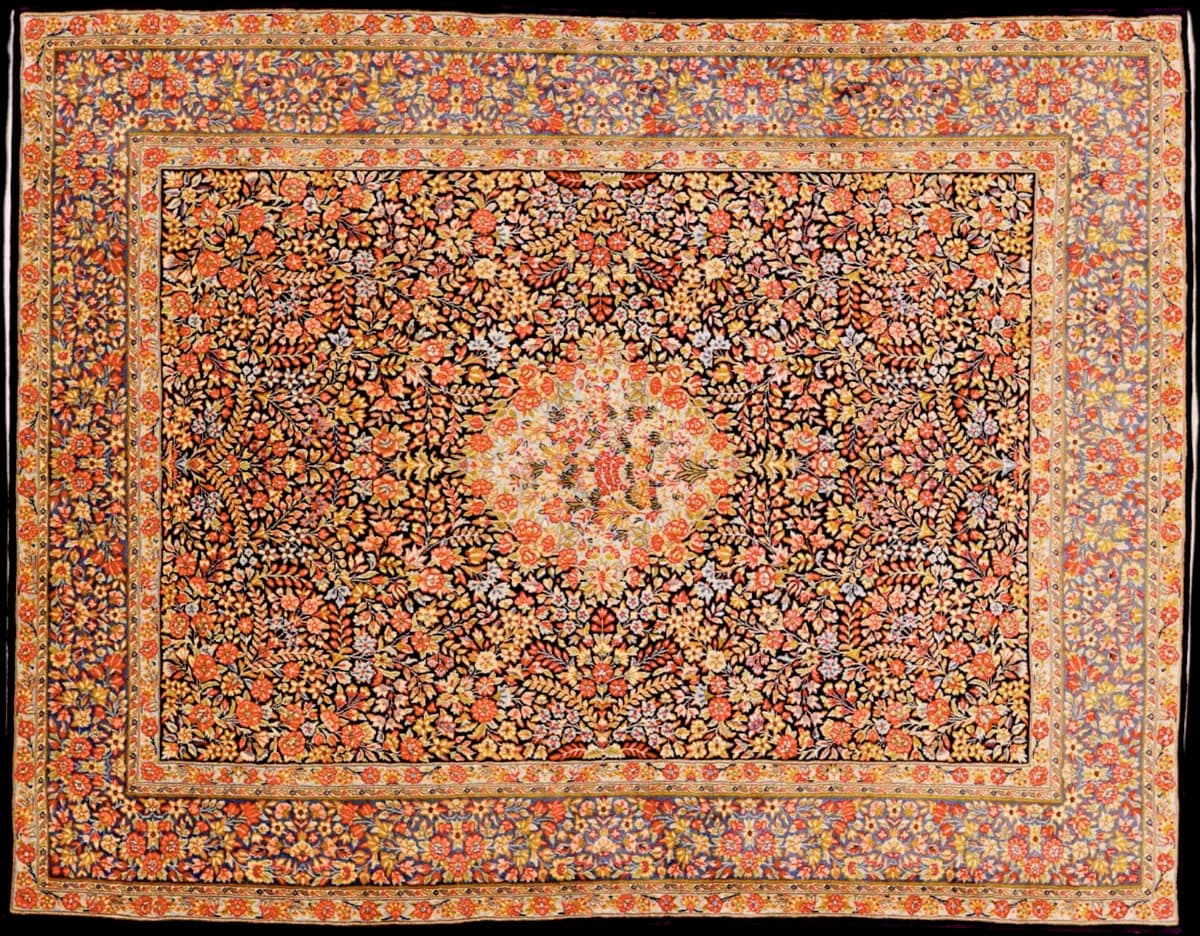
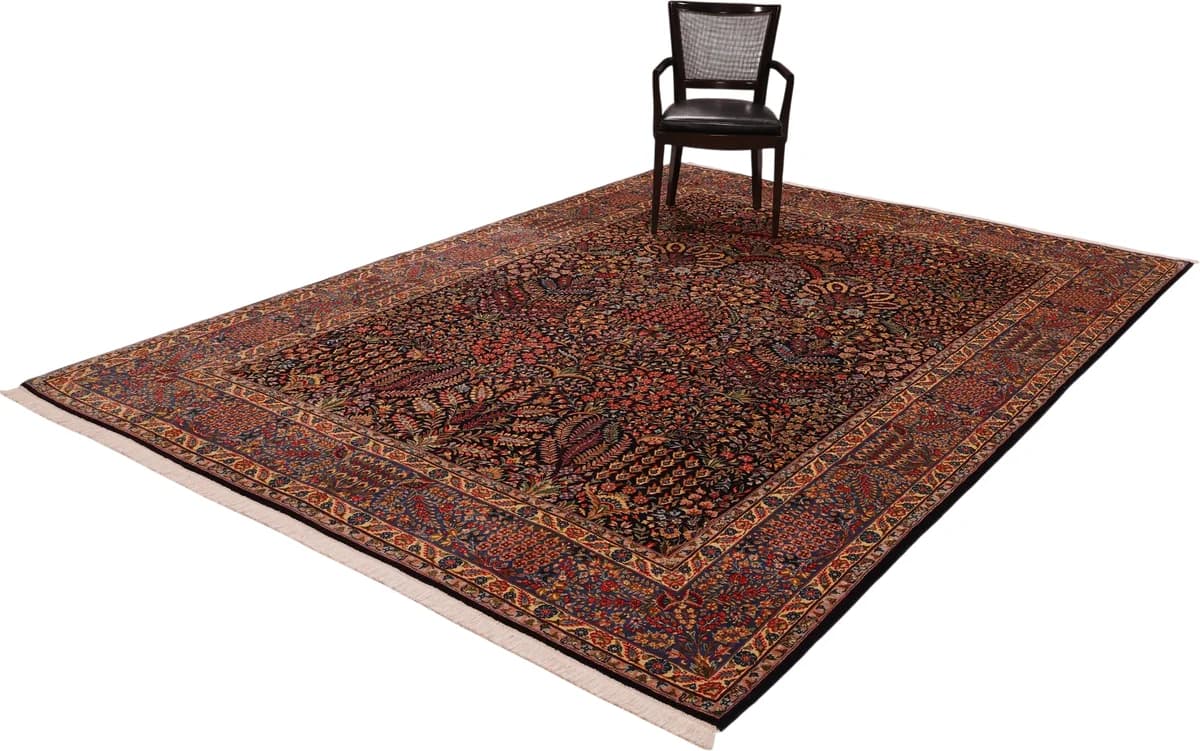
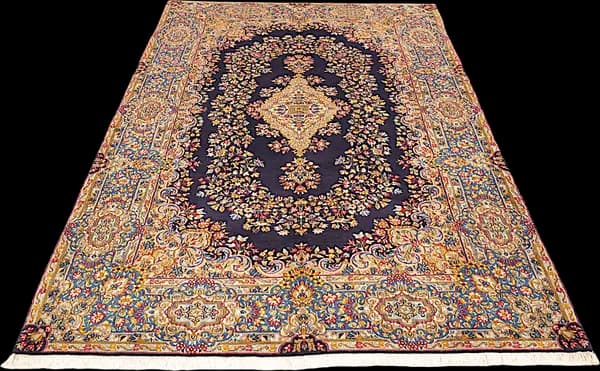
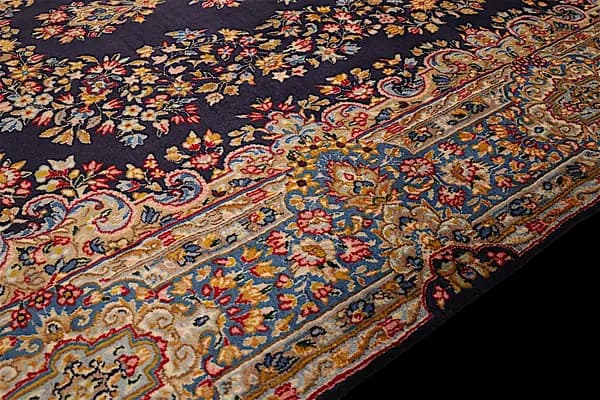
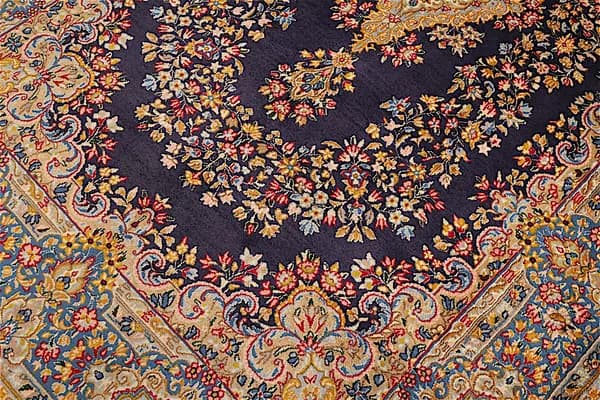
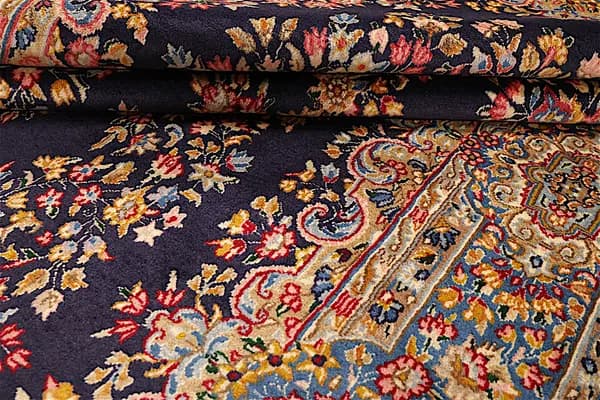
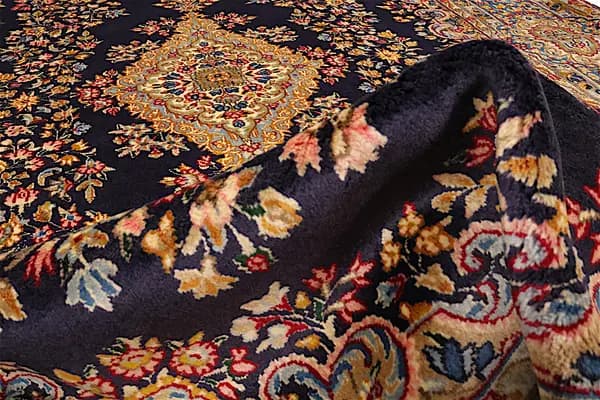
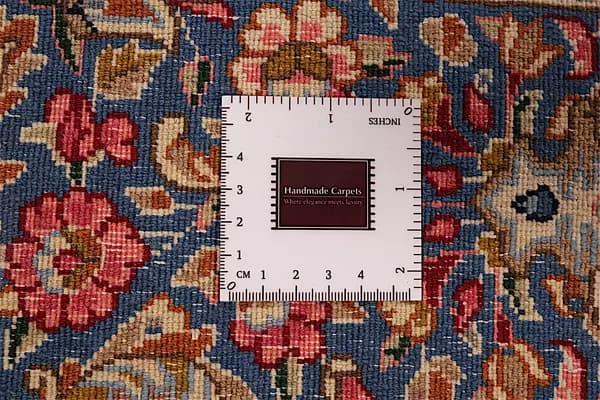
The field is a deep navy with an aubergine undertone, and it is densely filled with floral bouquets and scrolling vine work rather than left open around the medallion. That medallion is itself unusual, longer than it is wide rather than the round or diamond shape more commonly seen, and it sits in gold and camel tones surrounded by ivory and cream floral sprays, dusty pink and rose blossoms, touches of pale blue and small notes of red. A wide, multi-banded border in gold, blue and ivory carries the same floral language in repeating cartouches, taking up roughly a fifth of the rug's width and giving the dark field a firm, ornate frame.
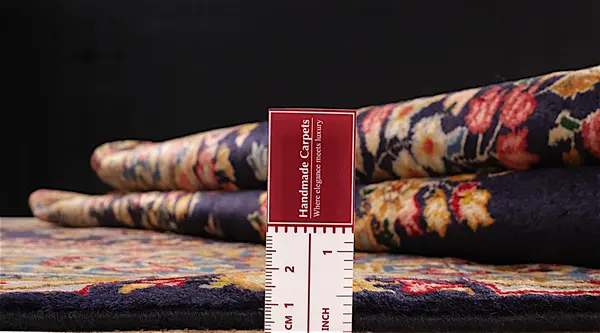
The wool is hand-spun rather than machine-spun, which keeps a faint irregularity in the yarn and a slight natural sheen across the lighter golds and creams, while the field wool sits matte around it. Knotted by hand at a density of 321,000 to 380,000 knots per square metre onto a cotton warp, the weave is fine enough to carry the small floral detail without the design losing its shape, and a rug at this density represents a considerable number of months at the loom. The 12 mm pile then gives the surface enough depth to hold that detail rather than flattening it.
At 240 x 147 cm this is a rug for a seating group or a dining table in a living or dining room, the kind of space where its horizontal medallion reads well underfoot rather than being cut off by a narrower footprint. The navy ground holds its own against dark wood or upholstery and warms a pale floor rather than competing with it, while the gold medallion and ivory sprays catch the light as it moves through the room over the course of a day. Underfoot the pile is dense and firm, wool spun and knotted to be lived on rather than kept for best, and the longer you look at that elongated medallion the more it reads like a garden rather than a single ornament.
More on Ravar rugs: origin, making and how to recognise a genuine piece
Superior craftsmanship
At 240 × 147 cm (3.53 m²) this is a medium rug. It works in front of a sofa, in front of a bed or in a study. It is too small for a dining table — there you want about 80 cm of clearance so a chair does not tip over the edge when pushed back.
Yes, knotted by hand — knot by knot on a loom, not machine-made. The density is 321,000 to 380,000 knots per square metre; across 3.53 m² that is roughly 1.1 to 1.3 million individual knots, every one of them tied by hand.
Hand-spun wool still carries its own lanolin, which keeps liquid sitting on the surface for a moment: blot quickly, with clear water and a light cloth, working inwards and without rubbing. Otherwise regular vacuuming along the pile is enough. Turn the rug once or twice a year so light and footfall reach it evenly.
We are in the Hamburg Speicherstadt. Come and see this rug in daylight, or write to us — a person answers.
Certificate included verifying origin, materials, and craftsmanship.
Ref: 761094