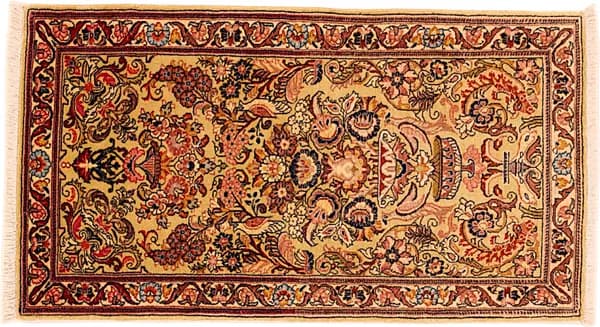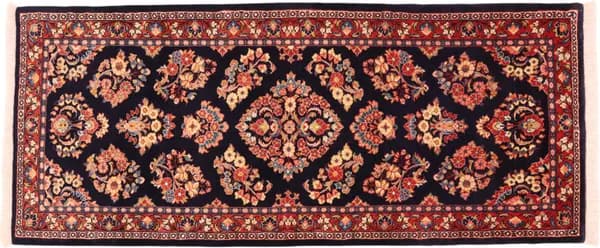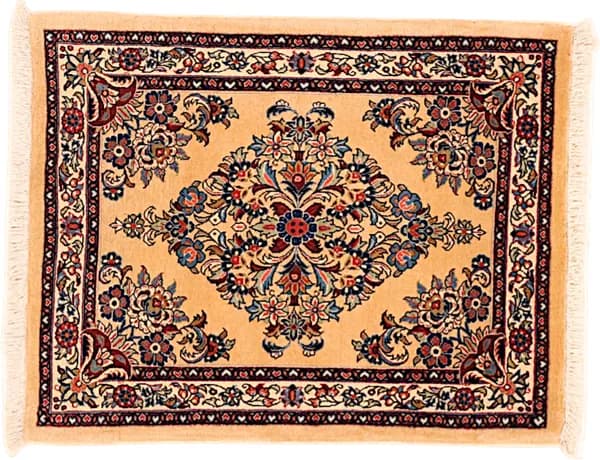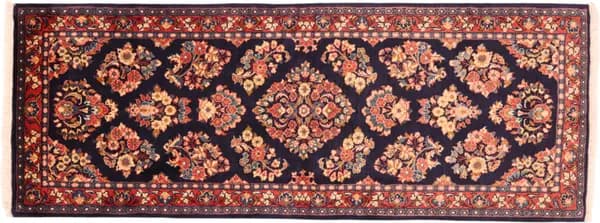
A field without a centre
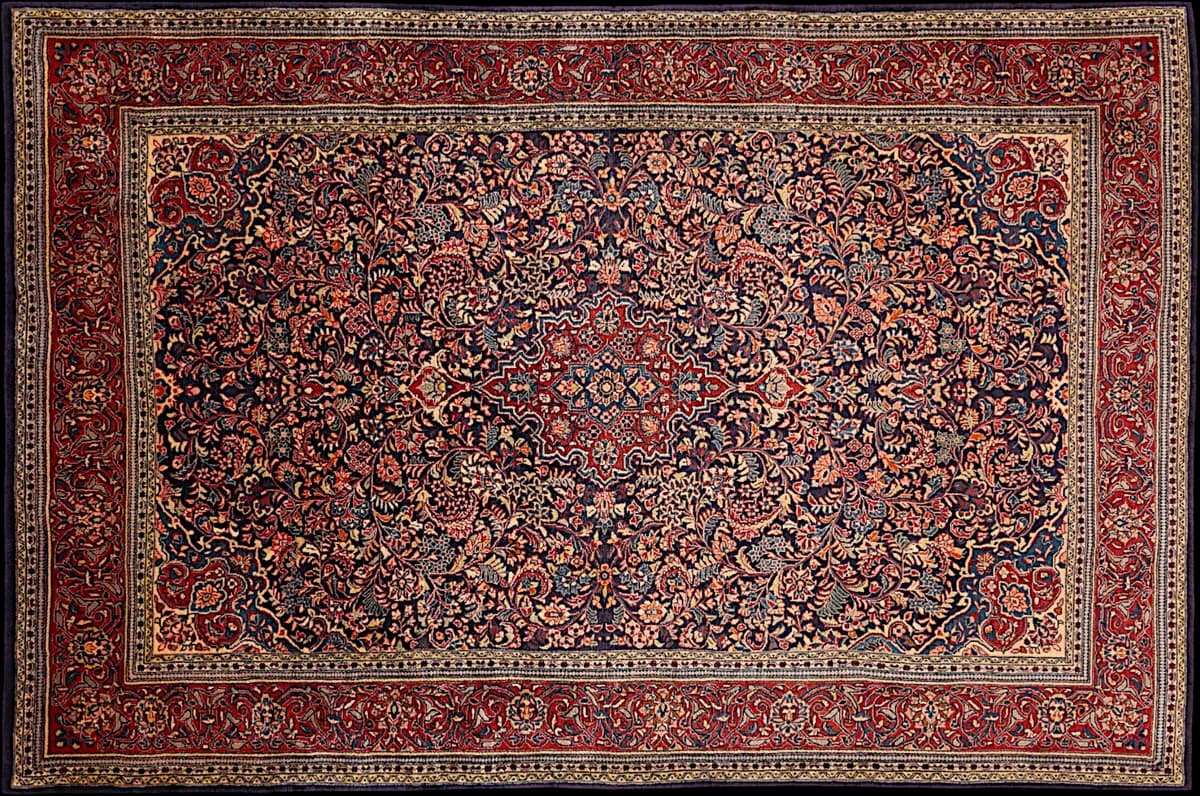
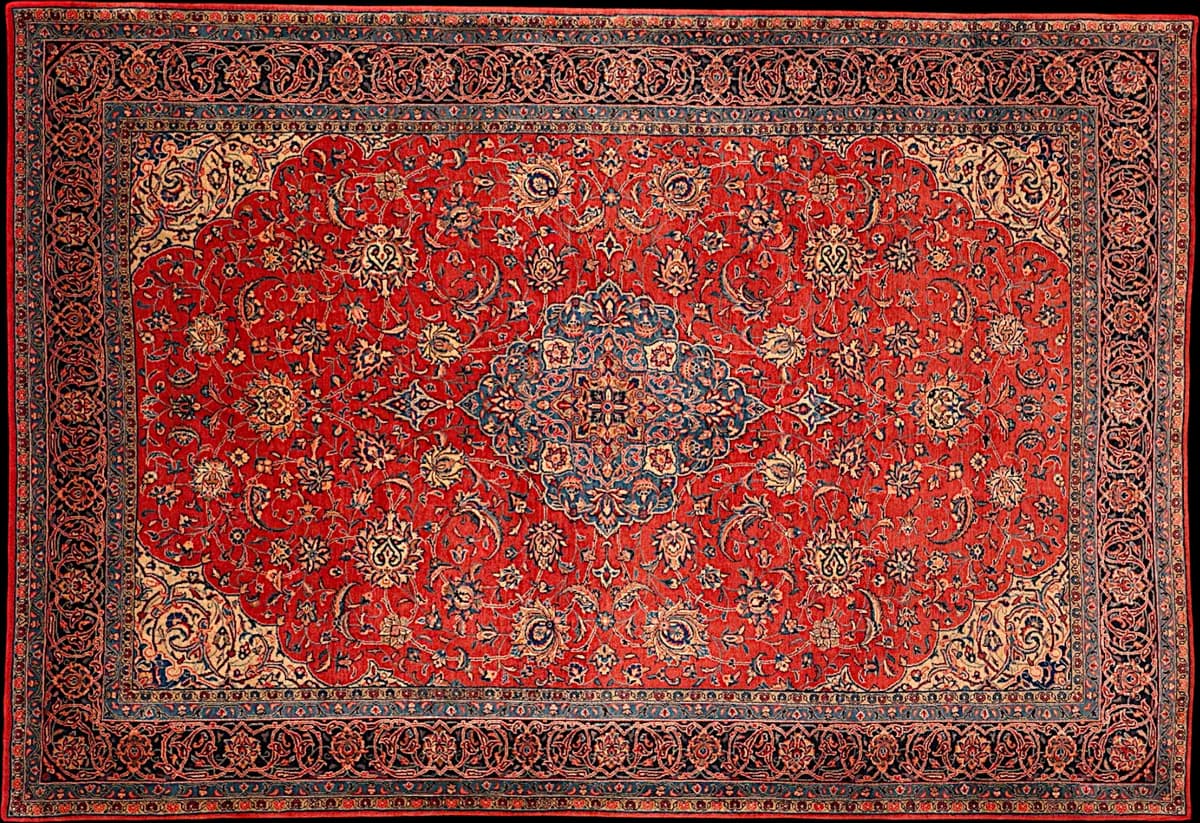
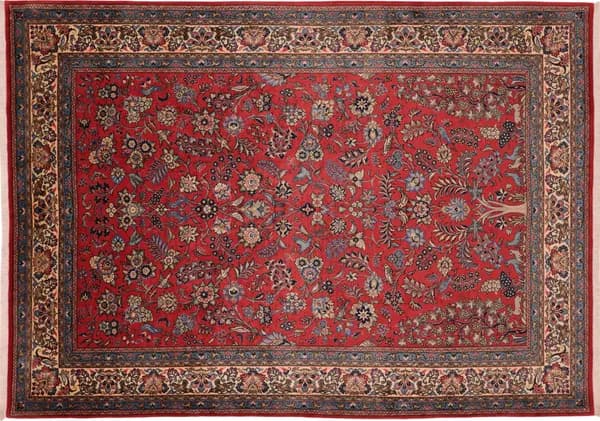
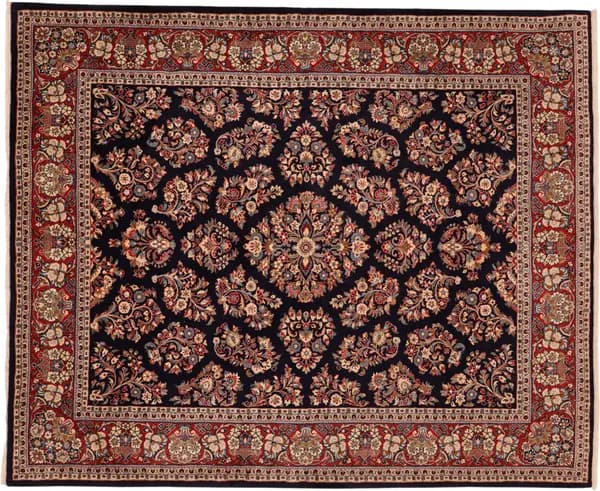
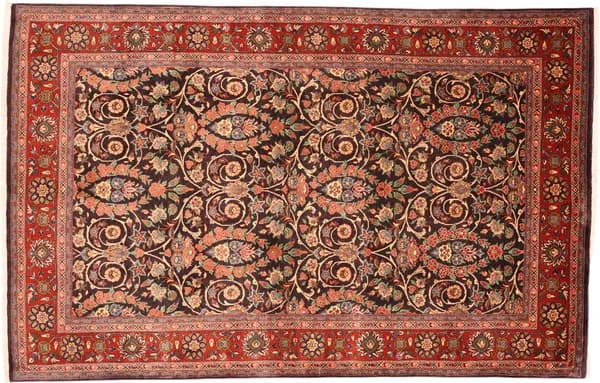
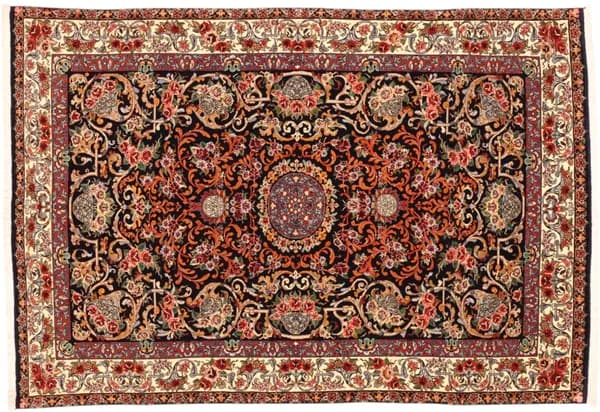
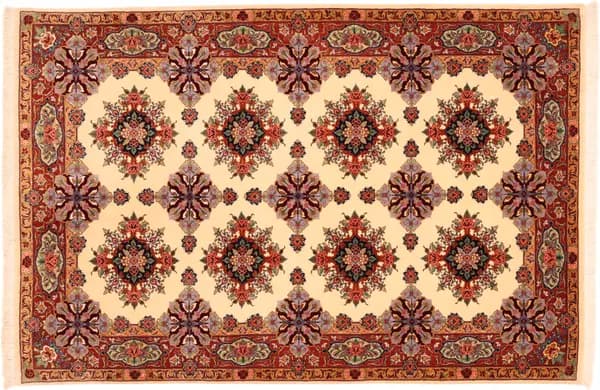
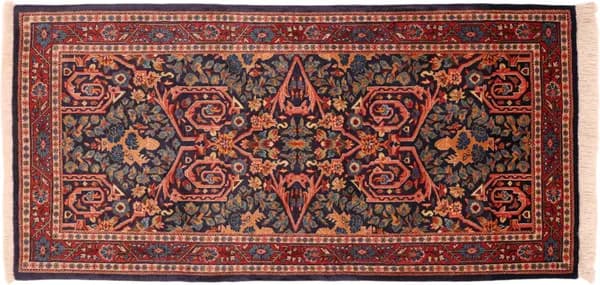
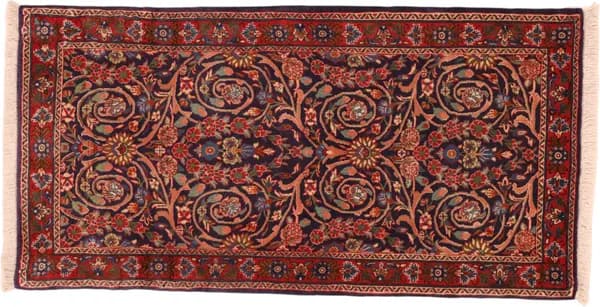
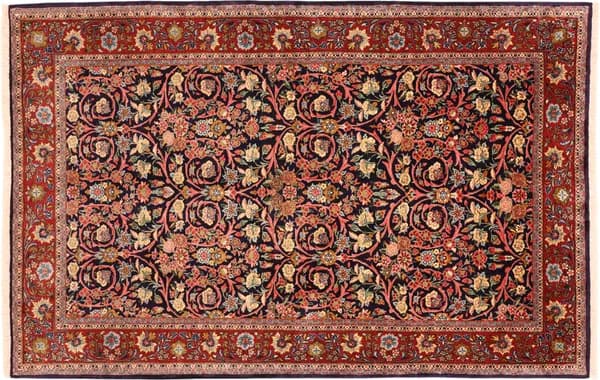
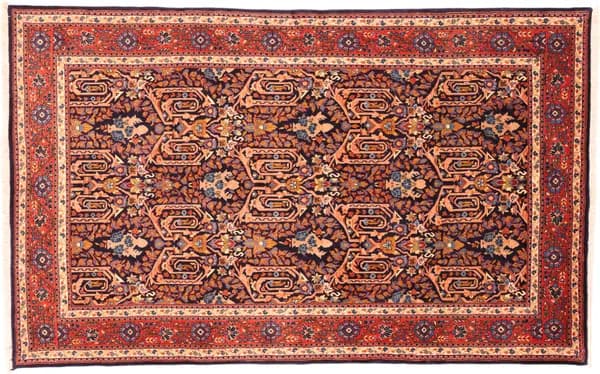
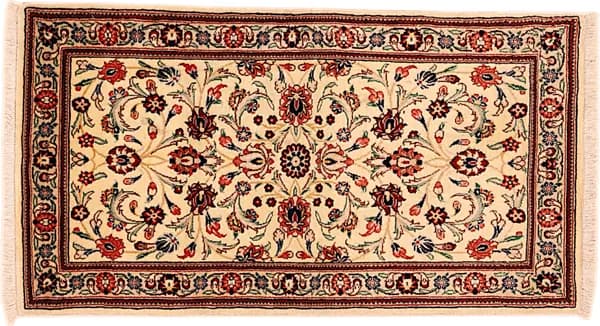
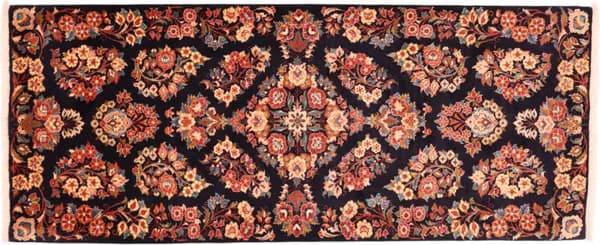
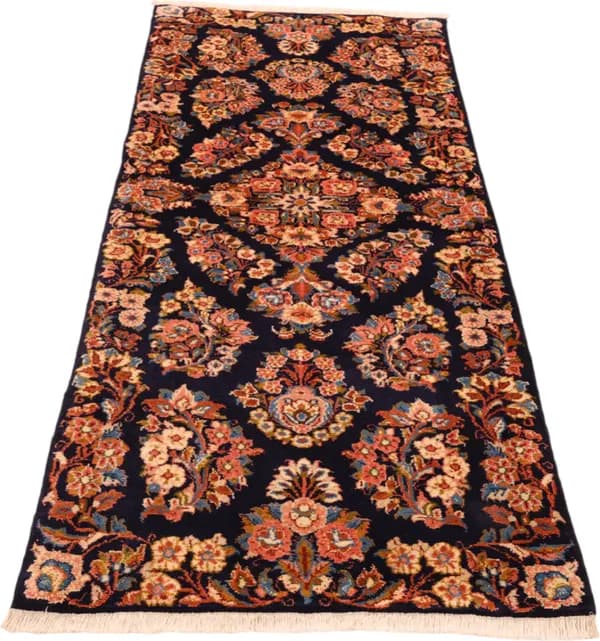
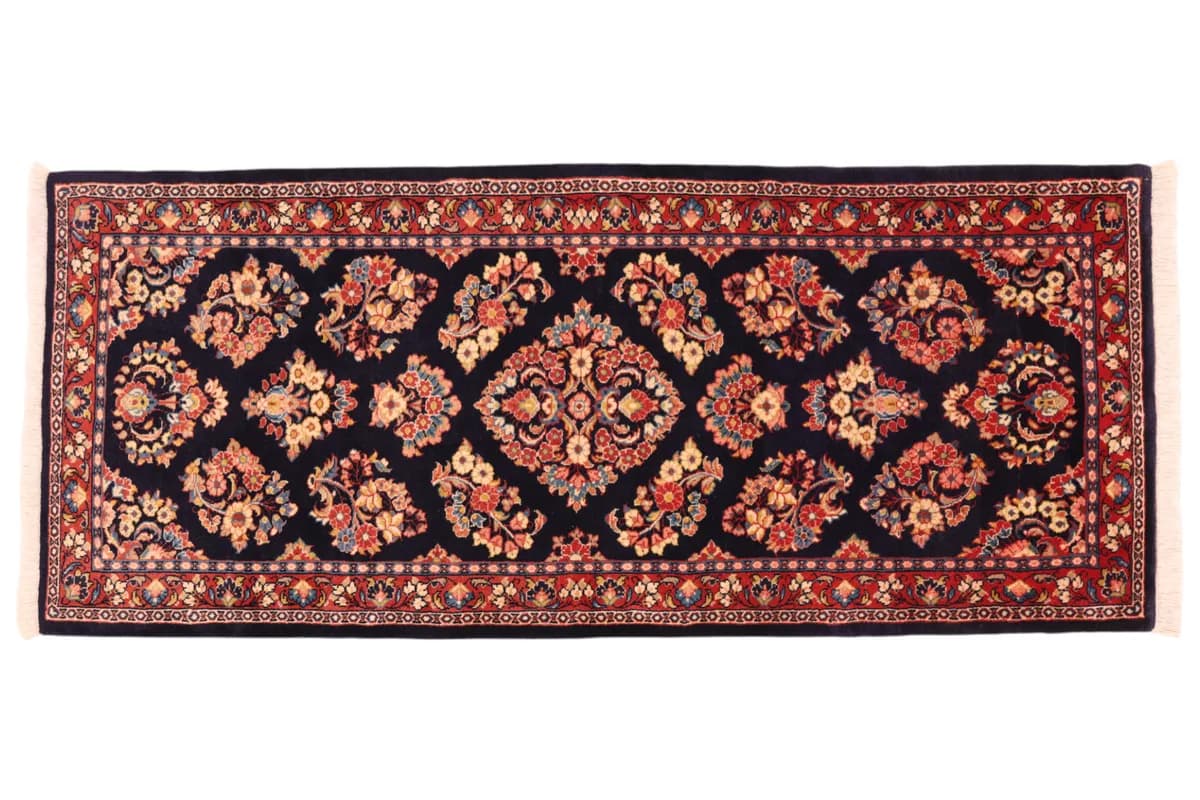
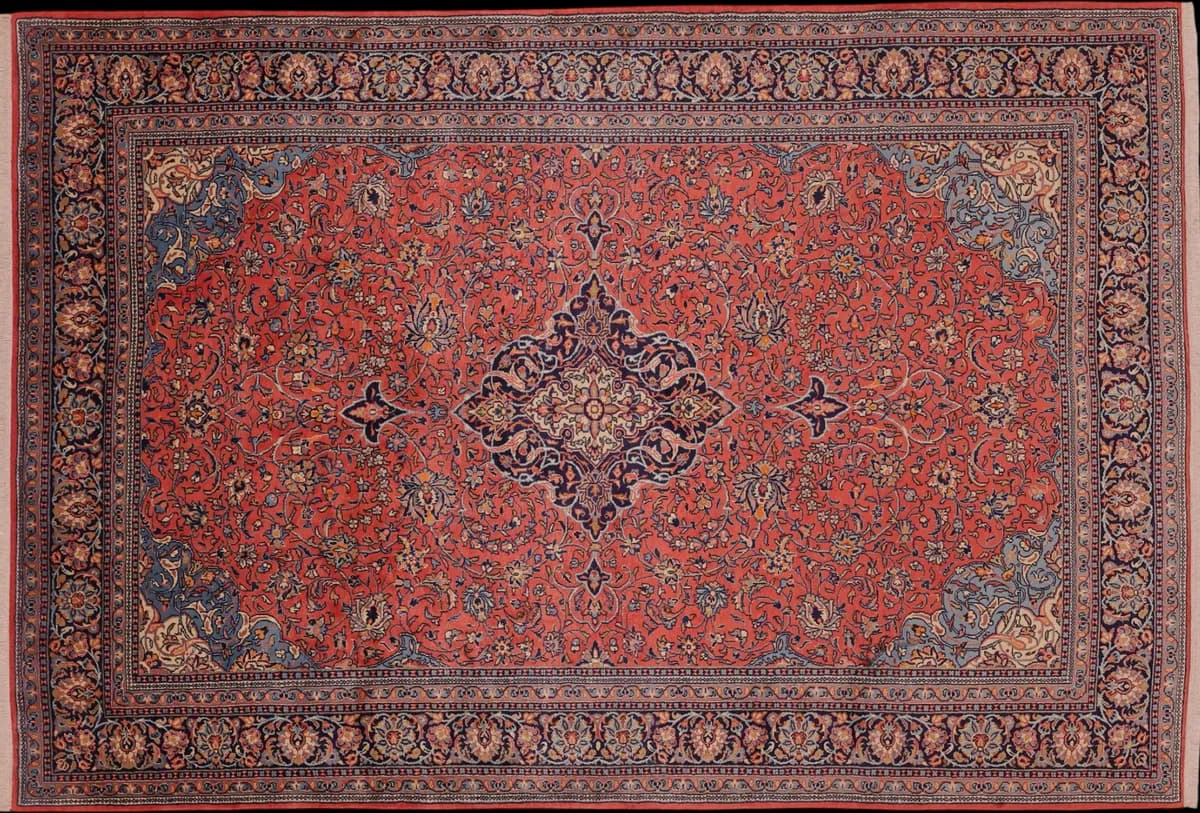
Most classical Persian compositions are built around a middle: a medallion, corner spandrels answering it, a border framing the whole. Sarough works differently. The floral drawing repeats across the entire field, and there is no single point the composition depends on.
That is a formal choice with a practical consequence. A medallion rug has to be seen whole to work, and a sofa across half of it destroys the arrangement. An all-over field looks the same wherever it is interrupted, so it takes furniture without complaint.
It also changes how the rug behaves in a room. A medallion pulls the eye to one spot; an all-over field spreads attention evenly and reads as a surface rather than as an object. In a room that already has a focal point — a fireplace, a view — that is usually the easier choice.
How it is built
The warp is cotton, which holds tension more evenly than wool and lets the weaver keep the repeating pattern regular over several metres. That regularity is what separates a Sarough from a tribal weaving using similar motifs.
At 201,000 to 250,000 knots per square metre the drawing is fine enough for curved floral forms without steps at their edges, but well short of the city manufactories. The result is a rug that reads as considered rather than as virtuoso.
Underfoot the difference from the dense Kurdish types is immediate. A Sarough is softer and more yielding, and it folds rather than only rolling — practical when a rug has to be moved or stored.
- Cotton warp — light, smooth fringes.
- All-over floral field, medallion only occasionally.
- Even repeat across the field — the mark of held tension.
- Softer and more yielding than Bidjar or Garrous.
- Folds; it does not need to be rolled.
Which room a Sarough suits
The all-over field makes this the low-risk choice for a living room where furniture will cover part of the rug. Sofa, armchairs, a low table — none of them damage the composition.
It works under a dining table too, allowing the usual 80 centimetres of clearance beyond the table edge so chairs do not catch when pushed back.
What it does not do is dominate. If you want the rug to be the thing people look at first, a medallion type is the better choice; a Sarough is a surface that supports a room rather than a statement in the middle of it.
Care
Vacuum along the pile, without a rotating brush.
Blot spills at once with clear water and a light cloth, working from the outside in, and never rub.
Turn it once or twice a year. On an all-over pattern uneven fading is harder to spot early and correspondingly harder to correct later.
Sarough or Bidjar?
Both are dense, hard-wearing Persian rugs in a similar price band. The choice is between pattern and structure.
| Criterion | Sarough | Bidjar |
|---|---|---|
| Knot density | typically 201,000–250,000 / m² | typically 441,000–500,000 / m² |
| Handle | softer, more yielding | hard, springy, heavy |
| Handling | folds | roll only |
| Layout | mostly all-over | mostly medallion |
| Strength | richness of pattern, softer underfoot | form stability, resists crushing |
Common questions
What does all-over mean?
A field where the pattern repeats across the whole surface with no dominant centre. The practical advantage is that furniture covering part of the rug costs the composition nothing, unlike a medallion design whose middle carries the arrangement.
Is a Sarough hard-wearing?
Yes, though less extreme than a Bidjar. At 201,000 to 250,000 knots on a cotton warp it takes normal household traffic well. It is softer underfoot, which most people prefer, and it folds rather than needing to be rolled.
Sarough, Sarouk or Saruk?
Transliterations of the same village name near Arak in central Iran. All three appear on labels and describe the same weaving tradition.
Does it work under a dining table?
Yes, and the all-over pattern helps: chairs and table legs cover part of the field without spoiling anything. Allow around 80 centimetres of clearance beyond the table edge so a chair does not tip over the edge when pushed back.
How do I tell a Sarough from a tribal rug with similar motifs?
By the regularity and the warp. A Sarough repeats evenly across several metres and stands on a cotton warp with smooth light fringes; a tribal weaving is drawn freehand with visible variation and usually stands on wool.