What wet-knotting does
A Bidjar is knotted on a damp warp. The weaver wets the wool as she works, and after every row she drives the knots down with a heavy iron comb. As the rug dries, the wool contracts around the warp threads and locks them in place.
The result is a weave with no give in it. A Bidjar of three square metres weighs noticeably more than a comparable rug of another origin, and it will not fold — bend it double and you feel the structure resist. That is why they are always rolled, never folded, and it is the quickest test in a shop.
The technique costs time and wool. It also explains the second half of the Bidjar reputation: a rug this compacted takes decades of walking without the pile laying over. Bidjars from the middle of the last century are still in daily use.
How to recognise a genuine Bidjar
Start by trying to fold it. A genuine Bidjar resists — the structure is too compacted to hinge. A rug that folds softly is something else, whatever the label says.
Then look at the back. The knot rows should be even, with no waving along the edges. The density means individual knots are hard to separate by eye; what you are checking is regularity, which shows the loom tension held over the months of work.
Then the wool. Handspun Kordestan wool carries its own lanolin, and you can feel it: the pile is faintly greasy, and a drop of water stands on the surface for a moment before it soaks in. Machine-spun wool takes liquid immediately and feels drier.
- It will not fold — the single most reliable mark.
- Even knot rows on the back, no waving at the edges.
- Pile faintly greasy; water beads for a moment before soaking in.
- Noticeably heavy for its size.
- Fringes are the warp itself, not sewn on.
Which room a Bidjar suits
A Bidjar is the rug you buy for a room that gets used. The dense weave takes footfall, the deep pile springs back, and the weight keeps it flat without an anti-slip mat underneath.
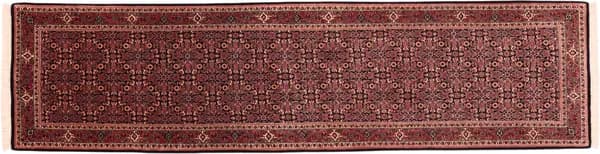
That makes it the natural choice under a dining table, where chairs are pushed back and forth all evening, and in a hallway, where a lighter rug travels within a week. Allow around 80 cm of clearance beyond the table edge so a chair does not tip over the edge when pushed back.
The one thing to plan for is height. Around 15 mm of pile on a compacted foundation builds up more than most rugs, and a door that closes close to the floor will catch on it.
Care
Vacuum along the pile, without a rotating brush. Find the direction by running a flat hand across the rug: one way feels smooth, the other roughs up. Smooth is the direction to vacuum.
Blot spills at once with clear water and a light cloth, working from the outside in, and never rub. The lanolin in the handspun wool buys you a moment before liquid soaks in.
Turn the rug once or twice a year so light and footfall reach it evenly. On a rug this heavy that is a two-person job, but it is the single most effective thing you can do for it.
Bidjar or Sarough?
Both are dense, hard-wearing Persian rugs in a similar price band. The choice between them is a choice between structure and pattern.
| Criterion | Bidjar | Sarough |
|---|---|---|
| Knot density | typically 441,000–500,000 / m² | typically 201,000–250,000 / m² |
| Handle | hard, springy, heavy | softer, more yielding |
| Handling | roll only | folds |
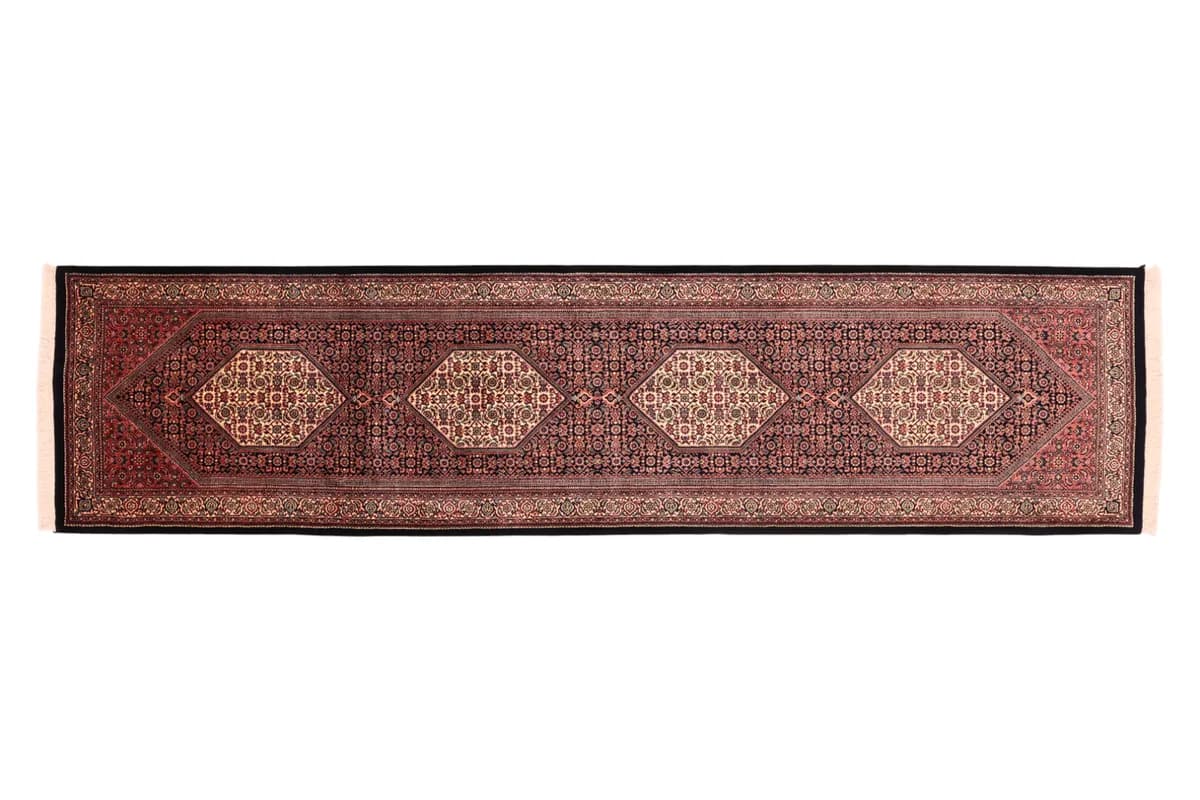
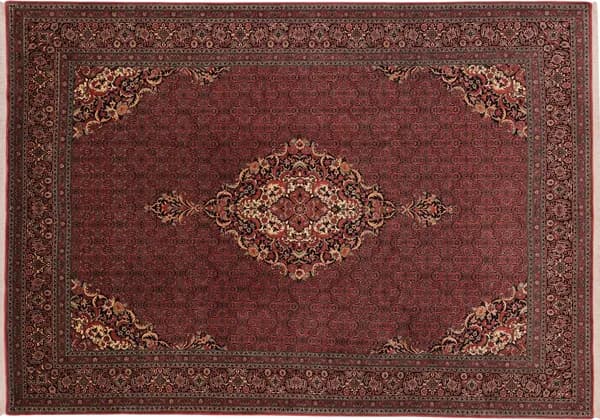
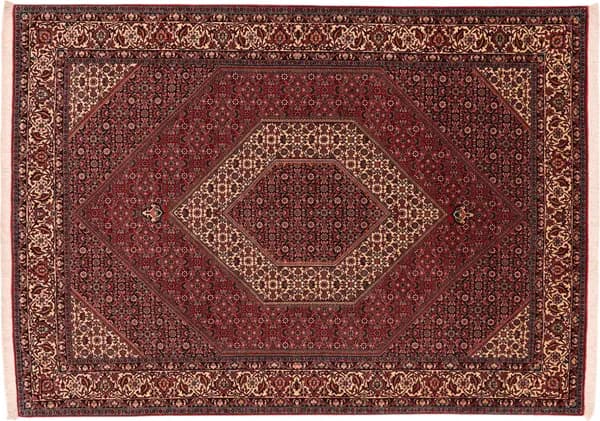
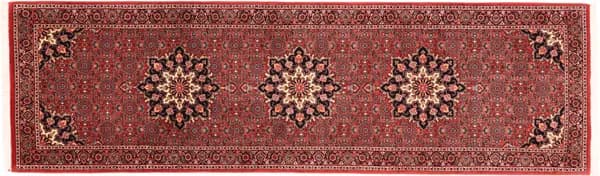
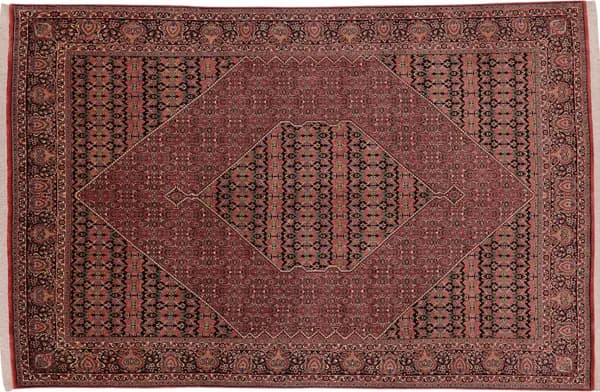
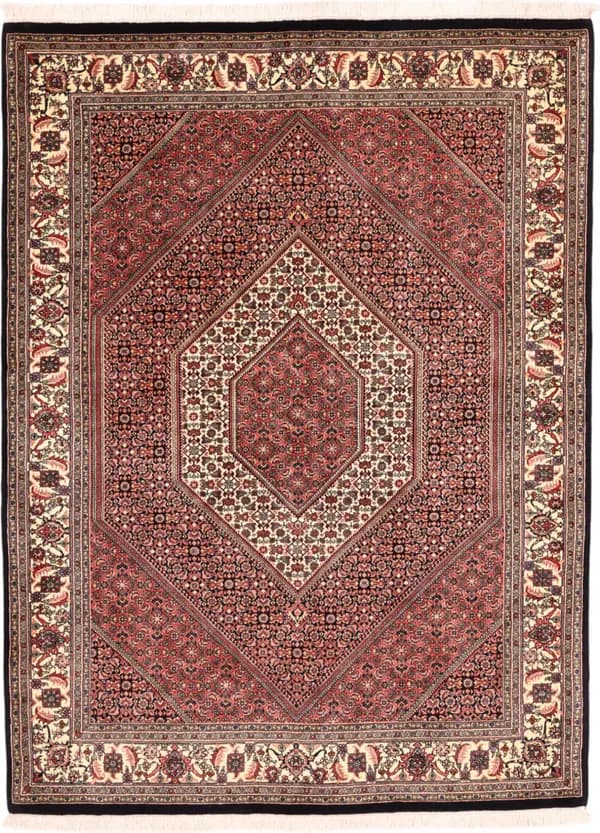
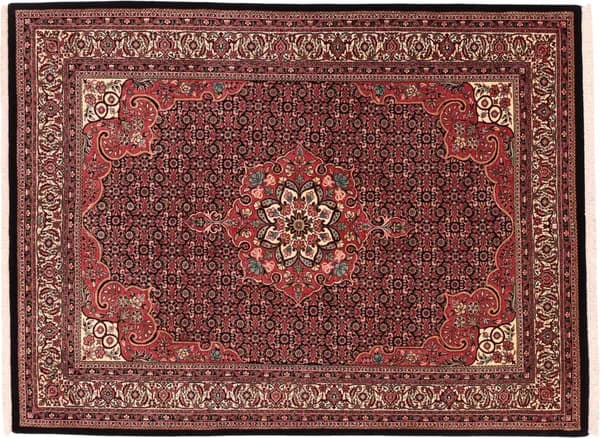
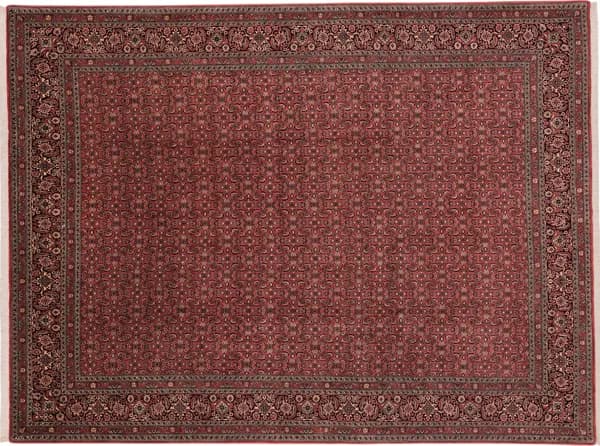
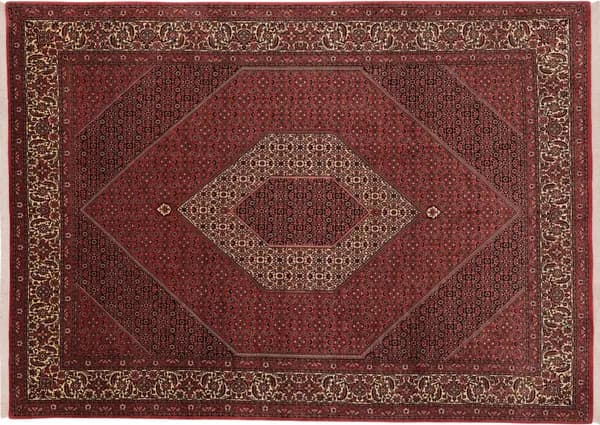
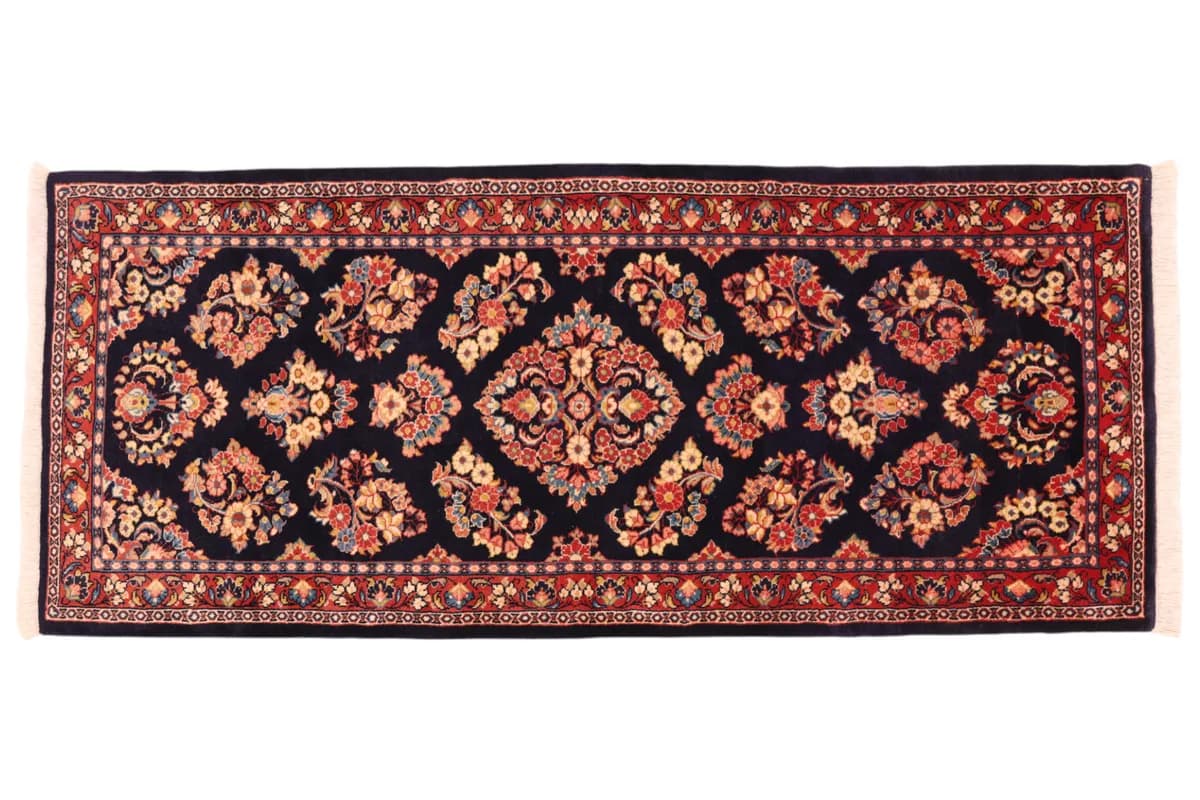
| Layout | mostly medallion | mostly all-over |
| Strength | form stability, resists crushing | richness of pattern, softer underfoot |
Common questions
Why can a Bidjar not be folded?
Because it is knotted on a damp warp and every row is beaten down with an iron comb. As the wool dries it contracts around the warp and locks it. The weave has no give left, so the rug hinges rather than folds — and forcing it can crack the foundation.
Is a Bidjar suitable for underfloor heating?
Only partly. A compacted foundation with 15 mm of wool pile insulates noticeably and slows the heat. If the room is heated through the floor, a flatter rug is the better choice.
What is a Herati pattern?
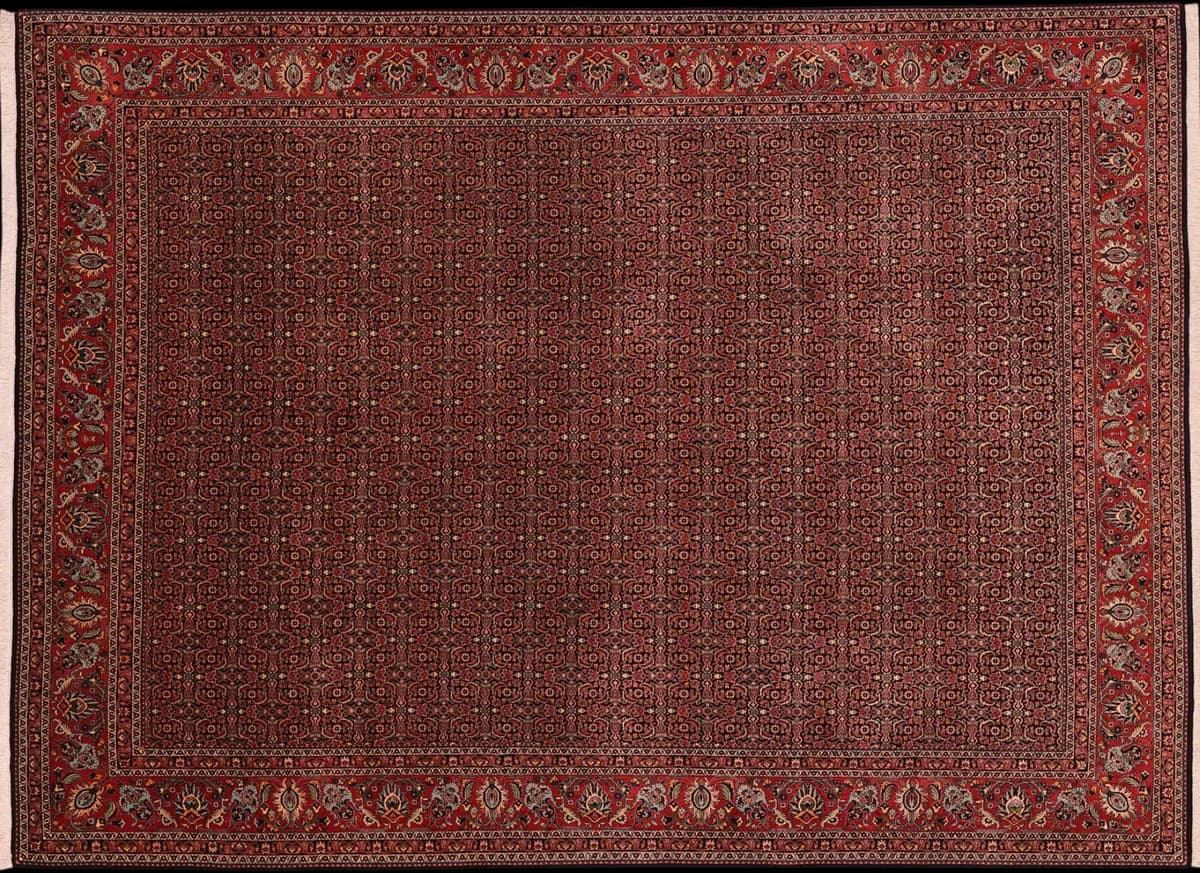
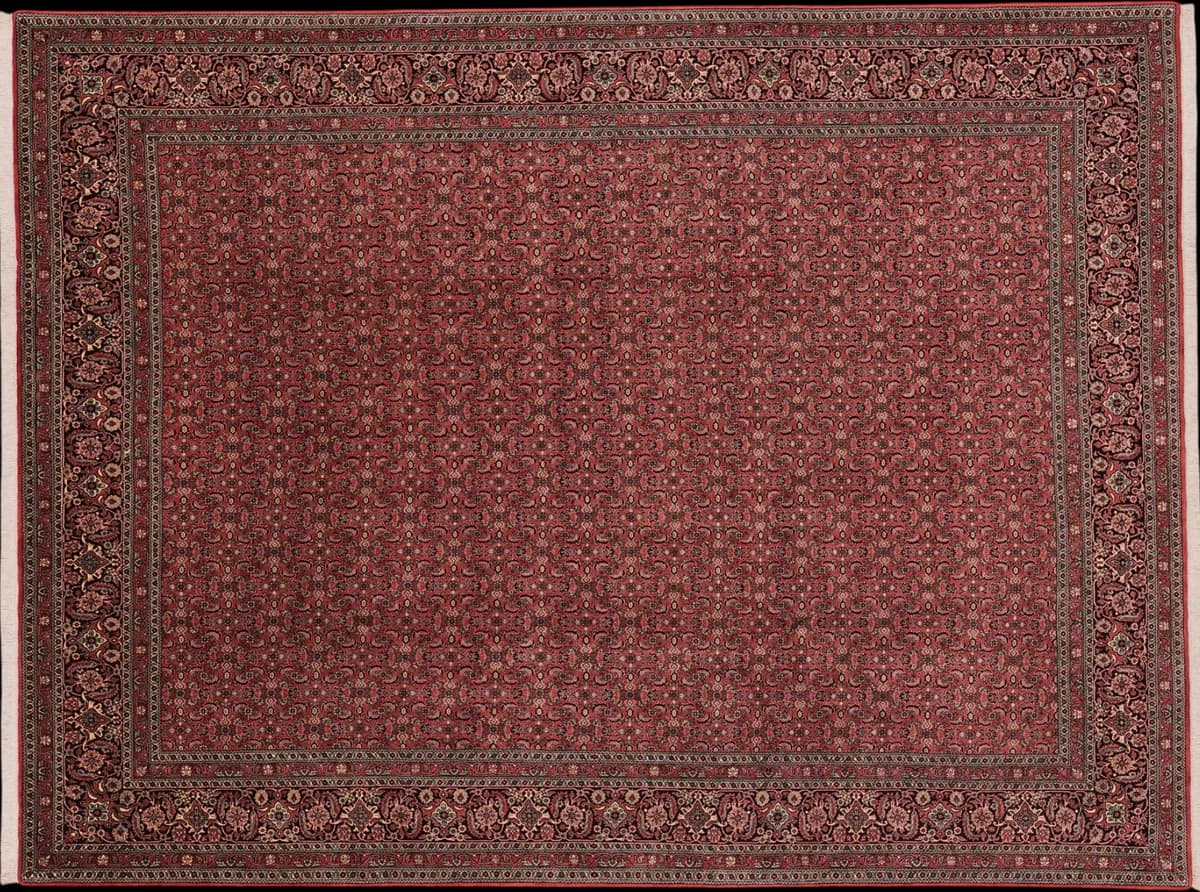
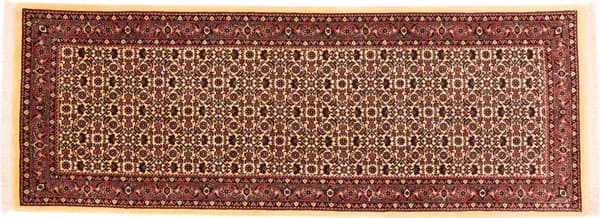
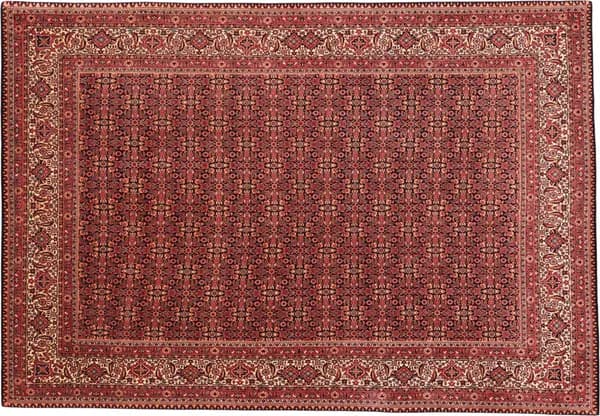
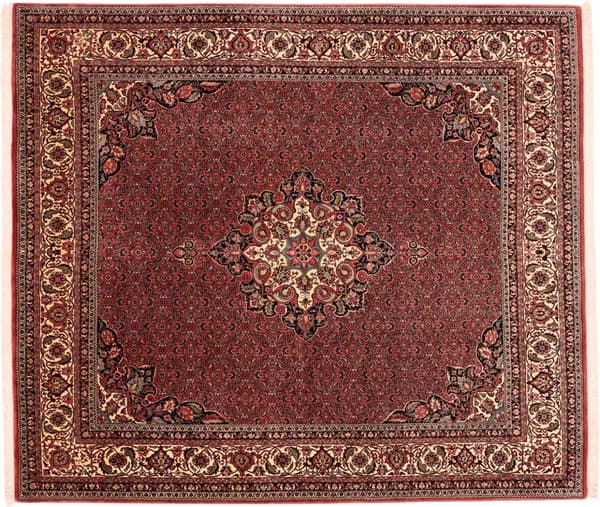
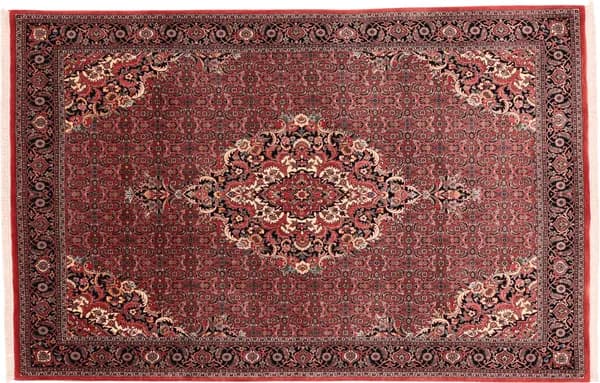
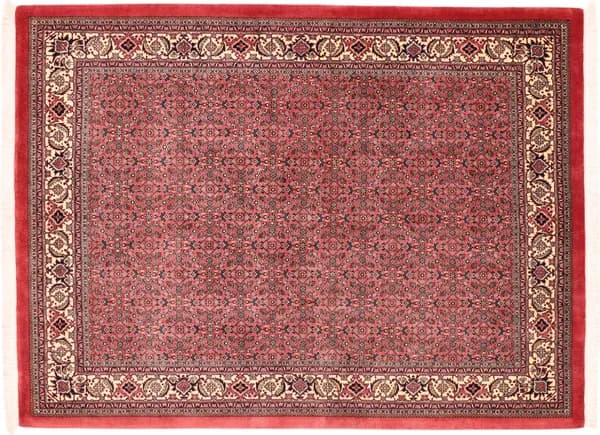
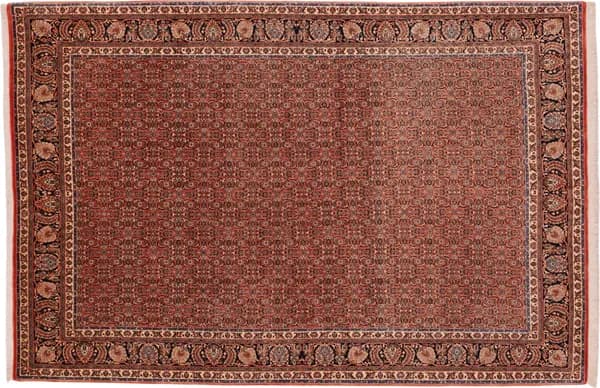
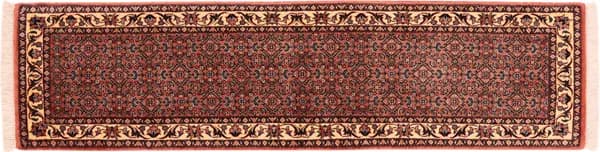
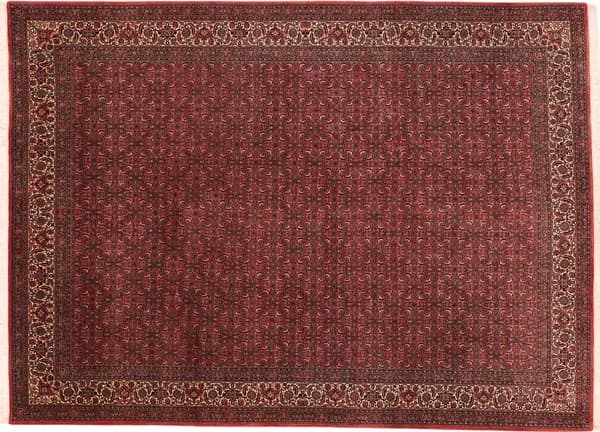
A repeating ground of small diamond frames, each holding a rosette with curved leaves at the corners — sometimes called the fish pattern, because the leaves read as fish around a pond. It is the most common ground in Bidjar weaving and appears across much of the Persian tradition.
How heavy is a Bidjar?
Noticeably heavier than a comparable rug of the same size from another origin — the wet-knotting packs far more wool into the same area. For a large piece, plan on two people to move or turn it.
Does an older Bidjar wear out?
Very slowly. They are among the longest-lasting Persian rugs precisely because of the density. What to check on any older piece are the edges and ends.