The same district, a different rug
Bidjar is the name Kordestan is known for: wet-knotted, compacted with an iron comb, so dense it cannot be folded. Garrous comes from the same district and shares the wool, the palette and much of the design vocabulary — but not the technique.
A Garrous is knotted conventionally, at roughly half the density, with a deeper pile. The result is a rug that behaves normally: it folds, it weighs what you expect, and it costs considerably less per square metre than its neighbour.
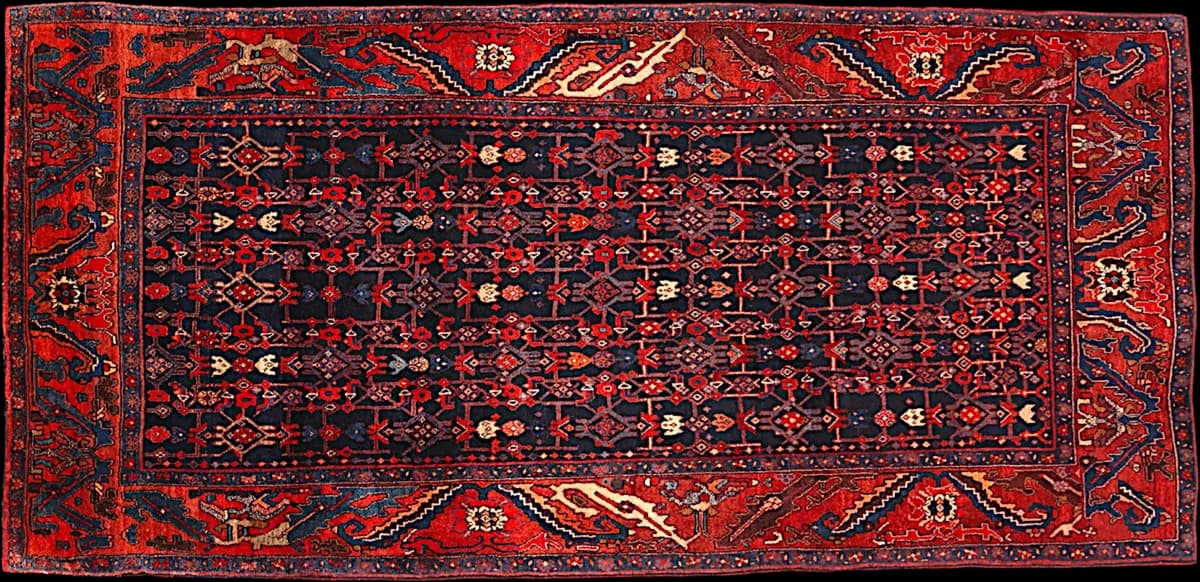
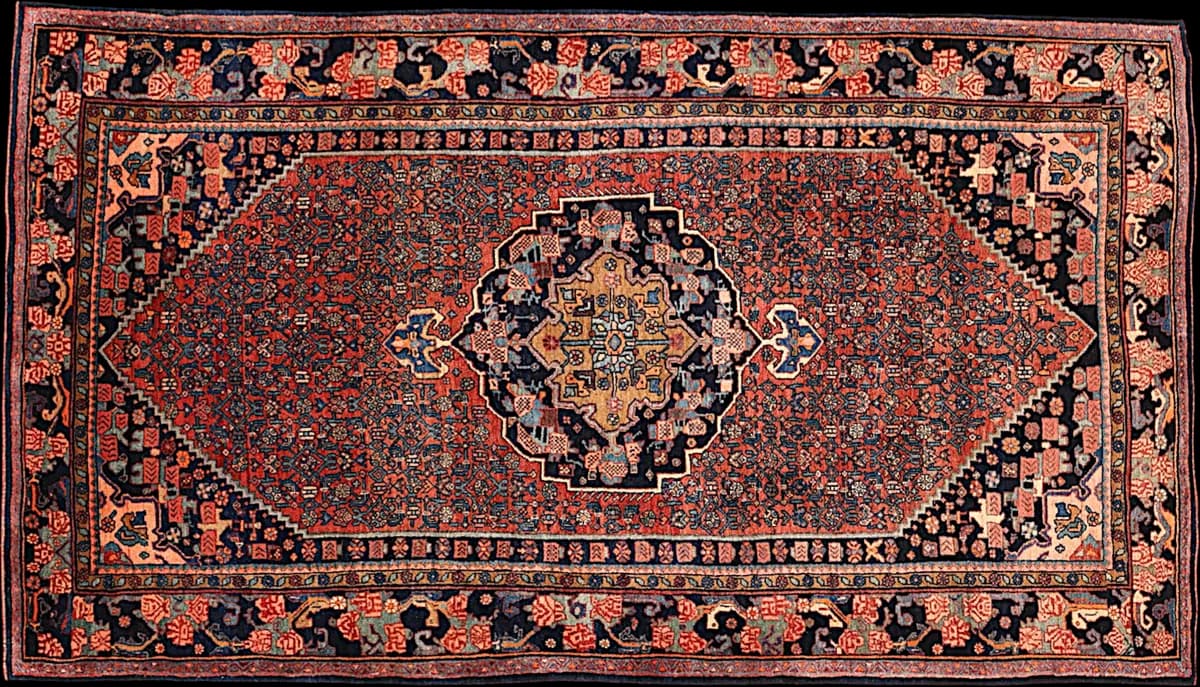
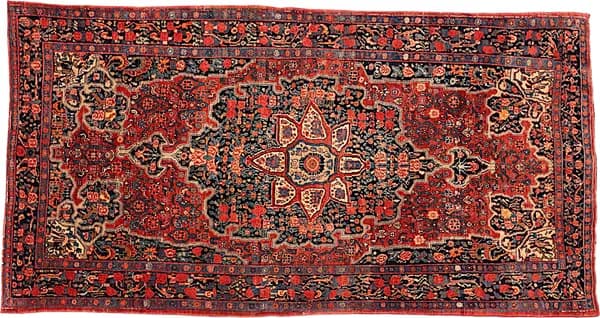
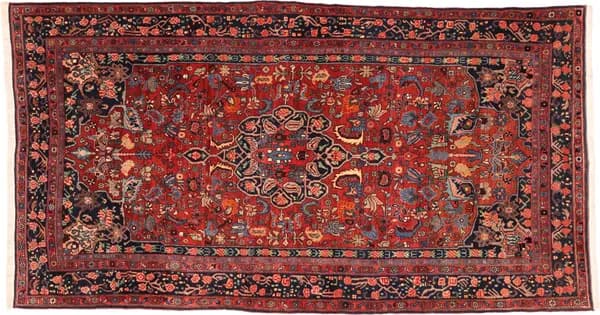
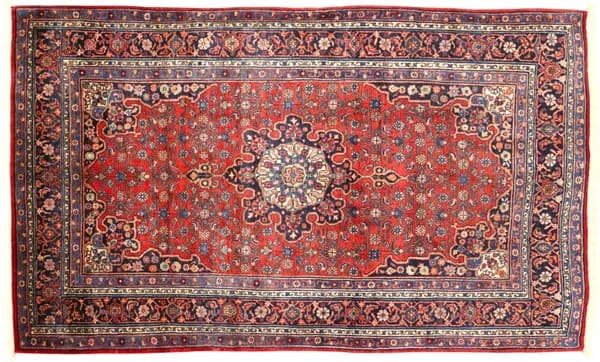
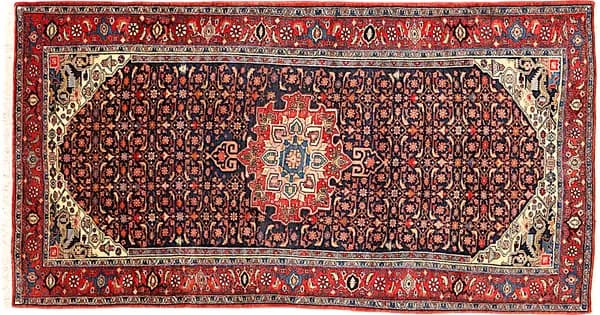
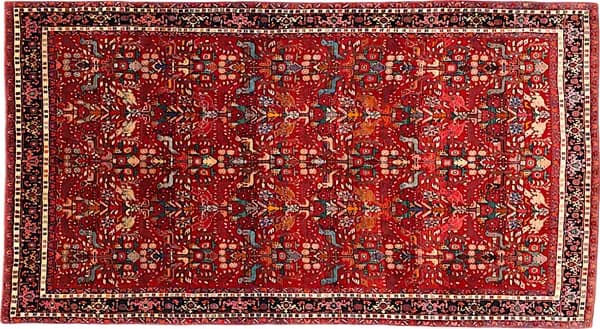
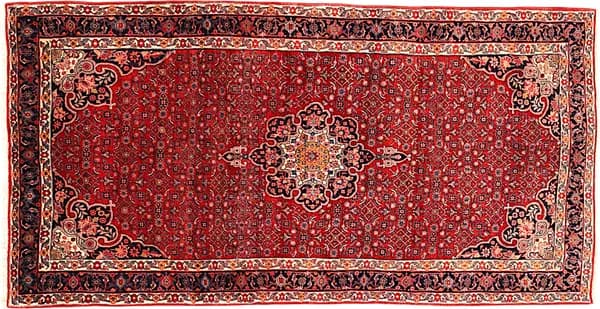
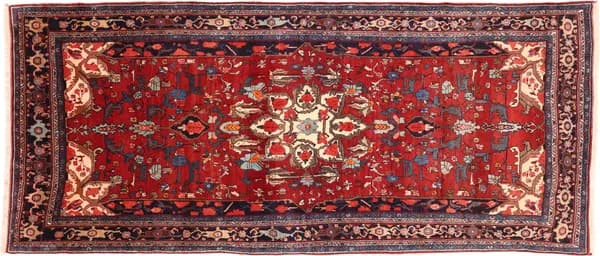
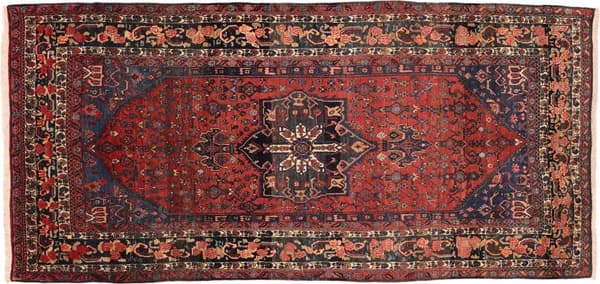
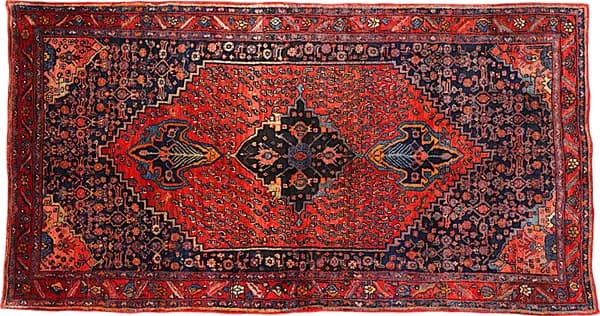
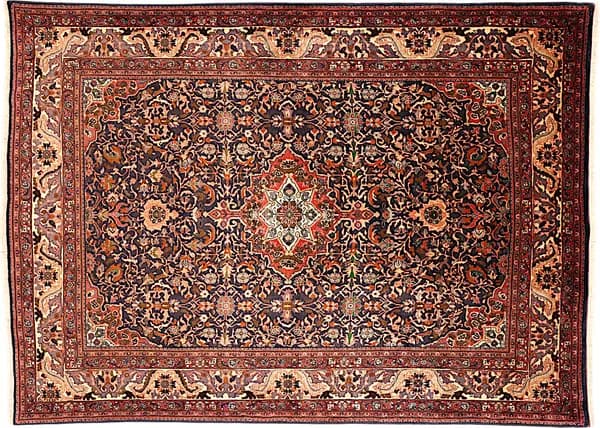
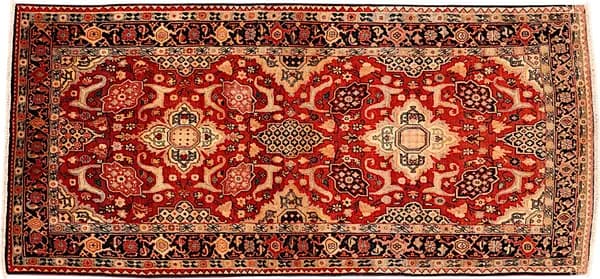
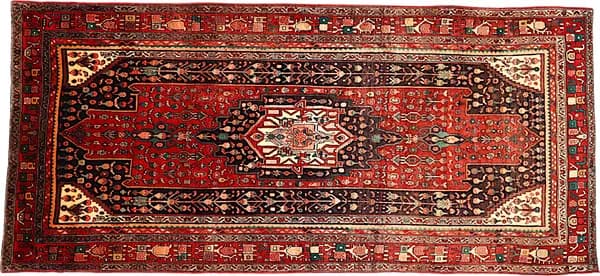
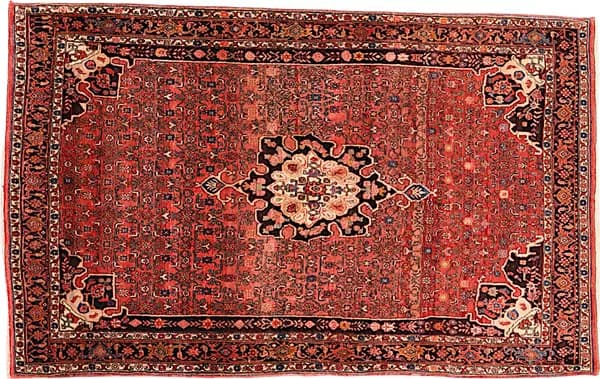
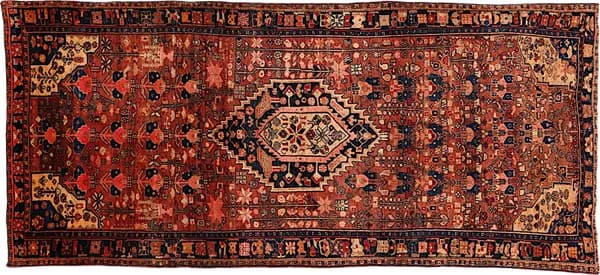
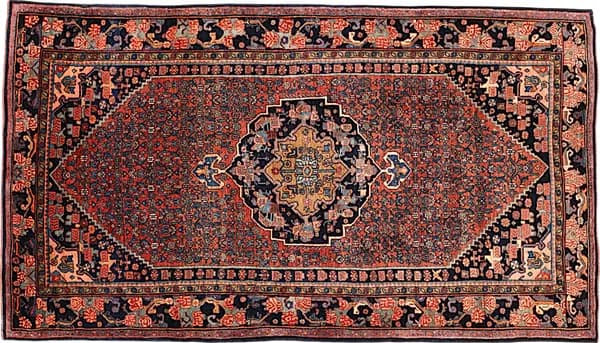
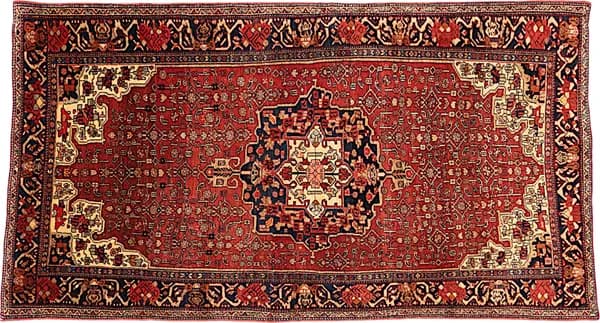
What it keeps is the Kurdish handwriting. Angular medallions, stepped forms, strong madder red and indigo — the drawing is recognisably from the same tradition, executed with fewer knots and therefore in bolder strokes.
What forty to sixty years does to a rug
Most Garrous rugs in the trade were knotted forty to sixty years ago. That is characteristic of the type, and it is worth understanding rather than treating as a compromise.
Natural dyes do not fade over decades so much as shift: madder moves slightly warmer, indigo settles. The pile takes on a low, even sheen that new wool does not have.
What to check is the condition: an even pile height across the whole field, firm edges and intact ends. Colours shifted slightly warmer are patina, not a fault.
- Angular Kurdish drawing in bold strokes.
- Deep pile of 12 to 15 mm on a cotton warp.
- Folds normally, unlike a Bidjar.
- Long formats suited to hallways and narrow rooms.
- Mellowed colour is patina, not a fault.
Which room a Garrous suits
The long common format around 287 by 148 centimetres is unusual and useful: it fits a hallway, a narrow sitting room, or the space along the foot of a bed where a square rug would not.
The deep pile and the coarse, robust knotting take traffic well. This is a rug for a room that is used rather than shown.
The strong red and blue set a clear accent. On pale oak they warm the room; in an already busy interior they will compete.
Care
Vacuum along the pile, without a rotating brush. On a deep pile the temptation to use one is greatest and the damage is greatest too.
Blot spills at once with clear water and a light cloth, working from the outside in. The lanolin in the handspun highland wool buys a moment before liquid soaks in.
On a rug of this age, a professional deep clean every few years is worth it. It lifts dust from the base of the pile that no vacuum reaches, and the colours come back noticeably clearer.
Garrous or Bidjar?
Same district, same wool, same design language — and two quite different rugs to live with.
| Criterion | Garrous | Bidjar |
|---|---|---|
| Knot density | typically 201,000–250,000 / m² | typically 441,000–500,000 / m² |
| Technique | conventionally knotted | wet-knotted, comb-beaten |
| Handling | folds | roll only |
| Pile height | 12–15 mm | around 15 mm |
| Price per m² | considerably lower | higher |
Common questions
Is a Garrous just a cheaper Bidjar?
It is a different rug from the same district. It shares the wool, the palette and the design vocabulary but is knotted conventionally rather than wet-knotted, at roughly half the density and with a deeper pile. That makes it cheaper per square metre and also more ordinary to handle — it folds.
Why are most Garrous rugs old?
It is characteristic of the type: the bulk of what reaches the trade is forty to sixty years old. For a buyer that is largely an advantage: the colours have settled.
How do I tell patina from damage?
By colour and structure. Colours shifted slightly warmer across the whole field are patina and do not shorten the life of the rug. Brittle edges, loose ends or warp threads showing through the pile are damage and need a restorer.
What is the long format good for?
Hallways, narrow sitting rooms, and the strip along the foot of a bed — places where a squarer rug leaves awkward margins. The shape is common in Garrous and comparatively rare elsewhere.
Does the coarser knotting make it less durable?
No. A coarser knot with a deeper pile takes footfall well and springs back; density matters for how fine a pattern can be drawn, not for how long a rug lasts. Wool quality and even weaving decide durability.