Exclusive
Bidjar | Exclusive
291 × 152 cm
10.500 €
5.112 €
Incl. VAT
In Stock · Ready to Ship
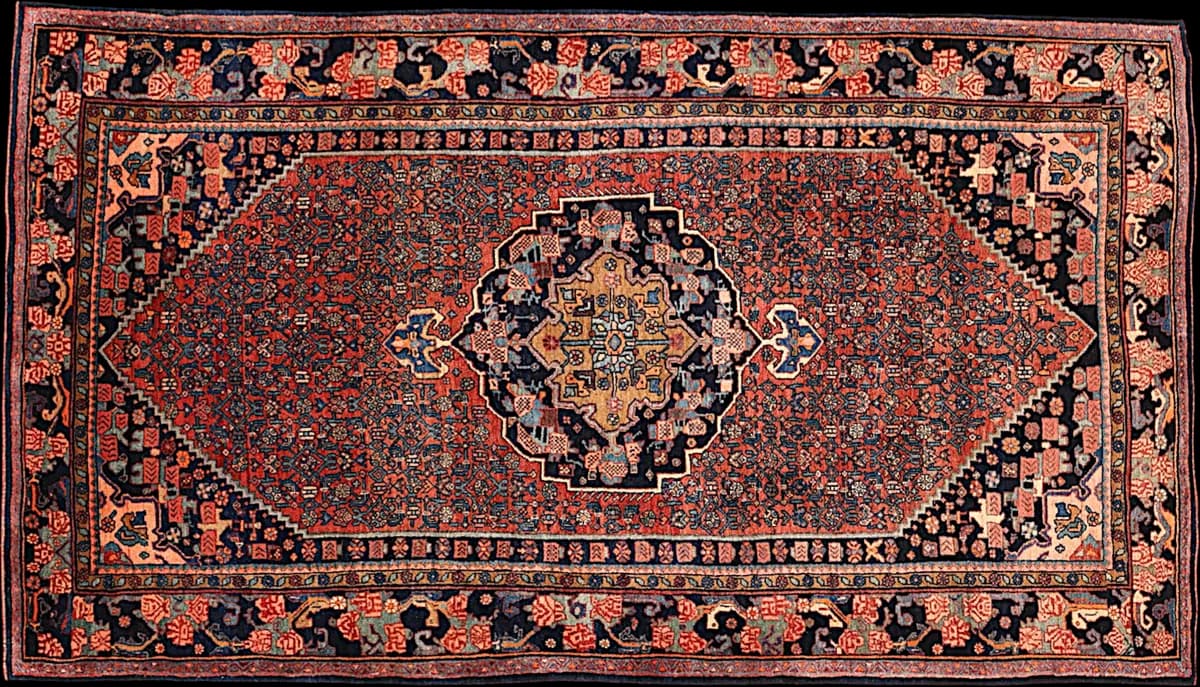
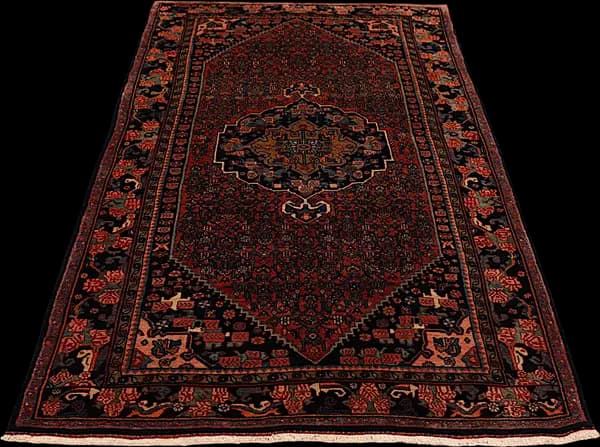
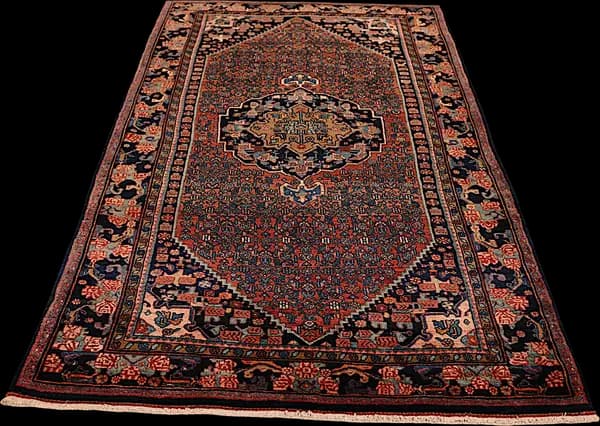
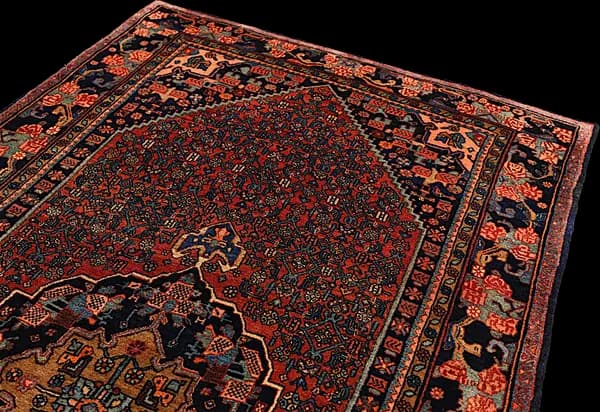
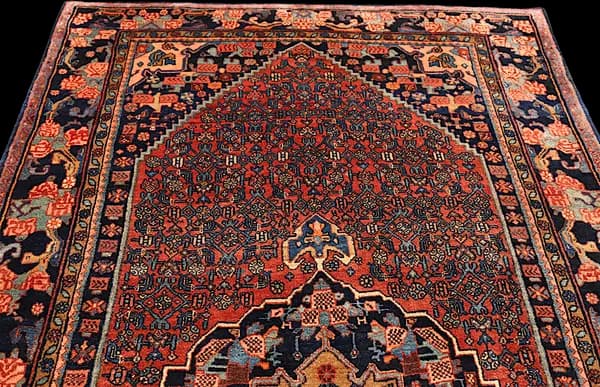
This is a Garrous rug, also written Garrus, woven by Kurdish tribes in the highlands around Bijar in western Iran, measuring 273 x 156 cm (8'11" x 5'1"). Garrous weaving shares the density that made Bijar famous the world over, though the name marks out the particular Kurdish tribal character behind it, distinct from the workshop pieces that share its region.
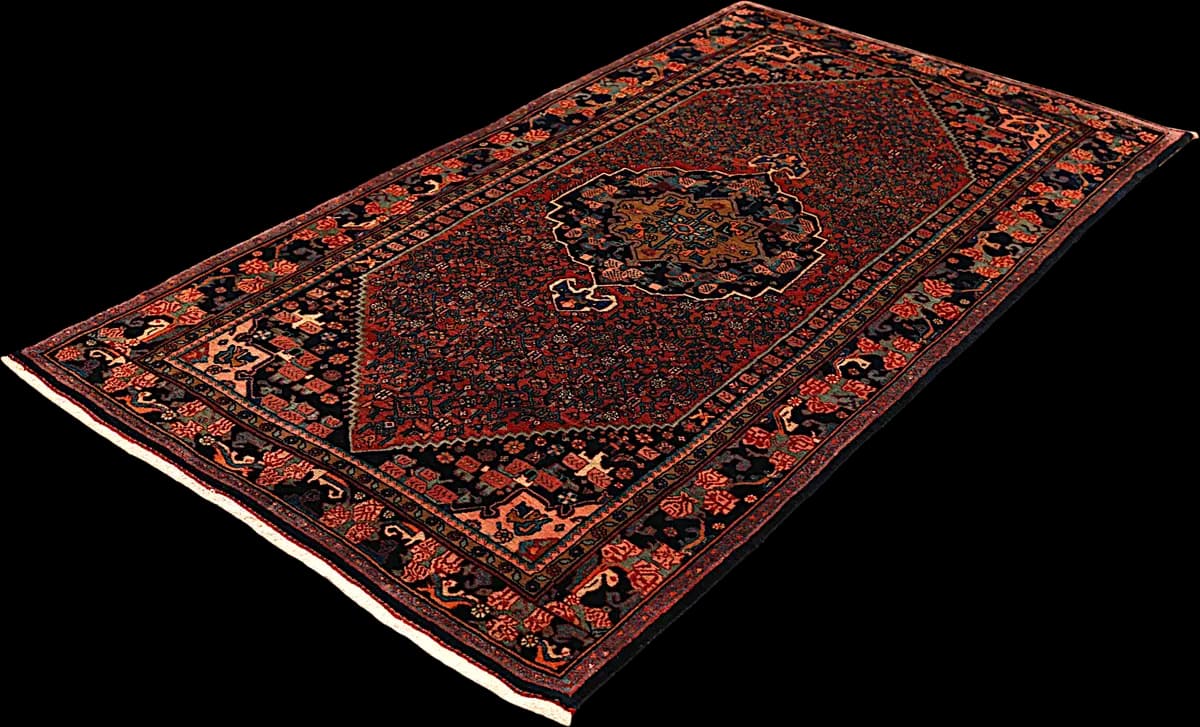
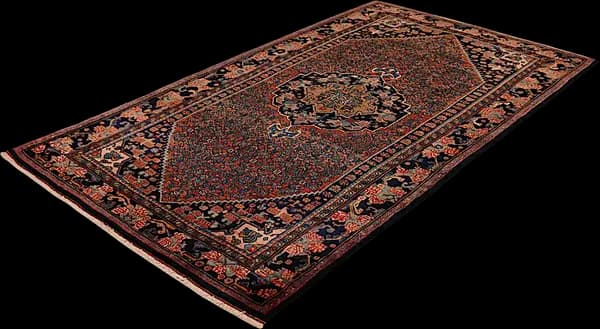
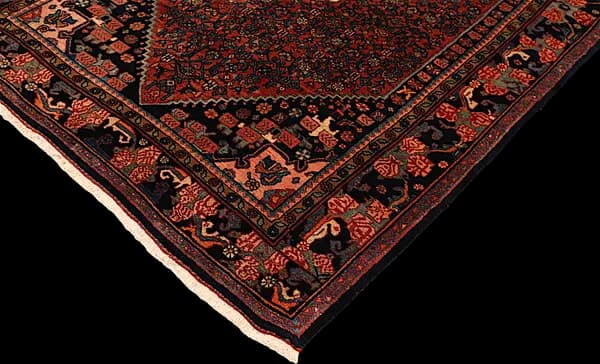
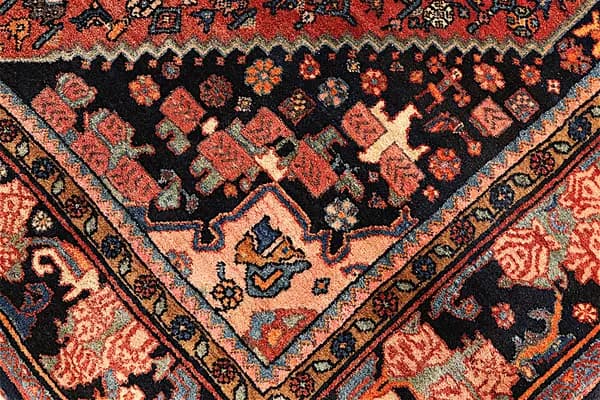
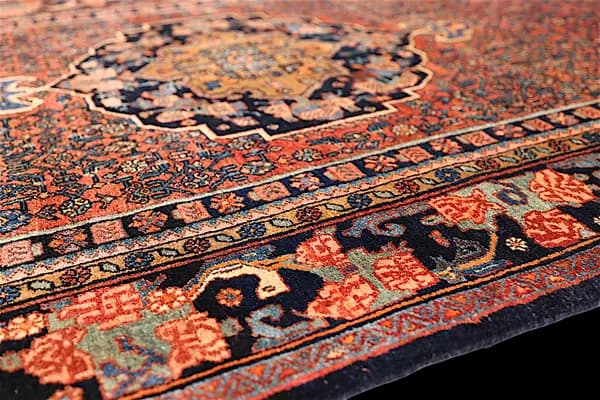
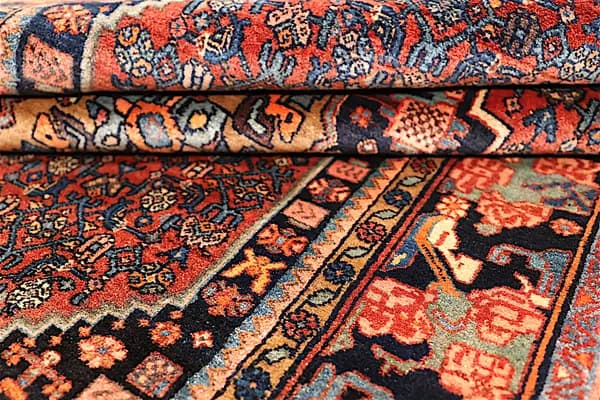
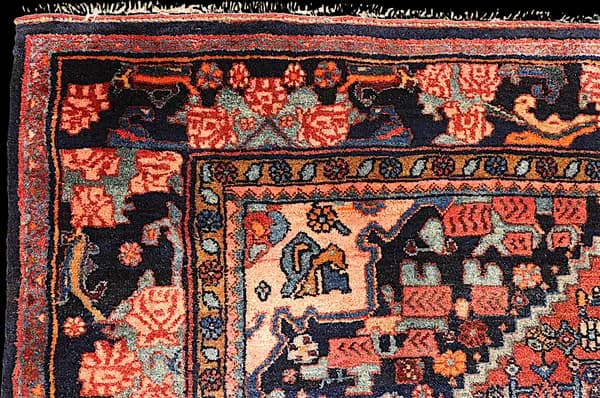
The field is a deep rust red, and across it floats a lozenge-shaped medallion in navy blue, its core touched with camel and turquoise. The four corner spandrels are dyed the same navy as the medallion, so the two read as one shape suspended over the red ground. Around the field runs a wide navy border filled with a dense vine of red and pink flowers, about a sixth of the rug's width, holding the design firmly in place.
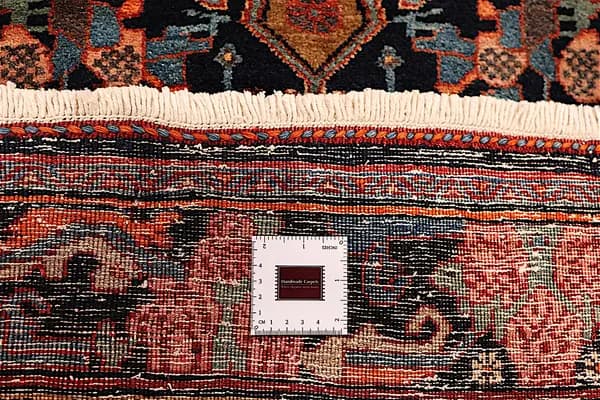
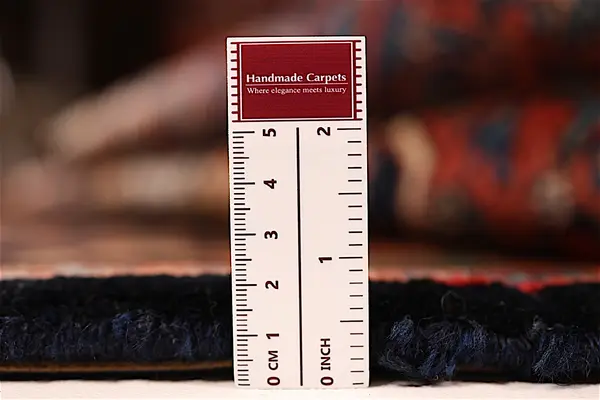
That clarity comes from density, the quality Garrous weaving is known for: 161,000 to 200,000 knots per square metre, hand-tied onto a cotton warp. At that density a pattern keeps its edges rather than blurring into the field, and the camel core and navy outline stay sharply drawn. The pile is handspun wool, sheared to 12 millimetres, its faintly uneven thread giving a matte, hand-worked surface — the same tight structure that has kept this rug sound after forty to sixty years underfoot.
At 273 x 156 cm this rug suits a seating corner in a living room or beside a bed, where its density lets it be walked on daily. The rust red warms a pale floor and holds its own against dark wood, while the navy medallion keeps its shape under changing light. Underfoot it is dense and firm, built for daily use, and that navy shape over red is what you will keep noticing, morning and evening.
More on Garrous rugs: origin, making and how to recognise a genuine piece
Traditional weave
At 273 × 156 cm (4.26 m²) this is a medium rug. It works in front of a sofa, in front of a bed or in a study. It is too small for a dining table — there you want about 80 cm of clearance so a chair does not tip over the edge when pushed back.
Yes, knotted by hand — knot by knot on a loom, not machine-made. The density is 161,000 to 200,000 knots per square metre; across 4.26 m² that is roughly 690,000 to 850,000 individual knots, every one of them tied by hand.
Hand-spun wool still carries its own lanolin, which keeps liquid sitting on the surface for a moment: blot quickly, with clear water and a light cloth, working inwards and without rubbing. Otherwise regular vacuuming along the pile is enough. Turn the rug once or twice a year so light and footfall reach it evenly.
We are in the Hamburg Speicherstadt. Come and see this rug in daylight, or write to us — a person answers.
Certificate included verifying origin, materials, and craftsmanship.
Ref: 791370