Exclusive
Bidjar | Exclusive
291 × 148 cm
2.550 €








1.924 €
Incl. VAT
In Stock · Ready to Ship
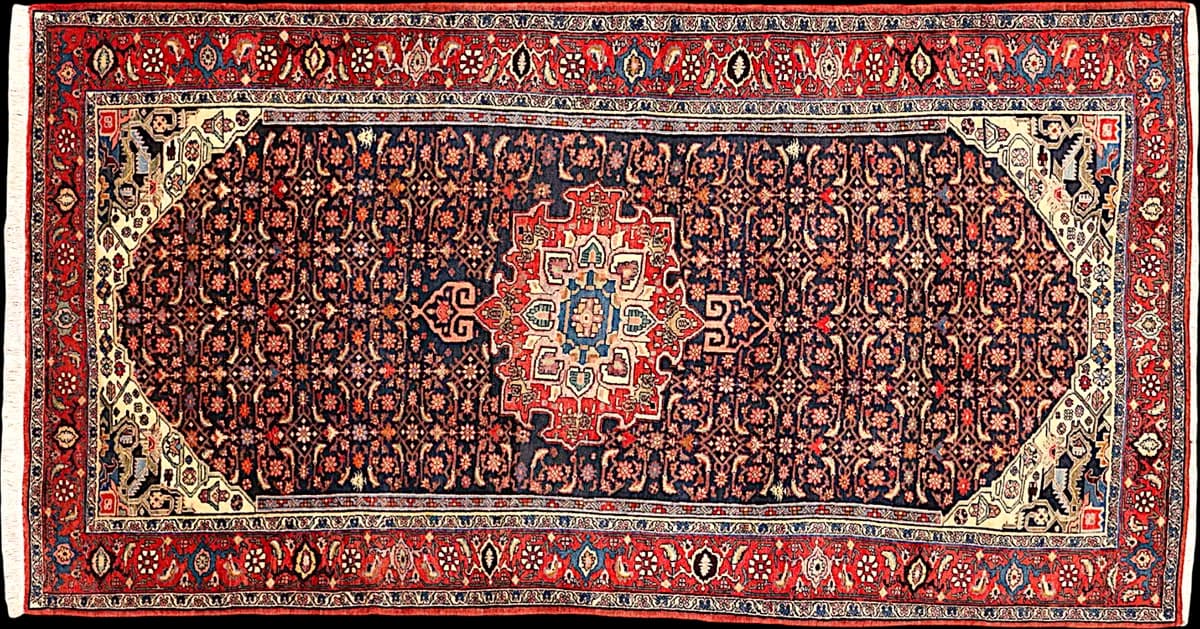
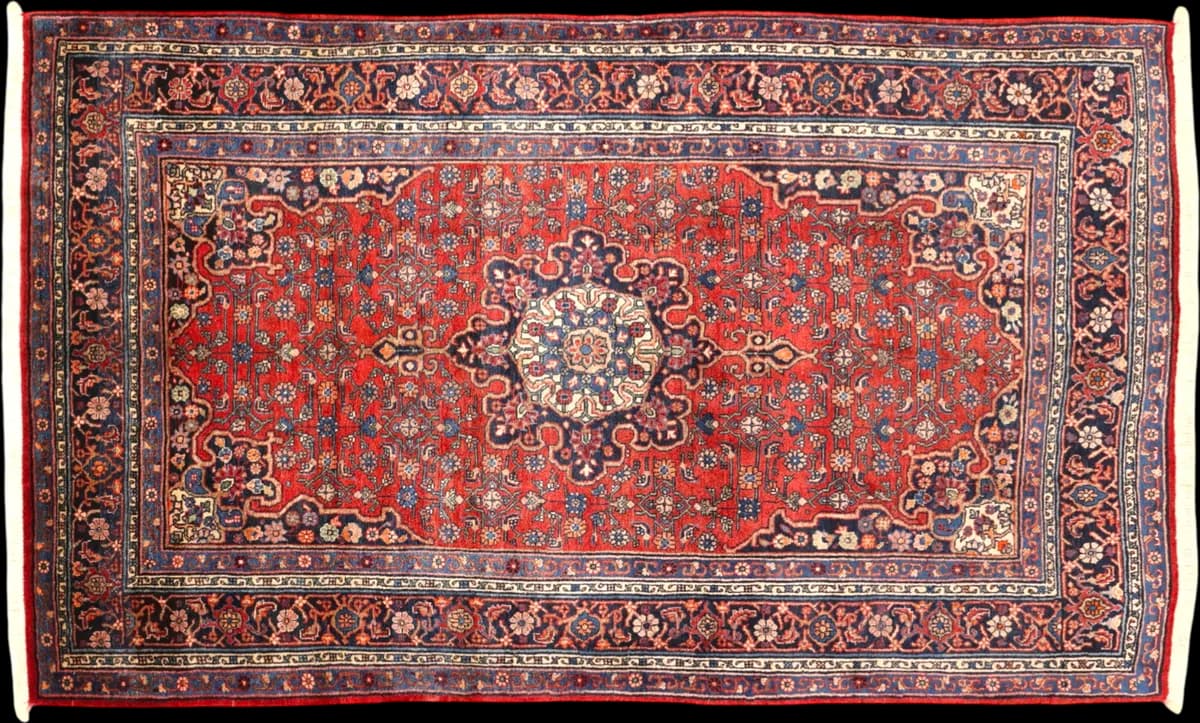
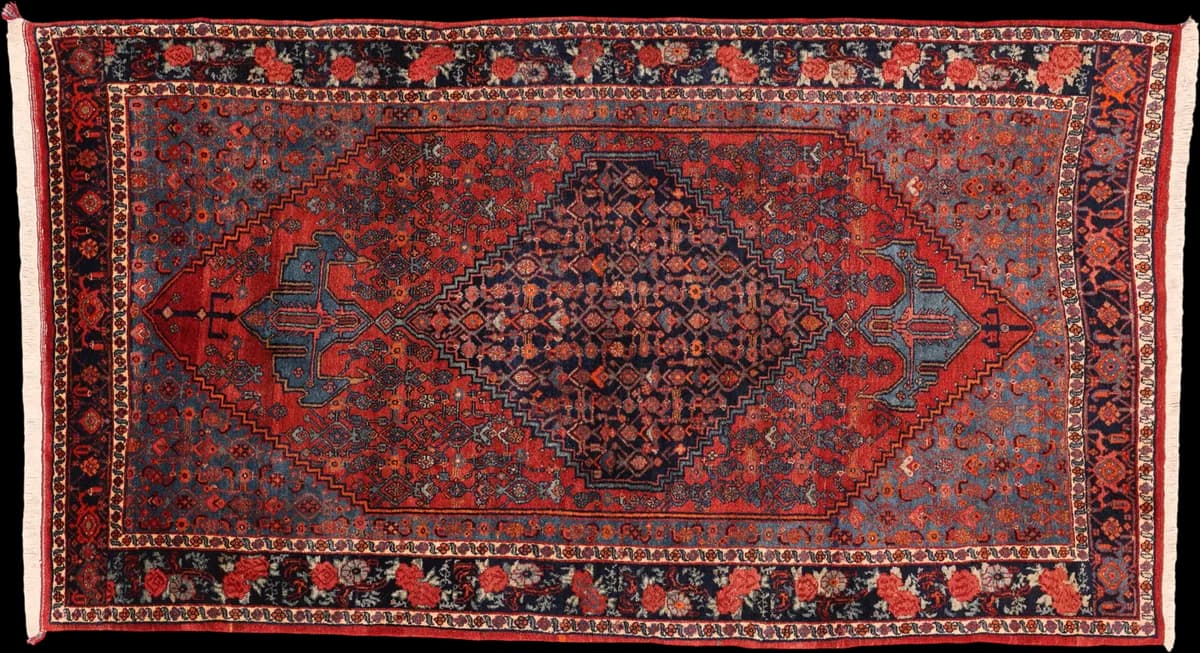
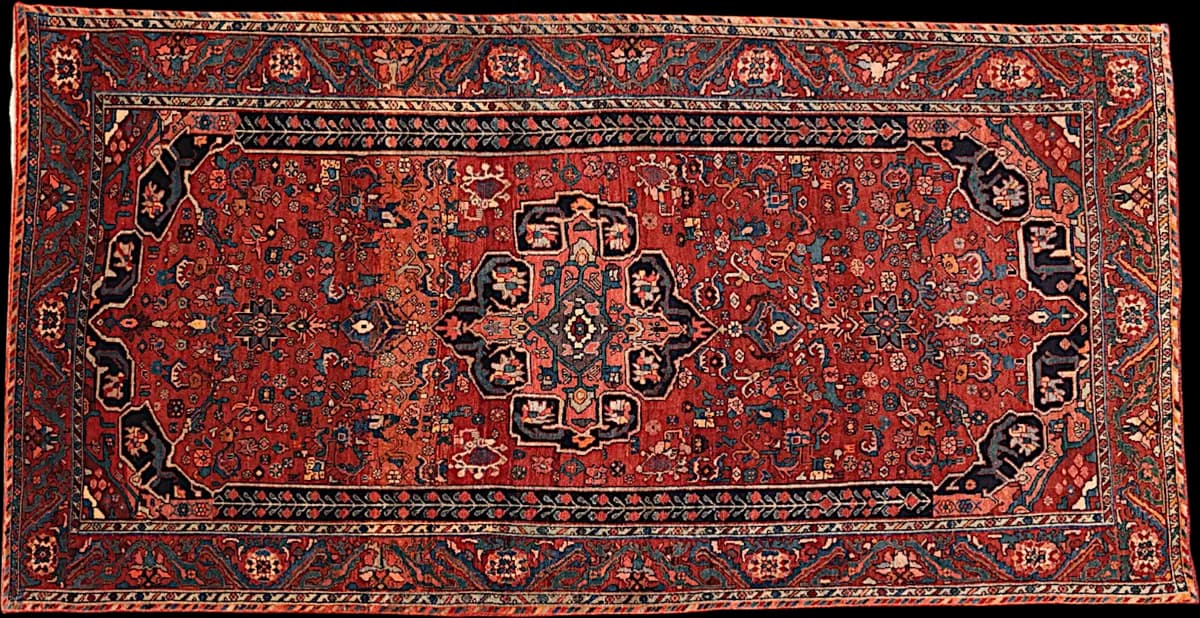
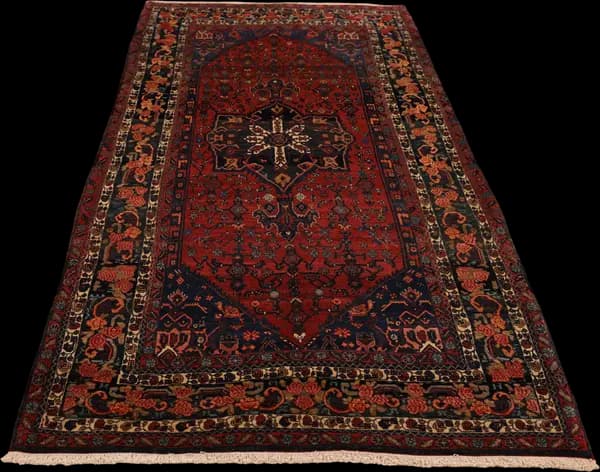
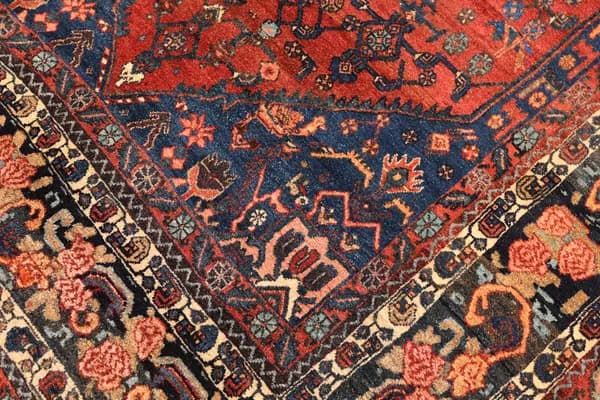
A Garrous rug from the Kurdish highlands around Bijar in western Iran, 327 x 157 cm (10'9" x 5'2"), knotted by Kurdish tribal weavers whose work is named for its own region rather than folded into the wider Bijar name. What Bijar is famous for, Garrous shares in full: a density so firm it is sometimes called iron-like, and a surface built to outlast almost anything else in the room.
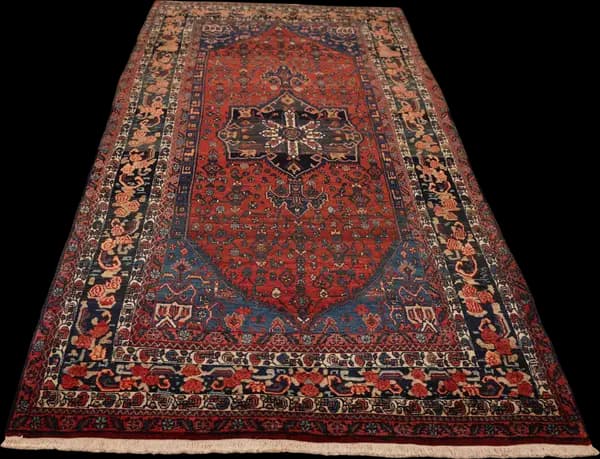
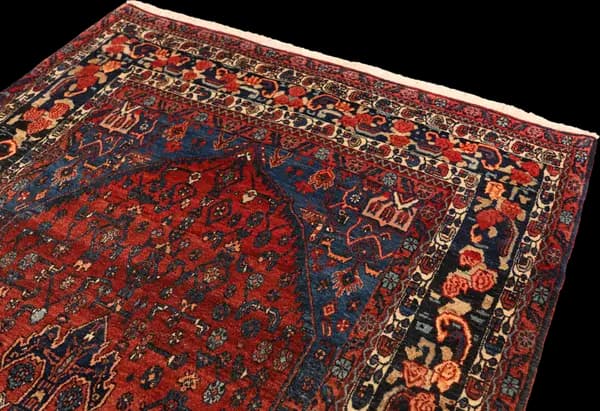
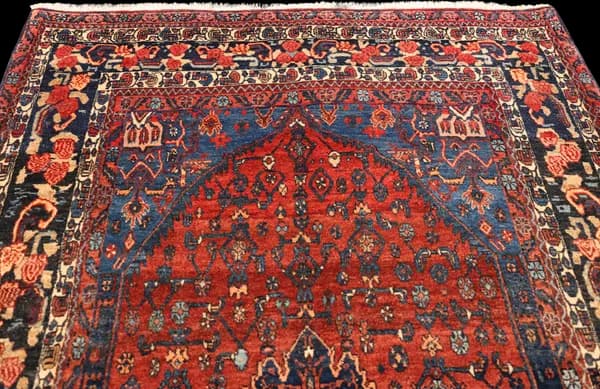
The field is a deep madder red, densely worked with small florals that give the ground constant, quiet movement. Out of that scatter rises a diamond medallion with pendants above and below, and at its centre sits an eight-pointed star in white and cream, drawn with a clarity that is unusual for this kind of weaving, where medallions more often blur softly into their surroundings. A wide navy border, patterned with salmon-pink blossoms, holds the whole field in place, and a narrower cream guard stripe with rosettes sets it off cleanly from the red.
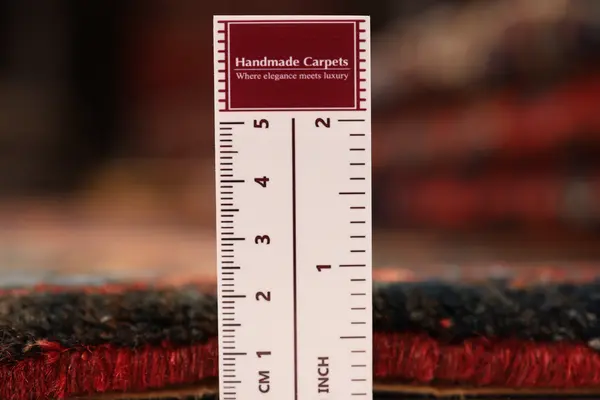
That contrast between a crisp central form and a busy, freehand field is a mark of skill rather than planning: this rug was knotted from memory, on a portable loom, with no drawn cartoon to follow, and the weaver still managed to keep the medallion's edges sharp against a ground that resists sharpness by nature. The hand-spun wool pile, low and even at 12 mm, sits on a cotton warp, and the knot count of 201,000 to 250,000 per square metre is what gives Garrous its density and its long life underfoot rather than any wish for decoration. It represents real time at the loom, and it shows in the weight of the thing.
A rug this size and this grounded suits a hallway with some length to it, or the seating end of a living room where furniture can sit at its edges rather than crowd it. The red holds its own against dark wood and does not fade into a pale floor either; the navy border keeps it anchored rather than loud. Underfoot it is dense and firm, built for a room that gets used rather than one kept for best. Given a little daylight, the wool takes on a soft sheen that moves as you cross the room, and the white star at its centre stays the first thing you see, every time.
More on Garrous rugs: origin, making and how to recognise a genuine piece
Fine quality weave
At 327 × 157 cm (5.13 m²) this is a large rug. It sits under a seating group with the front legs of sofa and chairs on it, or under a dining table for four. A table for six wants about 80 cm of clearance all round, and needs more.
Yes, knotted by hand — knot by knot on a loom, not machine-made. The density is 201,000 to 250,000 knots per square metre; across 5.13 m² that is roughly 1.0 to 1.3 million individual knots, every one of them tied by hand.
Hand-spun wool still carries its own lanolin, which keeps liquid sitting on the surface for a moment: blot quickly, with clear water and a light cloth, working inwards and without rubbing. Otherwise regular vacuuming along the pile is enough. Turn the rug once or twice a year so light and footfall reach it evenly.
We are in the Hamburg Speicherstadt. Come and see this rug in daylight, or write to us — a person answers.
Certificate included verifying origin, materials, and craftsmanship.
Ref: 237284