Exclusive
Bidjar | Exclusive
318 × 149 cm
4.977 €
6.600 €
Incl. VAT
In Stock · Ready to Ship
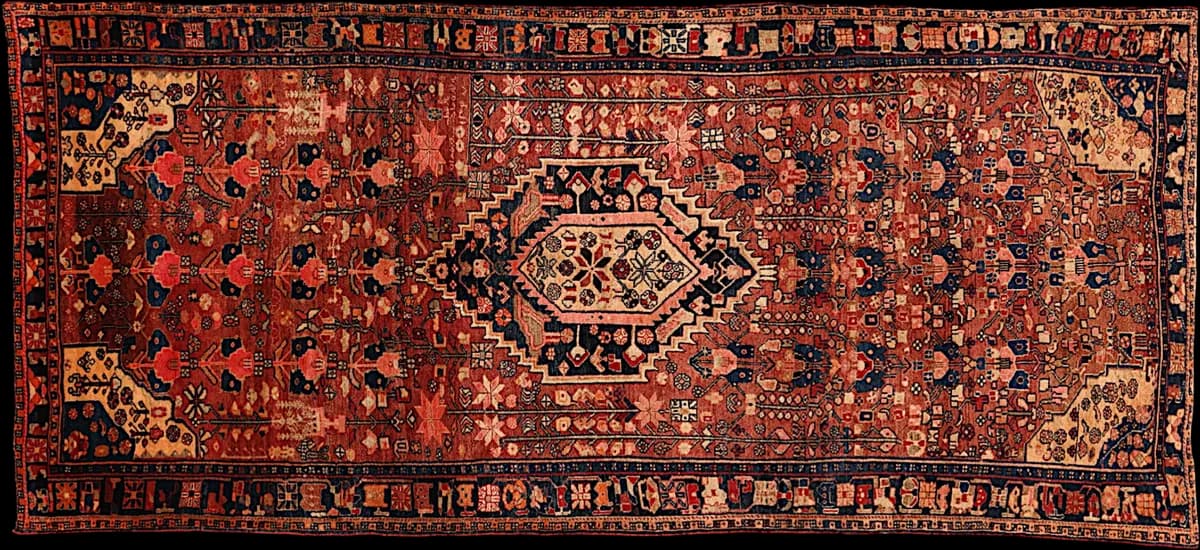
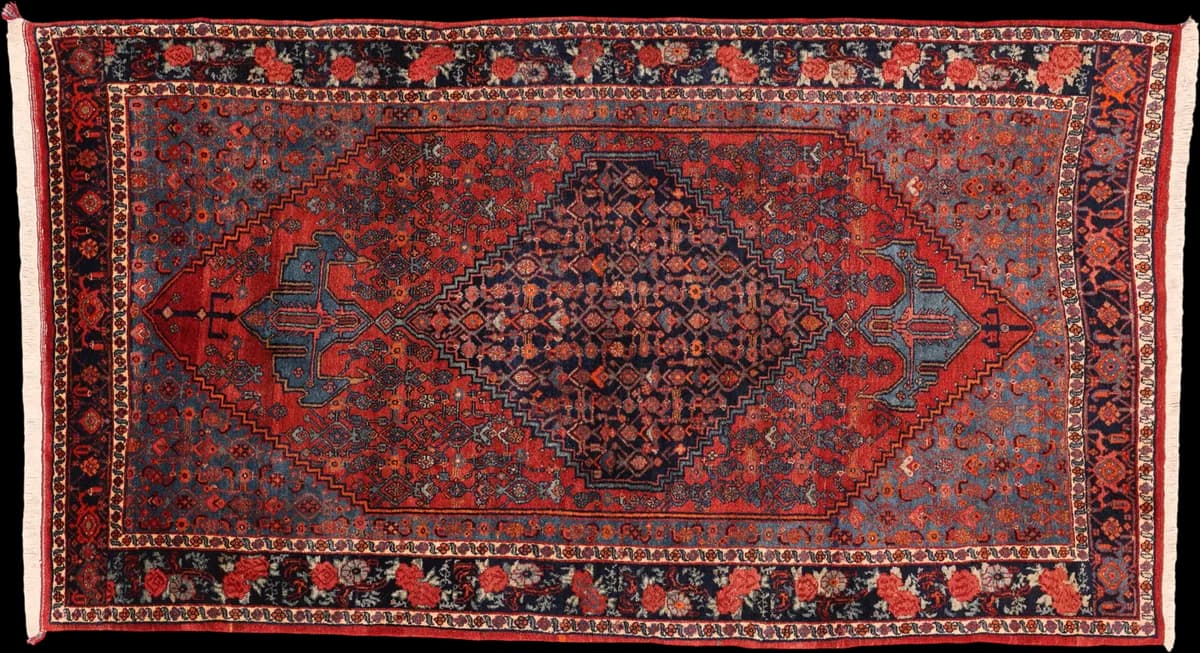
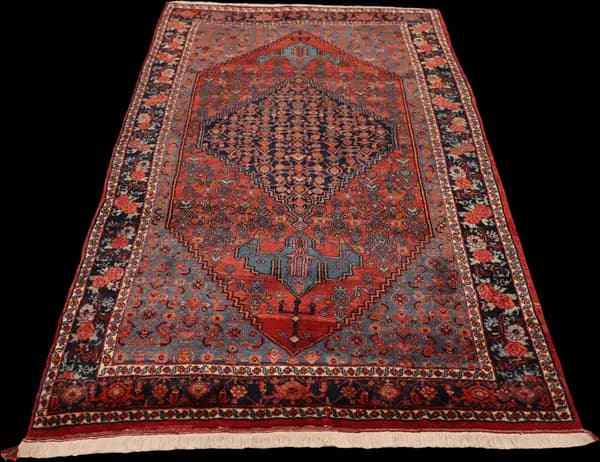
A Garrous, also known as Garrus, woven in the Kurdish highlands around Bijar in western Iran, 257 x 143 cm (8'5" x 4'8"). Garrous rugs are known above all for a density so firm it is often called iron-like, carried by wool from local Kurdish flocks. The design usually rests on one diamond medallion; this piece builds instead a column of three.
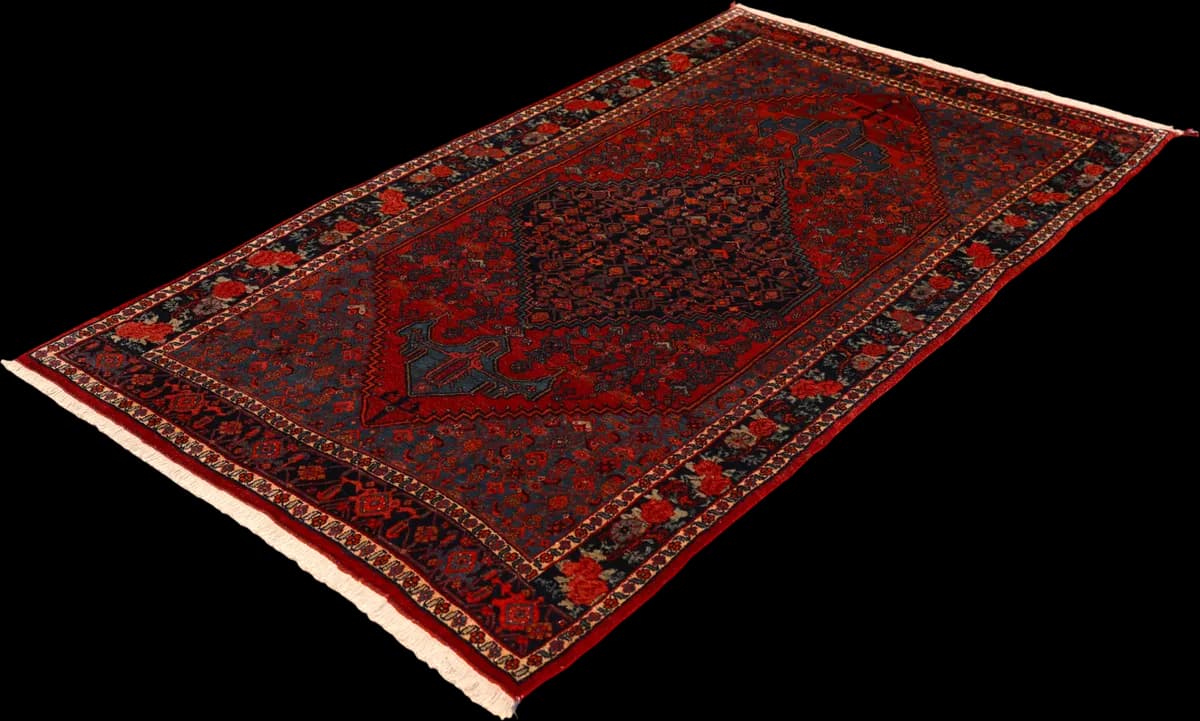
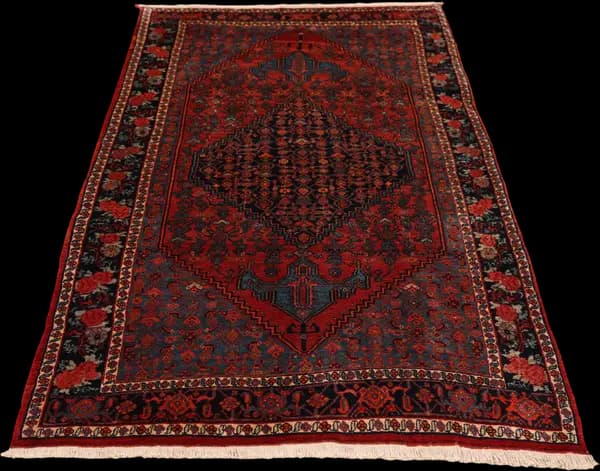
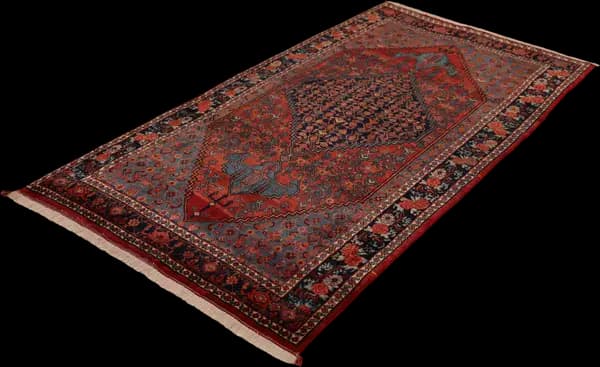
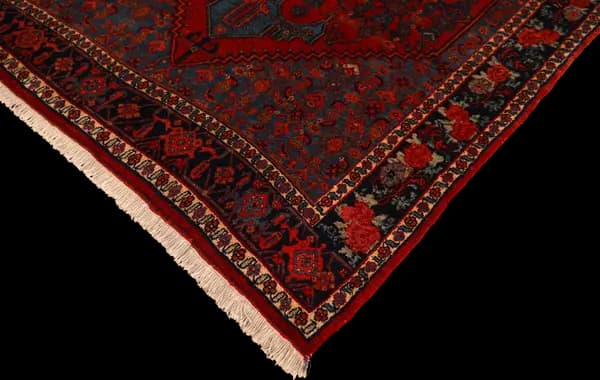
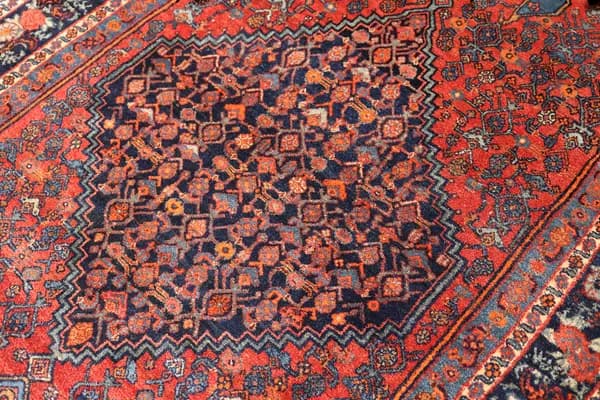
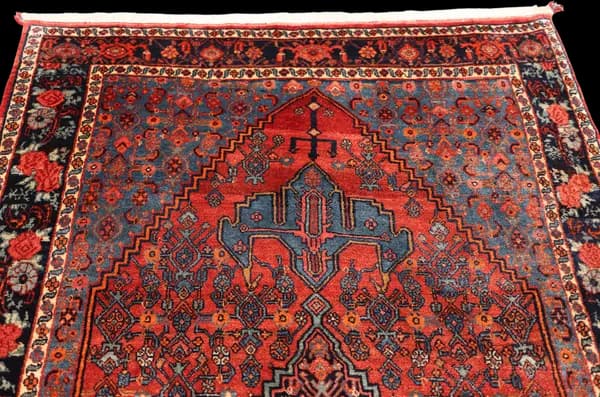
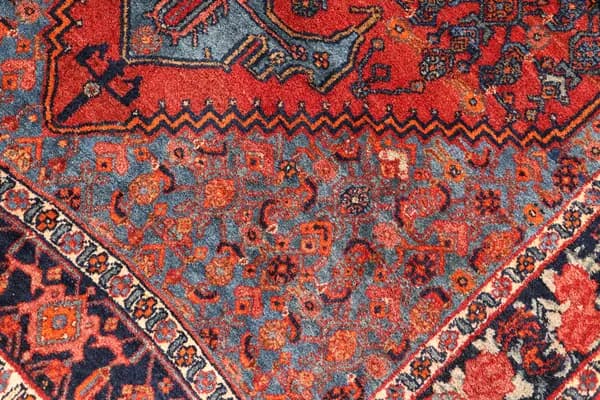
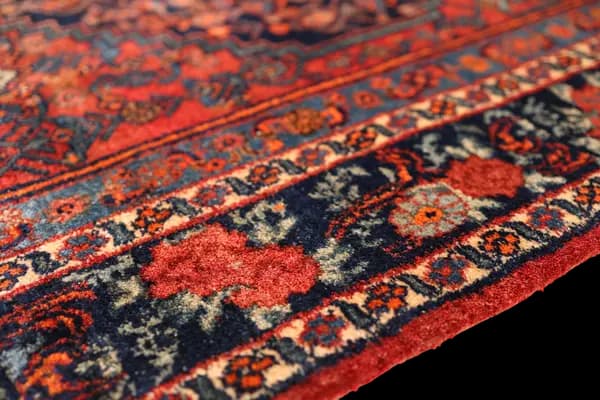
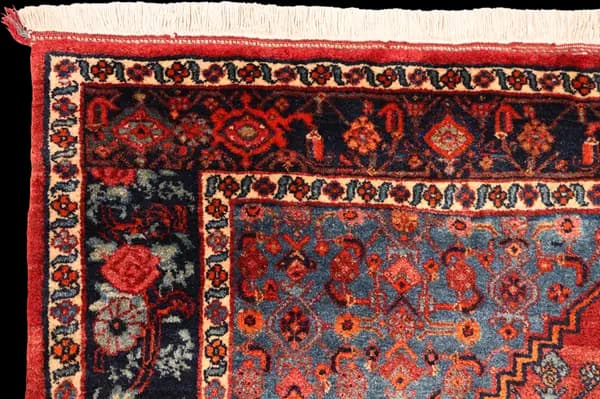
The field is a deep brick red, densely worked with small floral lattice, and against it stands a column of three medallions rather than one. A navy diamond holds the centre, flanked above and below by a pair of matching pendants, their outline closer to an anchor than the usual diamond of the Torandj. A wide steel-blue Mahi field surrounds the whole, its pattern finer than the field within, and a navy border of pink and dusty rose roses closes the rug, taking up close to a fifth of its width.
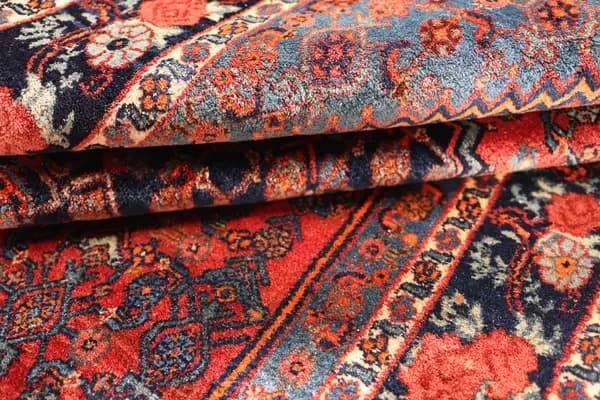
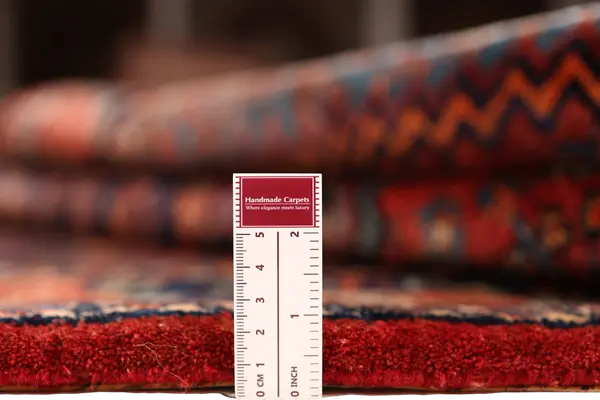
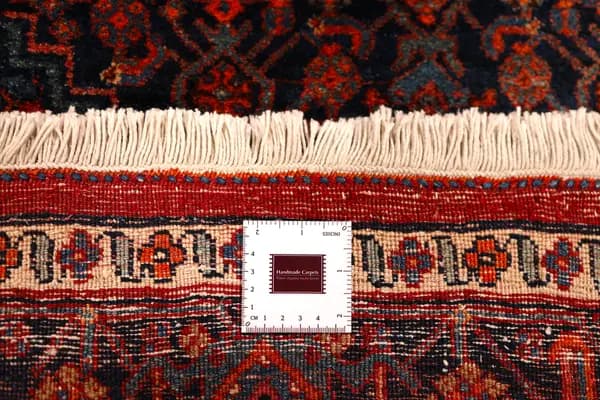
The pile is handspun wool, hand-knotted onto a cotton warp at a density of 201,000 to 250,000 knots per square metre — enough to keep the three medallions and the fine Mahi ground sharply defined, without the glassy sheen silk would give. The wool keeps a matte, faintly uneven surface, true to Garrous character: a rug meant for the floor rather than the wall. At fifteen millimetres the pile has real depth, and after sixty to eighty years it still holds that pattern firmly.
At this size, the rug suits a bedroom, laid beside the bed or across a sitting room corner. Its brick red warms a pale floor and holds its own against dark wood. Underfoot it is dense and firm, built for daily use rather than careful stepping. In low morning light the navy medallions come forward first, the pink border settling in behind them.
More on Garrous rugs: origin, making and how to recognise a genuine piece
Fine quality weave
At 257 × 143 cm (3.68 m²) this is a medium rug. It works in front of a sofa, in front of a bed or in a study. It is too small for a dining table — there you want about 80 cm of clearance so a chair does not tip over the edge when pushed back.
Yes, knotted by hand — knot by knot on a loom, not machine-made. The density is 201,000 to 250,000 knots per square metre; across 3.68 m² that is roughly 740,000 to 920,000 individual knots, every one of them tied by hand.
Hand-spun wool still carries its own lanolin, which keeps liquid sitting on the surface for a moment: blot quickly, with clear water and a light cloth, working inwards and without rubbing. Otherwise regular vacuuming along the pile is enough. Turn the rug once or twice a year so light and footfall reach it evenly.
We are in the Hamburg Speicherstadt. Come and see this rug in daylight, or write to us — a person answers.
Certificate included verifying origin, materials, and craftsmanship.
Ref: 583256