Bidjar Garus
297 × 151 cm
2.370 €




1.233 €
Incl. VAT
In Stock · Ready to Ship
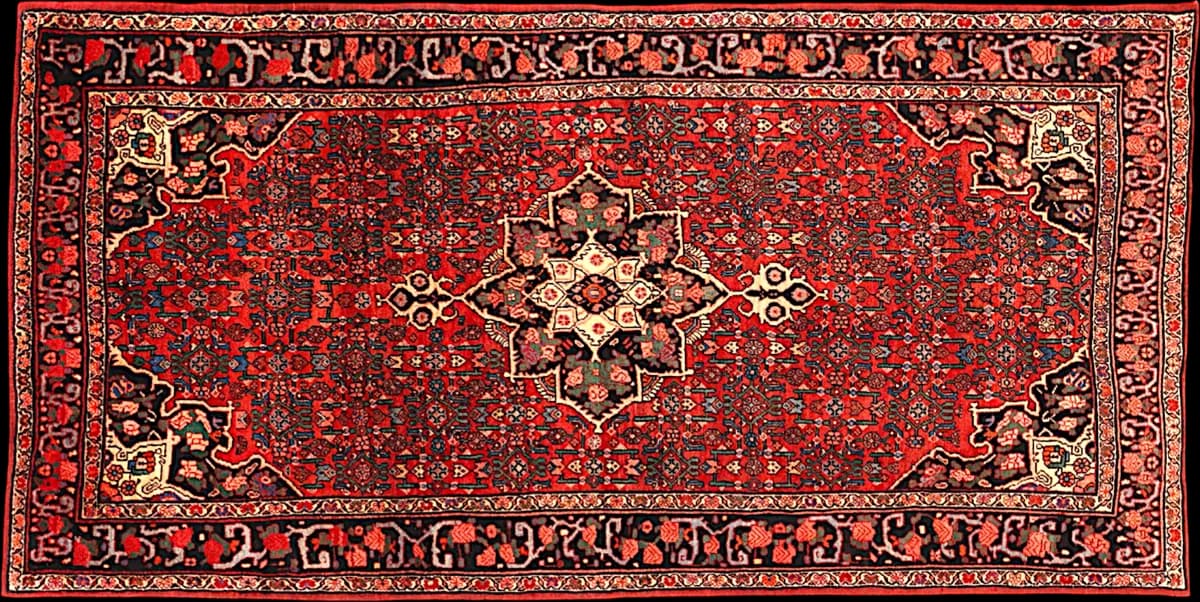
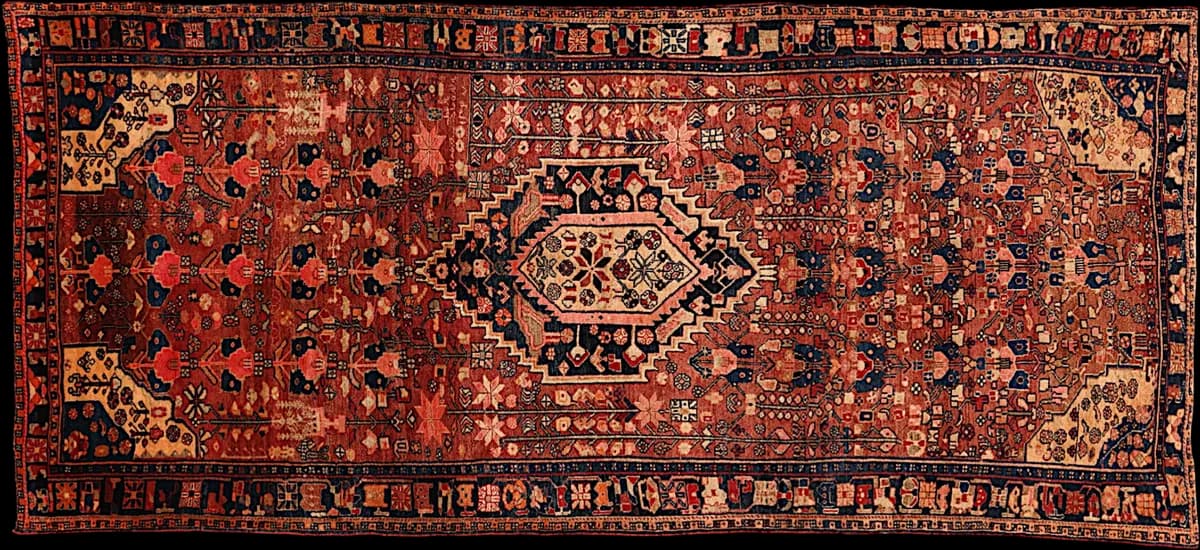
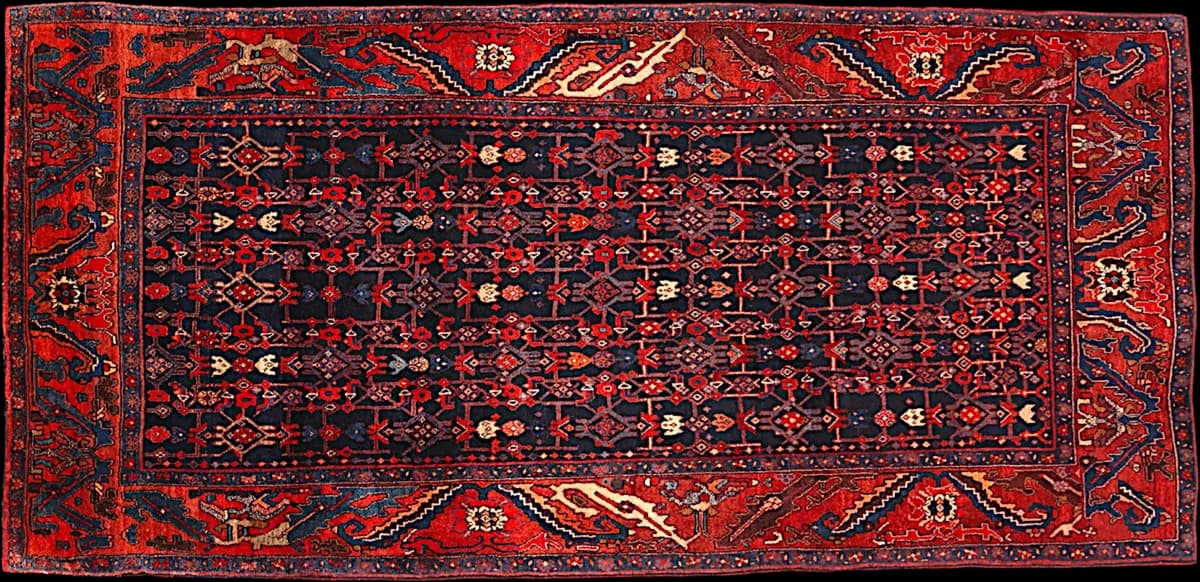
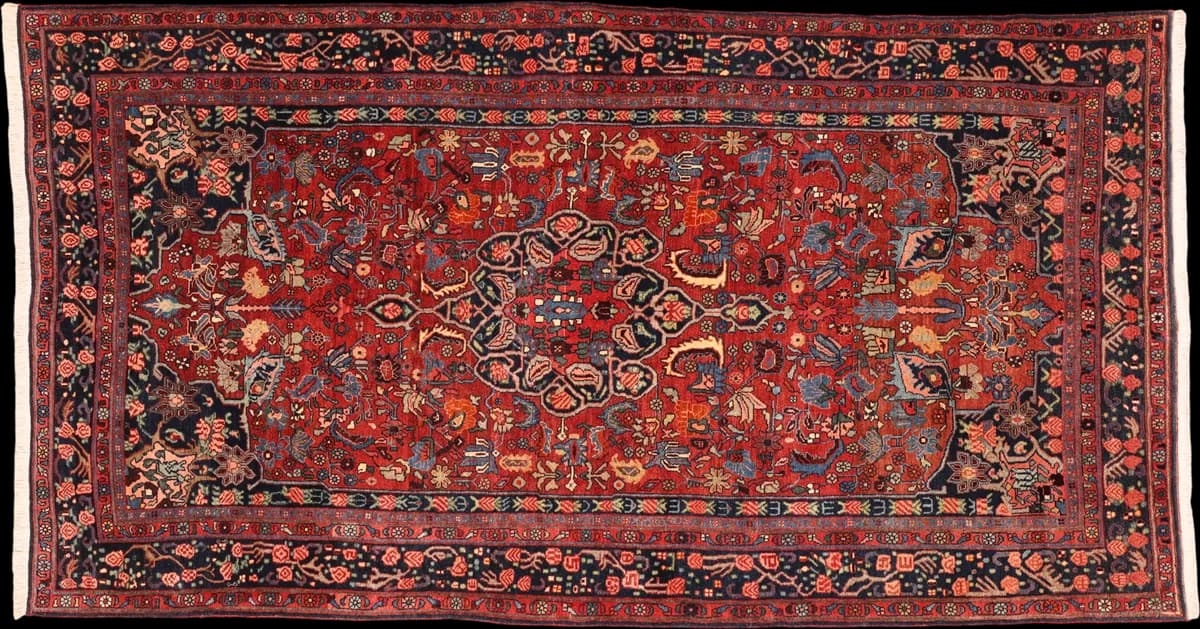
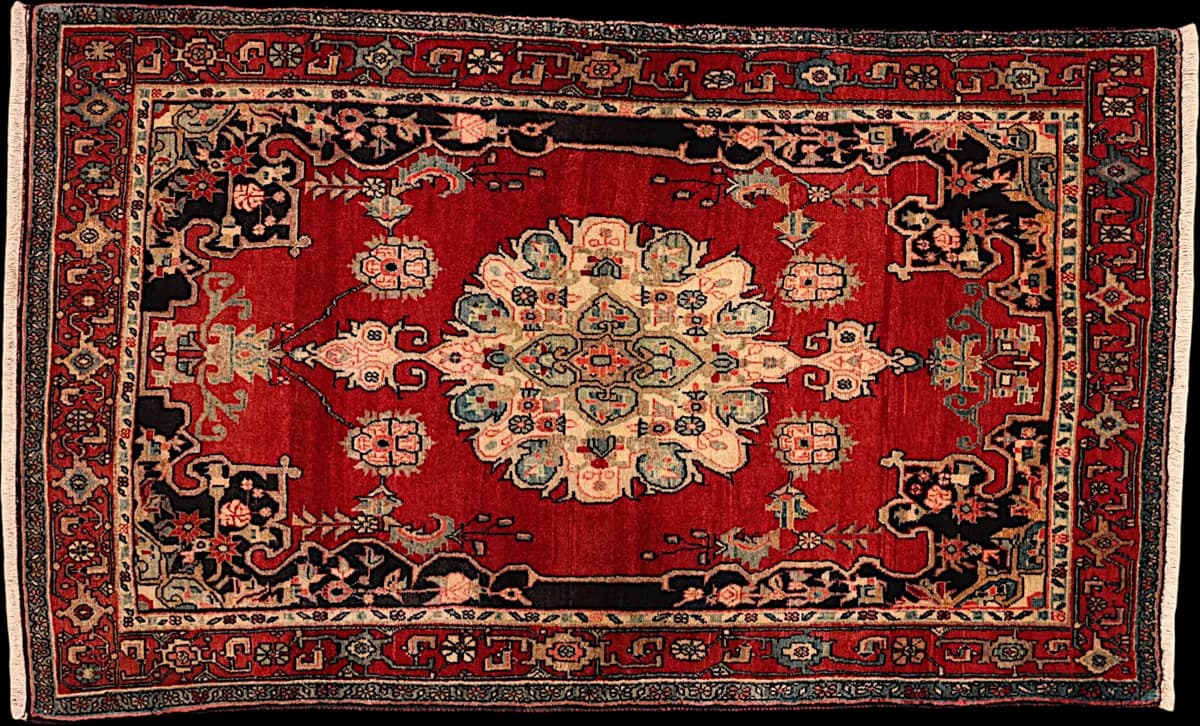
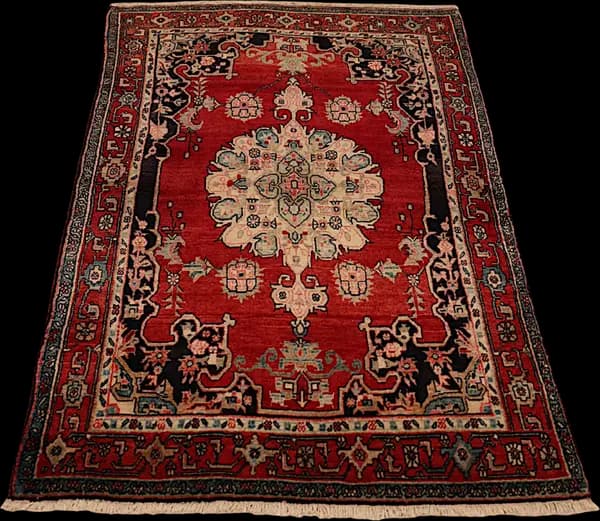
A Garrous rug, also written Garrus, at 170 x 103 cm (5'7" x 3'5"), woven by Kurdish tribes in the mountainous country around Bijar in Iranian Kurdistan. Garrous rugs are known above all for a density so firm it is often called iron-like, the mark of the wider Bijar region, and for the diamond medallion design that carries their name. This piece is a village-scaled example of that heritage, drawn with unusual restraint.
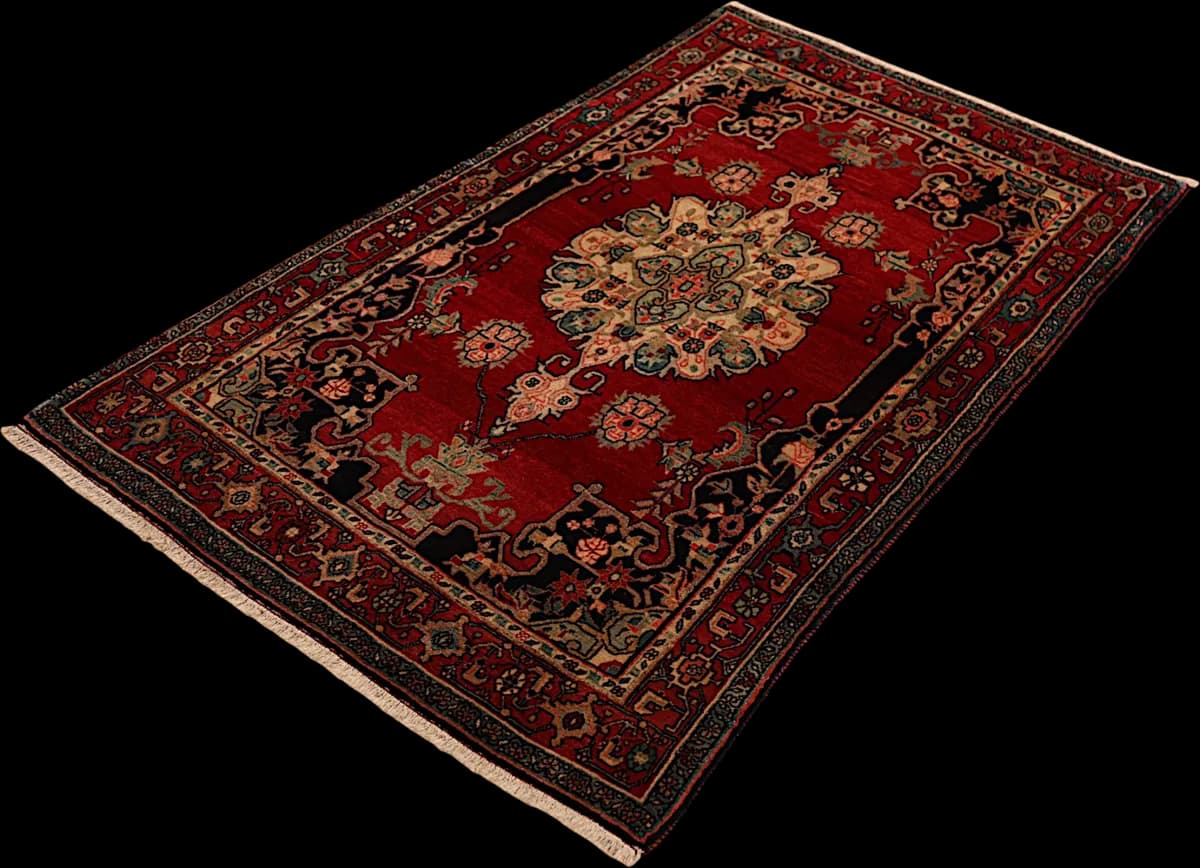
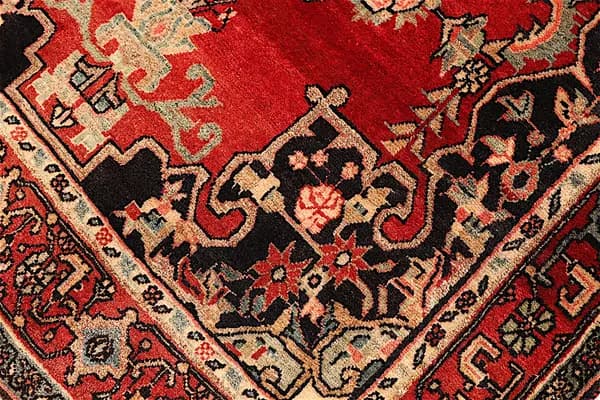
The field is a deep, uninterrupted brick red, and it stays that way almost to the edges. A large ivory medallion floats at its centre, lobed and softly lit with teal and dusty rose, with only small pendant rosettes running up and down the vertical axis rather than a crowded repeat filling the ground. Black cartouche-shaped spandrels sit in the corners, carrying their own fine floral scrollwork, and the same red reappears in the border, its scrolling vine held in by a narrow dark blue-black guard stripe. The overall effect is graphic rather than busy, a rug built around open space as much as pattern.
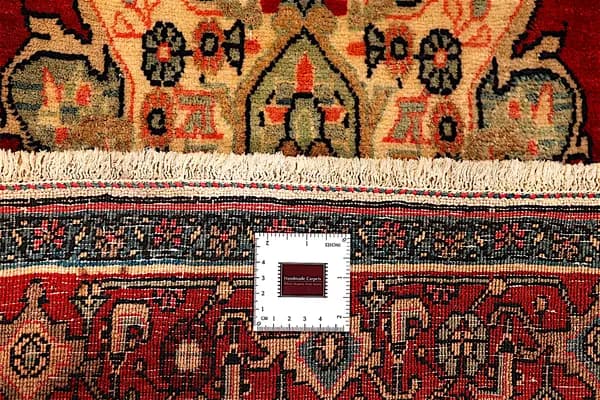
That openness sits on a construction that is anything but sparse. The pile is hand-spun wool, knotted by hand onto a cotton warp at a density of 201,000 to 250,000 knots per square metre, high enough to give the surface the compact, almost board-firm hand the region is famous for. Hand-spinning leaves the yarn slightly uneven in thickness, which is why the surface carries a gentle ribbing rather than a perfectly flat plane, and a light natural sheen rather than the even gloss of a machine-spun pile. At forty to sixty years old, the wool has taken on a soft matte glow that only comes with decades of handling, and the density that made it durable is the same density that will carry it another sixty.
At this size it is a rug for a hallway, a landing, or the floor beside a bed, somewhere the red can hold its own without a large expanse of floor to fill. Against pale boards it warms the space; against dark furniture it holds its ground rather than receding. Underfoot it is dense and firm, built for a well-used passage rather than a room kept for best, and as the light moves across it the ivory medallion is what draws the eye, calm against all that red.
More on Garrous rugs: origin, making and how to recognise a genuine piece
Fine quality weave
At 170 × 103 cm (1.75 m²) this is a small rug. It works beside a bed, in a reading corner, in front of a fireplace or as a mat by a door. It does not furnish a room; it makes a point in one.
Yes, knotted by hand — knot by knot on a loom, not machine-made. The density is 201,000 to 250,000 knots per square metre; across 1.75 m² that is roughly 350,000 to 440,000 individual knots, every one of them tied by hand.
Hand-spun wool still carries its own lanolin, which keeps liquid sitting on the surface for a moment: blot quickly, with clear water and a light cloth, working inwards and without rubbing. Otherwise regular vacuuming along the pile is enough. Turn the rug once or twice a year so light and footfall reach it evenly.
We are in the Hamburg Speicherstadt. Come and see this rug in daylight, or write to us — a person answers.
Certificate included verifying origin, materials, and craftsmanship.
Ref: 626399