Bidjar Garus
272 × 146 cm
2.158 €
913 €
Incl. VAT
In Stock · Ready to Ship
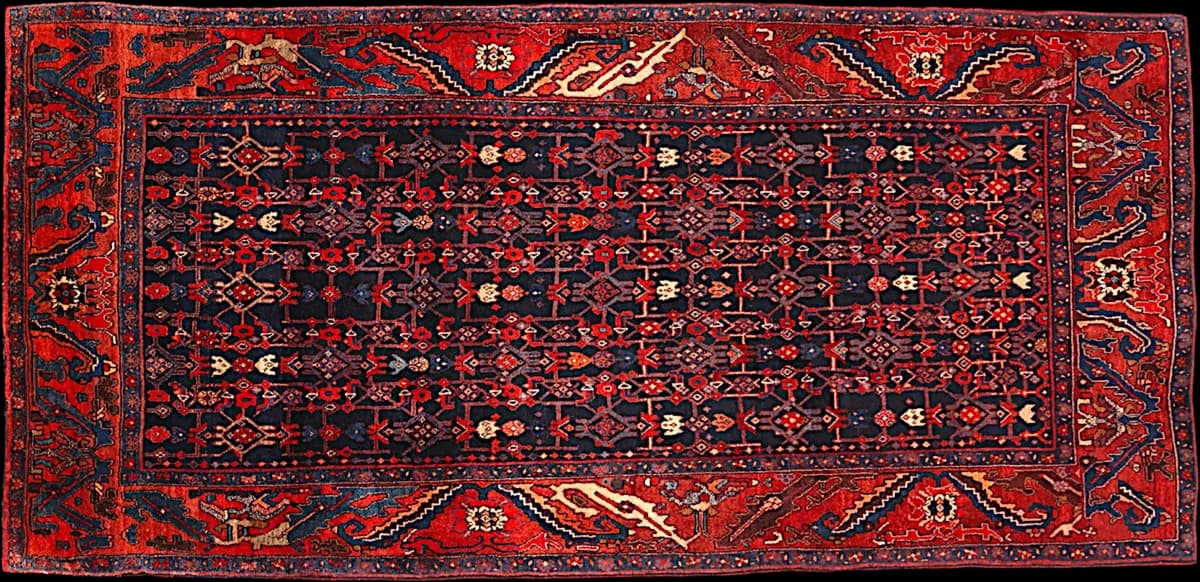
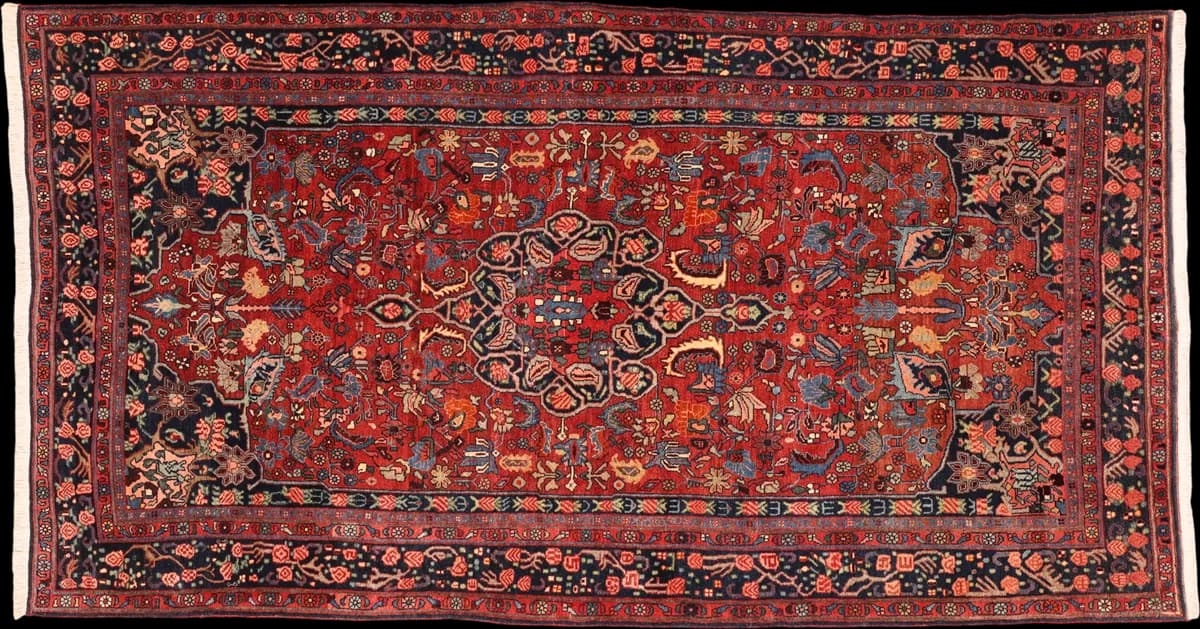
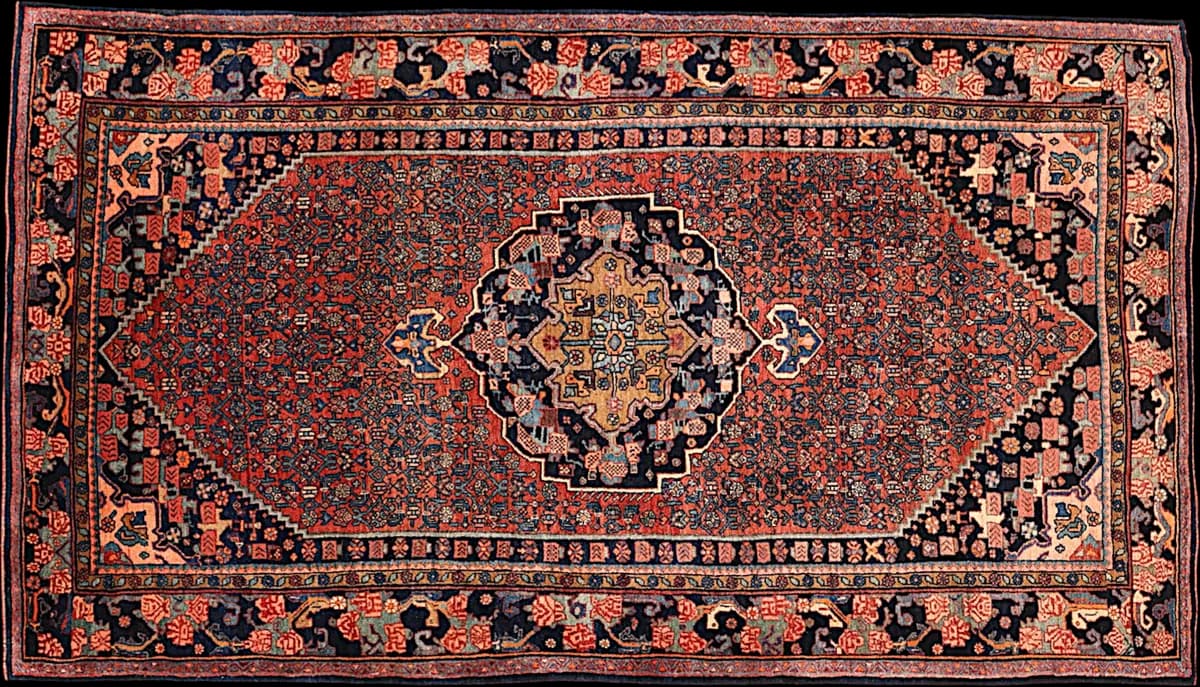
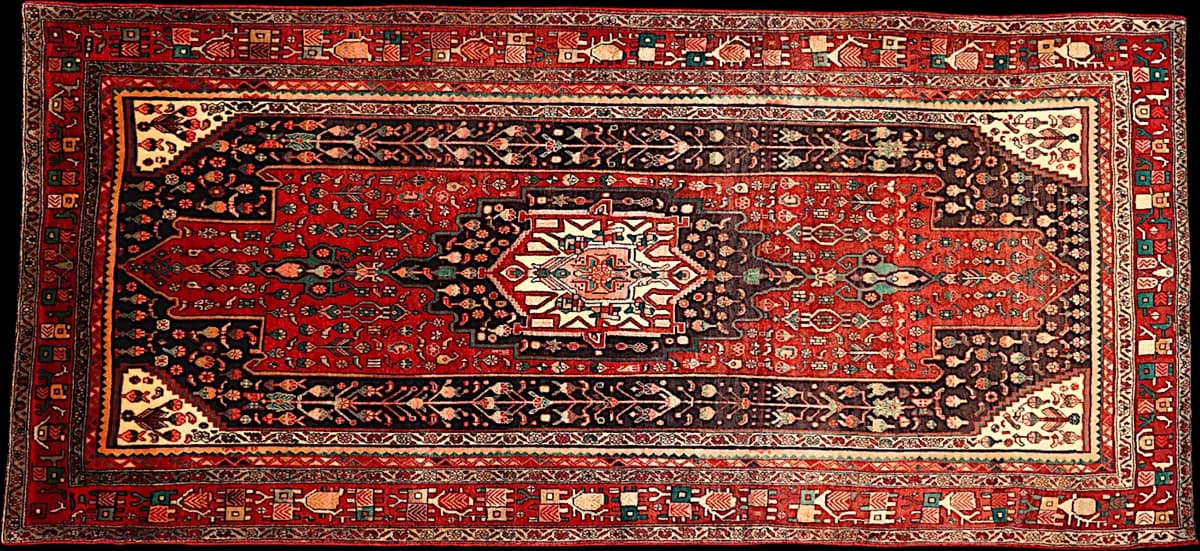
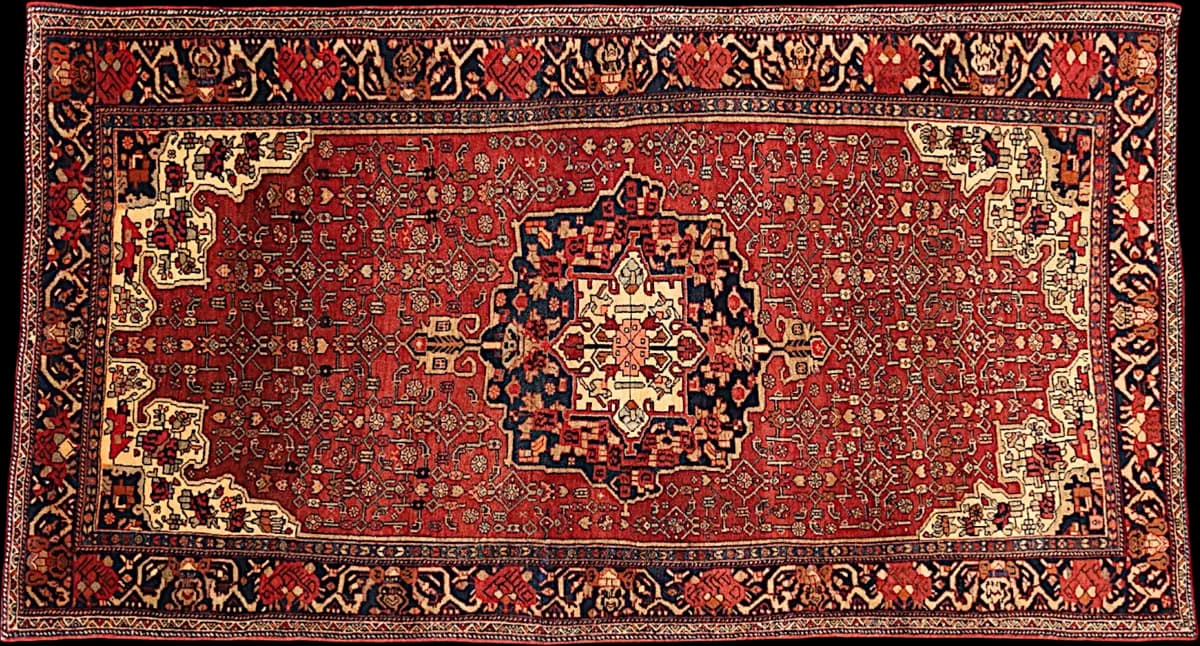
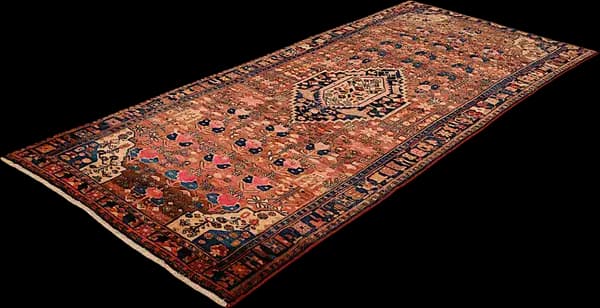
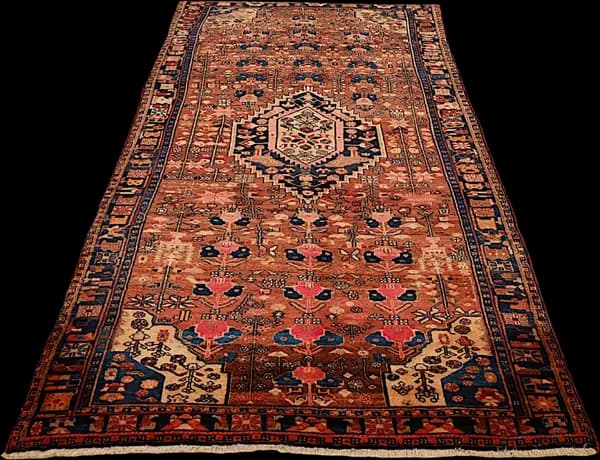
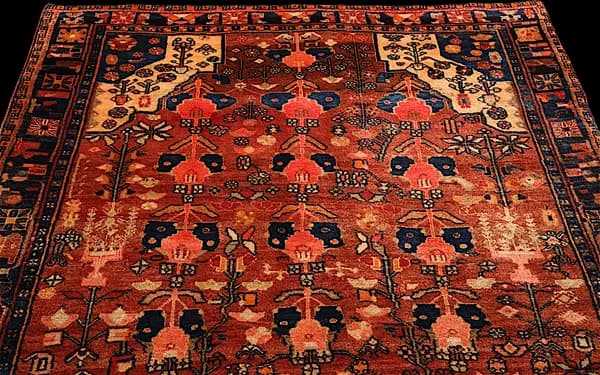
This is a Garrous, also written Garrus, a Kurdish weaving from the Bijar region of western Iran, in a long format measuring 323 x 145 cm (10'7" x 4'9"). Garrous rugs share the density that made Bijar famous, packed tight enough to earn the name iron rugs, woven by Kurdish tribes across the highlands above the town that gives the group its identity.
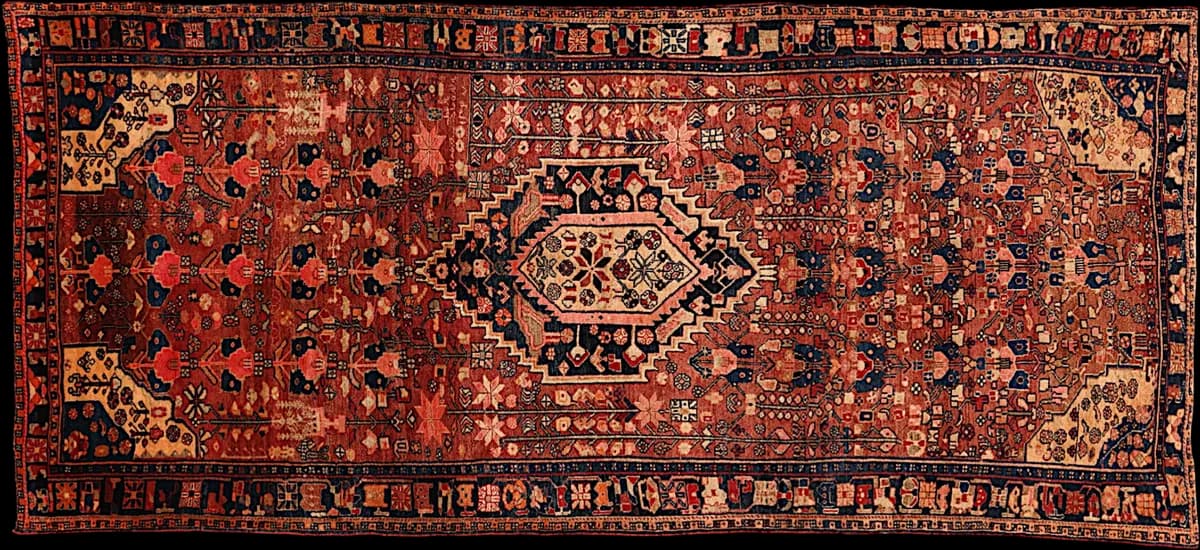
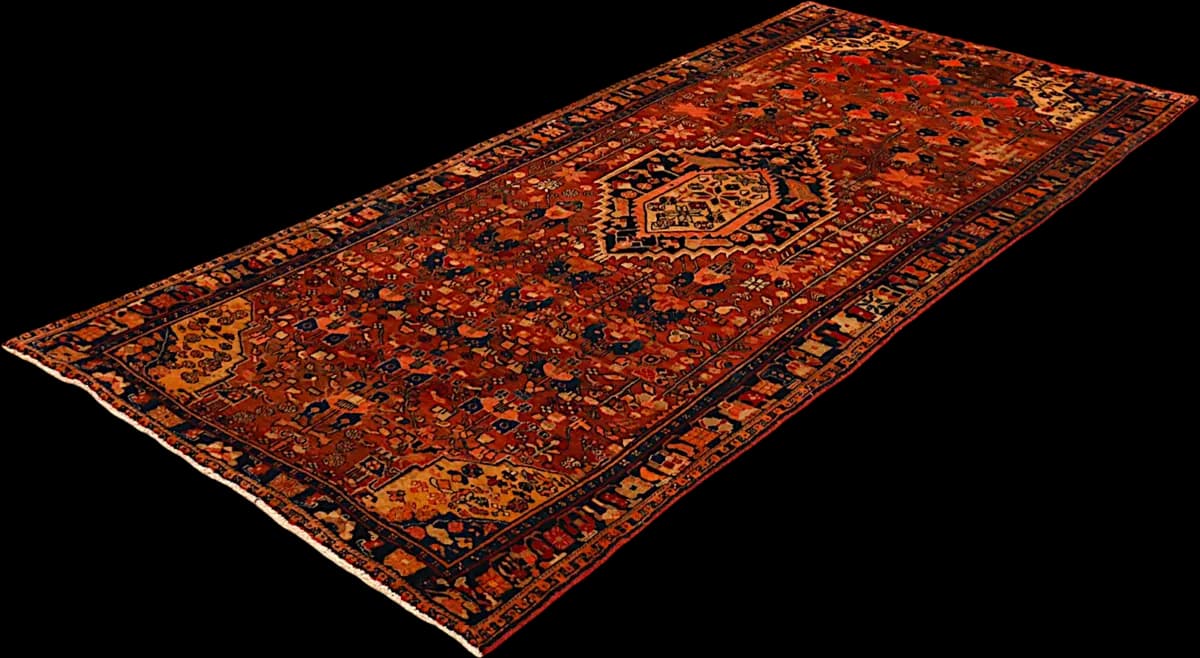
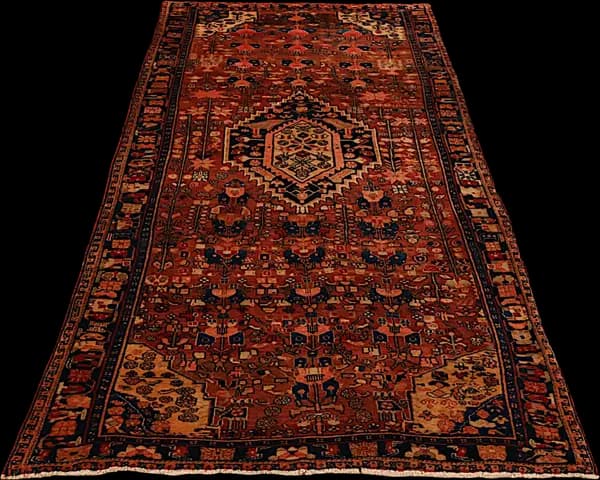
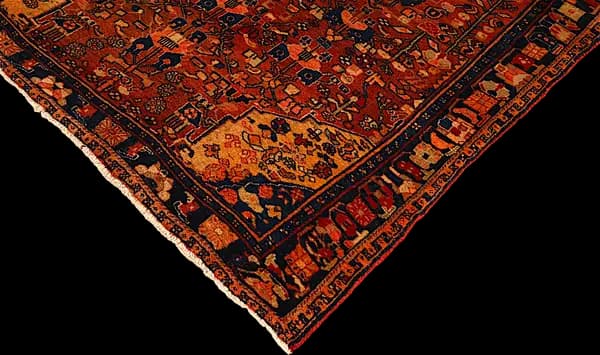
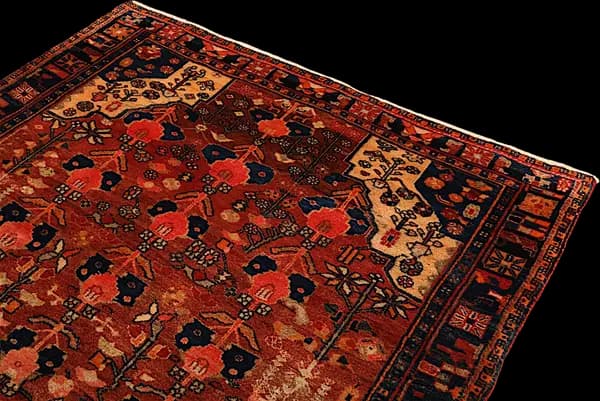
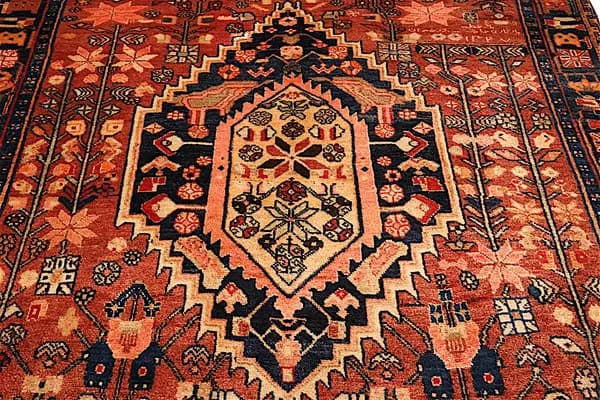
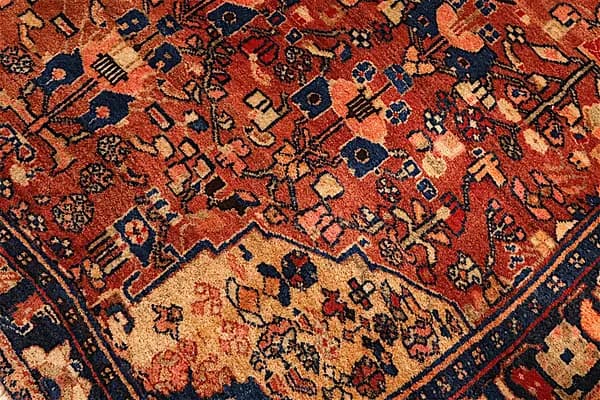
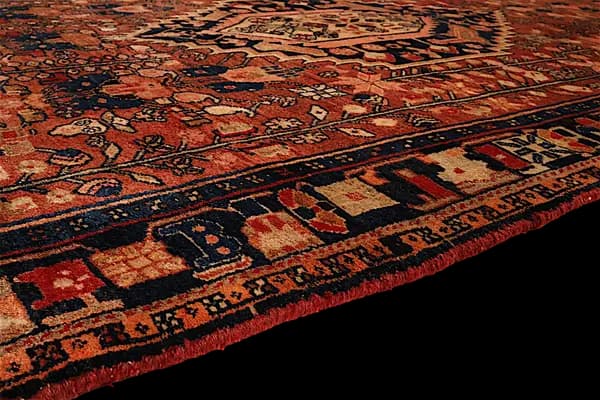
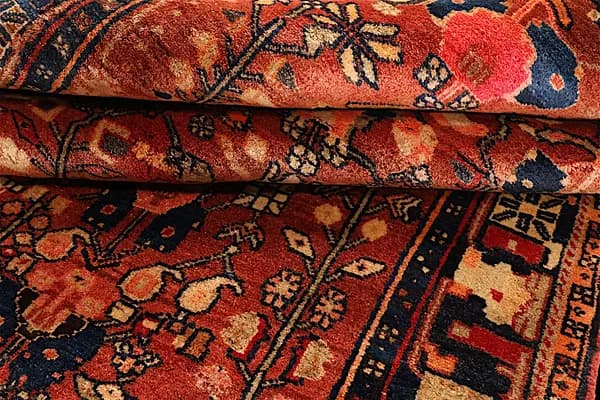
The field is a deep brick red, running in bands of darker and paler rust that shift most noticeably through the left third of the rug. Across it floats a large hexagonal medallion, outlined in ivory, its stepped pendants reaching toward the ends. Small floral sprays and vinery scatter the ground in coral, dusty rose and mustard, dense enough to fill every gap. A narrow navy border, patterned with small cream and rust motifs, closes the field firmly at each edge.
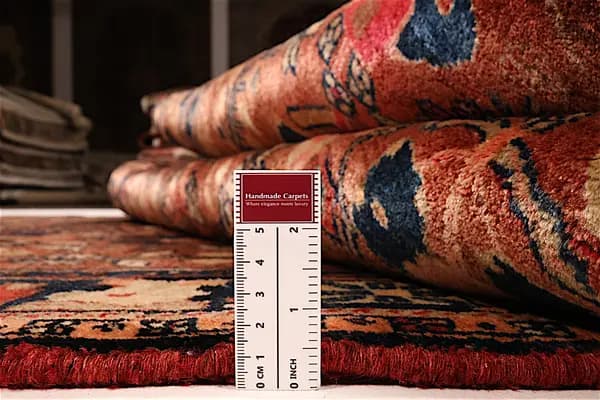
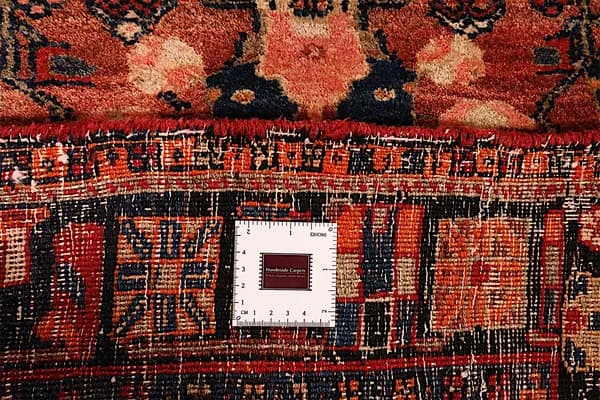
That density is not decorative language: hand-knotted at 128,000 to 160,000 knots per square metre onto a cotton warp, the weave explains the rug's weight and firmness underfoot. The wool is hand-spun from local Kurdish flocks and dyed in small batches, which is why the red shifts in bands rather than sitting flat — a mark of natural dye, not a flaw. Against this dense ground, the weaver set one oversized medallion, bolder and more deliberate than the uniform floral fields most Garrous rugs prefer.
This Garrous suits a long room rather than a narrow passage — a wide hallway, a landing, or the run beside a dining table, where its 145 cm width settles comfortably. The brick red holds its own against dark wood or pale floors, and the ivory medallion keeps the eye moving along its length. Underfoot it is dense and firm, built for daily use, and through the day the abrash bands catch the light and soften in turn.
More on Garrous rugs: origin, making and how to recognise a genuine piece
Traditional weave
At 323 × 145 cm (4.68 m²) this is a runner. It belongs in a hallway, an entrance, on a landing or lengthways beside a bed. It is too narrow for the middle of a room.
Yes, knotted by hand — knot by knot on a loom, not machine-made. The density is 128,000 to 160,000 knots per square metre; across 4.68 m² that is roughly 600,000 to 750,000 individual knots, every one of them tied by hand.
Hand-spun wool still carries its own lanolin, which keeps liquid sitting on the surface for a moment: blot quickly, with clear water and a light cloth, working inwards and without rubbing. Otherwise regular vacuuming along the pile is enough. Turn the rug once or twice a year so light and footfall reach it evenly.
We are in the Hamburg Speicherstadt. Come and see this rug in daylight, or write to us — a person answers.
Certificate included verifying origin, materials, and craftsmanship.
Ref: 697307