Bidjar Garus
265 × 145 cm
2.370 €






936 €
Incl. VAT
In Stock · Ready to Ship
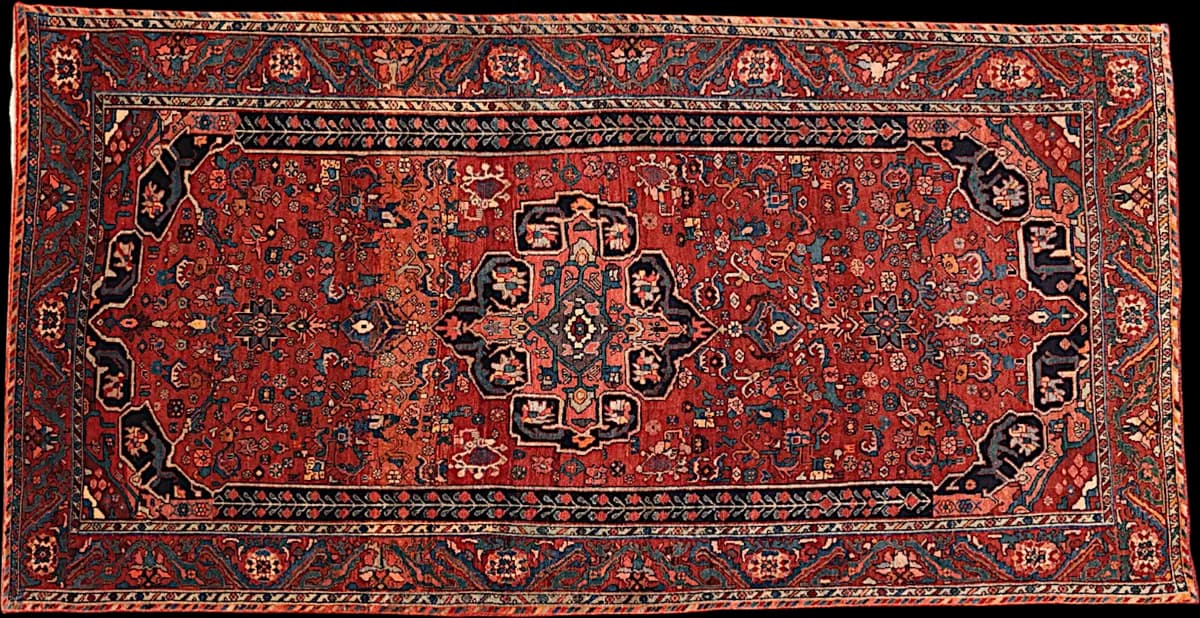
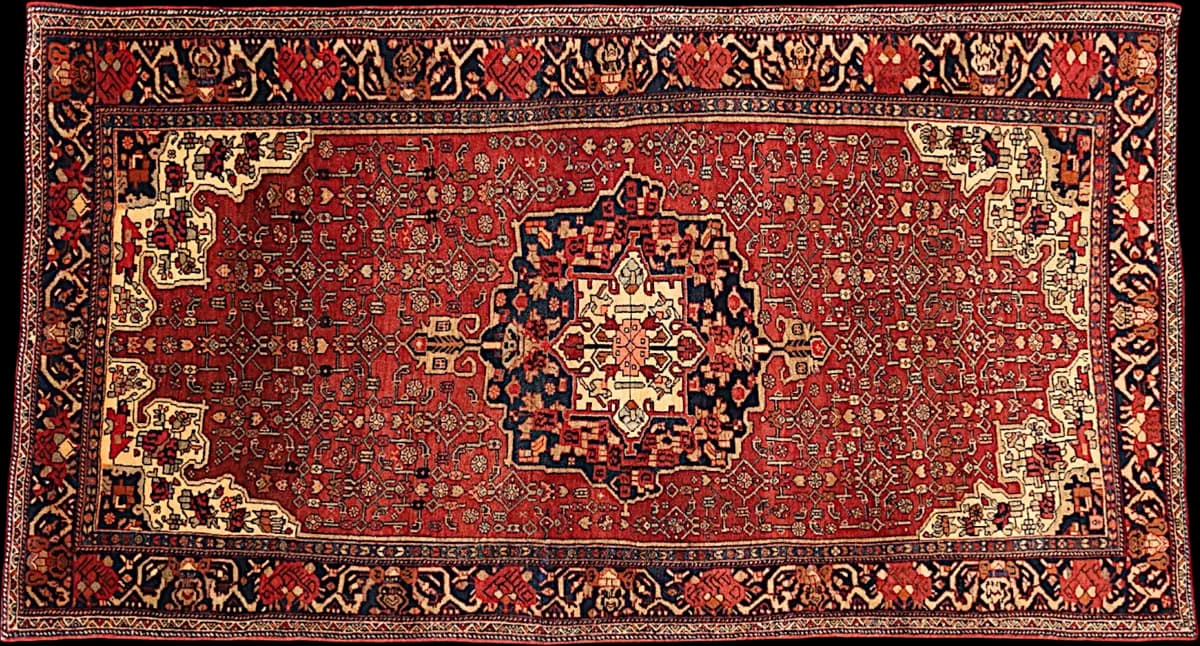
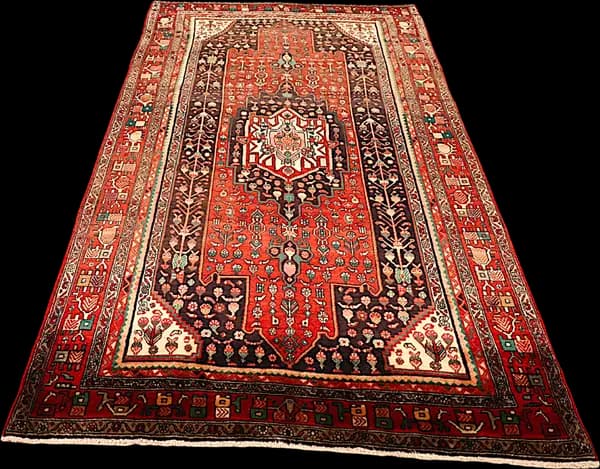
This is a Garrous runner, woven by Kurdish tribes in the highland country around Bijar in western Iran, 324 x 148 cm (10'8" x 4'10"). Garrous rugs, also written Garrus, are known above all for an iron-like density that has made the wider Bijar name legendary among collectors, and here that same tradition has been carried into a long, narrow format rather than the broad room size the type is usually built for.
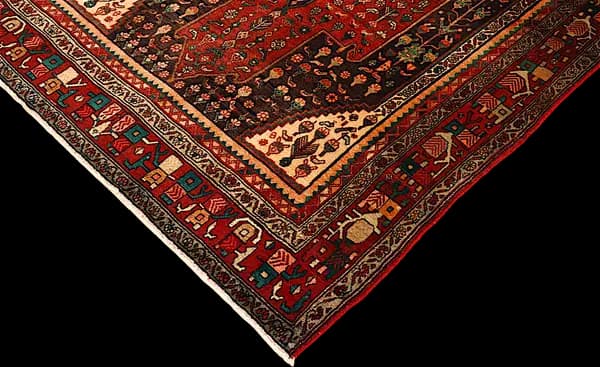
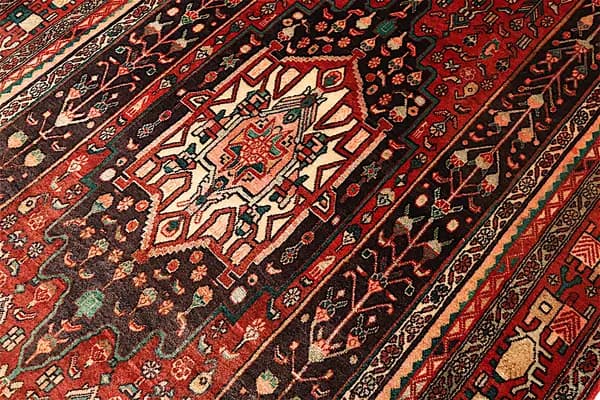
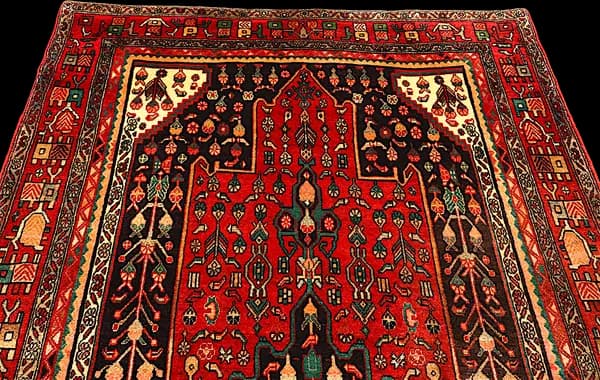
The eye meets a deep brick red first, though the field itself is not one colour: at the centre it glows red, while toward both ends it darkens into an almost blue-black ground, a deliberate change of colour within the same field rather than a single tone held throughout its length. Down this shifting ground runs an elongated medallion in ivory and red, its pendant extensions tapering into sharp, serrated points that reach almost to both ends of the runner. Around it, a wide brick-red border carries a floral vine in cream, rust and petrol, holding the changing field together along the whole run.
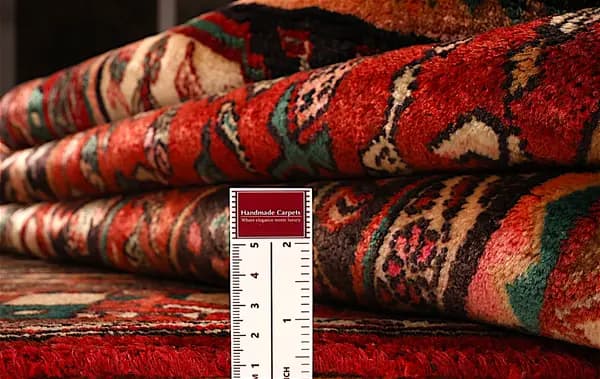
The pile is hand-spun wool, knotted by hand onto a cotton warp at 201,000 to 250,000 knots per square metre. That is not the tightest count a workshop might reach, but combined with wool spun by hand rather than machine, it gives the surface the slightly uneven, compact hand that Bijar country weaving is known for. Standing 12 mm high, the pile is deep enough to hold the medallion's sharp points crisply rather than let them blur, and the small irregularities across the field are the trace of a weaver working from memory, not from a drawn plan.
In a hallway or along a landing, the shift from red to blue-black works with the space rather than against it: the ivory medallion tip stays lit even where the field turns dark, drawing the eye to walk its length rather than settle on one point. Wool this densely packed takes daily footsteps without flattening, and a piece built to the standard Bijar country is known for is made to be walked on, not kept for best. Morning or evening light crossing the vine border in cream and rust changes as it falls along the width, and the tapering medallion is the detail a household keeps noticing long after moving in.
More on Garrous rugs: origin, making and how to recognise a genuine piece
Fine quality weave
At 324 × 148 cm (4.80 m²) this is a medium rug. It works in front of a sofa, in front of a bed or in a study. It is too small for a dining table — there you want about 80 cm of clearance so a chair does not tip over the edge when pushed back.
Yes, knotted by hand — knot by knot on a loom, not machine-made. The density is 201,000 to 250,000 knots per square metre; across 4.80 m² that is roughly 1.0 to 1.2 million individual knots, every one of them tied by hand.
Hand-spun wool still carries its own lanolin, which keeps liquid sitting on the surface for a moment: blot quickly, with clear water and a light cloth, working inwards and without rubbing. Otherwise regular vacuuming along the pile is enough. Turn the rug once or twice a year so light and footfall reach it evenly.
We are in the Hamburg Speicherstadt. Come and see this rug in daylight, or write to us — a person answers.
Certificate included verifying origin, materials, and craftsmanship.
Ref: 902185