Bidjar Garus
267 × 125 cm
1.650 €





2.550 €
Incl. VAT
In Stock · Ready to Ship
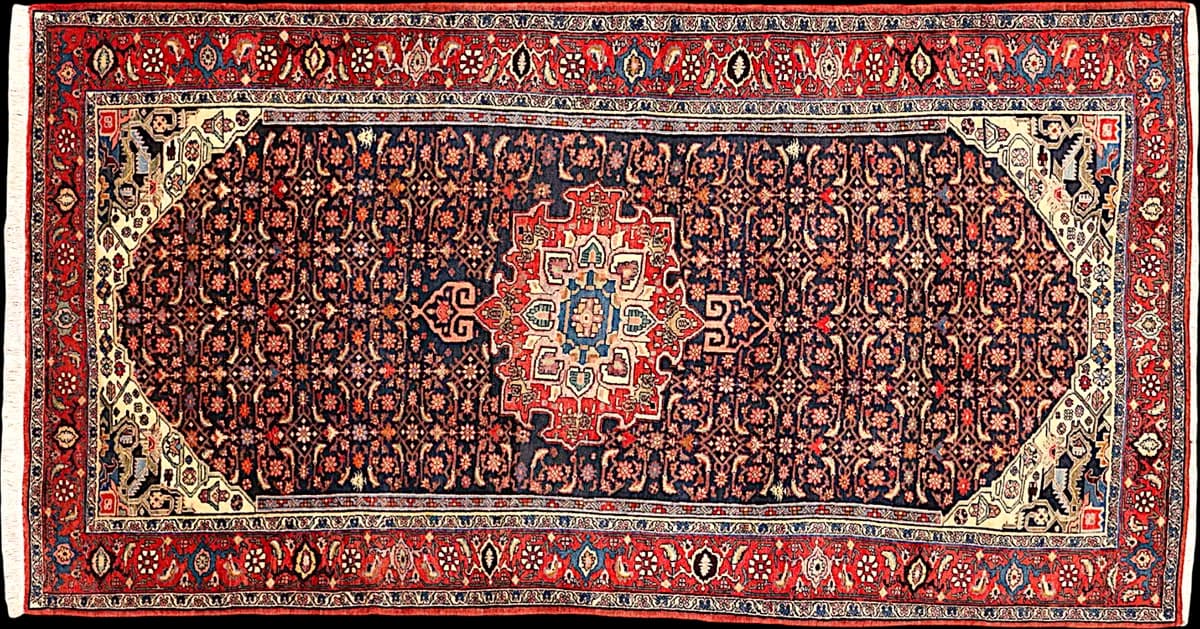
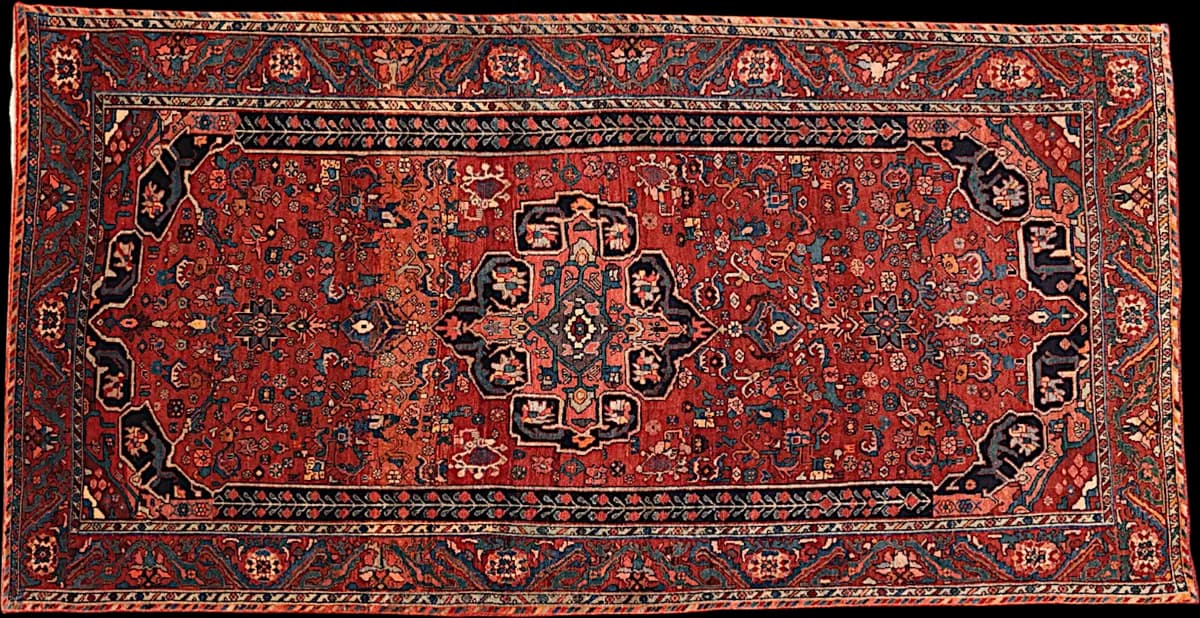
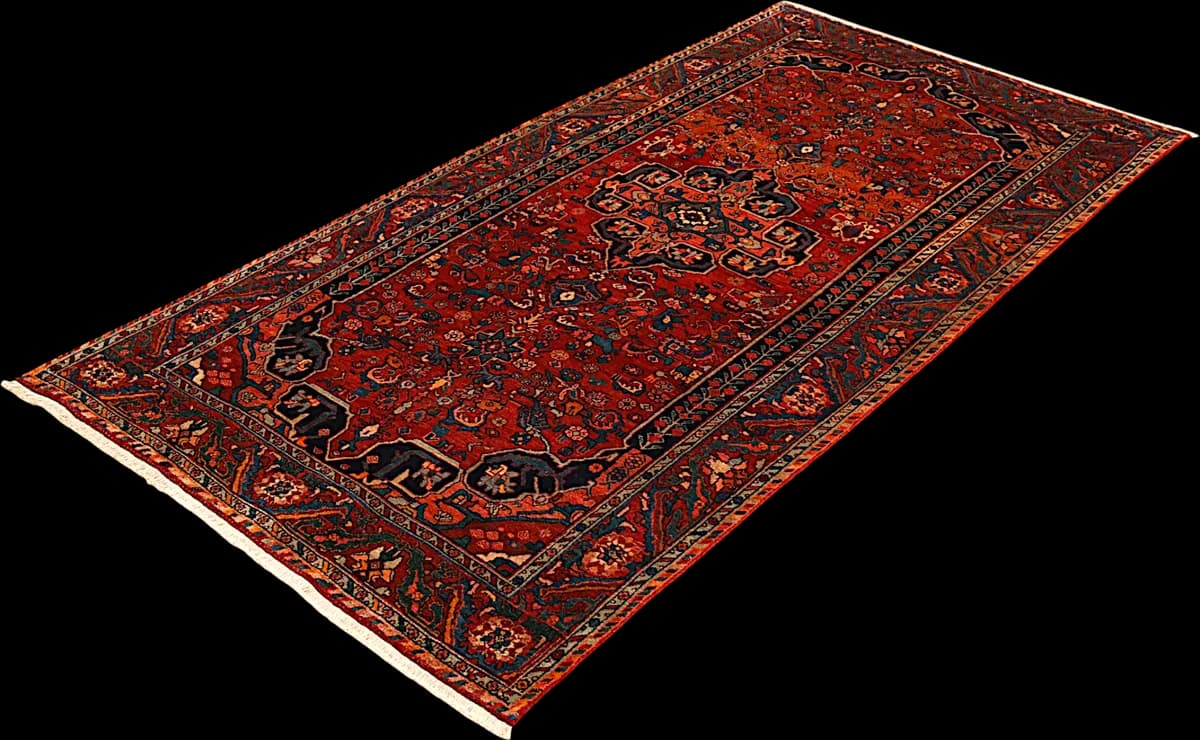
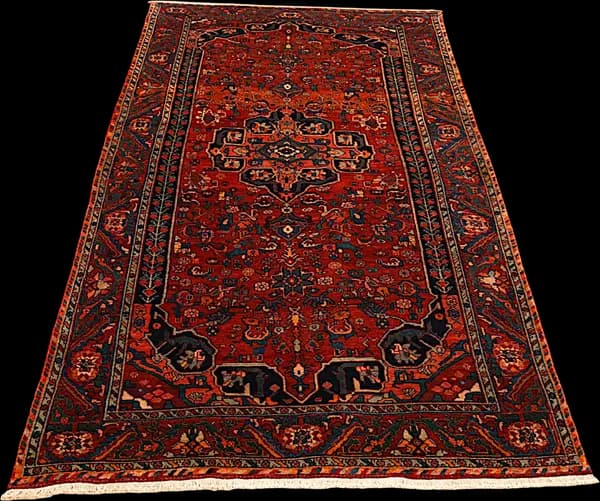
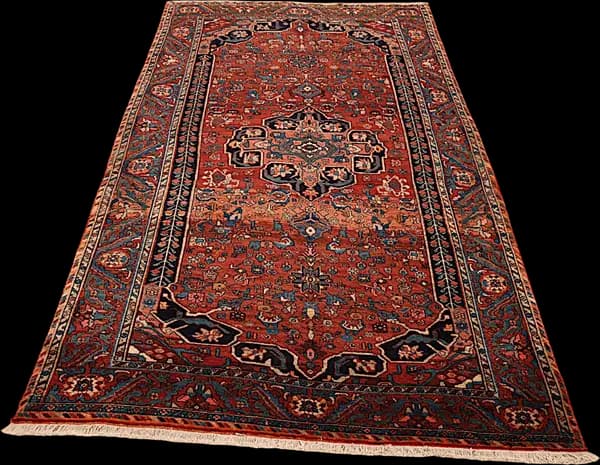
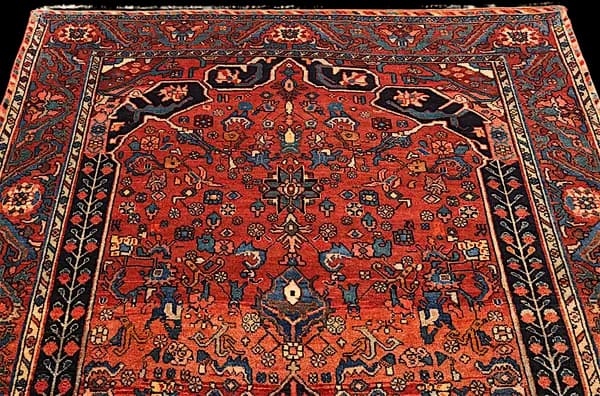
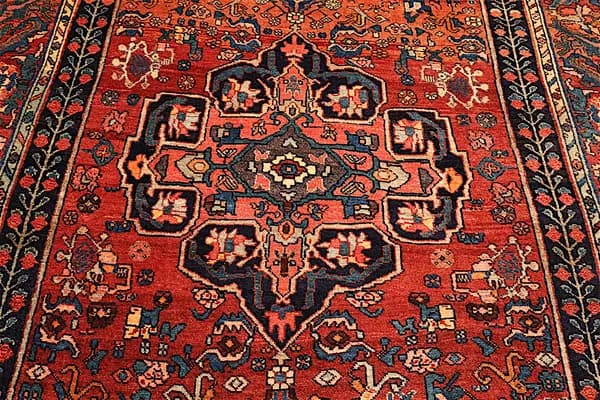
The rug in front of you is a Garrous, also written Garrus, a tribal Kurdish weaving from the highlands around Bijar in Iranian Kurdistan, at 291 x 148 cm (9'6" x 4'10"). Garrous rugs share the Bijar region's celebrated density, but the name marks out a distinct Kurdish tribal hand, one that favours a strongly drawn central medallion over the looser, all-over scatter more typical of the wider village tradition.
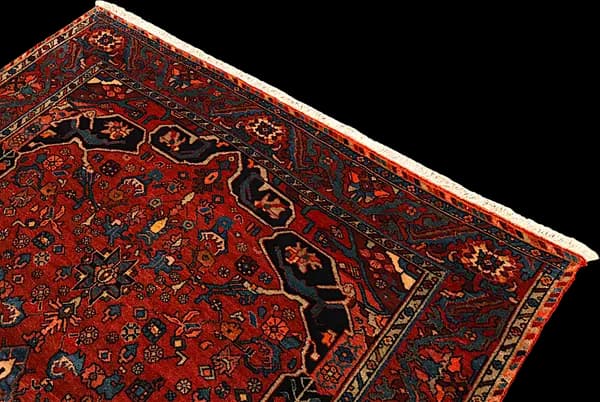
That graphic strength is immediately apparent. A deep brick-red field carries a dense scatter of small florals and vinery in teal-green, ivory and salmon, and floating above it sits a diamond medallion with drawn-out pendants in a navy so dark it reads almost black. The same indigo fills the corner spandrels, and the effect is a rug with far more contrast and clarity than the usual busy village floral, without a trace of grey or true black anywhere in it. A wide navy border, patterned with the same teal and salmon vinery, closes the design and takes up roughly a fifth of the rug's width, holding the red field firmly in place.
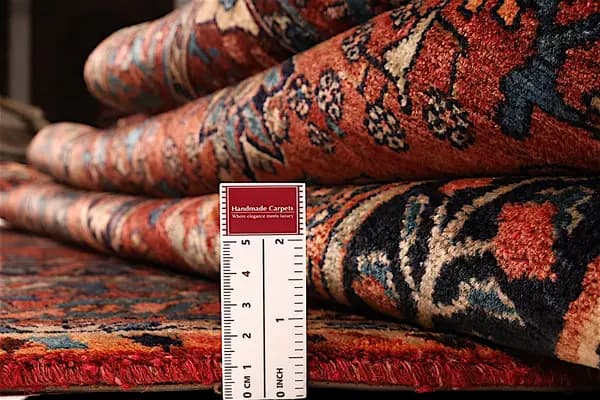
This crispness comes from a weave the region is famous for. The cotton warp and a densely packed hand-spun wool pile, knotted at 201,000 to 250,000 knots per square metre, give the surface an iron-like firmness that Bijar-country weavers have built their reputation on for generations. A pile of 15 mm depth, hand-spun rather than machine-spun, sits with a soft ribbing at the edges and a matte, natural-dye surface, forty to sixty years old, that has settled into itself rather than faded. Knotted from memory rather than a drawn plan, the medallion's crisp lines are all the more striking for having been carried entirely in the weaver's hand.
At this size the rug is at home in a hallway or a generous entrance, where its bold medallion greets whoever comes through the door rather than waiting to be discovered underfoot. The brick red and navy hold their own against dark floorboards or pale stone alike, warming a plain corridor without needing help from anything around it. Underfoot it is dense and firm, built for daily footsteps rather than careful preservation, and as daylight moves across it through the day the indigo pendants shift between near-black and deep blue against the red.
More on Garrous rugs: origin, making and how to recognise a genuine piece
Fine quality weave
At 291 × 148 cm (4.31 m²) this is a medium rug. It works in front of a sofa, in front of a bed or in a study. It is too small for a dining table — there you want about 80 cm of clearance so a chair does not tip over the edge when pushed back.
Yes, knotted by hand — knot by knot on a loom, not machine-made. The density is 201,000 to 250,000 knots per square metre; across 4.31 m² that is roughly 0.9 to 1.1 million individual knots, every one of them tied by hand.
Hand-spun wool still carries its own lanolin, which keeps liquid sitting on the surface for a moment: blot quickly, with clear water and a light cloth, working inwards and without rubbing. Otherwise regular vacuuming along the pile is enough. Turn the rug once or twice a year so light and footfall reach it evenly.
We are in the Hamburg Speicherstadt. Come and see this rug in daylight, or write to us — a person answers.
Certificate included verifying origin, materials, and craftsmanship.
Ref: 243170