Exclusive
Bidjar | Exclusive
257 × 143 cm
6.600 €






2.340 €
Incl. VAT
In Stock · Ready to Ship
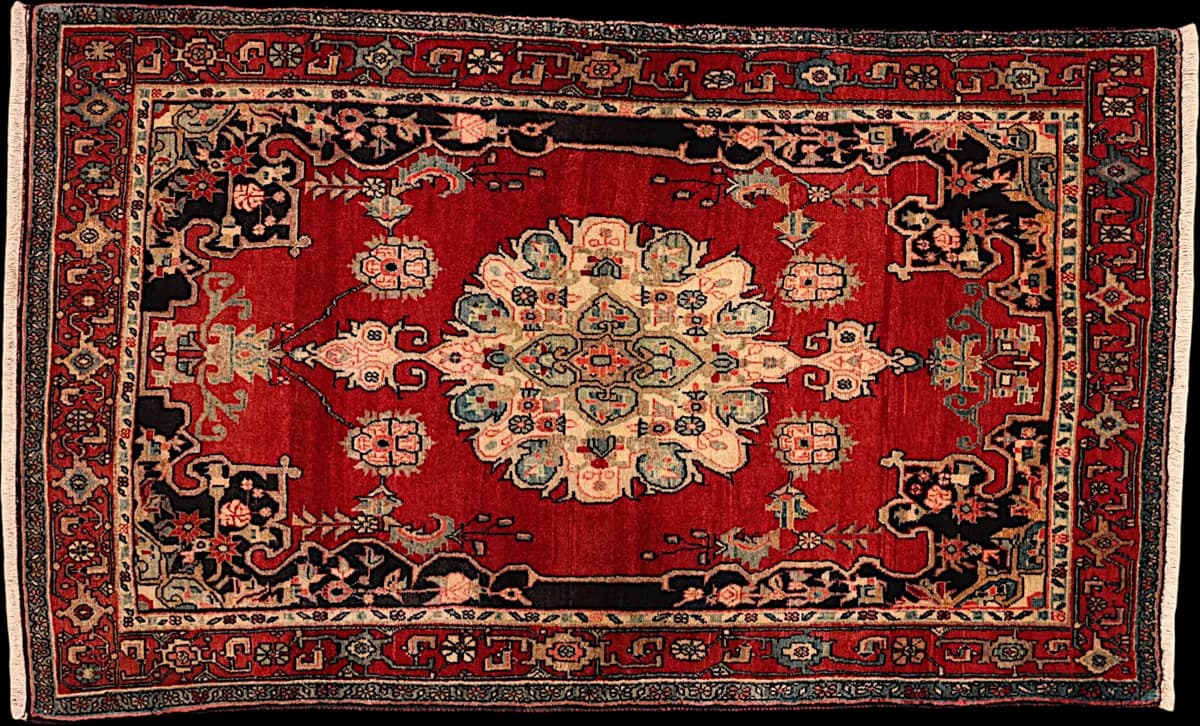
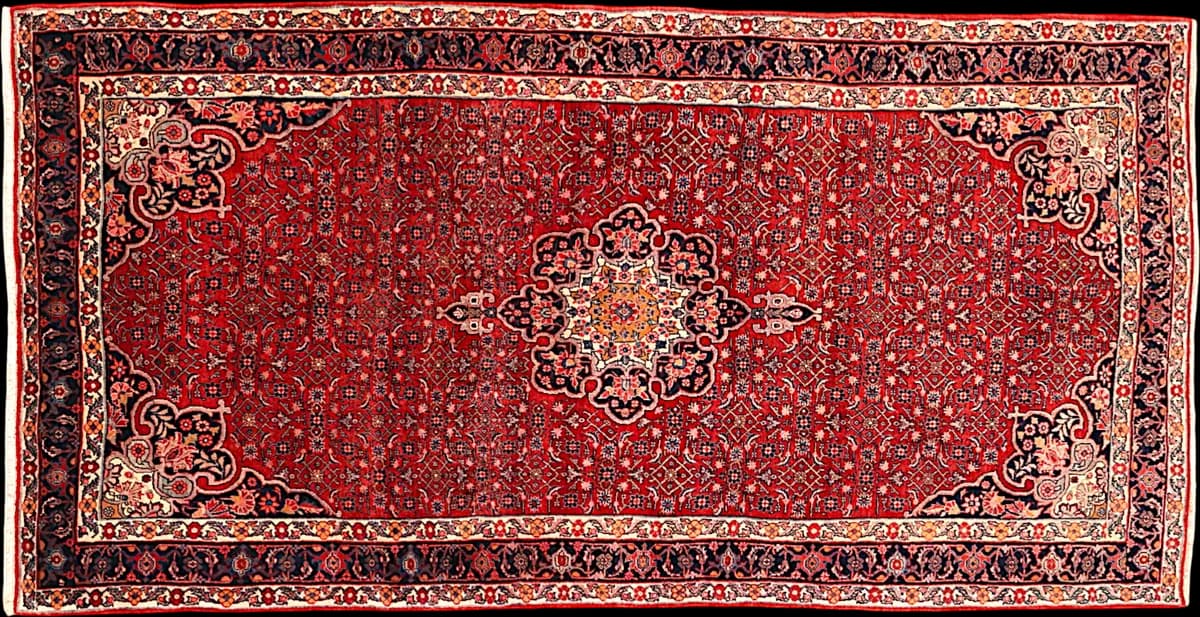
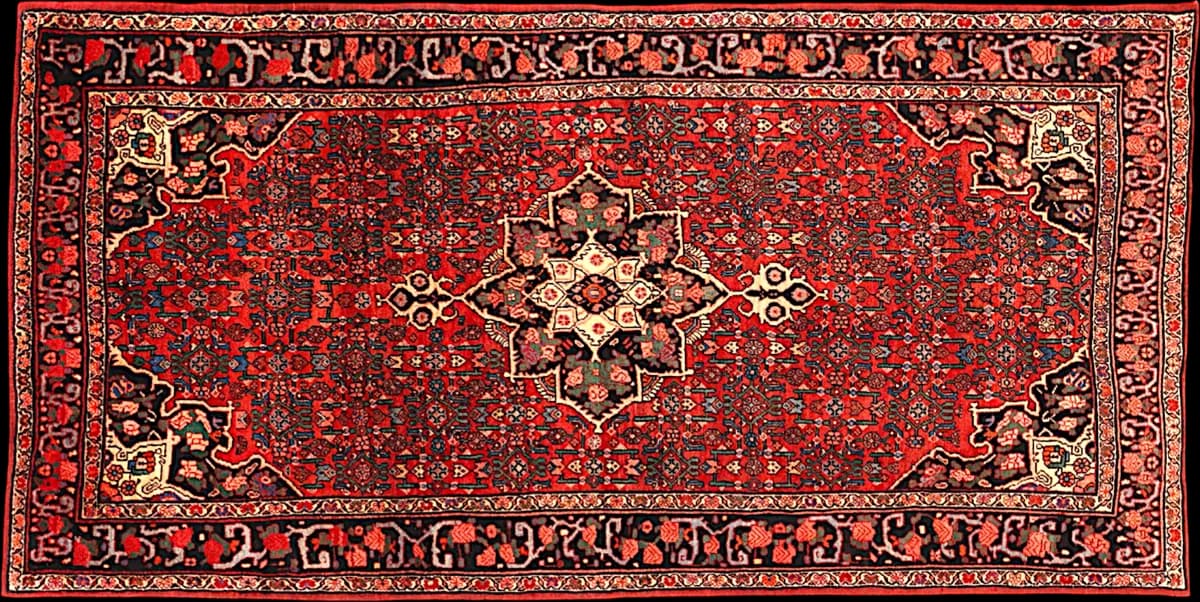
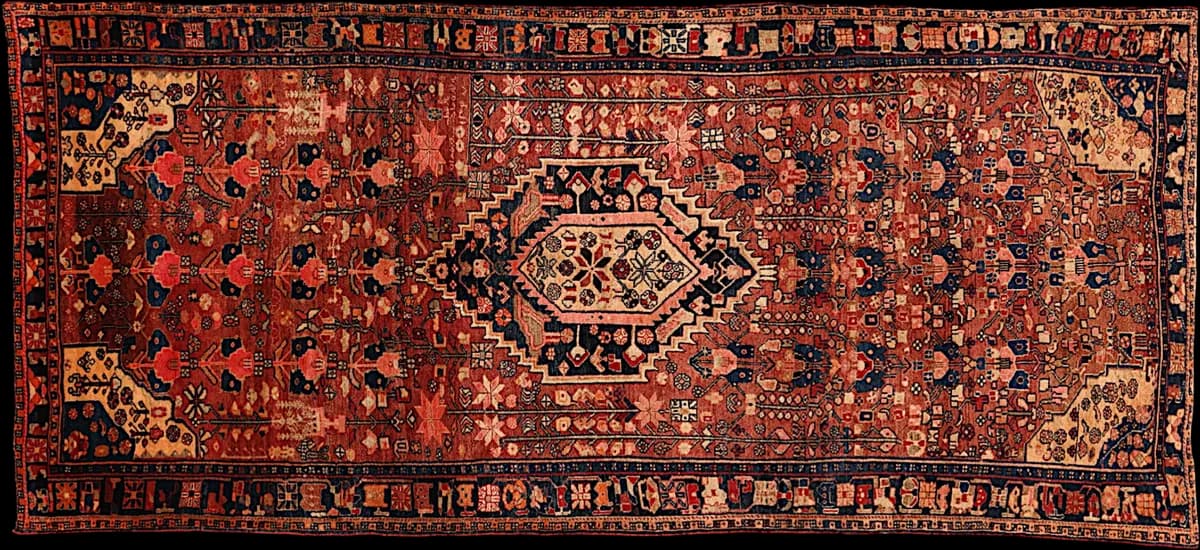
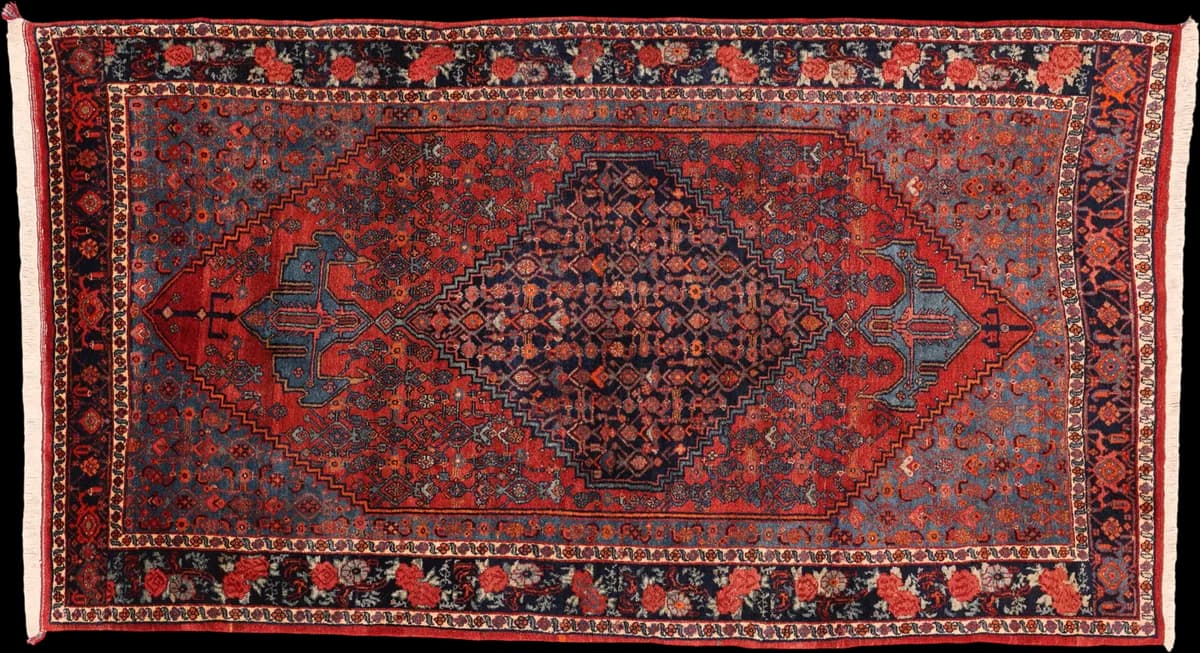
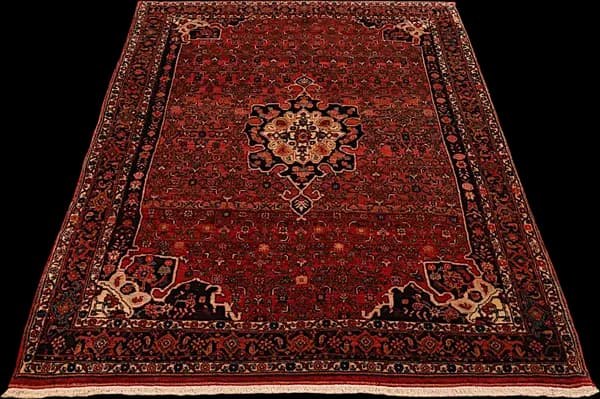
This is a Garrous, a Kurdish tribal weaving from the Bijar highlands of western Iran, 260 x 164 cm (8'6" x 5'5"). Garrous is the old regional name for Bijar country, and its rugs are known above all for a weave so dense it is often called iron-like. This one carries the classic Garrous medallion on a Mahi ground.
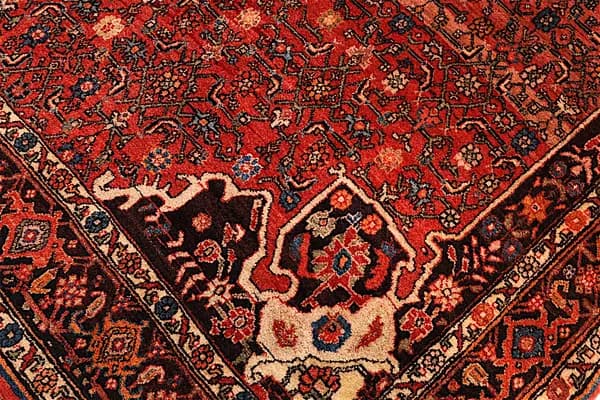
A warm, even brick red fills the field, carrying a dense diamond-lattice Mahi repeat scattered with teal, dusty rose and mustard. At the centre a lobed medallion rises in black and ivory, and the corner spandrels answer it in almost the same palette, pulling the layout into a tight, mirrored balance. A wide navy-black border, filled with a floral vine and rosette meander, frames it all, held at the edge by narrow cream and red guard stripes.
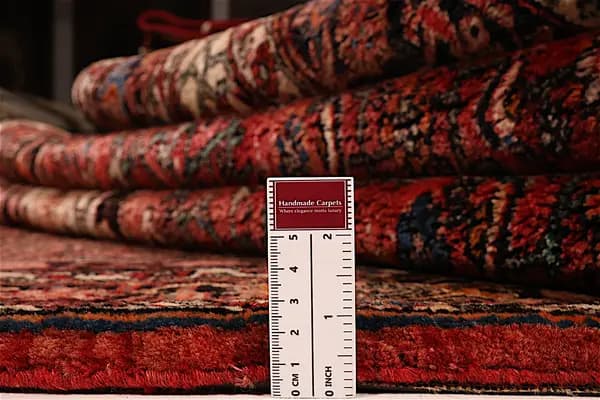
Garrous weavers use glossy, hand-spun wool from local Kurdish flocks, knotted onto a cotton warp and packed tighter than most tribal work attempts — the source of the region's legendary iron-like firmness. That same tight packing is what lets a weaver working from memory draw a lattice this fine, and a medallion and corner spandrels crisp enough to echo each other almost knot for knot. Natural dyes, worked in a harmonious palette, let the mustard and dusty rose sit quietly against the red rather than compete with it.
At 260 x 164 cm this suits a living room seating area or a bedroom floor. The brick red holds its own against dark wood, and warms a pale floor without overwhelming it. Underfoot the wool is dense and firm, a weave built to be walked on rather than kept for best. As the light moves across it, the small teal and rose accents in the lattice catch and let go in turn.
More on Garrous rugs: origin, making and how to recognise a genuine piece
At 260 × 164 cm (4.26 m²) this is a medium rug. It works in front of a sofa, in front of a bed or in a study. It is too small for a dining table — there you want about 80 cm of clearance so a chair does not tip over the edge when pushed back.
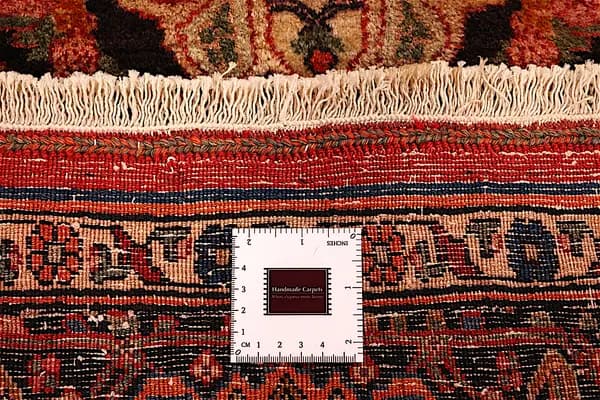
Yes, knotted by hand — knot by knot on a loom, not machine-made.
Hand-spun wool still carries its own lanolin, which keeps liquid sitting on the surface for a moment: blot quickly, with clear water and a light cloth, working inwards and without rubbing. Otherwise regular vacuuming along the pile is enough. Turn the rug once or twice a year so light and footfall reach it evenly.
We are in the Hamburg Speicherstadt. Come and see this rug in daylight, or write to us — a person answers.
Certificate included verifying origin, materials, and craftsmanship.
Ref: 573836