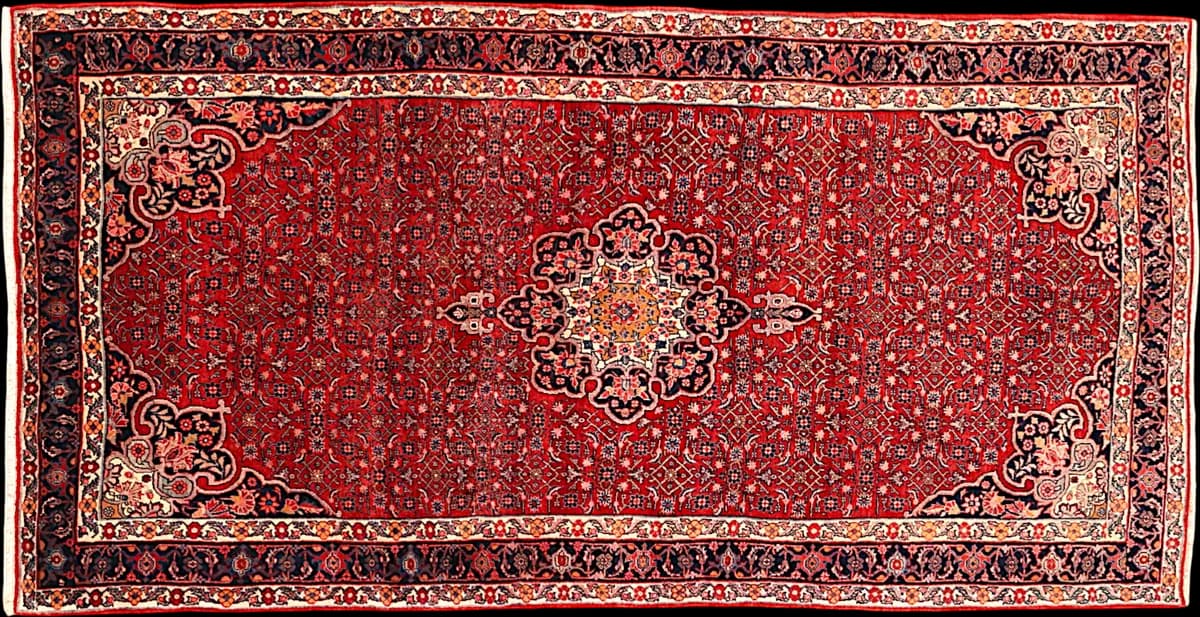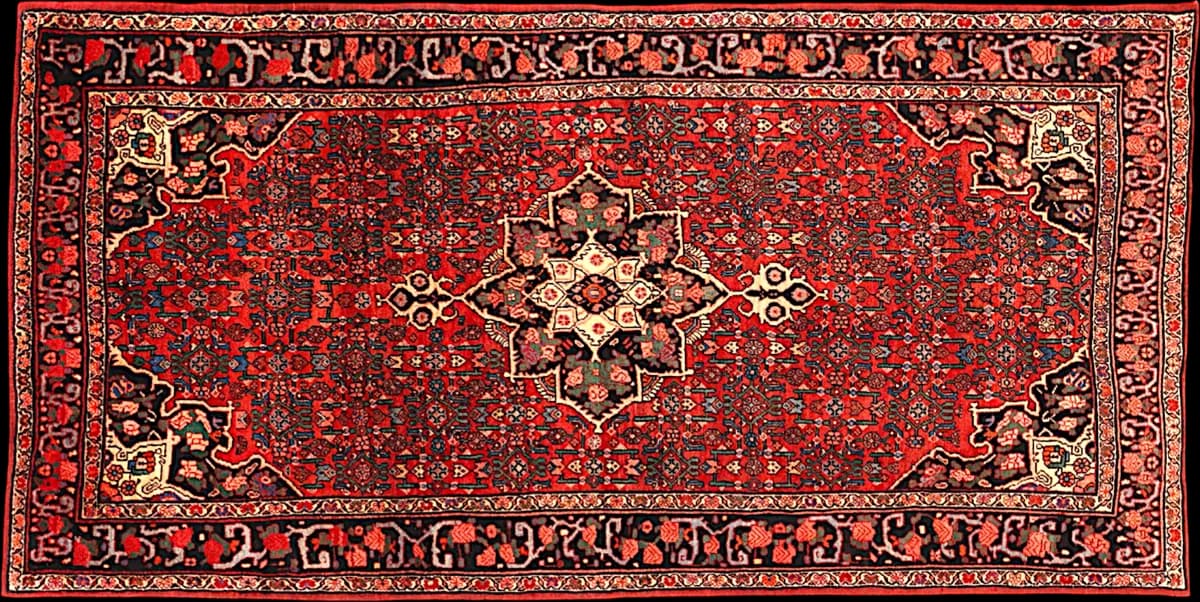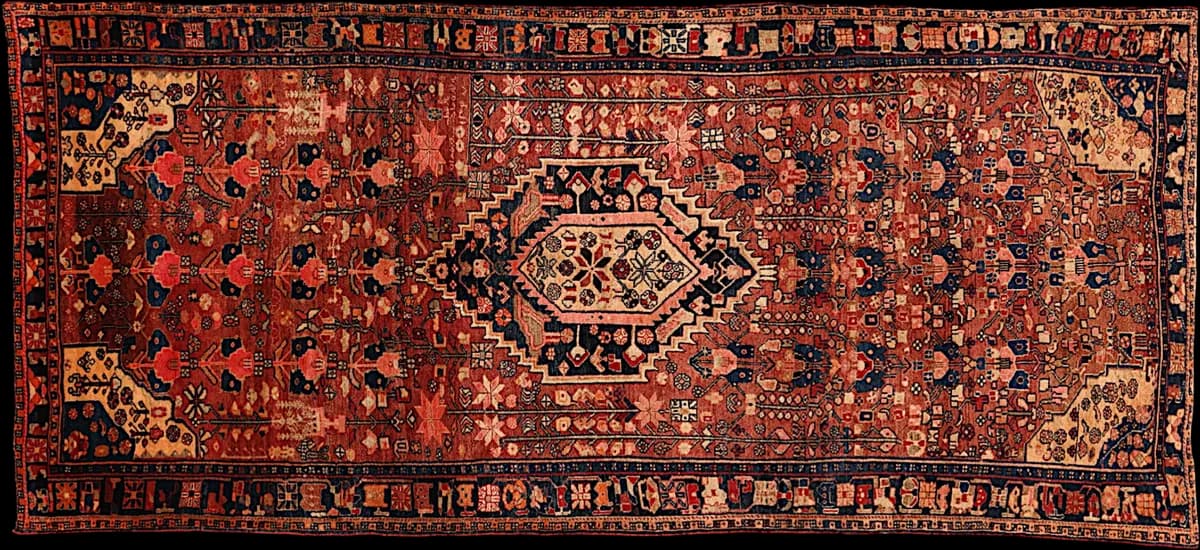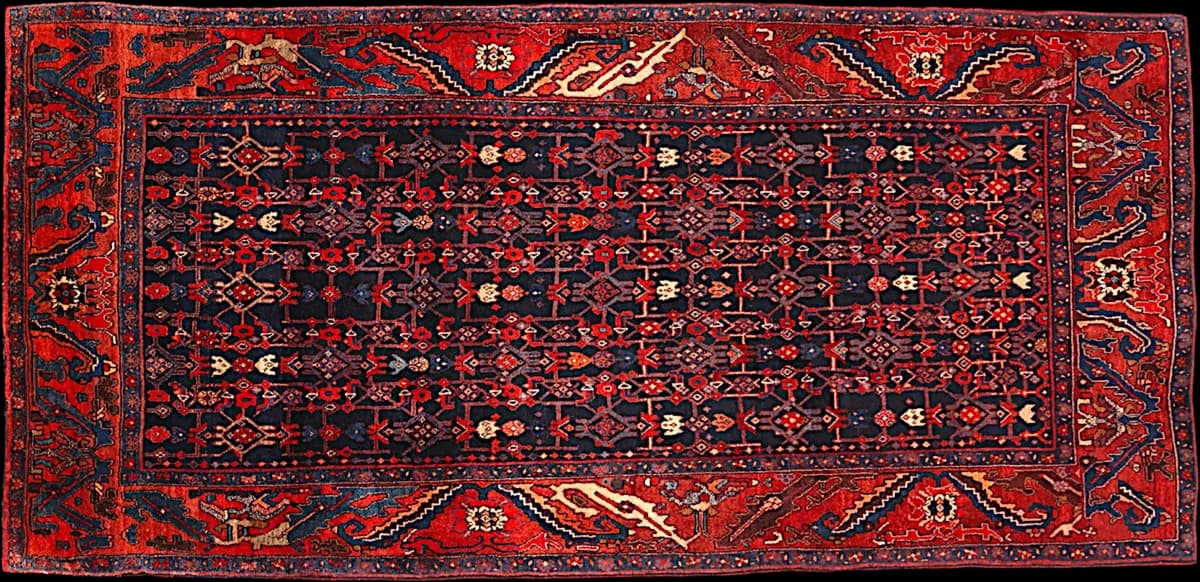
Bidjar Garus
170 × 103 cm
1.233 €



1.620 €
Incl. VAT
In Stock · Ready to Ship
This is a Garrous runner, also written Garrus, 336 x 168 cm (11'0" x 5'6"), from the Kurdish highlands around Bijar in western Iran. Garrous is the older tribal name for that region, and pieces woven there share the iron-like firmness that made Bijar famous across Persia, produced not in a workshop but by Kurdish tribal weavers working from memory.
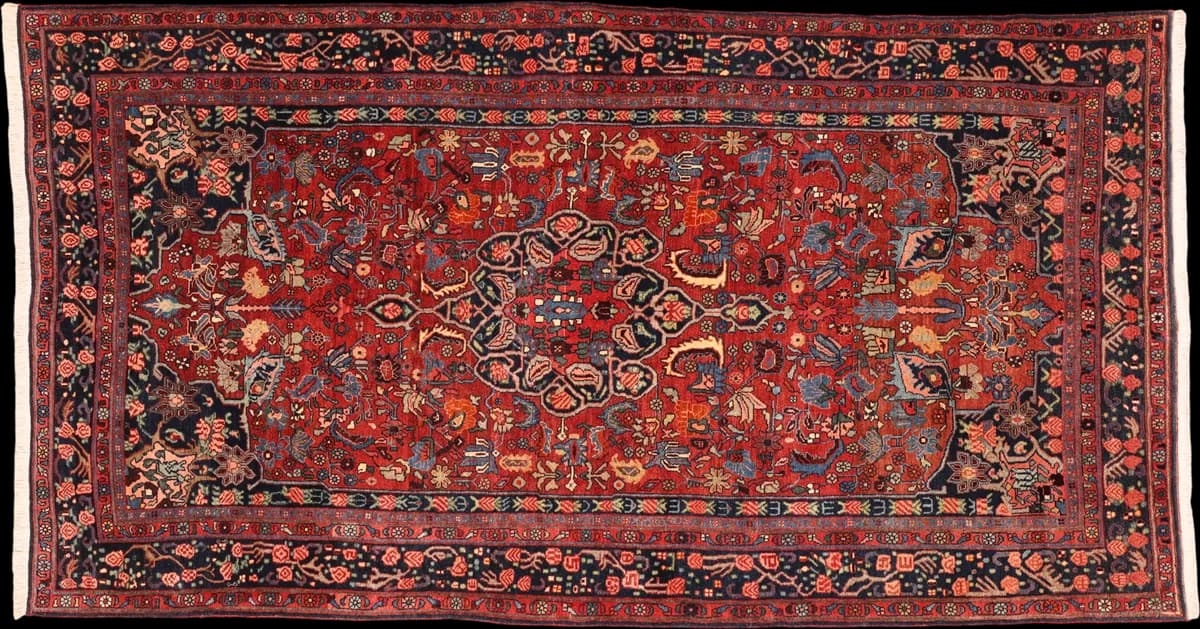
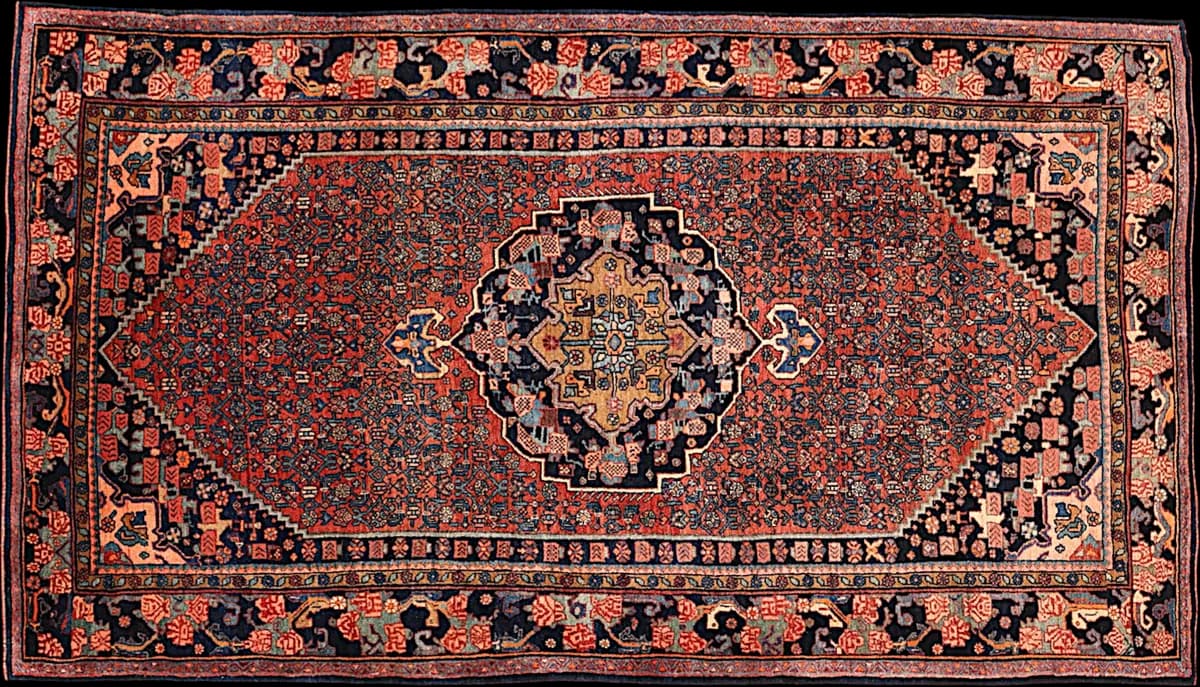
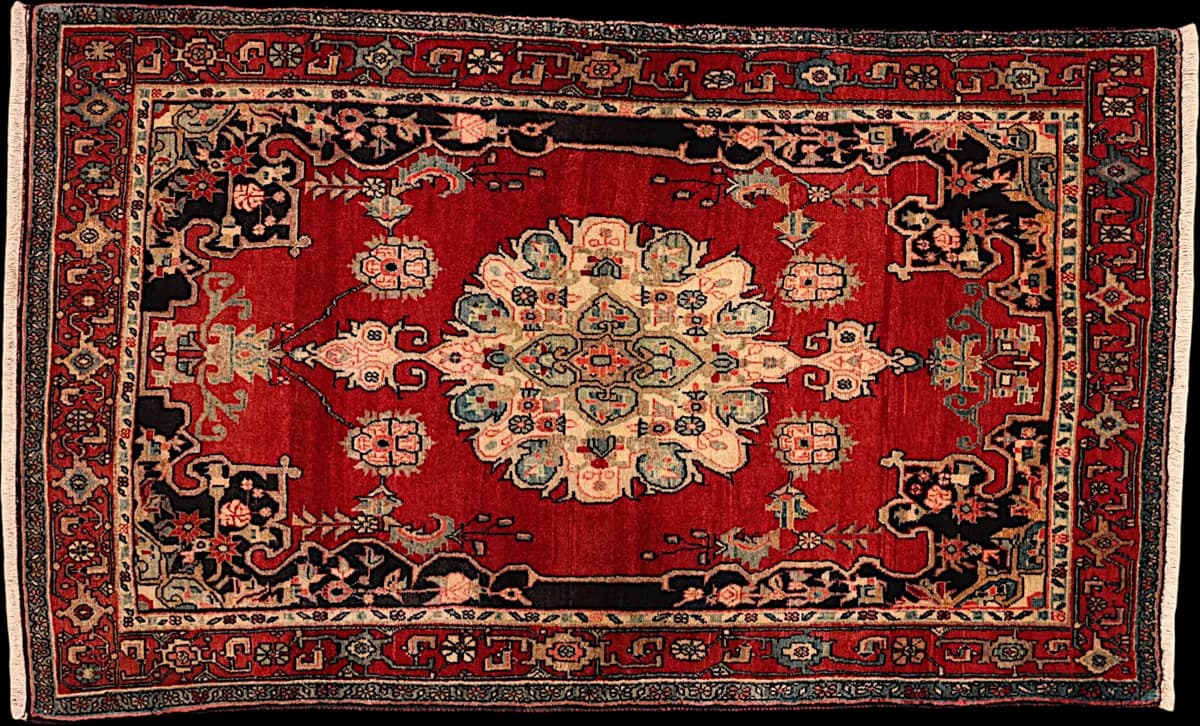
The first thing you see is a pair of large, stepped medallions in teal and jade, floating on a field of deep chocolate brown that runs close to black. A small motif links the two, and the ground between them carries only scattered stylised figures rather than a dense repeating pattern. At each corner sits a brick-red spandrel with stepped edges. Around all of this runs a wide, multi-banded border in navy and rust-orange, taking up a fifth of the rug's width.
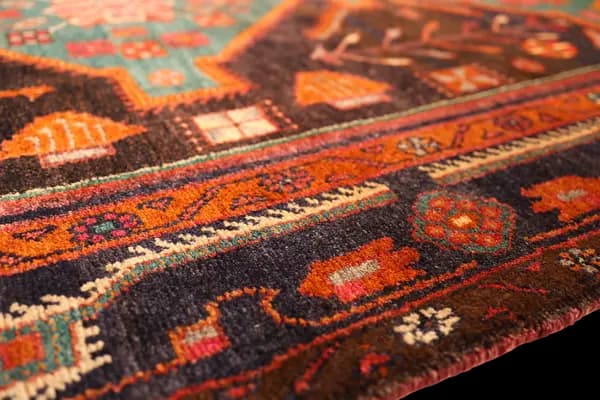
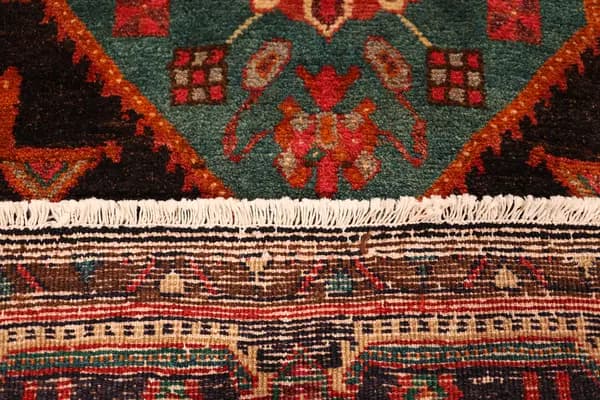
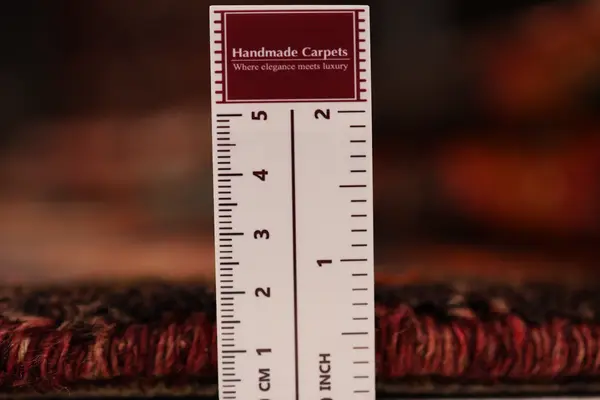
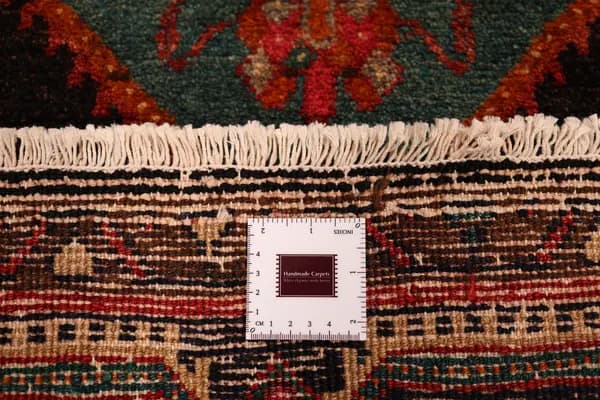
The weave is hand-knotted on a cotton warp, in hand-spun wool that keeps a faint sheen and a slight unevenness no machine spinning produces. At 201,000 to 250,000 knots per square metre, the knotting is close enough to lock the twelve-millimetre pile into the dense, board-like hand that gave Bijar and Garrous rugs their reputation for outlasting most other rugs underfoot. Woven twenty to forty years ago, the wool has already settled into that firmness, and it will not soften with use, only wear smoother.
As a runner, this rug belongs in a hallway or a landing, seen along its length rather than sat on. Against a pale floor, the chocolate-brown field holds its own, and the two teal medallions carry the eye down the room. Underfoot it is dense and firm, made to be walked on rather than kept for best. As light crosses it, the teal shifts from blue to green against the dark ground.
More on Garrous rugs: origin, making and how to recognise a genuine piece
Fine quality weave
At 336 × 168 cm (5.64 m²) this is a large rug. It sits under a seating group with the front legs of sofa and chairs on it, or under a dining table for four. A table for six wants about 80 cm of clearance all round, and needs more.
Yes, knotted by hand — knot by knot on a loom, not machine-made. The density is 201,000 to 250,000 knots per square metre; across 5.64 m² that is roughly 1.1 to 1.4 million individual knots, every one of them tied by hand.
Hand-spun wool still carries its own lanolin, which keeps liquid sitting on the surface for a moment: blot quickly, with clear water and a light cloth, working inwards and without rubbing. Otherwise regular vacuuming along the pile is enough. Turn the rug once or twice a year so light and footfall reach it evenly.
We are in the Hamburg Speicherstadt. Come and see this rug in daylight, or write to us — a person answers.
Certificate included verifying origin, materials, and craftsmanship.
Ref: 612653