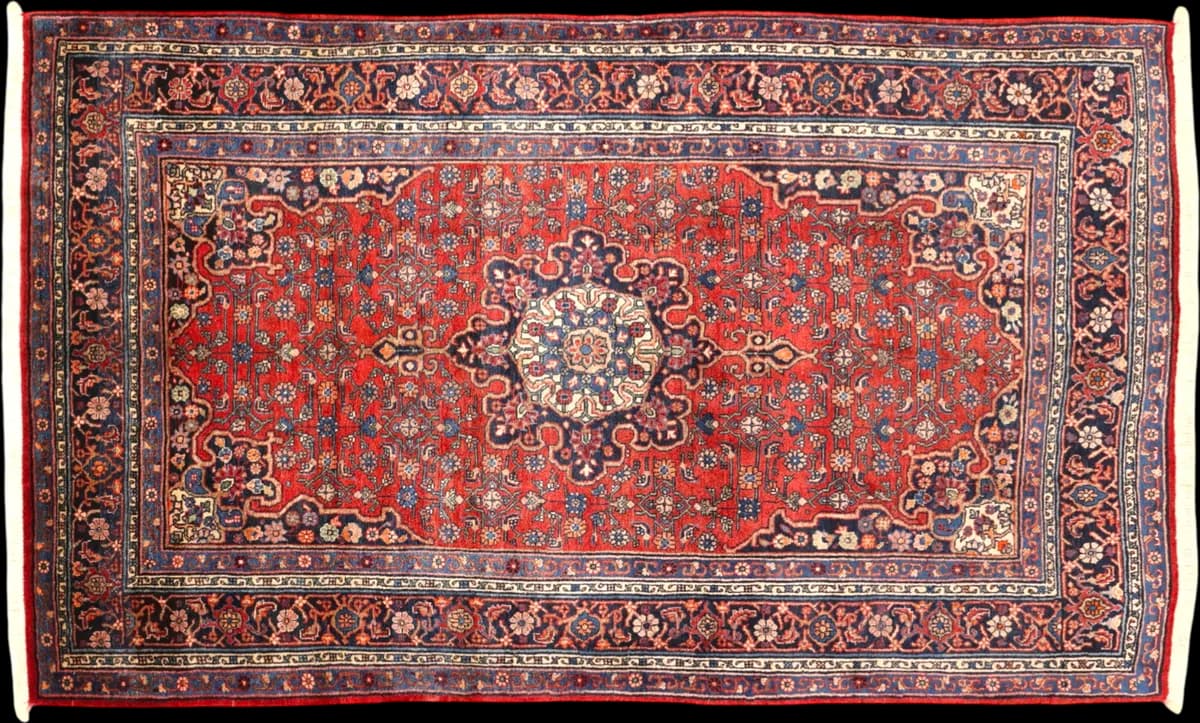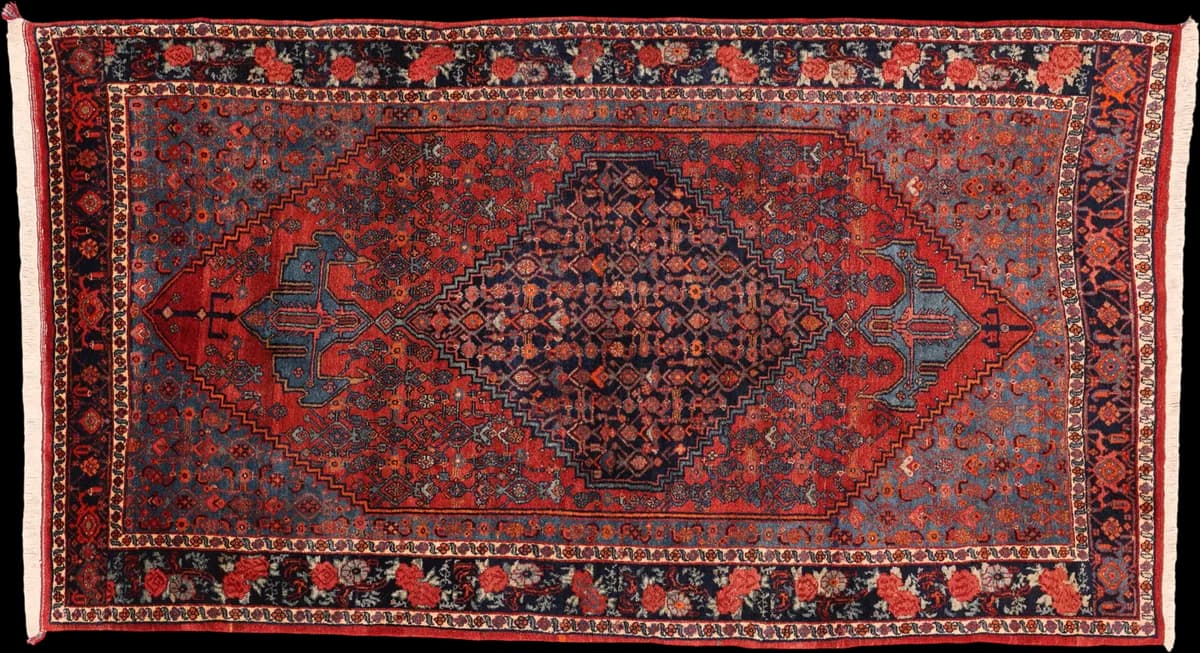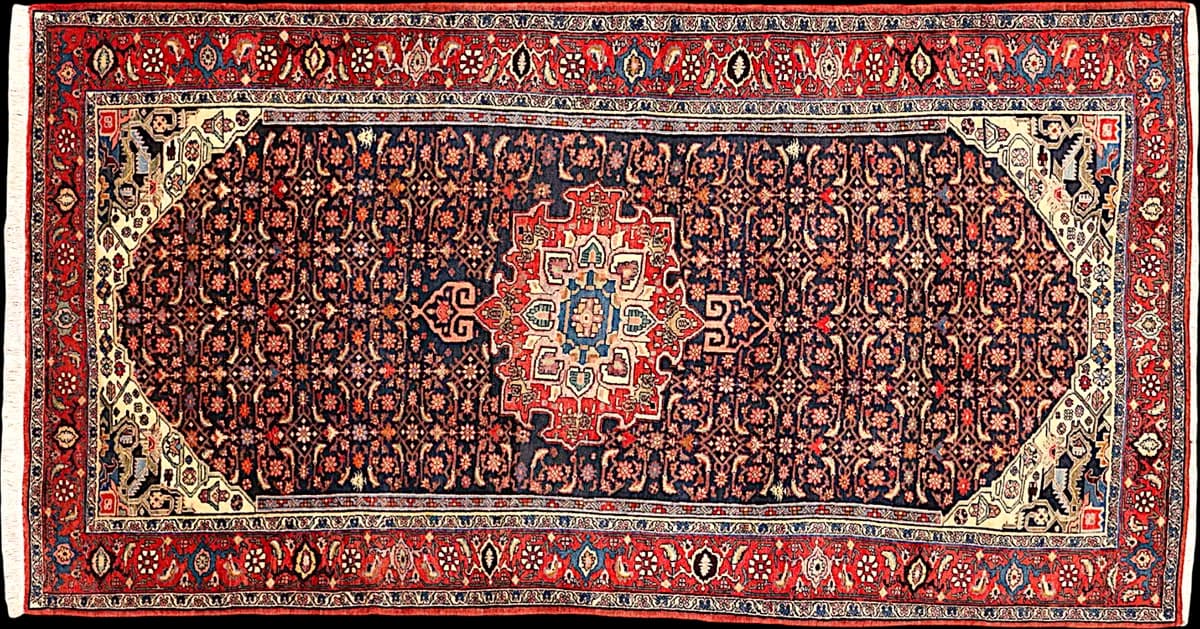
Kordi
276 × 146 cm
2.370 €






1.650 €
Incl. VAT
In Stock · Ready to Ship
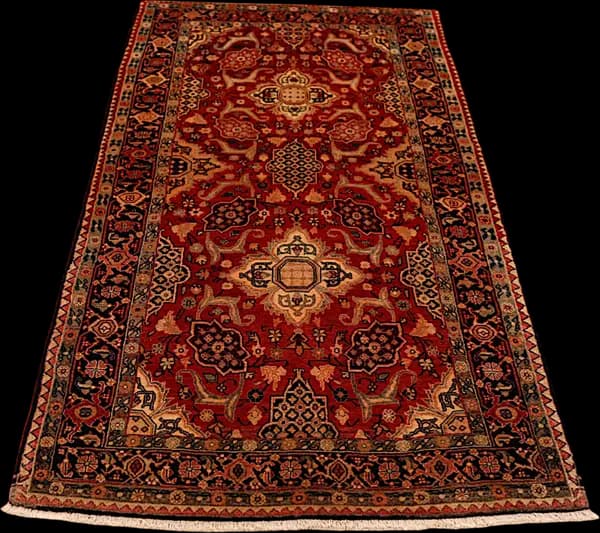
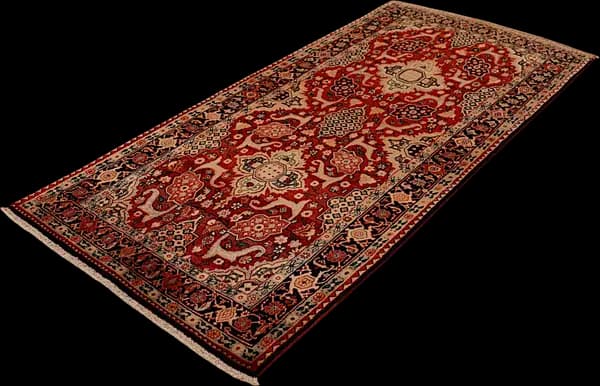
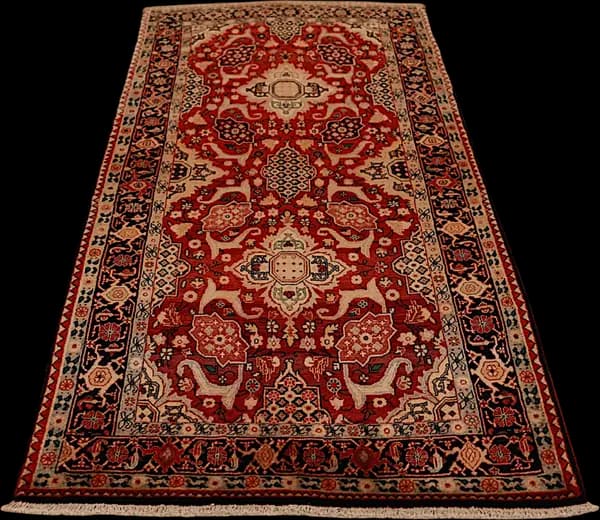
This is a Garrous runner, 267 x 125 cm (8'9" x 4'1"), woven in the Kurdish highlands around Bijar in western Iran. Garrous, also written Garrus, is the tribal name behind the wider Bijar tradition, prized for a density so firm it is often called iron-like. Where a Bijar is usually built around one broad medallion, here the weaver has drawn out a chain of them along the runner's length.
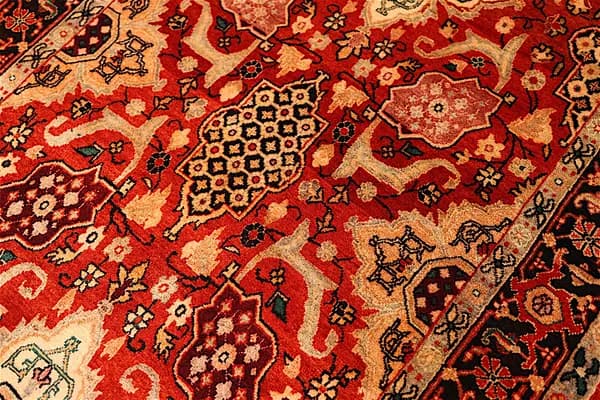
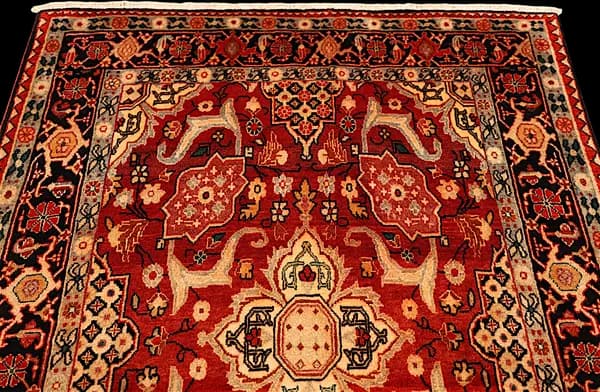
The field is a deep brick red, carried the length of the runner by a chain of medallions rather than gathered into one centre. Each is outlined in ivory and linked by curling floral vines, and though the shapes repeat, the fillings do not: one holds a tight micro-diamond lattice, the next a floral rosette, with dusty rose, mustard-gold and teal-grey surfacing along the way. A wide navy border, dense with small floral cartouches, closes the field on both sides, held in by narrow ivory and red guard stripes.
This runner is hand-knotted, wool on a cotton warp, at 201,000 to 250,000 knots per square metre, the density behind Garrous's famously firm handle. The wool is hand-spun and matte rather than glossy, holding colour rather than throwing light, and stands 15 mm deep, giving real body underfoot. Repeating a medallion down a long, narrow field rather than centring one asks a weaver working from memory to redraw the same shape again and again without a cartoon - which is why the fillings shift slightly each time.
A runner suits a hallway or landing, warming a space that often gets little daylight. The navy border holds its own against dark skirting, and the chain of medallions draws the eye down the length of the room. Underfoot the wool is dense and firm, made for a passage that is walked rather than admired. Morning light catches the ivory outlines differently each way you pass.
More on Garrous rugs: origin, making and how to recognise a genuine piece
Fine quality weave
At 267 × 125 cm (3.34 m²) this is a medium rug. It works in front of a sofa, in front of a bed or in a study. It is too small for a dining table — there you want about 80 cm of clearance so a chair does not tip over the edge when pushed back.
Yes, knotted by hand — knot by knot on a loom, not machine-made. The density is 201,000 to 250,000 knots per square metre; across 3.34 m² that is roughly 670,000 to 830,000 individual knots, every one of them tied by hand.
Hand-spun wool still carries its own lanolin, which keeps liquid sitting on the surface for a moment: blot quickly, with clear water and a light cloth, working inwards and without rubbing. Otherwise regular vacuuming along the pile is enough. Turn the rug once or twice a year so light and footfall reach it evenly.
We are in the Hamburg Speicherstadt. Come and see this rug in daylight, or write to us — a person answers.
Certificate included verifying origin, materials, and craftsmanship.
Ref: 258798