Bidjar Garus
327 × 157 cm
1.924 €




4.032 €
Incl. VAT
In Stock · Ready to Ship
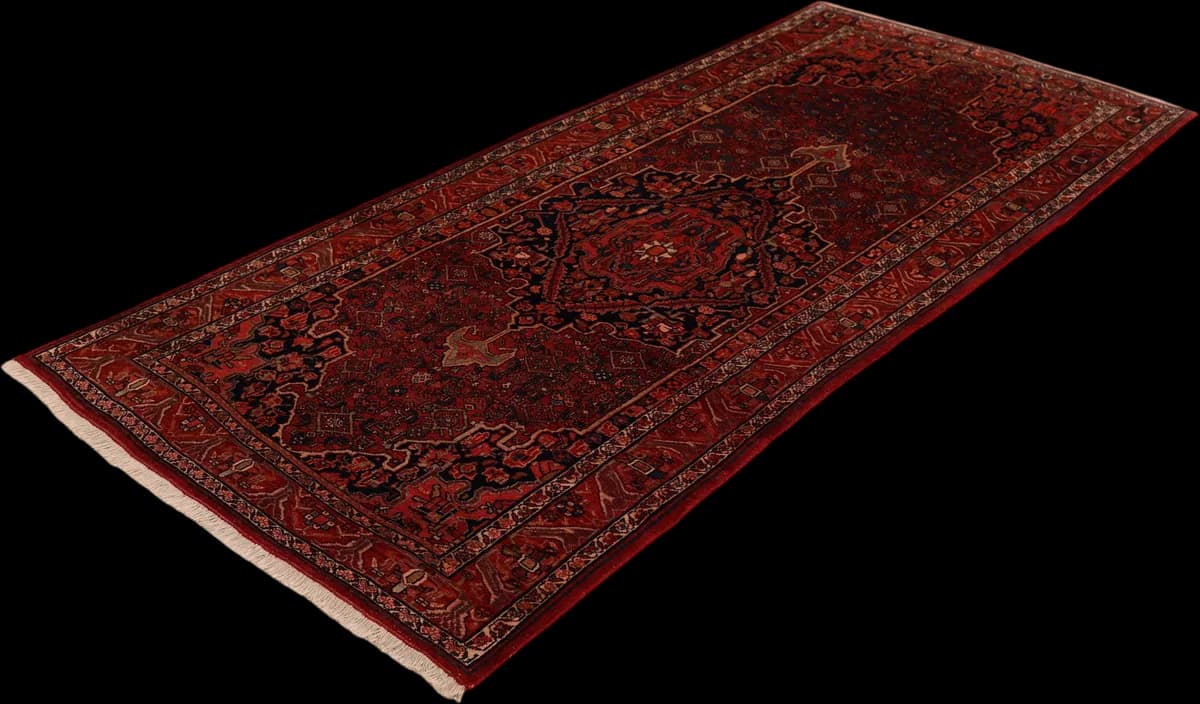
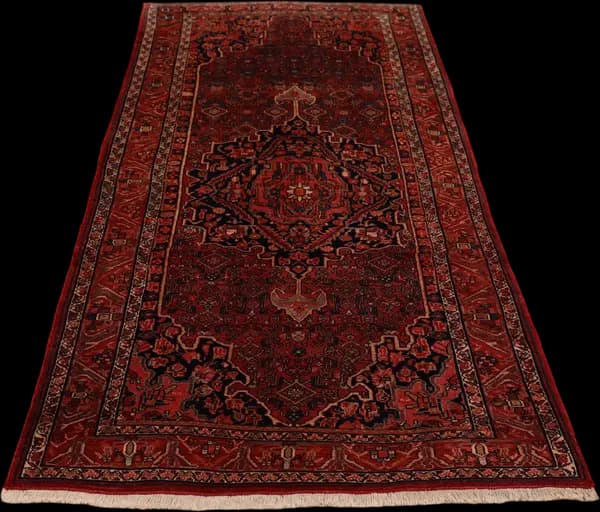
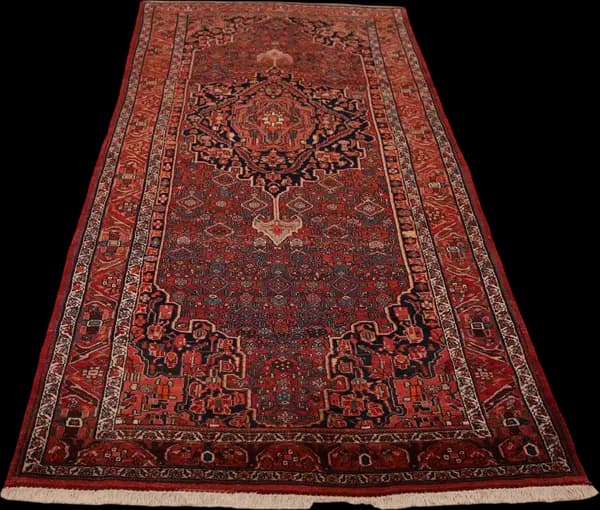
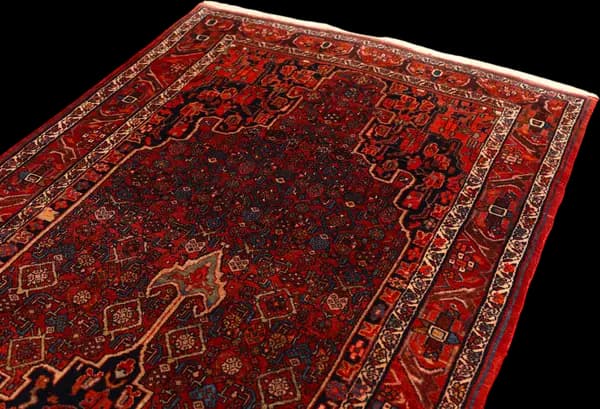
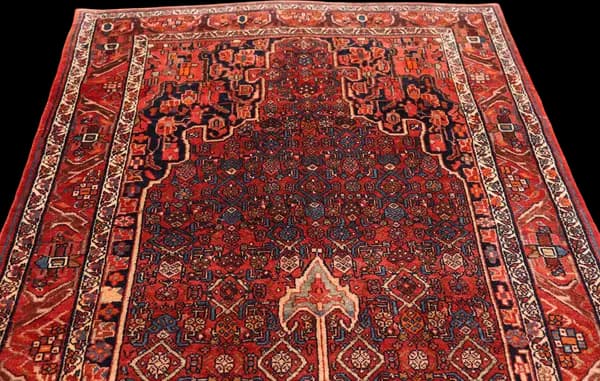
This is a Garrous runner, also written Garrus, knotted from memory by Kurdish weavers in the highlands around Bijar in western Iran, measuring 320 x 140 cm (10'6" x 4'7"). Garrous is the old name for the Bijar district, and pieces woven here carry the same legendary density that makes Bijar rugs famous, produced by tribal hands rather than an urban workshop. In a runner, that strength becomes something you can put underfoot every day.
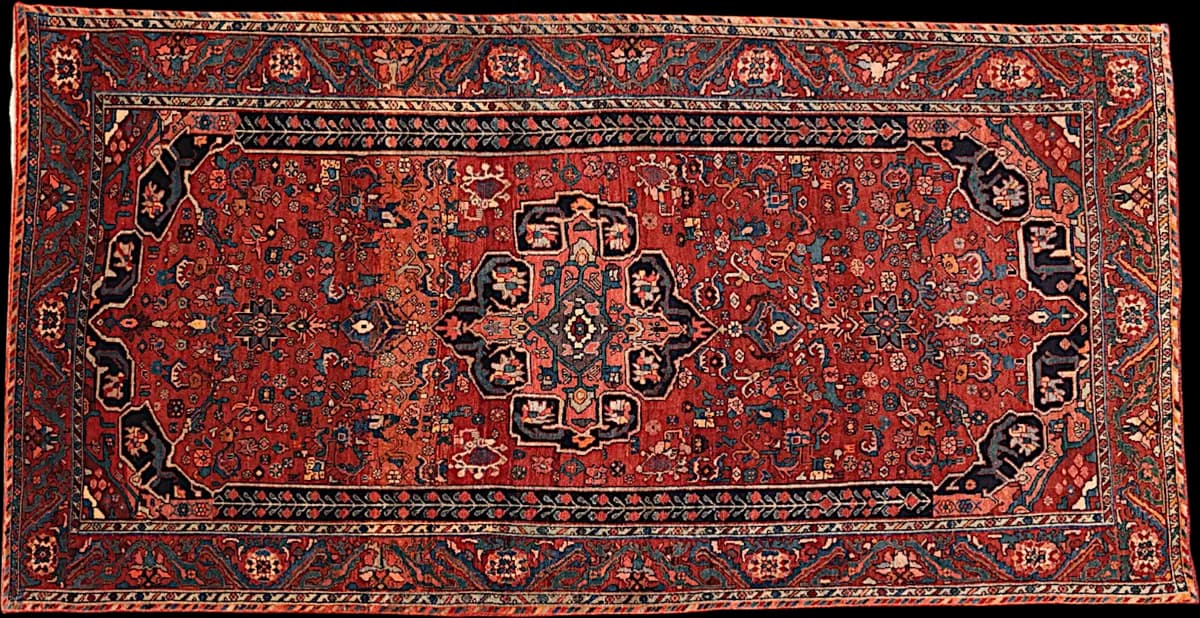
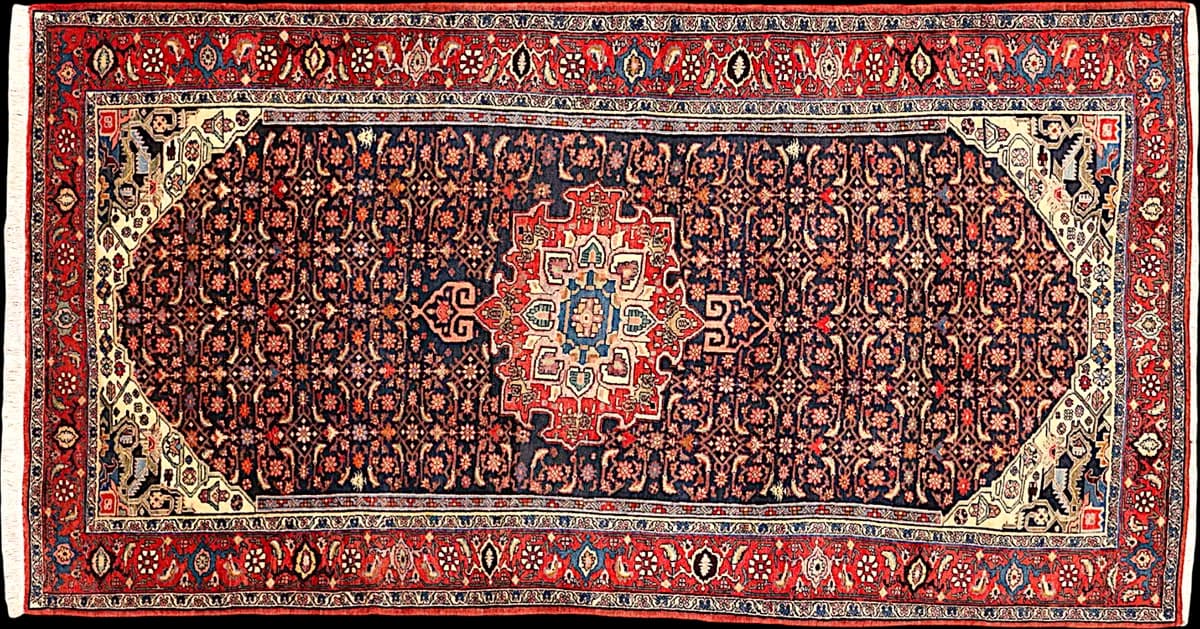
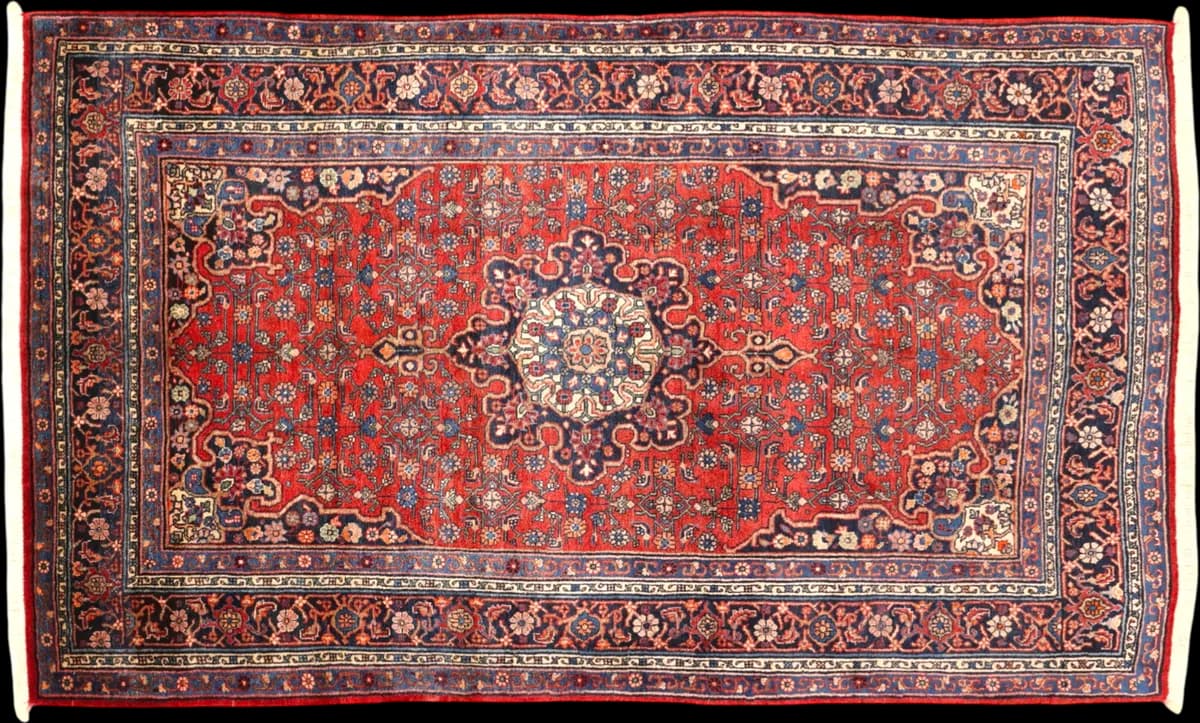
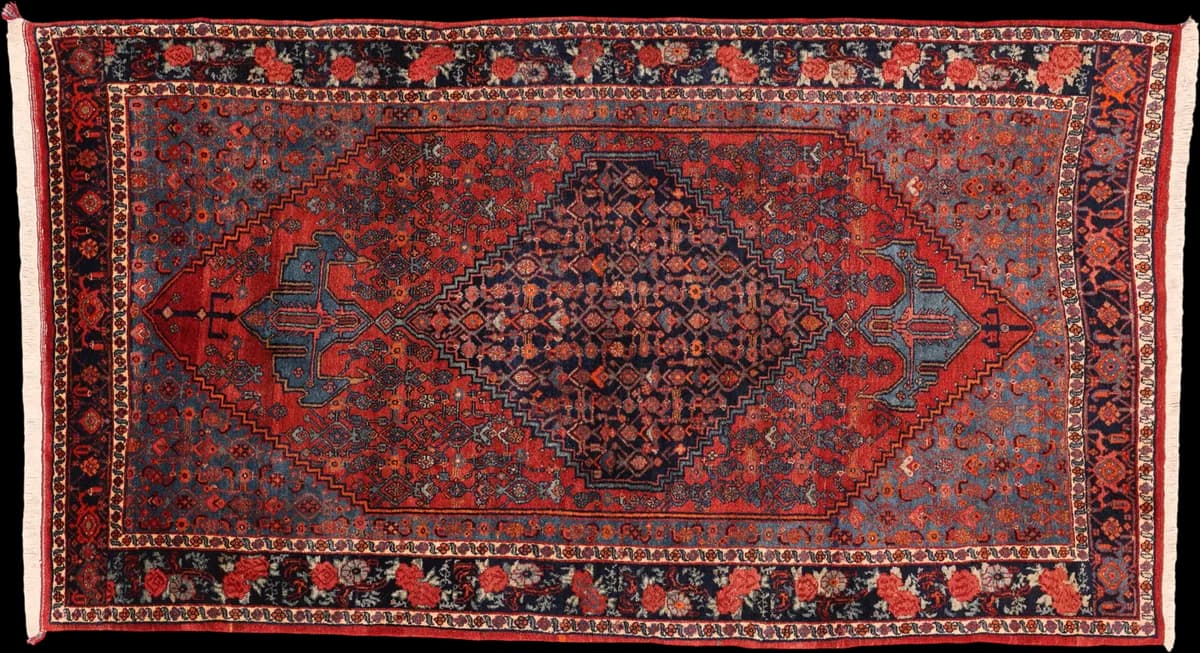
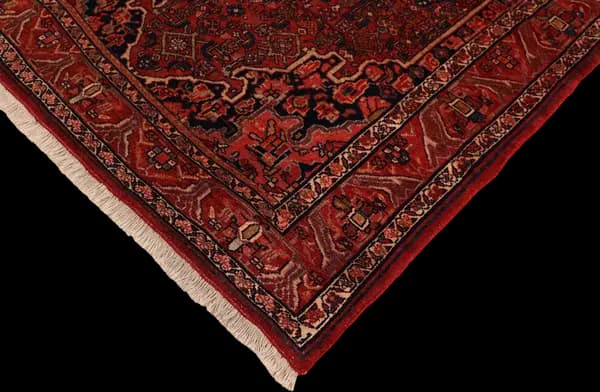
A deep brick red field carries the eye first, and out of it rises a large navy medallion with a red core, floating rather than centred. Around it the red is thick with small motifs, in rust, teal, camel and dusty pink, scattered densely yet never crowding the medallion's authority. Navy pendant spandrels anchor each end, and a wide ivory border, patterned with a floral running vine, closes the field with a calm, pale frame.
The density is not just visual. At 800,000 to 1,000,000 knots per square metre, this counts among the tightest hand-knotting done anywhere, made with hand-spun wool from local Kurdish flocks on a cotton warp. Combined with a pile sheared to just 15 mm, that count gives Garrous weaving its near-iron firmness and crisp definition of small motifs — a shallow, tightly packed pile holds a line better than a deep, loose one. A rug at this density is months, not weeks, at the loom.
This is a hallway or landing piece, long enough for a corridor, with room to pass. Brick red and navy hold their depth even where daylight is scarce, reading clearly under artificial light. Underfoot it is dense and firm, made for a floor walked on daily, and decades in its wool already prove it can take that use. Where light does reach it, the ivory border catches first, and the navy medallion deepens against the red.
More on Garrous rugs: origin, making and how to recognise a genuine piece
Exceptionally fine weave
At 320 × 140 cm (4.48 m²) this is a runner. It belongs in a hallway, an entrance, on a landing or lengthways beside a bed. It is too narrow for the middle of a room.
Yes, knotted by hand — knot by knot on a loom, not machine-made. The density is 800,000 to 1,000,000 knots per square metre; across 4.48 m² that is roughly 3.6 to 4.5 million individual knots, every one of them tied by hand.
Hand-spun wool still carries its own lanolin, which keeps liquid sitting on the surface for a moment: blot quickly, with clear water and a light cloth, working inwards and without rubbing. Otherwise regular vacuuming along the pile is enough. Turn the rug once or twice a year so light and footfall reach it evenly.
We are in the Hamburg Speicherstadt. Come and see this rug in daylight, or write to us — a person answers.
Certificate included verifying origin, materials, and craftsmanship.
Ref: 209359