Exclusive
Bidjar | Exclusivewith silk
407 × 79 cm
8.550 €






23.400 €
Incl. VAT
In Stock · Ready to Ship
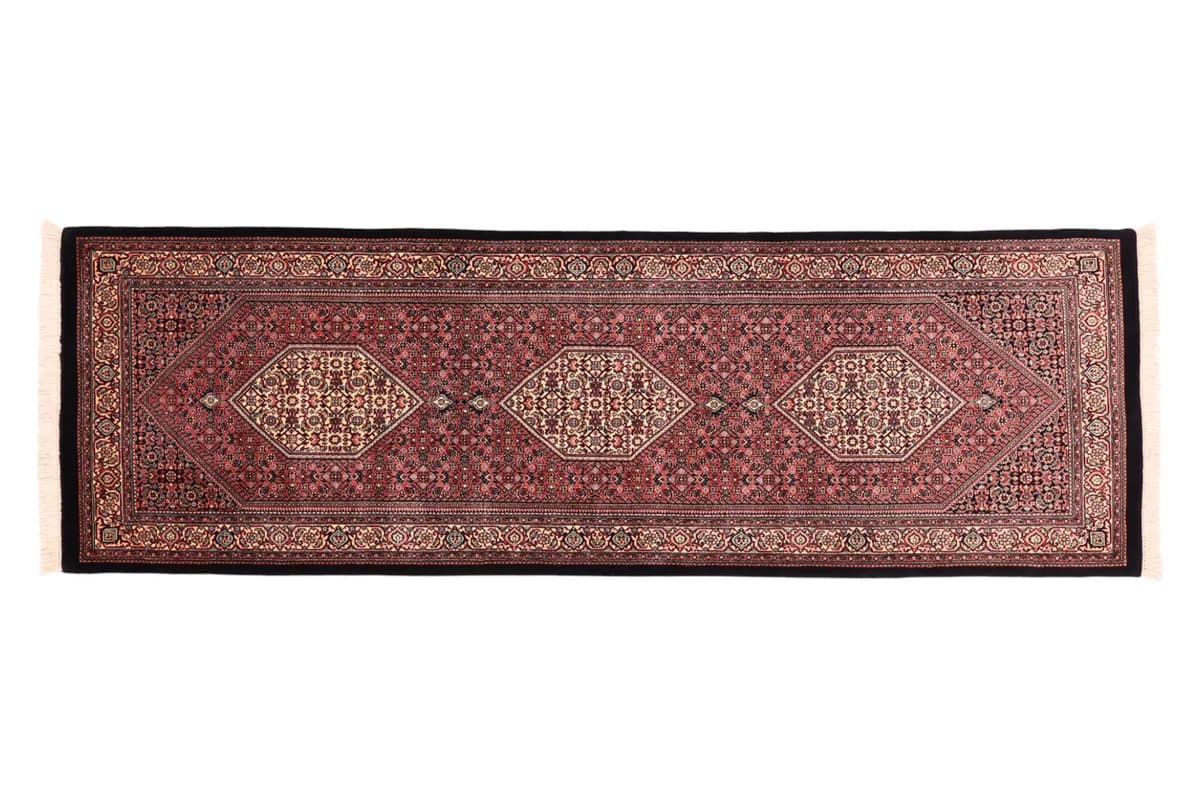
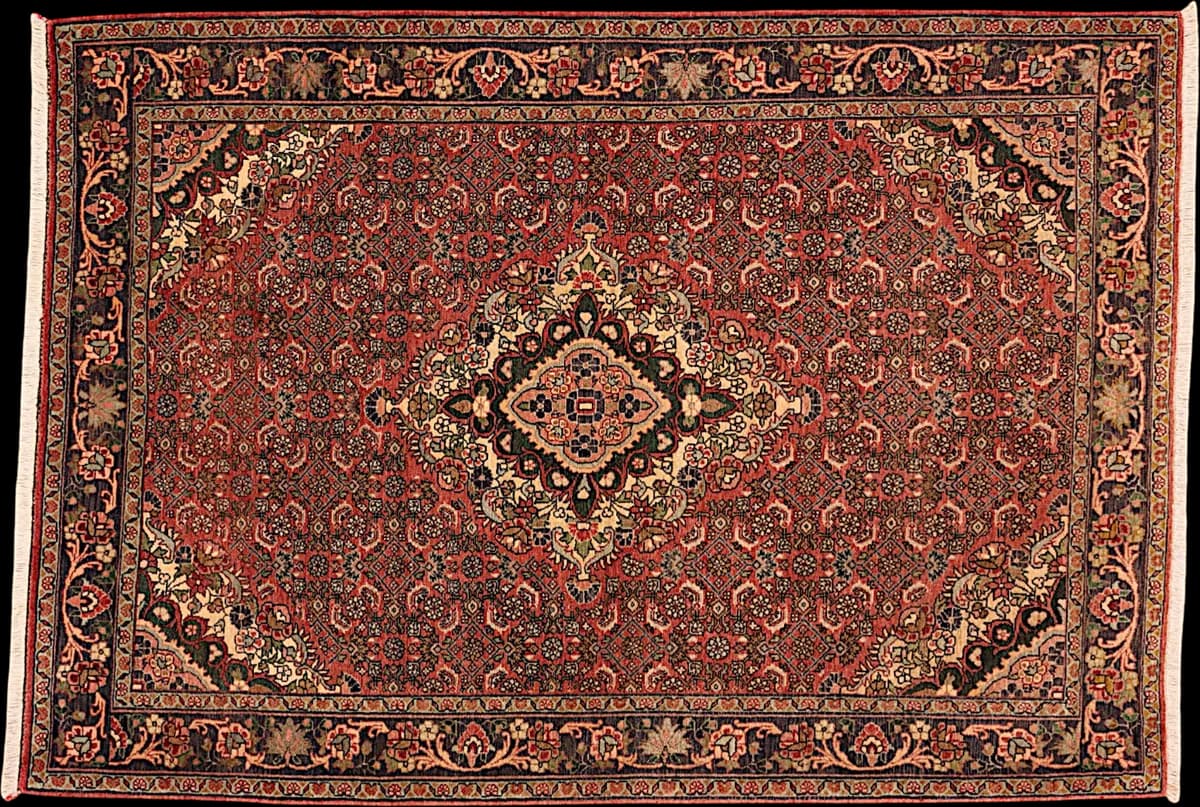
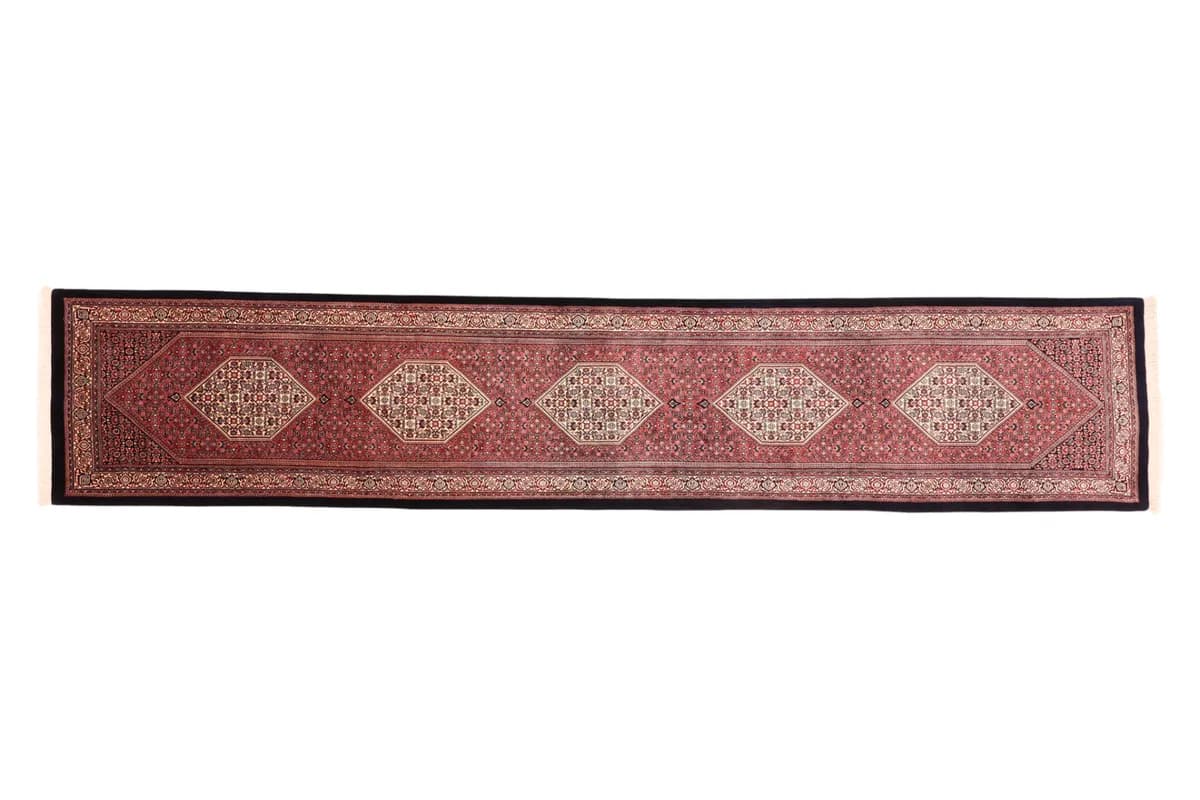
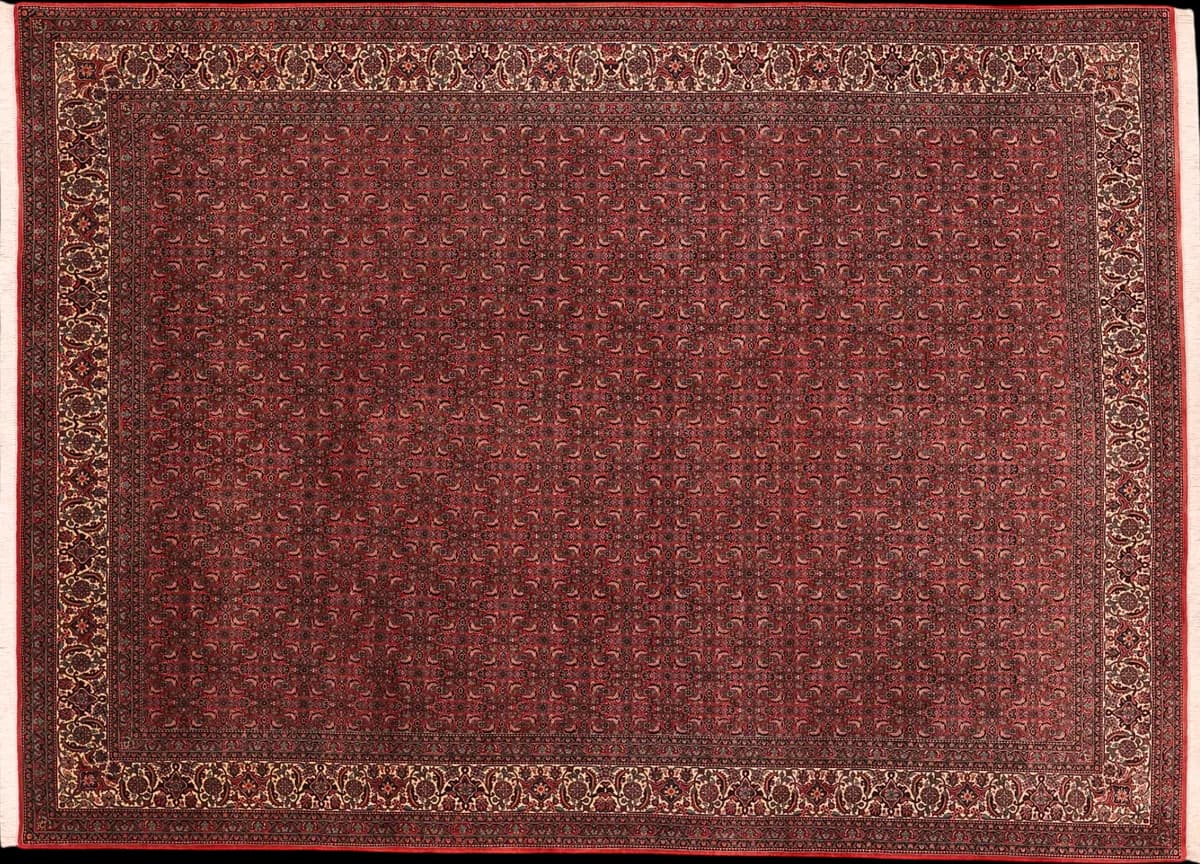
Some rugs announce themselves as soon as you enter a room; this one takes longer, and that is the point. It is a Bijar, also written Bidjar, from the Kurdish weaving regions of western Iran, sized 350 x 256 cm (11'6" x 8'5"). The type is known above all for two things: a density of knotting unmatched anywhere else in the Persian tradition, and a habit of combining strict geometry with classical floral drawing in the same field. Weavers here have earned their rugs the nickname "the iron rugs of Persia."
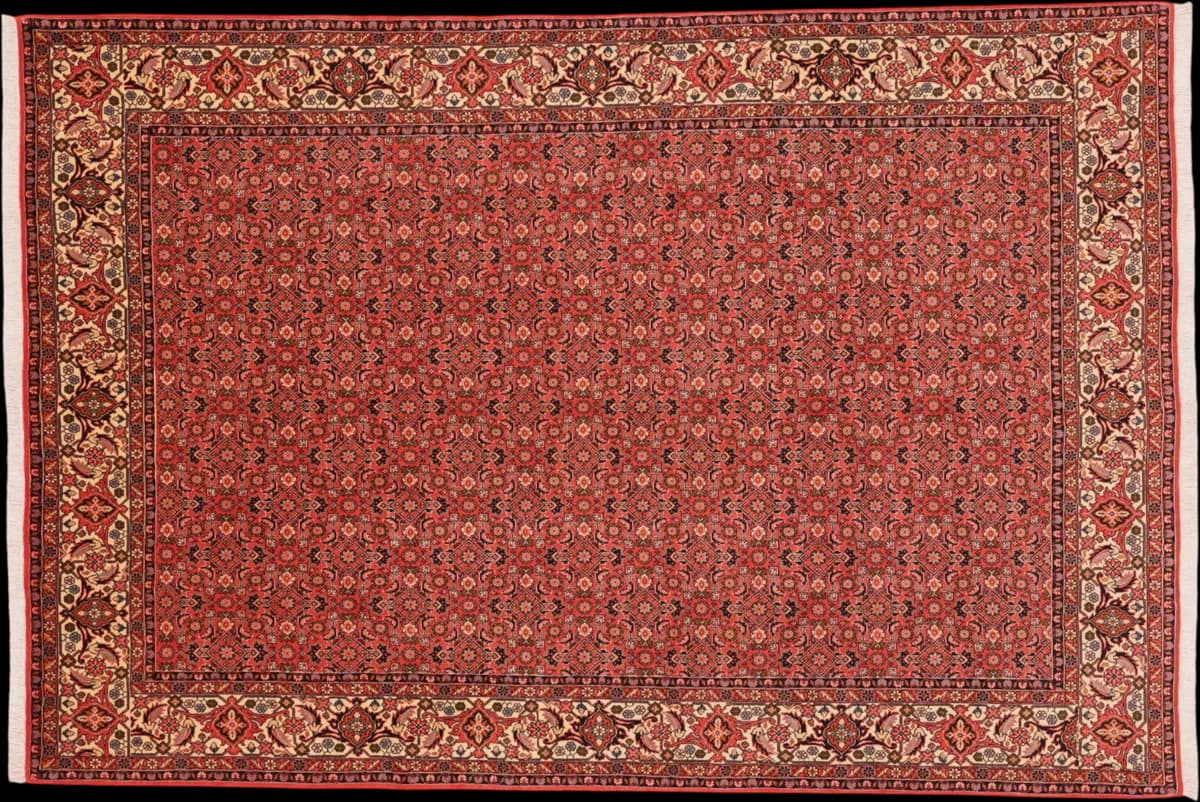
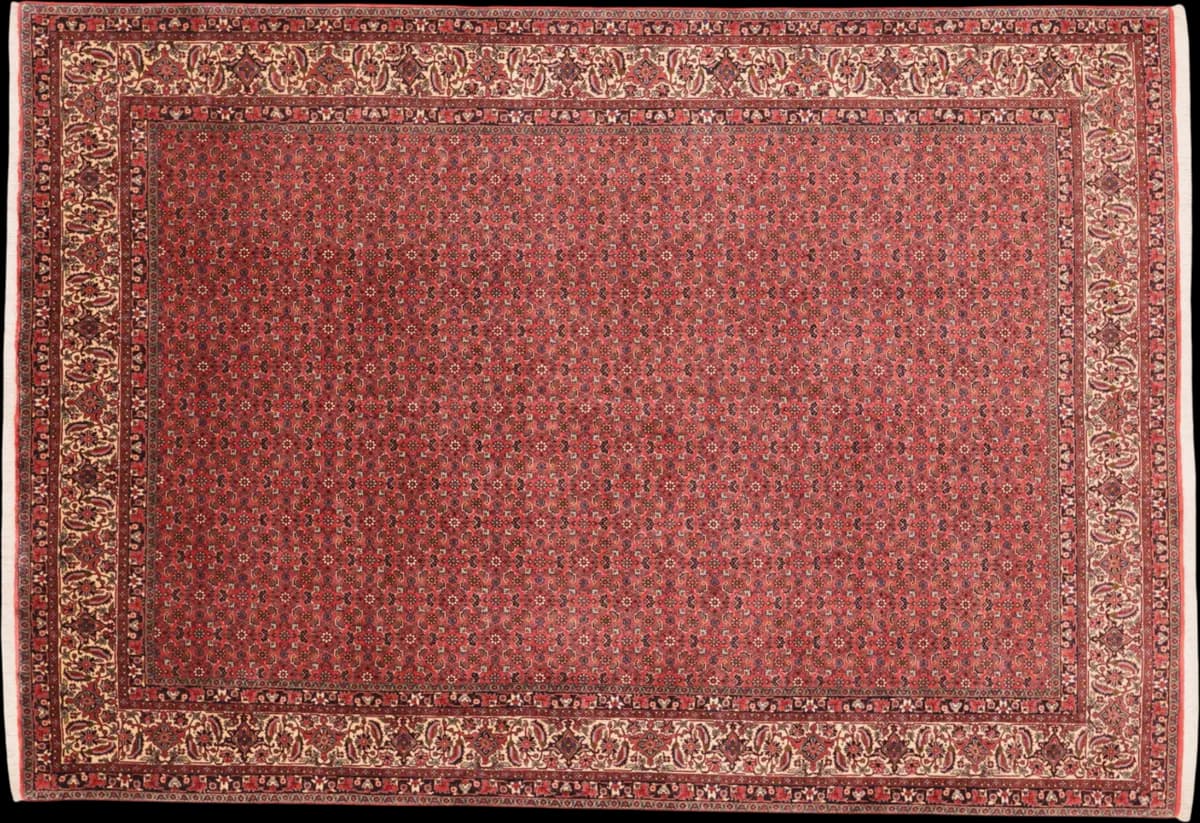
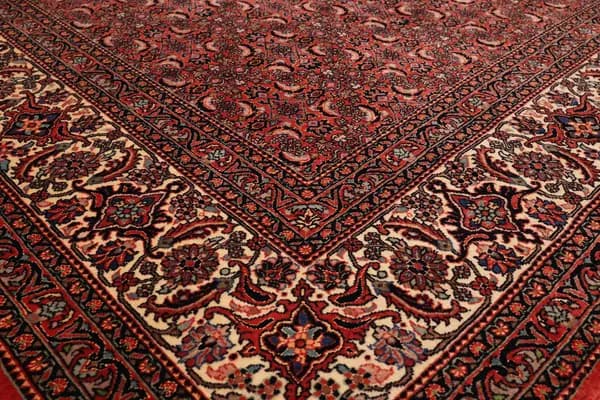
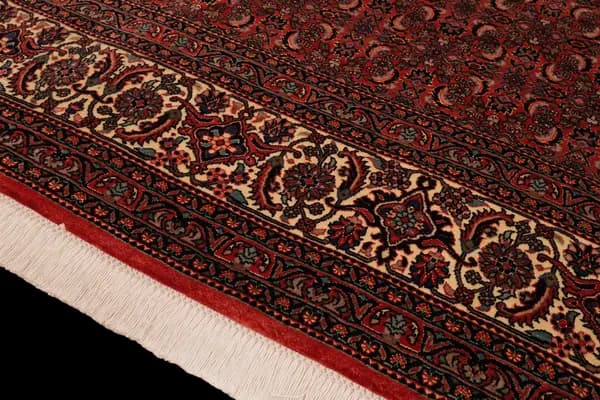
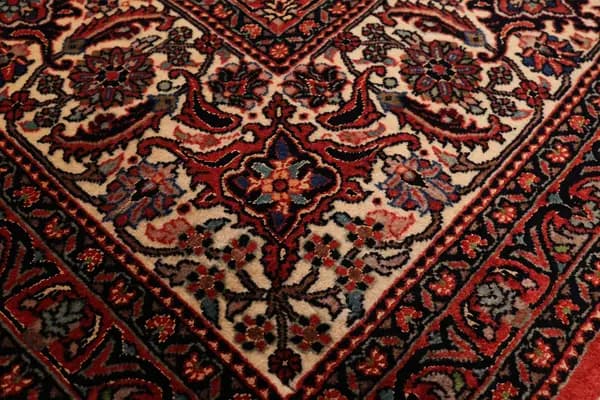
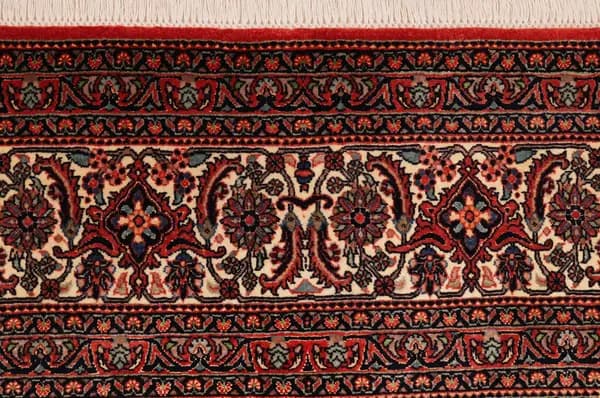
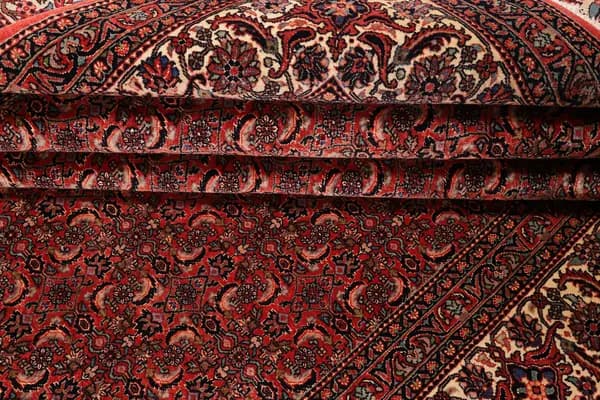
The field is a deep brick red, almost wine at its darkest, carrying an allover Mahi lattice of fish and rosettes with no medallion to anchor it. The repeat is so fine and so even that at normal viewing distance the pattern stops reading as motif at all and settles instead into a dense, textured red surface, closer to a woven cloth than a drawn design. It takes a step closer to resolve back into diamonds and fish. Around it runs a wide ivory border, roughly a fifth of the rug's width, carrying red, navy and teal palmettes and vine against navy guard stripes, and it is this pale, busier frame that finally sets off how quiet the field itself has been.
That quietness is a direct result of the knotting. At 441,000 to 500,000 knots per square metre, this is an unusually fine weave even for a Bijar, and the pile mixes silk into the wool, which spins thinner and lets the knot sit tighter still, which is why so small a motif can be drawn so cleanly and then disappear at range. The same density gives the rug its legendary weight and stiffness: a Bijar this compact cannot be folded, only rolled, and that same compactness is what carries it through decades of foot traffic without losing its edges.
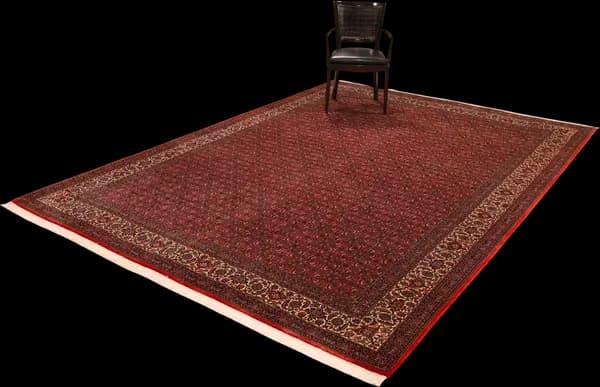
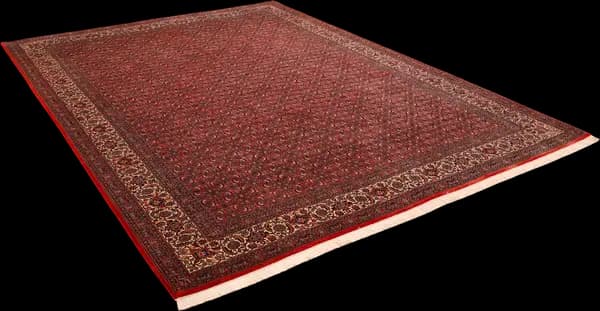
Under a dining table or beneath a living room seating group, this is a rug built to be walked on rather than kept for best. The brick red holds its own against dark wood or dark upholstery and warms a pale floor without shouting at it, while the low, tightly clipped pile stays firm and substantial underfoot, dense enough for a room in daily use. Move around it through the day and the surface catches the light differently from every angle, the lattice sharpening and softening as you go.
More on Bidjar rugs: origin, making and how to recognise a genuine piece
Superior craftsmanship
At 350 × 256 cm (8.96 m²) this is a very large rug. It carries a whole seating group with every furniture leg on it, or a dining table with the chairs pushed back. In a small room it becomes the floor rather than a rug.
Yes, knotted by hand — knot by knot on a loom, not machine-made. The density is 441,000 to 500,000 knots per square metre; across 8.96 m² that is roughly 4.0 to 4.5 million individual knots, every one of them tied by hand.
This pile contains silk and is more delicate than pure wool. Vacuum without a rotating brush and along the pile, do not beat it, and keep it out of permanent direct sun. Blot spills at once with a light cloth, never rub. For a proper clean a silk-blend rug belongs in expert hands — we handle that for pieces bought from us.
We are in the Hamburg Speicherstadt. Come and see this rug in daylight, or write to us — a person answers.
Certificate included verifying origin, materials, and craftsmanship.
Ref: 790535