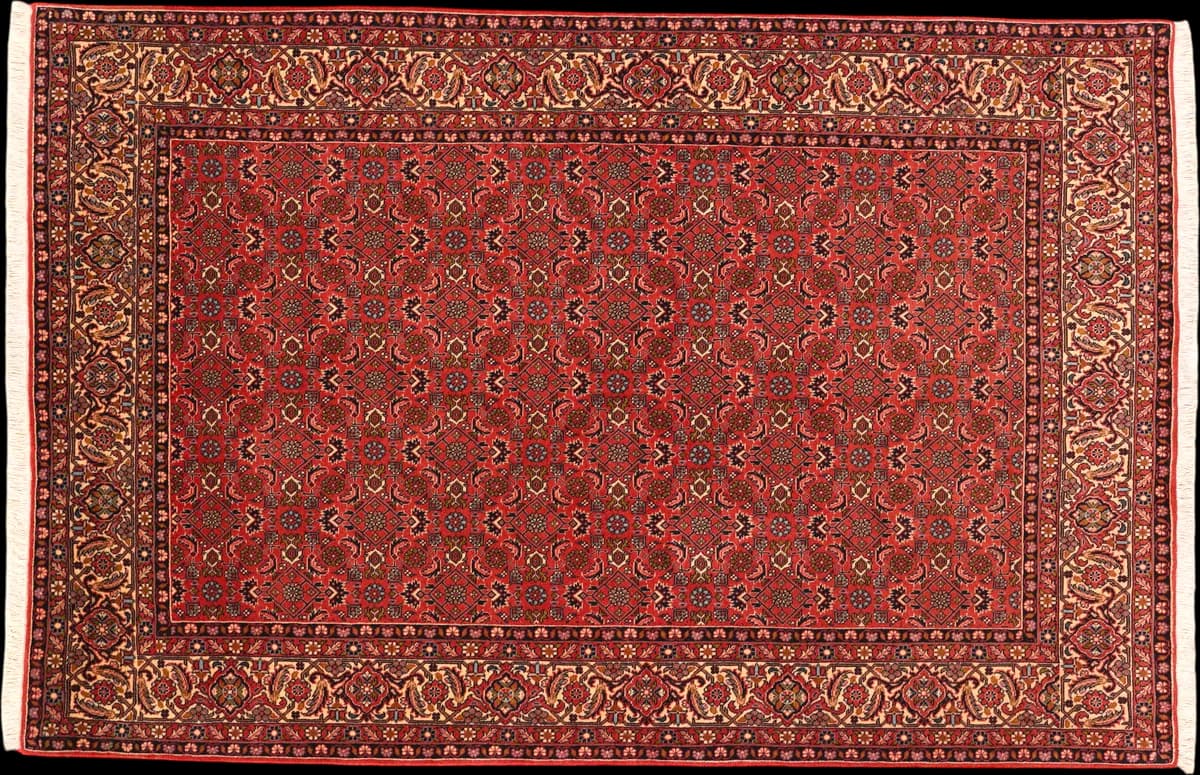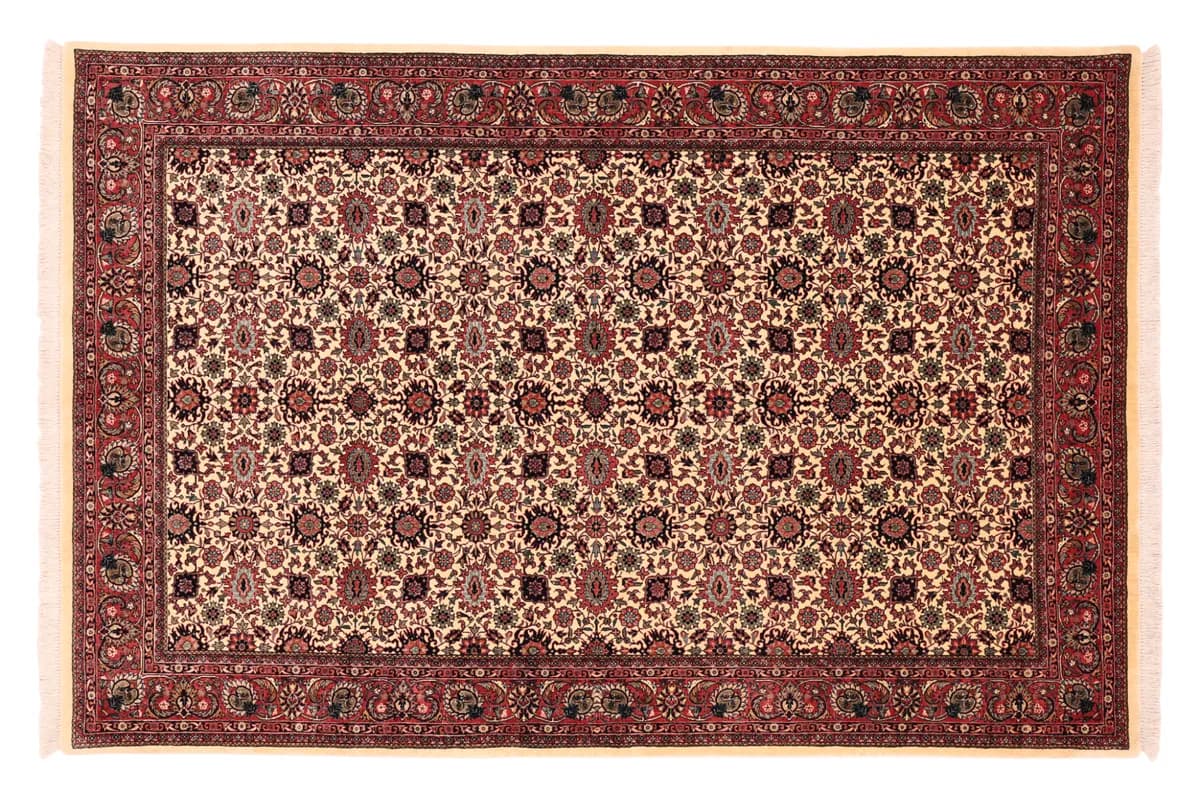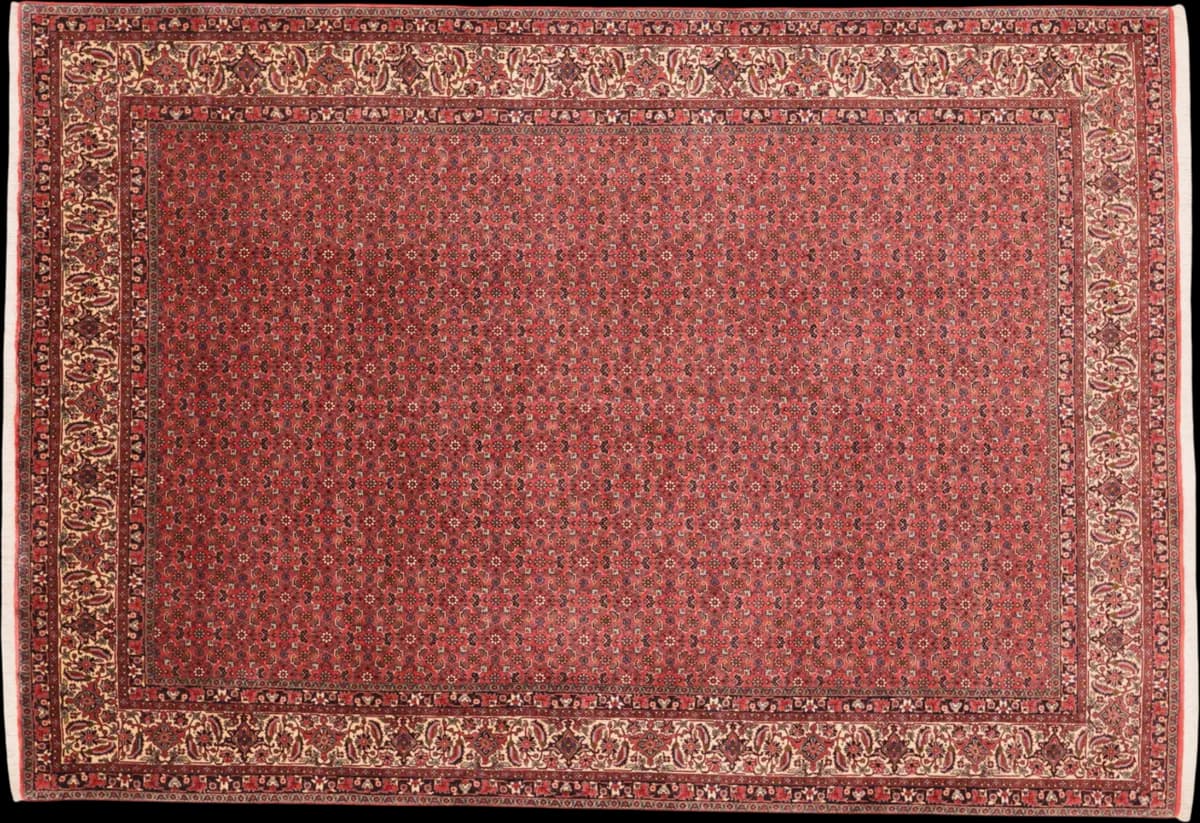
Bidjar Garus
296 × 205 cm
7.102 €
1.650 €
Incl. VAT
In Stock · Ready to Ship
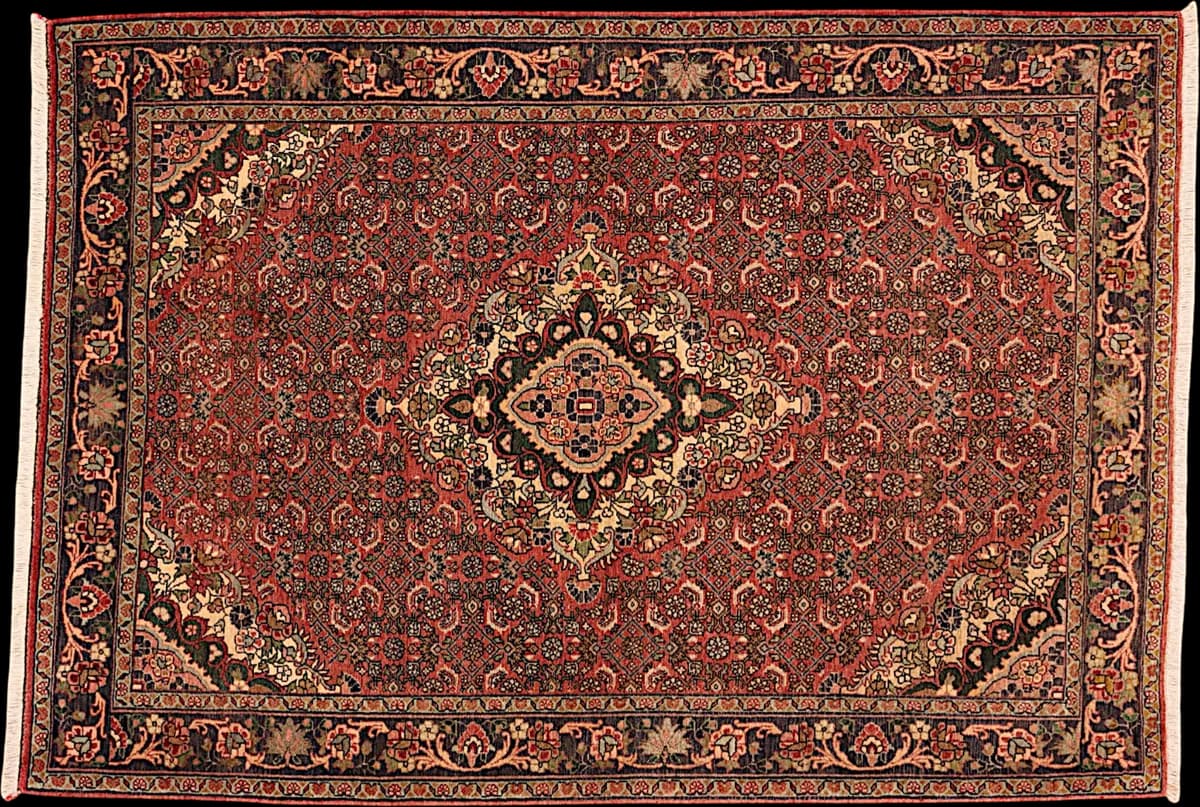
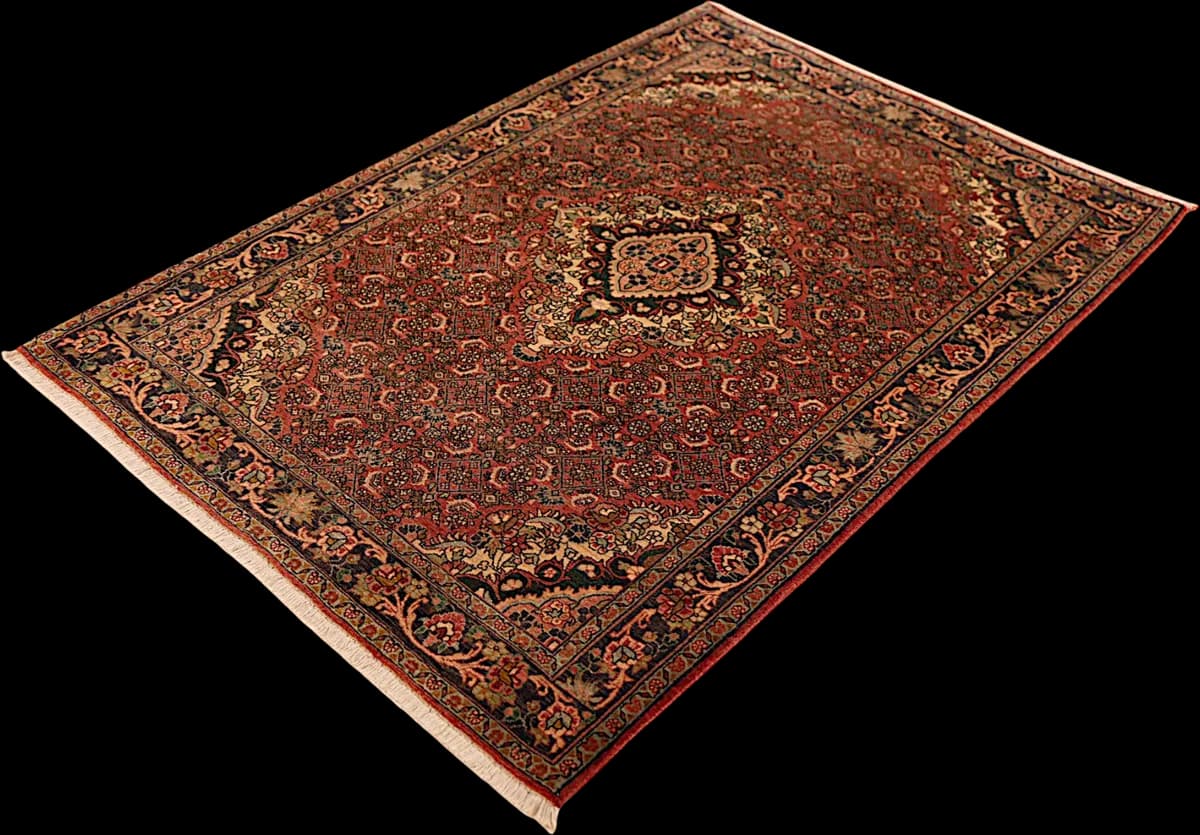
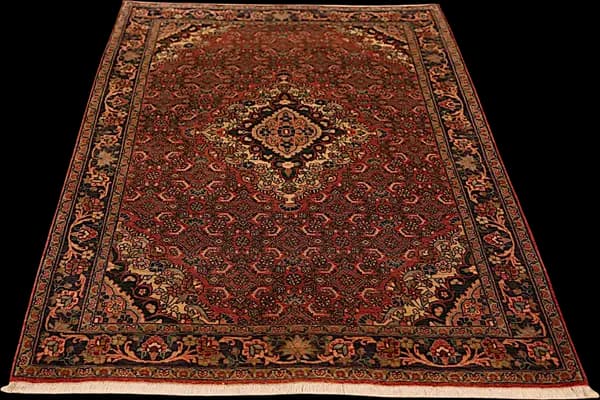
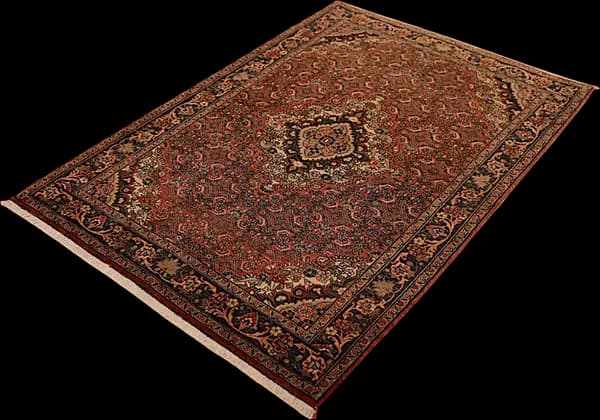
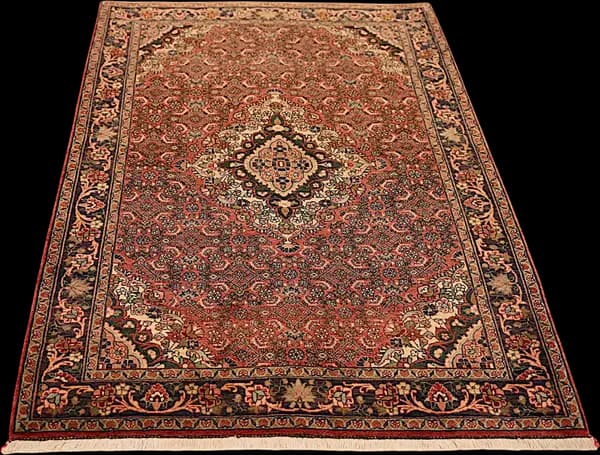
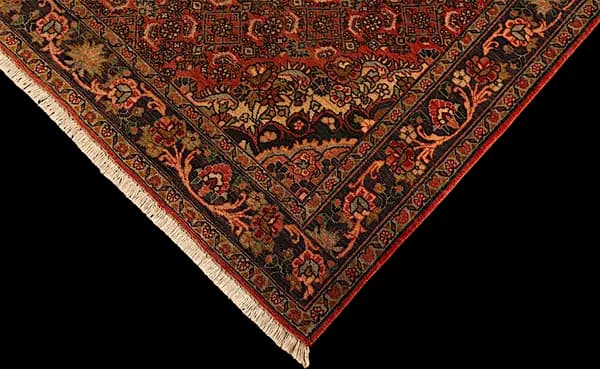
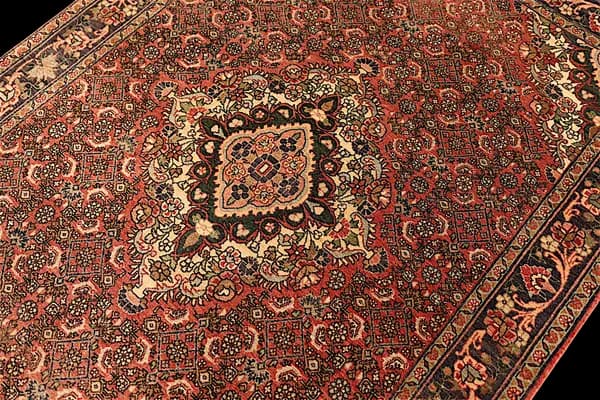
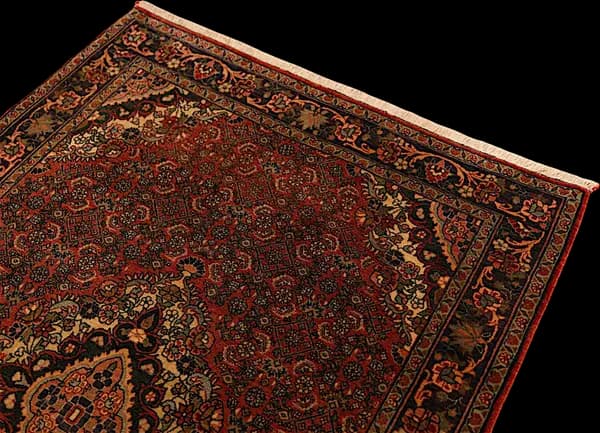
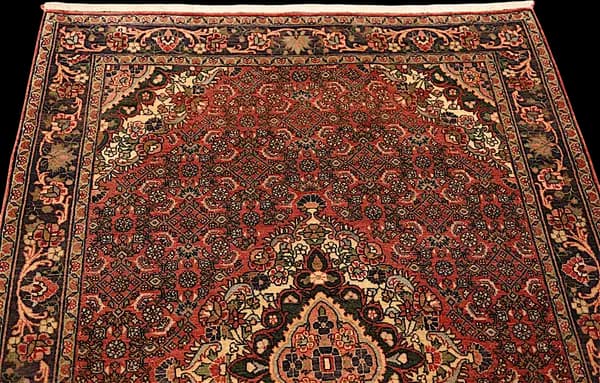
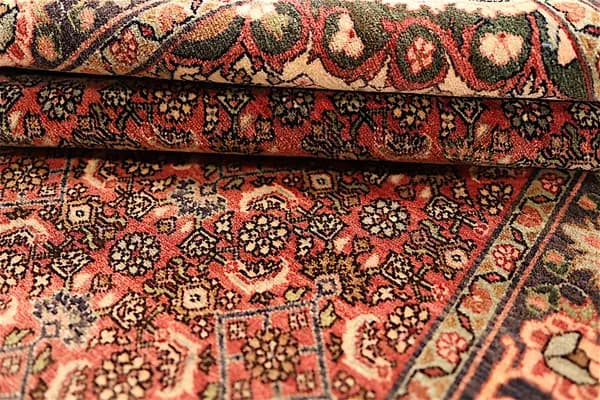
This is a Bidjar, also written Bijar or Bidjar-e Kordestan, a knotted rug from the Kurdish regions of western Iran, 170 x 118 cm (5'7" x 3'10"). The type has long been known in the trade as the iron rug of Persia, woven so dense and tightly pressed that a finished piece cannot be folded, only rolled. Bidjar weavers usually work from memory rather than a drawn plan, and the type is prized as much for its irregularities as for its strength; this piece is the rarer case, drawn with a precision closer to a workshop cartoon.
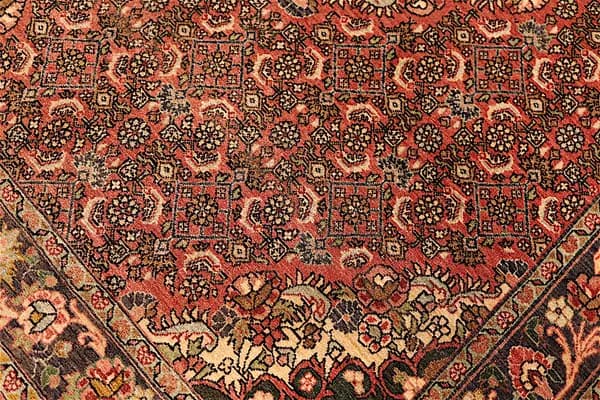
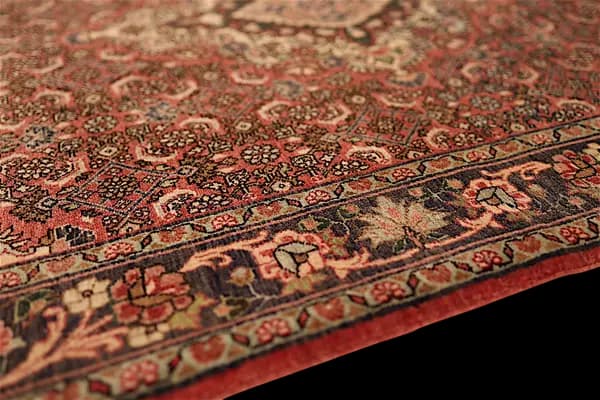
A dense brick red fills the field first, broken by a fine lattice of small diamonds that carries without a break to the edges. Set into the centre of that lattice sits a pale ivory medallion, in the lozenge form typical of a Mahi or Herati pattern, touched with sage green and dusty pink. The four corner spandrels take up the same ivory ground and the same drawing, closely enough that the field reads as one balanced, four-cornered composition rather than a medallion placed loosely among the pattern. A wide navy border closes the rug, itself carrying a red-ground floral vine, and against the red field it holds the whole design firmly together.
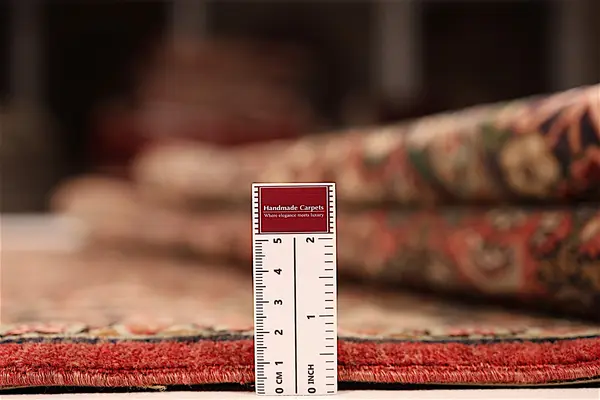
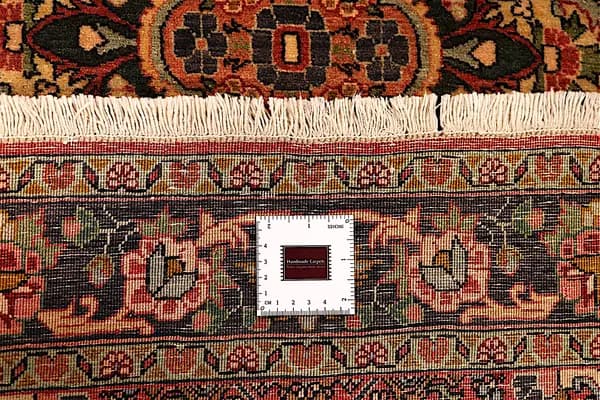
That precision is a matter of density. At 321,000 to 380,000 knots per square metre, this sits close to the tightest knotting found anywhere in the Persian tradition, and it is that fineness which lets a lattice this small, and a medallion and spandrels this closely matched, stay crisp rather than blur at the edges. The pile is hand-spun wool, knotted by hand onto a cotton warp and kept to a short 15mm, so detail sits sharp rather than sinking into depth. Reaching that density from memory, without a cartoon to follow, on a rug now forty to sixty years old, is not quick work, and the evenness here was earned at the loom rather than handed to the weaver in advance.
At this size the rug belongs in a hallway, by a doorway, or under a small desk in a study, somewhere it is seen close rather than across a room. The red warms a pale floor and holds its own against dark wood furniture, while the navy border keeps the whole thing anchored rather than glowing. Underfoot it feels dense, firm and substantial, built for a passage that gets used rather than admired from a distance. Catch it in low light and the ivory medallion and its soft green and pink lift quietly out of the red.
More on Bidjar rugs: origin, making and how to recognise a genuine piece
Superior craftsmanship
At 170 × 118 cm (2.01 m²) this is a small rug. It works beside a bed, in a reading corner, in front of a fireplace or as a mat by a door. It does not furnish a room; it makes a point in one.
Yes, knotted by hand — knot by knot on a loom, not machine-made. The density is 321,000 to 380,000 knots per square metre; across 2.01 m² that is roughly 640,000 to 760,000 individual knots, every one of them tied by hand.
Hand-spun wool still carries its own lanolin, which keeps liquid sitting on the surface for a moment: blot quickly, with clear water and a light cloth, working inwards and without rubbing. Otherwise regular vacuuming along the pile is enough. Turn the rug once or twice a year so light and footfall reach it evenly.
We are in the Hamburg Speicherstadt. Come and see this rug in daylight, or write to us — a person answers.
Certificate included verifying origin, materials, and craftsmanship.
Ref: 841544