Exclusive
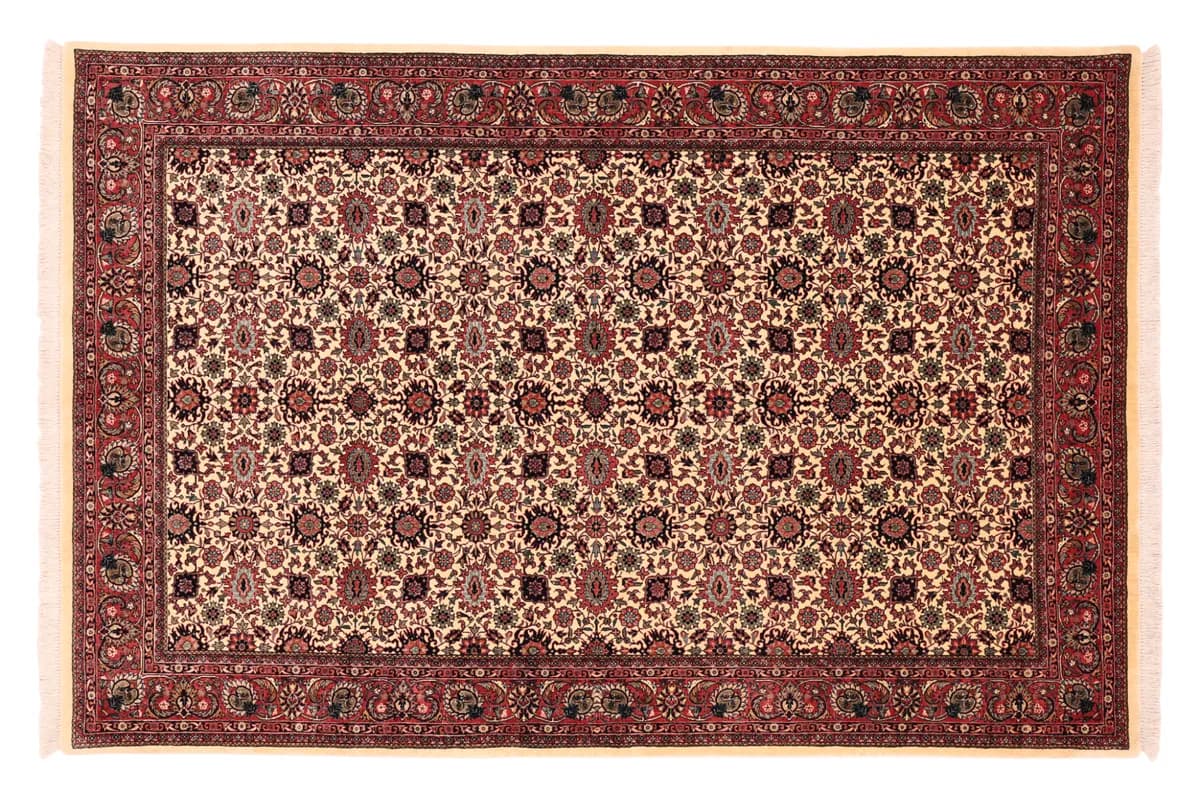
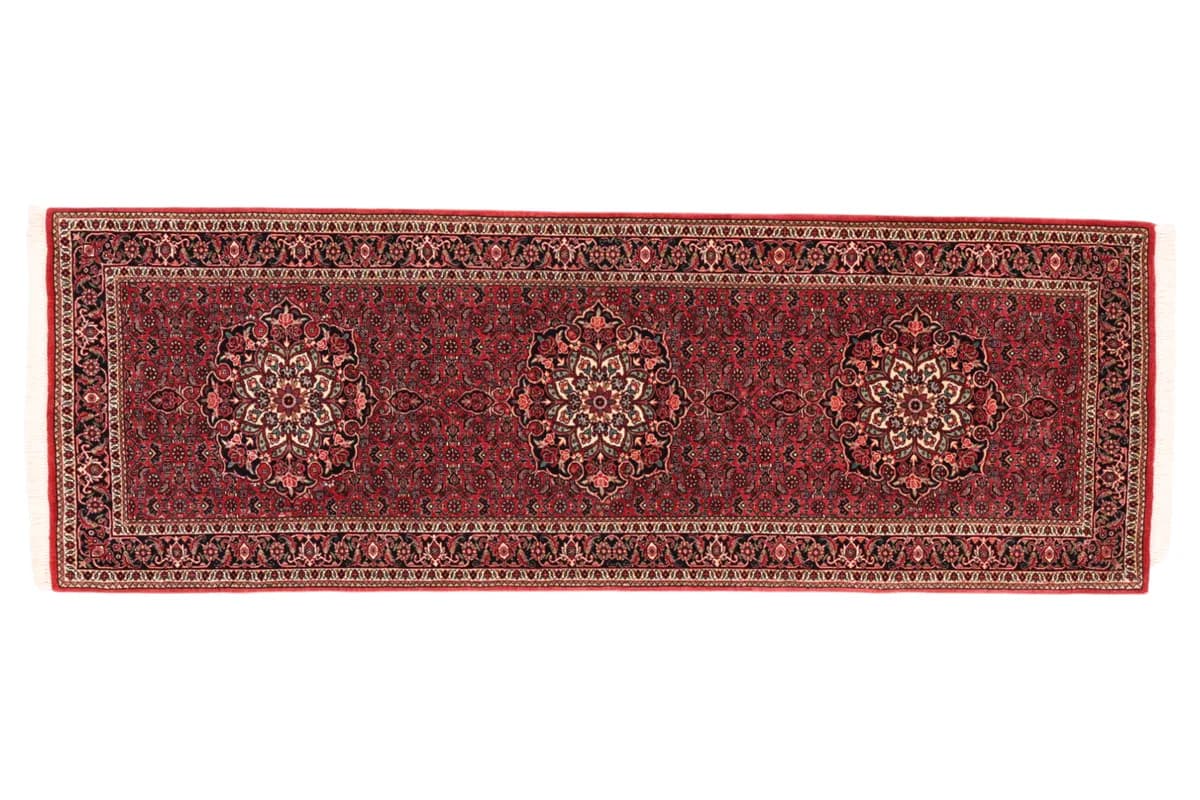
Bidjar | Exclusivewith silk
348 × 83 cm
7.350 €



1.665 €
Incl. VAT
In Stock · Ready to Ship
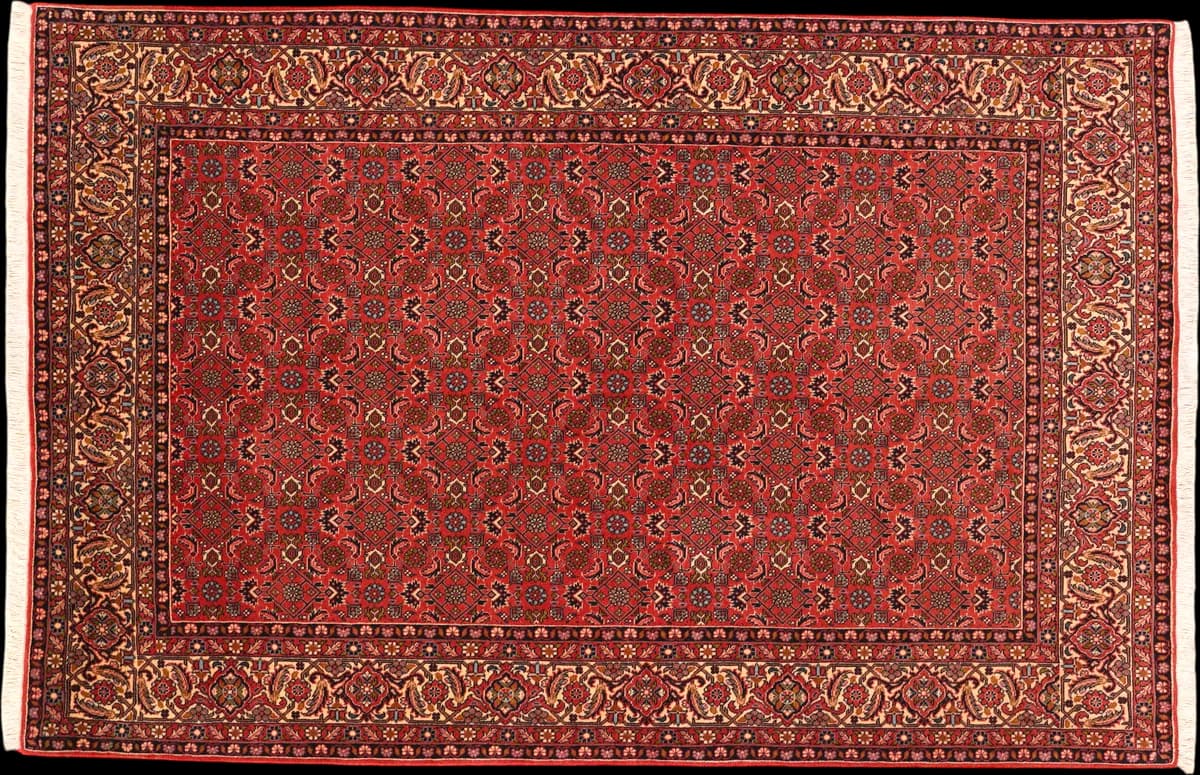
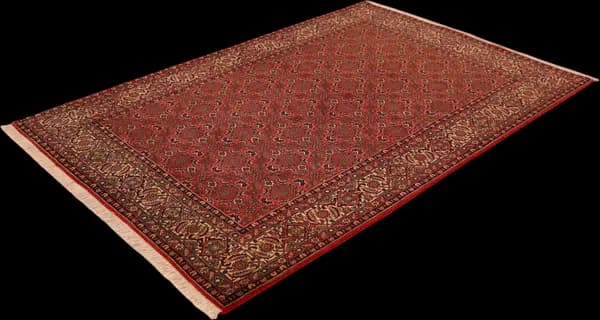
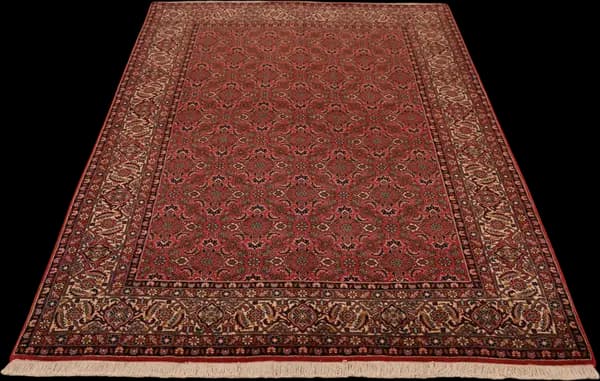
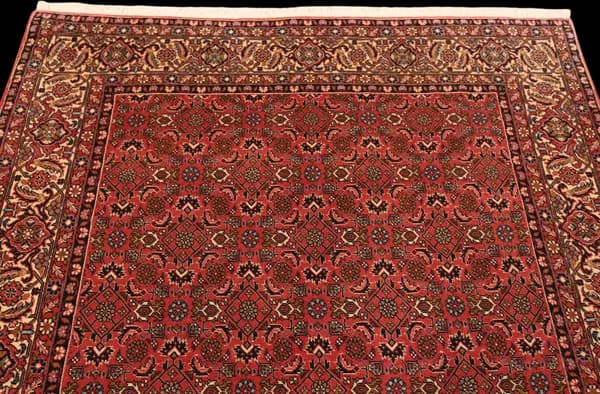
This is a Bijar, also spelled Bidjar, hand-knotted in the Kurdish weaving regions of western Iran, and it measures 214 x 140 cm (7'0" x 4'7"). The type carries the nickname "the iron rugs of Persia", earned by a construction so dense and firmly pressed that a Bijar can only be rolled, never folded, and holds its shape for decades underfoot.
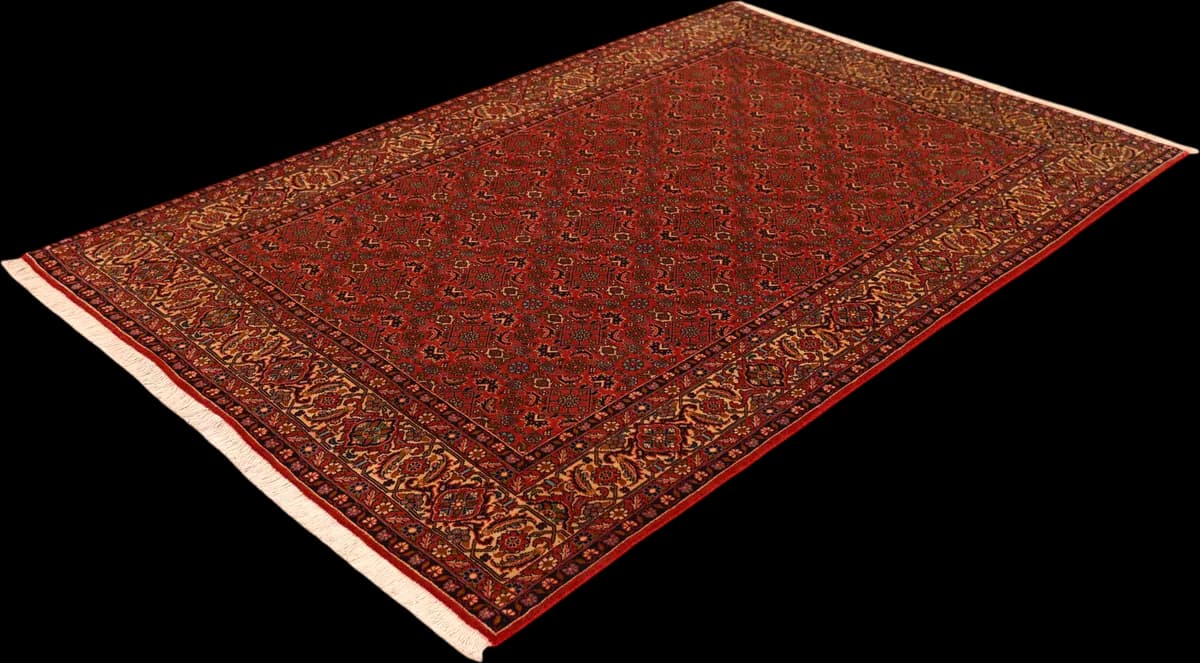
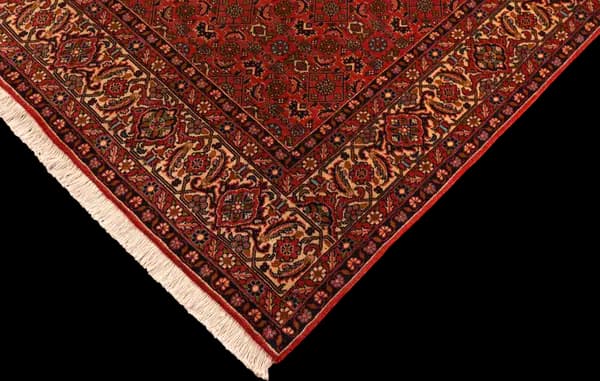
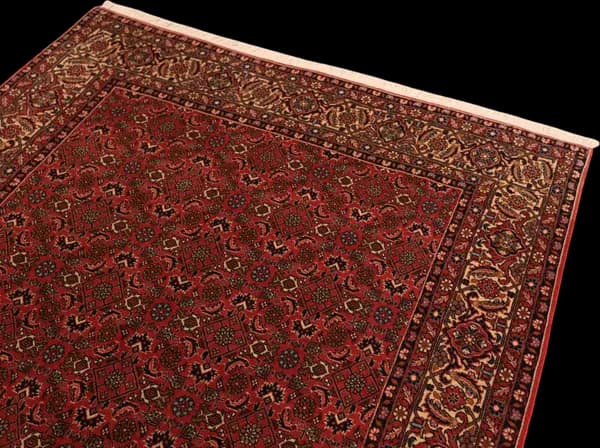
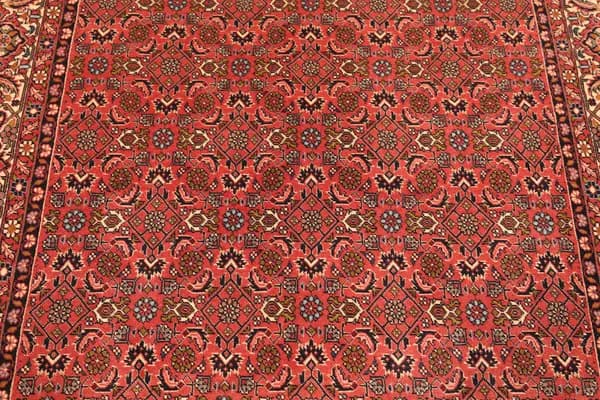
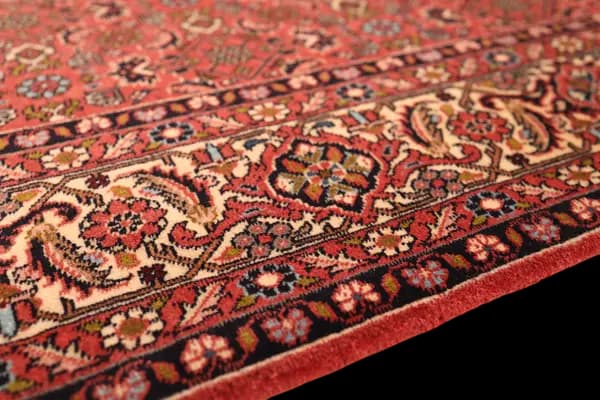
The field is a deep brick red, filled edge to edge with a fine diamond lattice in the Mahi, or "fish", pattern, repeated so evenly that no medallion interrupts it. Within the lattice, small rosettes in olive green and steel blue sit at each crossing, with occasional touches of pink and rust. A wide cream-ground border of floral vines frames the field, set off by thin navy guard stripes, its pale ground reading clearly against the red before the eye settles back on the pattern.
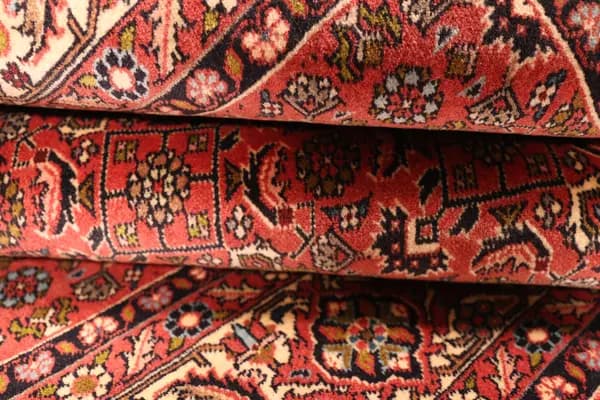
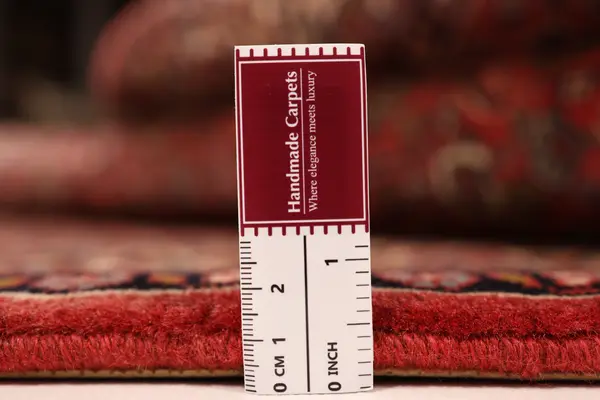
That evenness comes from a knot count of 251,000 to 320,000 per square metre, among the densest found in Persian weaving, packed onto a cotton warp with a pile of handspun wool. Spinning the wool by hand, rather than by machine, lets the weaver control its thickness and pack knots close enough to press the design into sharp, even lines with a 15 mm pile. The same density is what makes the rug too firm to fold, and gives it the weight and quiet sheen felt in the hand.
This Bijar suits a bedroom floor, or a quieter seating corner, at a size that warms pale boards without asking for a lot of space. The cream border lifts the room even where daylight is thin, while the dense, firmly packed pile stays flat and substantial underfoot, built for daily use rather than careful stepping. Afternoon light catches the wool's soft sheen, and the deep red holds its own against darker furniture nearby.
More on Bidjar rugs: origin, making and how to recognise a genuine piece
Fine quality weave
At 214 × 140 cm (3.00 m²) this is a medium rug. It works in front of a sofa, in front of a bed or in a study. It is too small for a dining table — there you want about 80 cm of clearance so a chair does not tip over the edge when pushed back.
Yes, knotted by hand — knot by knot on a loom, not machine-made. The density is 251,000 to 320,000 knots per square metre; across 3.00 m² that is roughly 750,000 to 960,000 individual knots, every one of them tied by hand.
Hand-spun wool still carries its own lanolin, which keeps liquid sitting on the surface for a moment: blot quickly, with clear water and a light cloth, working inwards and without rubbing. Otherwise regular vacuuming along the pile is enough. Turn the rug once or twice a year so light and footfall reach it evenly.
We are in the Hamburg Speicherstadt. Come and see this rug in daylight, or write to us — a person answers.
Certificate included verifying origin, materials, and craftsmanship.
Ref: 846165