Bidjar
295 × 199 cm
4.500 €
3.354 €
Incl. VAT
In Stock · Ready to Ship
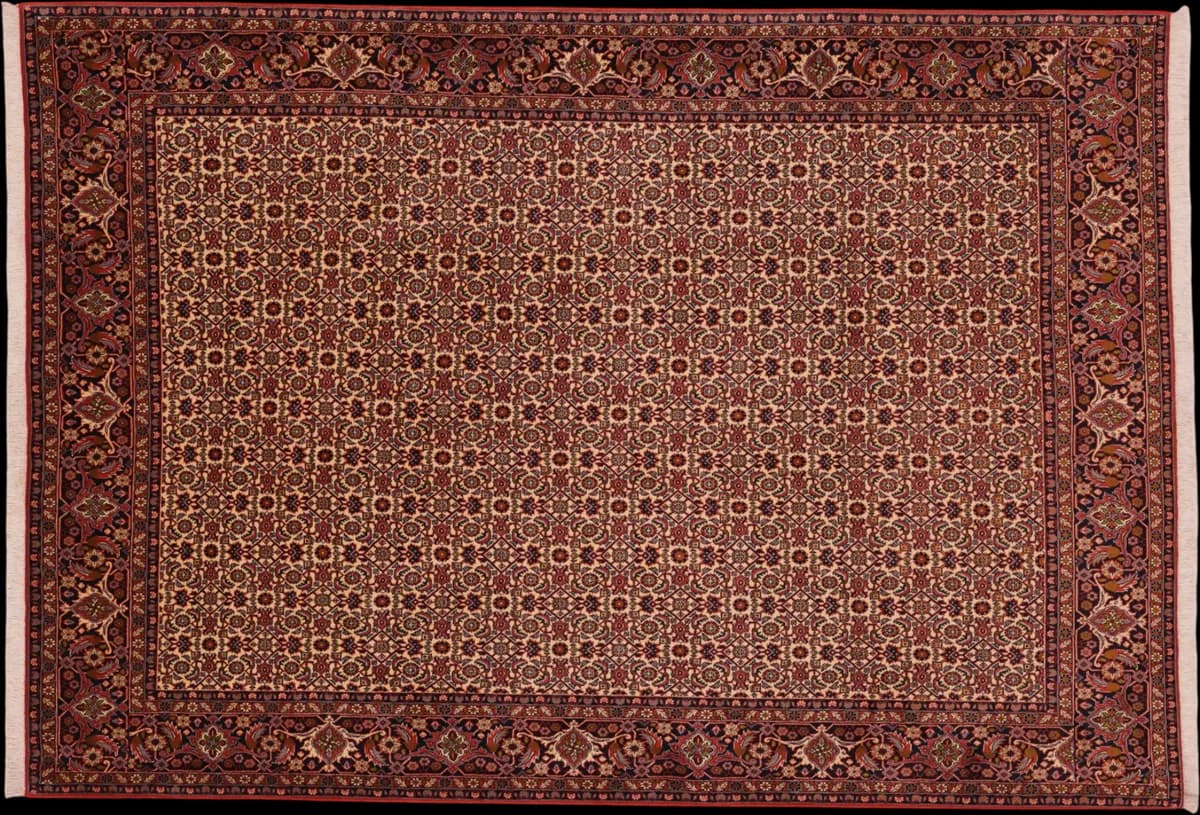
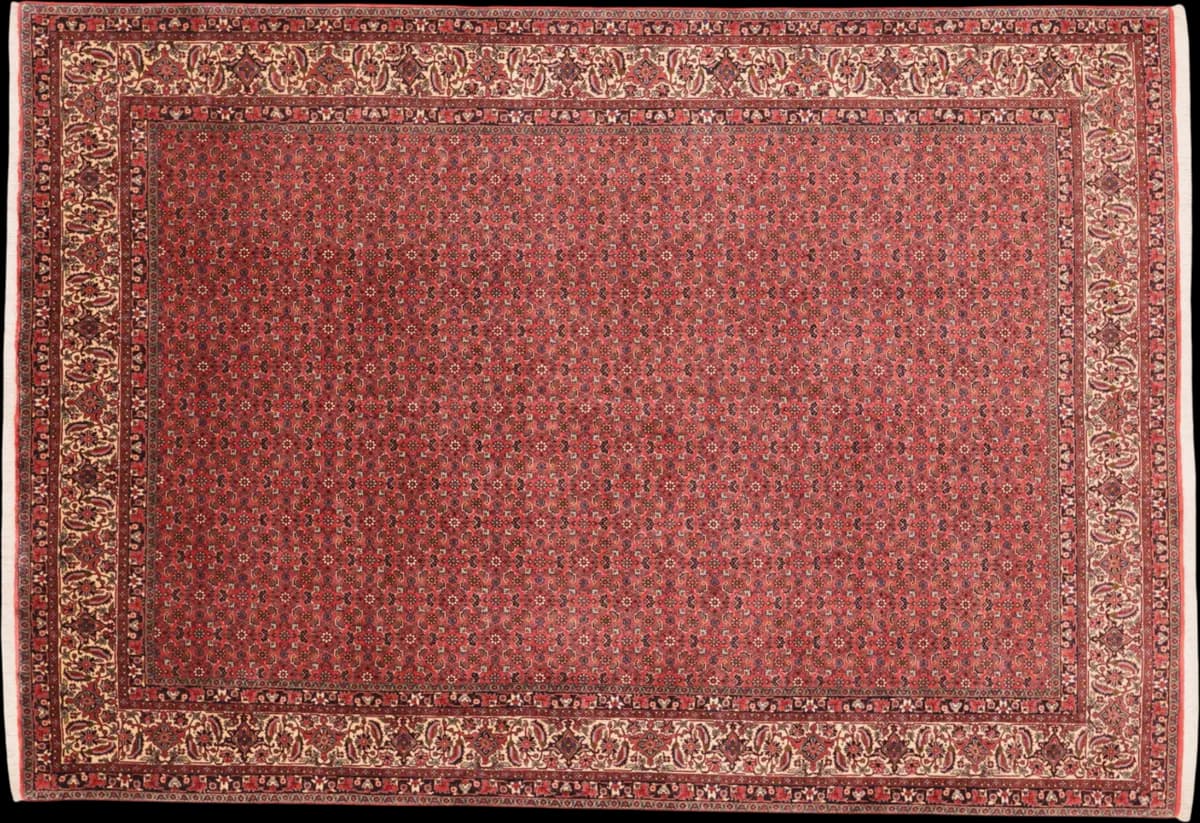
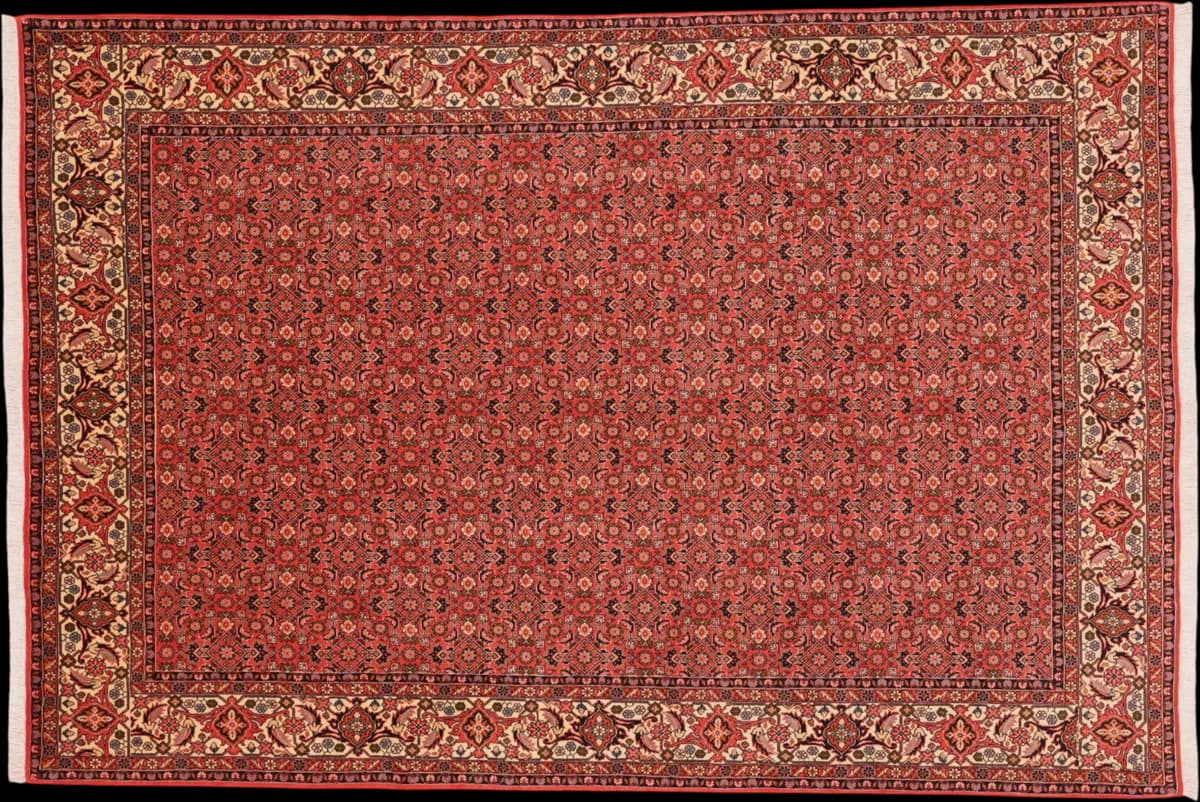
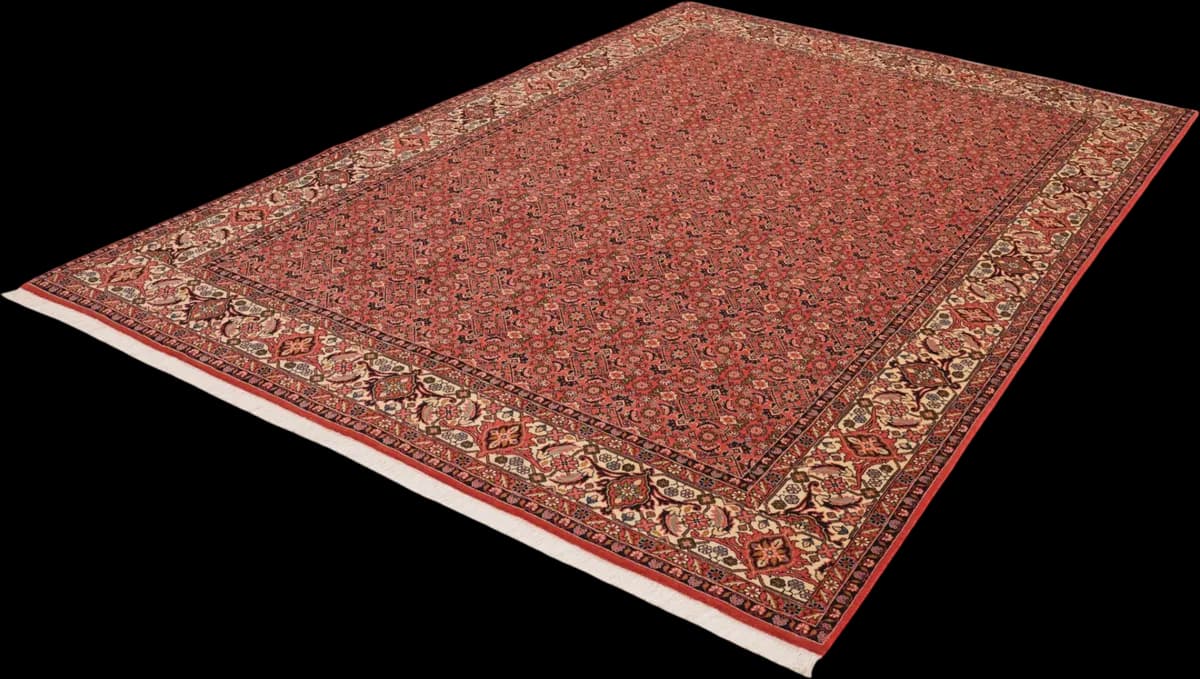
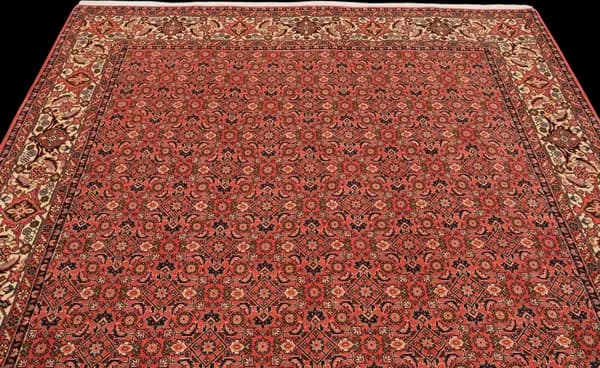
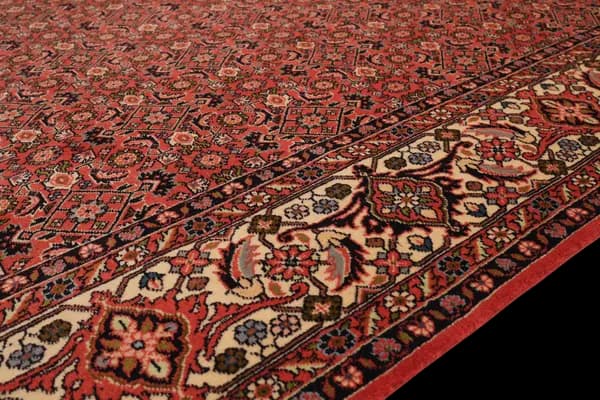
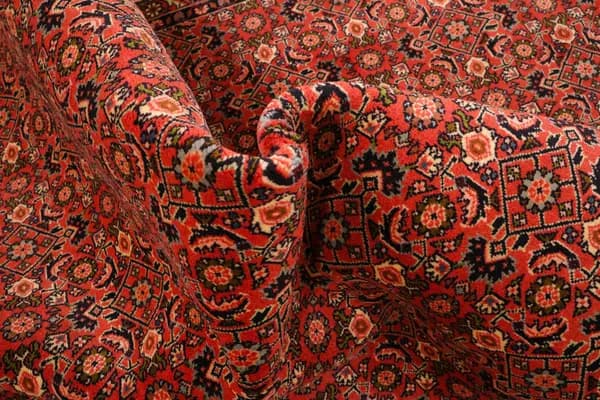
A Bidjar rug, 288 x 194 cm (9'5" x 6'4"), from the Kurdish regions of western Iran. The type is nicknamed the iron rug of Persia, and for good reason: its weave is pressed so tight that a Bidjar cannot be folded, only rolled, and it is prized above all for outlasting almost anything else with a knot in it.
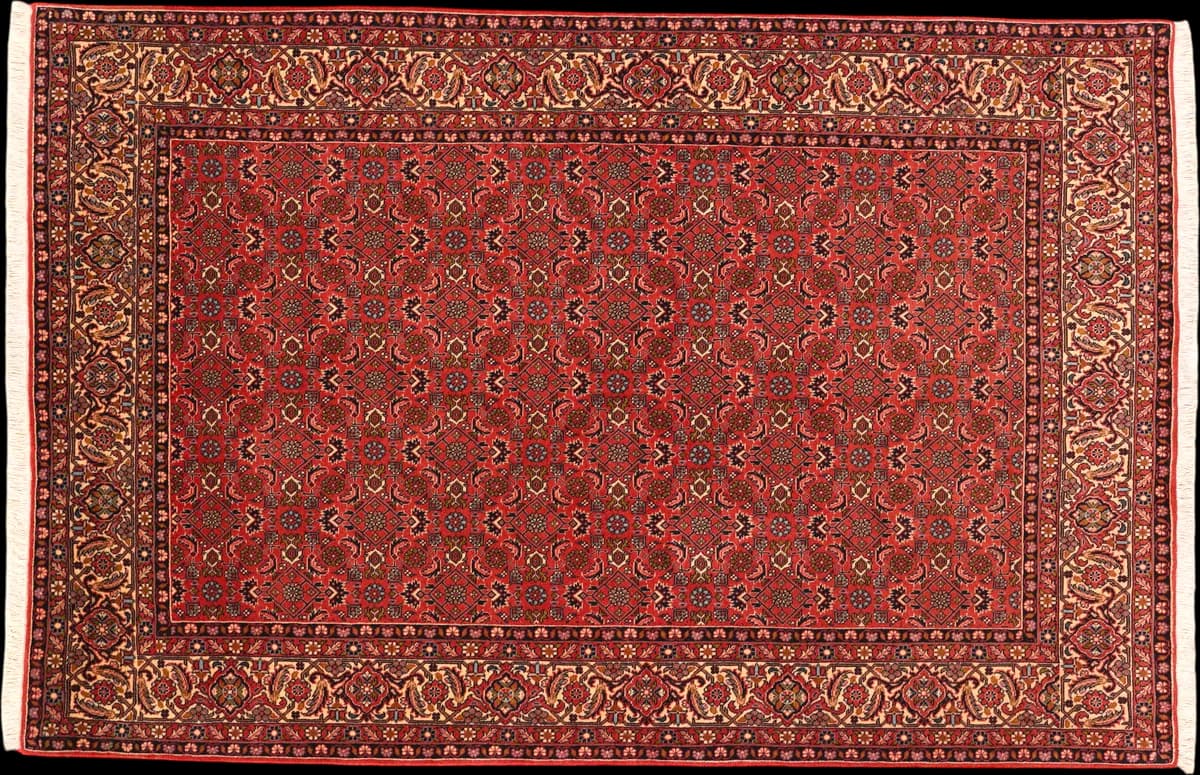
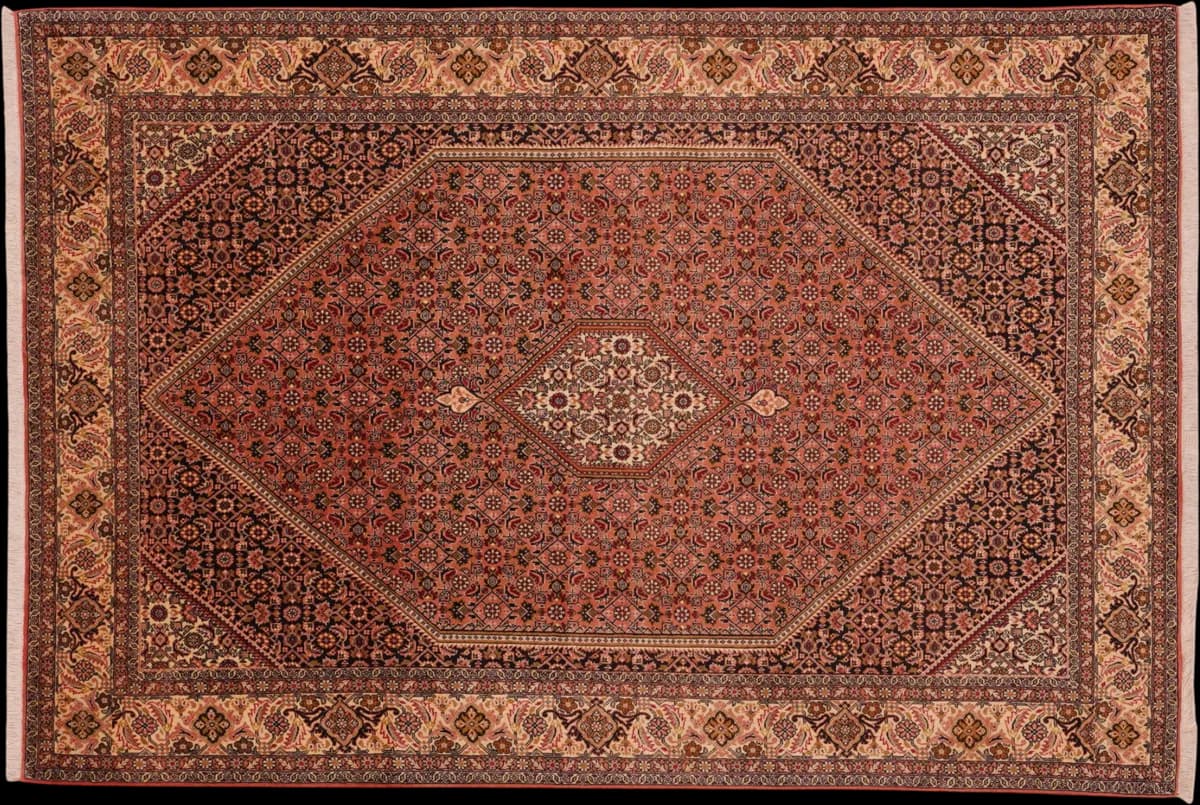
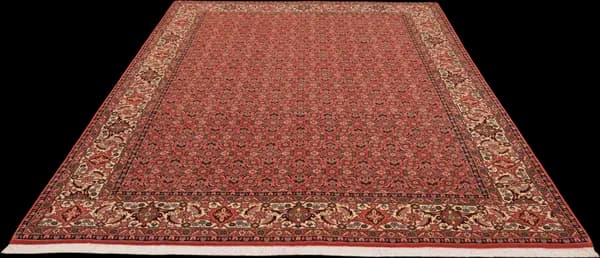
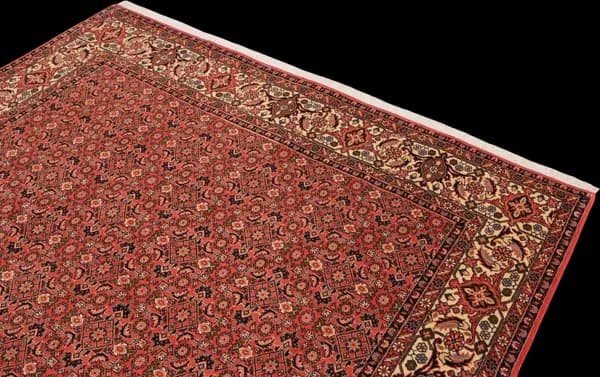
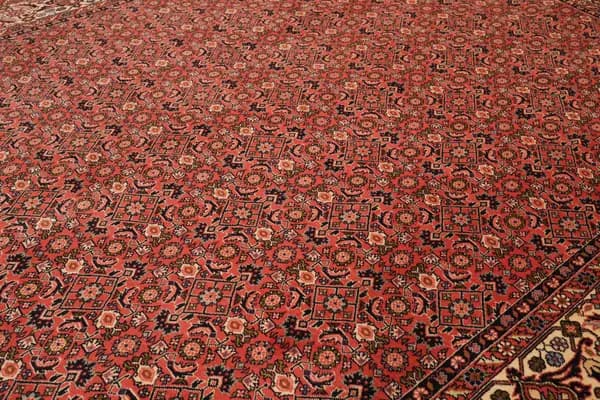
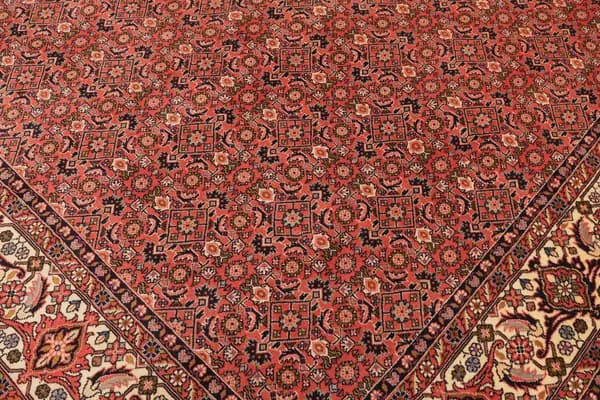
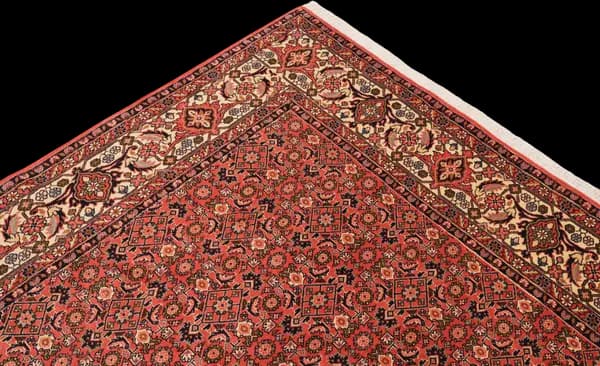
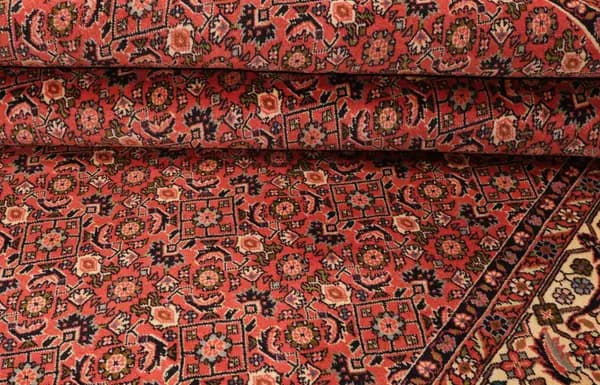
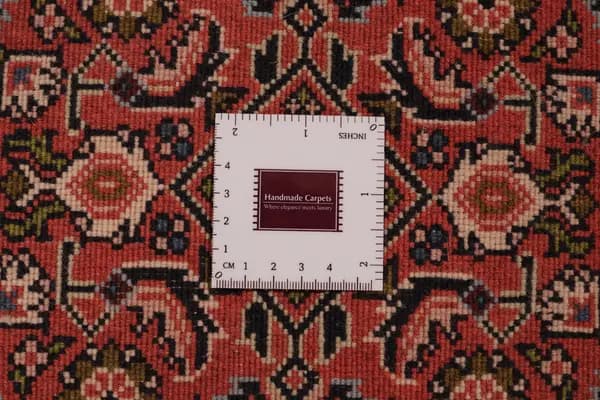
The first impression is a warm brick red, covered edge to edge with a fine navy diamond lattice in the Mahi, or Herati, repeat, drawn evenly across the whole field with no medallion to interrupt it. That density of pattern is held by an equally full ivory border, a good fifth of the rug's width, filled with red and olive palmettes and serrated vinework that sit clearly against the pale ground. Nothing in the design is loud on its own; it is the sheer coverage, lattice after lattice, palmette after palmette, that gives the rug its weight.
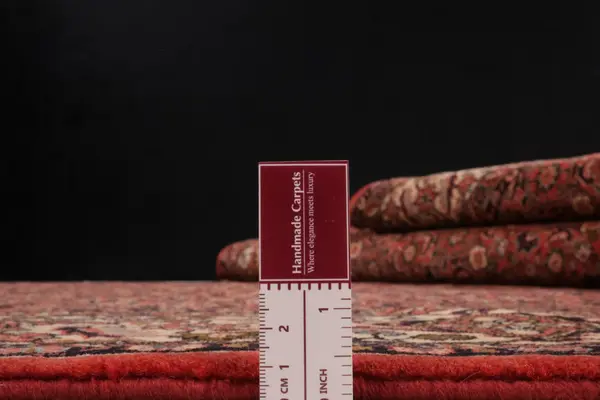
That weight is not only visual. The pile is hand-spun wool on a cotton foundation, knotted at 381,000 to 440,000 knots per square metre, a density that sits at the top of the Persian tradition and that is what lets a lattice this fine stay crisp rather than blur at the edges. Reaching numbers like that is slow, patient work, and it is also what presses the rug into the firm, compact structure a Bidjar is known for. The wool itself is spun by hand rather than machine, which shows in a short, even pile with a soft matte surface and no sheen — the iron underneath, without any polish on top.
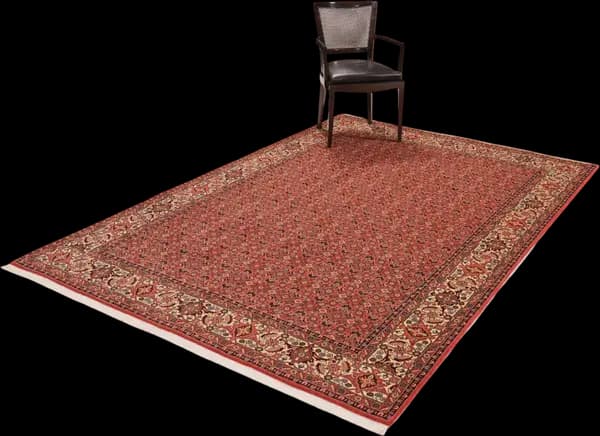
At 288 x 194 cm this is a dining room or living room rug, sized for a table and its chairs or a seating group rather than a single armchair corner. The red carries real warmth into a room with pale flooring, and holds its own comfortably against dark wood or dark upholstery without needing either to match it. Underfoot it is dense and firm rather than soft and sinking, exactly the construction that is made to be walked over daily rather than kept for best. As daylight moves across it through the day, the matte wool takes the light rather than throwing it back, and the navy lattice stays legible from every angle in the room.
More on Bidjar rugs: origin, making and how to recognise a genuine piece
Superior craftsmanship
At 288 × 194 cm (5.59 m²) this is a large rug. It sits under a seating group with the front legs of sofa and chairs on it, or under a dining table for four. A table for six wants about 80 cm of clearance all round, and needs more.
Yes, knotted by hand — knot by knot on a loom, not machine-made. The density is 381,000 to 440,000 knots per square metre; across 5.59 m² that is roughly 2.1 to 2.5 million individual knots, every one of them tied by hand.
Hand-spun wool still carries its own lanolin, which keeps liquid sitting on the surface for a moment: blot quickly, with clear water and a light cloth, working inwards and without rubbing. Otherwise regular vacuuming along the pile is enough. Turn the rug once or twice a year so light and footfall reach it evenly.
We are in the Hamburg Speicherstadt. Come and see this rug in daylight, or write to us — a person answers.
Certificate included verifying origin, materials, and craftsmanship.
Ref: 801709