Exclusive
Bidjar | Exclusive | With Silk · with silk
203 × 196 cm
6.750 €
4.500 €
Incl. VAT
In Stock · Ready to Ship
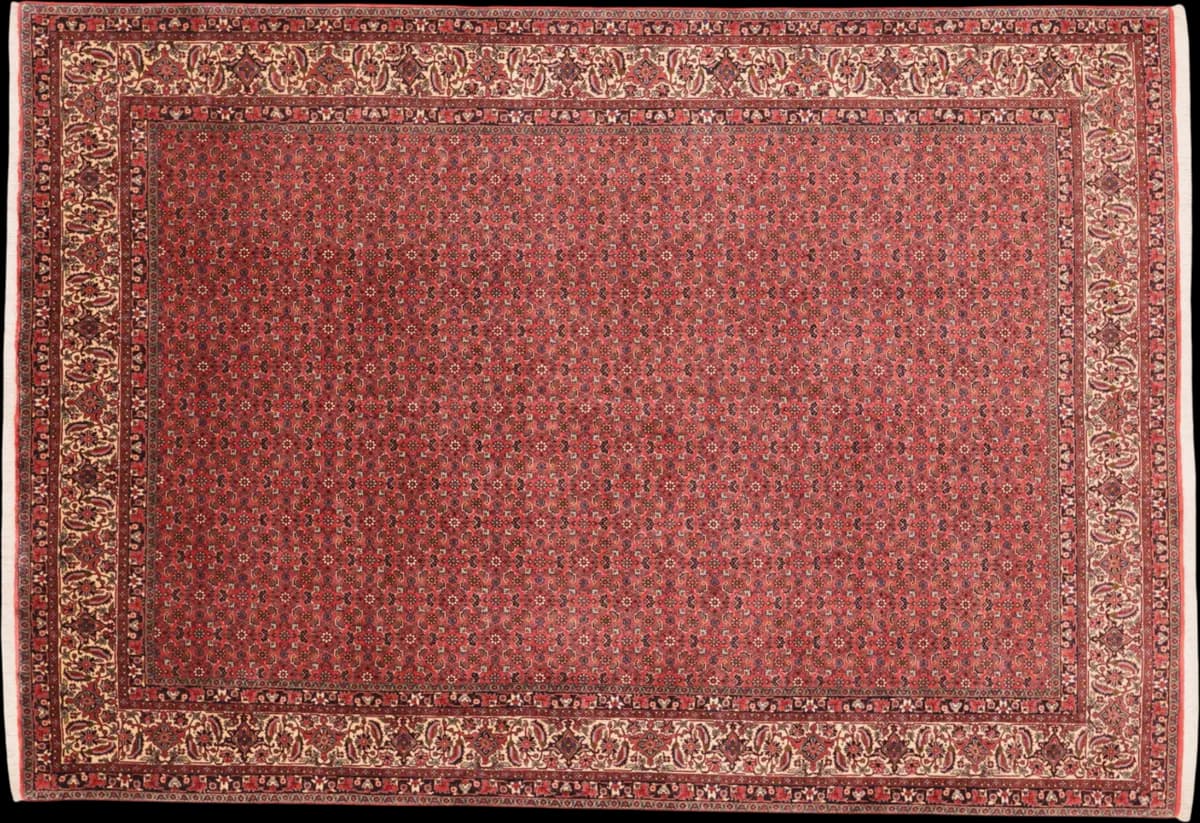
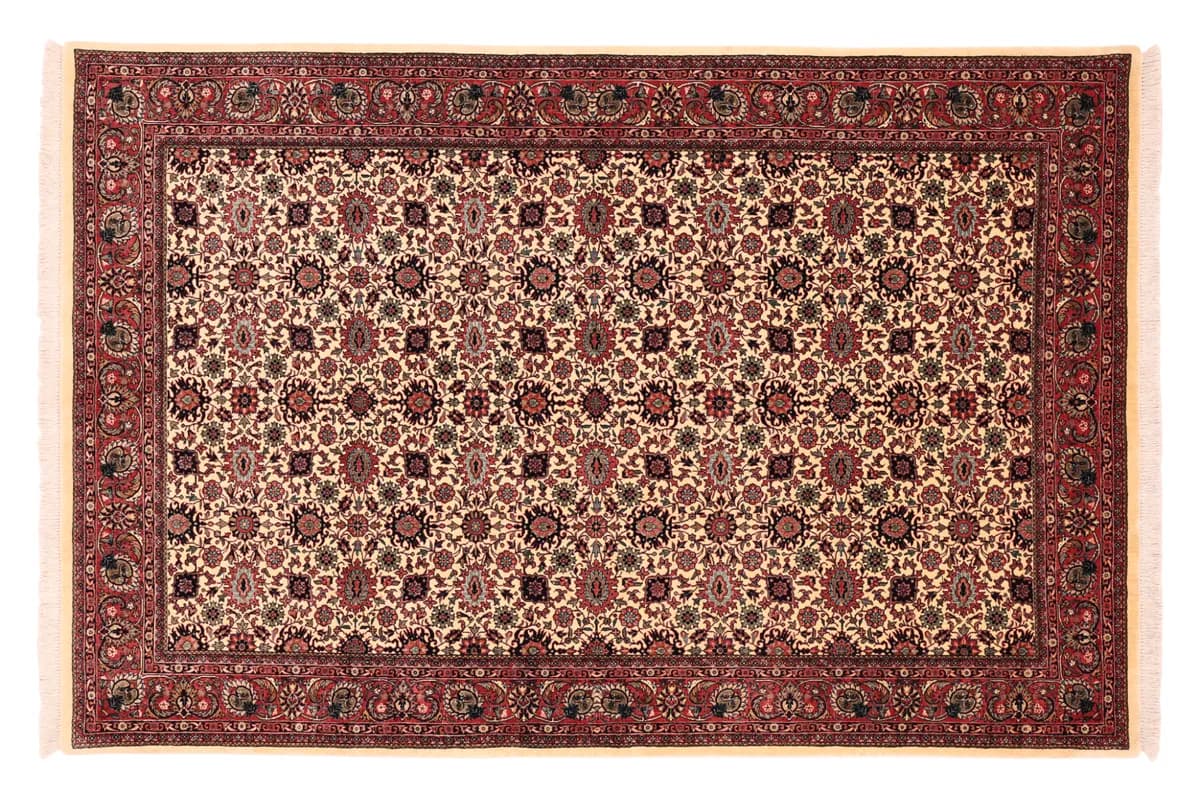
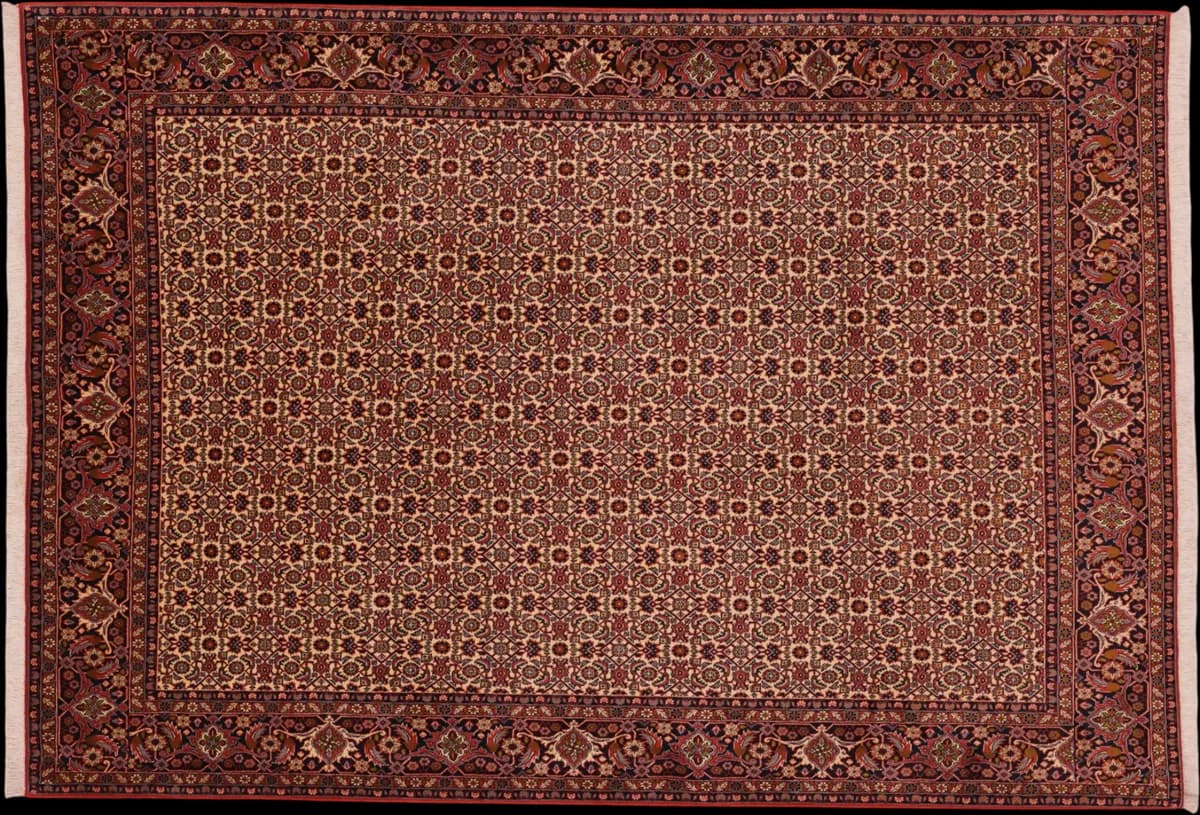
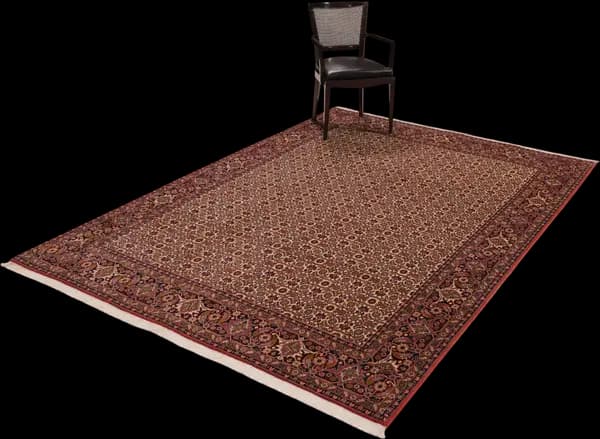
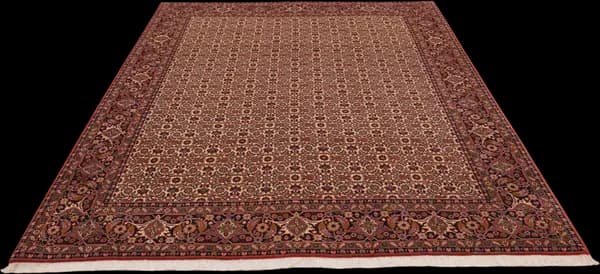
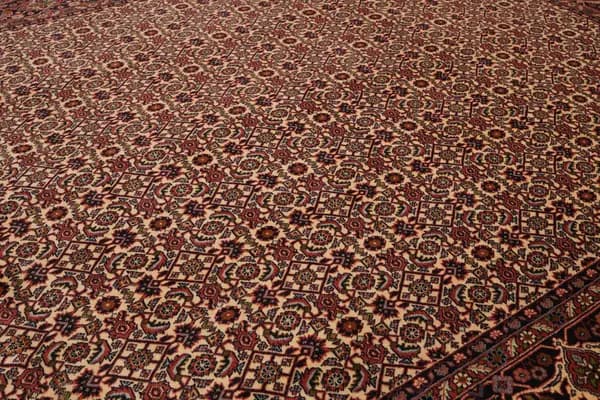
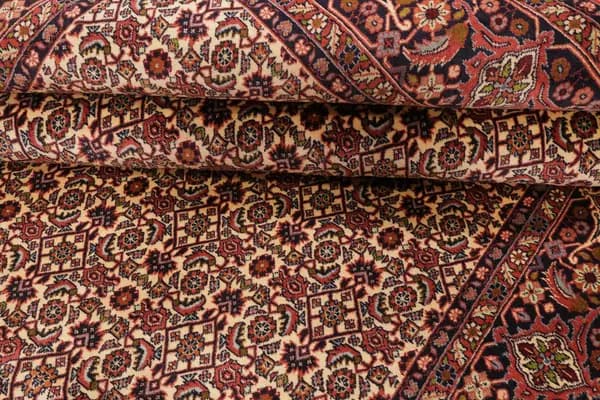
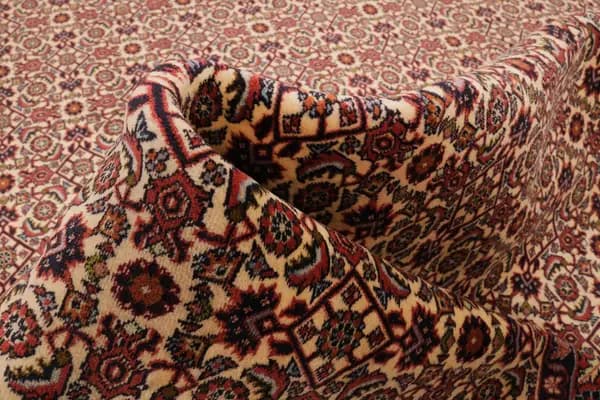
Bijar rugs from the Kurdish regions of western Iran have earned the name "the Iron Rugs of Persia," pressed so densely at the loom that they cannot be folded, only rolled. This one measures 296 x 205 cm (9'8" x 6'9"), a size suited to a dining table or a generous seating group. Where Bijar fields usually run deep red or navy, this one is worked in a warm ivory rarely seen on the type.
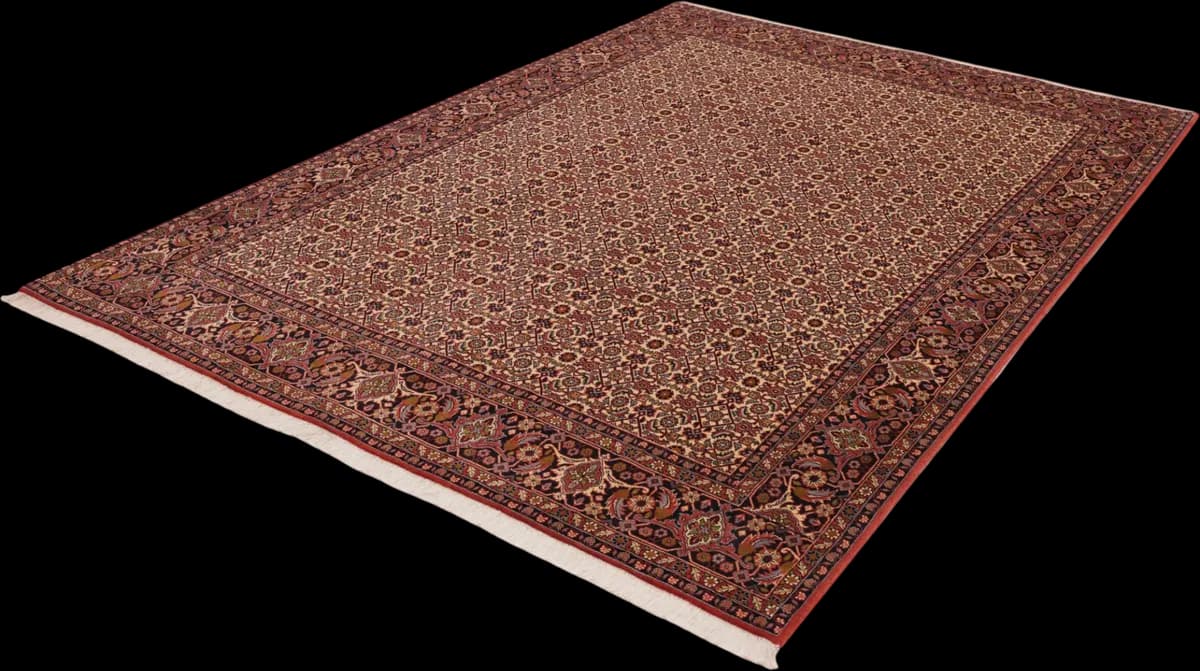
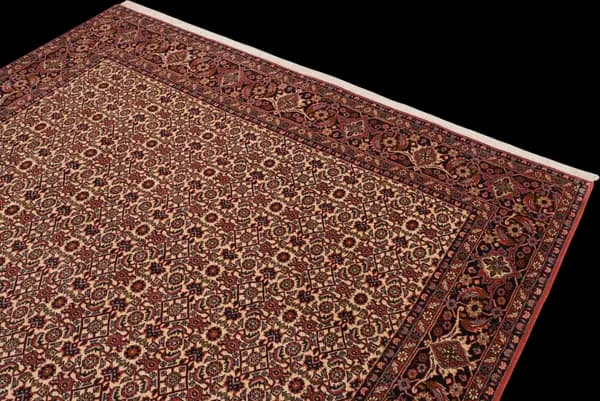
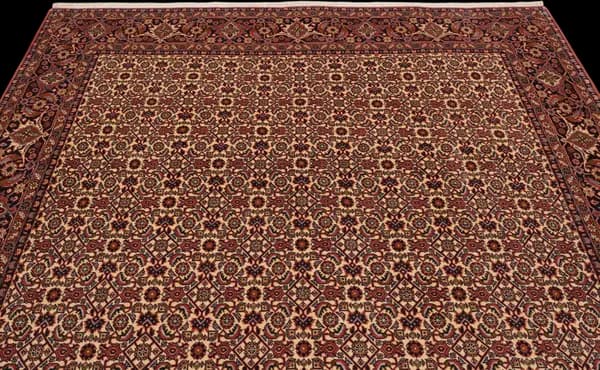
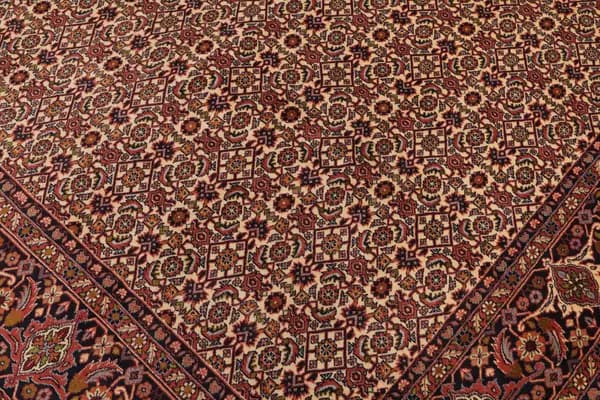
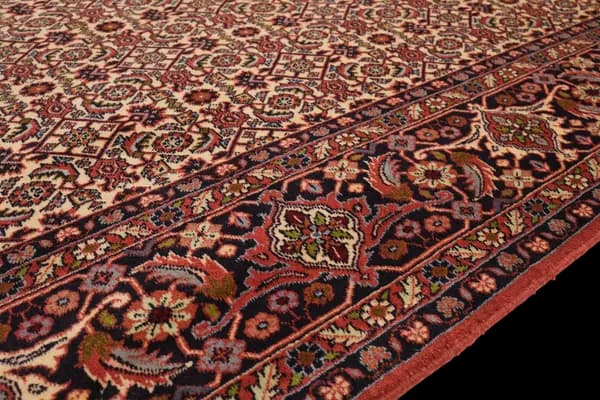
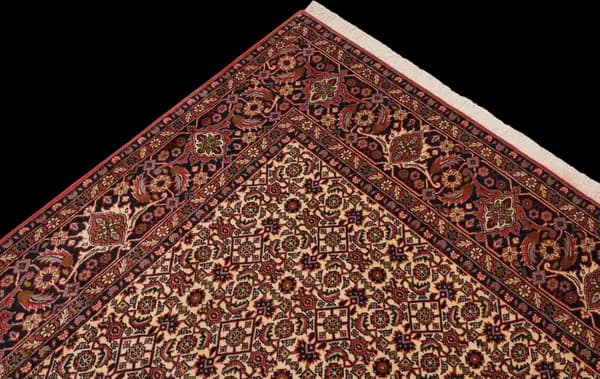
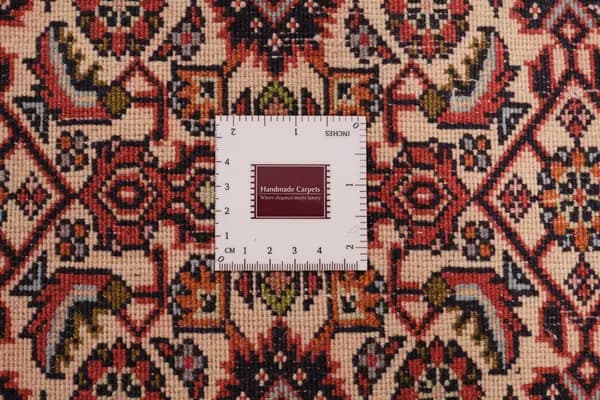
That ivory carries the whole piece. Across it runs a fine, even repeat of diamond lattice in the Mahi, or Herati, tradition, each diamond centred on a small rosette, no medallion to anchor it, the pattern simply continuing edge to edge. The diamonds themselves are drawn in deep brick red and navy, sharp against the pale ground, and the eye moves outward to a wide navy border, nearly a fifth of the rug's width, filled with rust-red, cream, olive and dusty pink palmettes among serrated leaves.
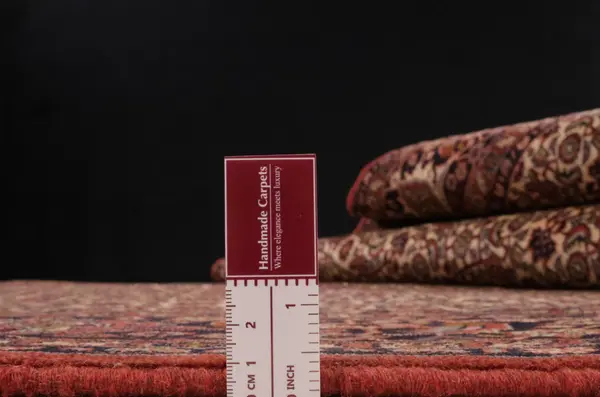
A Bijar earns its density from a weaving method that packs the weft unusually hard between rows, and this piece was knotted at 128,000 to 160,000 knots per square metre, among the tightest counts in the Persian tradition. That density is why a pattern this fine holds its edges rather than blurring into the field, and why an ivory ground, normally the first place wear and shadow would show, stays clean and legible. Hand-spun wool over a cotton warp gives the 15 mm pile its slight lustre and its weight in the hand, substantial without being stiff.
Laid in a living or dining room, this ivory ground does something a red or navy Bijar cannot: it lifts a room with pale floors instead of anchoring it, and still holds its own against dark wood or a dark sofa, the navy border doing that work at the edges. Underfoot it is dense, firm and slightly springy, a construction built for a room that gets used, not one set aside for looking at. Morning light crossing the field brings out that faint sheen in the wool, and the ivory seems to hold the room's light rather than simply sit under it.
More on Bidjar rugs: origin, making and how to recognise a genuine piece
Traditional weave
At 296 × 205 cm (6.07 m²) this is a large rug. It sits under a seating group with the front legs of sofa and chairs on it, or under a dining table for four. A table for six wants about 80 cm of clearance all round, and needs more.
Yes, knotted by hand — knot by knot on a loom, not machine-made. The density is 128,000 to 160,000 knots per square metre; across 6.07 m² that is roughly 780,000 to 970,000 individual knots, every one of them tied by hand.
Hand-spun wool still carries its own lanolin, which keeps liquid sitting on the surface for a moment: blot quickly, with clear water and a light cloth, working inwards and without rubbing. Otherwise regular vacuuming along the pile is enough. Turn the rug once or twice a year so light and footfall reach it evenly.
We are in the Hamburg Speicherstadt. Come and see this rug in daylight, or write to us — a person answers.
Certificate included verifying origin, materials, and craftsmanship.
Ref: 814758