Bidjar
296 × 205 cm
4.500 €
4.500 €
Incl. VAT
In Stock · Ready to Ship
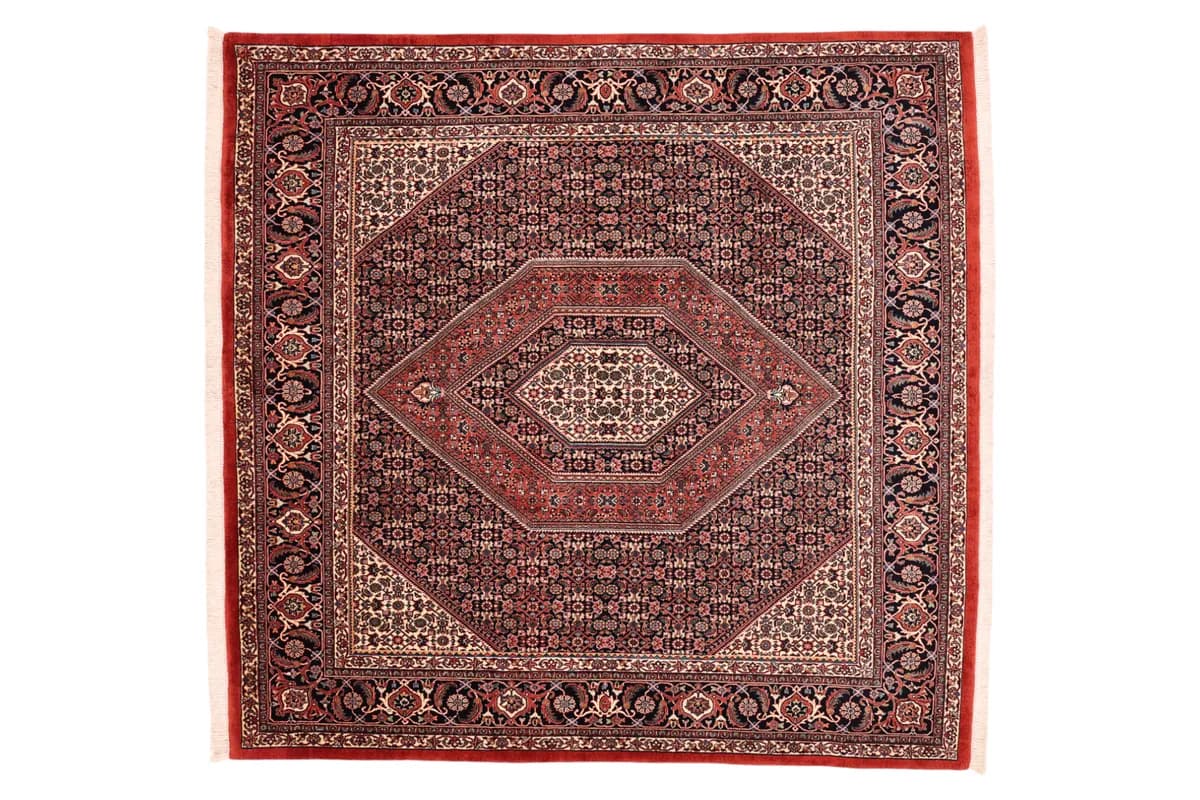
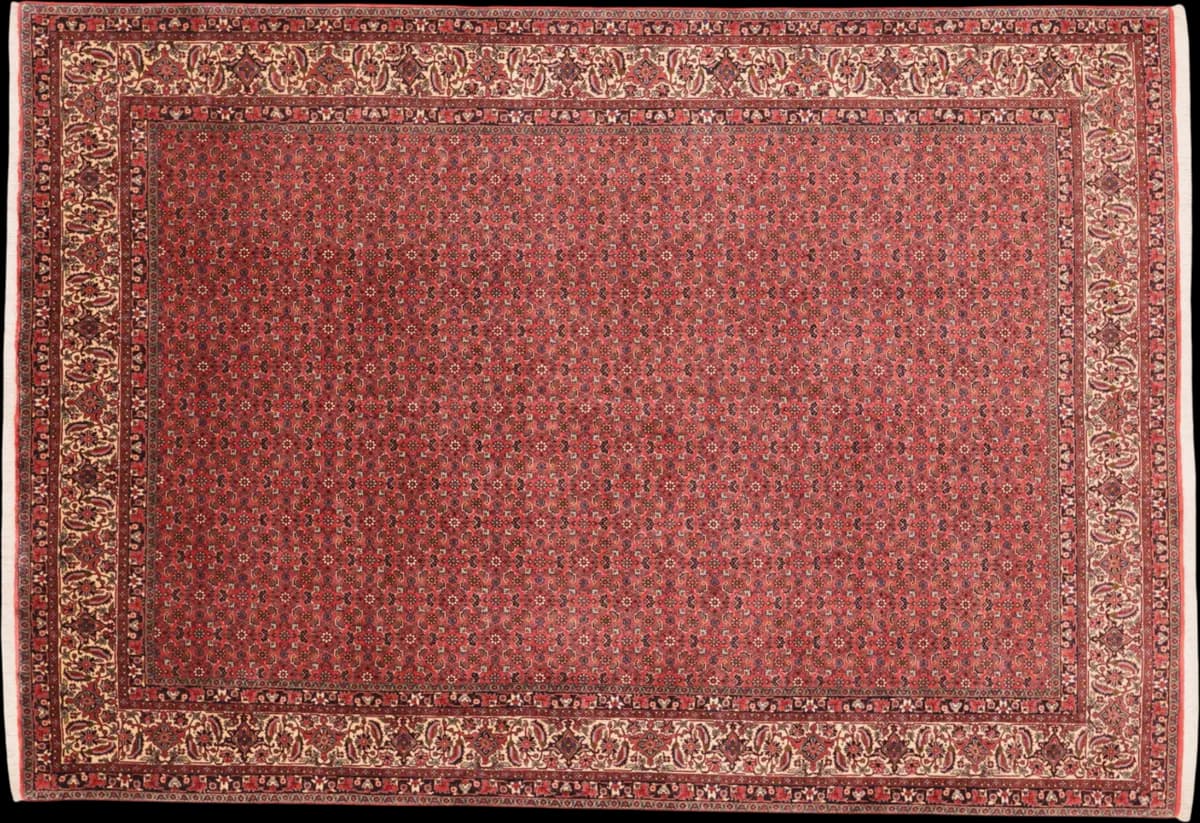
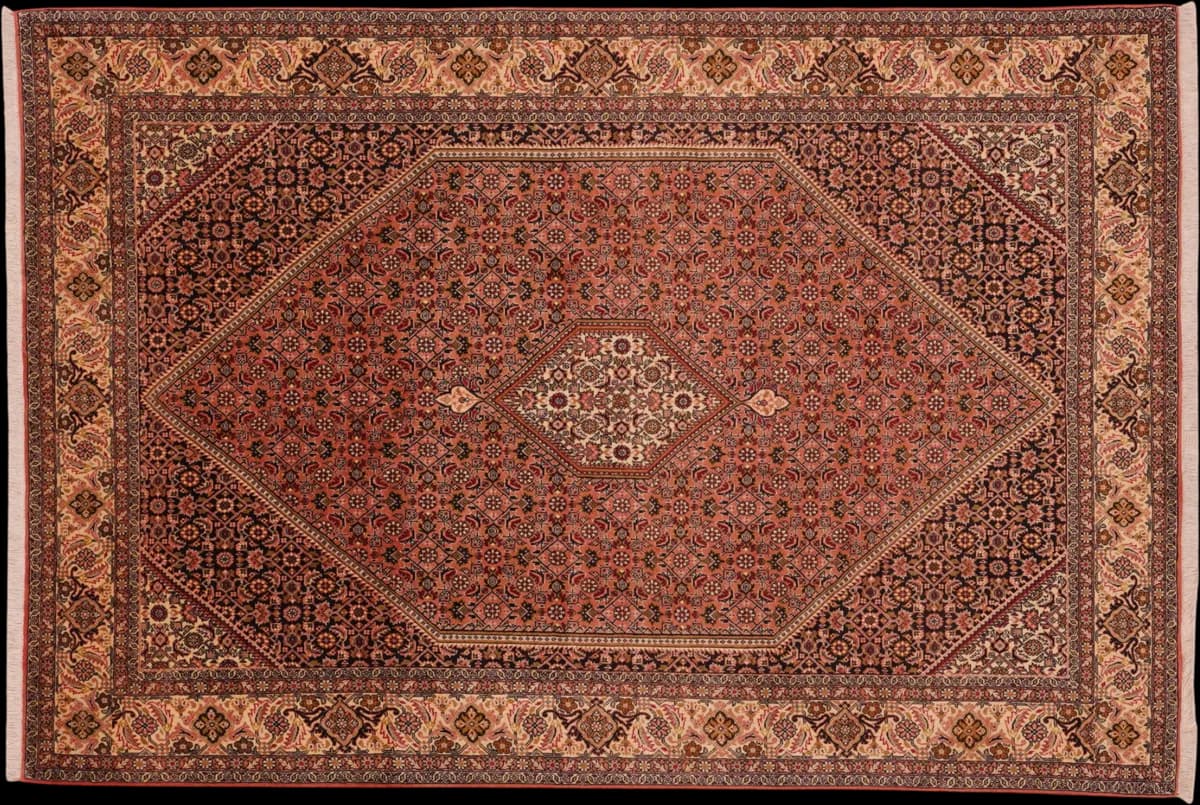
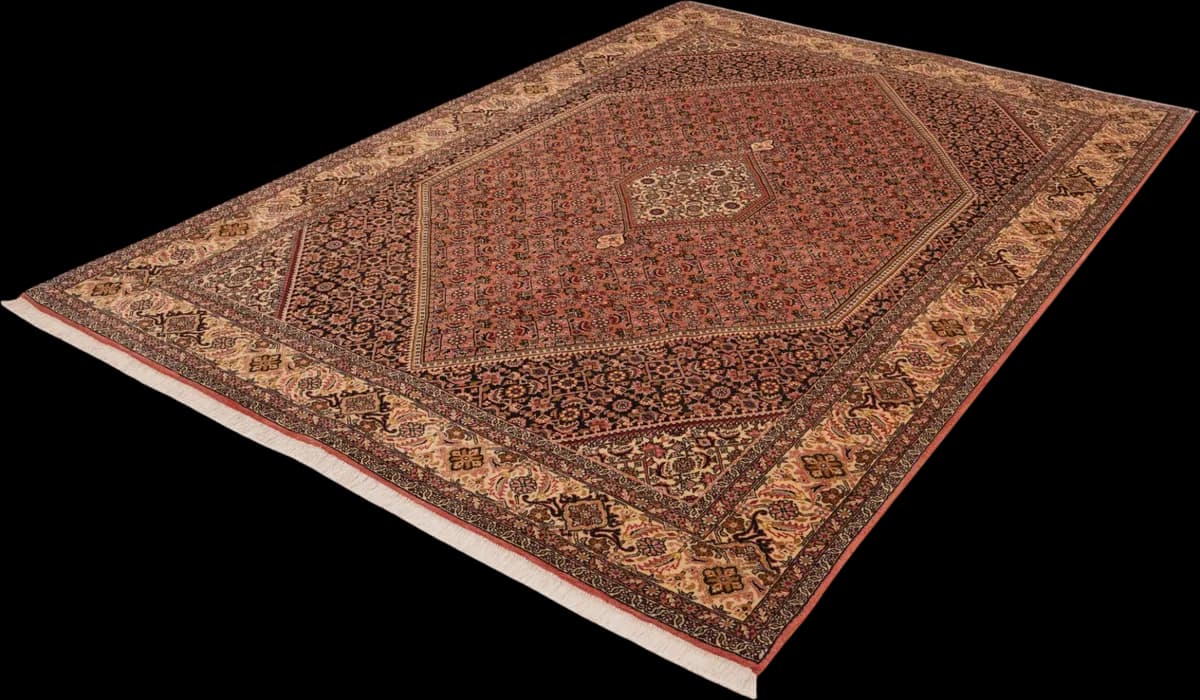
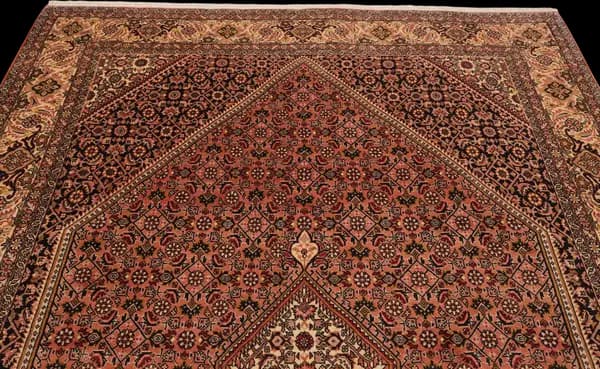
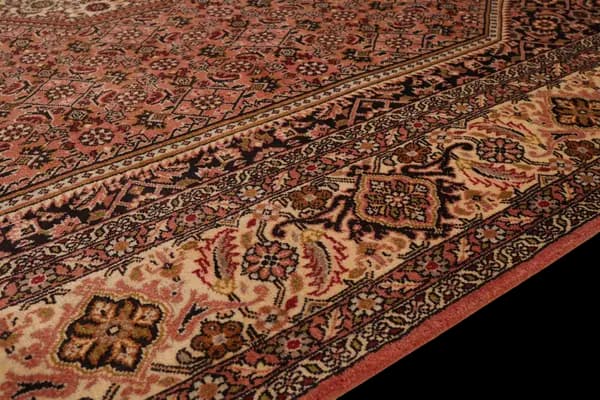
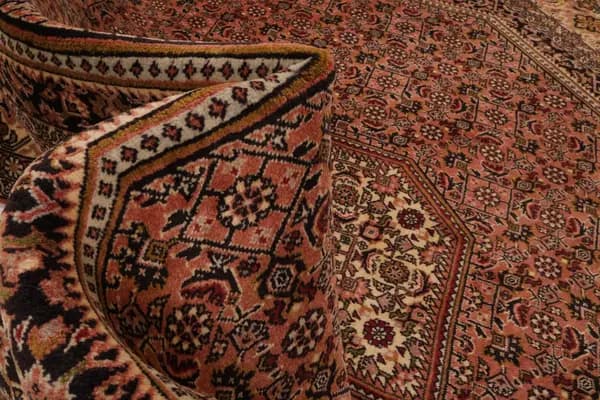
A Bidjar, also written Bijar, from the Kurdish weaving regions of western Iran, measuring 295 x 199 cm (9'8" x 6'6"). The type has earned itself a nickname among rug people: the Iron Rugs of Persia, so called for a structure pressed so tight and dense that a Bidjar cannot be folded, only rolled. It is a weaving built to be walked on for generations rather than kept for best, and this piece carries that reputation with a drawing sharper than most.
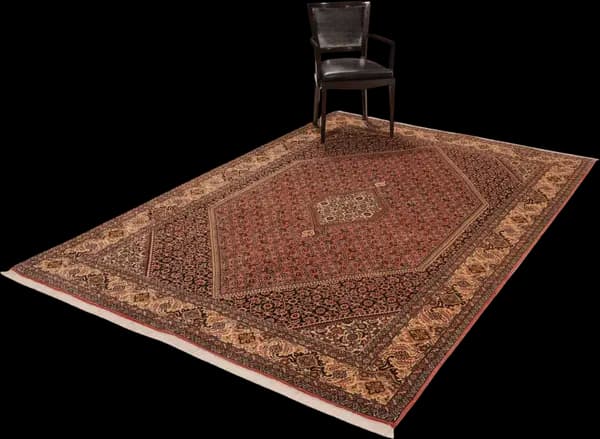
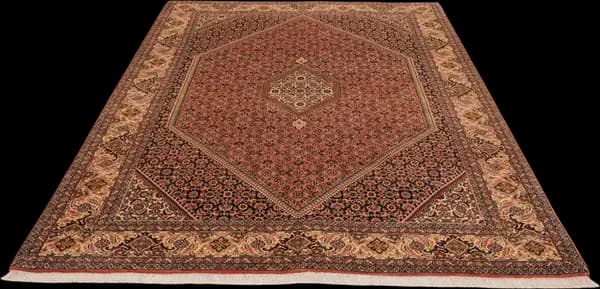
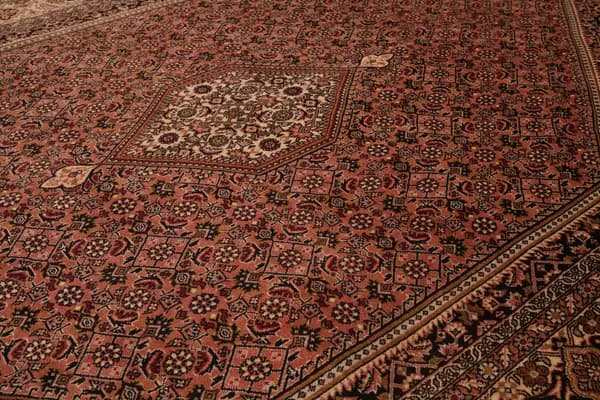
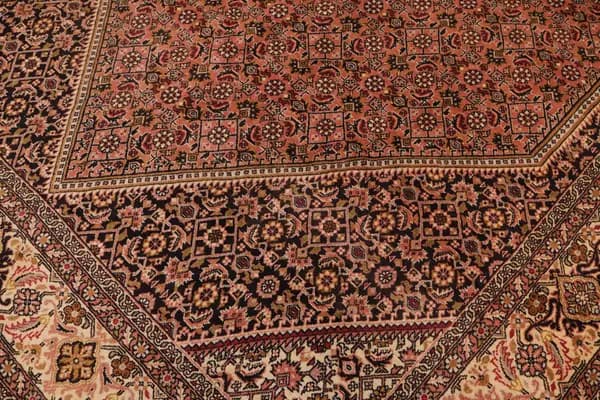
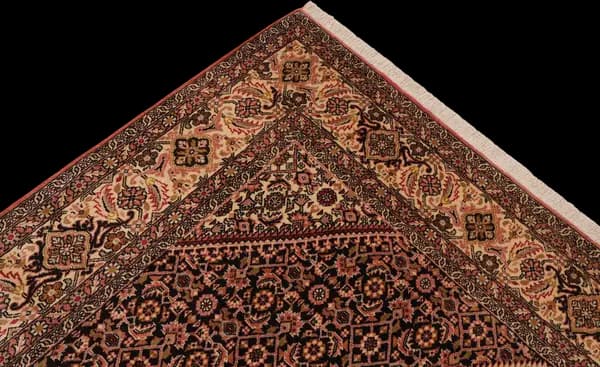
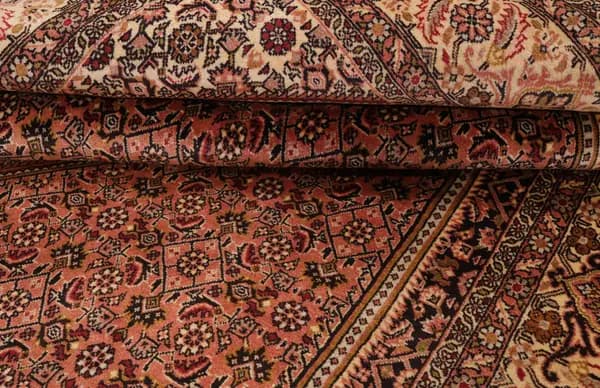
The first impression is a warm salmon-terracotta field, worked over its entire surface in a fine diamond lattice of rosettes and serrated leaves, the Mahi pattern that gives Bidjar its name. At the centre sits a lozenge medallion, and within it a second, smaller medallion shifts abruptly to ivory ground with its own denser cluster of rosettes, so the eye reads two medallions nested one inside the other. Dark navy spandrels anchor the corners against that warmth, and a wide ivory border of floral vine and palmettes, edged by narrow navy and rust guard stripes, closes the composition with a calm, even frame.
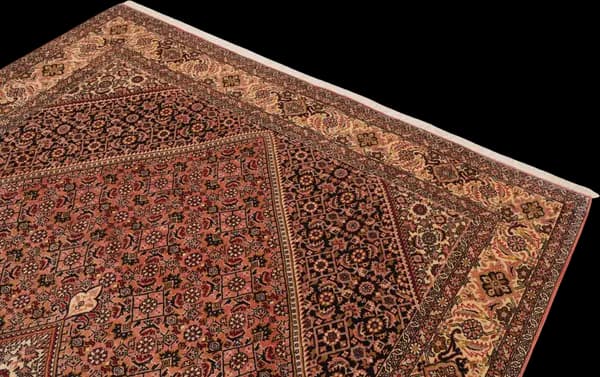
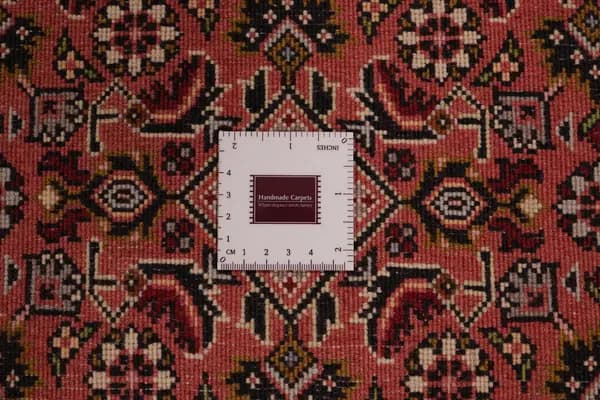
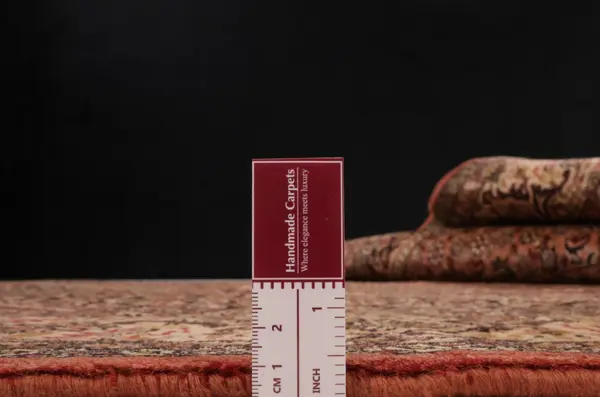
What makes the field convincing is that the lattice holds its scale and regularity all the way to the medallion's edge, with no thinning or distortion of the pattern as it approaches the centre - a sign of a cartoon followed with real discipline. That precision sits on a knot count of 201,000 to 250,000 per square metre, among the densest a rug can carry, tied by hand in wool that was spun before knotting rather than machine-spun after. Hand-spun wool takes dye and light slightly differently to commercial yarn, which is part of where the soft sheen across the field comes from. At 15 mm the pile stays low and firm, cotton warp beneath giving the whole construction the compact, weighty feel Bidjar is prized for.
A rug this size sits naturally under a dining table or in front of a living room sofa group, and the salmon field will hold its warmth against pale oak floors and equally against darker, heavier furniture. Underfoot it is dense, firm and substantial rather than soft and yielding, built for a room that gets used rather than one kept quiet. Over years of that use it keeps its edges and its geometry sharp, and the low sheen in the wool will shift gently as the light in the room moves across it through the day.
More on Bidjar rugs: origin, making and how to recognise a genuine piece
Fine quality weave
At 295 × 199 cm (5.87 m²) this is a large rug. It sits under a seating group with the front legs of sofa and chairs on it, or under a dining table for four. A table for six wants about 80 cm of clearance all round, and needs more.
Yes, knotted by hand — knot by knot on a loom, not machine-made. The density is 201,000 to 250,000 knots per square metre; across 5.87 m² that is roughly 1.2 to 1.5 million individual knots, every one of them tied by hand.
Hand-spun wool still carries its own lanolin, which keeps liquid sitting on the surface for a moment: blot quickly, with clear water and a light cloth, working inwards and without rubbing. Otherwise regular vacuuming along the pile is enough. Turn the rug once or twice a year so light and footfall reach it evenly.
We are in the Hamburg Speicherstadt. Come and see this rug in daylight, or write to us — a person answers.
Certificate included verifying origin, materials, and craftsmanship.
Ref: 807577