ExclusiveSigned
Tabriz | Silk Warpwith silk
235 × 154 cm
8.250 €




6.300 €
Incl. VAT
In Stock · Ready to Ship
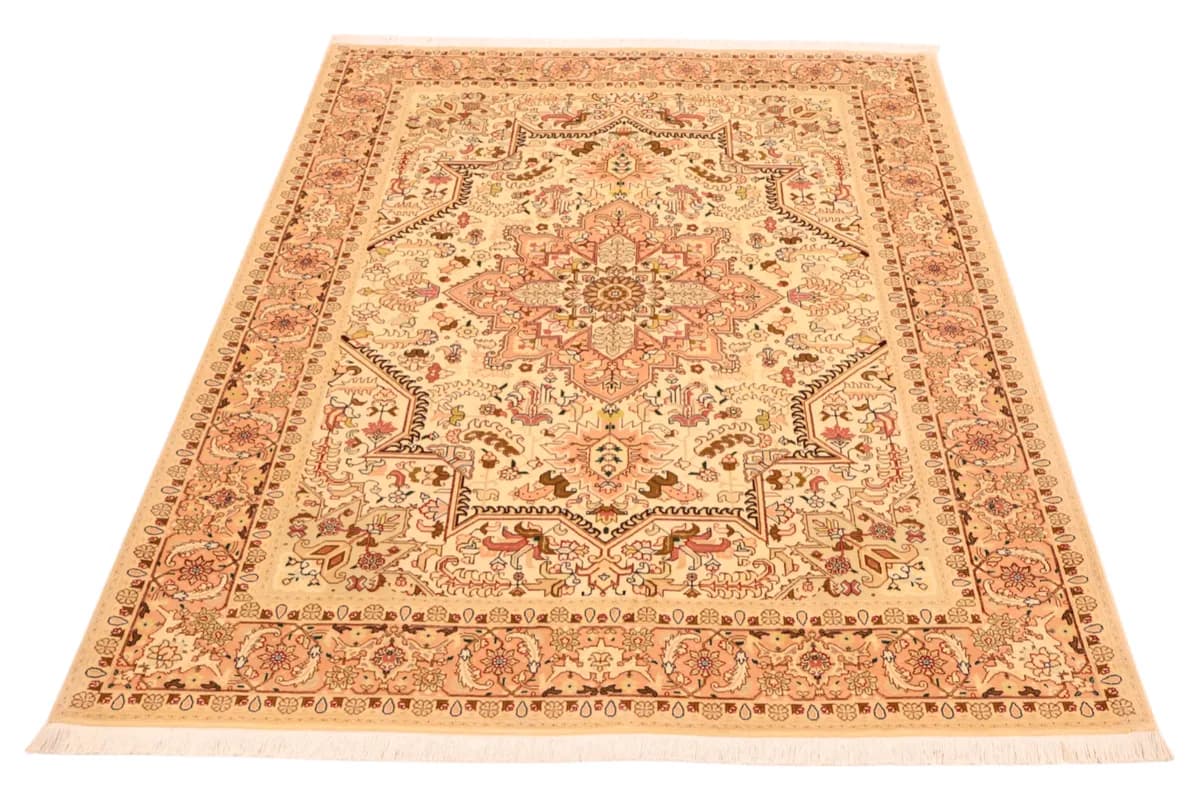
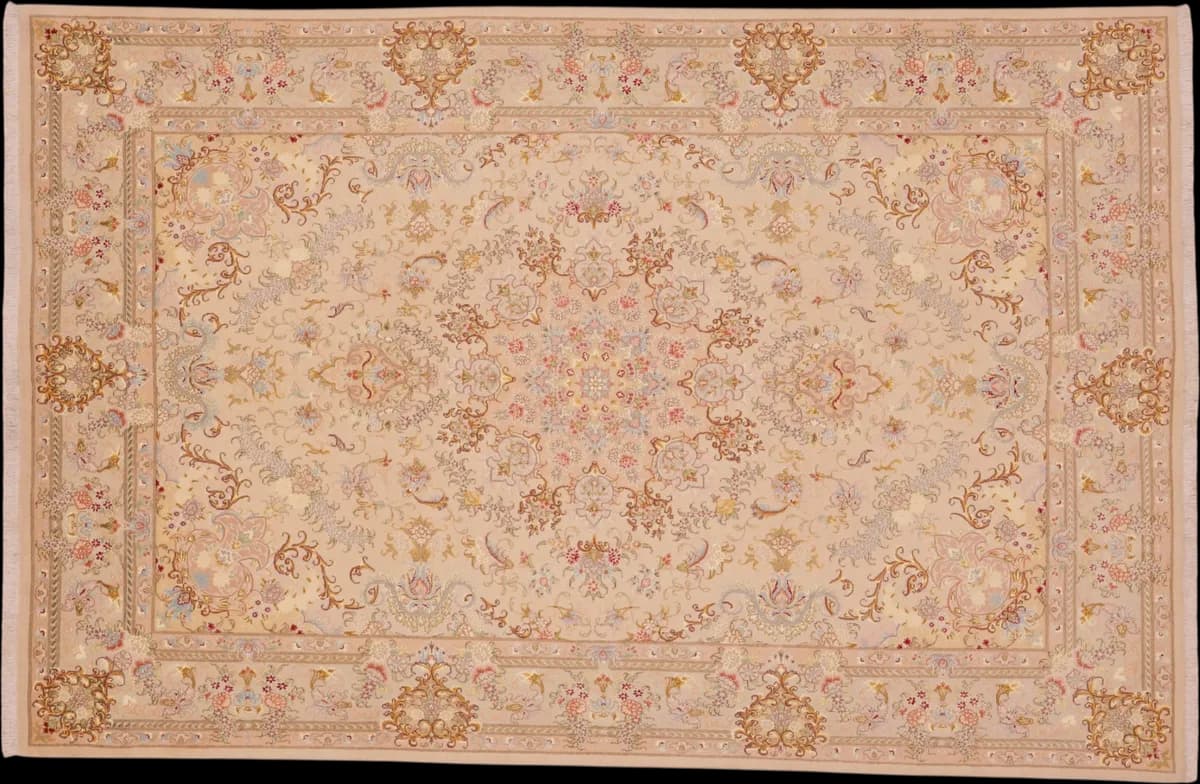
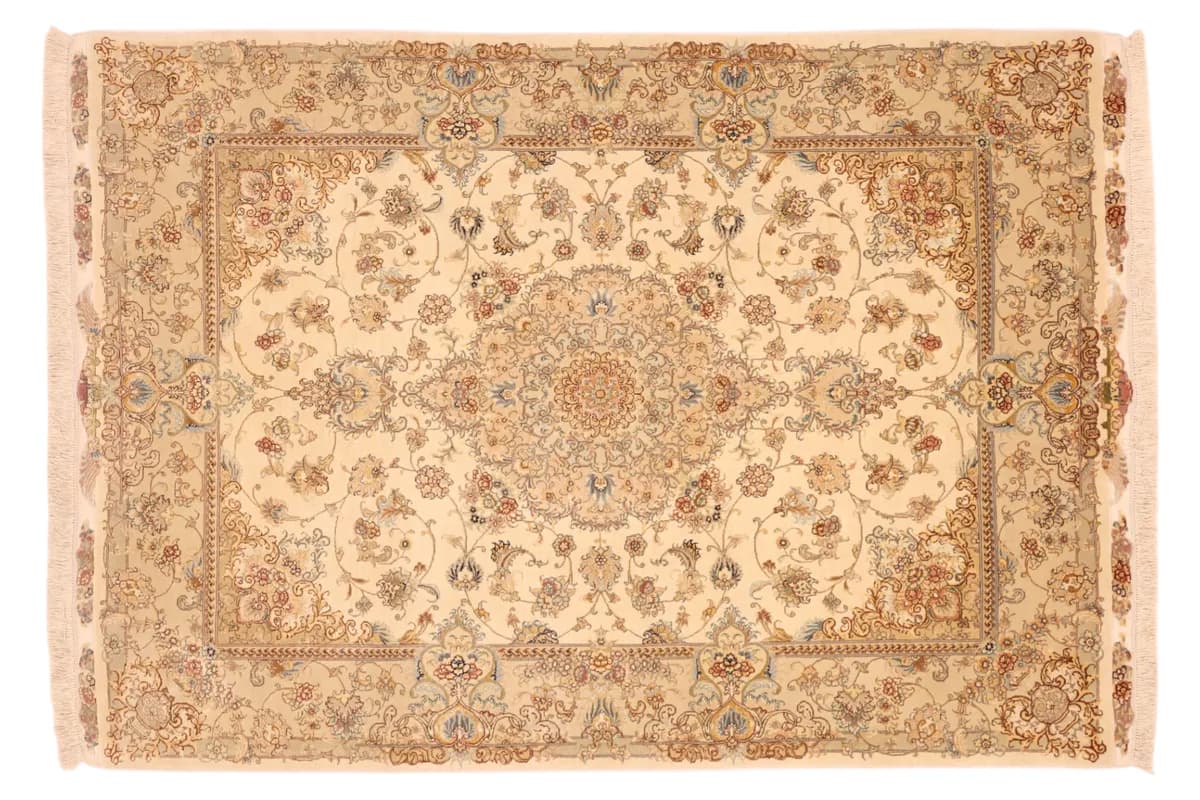
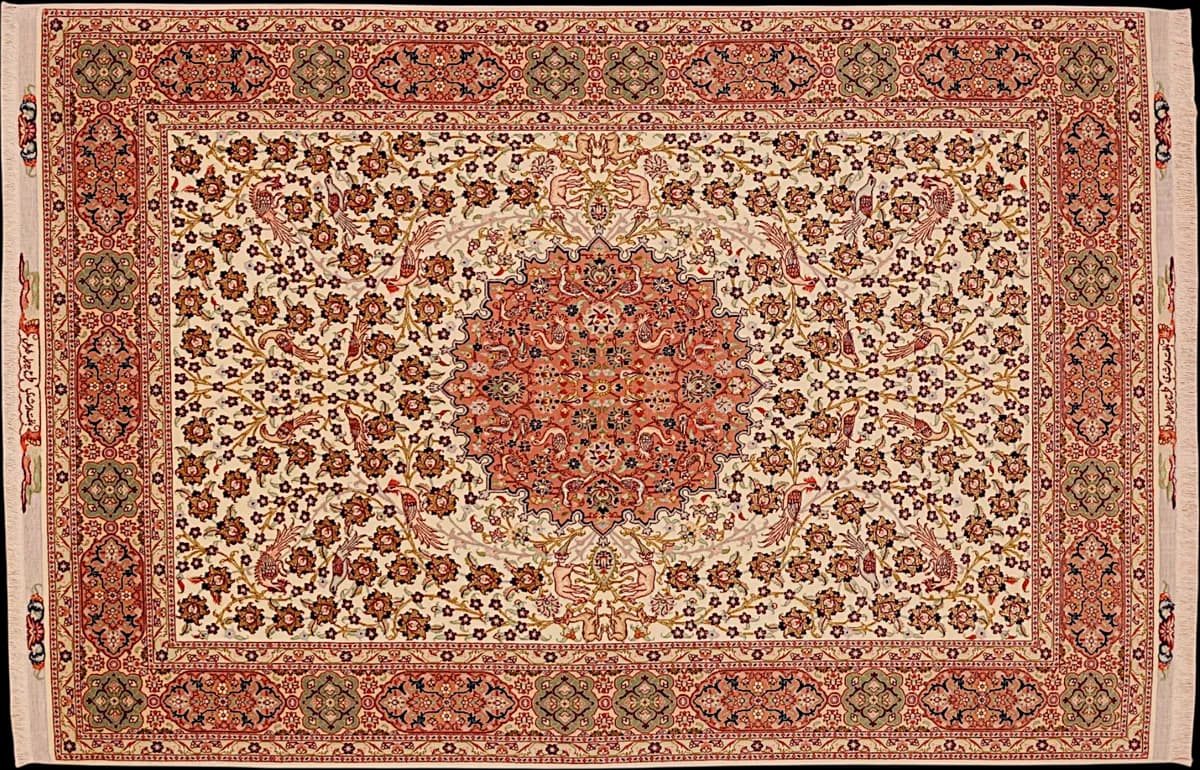
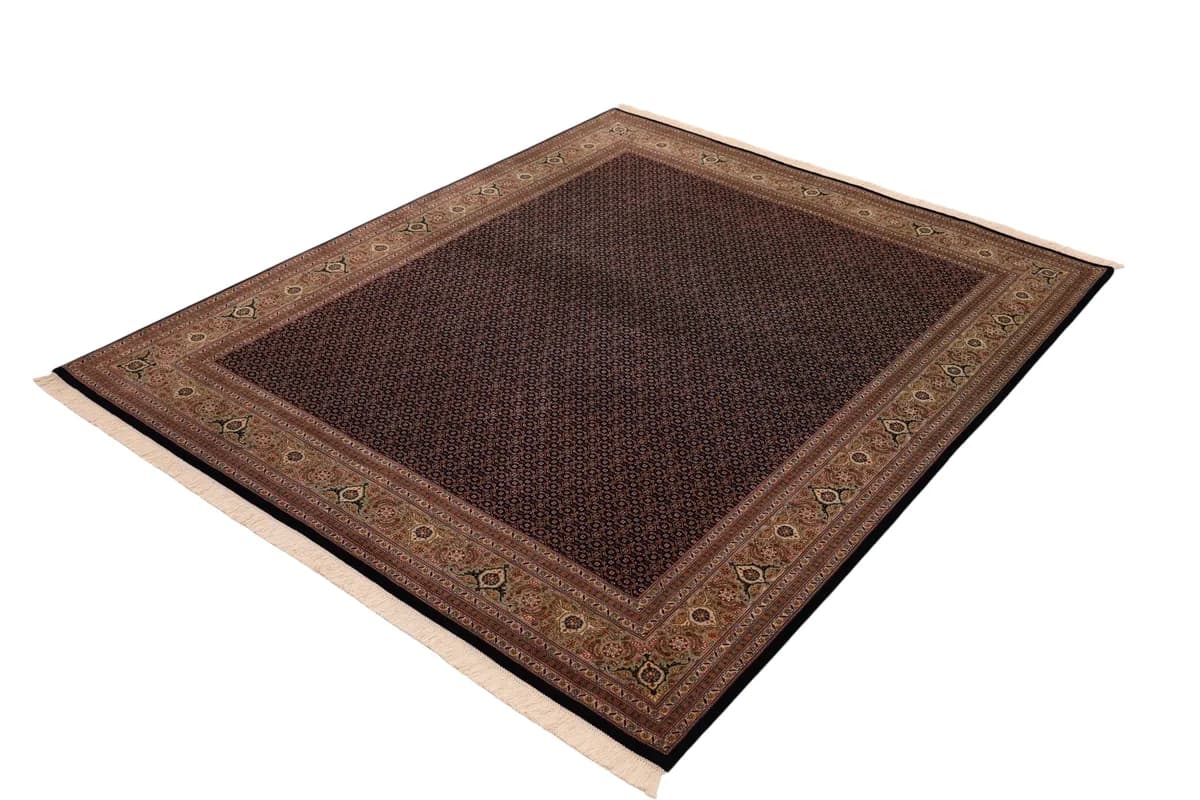
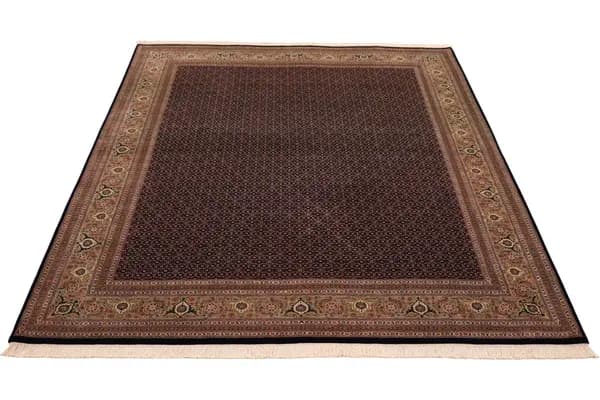
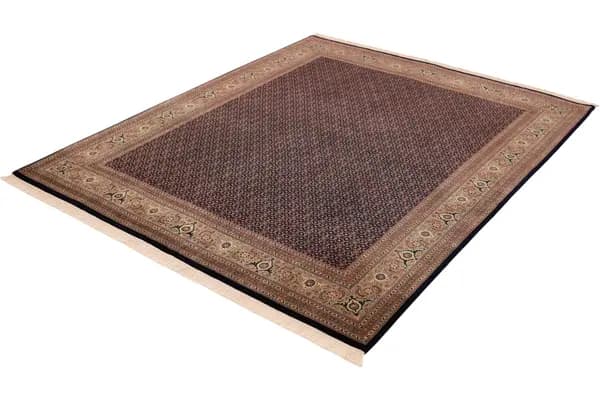
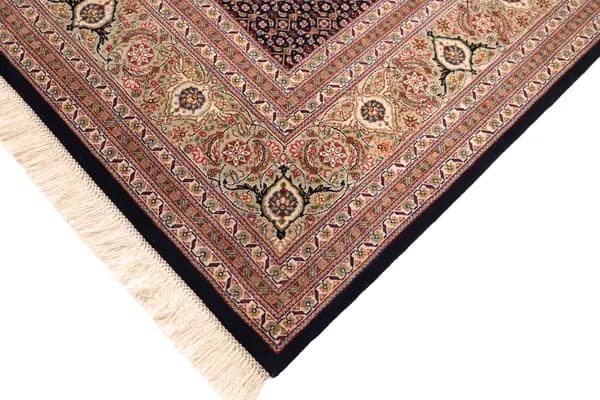
This is a Tabriz Mahi, 243 x 200 cm (8'0" x 6'7"), a design drawn from Persia's great workshop city and made here in India by weavers working to the same cartoon and the same symmetric knot that has defined Tabriz production for five centuries. The Mahi, or fish-and-rosette lattice, is one of that city's oldest patterns and is usually set against red or ivory. This piece is not.
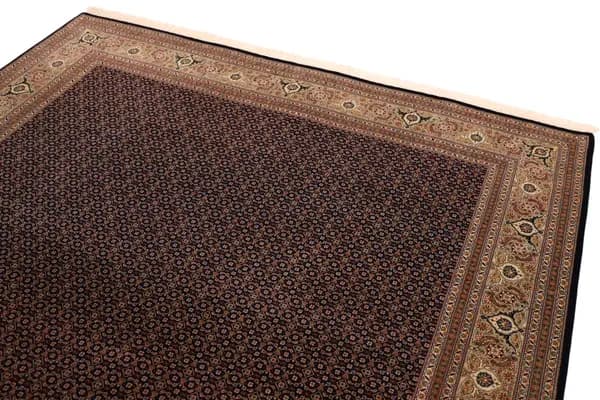
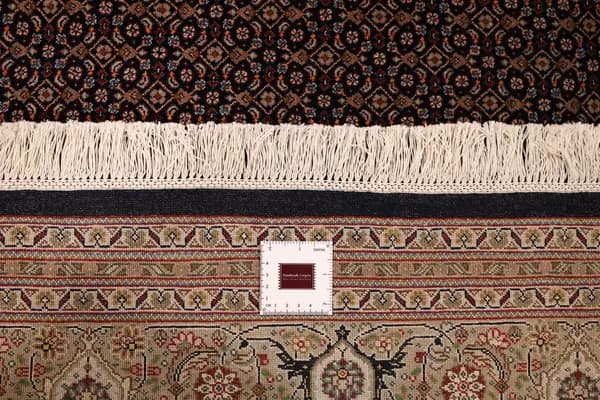
The field reads almost black, a deep midnight blue close enough to black that it changes the whole character of the pattern above it. Across that ground runs a fine, regular lattice of small fish and rosettes, repeated edge to edge with no medallion to interrupt it, so the eye travels the whole field rather than settling on a centre. Around it sits a wide border, close to a fifth of the rug's width, in warm camel and rust, carrying paisley and floral cartouches and edged with thin black and cream guard stripes. Against the near-black field, that camel border reads unusually bright, and the contrast is the first thing anyone standing over this rug will notice.
A pattern this fine, held against a ground this dark, asks a lot of the weave, and that is where the piece earns its clarity. The pile is wool with silk, and silk takes a much finer thread than wool alone, which is what allows a knot count of 321,000 to 380,000 per square metre to hold each small rosette distinct rather than letting it dissolve into the dark field around it. A cotton warp keeps the rug flat and stable, and the pile is clipped low, to 12 mm, so the lattice stays crisp rather than soft-edged. The result took months of steady, symmetric knotting, and the light silk content gives the surface a gentle sheen rather than a flat one.
At 243 x 200 cm this is a dining room piece, sized to sit comfortably under a table and chairs, or a rug for a living room seating group where the floor is meant to be seen as much as covered. The midnight ground holds its own against dark wood or dark upholstery without disappearing into it, and against a paler floor it reads as a strong, quiet anchor rather than a bright one. Underfoot the pile is dense and even, firm enough for daily use rather than a piece to be tiptoed around. Move a lamp or let the afternoon sun cross it, and the silk in the lattice catches the light in a way the wool around it does not, so the pattern seems to shift very slightly through the day.
More on Tabriz rugs: origin, making and how to recognise a genuine piece
Superior craftsmanship
At 243 × 200 cm (4.86 m²) this is a medium rug. It works in front of a sofa, in front of a bed or in a study. It is too small for a dining table — there you want about 80 cm of clearance so a chair does not tip over the edge when pushed back.
Yes, knotted by hand — knot by knot on a loom, not machine-made. The density is 321,000 to 380,000 knots per square metre; across 4.86 m² that is roughly 1.6 to 1.8 million individual knots, every one of them tied by hand.
This pile contains silk and is more delicate than pure wool. Vacuum without a rotating brush and along the pile, do not beat it, and keep it out of permanent direct sun. Blot spills at once with a light cloth, never rub. For a proper clean a silk-blend rug belongs in expert hands — we handle that for pieces bought from us.
We are in the Hamburg Speicherstadt. Come and see this rug in daylight, or write to us — a person answers.
Certificate included verifying origin, materials, and craftsmanship.
Ref: 232685