ExclusiveSigned
Tabriz | Exclusive | Signedwith silk
309 × 199 cm
16.050 €
16.350 €
Incl. VAT
In Stock · Ready to Ship
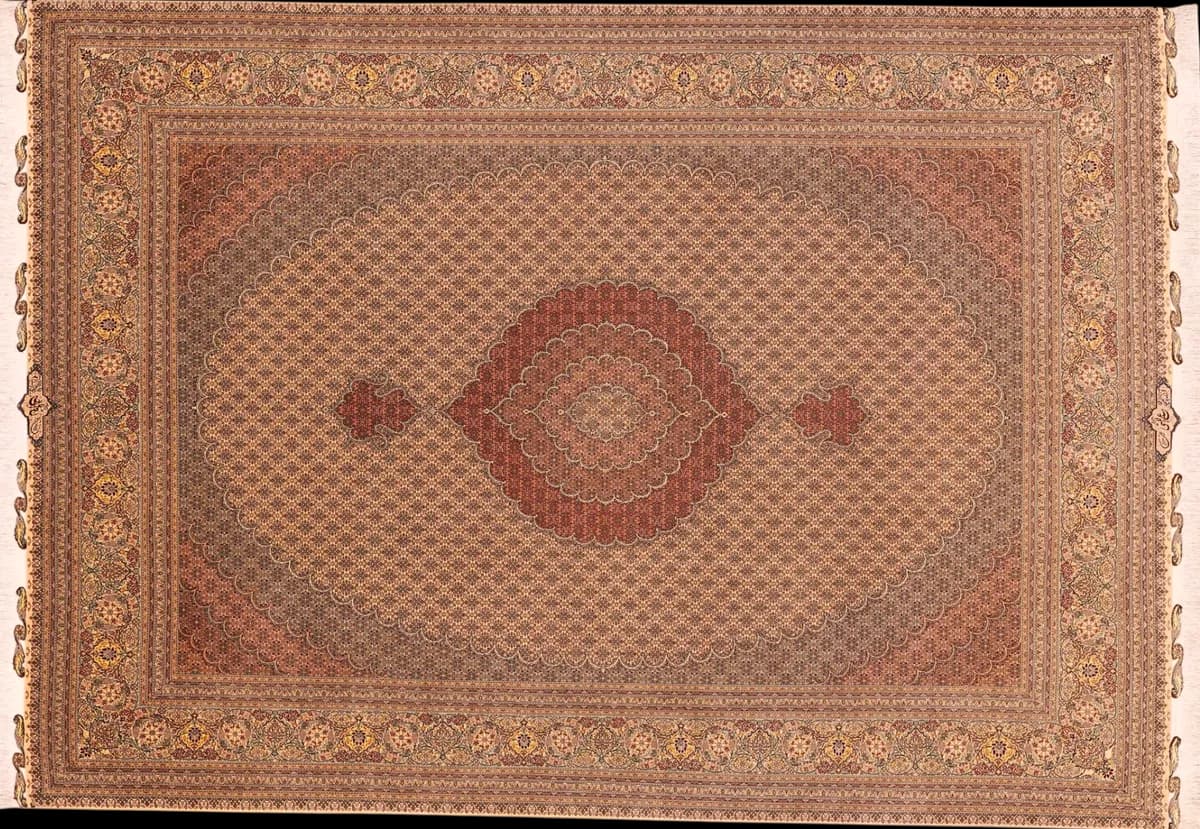
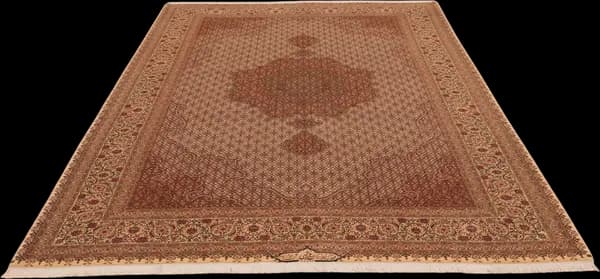
Tabriz is one of Persia's great workshop cities, where rugs are drawn on paper before a single knot is tied and woven to that plan with real exactness. This piece measures 303 x 203 cm (9'11" x 6'8"), a size that sits comfortably in a dining room or a generous seating area, and it belongs to the city's best-known form: a central medallion set into an allover pattern, made in the symmetric knot that gives Tabriz weaving its tight, clean lines. What marks this particular rug out, even within that tradition, is how fine the drawing is allowed to become.
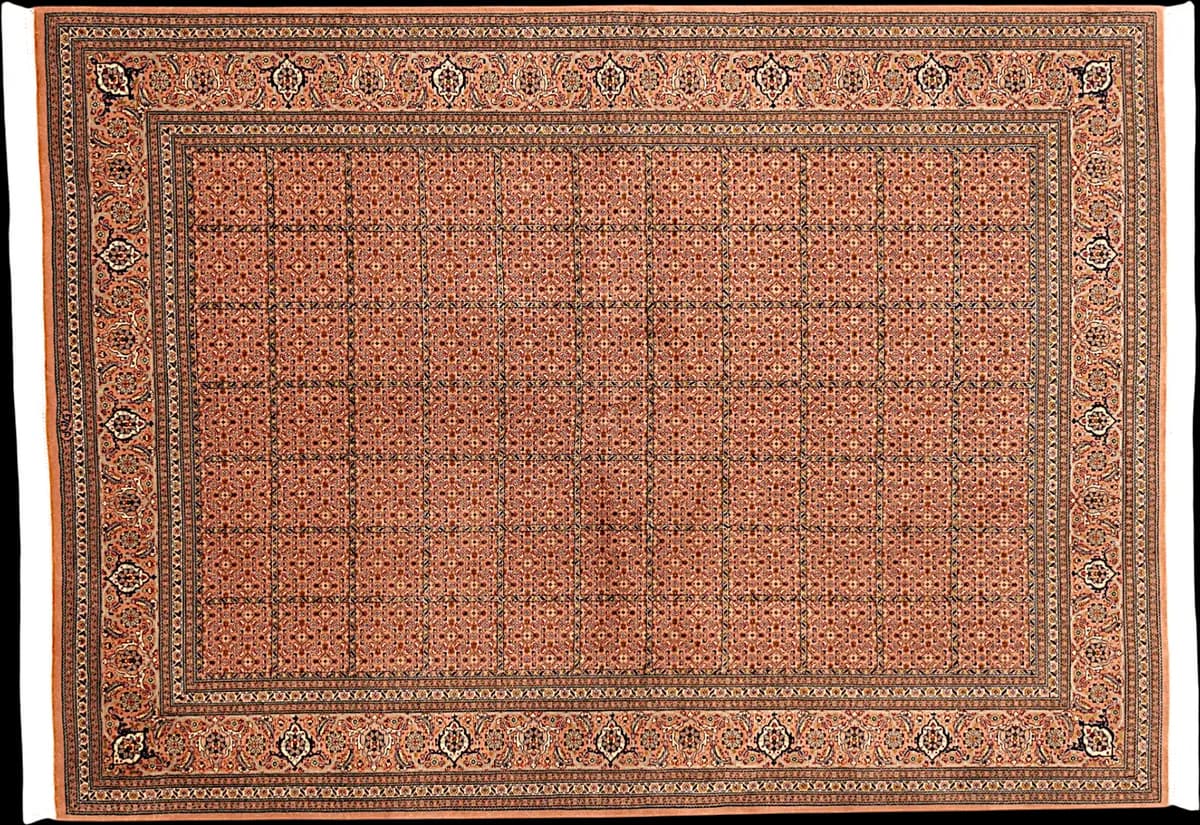
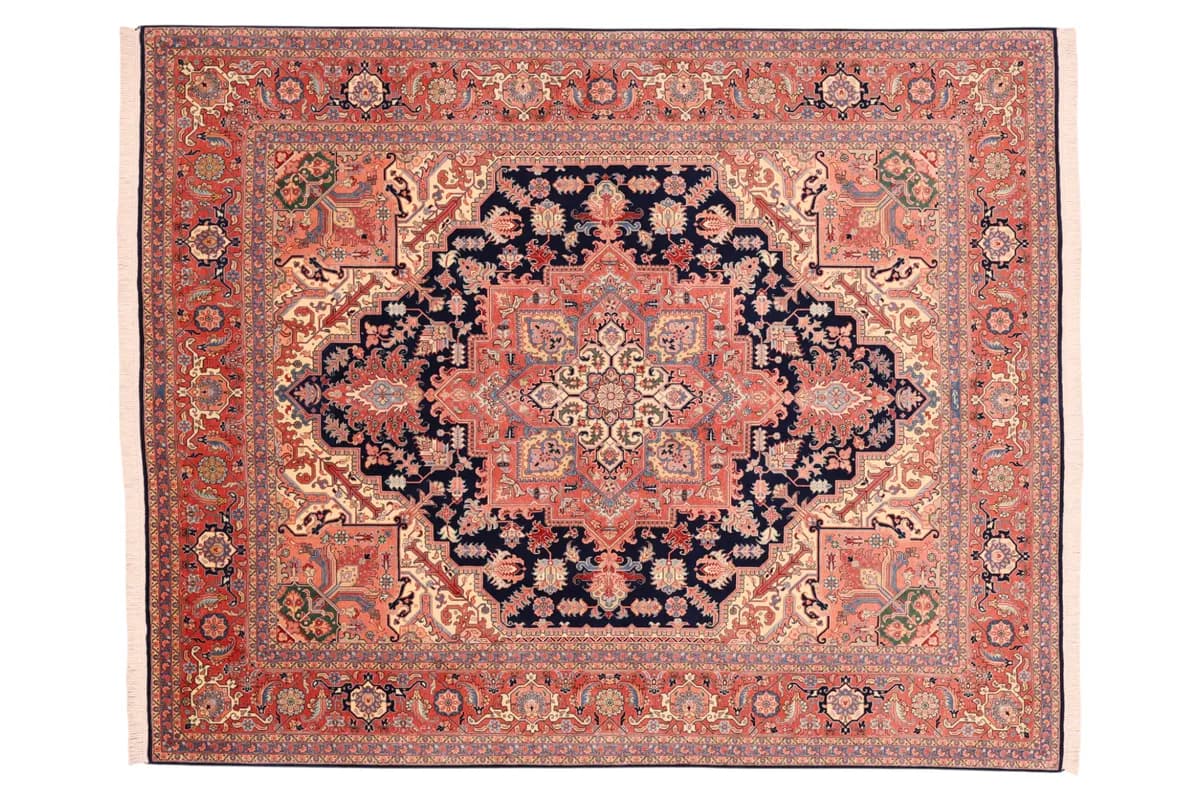
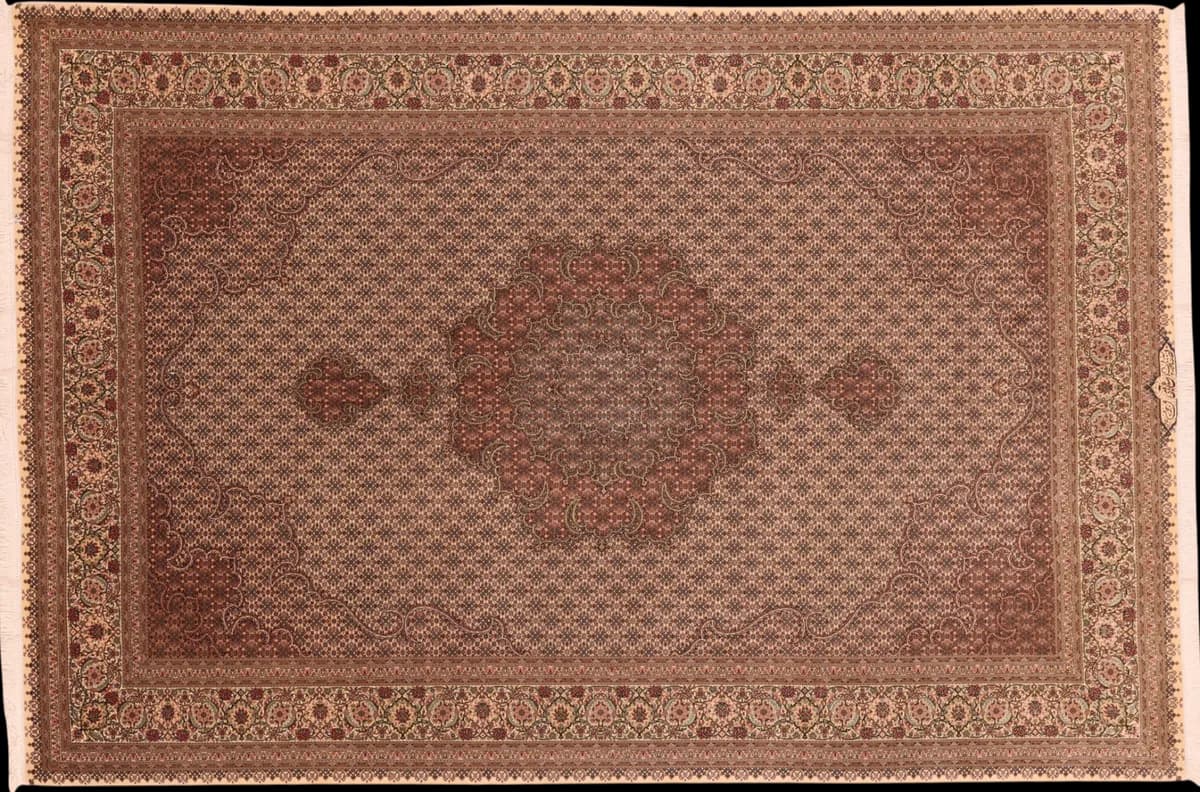
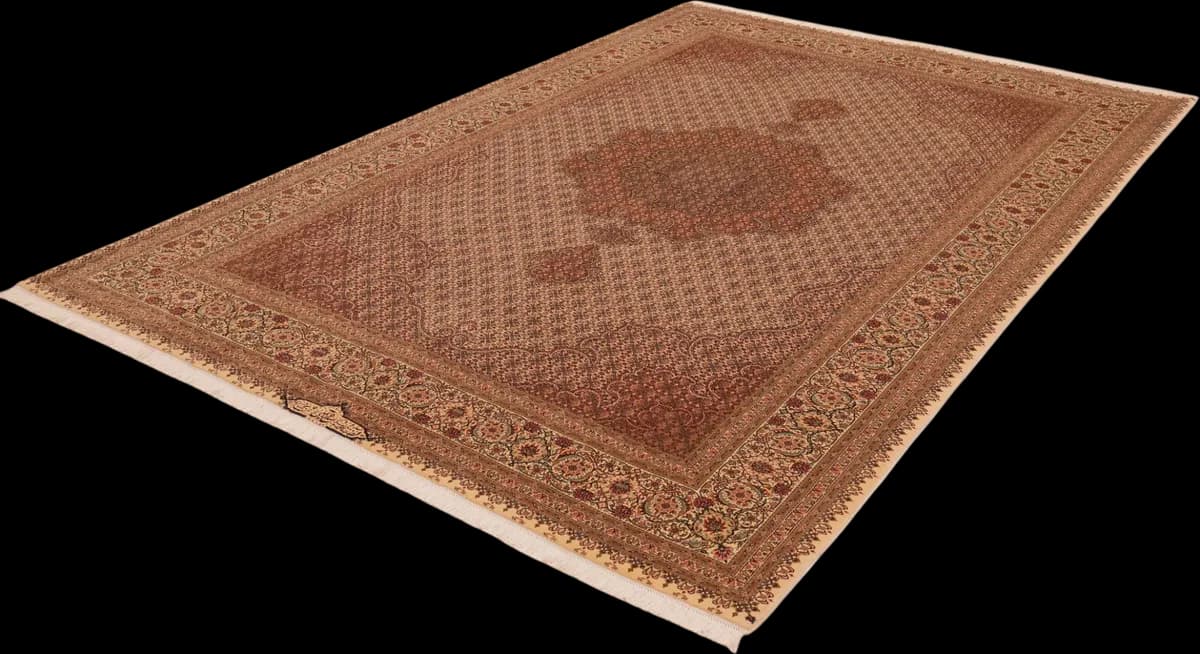
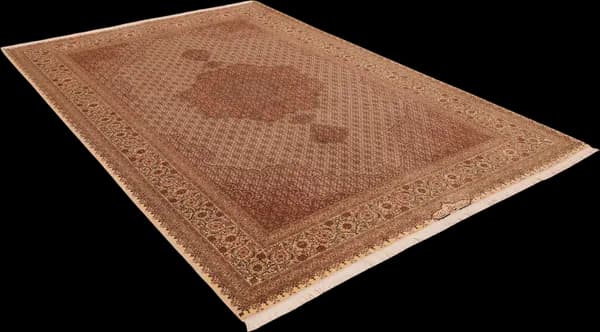
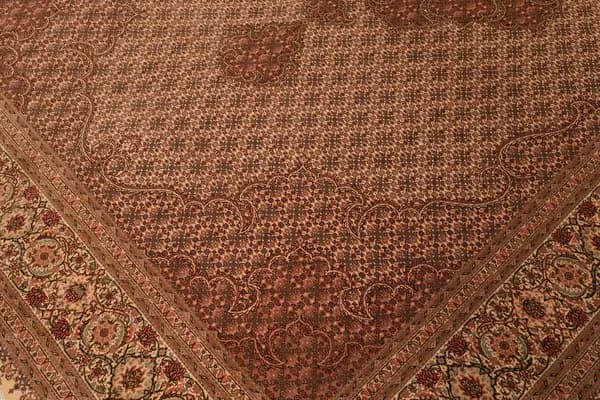
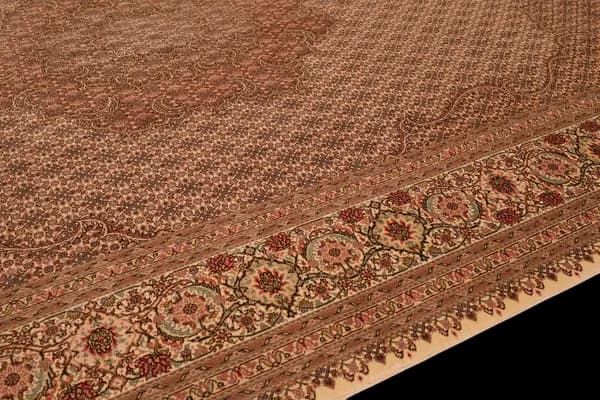
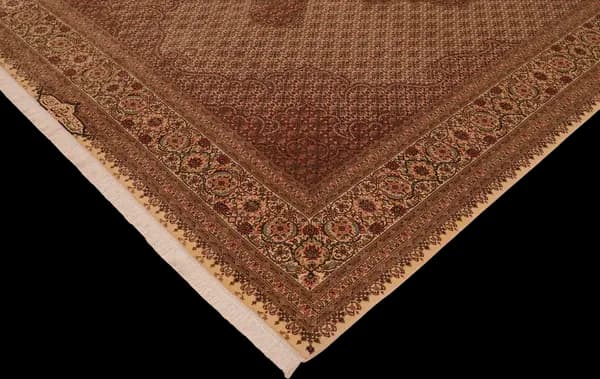
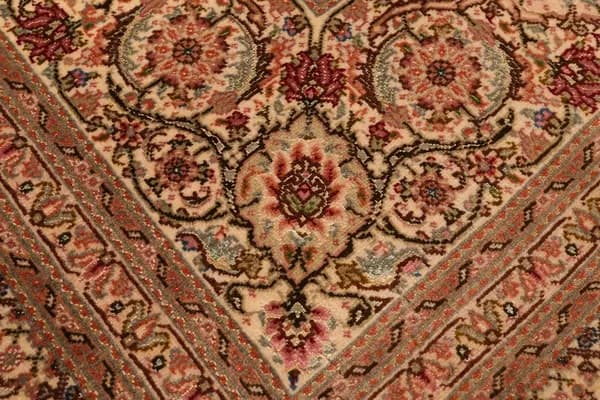
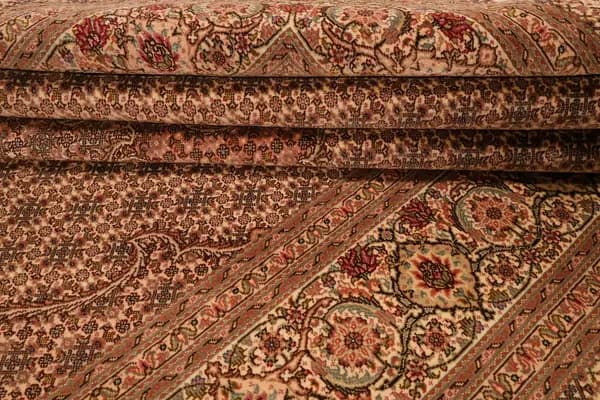
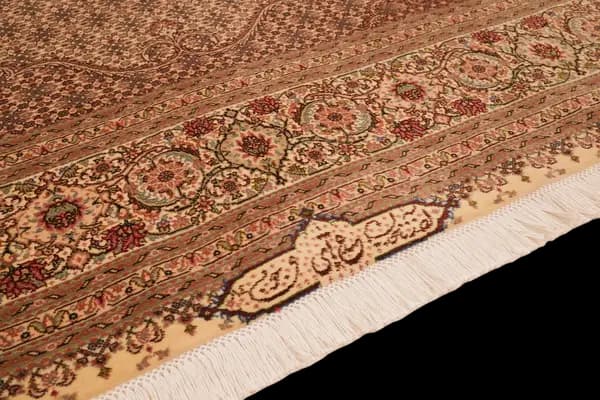
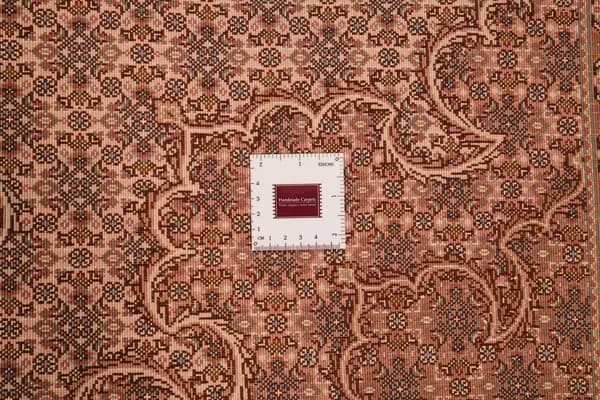
The field is a warm rust brown, filled edge to edge with a dense Mahi lattice, the small diamond-fish pattern that Tabriz weavers have used for generations. Rising out of it is a deep brick-red medallion with a dark outline, flanked by two smaller pendant medallions above and below, so the eye settles in the centre and then travels the length of the rug. Around all of this runs a wide ivory border, carrying a running vine of red, sage green and dark navy flowerheads, a clear, pale frame against the darker field. In the lower left corner, close to the border, a small woven cartouche carries the weaver's signature.
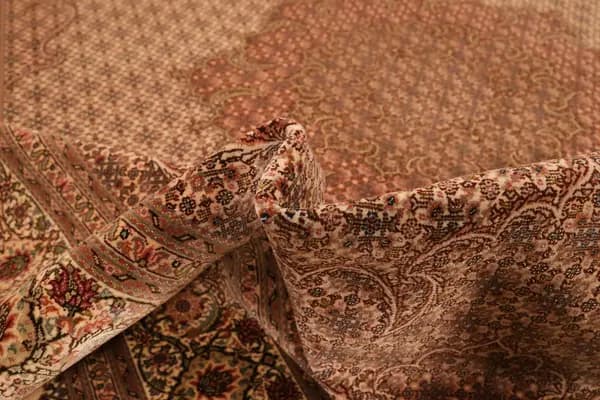
The pile is wool with an admixture of silk, carried on a cotton warp, at a density of between 441,000 and 500,000 knots per square metre. Silk threads spin far finer than wool, and knotting some of them into the pile lets a weaver draw a sharper edge and a smaller motif than wool alone allows, which is why the lattice and the border vine here read almost like drawing rather than weaving, closer to a miniature than a typical rug of this scale. A pile of that density, at that fineness, is not quick work; this is many months at the loom to finish a single piece.
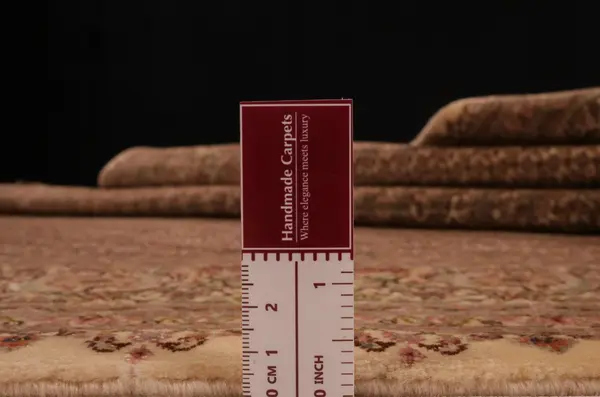
Under a dining table or beneath a sofa, that rust ground will hold its own against dark wood and warm a pale floor without shouting for attention, while the ivory border keeps the whole composition from ever feeling heavy. The pile, at ten millimetres and tightly packed, is firm and even underfoot, made for a room that gets daily use rather than one kept for best. Let daylight move across it through the day and the silk in the field and border will catch the light in turns, so the medallion and the lattice never look quite the same twice.
More on Tabriz rugs: origin, making and how to recognise a genuine piece
Superior craftsmanship
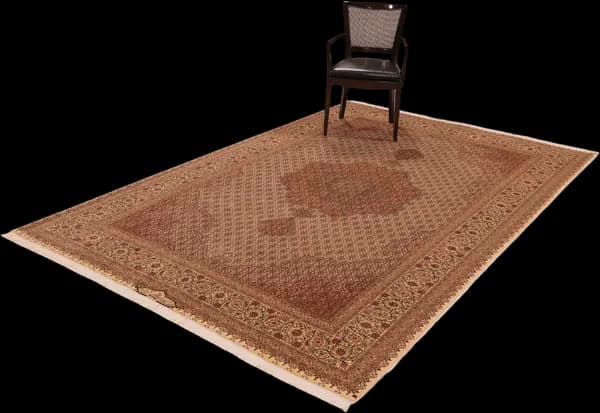
At 303 × 203 cm (6.15 m²) this is a large rug. It sits under a seating group with the front legs of sofa and chairs on it, or under a dining table for four. A table for six wants about 80 cm of clearance all round, and needs more.
Yes, knotted by hand — knot by knot on a loom, not machine-made. The density is 441,000 to 500,000 knots per square metre; across 6.15 m² that is roughly 2.7 to 3.1 million individual knots, every one of them tied by hand.
This pile contains silk and is more delicate than pure wool. Vacuum without a rotating brush and along the pile, do not beat it, and keep it out of permanent direct sun. Blot spills at once with a light cloth, never rub. For a proper clean a silk-blend rug belongs in expert hands — we handle that for pieces bought from us.
We are in the Hamburg Speicherstadt. Come and see this rug in daylight, or write to us — a person answers.
Certificate included verifying origin, materials, and craftsmanship.
Ref: 121988