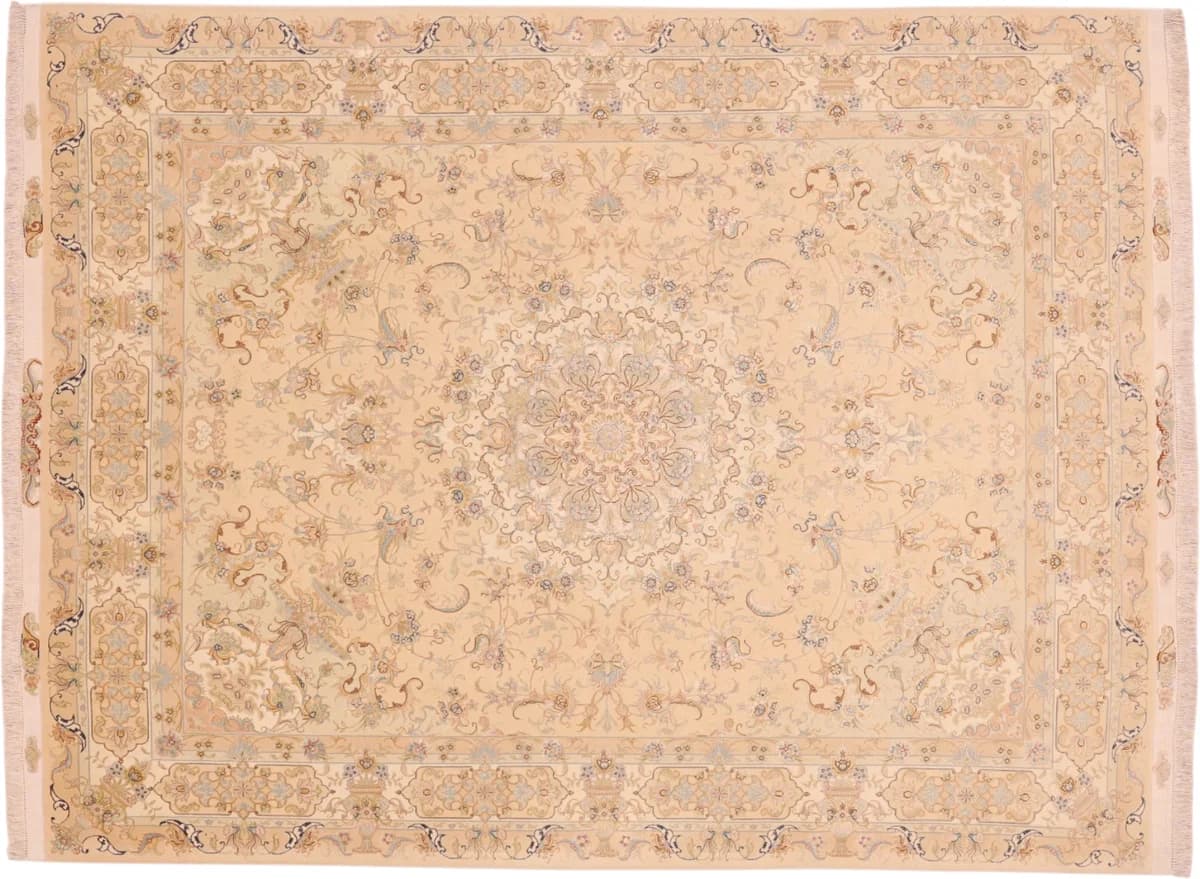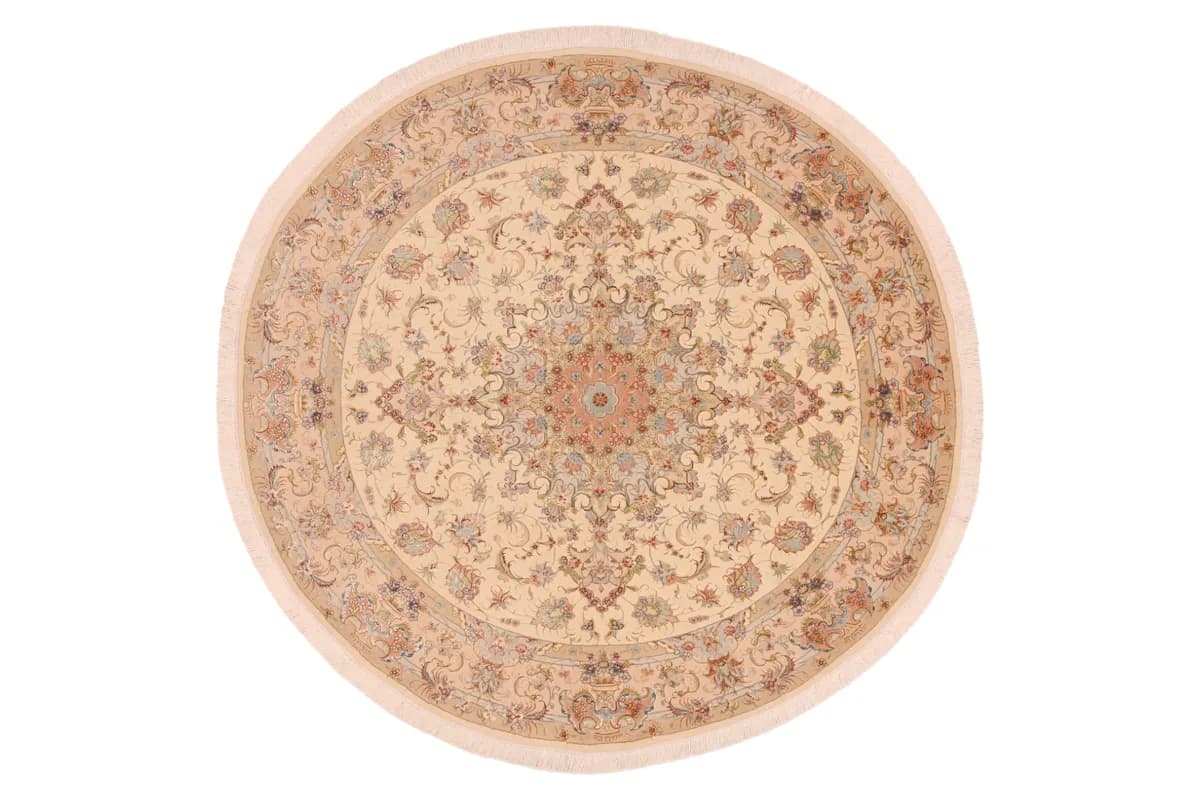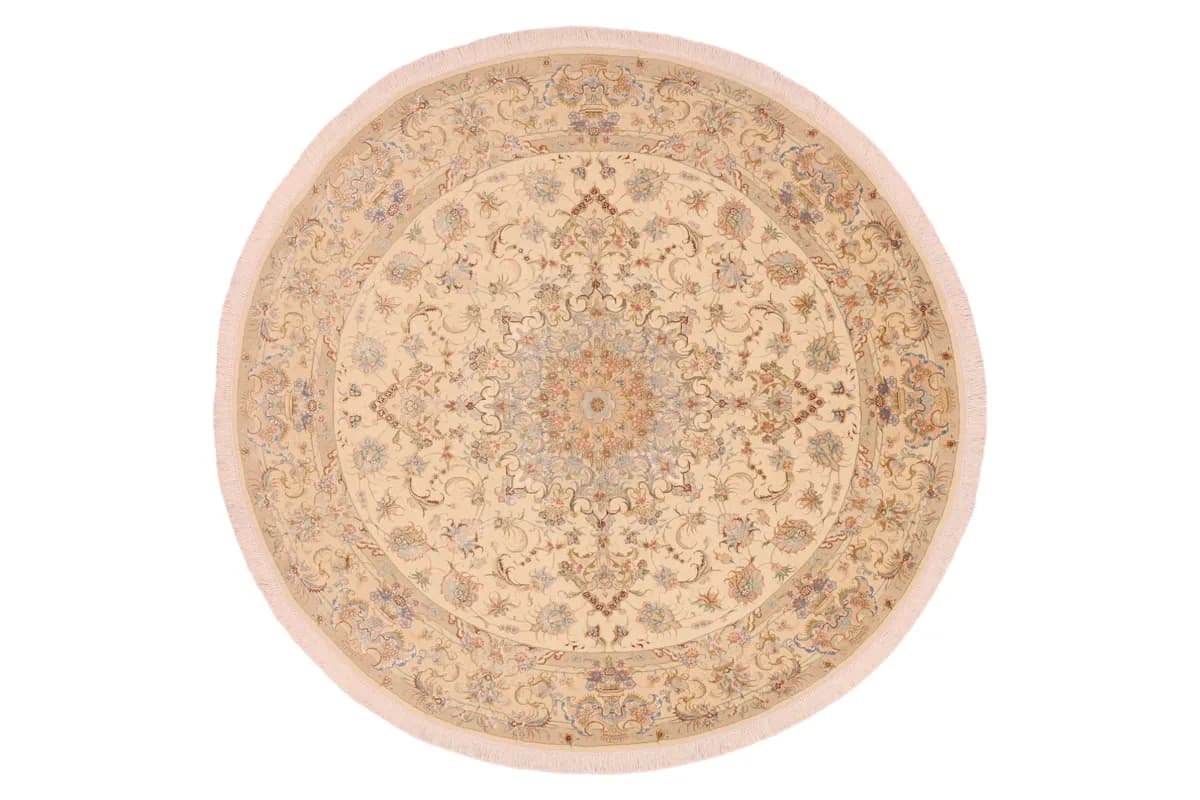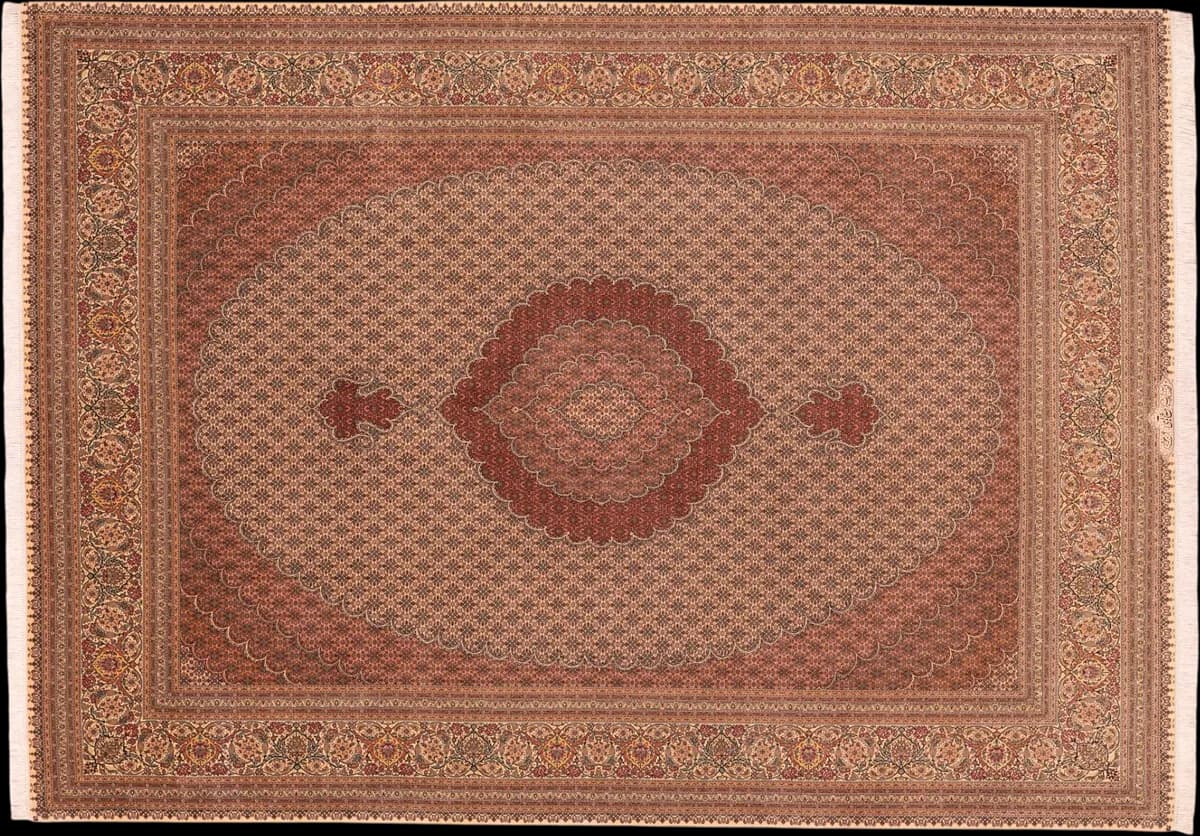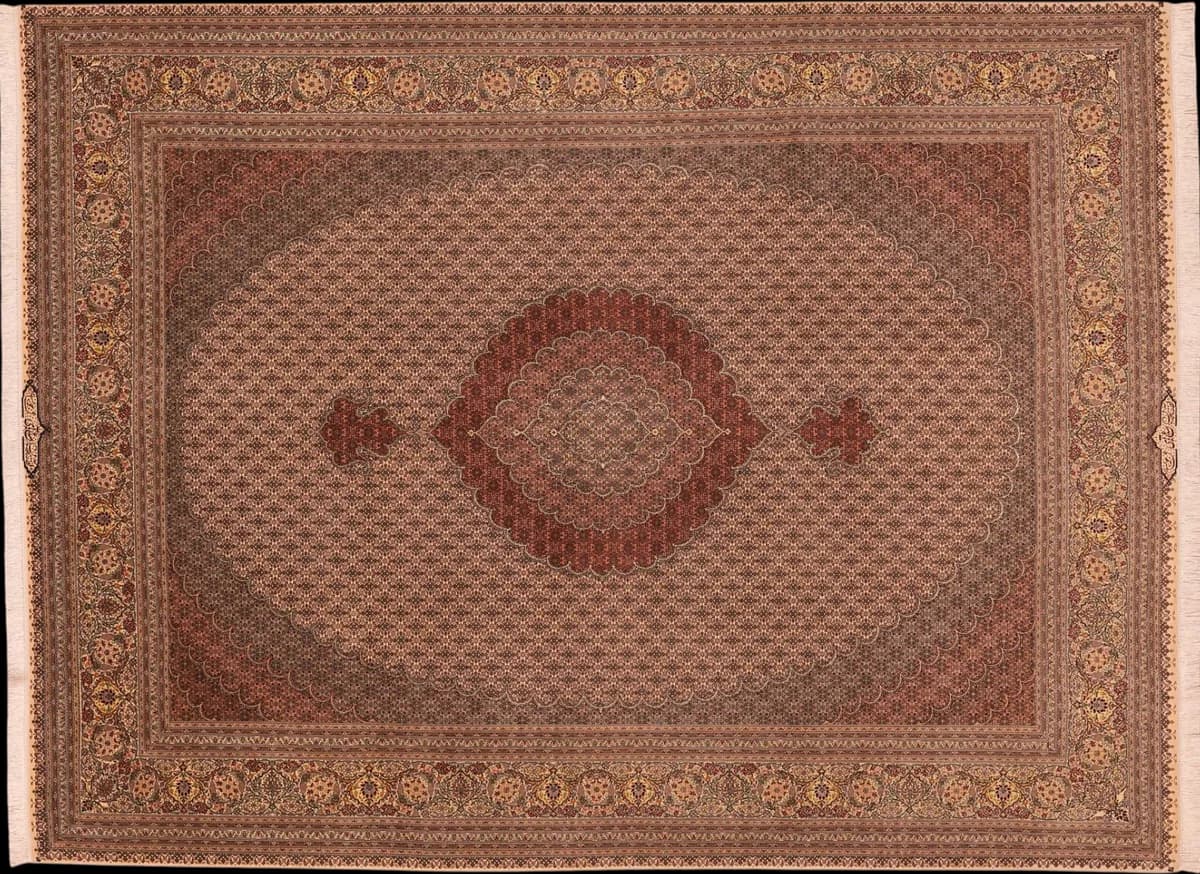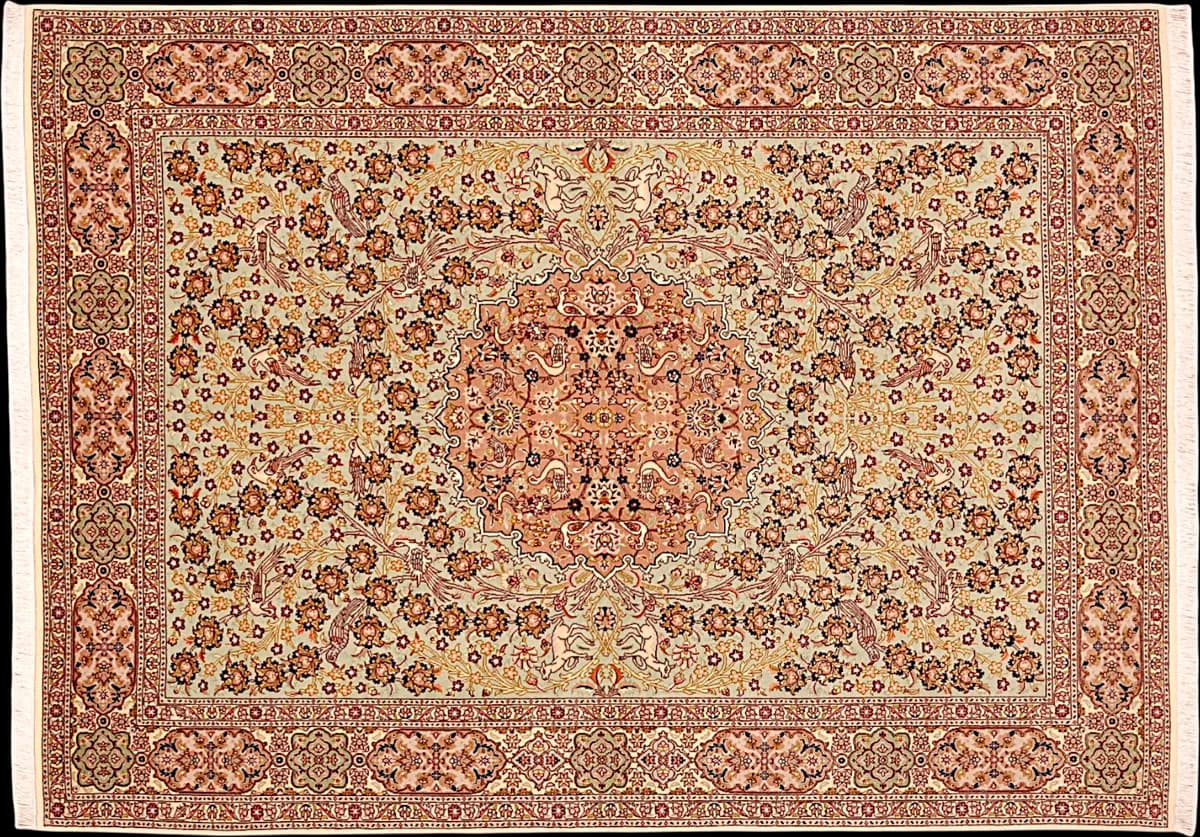
Tabriz 50 Rajwith silk
225 × 163 cm
7.950 €






2.850 €
Incl. VAT
In Stock · Ready to Ship
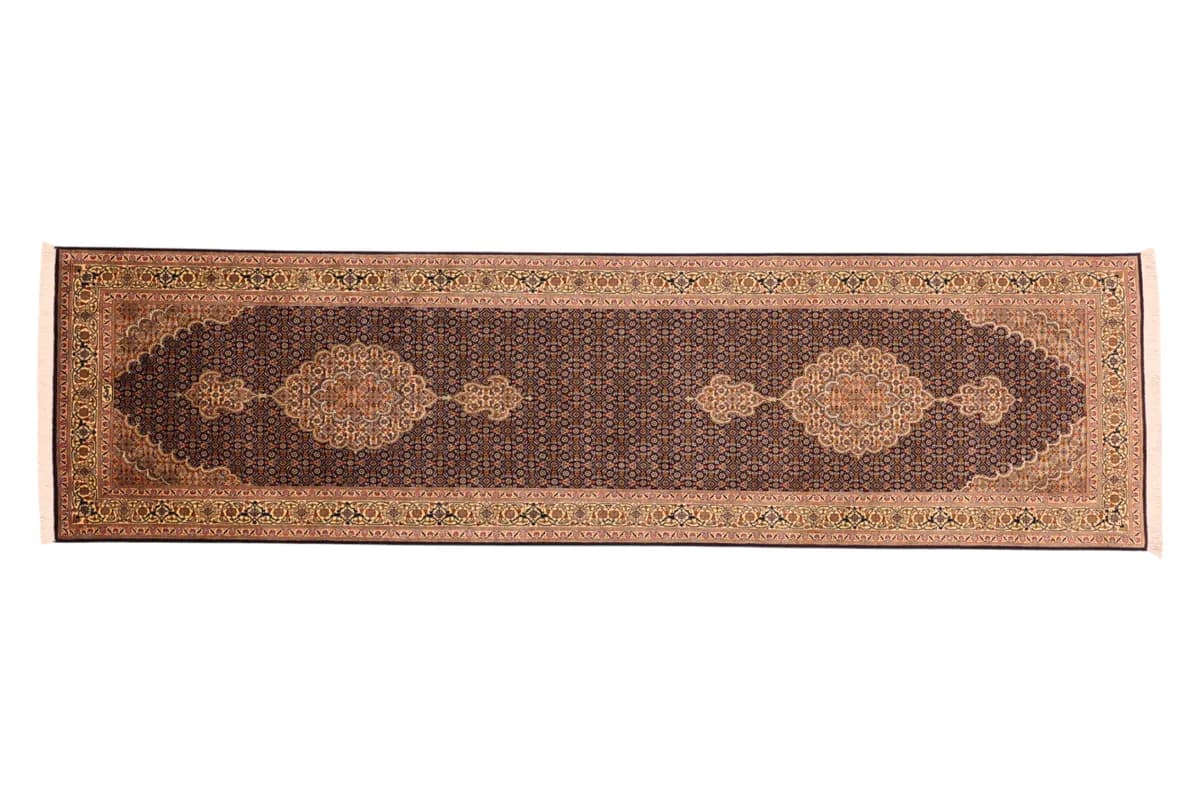
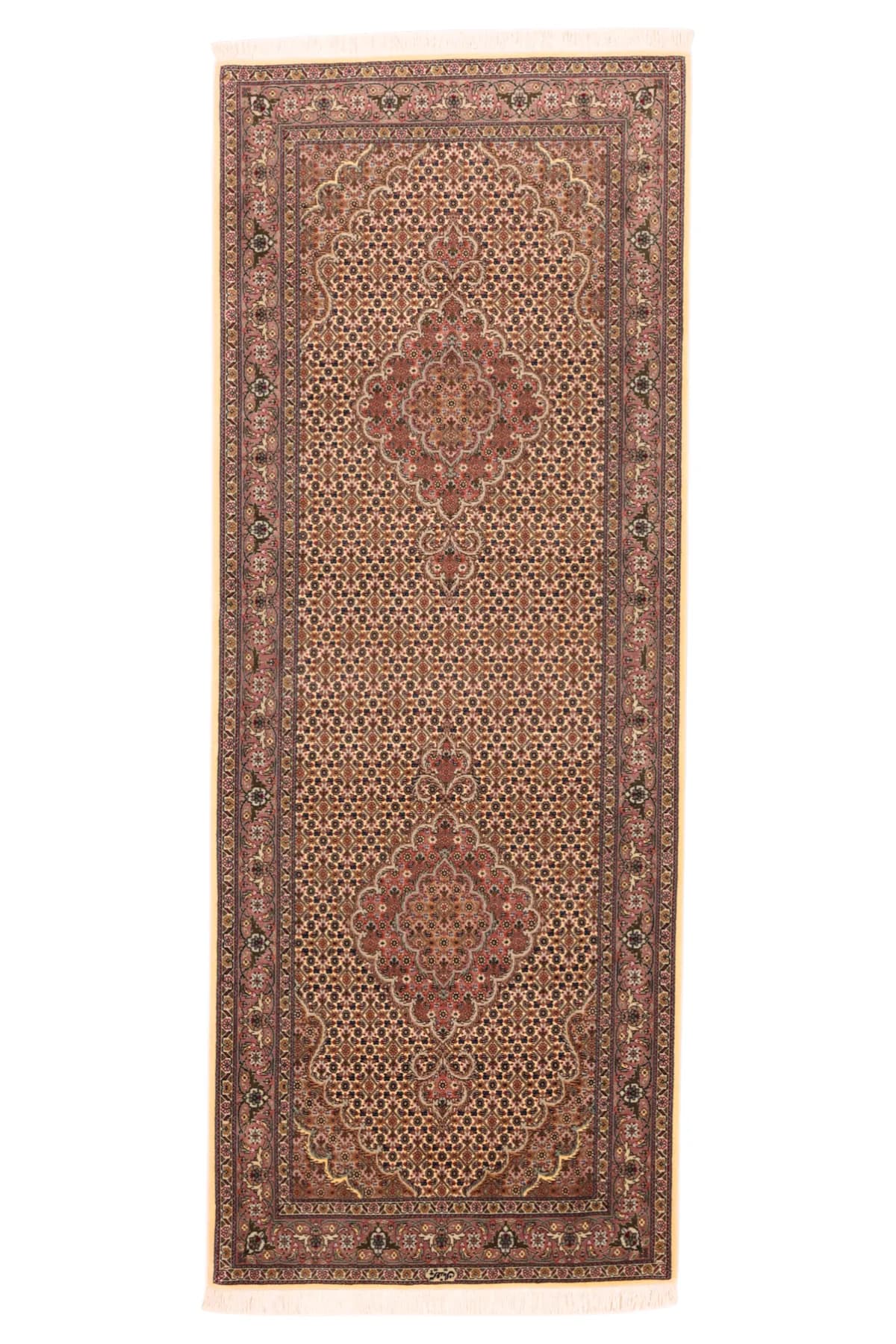
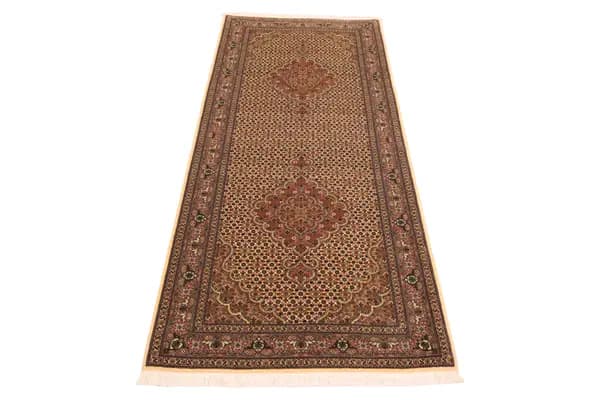
A Tabriz runner from north-west Iran, 212 x 81 cm (6'11" x 2'8"), from a weaving city that has set the standard for Persian workshop rugs for five centuries. Tabriz is best known for its central medallion designs and for a symmetric, or Turkish, knot that gives a taut, precisely drawn surface. This piece takes that tradition and runs it differently: instead of one medallion, three.
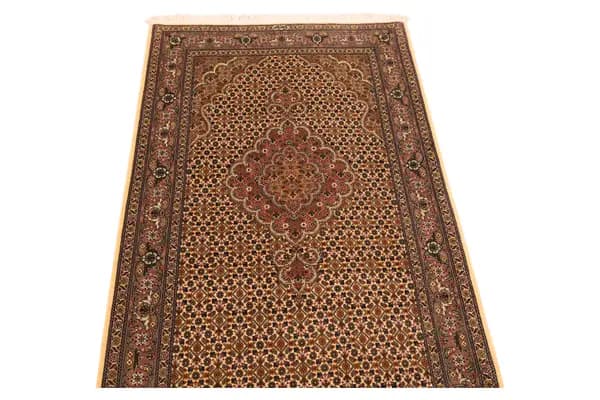
The field is ivory, covered edge to edge in a fine rust-brown lattice so dense that from a short distance it reads almost like lace. Down the centre, three lozenge-shaped medallions follow one after another in rust-red and dusty rose, with touches of navy caught inside the lattice around them, so the eye moves along the runner rather than settling on a single point. A broad border in dusty rose and olive-brown carries a floral vine around the whole piece, closed in by a narrow olive-brown guard stripe and a thin line of mustard gold, holding the pale field firmly in place.
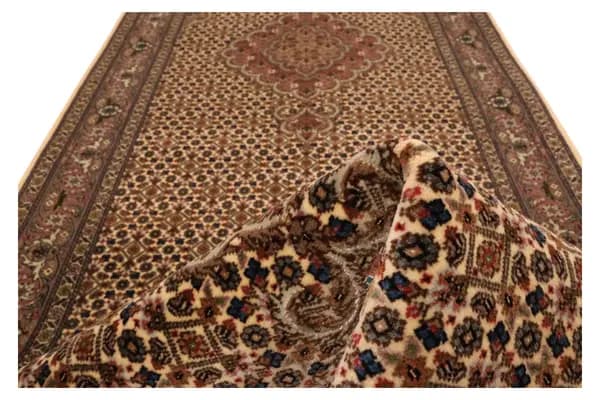
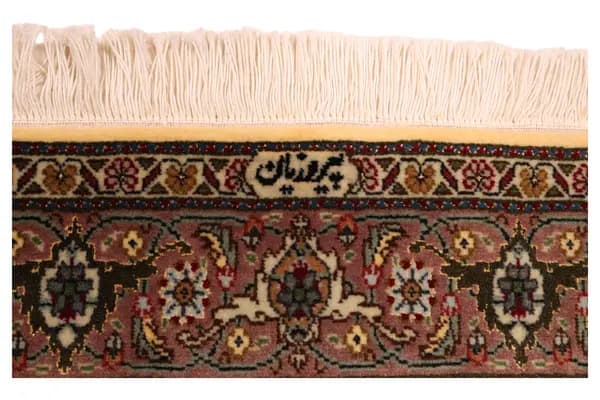
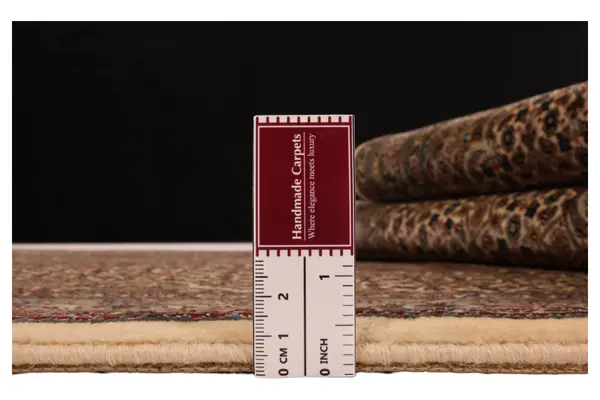
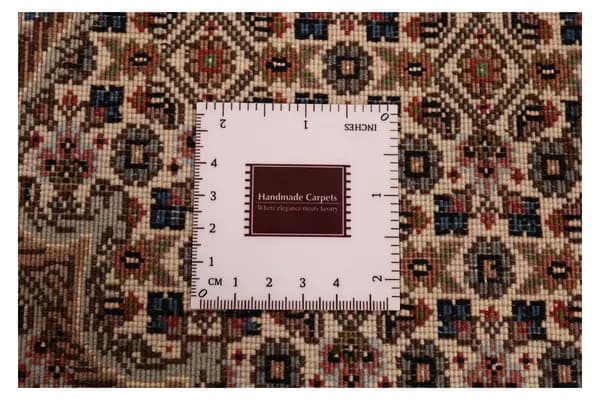
The lattice keeps its clarity at this scale because of what is in the pile: wool mixed with silk, tied at 441,000 to 500,000 knots per square metre. Silk spins far finer than wool, so a knot tied in it can be smaller and packed tighter, which is what lets a repeat this small stay crisp rather than blurring into the field. At 7 mm the pile is shallow enough to carry that sheen along the medallion outlines and the border florals without softening their edges. The piece carries a woven signature from the Pirozian workshop, a detail that marks it as a specific, accounted-for piece of work rather than one of many.
A runner of this width and pattern belongs in a hallway or along a landing, somewhere it is seen in passing rather than all at once, which suits a design built to be read as a sequence rather than a single centre. The ivory field will lift a hallway that gets little daylight, while the rust and rose hold their own against a dark floor or wood panelling. Underfoot it is dense and firm, wool and silk together giving a slight resistance rather than softness, well suited to daily use through a passage rather than a room that sits empty. Walk its length in low light and the silk in the medallions catches first, one after another, all the way down.
More on Tabriz rugs: origin, making and how to recognise a genuine piece
Superior craftsmanship
At 212 × 81 cm (1.72 m²) this is a runner. It belongs in a hallway, an entrance, on a landing or lengthways beside a bed. It is too narrow for the middle of a room.
Yes, knotted by hand — knot by knot on a loom, not machine-made. The density is 441,000 to 500,000 knots per square metre; across 1.72 m² that is roughly 760,000 to 860,000 individual knots, every one of them tied by hand.
This pile contains silk and is more delicate than pure wool. Vacuum without a rotating brush and along the pile, do not beat it, and keep it out of permanent direct sun. Blot spills at once with a light cloth, never rub. For a proper clean a silk-blend rug belongs in expert hands — we handle that for pieces bought from us.
We are in the Hamburg Speicherstadt. Come and see this rug in daylight, or write to us — a person answers.
Certificate included verifying origin, materials, and craftsmanship.
Ref: 900179