Gabbeh
327 × 236 cm
3.600 €
2.813 €
Incl. VAT
In Stock · Ready to Ship
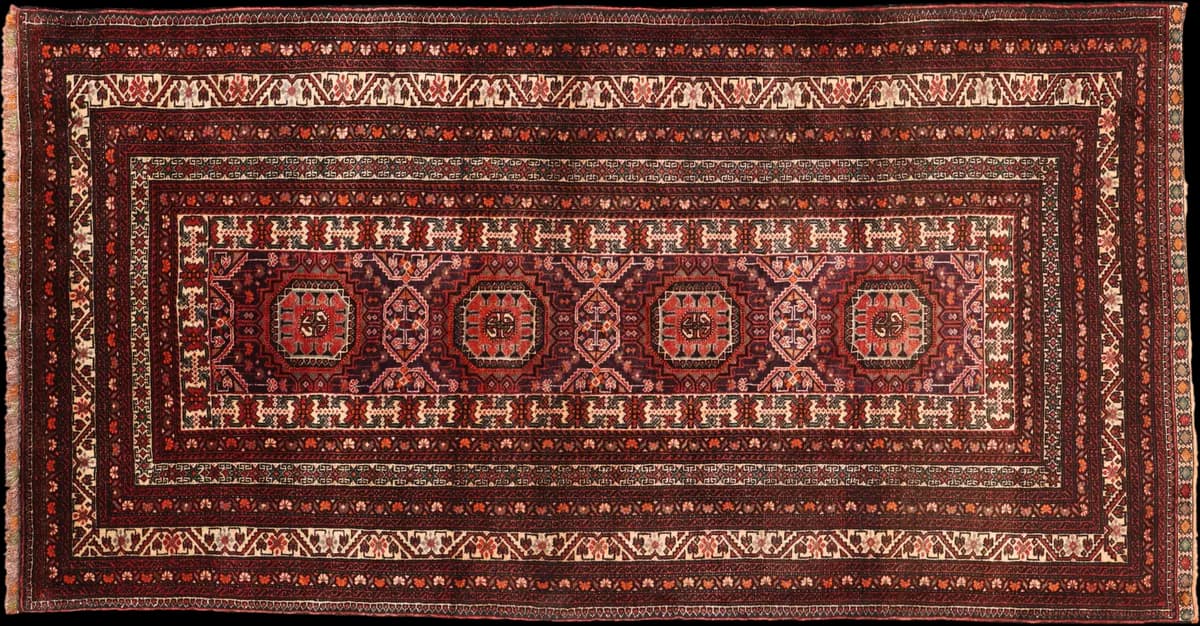
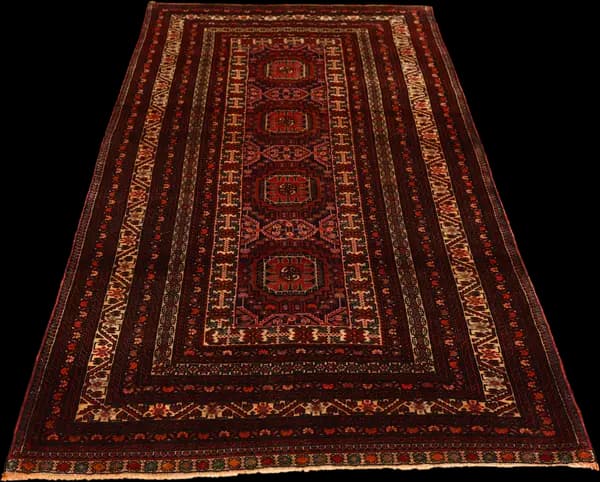
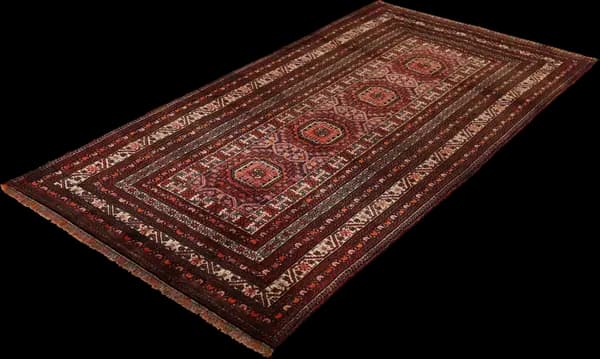
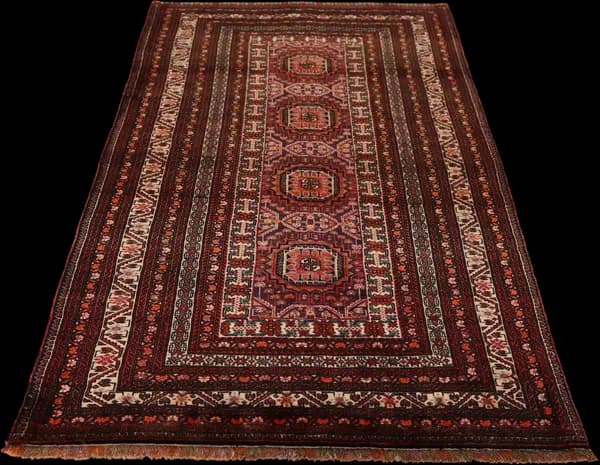
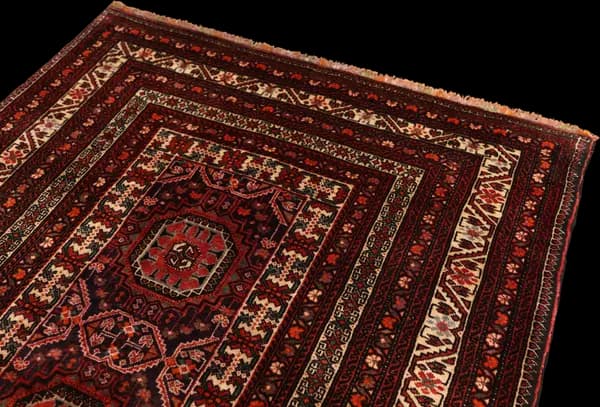
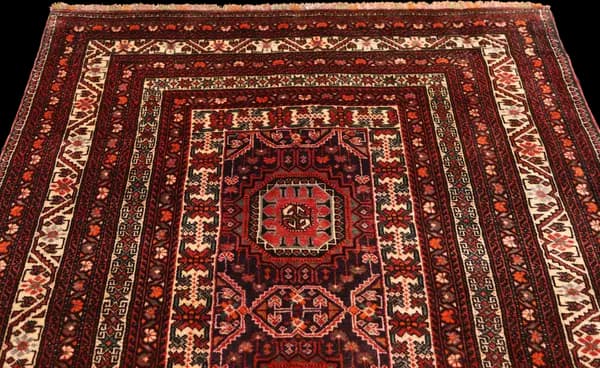
This is a Kalathe, a village weaving from the Khorasan region of northeastern Iran, measuring 268 x 140 cm (8'10" x 4'7"). The name itself means "village" in Persian, and Kalathe rugs are typically knotted with medallion compositions, earthy warm palettes and hand-spun wool. This particular piece carries a border unusually layered and precisely drawn for a rug of its kind.
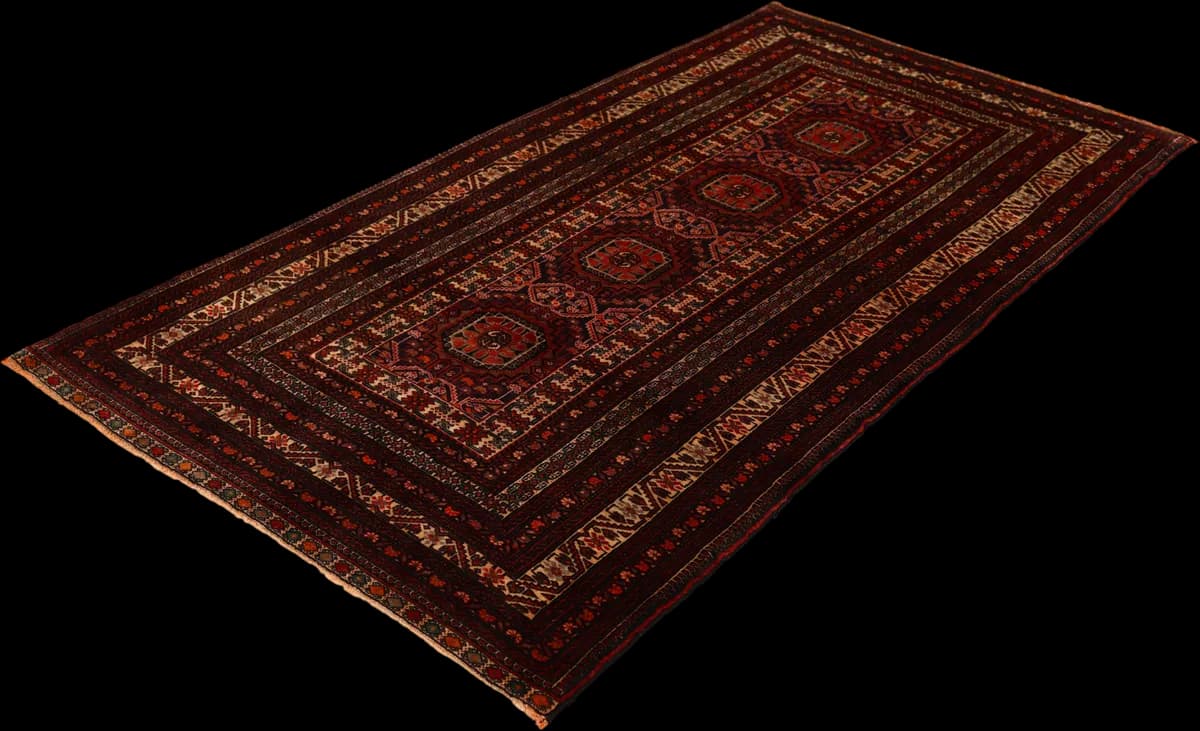
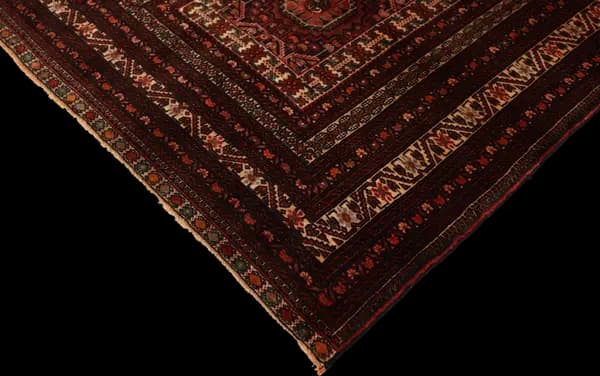
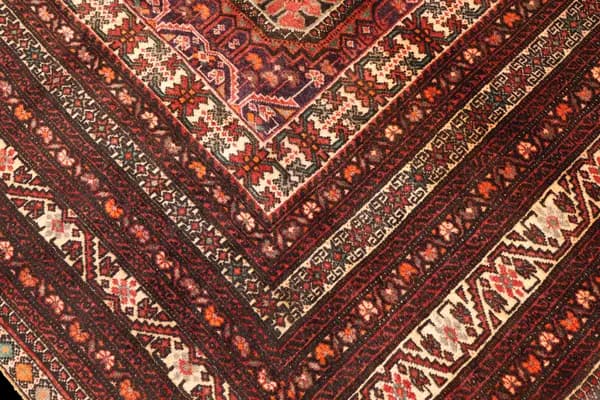
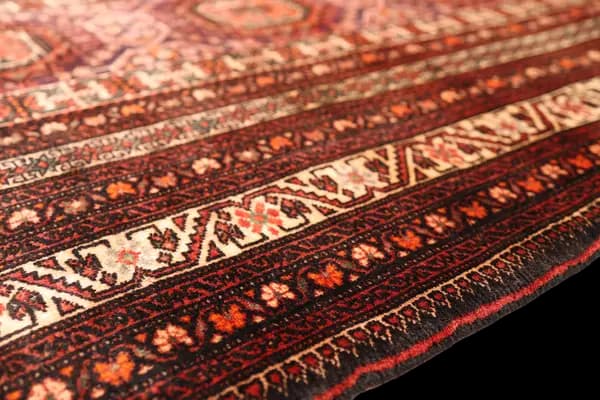
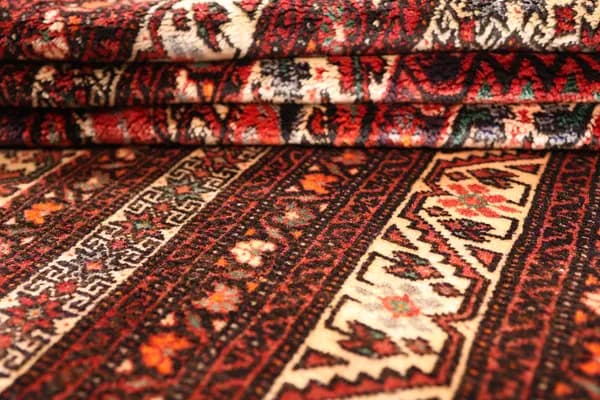
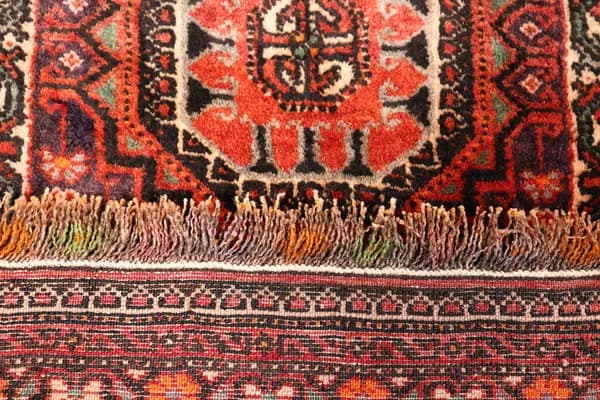
The field is a deep aubergine, so dark it reads almost black-brown from a distance. Across it runs a horizontal chain of four large octagonal medallions in brick red and rust, each separated by a pointed diamond lozenge, so the eye follows a line rather than a scattered pattern. Around this sits a wide, many-banded border - cream floral vines, dark red stripes, and at its centre a black-and-cream key-fret band drawn with unusual clarity, filling close to a third of the rug's width.
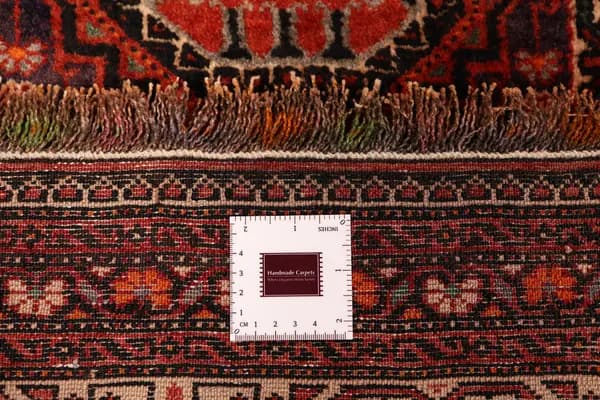
The wool was hand-spun before it was knotted, and hand-spinning leaves the yarn slightly uneven, which gives the surface its matte, organic quality rather than any sheen. At 501,000 to 640,000 knots per square metre, the knotting is dense for a village loom, where weavers usually work more loosely and from memory rather than a fixed plan. That density let this weaver hold the fret band to a straight line and keep the four medallions reading as a deliberate chain rather than a loose repeat.
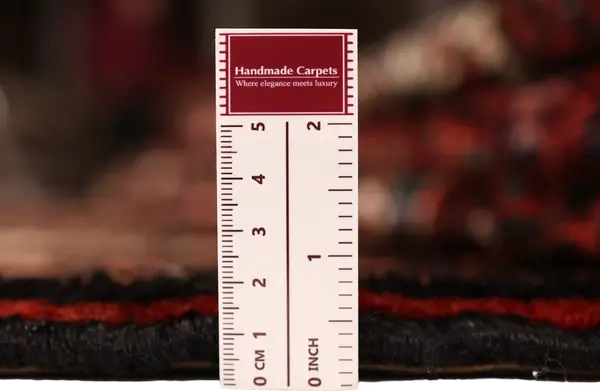
This rug suits a bedroom, laid at the foot of the bed or in a quiet corner, away from heavy traffic. The dark aubergine ground holds its own against wood furniture and low evening light, while the red medallions keep the room from feeling flat. Underfoot the pile is dense, short and firm - made to be walked on, not kept for best. Morning light finds the fret band first.
Hamadan rugs come from the ancient city of Hamadan (the historic Ecbatana) and its surrounding region of over a thousand villages in western Iran. Woven with the symmetrical (Turkish) knot on a cotton foundation, they are distinguished by their single-weft construction, one weft thread between each row of knots, which creates a characteristic ribbed appearance on the reverse.
Geometric medallion-and-corner layouts, Herati patterns, and boteh (paisley) motifs dominate the design language, rendered in a classic palette of deep reds and blues from madder root and indigo. The sturdy highland wool ensures excellent durability for everyday use.
Exceptionally fine weave
At 268 × 140 cm (3.75 m²) this is a medium rug. It works in front of a sofa, in front of a bed or in a study. It is too small for a dining table — there you want about 80 cm of clearance so a chair does not tip over the edge when pushed back.
Yes, knotted by hand — knot by knot on a loom, not machine-made. The density is 501,000 to 640,000 knots per square metre; across 3.75 m² that is roughly 1.9 to 2.4 million individual knots, every one of them tied by hand.
Hand-spun wool still carries its own lanolin, which keeps liquid sitting on the surface for a moment: blot quickly, with clear water and a light cloth, working inwards and without rubbing. Otherwise regular vacuuming along the pile is enough. Turn the rug once or twice a year so light and footfall reach it evenly.
We are in the Hamburg Speicherstadt. Come and see this rug in daylight, or write to us — a person answers.
Certificate included verifying origin, materials, and craftsmanship.
Ref: 505375