Malayer
201 × 129 cm
1.950 €
3.750 €
Incl. VAT
In Stock · Ready to Ship
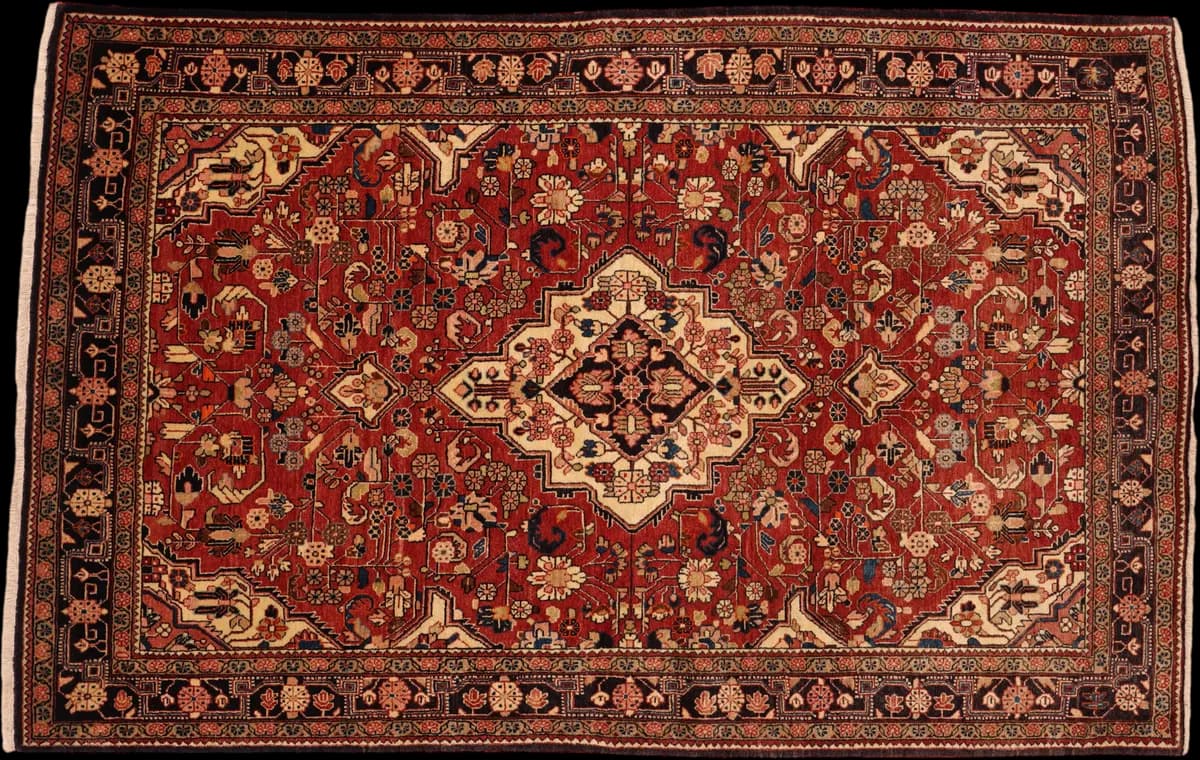
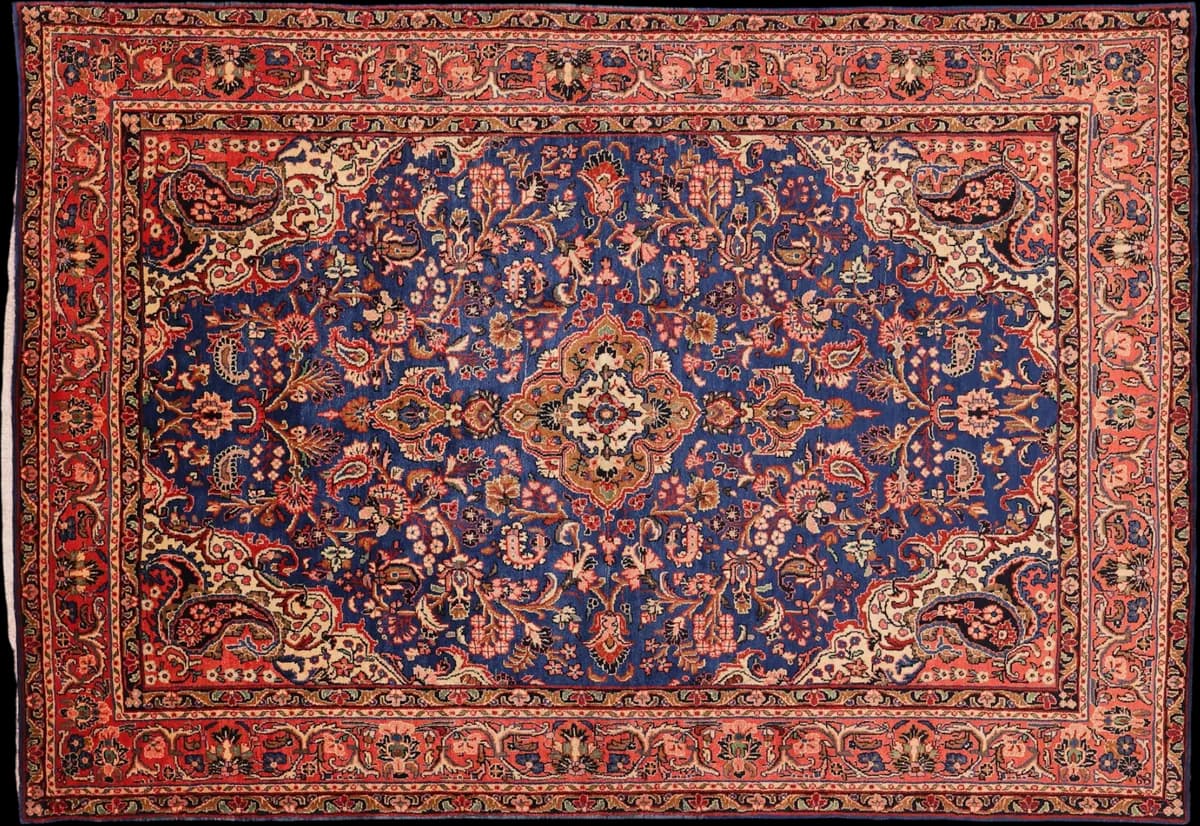
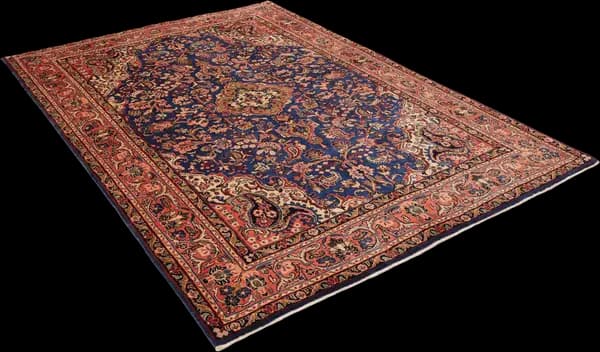
This is a Mehraban rug, woven in the Malayer district of Hamadan province in western Iran, measuring 299 x 206 cm (9'10" x 6'9"). Malayer weavings sit at a crossing point between the plain geometry of Hamadan village work and the floral refinement of Sarouk and Farahan, and are prized for design variations that resist easy classification.
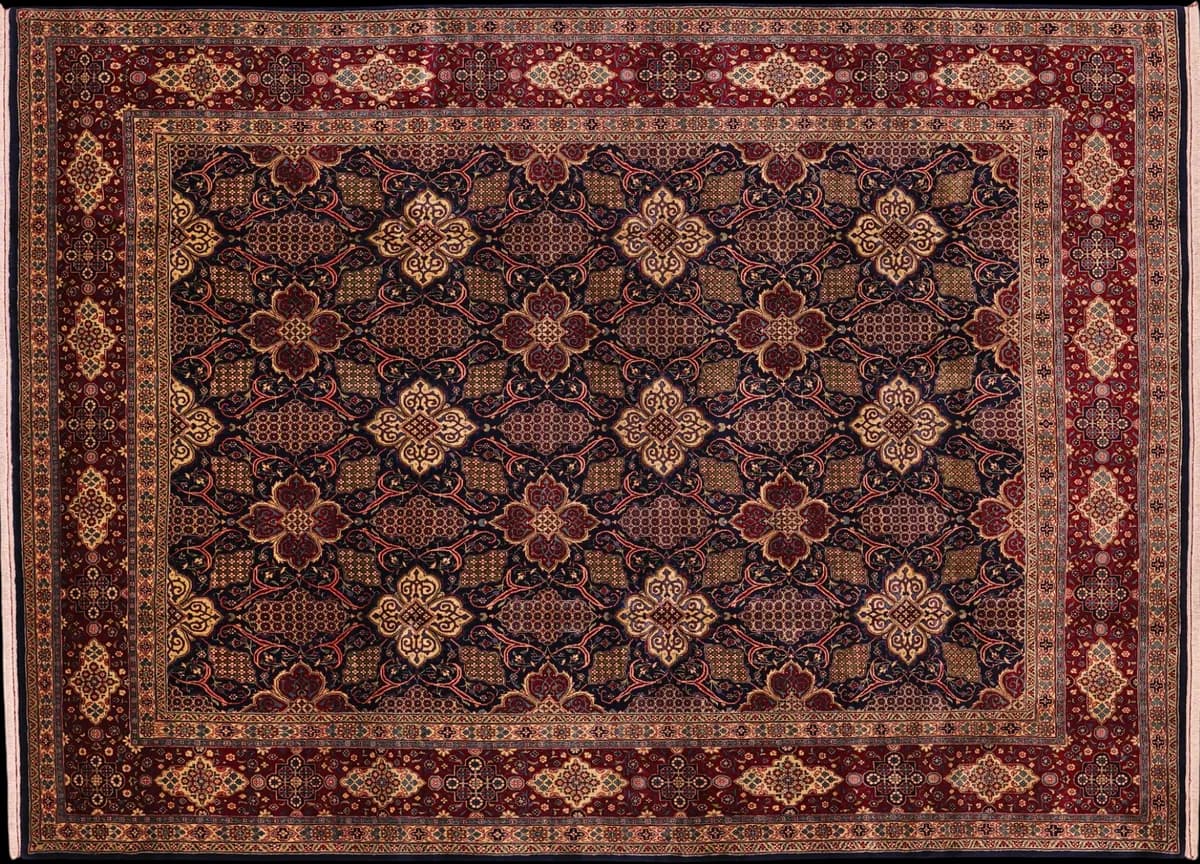
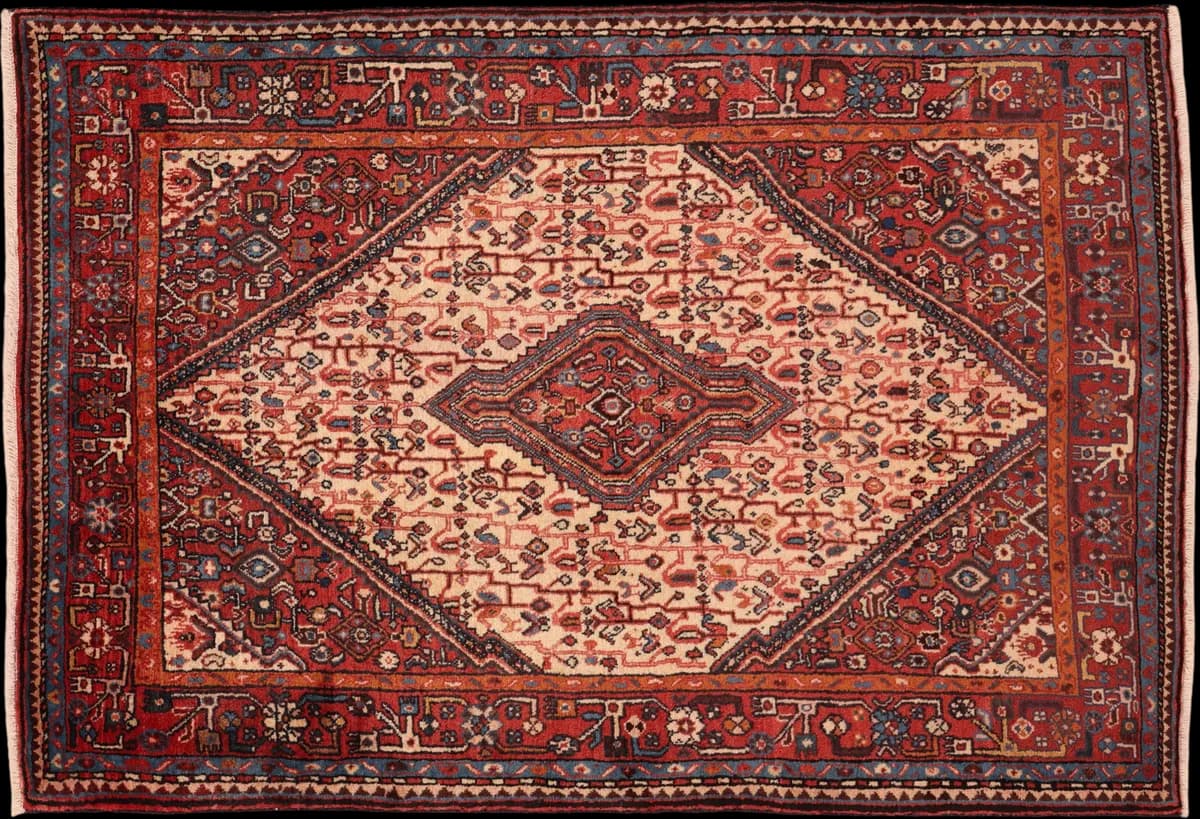
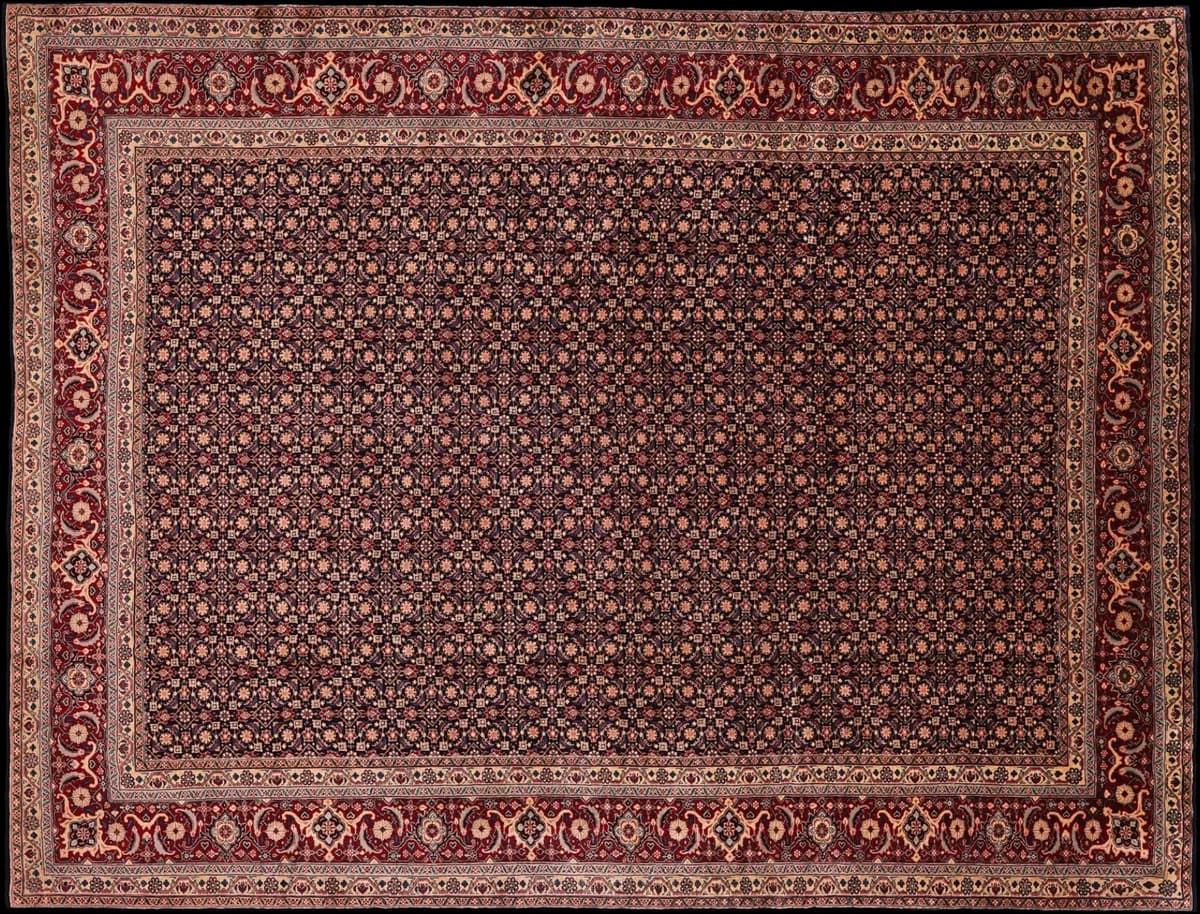
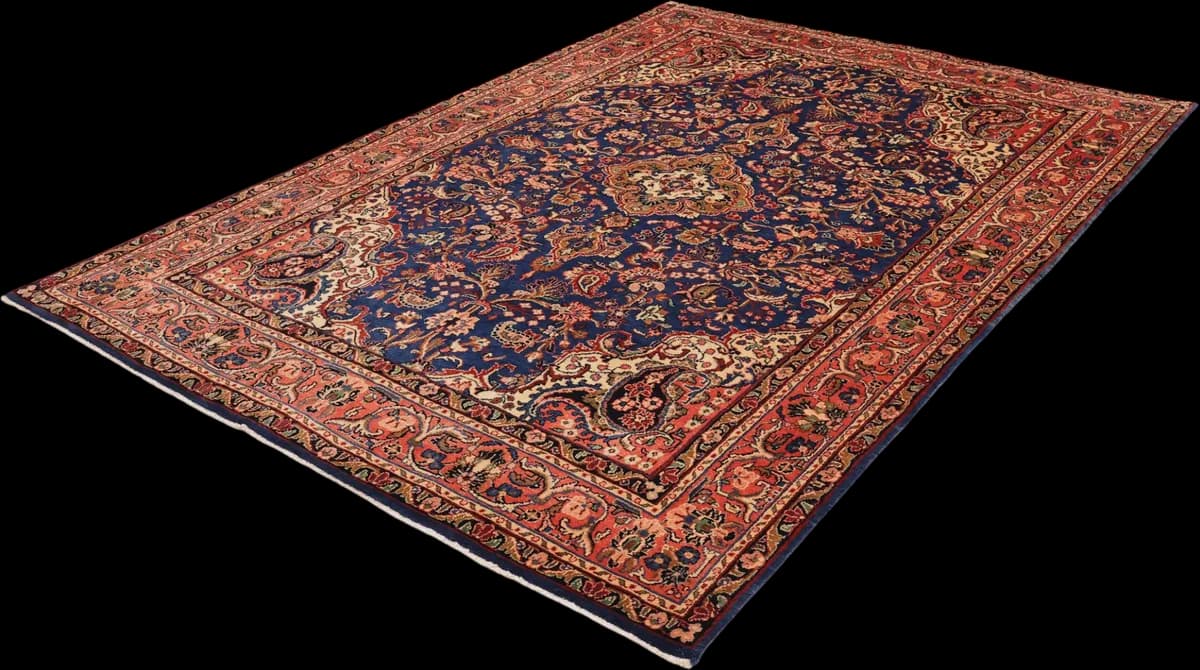
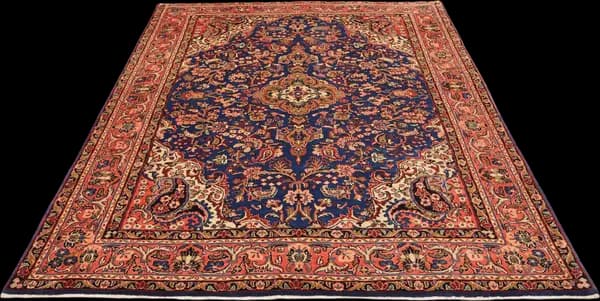
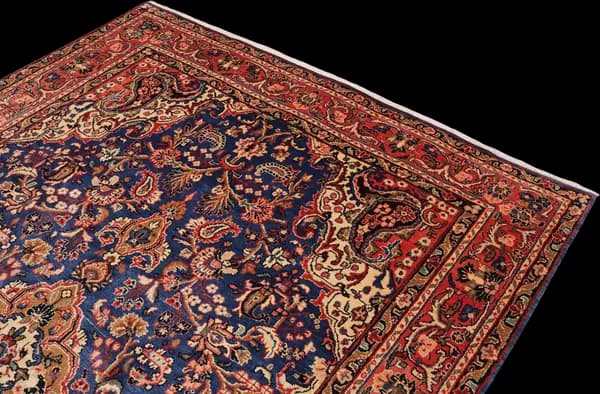
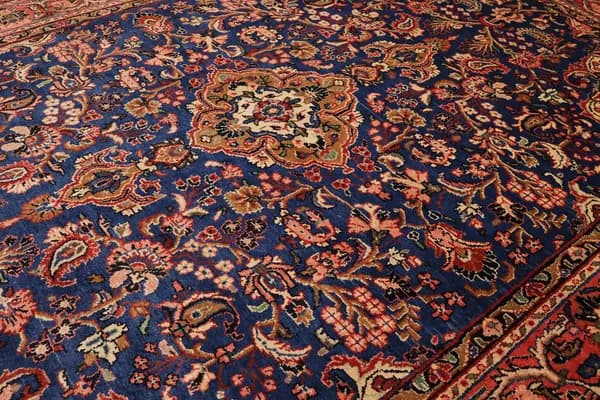
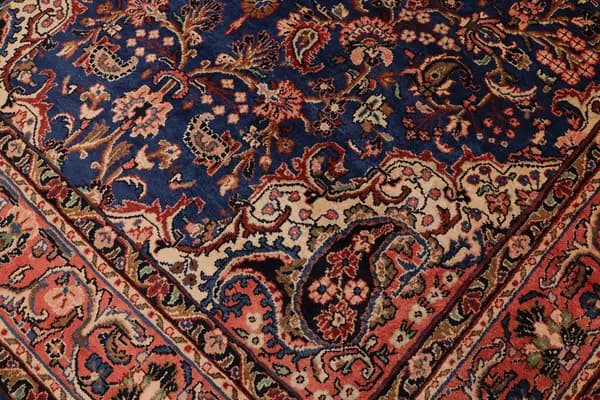
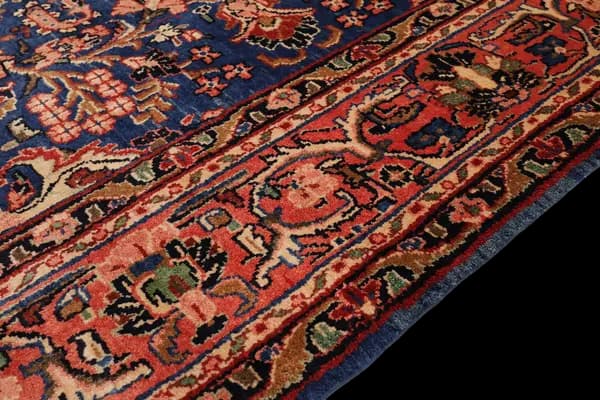
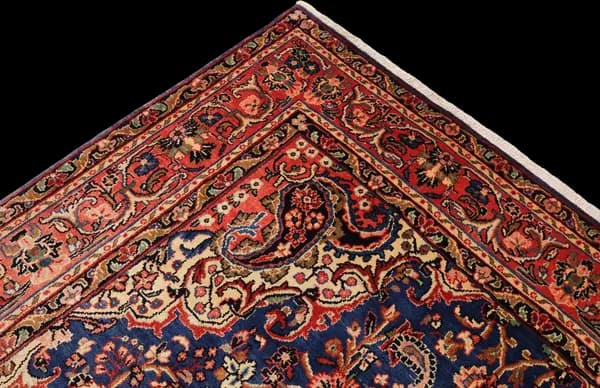
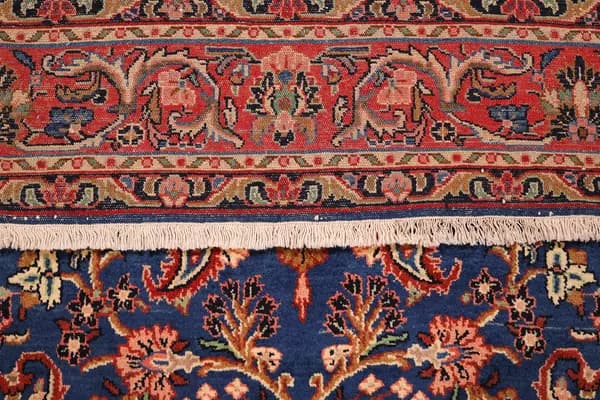
The first impression is a navy field dense with small florals, framed by a wide, warm border in rust-red and coral. At its centre sits a floral medallion with pendants, drawn in enough detail to hold its own against the field around it. Where a Sarouk-type design would usually fill each corner with a floral fan, this one sets a large ivory paisley instead, giving the pattern a different logic. Ivory guard stripes separate field from border, which alone takes up close to a fifth of the rug's width.
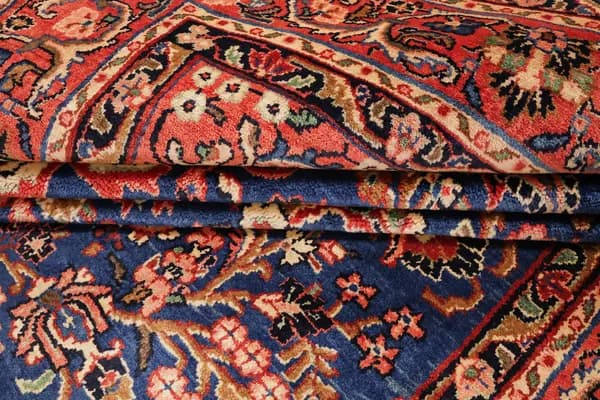
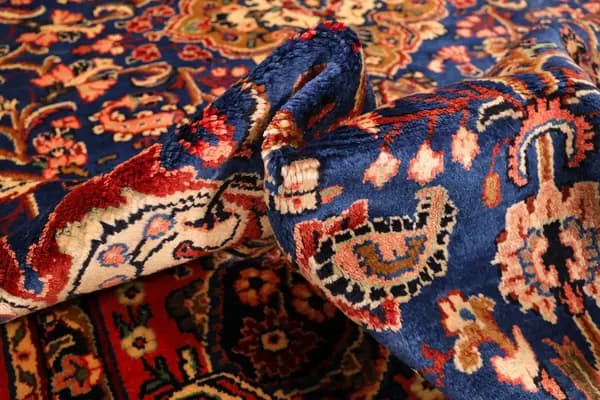
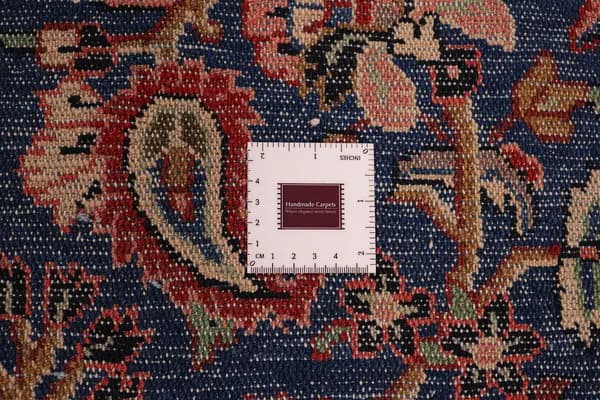
The pile is hand-spun wool on a cotton warp, hand-knotted at around 128,000 to 160,000 knots per square metre. That is enough to keep the paisley outlines crisp and the floral filling dense without blurring, though it sits below the finest city weaves, giving the drawing a slight directness rather than miniature precision. Hand-spun wool takes dye unevenly, giving the navy ground soft depth, and at 8 mm the pile stays low and even, closer to firm than plush.
A rug this size suits a dining table or a living room seating group, where it will be seen in full. The navy ground holds its own against dark wood, while the rust-red border warms a room with little direct sun. Underfoot the wool is dense and firm, made for daily use. As light crosses the room, the camel, sage and pink accents catch in turn, drawing the eye back to the ivory paisleys in the corners.
Hamadan rugs come from the ancient city of Hamadan (the historic Ecbatana) and its surrounding region of over a thousand villages in western Iran. Woven with the symmetrical (Turkish) knot on a cotton foundation, they are distinguished by their single-weft construction, one weft thread between each row of knots, which creates a characteristic ribbed appearance on the reverse.
Geometric medallion-and-corner layouts, Herati patterns, and boteh (paisley) motifs dominate the design language, rendered in a classic palette of deep reds and blues from madder root and indigo. The sturdy highland wool ensures excellent durability for everyday use.
Traditional weave
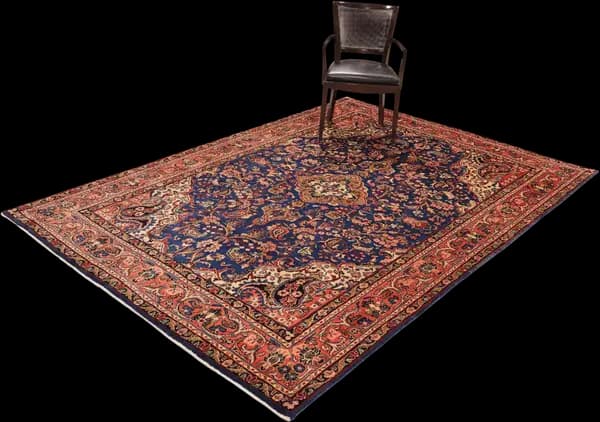
At 299 × 206 cm (6.16 m²) this is a large rug. It sits under a seating group with the front legs of sofa and chairs on it, or under a dining table for four. A table for six wants about 80 cm of clearance all round, and needs more.
Yes, knotted by hand — knot by knot on a loom, not machine-made. The density is 128,000 to 160,000 knots per square metre; across 6.16 m² that is roughly 790,000 to 990,000 individual knots, every one of them tied by hand.
Hand-spun wool still carries its own lanolin, which keeps liquid sitting on the surface for a moment: blot quickly, with clear water and a light cloth, working inwards and without rubbing. Otherwise regular vacuuming along the pile is enough. Turn the rug once or twice a year so light and footfall reach it evenly.
We are in the Hamburg Speicherstadt. Come and see this rug in daylight, or write to us — a person answers.
Certificate included verifying origin, materials, and craftsmanship.
Ref: 274545