Malayer
154 × 110 cm
482 €
19.500 €
Incl. VAT
In Stock · Ready to Ship
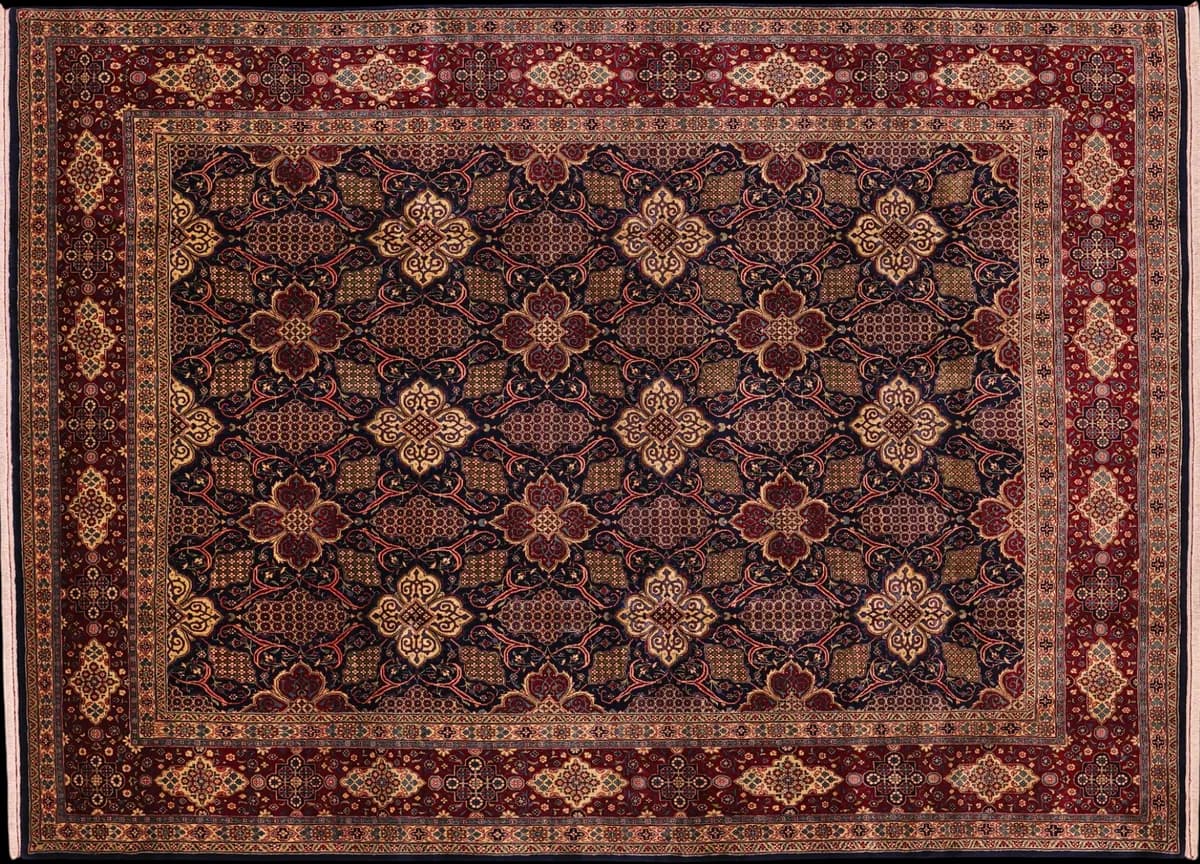
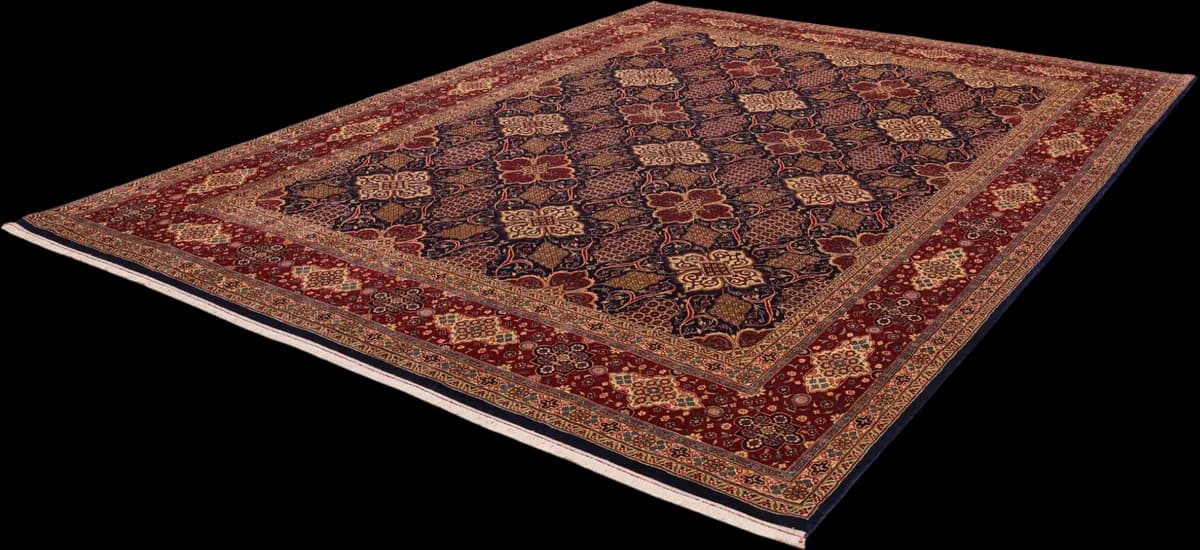
A Malayer rug from the Hamadan region of western Iran, 361 x 265 cm (11'10" x 8'8"). Malayer sits at the point where Hamadan's plain geometric weaving meets the more refined floral drawing of Sarouk and Farahan, and its rugs are collected precisely because the result rarely sits neatly in either camp, each village weaver bringing her own reading of both.
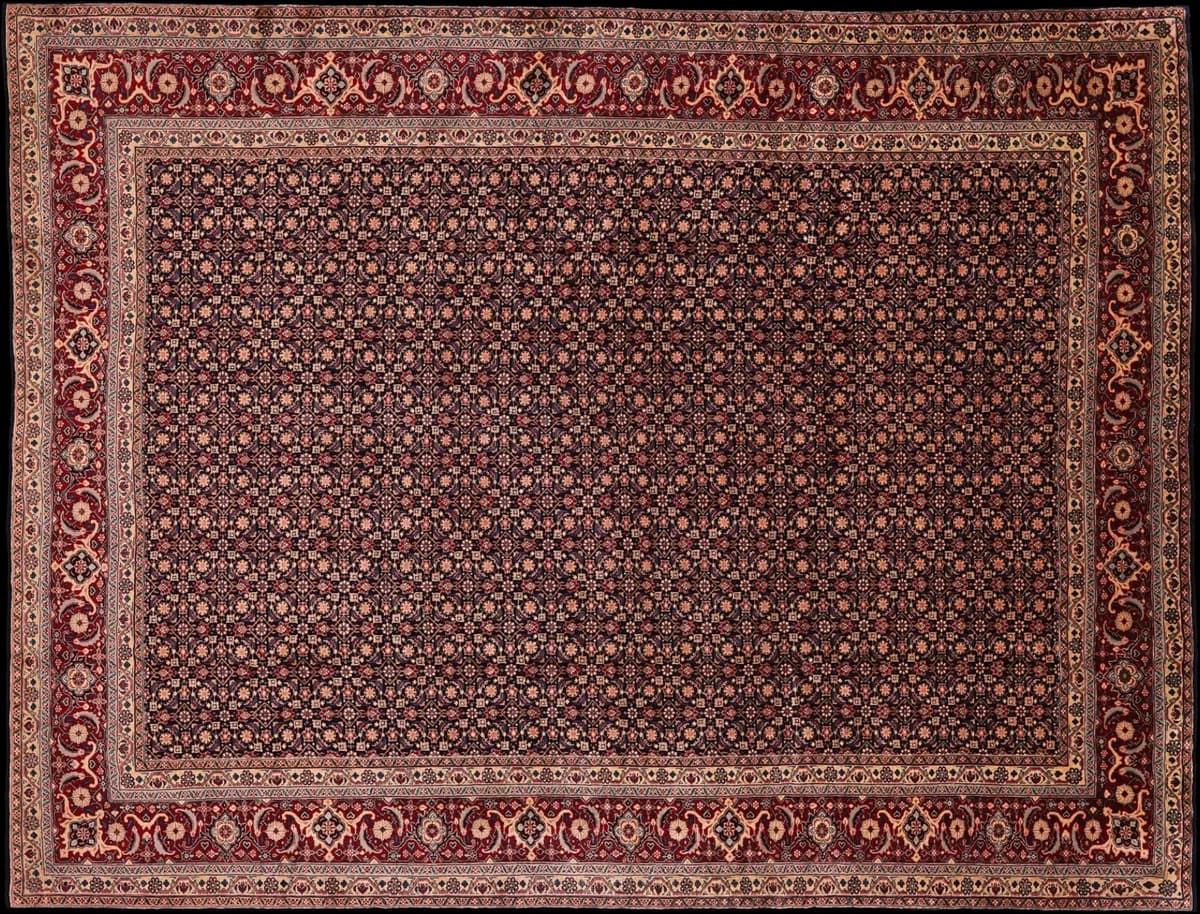
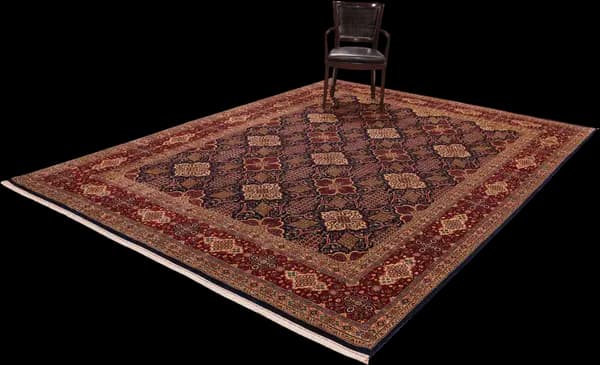
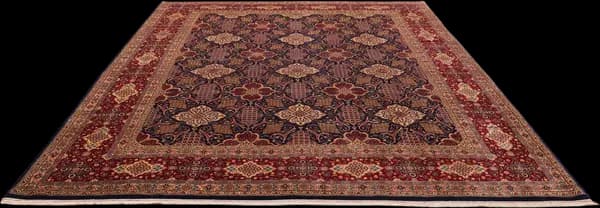
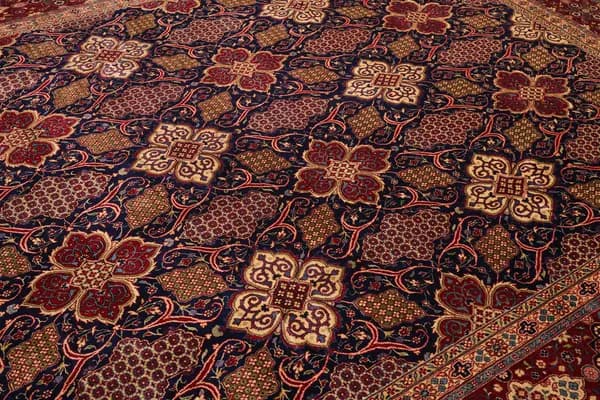
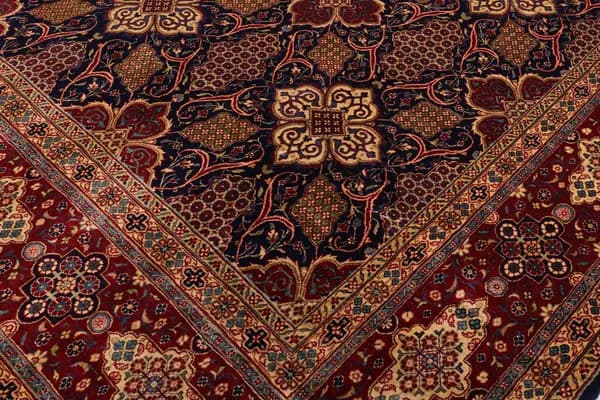
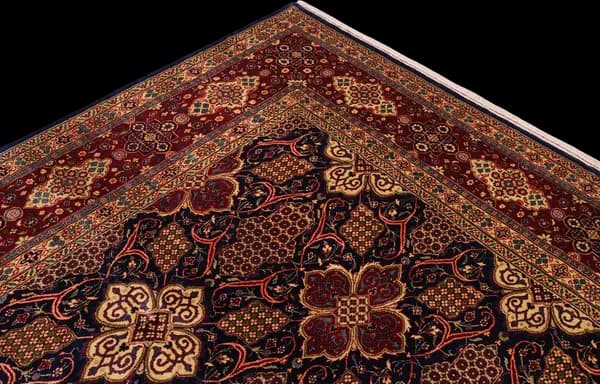
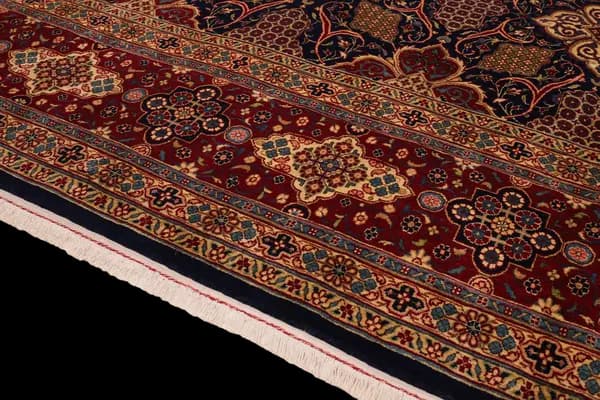
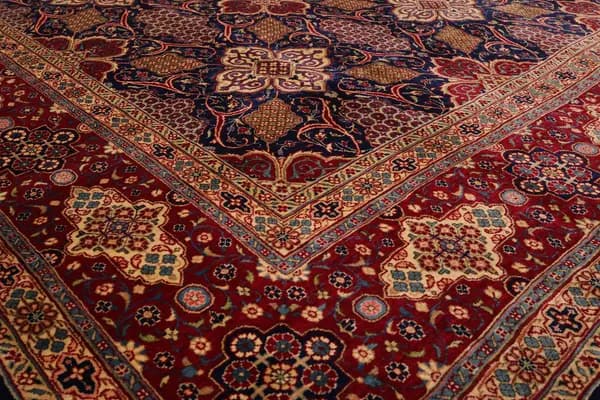
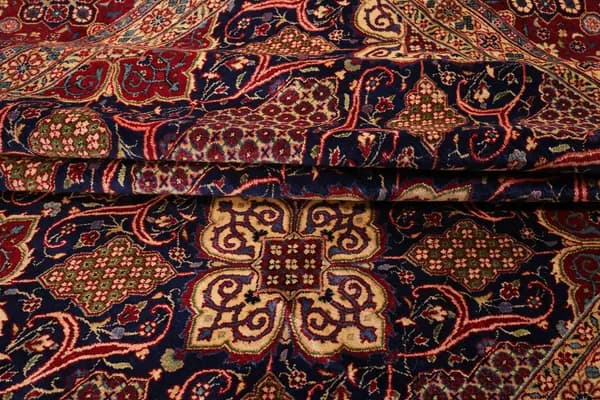
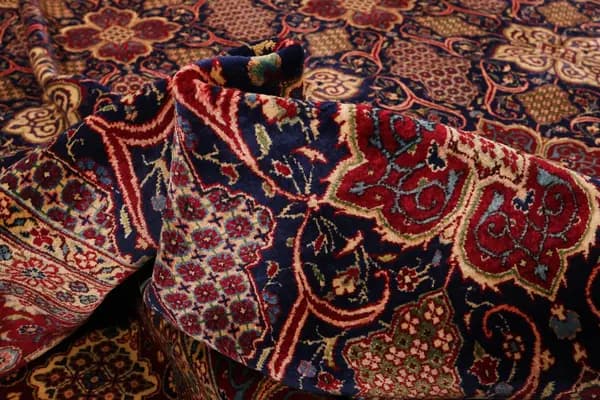
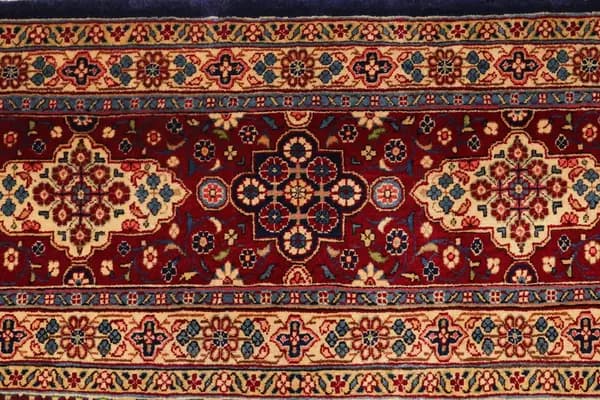
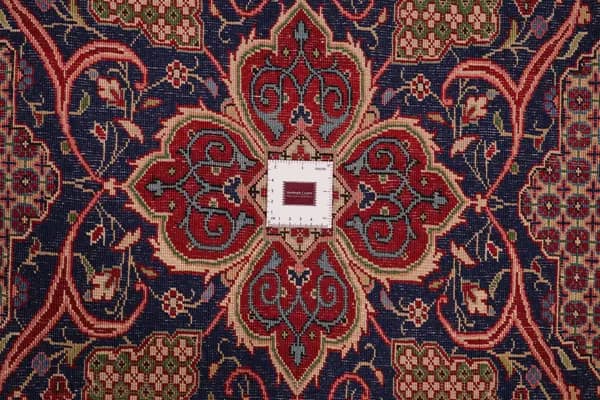
The first impression is a field of deep midnight navy, so dark it reads almost as tile rather than textile. Across it runs an even lattice of diamonds, each holding a four-petalled palmette in cream and rust, joined by a fine curling vine with touches of dusty rose and slate blue in the smaller flowers. A wide wine-red border frames the field, filled with cream cartouches and rosettes, its own colour dark enough to hold its ground against the navy rather than fade beside it.
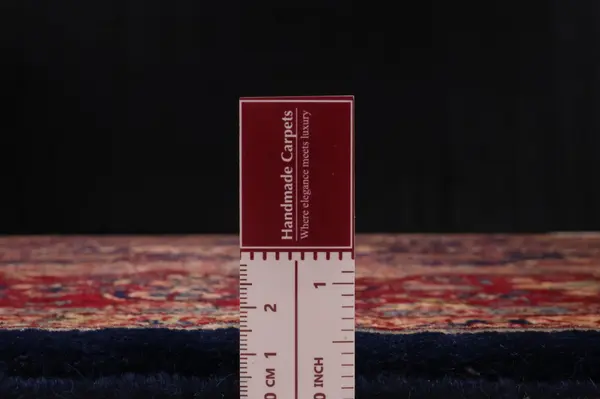
The design is Mahi, the fish pattern, named for the way the vine winds between the diamonds, and it is normally shown on a mid-blue or ivory ground rather than one this close to black. Keeping the lattice legible against so dark a field took an even, tight knot: 441,000 to 500,000 per square metre, tied by hand over a cotton warp. The wool itself was spun by hand rather than machine, which gives each line a slight irregularity that stops a pattern this fine from looking printed, and forty to sixty years on, the drawing is exactly as the weaver set it.
A rug of this size suits a living or dining room, laid under a table or in front of a sofa where there is space to read the whole lattice rather than crop it. The near-black ground holds its own against dark wood or leather, while the cream and rust lattice lifts the room around it, and the wine border keeps a warm line running along the edge. Underfoot the pile is dense and short, packed tight enough for daily use rather than careful treatment, and in shifting light the diamonds carry a soft sheen that keeps the pattern quietly alive through the day.
Hamadan rugs come from the ancient city of Hamadan (the historic Ecbatana) and its surrounding region of over a thousand villages in western Iran. Woven with the symmetrical (Turkish) knot on a cotton foundation, they are distinguished by their single-weft construction, one weft thread between each row of knots, which creates a characteristic ribbed appearance on the reverse.
Geometric medallion-and-corner layouts, Herati patterns, and boteh (paisley) motifs dominate the design language, rendered in a classic palette of deep reds and blues from madder root and indigo. The sturdy highland wool ensures excellent durability for everyday use.
Superior craftsmanship
At 361 × 265 cm (9.57 m²) this is a very large rug. It carries a whole seating group with every furniture leg on it, or a dining table with the chairs pushed back. In a small room it becomes the floor rather than a rug.
Yes, knotted by hand — knot by knot on a loom, not machine-made. The density is 441,000 to 500,000 knots per square metre; across 9.57 m² that is roughly 4.2 to 4.8 million individual knots, every one of them tied by hand.
Hand-spun wool still carries its own lanolin, which keeps liquid sitting on the surface for a moment: blot quickly, with clear water and a light cloth, working inwards and without rubbing. Otherwise regular vacuuming along the pile is enough. Turn the rug once or twice a year so light and footfall reach it evenly.
We are in the Hamburg Speicherstadt. Come and see this rug in daylight, or write to us — a person answers.
Certificate included verifying origin, materials, and craftsmanship.
Ref: 275420