Turkaman
136 × 101 cm
658 €
1.750 €
Incl. VAT
In Stock · Ready to Ship
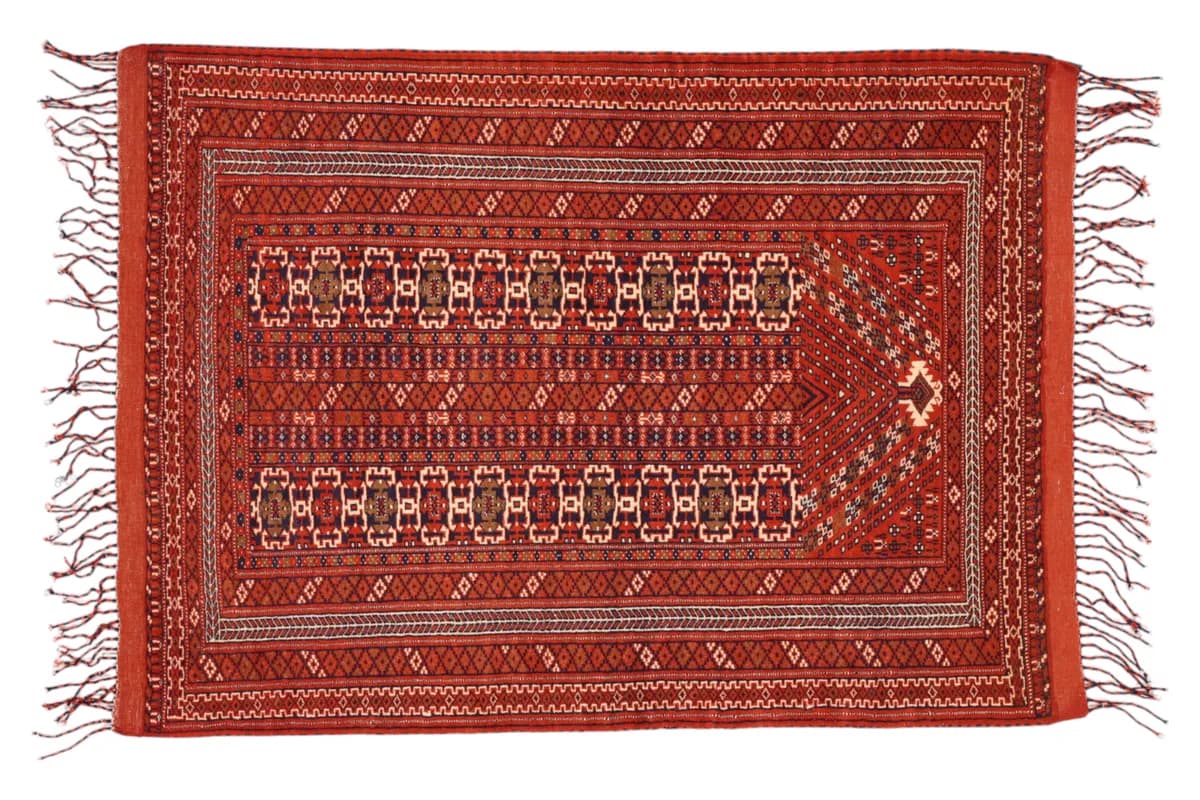
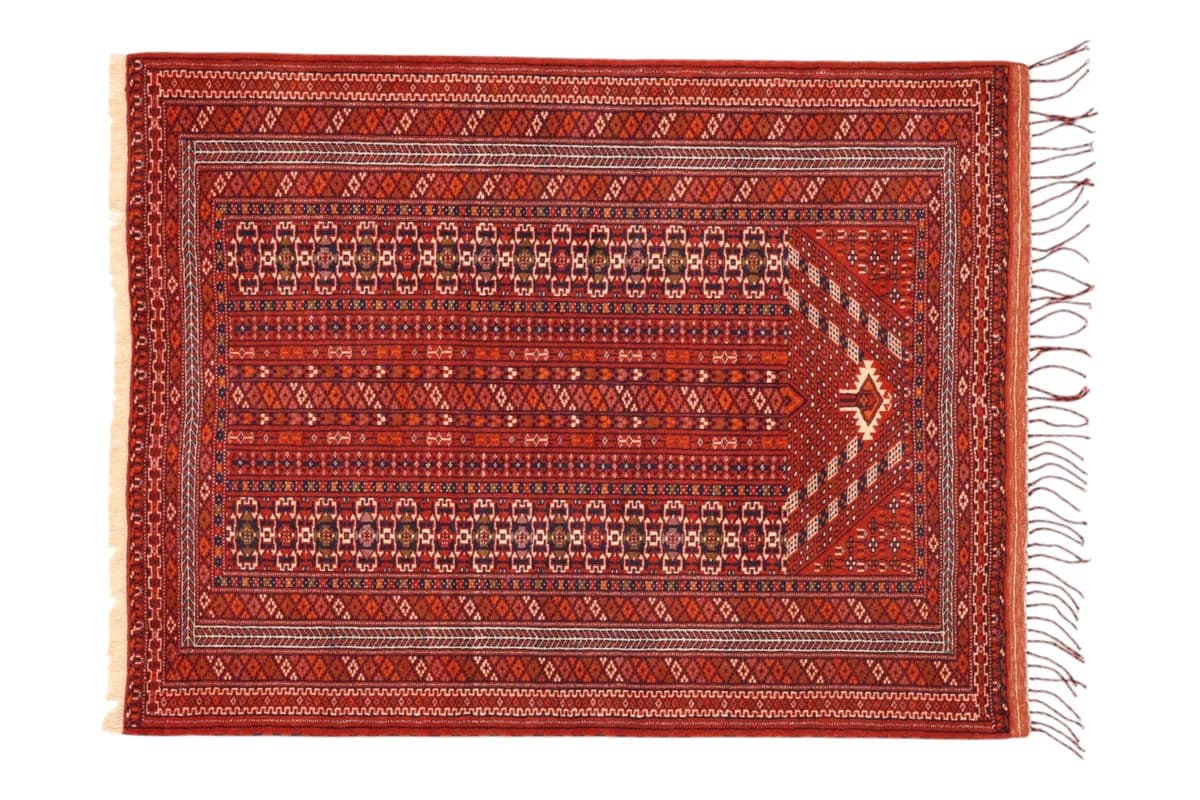
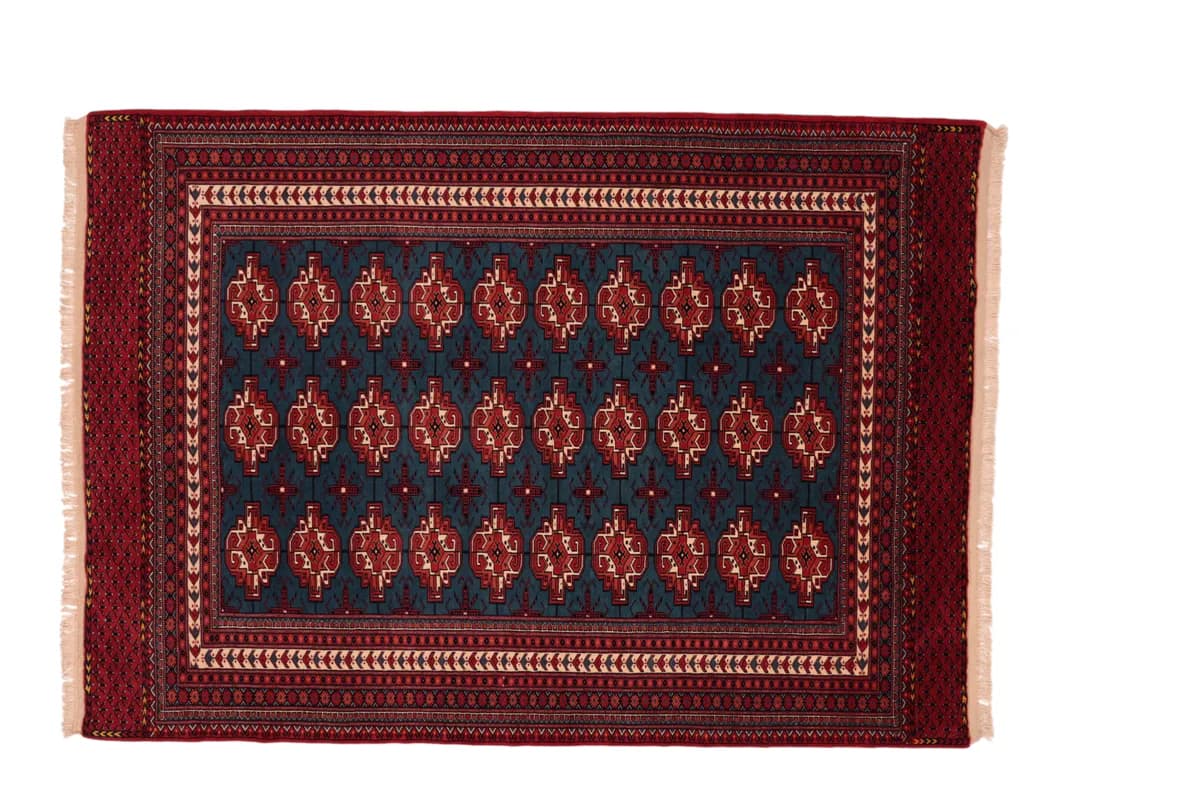
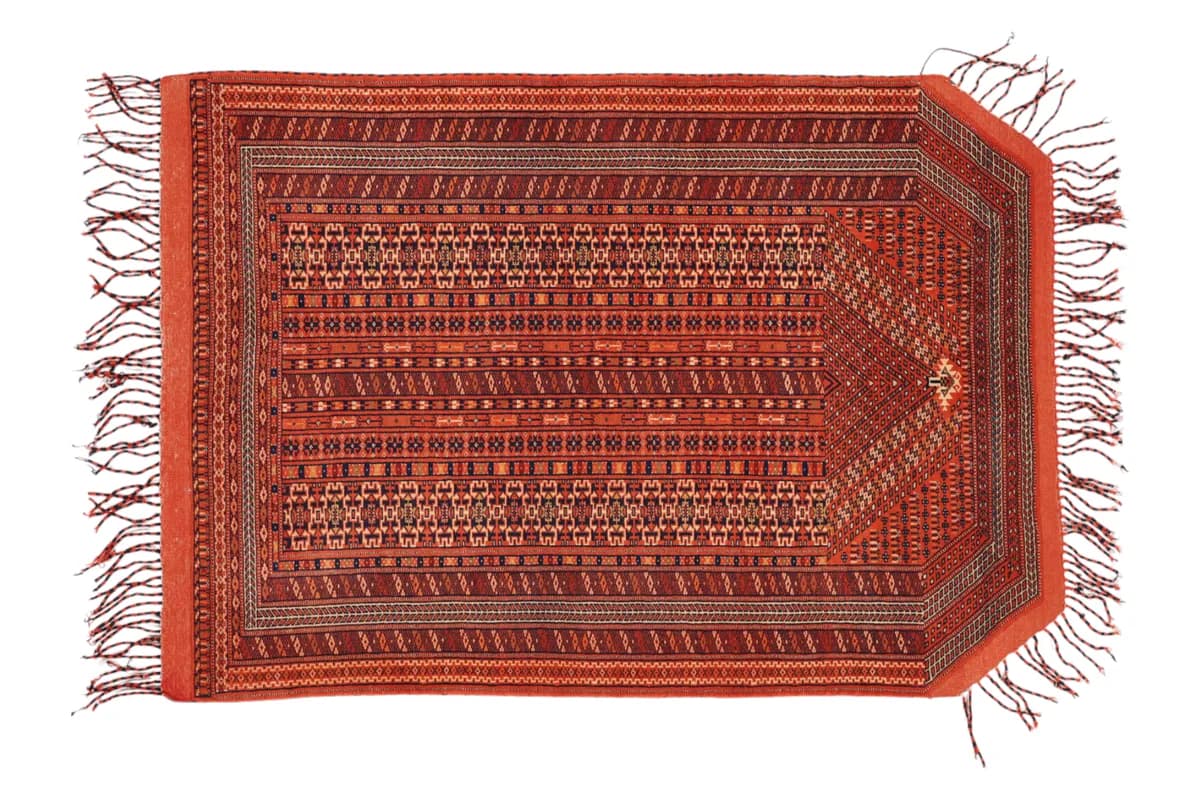
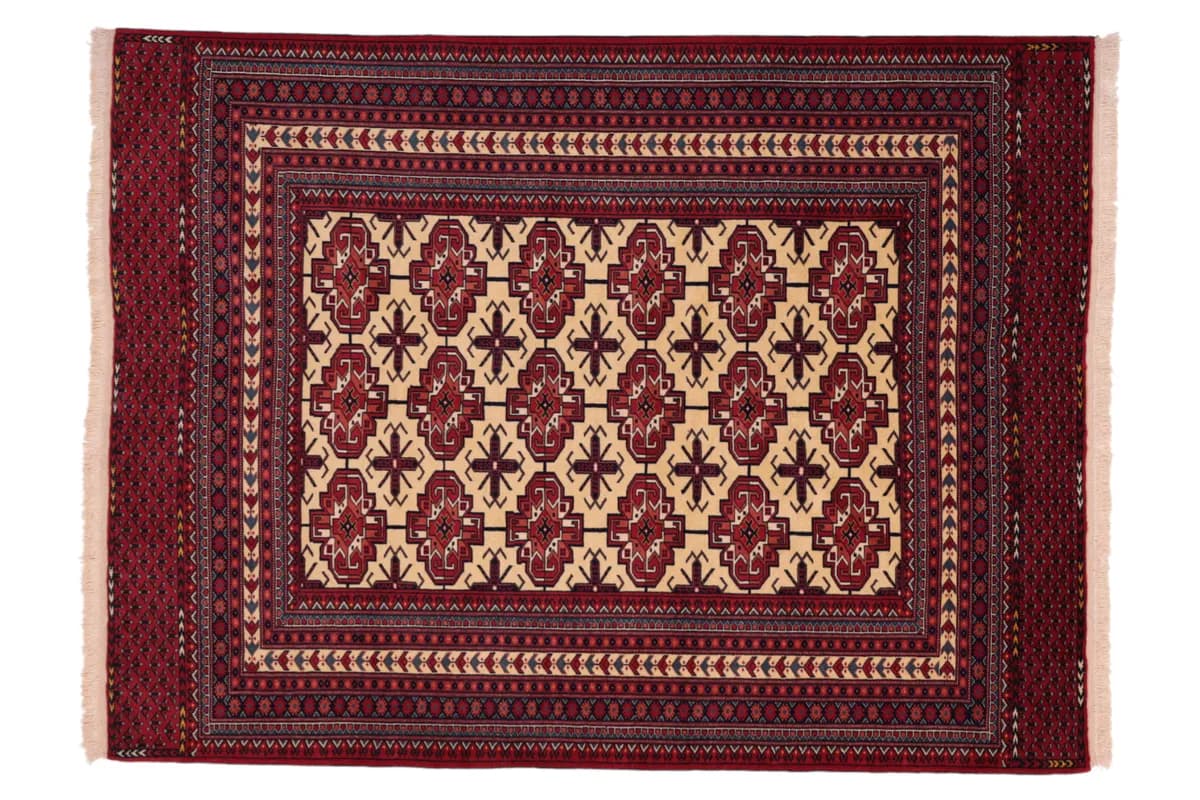
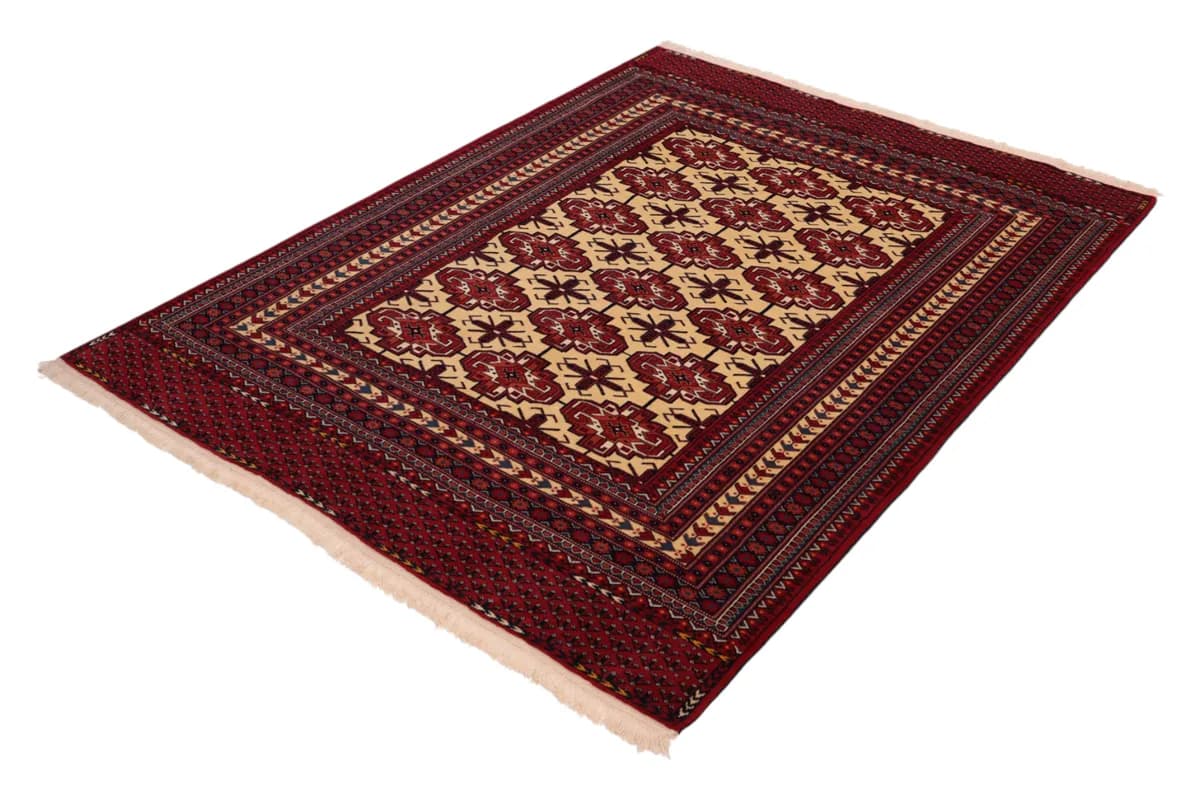
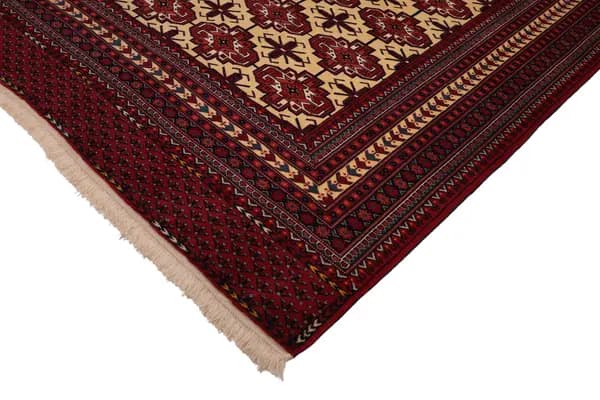
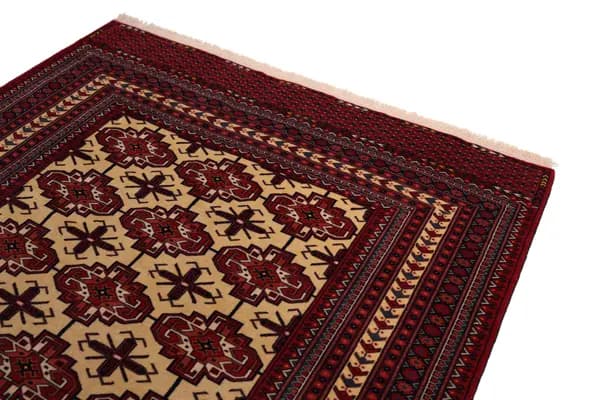
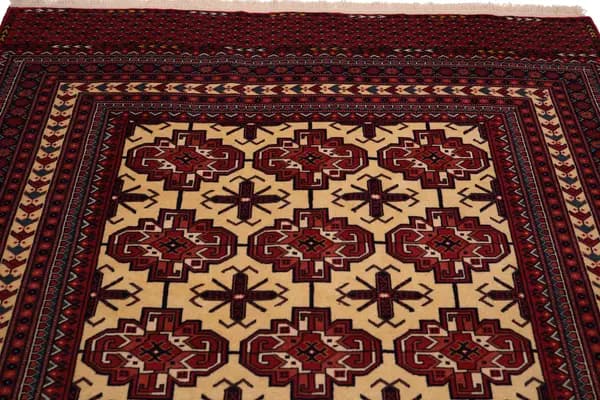
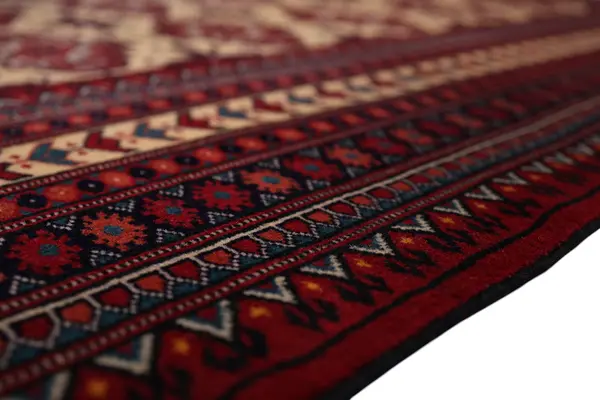
Turkmen rugs are among the most recognisable tribal weavings in the world, their fields carried by rows of repeating gul medallions, one of the oldest tribal emblems still in use. This piece measures 208 x 156 cm (6'10" x 5'1"), a size suited to a room rather than a grand hall, and it comes from the Turkmen weaving tradition of Central Asia, also known as Turkoman work, prized for its density and its long service life. Where the type is usually set on a deep red ground, here the field is a warm ivory, and that single change lifts the whole rug into unusually bright, open territory.
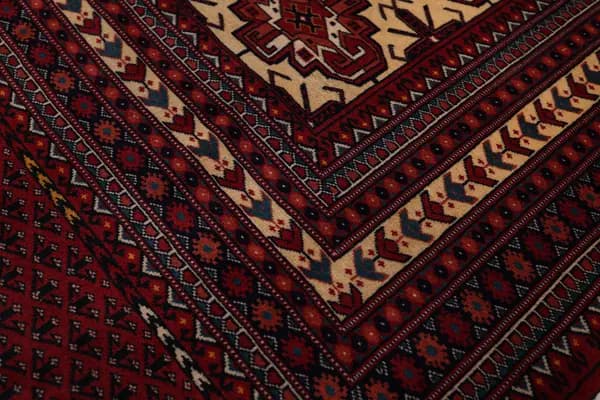
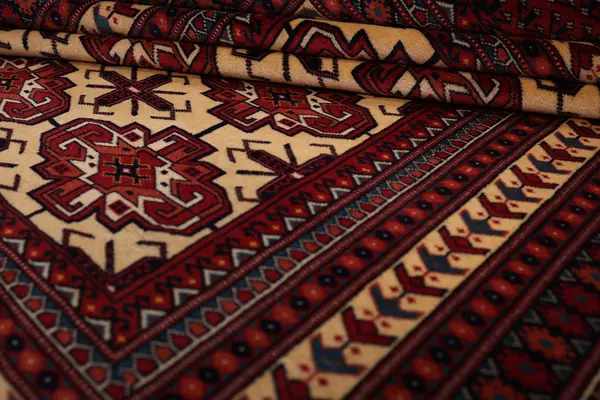
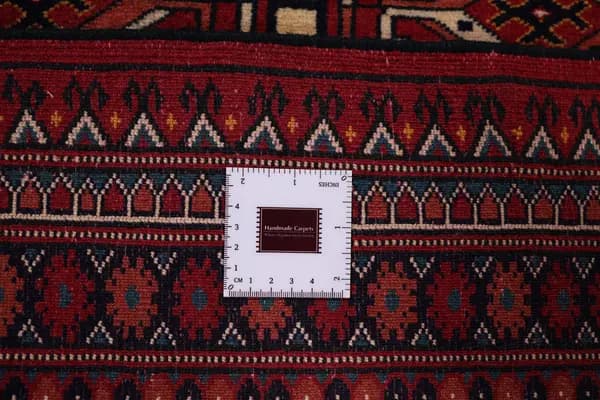
The eye meets that ivory field first, and only then finds the three offset rows of stepped octagonal guls marching across it in deep red and burgundy, each outlined in midnight navy. Small cross-shaped motifs sit between the medallions, holding the rows apart without breaking the rhythm. A wide border of striped bands in red, navy and ivory closes the design, taking up close to a fifth of the rug's width, its narrow repeating devices echoing the geometry of the field rather than competing with it. Nothing here is soft-edged; the whole composition reads as structured and deliberate, an effect the ivory ground only sharpens.
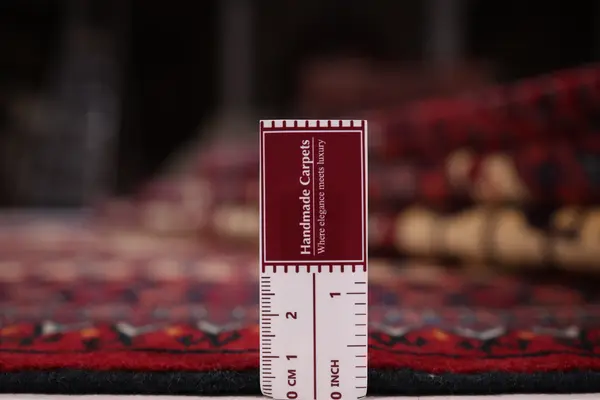
This is a nomadic weaving, knotted from memory rather than from a drawn plan, which is why the guls keep their family likeness without ever repeating identically. The knot count runs between 501,000 and 640,000 per square metre, a density that puts real weeks and months into a rug this size and gives it the tight, crisp surface you can feel under a hand. Wool warp carries a handspun wool pile at 6 mm, left with a matte, flat-looking finish rather than any sheen, which is exactly what lets the ivory ground stay clean and the red guls stand forward from it.
A rug this size and this bright suits a bedroom well, laid where the eye meets it on waking, or in a quieter seating corner where a pale floor needs warming without being overwhelmed. Against light oak or a plain painted wall the ivory ground holds its own calm, while the red and burgundy guls keep the room from feeling flat. Underfoot the pile is dense and firm, built for daily use rather than careful protection, and as the light shifts through the day the navy outlines catch and let go, keeping the pattern quietly alive.
More on Turkmen rugs: origin, making and how to recognise a genuine piece
Exceptionally fine weave
At 208 × 156 cm (3.24 m²) this is a medium rug. It works in front of a sofa, in front of a bed or in a study. It is too small for a dining table — there you want about 80 cm of clearance so a chair does not tip over the edge when pushed back.
Yes, knotted by hand — knot by knot on a loom, not machine-made. The density is 501,000 to 640,000 knots per square metre; across 3.24 m² that is roughly 1.6 to 2.1 million individual knots, every one of them tied by hand.
Hand-spun wool still carries its own lanolin, which keeps liquid sitting on the surface for a moment: blot quickly, with clear water and a light cloth, working inwards and without rubbing. Otherwise regular vacuuming along the pile is enough. Turn the rug once or twice a year so light and footfall reach it evenly.
We are in the Hamburg Speicherstadt. Come and see this rug in daylight, or write to us — a person answers.
Certificate included verifying origin, materials, and craftsmanship.
Ref: 616382