The gul, and why it repeats
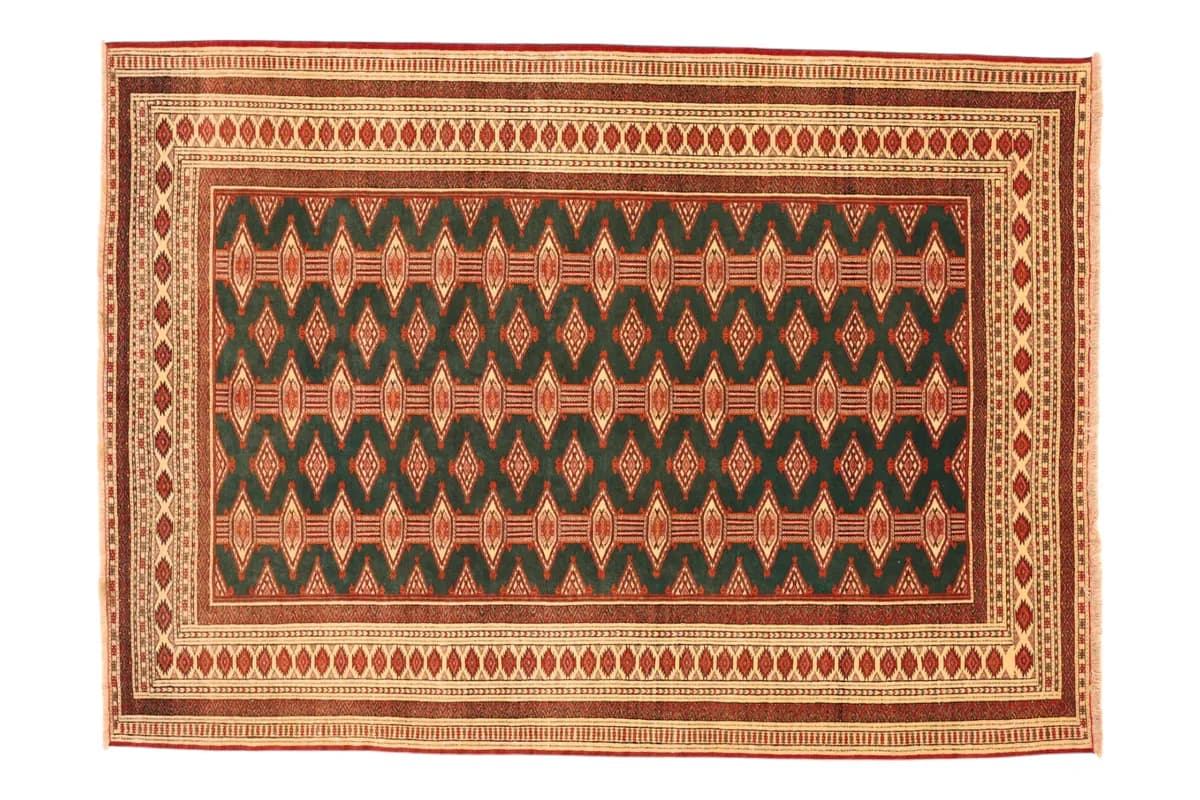
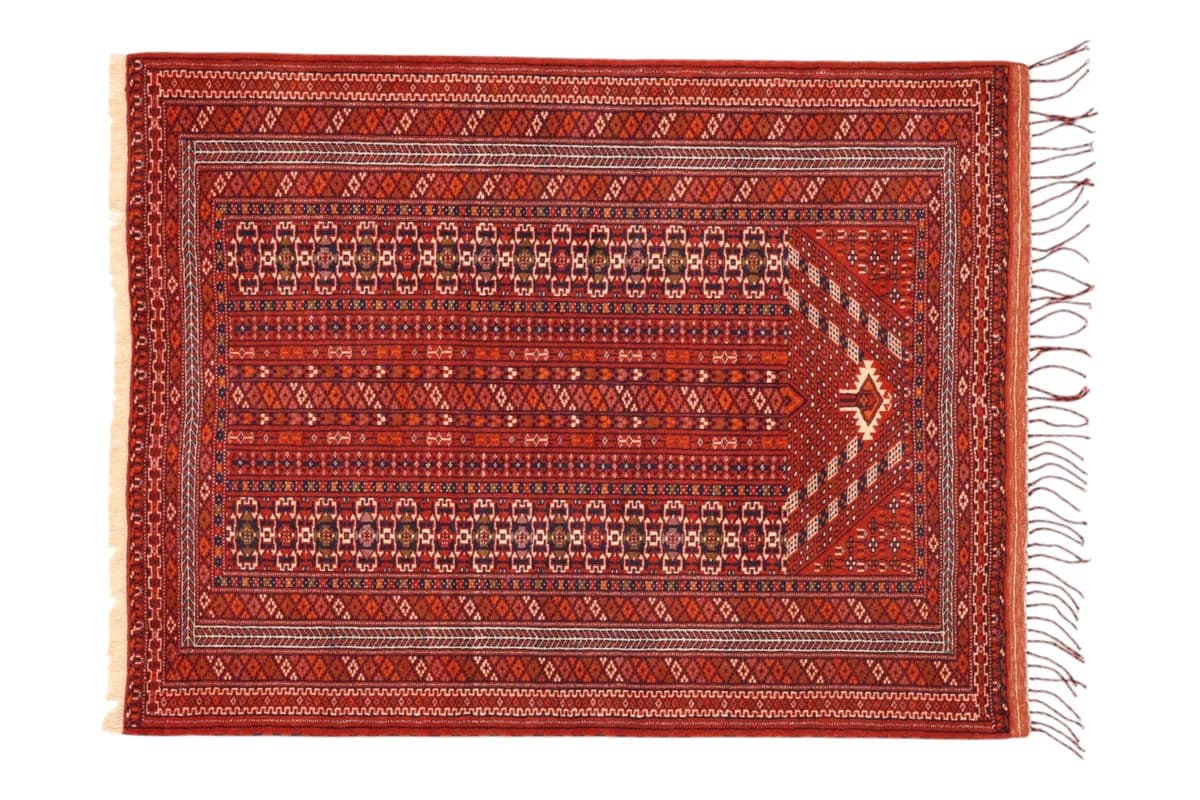
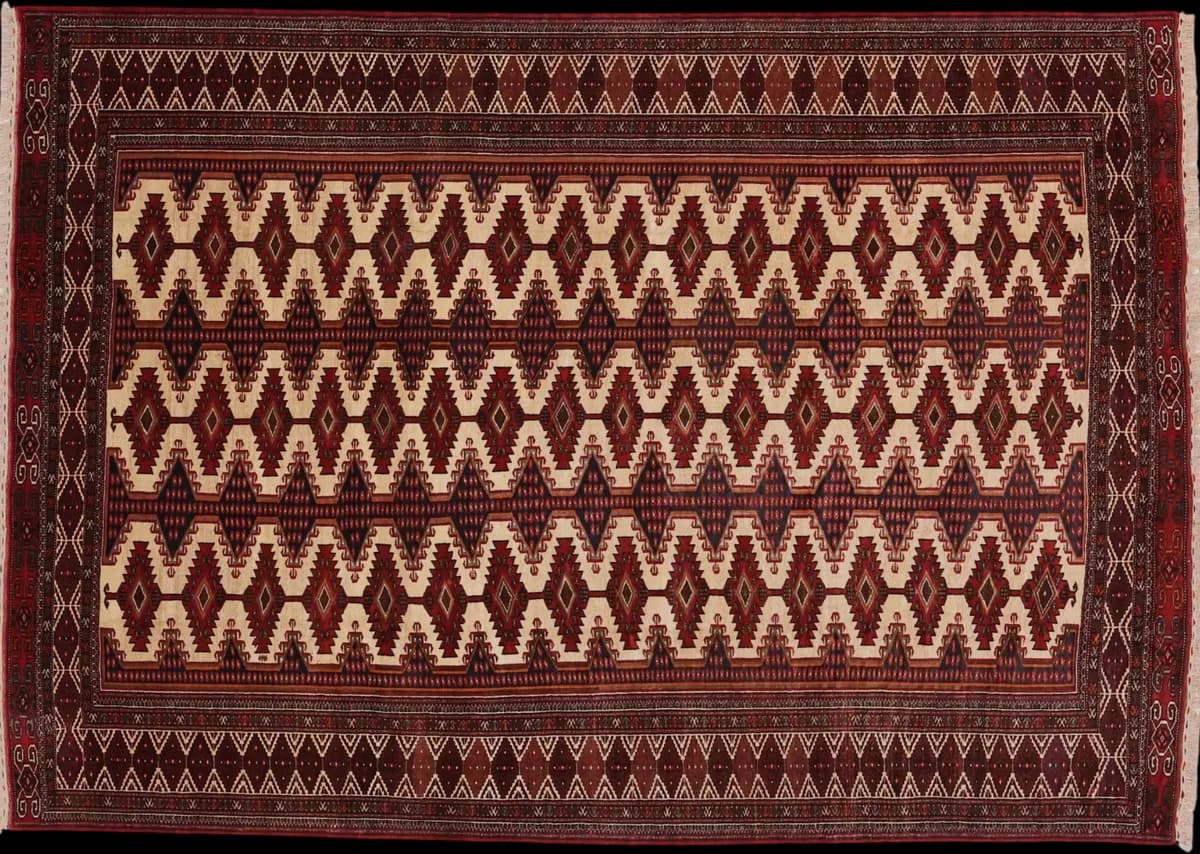
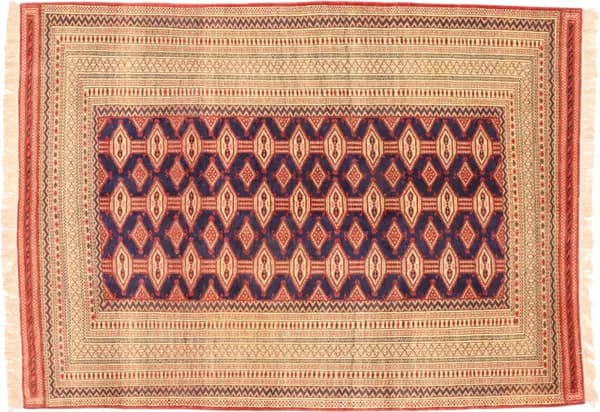
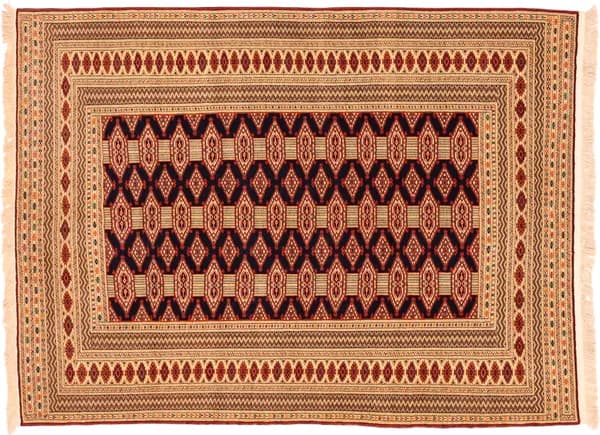
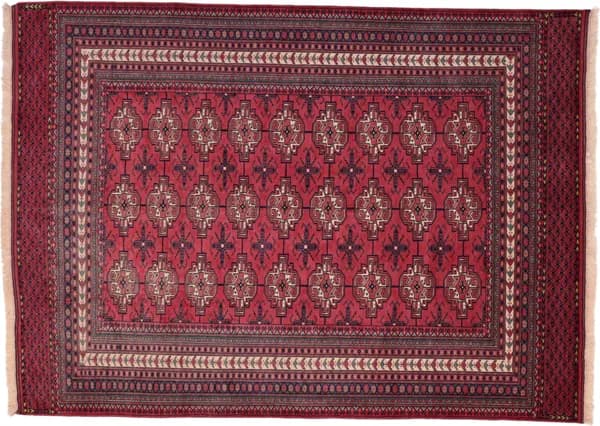
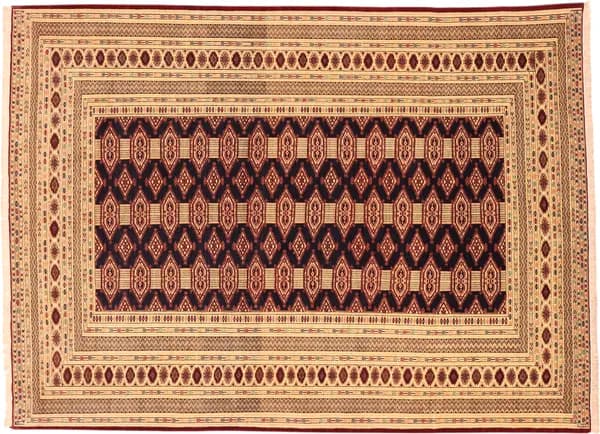
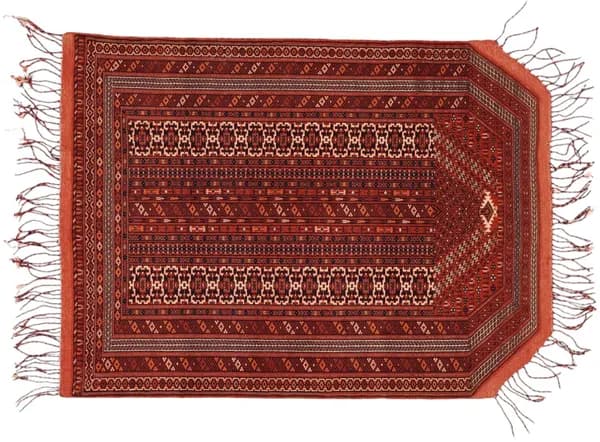
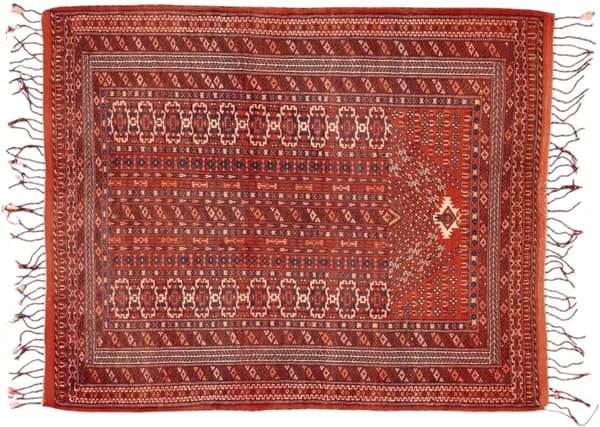
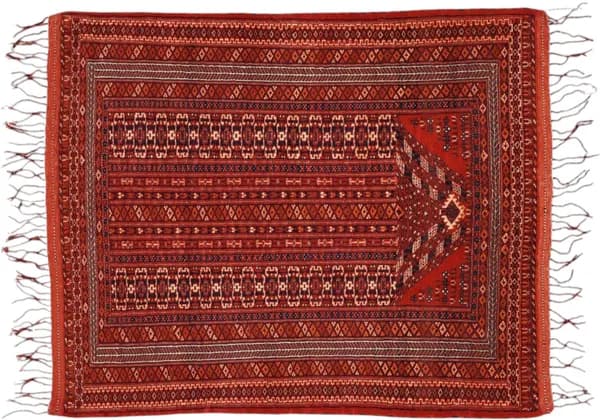
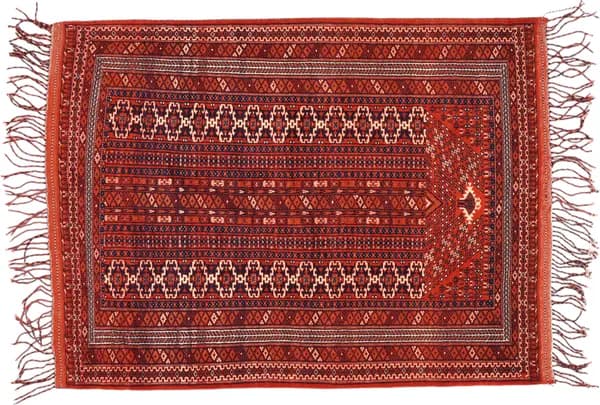
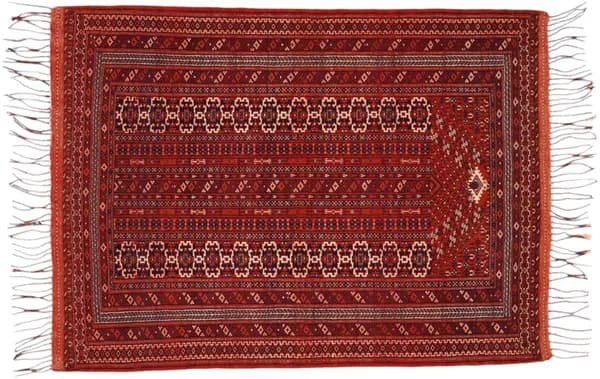
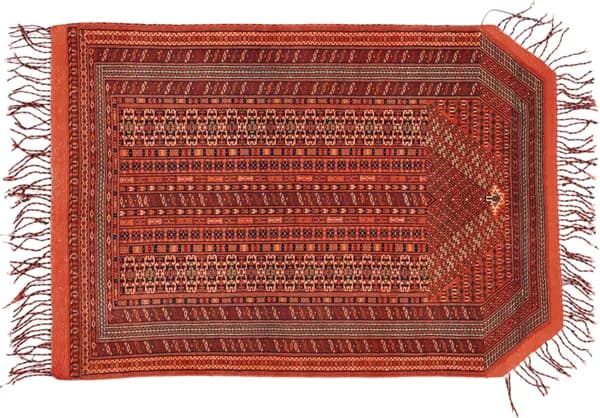
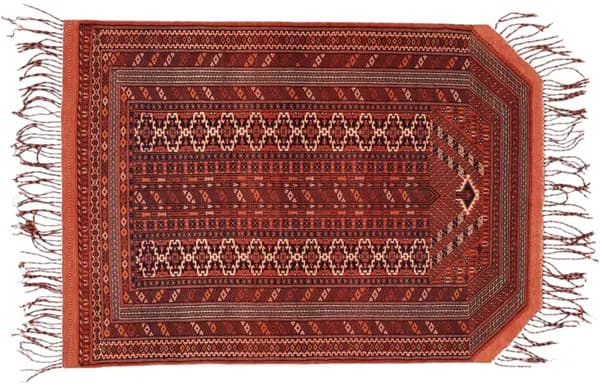
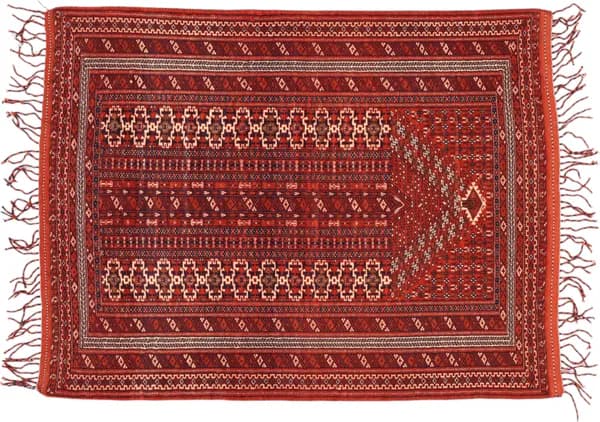
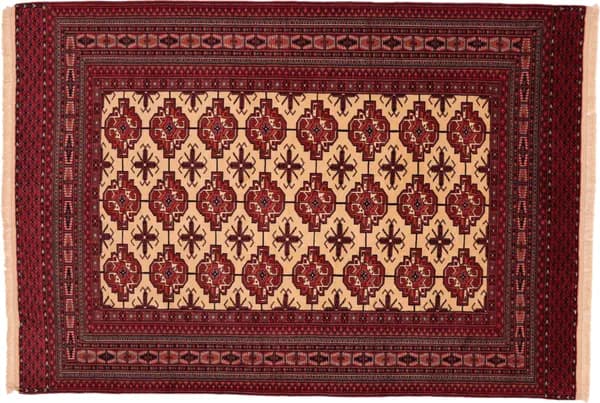
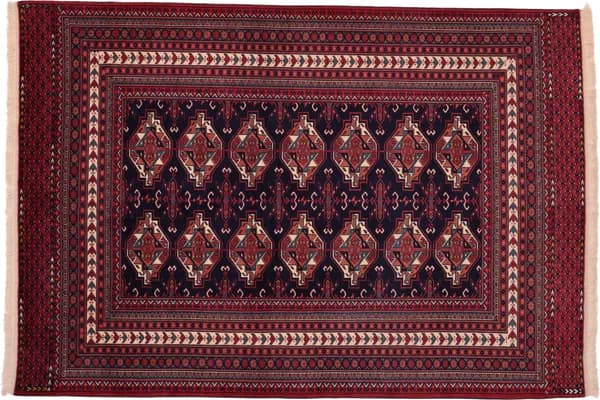
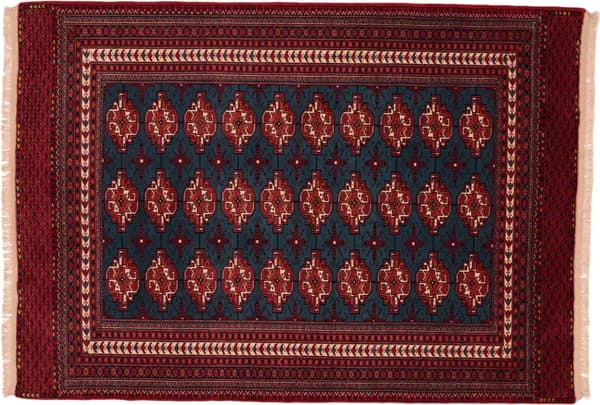
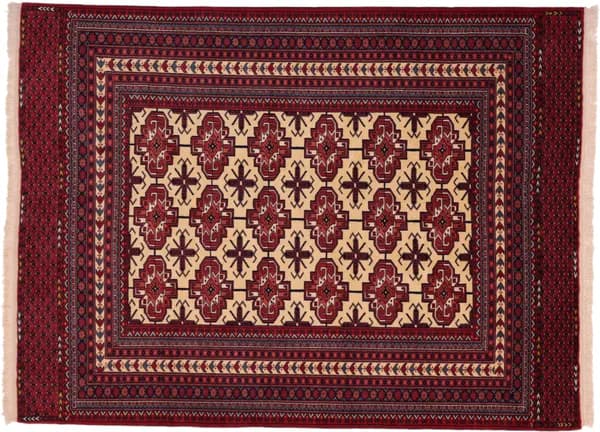
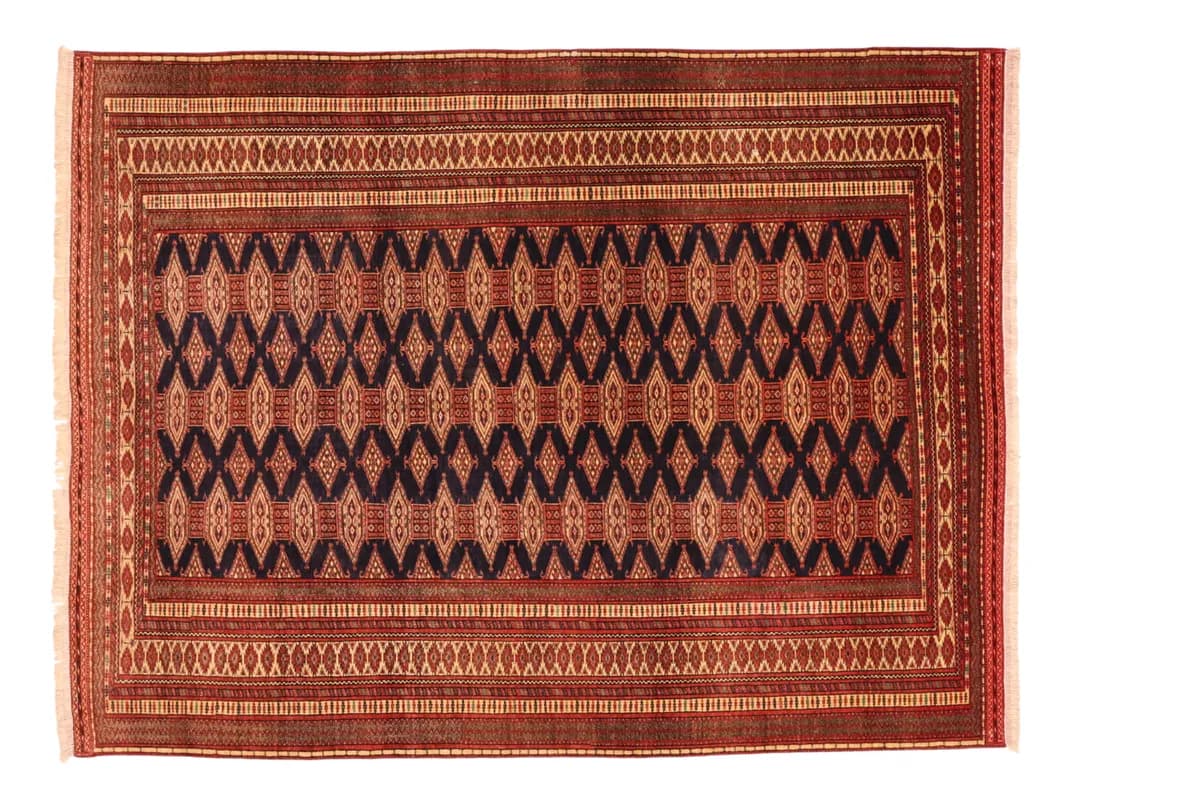
Almost every Turkmen rug is built from one element: the gul, an octagonal or lozenge-shaped medallion, repeated in strict rows and columns across the field. Between the guls sit smaller secondary motifs, and a narrow border frames the whole.
The word means flower, though the form is long since abstract. What matters for a buyer is that each Turkmen tribe historically used its own gul, and the shape is specific enough that a collector can often name the group from the medallion alone.
The rigour is the point. Where a Baluch weaver sets motifs freely across the field, the Turkmen grid is measured and held. That discipline over several thousand knots per row is what distinguishes the tradition — and it is why the rugs read as ordered rather than as improvised.
Fine work on a tribal loom
At 441,000 to 500,000 knots per square metre, Turkmen weaving reaches densities that most traditions only achieve in city workshops with drawn cartoons and fixed vertical looms.
That density is what allows the gul to keep its exact proportions across dozens of repetitions. At a quarter of the count the octagon would drift row by row, and the grid — the whole point of the composition — would dissolve.
It also explains the surface. A dense, short pile in dark wool gives a slightly lustrous, almost velvety face that catches light differently as you move around it. The effect is quite unlike the matt surface of a coarser tribal rug.
- Octagonal guls in strict rows and columns.
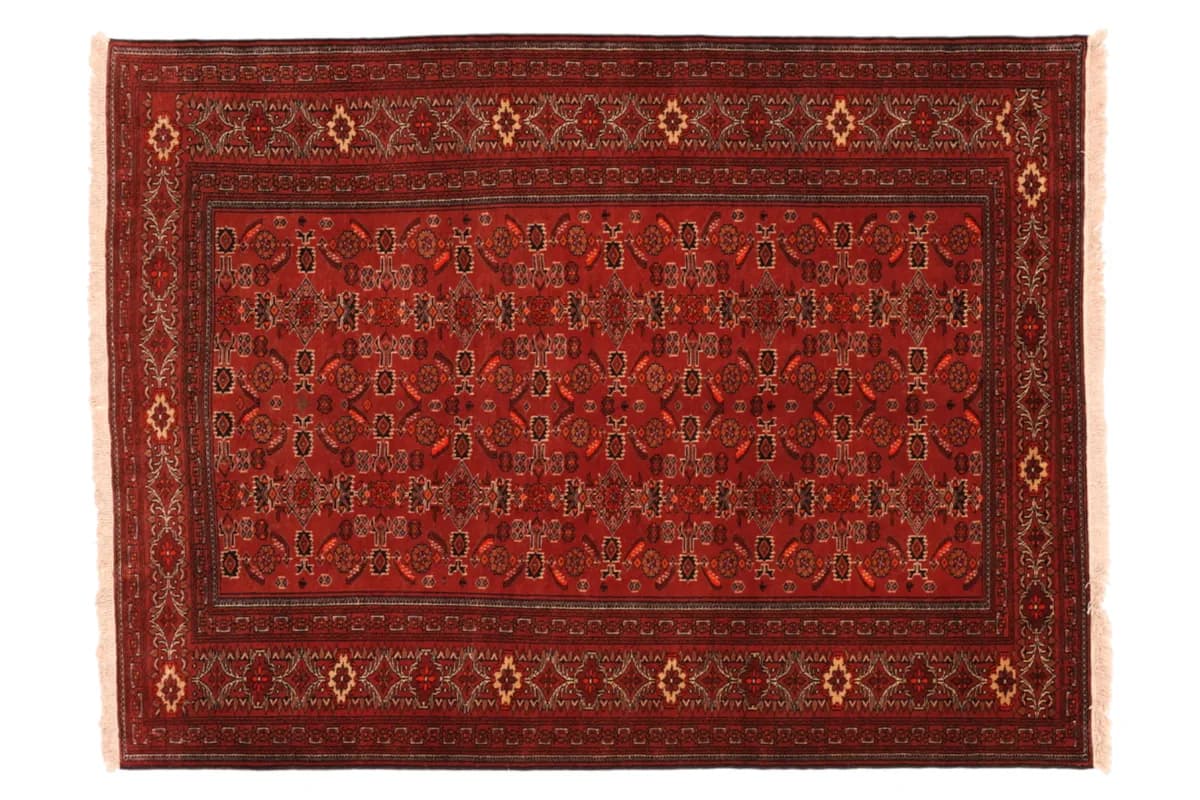
- Narrow palette — rust and brick red with dark blue, white, black.
- Very high knot density for a tribal weaving.
- Dense short pile with a faint lustre.
- Small to medium formats.
Which room a Turkmen rug suits
The small format and the dense, dark field make this a rug for a defined spot: in front of a sofa, beside a bed, in a study, or on a wall where the grid can be read as a composition.
The deep red carries weight. In a pale, minimal room it will be the first thing anyone sees; against dark wood and leather it settles in and looks inevitable.
The dense short pile takes traffic well for its size, but the formats rarely suit a whole living room. If you need to cover a large floor, this is the wrong origin.
Care
Vacuum along the pile, without a rotating brush.
Blot spills at once with clear water and a light cloth, working inwards. On a dark red ground a mark is easy to overlook until it has dried in.
Keep it out of permanently direct sun. The narrow palette depends on the depth of the red, and that is exactly what fades first.
Turkmen or Baluch?
Both are tribal weavings from the north-east with dark grounds, and they are regularly confused. Density and layout tell them apart at a glance.
| Criterion | Turkmen | Baluch |
|---|---|---|
| Knot density | typically 441,000–500,000 / m² | typically 128,000–160,000 / m² |
| Ground colour | rust brown to brick red | aubergine, rust, near-black |
| Leading motif | gul, octagonal, set in rows | prayer niche, tree of life |
| Drawing | strictly gridded | free, small deviations |
| Distinctive | very fine for a tribal rug | undyed camel hair |
Common questions
What is a gul?
The octagonal or lozenge-shaped medallion repeated across a Turkmen field. The word means flower, though the form is abstract. Historically each tribe used its own version, specific enough that the group can often be identified from the medallion alone.
Why are Turkmen rugs so much finer than other tribal weavings?
Because the composition demands it. A grid of repeated guls only holds if each one keeps its proportions across dozens of repetitions, and that needs density. At a quarter of the knot count the octagons would drift and the grid would dissolve.
Are they all red?
Nearly. The palette runs from rust brown to brick red with dark blue, white and black as accents. That narrowness is deliberate and is one of the fastest ways to identify the tradition across a room.
Turkmen, Turkoman or Turkaman?
Transliterations of the same name. Turkmen is the usual English form; all three appear in the trade and describe the same weavers.
Can I use one in a hallway?
Yes for its size — the dense short pile takes traffic well. Just keep it out of direct sun, because the depth of the red is what the whole palette rests on and it is the first thing to fade.