A palette you can identify across a room
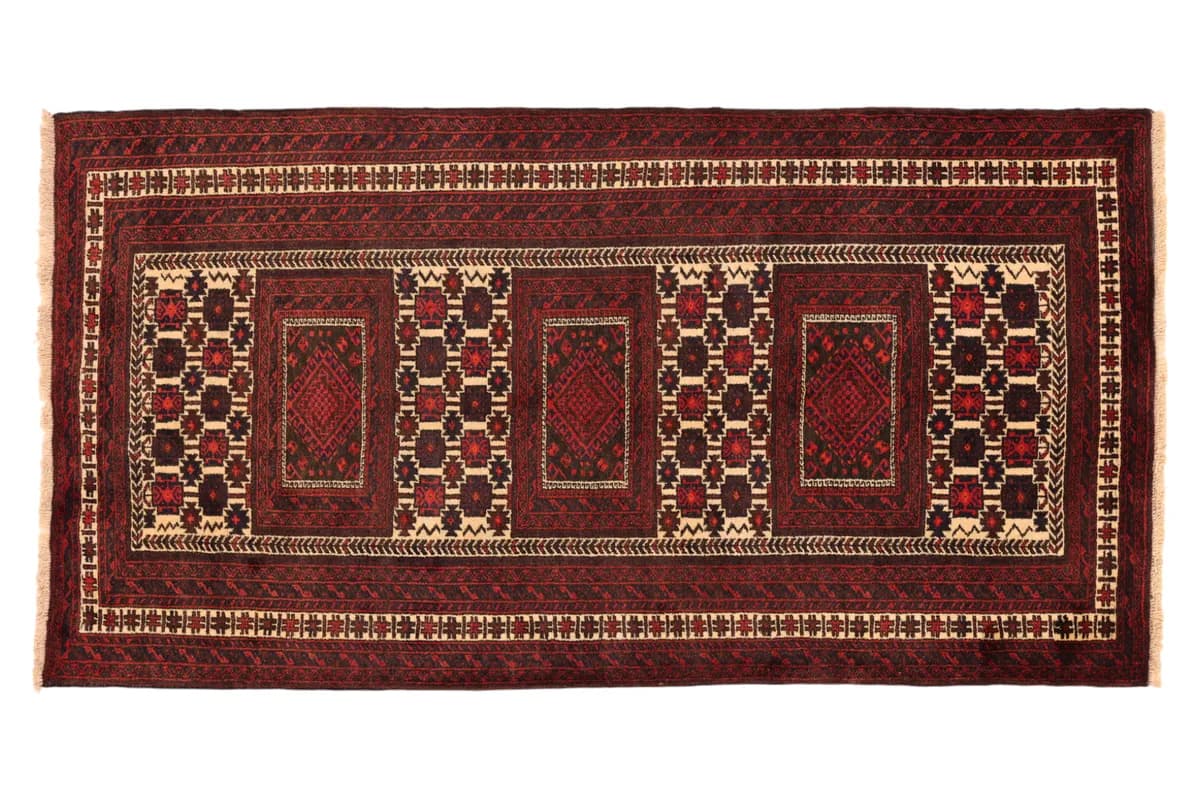
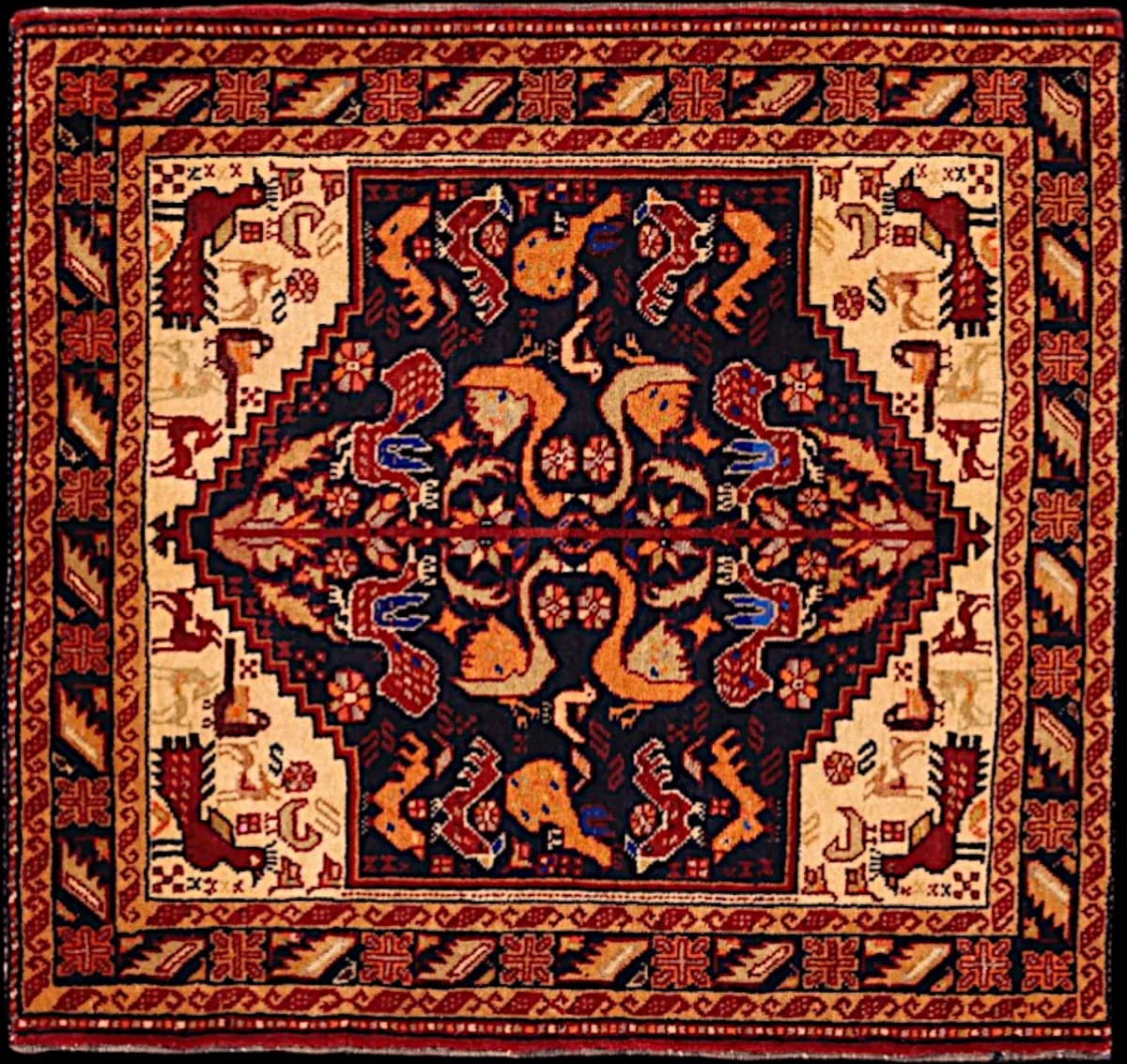
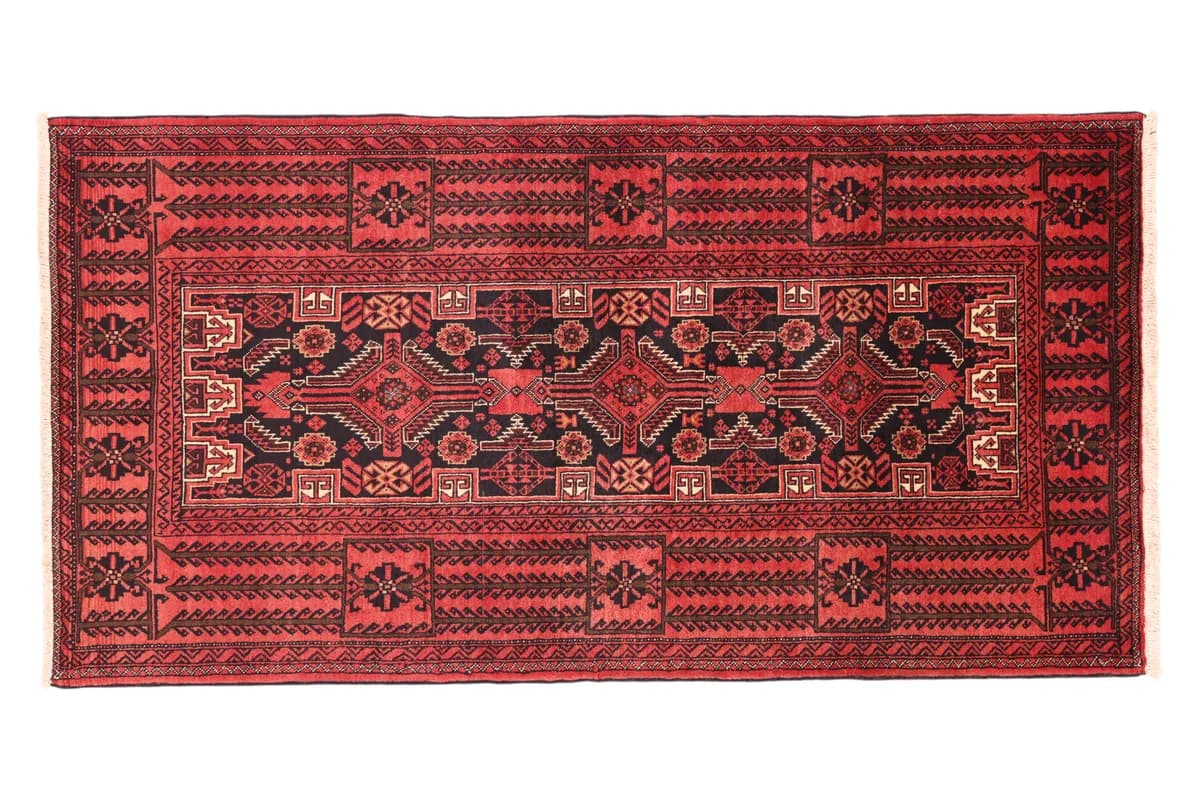
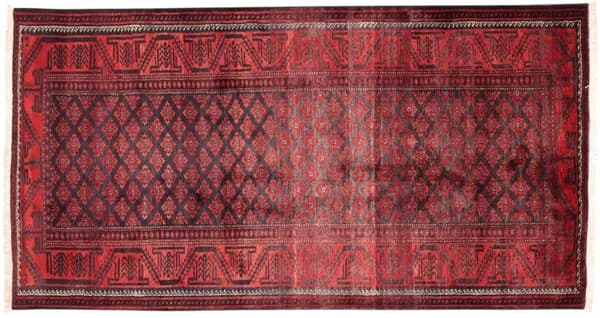
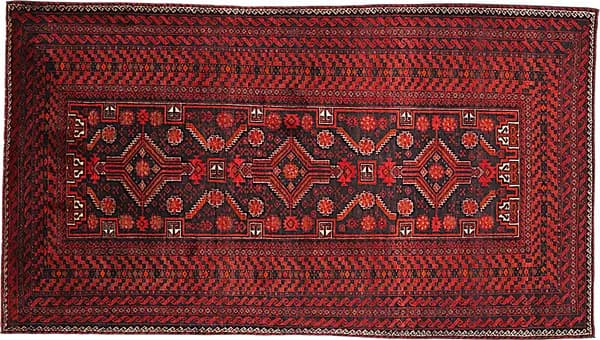
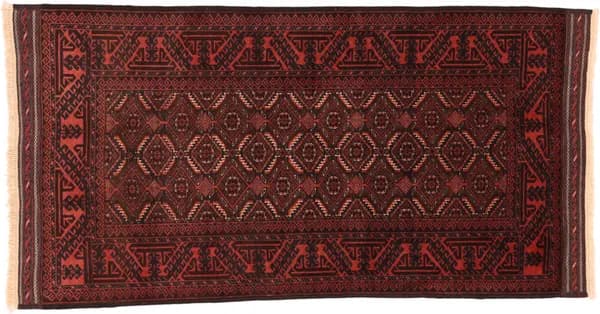
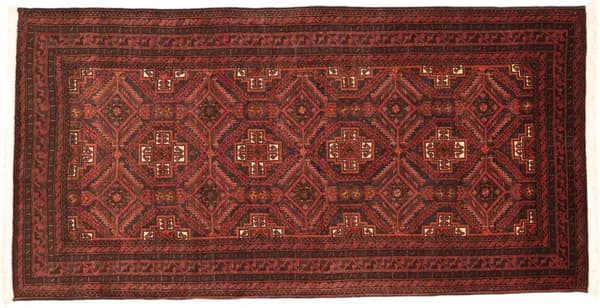
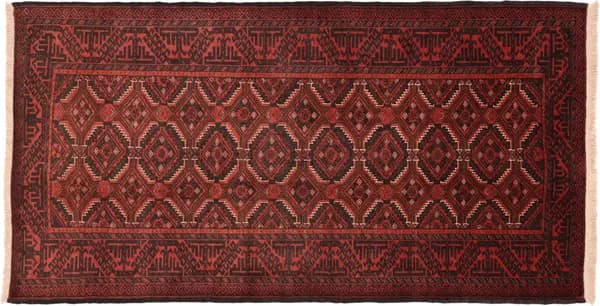
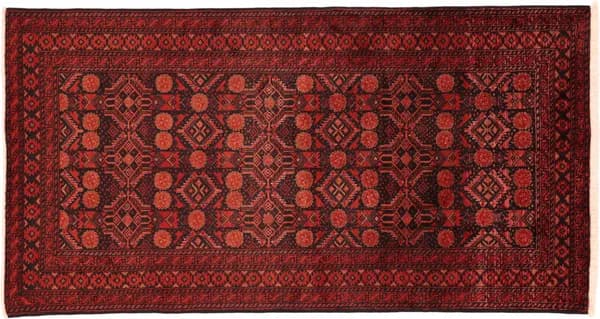
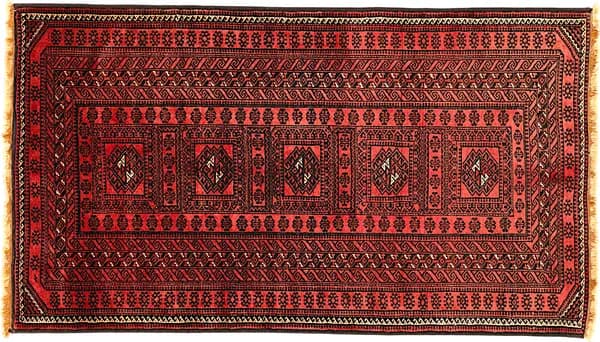
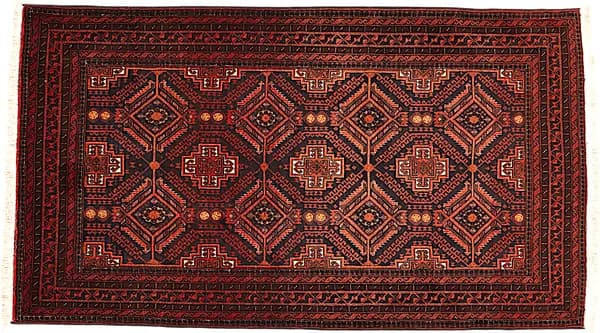
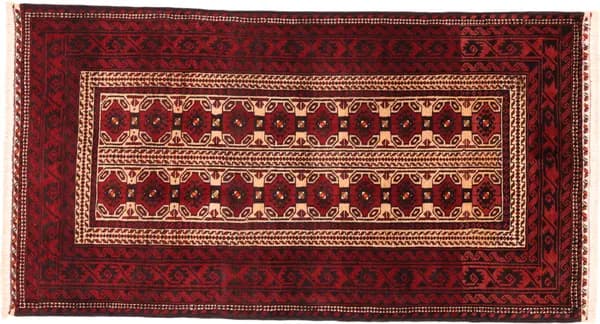
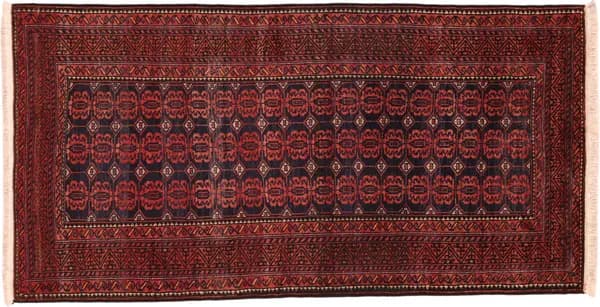
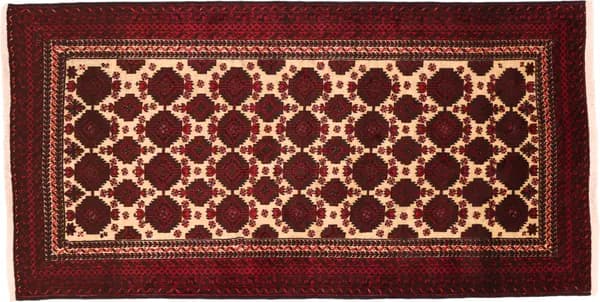
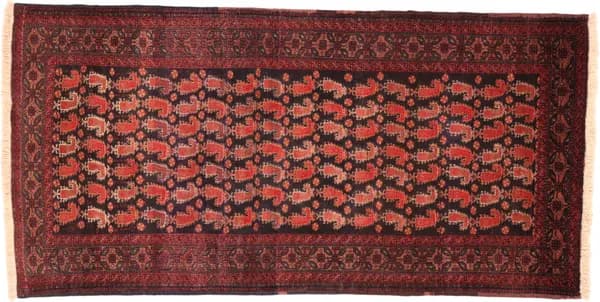
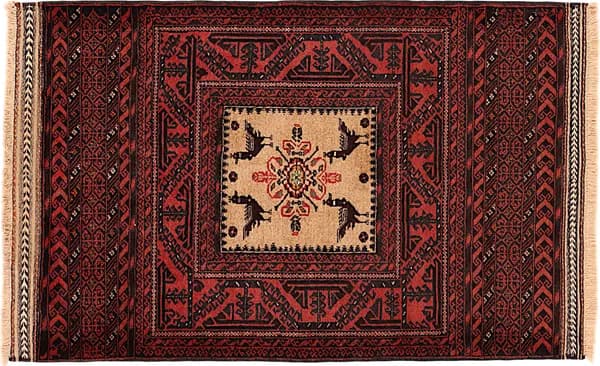
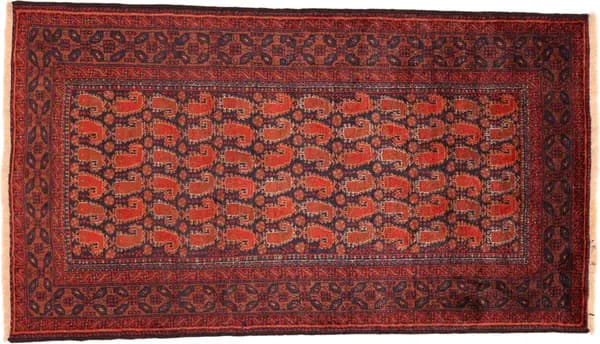
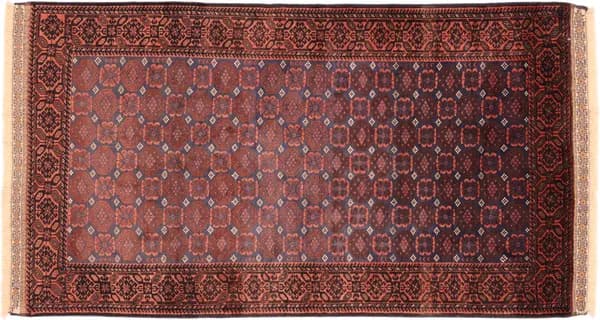
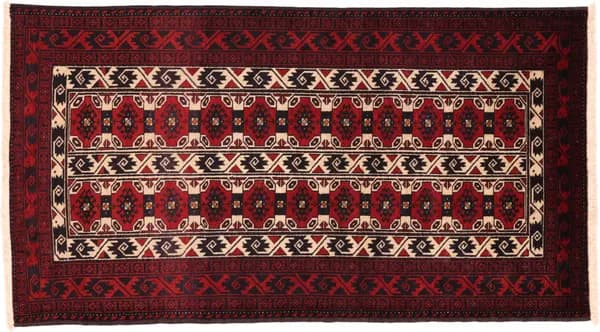
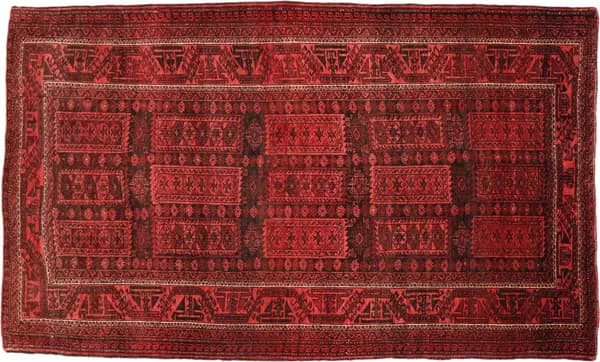
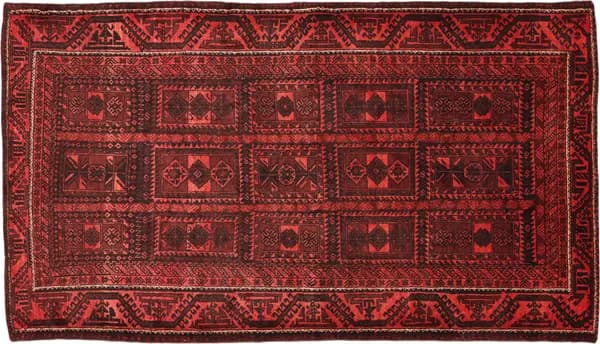
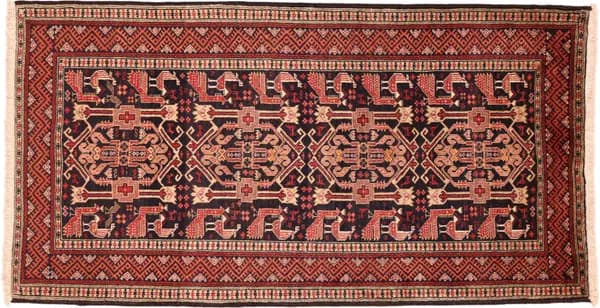
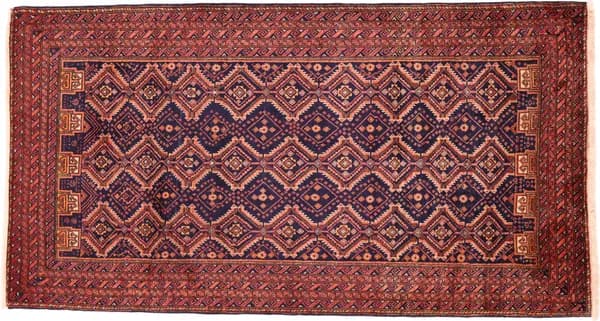
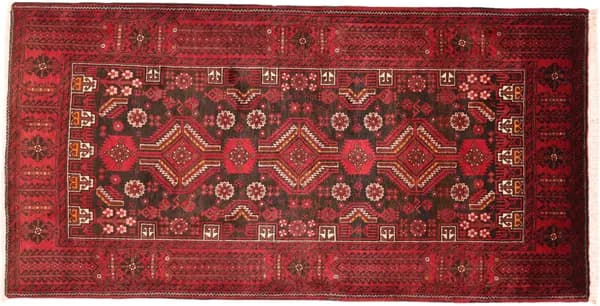
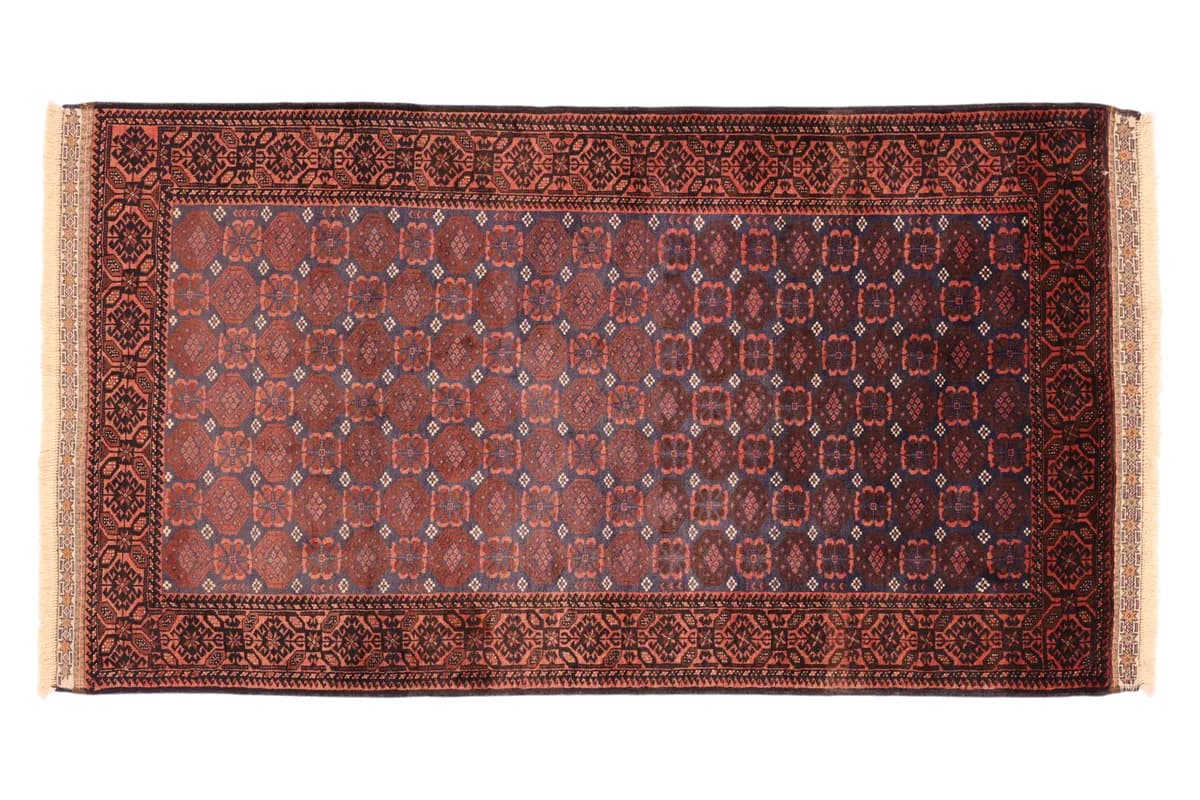
Most Persian origins have to be read close up. A Baluch does not. The colour scheme — deep aubergine, rust brown, a blue that goes almost to black — is unlike anything else in the tradition, and it is visible from the other side of a room.
The darkness is not an accident of dye quality. It is what the available plants gave: madder for the rust, indigo layered heavily for the near-black, and the two overdyed for the aubergine. Weavers who moved with their herds used what grew along the route.
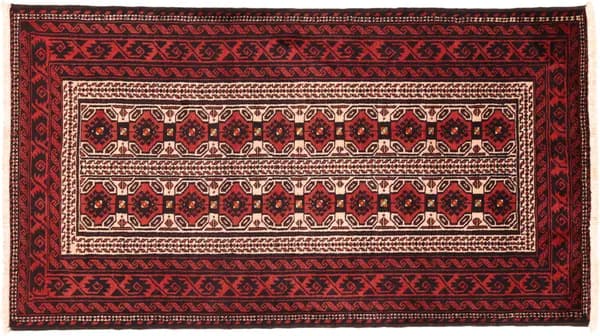
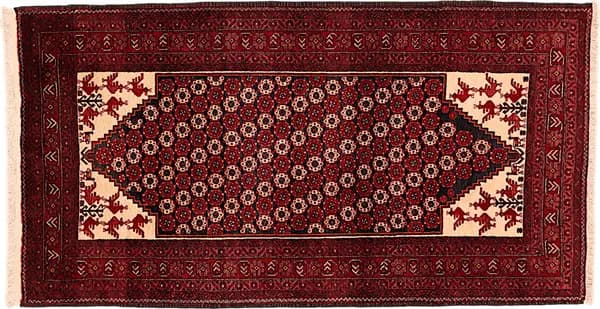
The light in these rugs usually comes from one place: undyed camel hair. Left in its natural colour, it gives a warm sandy ground that the dark motifs sit on. Where you see that combination — a soft light brown field carrying near-black drawing — you are almost certainly looking at a Baluch.
The prayer niche and what it tells you
The most common Baluch format is the prayer rug: a field with a pointed arch at one end, the mihrab, that marks the direction of prayer. Above and around it sit stylised trees, combs and hands.
For a buyer the niche is useful information beyond its meaning. It tells you the rug has a top and a bottom — it is directional, and it is meant to be seen from one end. Laid the wrong way round in a hallway, the composition reads upside down.
The second recurring motif is the tree of life, growing from a vessel at the base of the field and branching upward. Both motifs are set freehand, from memory, which is why no two are identical and why the two halves of one rug rarely mirror exactly.
- Wool warp — matt, slightly crimped fringes rather than smooth white cotton.
- Dark palette with undyed camel hair as the light ground.
- Prayer niche or tree of life, set freehand.
- Small formats — this is a rug for a specific spot.
- Slight asymmetry is the record of a hand, not a fault.
Which room a Baluch suits
The small format decides it: beside a bed, in a reading corner, in front of a fireplace, on a wall. A Baluch furnishes a spot rather than a room.
The dark palette does real work in a bright room. Against pale oak or a white floor it anchors a corner without demanding attention, and it hides everyday marks far better than a light rug.
If the rug carries a prayer niche, place it so the arch points away from the main approach. It is a directional composition, and it looks wrong upside down even to someone who does not know why.
Care
Vacuum along the pile, without a rotating brush. On a wool warp the brush is particularly worth avoiding, because it pulls at the fringes and frays them over time.
Blot spills at once with clear water and a light cloth, working inwards. On a dark ground a water mark is less visible than on a pale one, which makes it easier to leave a stain to dry in — so treat it anyway.
Never comb or brush the fringes. They are the warp itself and structural; mechanical work weakens them.
Baluch or Turkmen?
Both are tribal weavings from the north-east with dark grounds, and they are regularly confused. Density and layout tell them apart at a glance.
| Criterion | Baluch | Turkmen |
|---|---|---|
| Knot density | typically 128,000–160,000 / m² | typically 441,000–500,000 / m² |
| Ground colour | aubergine, rust, near-black | rust brown to brick red |
| Leading motif | prayer niche, tree of life | gul, octagonal, set in rows |
| Drawing | free, small deviations | strictly gridded |
| Distinctive | undyed camel hair | very fine for a tribal rug |
Common questions
Baluch, Belouch or Belutsch?
All three are transliterations of the same name. Baluch is the usual English spelling, Belutsch the German one. They describe the same weavers and the same rugs, and it is worth searching both.
What is the arch at one end?
A mihrab, the prayer niche marking the direction of prayer. It also tells you the rug is directional: it has a top and a bottom and is meant to be seen from one end.
Why is the warp wool rather than cotton?
Because the loom travels. A portable horizontal loom is taken down and re-tensioned twice a year, and wool is elastic enough to survive that. Cotton is too brittle. A wool warp is therefore the most reliable sign of a genuinely nomadic weaving.
Is camel hair really camel?
In older pieces, usually yes — undyed camel hair used for its natural sandy colour. In newer production the same effect is often achieved with undyed sheep wool. Both are legitimate; the point is that the light ground is undyed rather than bleached.
Are Baluch rugs hard-wearing?
Yes for their weight class. The pile is dense enough for daily use and the dark ground forgives marks. What they are not is large — if you need to cover a room, this is the wrong origin.