A region, not a workshop
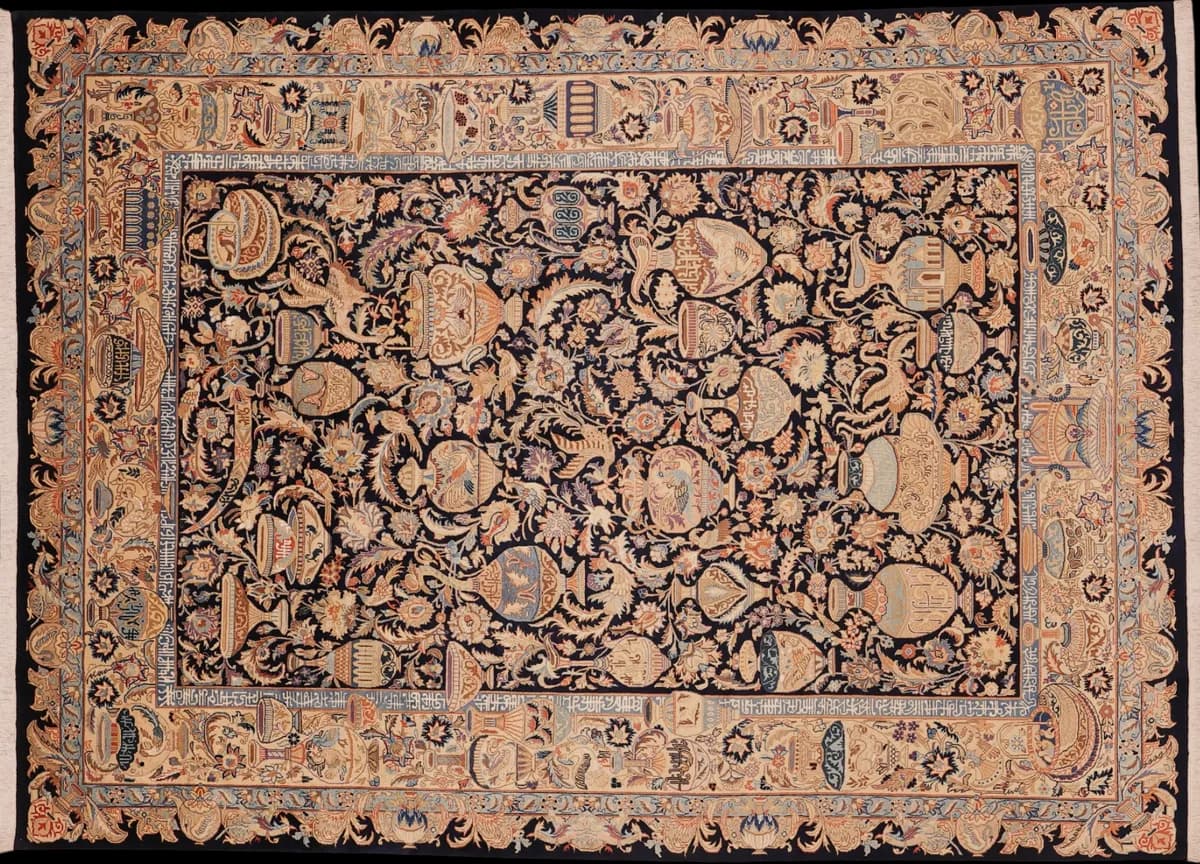
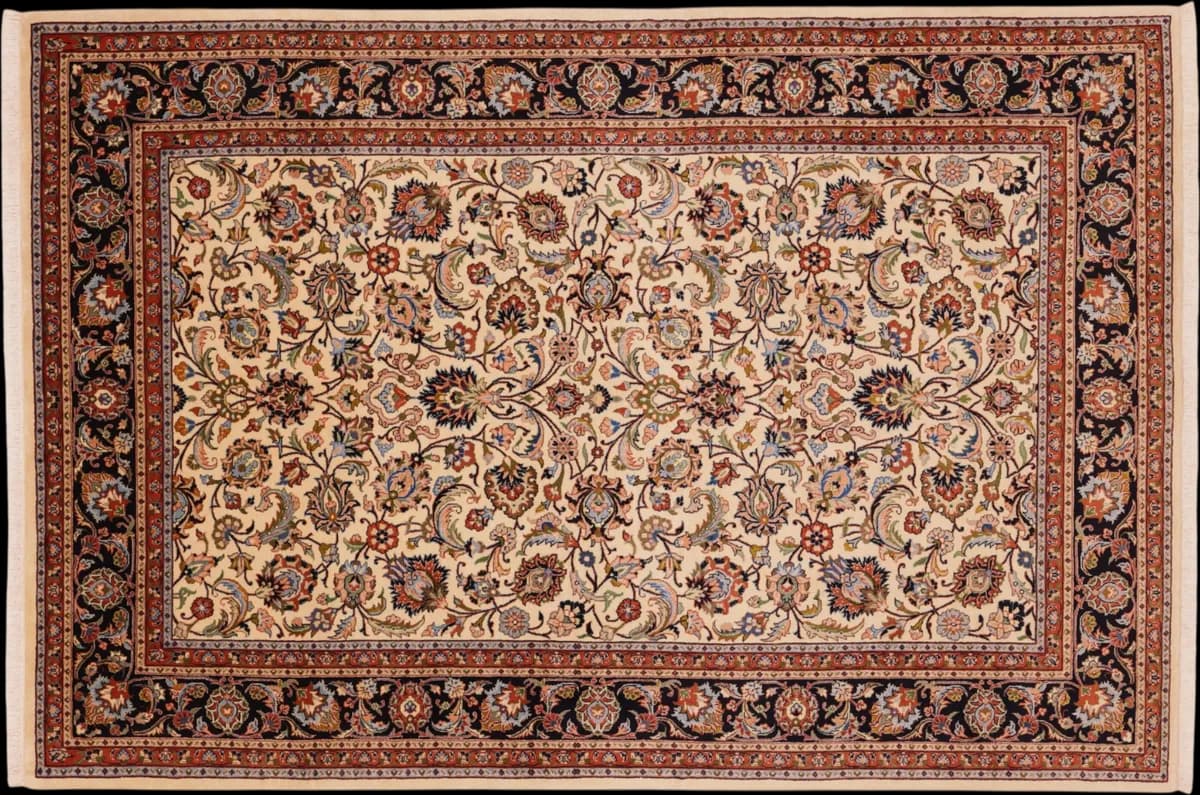
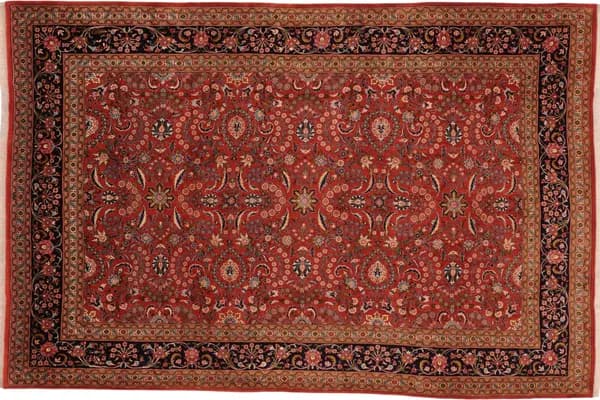
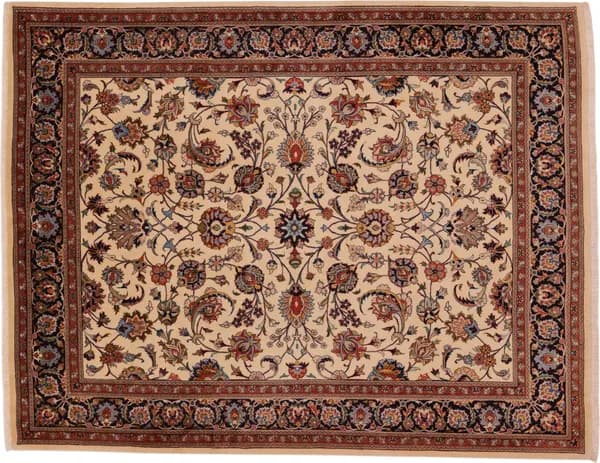
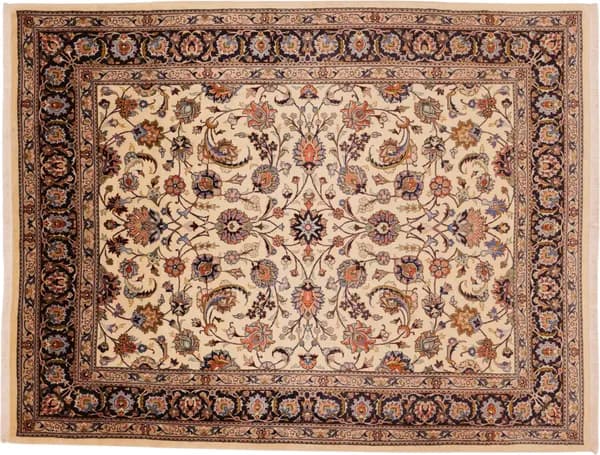
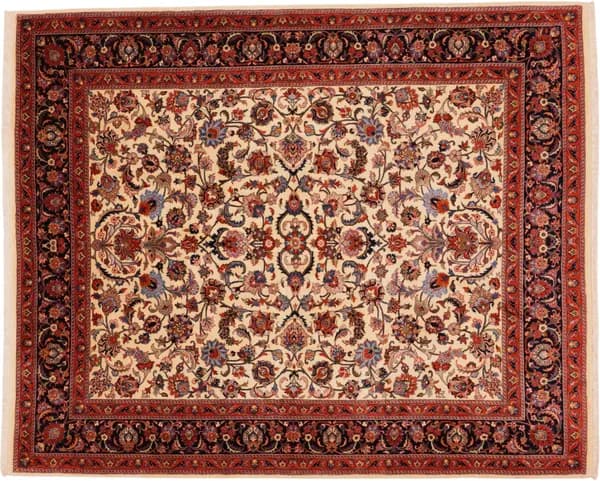
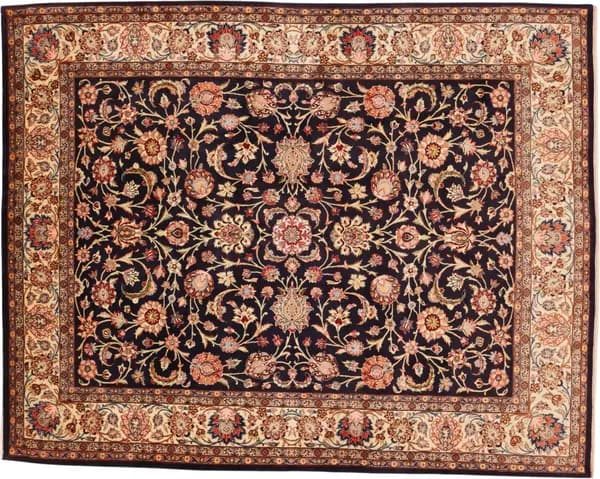
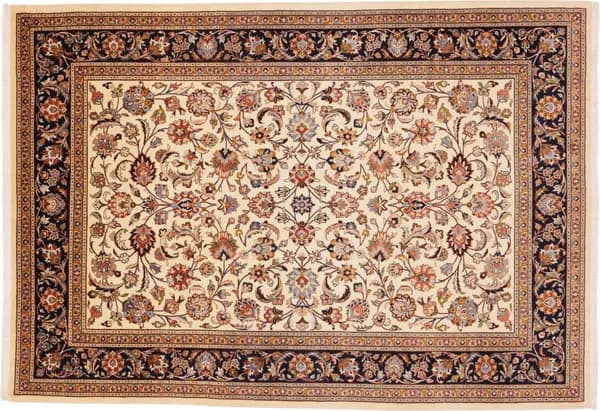
Khorasan is the north-east of Iran, a group of provinces on the borders with Turkmenistan and Afghanistan. It is where most Iranian rugs come from, and the name appears constantly in the trade because it names an origin people recognise — not because it describes a particular way of working.
That has a practical consequence. Khorasan is a collective term, and between a coarse piece from a mountain village and a fine one from a Mashhad workshop lies a considerable distance. Both may legitimately be called Khorasan. Read the numbers rather than the name: knot density, warp material, pile height.
Mashhad is the trading centre. A large share of the regional production passes through its bazaars, and many rugs carry its name although they were knotted a hundred kilometres away. That is a trade convention rather than a deception — it is simply worth knowing.
How to judge one
Start with the back. Even knot rows without waving show that the loom tension held over the months of work. On a large format that is the harder achievement: the wider the rug, the more the weave tends to pull in at the edges.
Then the wool. Handspun regional wool carries a high lanolin content and you can feel it — the pile is faintly greasy, and a drop of water stands on the surface for a moment before soaking in. Machine-spun wool takes liquid immediately and feels drier.
Then the colour. Natural dyes from madder, indigo and walnut husk age differently from synthetics: they do not go pale, they shift slightly warmer, and the shades within one field differ minutely because no dye bath matches another exactly. That irregularity, called abrash, is a quality sign rather than a fault.
- Even back, no waving at the edges — critical on large formats.
- Pile faintly greasy, water beads for a moment — handspun wool with lanolin.
- Slight colour shifts within a field argue for natural dyes.
- Cotton warp is the norm; a wool warp suggests a nomadic piece.
- Fringes are the warp itself, not sewn on.
Which room a Khorasan suits
The region produces a great many pieces beyond five square metres, and that is where its strength lies. A Khorasan carries a seating group with the front legs of sofa and chairs on the rug, or a dining table with the chairs pushed back — allow around 80 centimetres of clearance beyond the table edge.
At 12 mm of pile and a density around 250,000 knots, the rug sits in a range that can be walked on daily without being spared. It is not a silk rug that wants a quiet room; it is a working piece in the best sense.
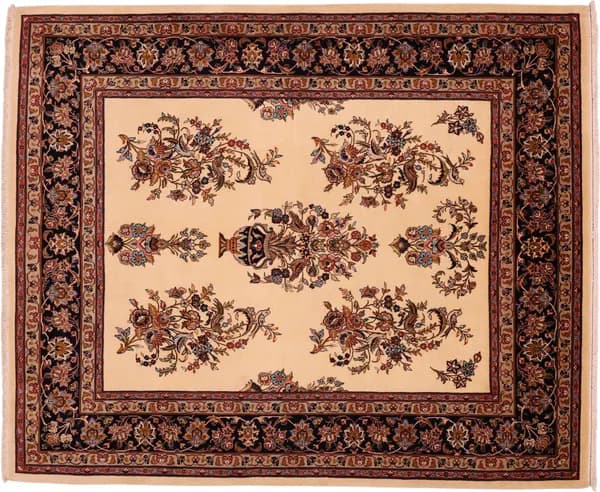
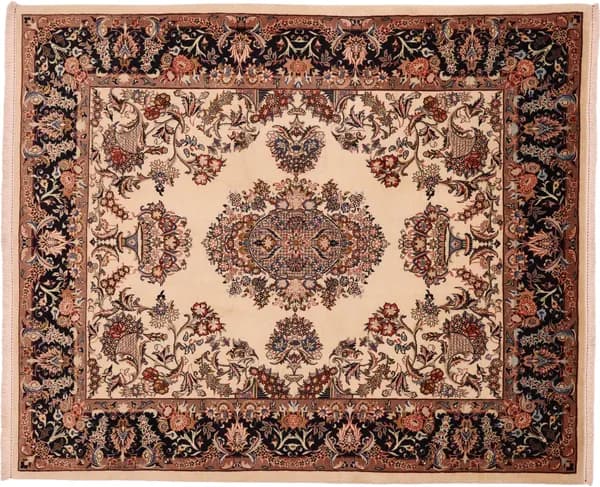
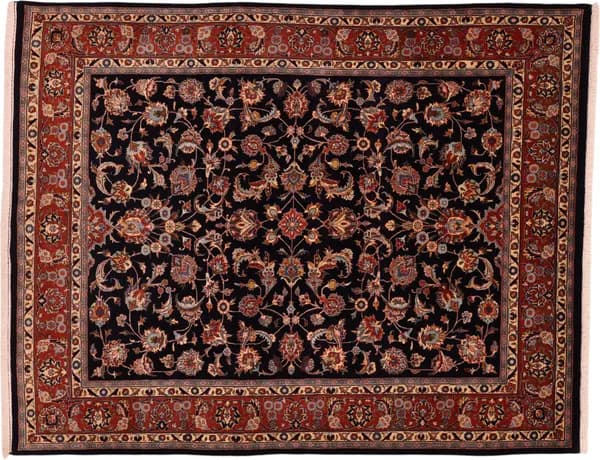
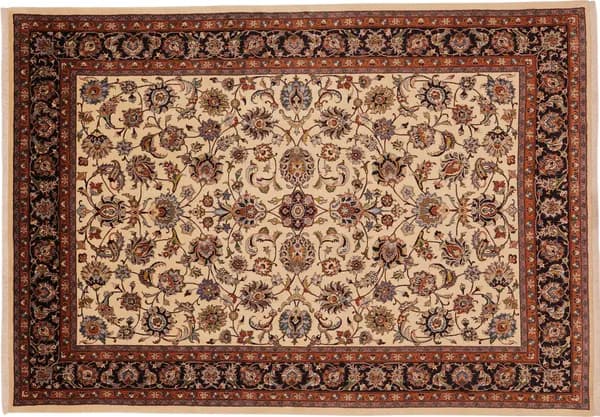
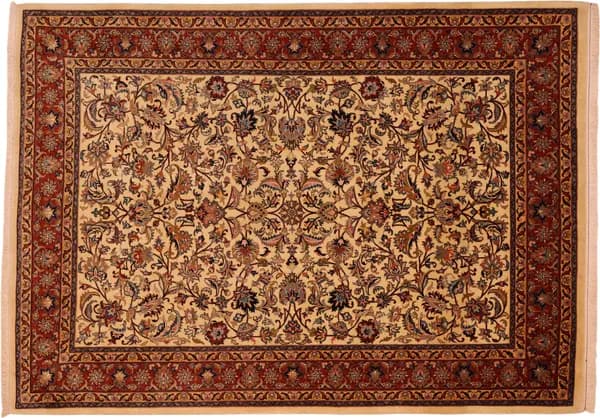
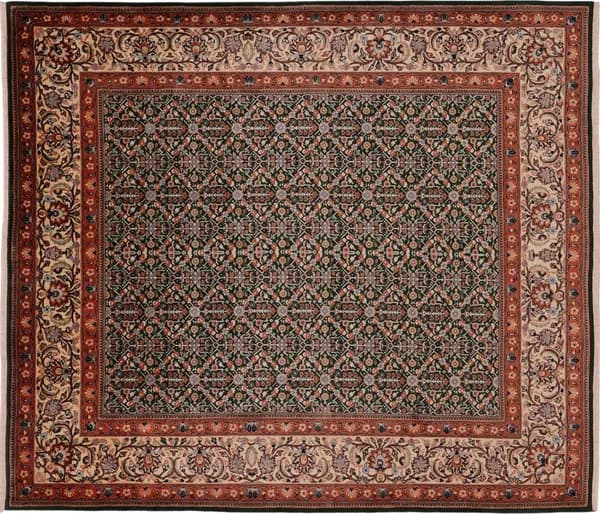
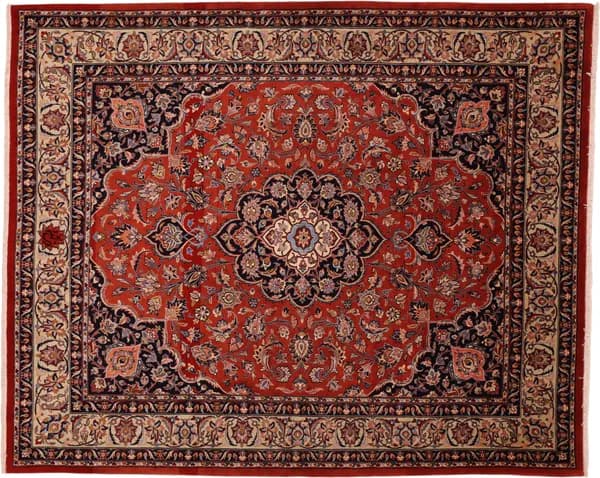
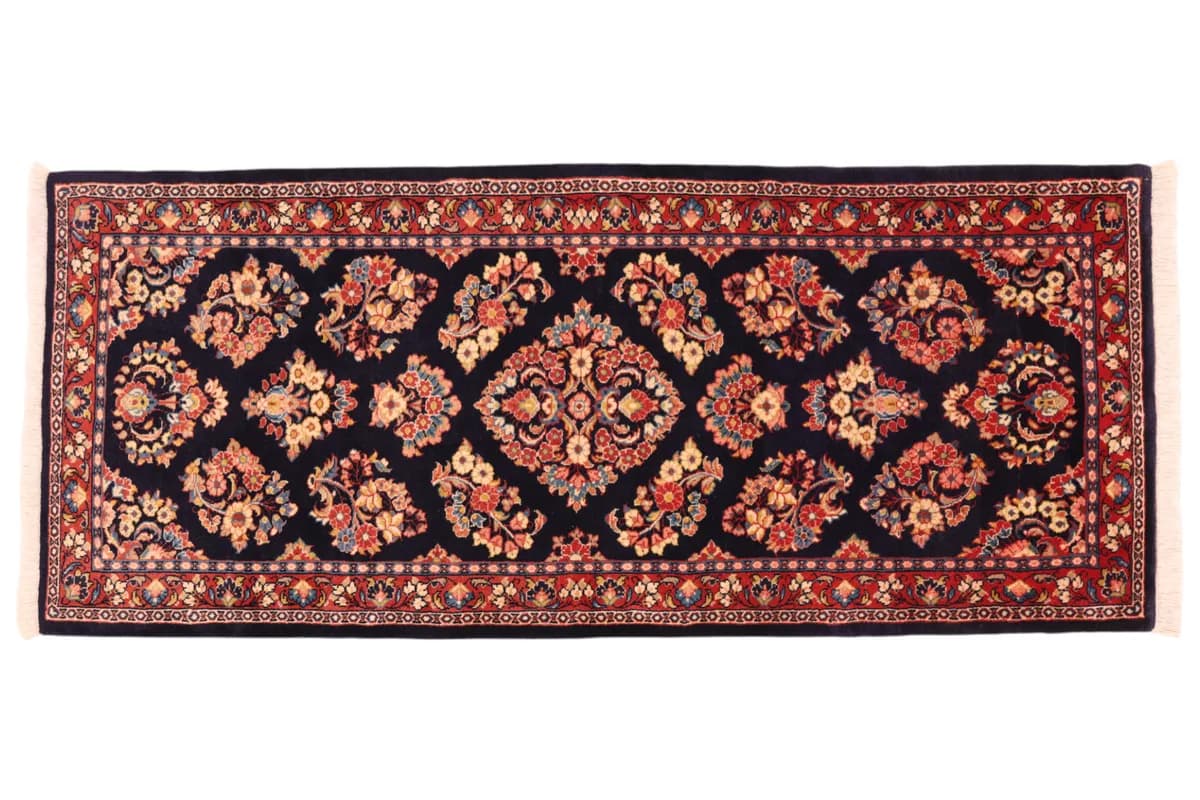
Because many Khorasan rugs are all-over and carry no central medallion, they forgive furniture. A sofa covering a third of the surface destroys no composition — unlike a medallion rug, whose middle carries the whole design.
Care
Vacuum along the pile, without a rotating brush. Find the direction with a flat hand: one way is smooth, the other roughs up. Smooth is the direction to vacuum.
Blot spills at once with clear water and a light cloth, working from the outside in, never rubbing.
Turn the rug once or twice a year. On a large rug in a living room this is the single most effective step: otherwise the window side fades visibly faster than the room side over the years.
Khorasan or Baluch?
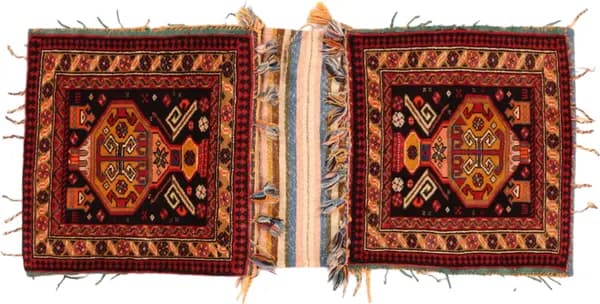
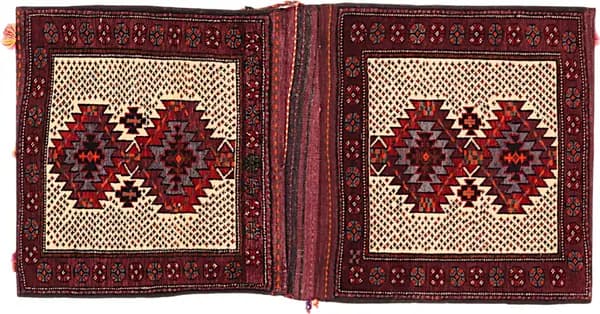
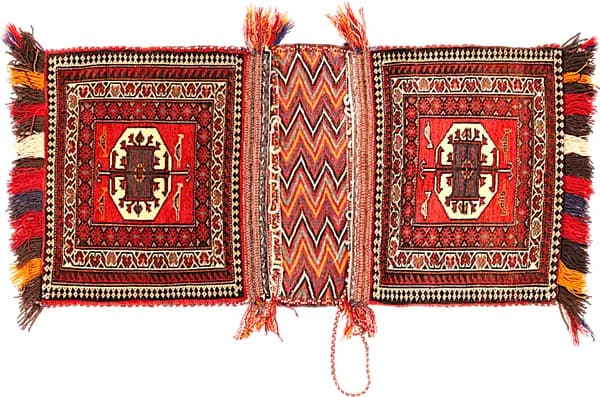
Both come from north-eastern Iran and are occasionally confused in the trade. They are different objects: one a regional collective term on a cotton warp, the other a tribal weaving.
| Criterion | Khorasan | Baluch |
|---|---|---|
| Type of origin | region with several schools | tribal weaving, often nomadic |
| Warp | cotton | usually wool |
| Format | often large, over 5 m² | mostly small to medium |
| Palette | broad, often lighter | dark, rust and near-black |
| Pattern | all-over or medallion | geometric, often a prayer niche |
Common questions
Is Khorasan the same as Mashhad?
Not quite. Khorasan is the region, Mashhad its largest city and trading centre. Many rugs from the region are sold as Mashhad although they were knotted in villages well outside it. The name tells you where the rug was traded, not necessarily where it was made.
What knot density is normal for a Khorasan?
The most common range is 201,000 to 250,000 knots per square metre. Finer workshop pieces reach 441,000 to 500,000. Both are usual; the higher density allows finer drawing, the lower gives a more substantial, harder-wearing pile.
Does a Khorasan work under a dining table?
Yes, and the region is particularly suited to it because so many large formats come from there. The measurement that matters is the clearance: around 80 centimetres beyond the table edge, so a chair does not tip over the edge when pushed back. For a four-person table that usually means at least 250 by 200 centimetres.
Why do so many Khorasan rugs have no medallion?
All-over fields are more common in the region than the medallion compositions of the city manufactories. For a buyer that is a practical advantage: a rug without a centre tolerates furniture covering part of the surface without losing its composition.
How do I tell handspun from machine-spun wool?
Handspun wool is minutely uneven along the thread and still contains lanolin. It feels slightly greasy, and a drop of water stands on the surface for a moment before soaking in. Machine wool is more even, drier to the touch, and absorbs immediately.