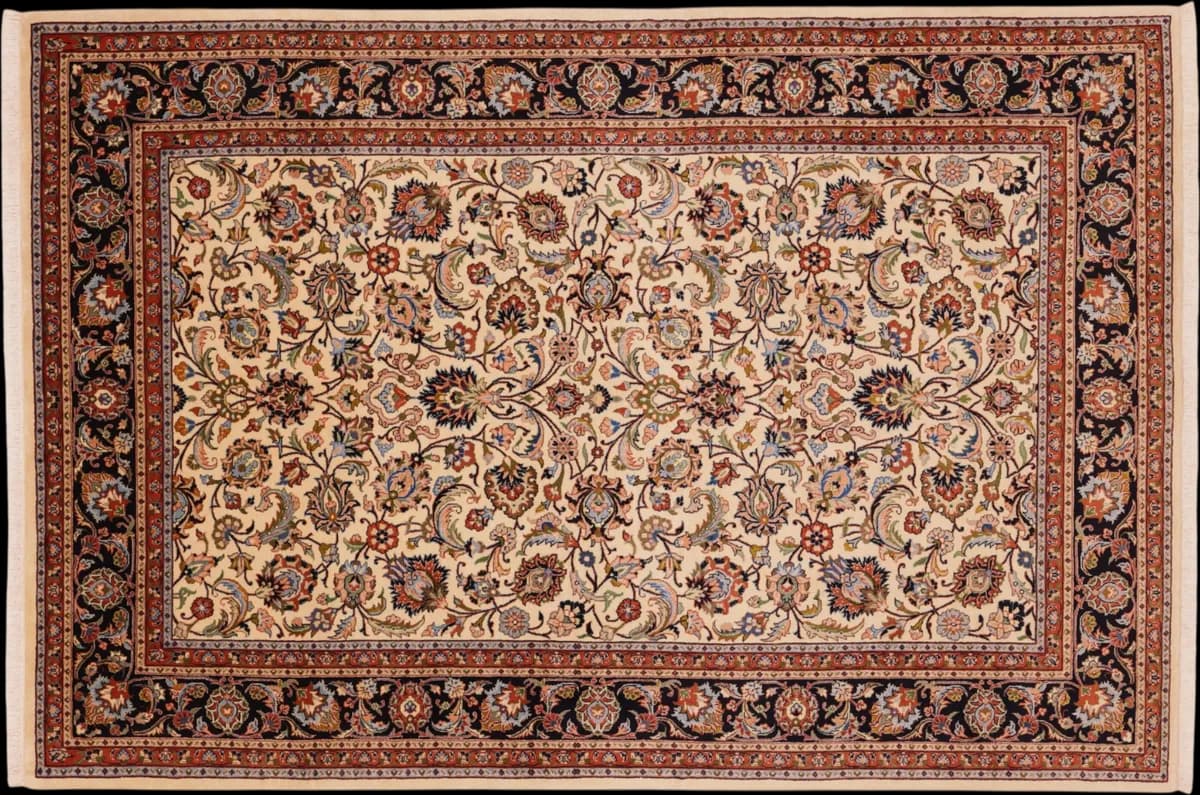
Khorasan
293 × 197 cm
4.950 €
504 €
Incl. VAT
In Stock · Ready to Ship
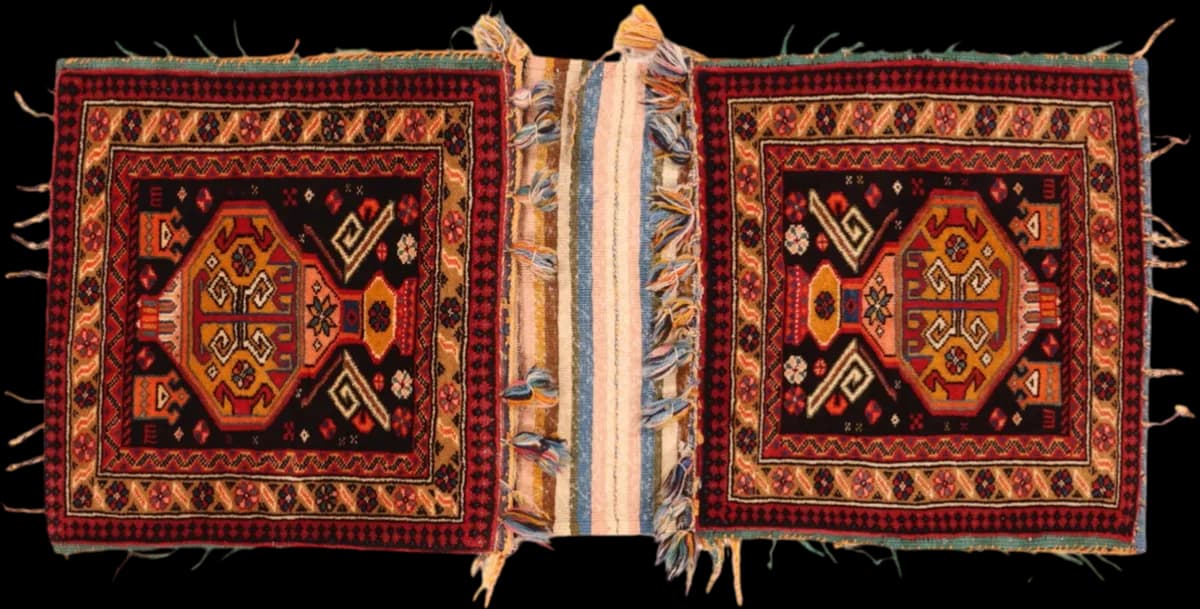
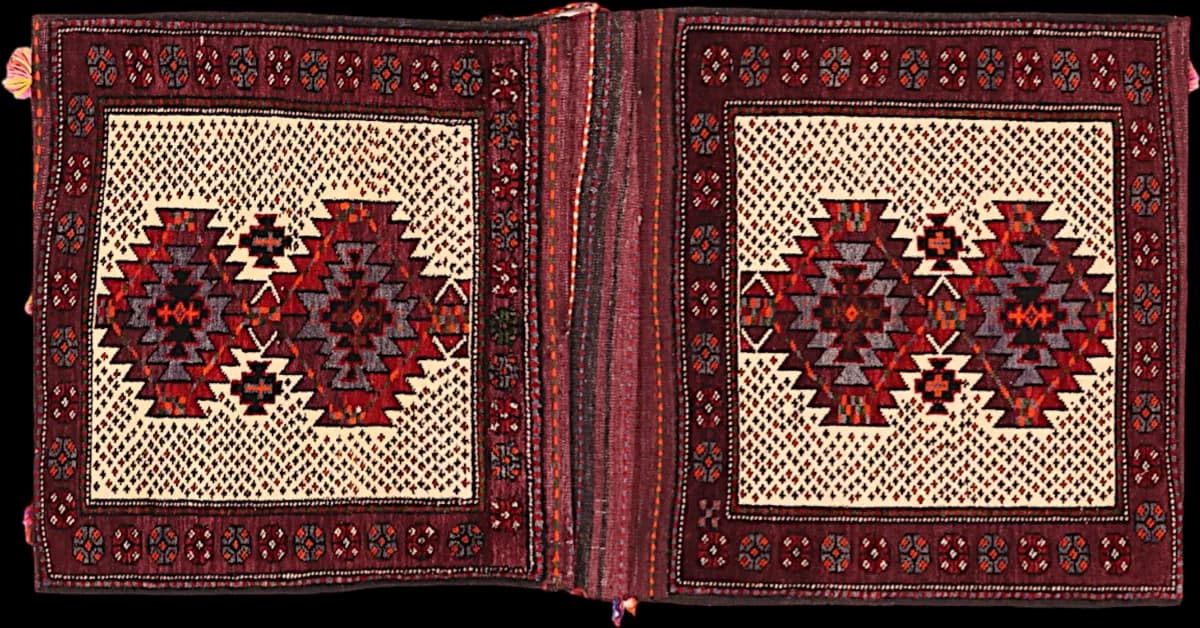
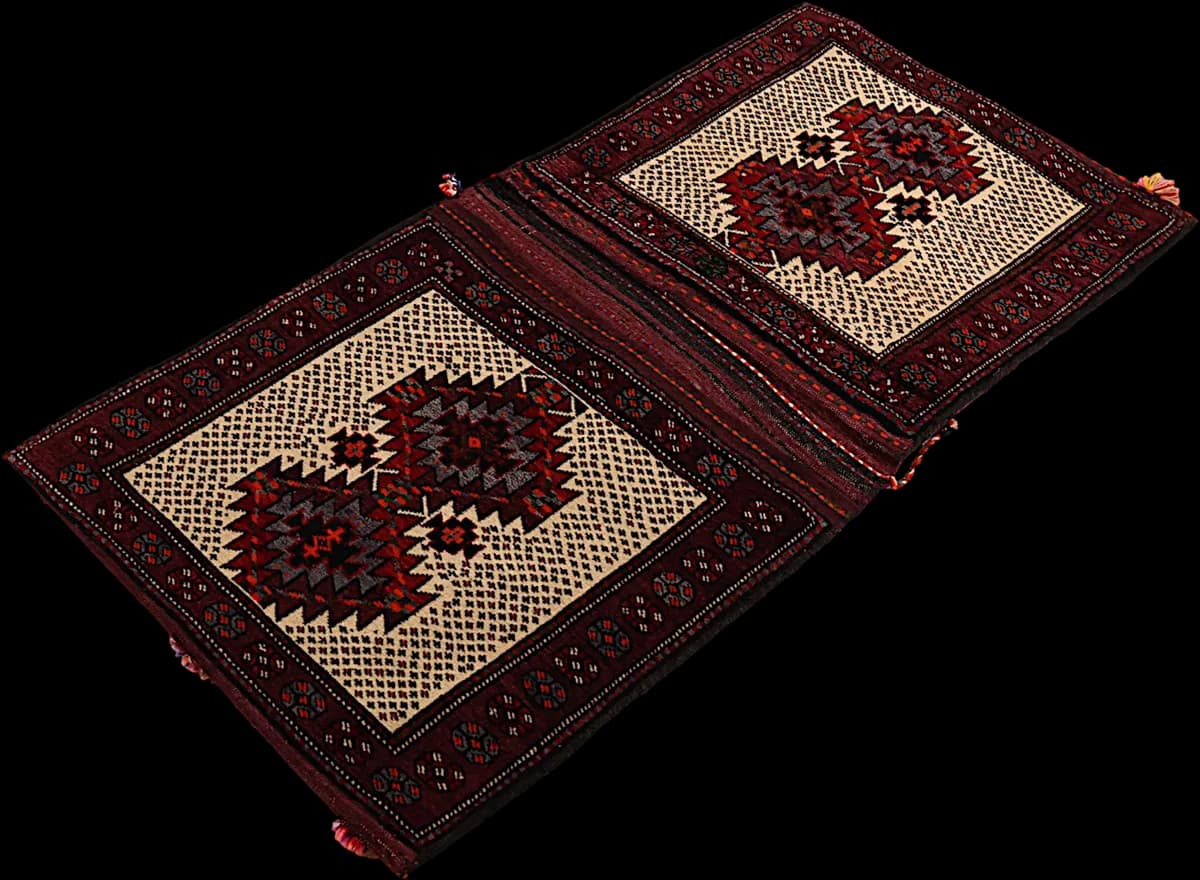
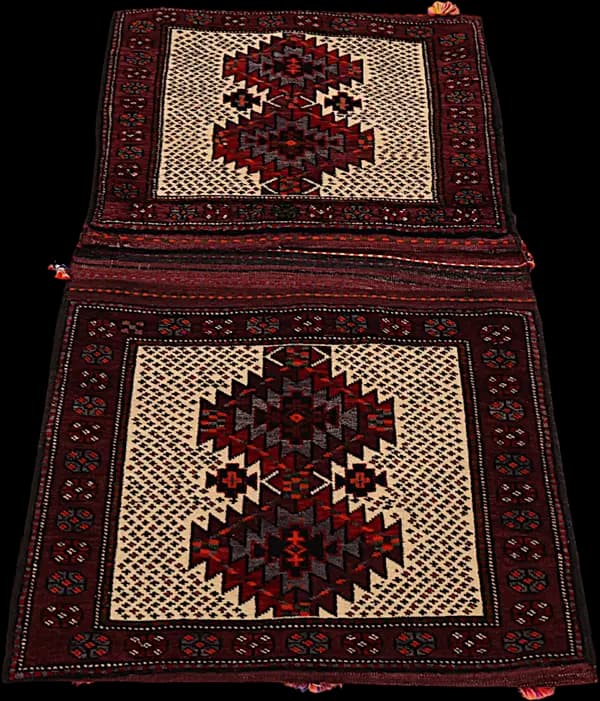
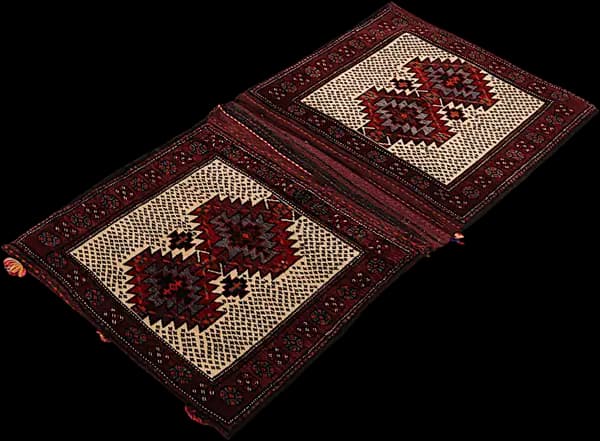
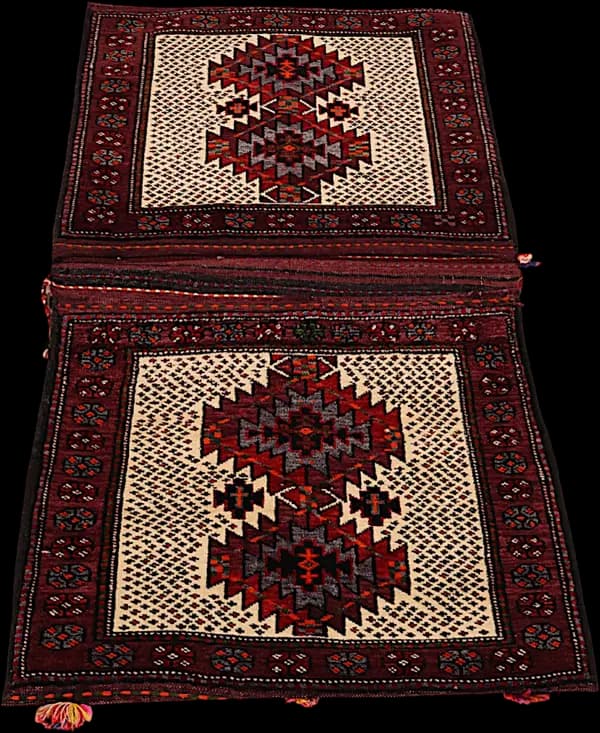
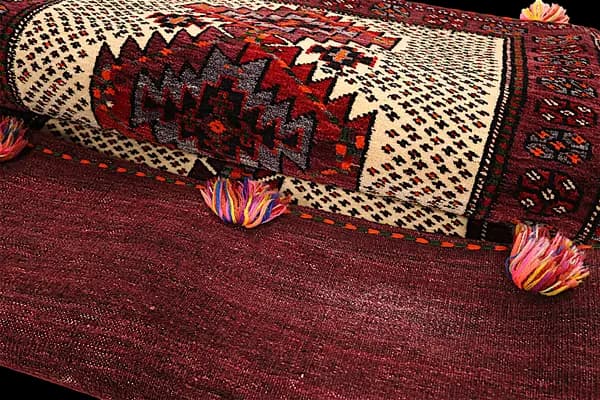
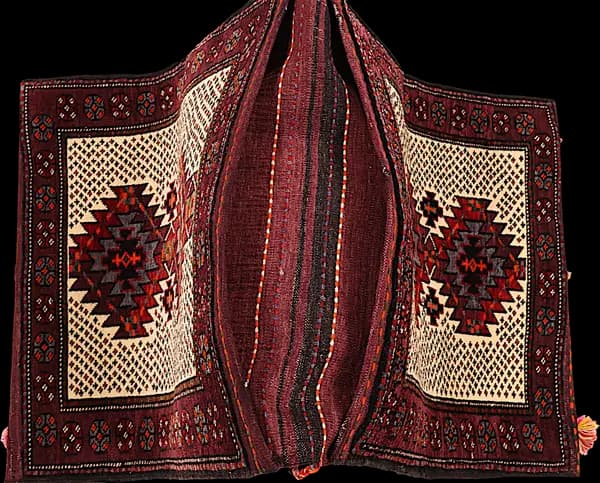
This is a khorjin, the paired face of a nomadic saddlebag from Khorasan in Iran's northeast, at 117 x 59 cm (3'10" x 1'11"). Khorasan is best known for its city carpets, vast medallion compositions worked at a monumental scale for grand rooms. Here that same instinct for pattern appears in miniature, woven by nomadic hands for a bag carried rather than a floor covered.
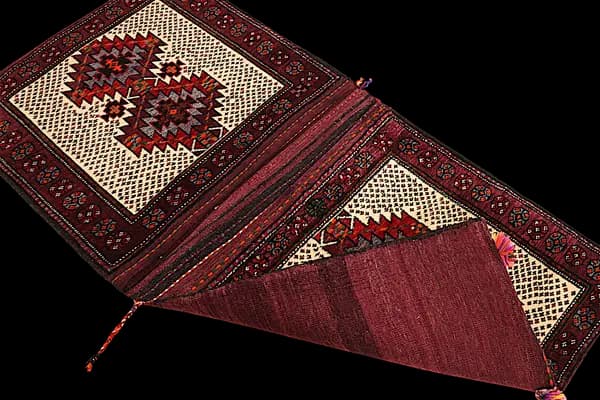
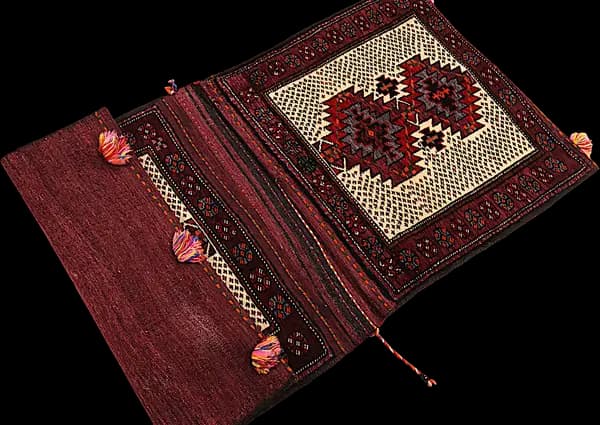
The field reads as ivory from across the room, held by two mirror-image panels set side by side. Each is packed with a fine diamond lattice scattered with small crosses, and through it runs a chain of stacked, stepped medallions in madder red, slate blue-grey and touches of rust. A narrow burgundy-red border, filled with small octagonal rosettes, frames each panel and pulls the eye back in from the pale ground. Between the two sits a plain flatwoven strip, striped, threaded with tiny orange and blue accents, the join where two matching panels once became one bag.
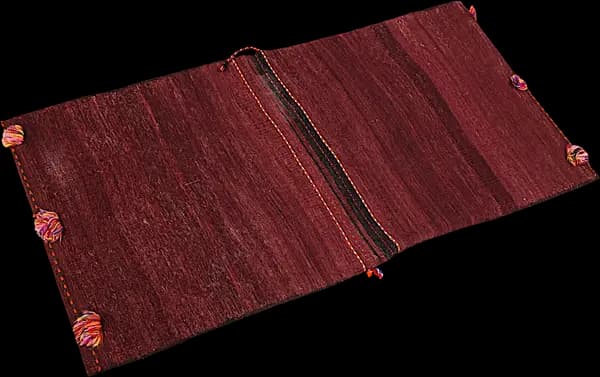
The knotting is fine for a nomadic weaving, 128,000 to 160,000 knots per square metre, which is what allows a lattice this crisp and rosettes this small to hold their shape rather than blur. The pile is hand-spun wool on a cotton warp, clipped to 12 millimetres, dense enough to give the surface a faint ribbed texture under the light. The central strip, by contrast, is flat and plain woven, the practical seam of a bag rather than a decorated surface, and it is this shift between fine knotted pattern and plain functional weave that marks the piece as something once carried, not commissioned for a wall.
A piece this size earns its place by a door, in a study, or beside a chair where it is seen at close range rather than crossed daily. The ivory ground lifts a dark corner or a shadowed hallway with no natural light of its own, while the burgundy border holds its own against dark wood or leather nearby. Underfoot it is firm and closely packed, built for occasional footsteps rather than a busy room, and in low afternoon light the rosettes and the fine lattice catch a quiet, even sheen.
Qashqai rugs are woven by the Qashqai confederacy, a Turkic nomadic people who migrate seasonally through the Zagros Mountains of Fars Province, southwestern Iran. Constructed entirely from wool, pile, warp, and weft from the tribe's own flocks, these are among the finest nomadic rugs produced in Iran, with bold geometric diamond medallions and rich, saturated natural dyes.
Stylised animals, birds, flowers, and tribal symbols are woven freehand from memory, no cartoon or pattern paper is used. The lanolin-rich wool from Qashqai grazing routes produces a distinctive natural sheen. Characteristic red or brown dyed wefts and barber-pole selvages are reliable identifiers.
Traditional weave
At 117 × 59 cm (0.69 m²) this is a small rug. It works beside a bed, in a reading corner, in front of a fireplace or as a mat by a door. It does not furnish a room; it makes a point in one.
Yes, knotted by hand — knot by knot on a loom, not machine-made. The density is 128,000 to 160,000 knots per square metre; across 0.69 m² that is roughly 90,000 to 110,000 individual knots, every one of them tied by hand.
Hand-spun wool still carries its own lanolin, which keeps liquid sitting on the surface for a moment: blot quickly, with clear water and a light cloth, working inwards and without rubbing. Otherwise regular vacuuming along the pile is enough. Turn the rug once or twice a year so light and footfall reach it evenly.
We are in the Hamburg Speicherstadt. Come and see this rug in daylight, or write to us — a person answers.
Certificate included verifying origin, materials, and craftsmanship.
Ref: 947841