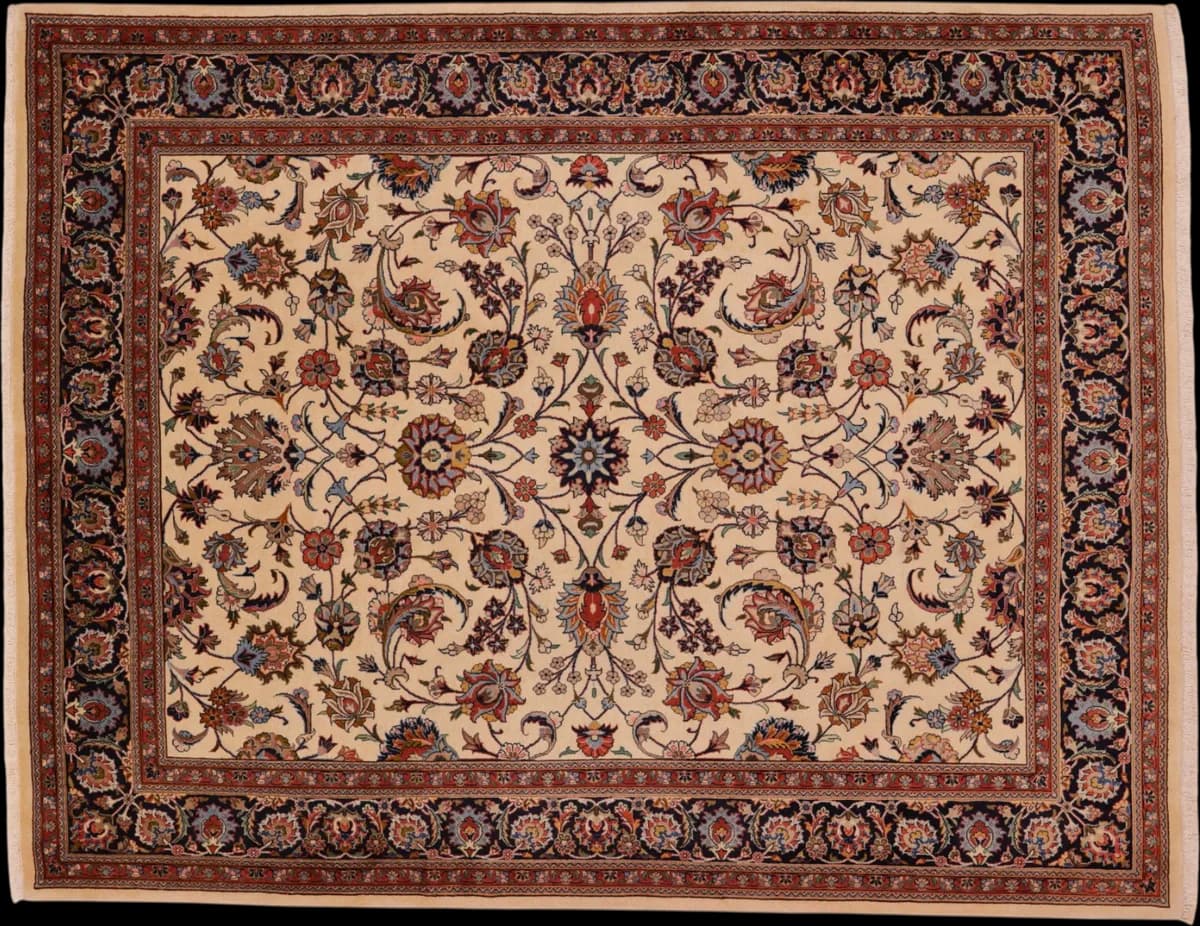
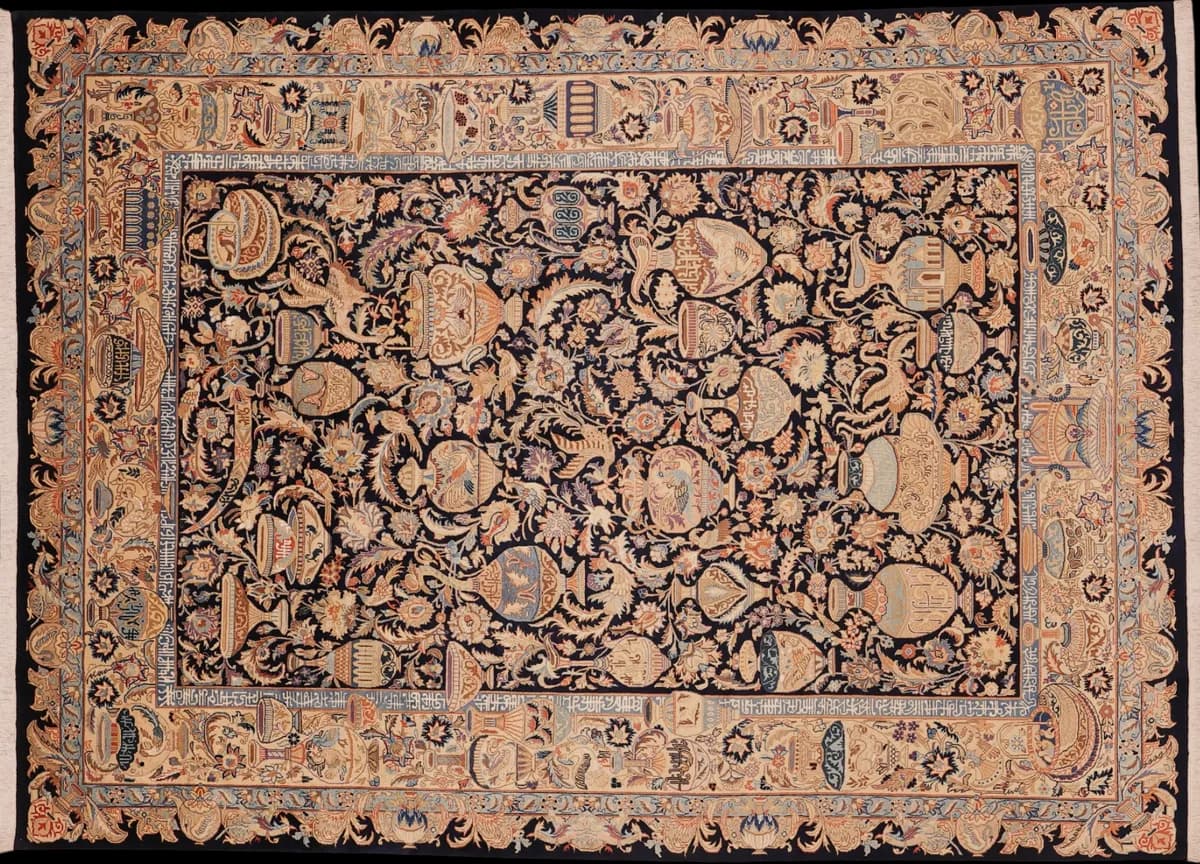
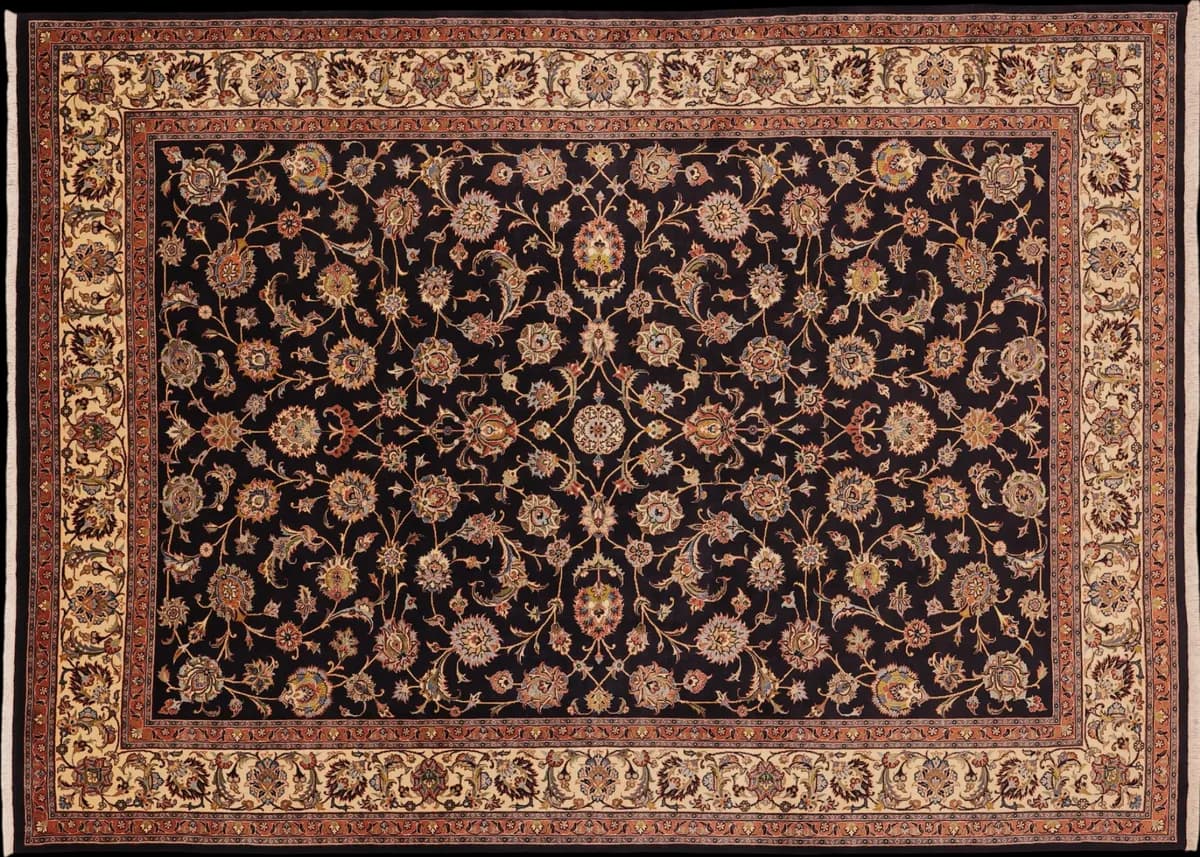
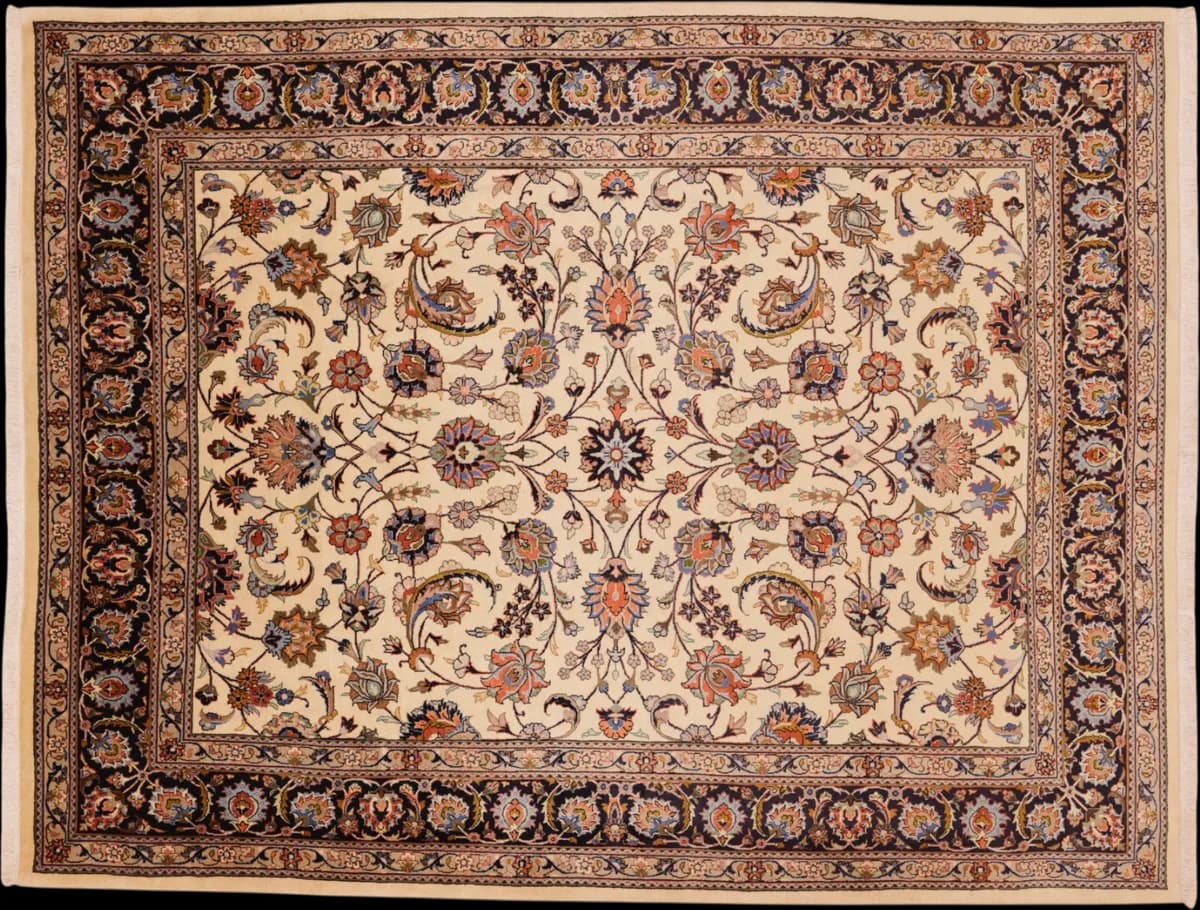
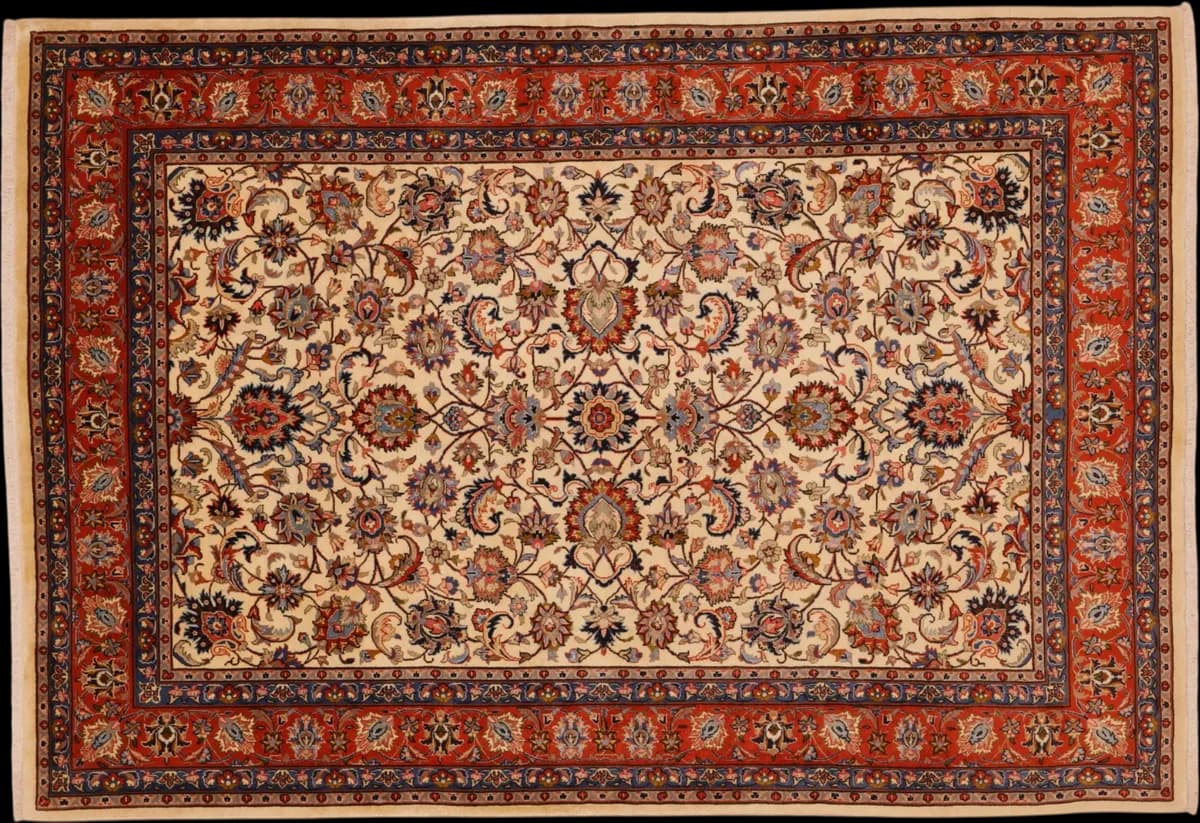
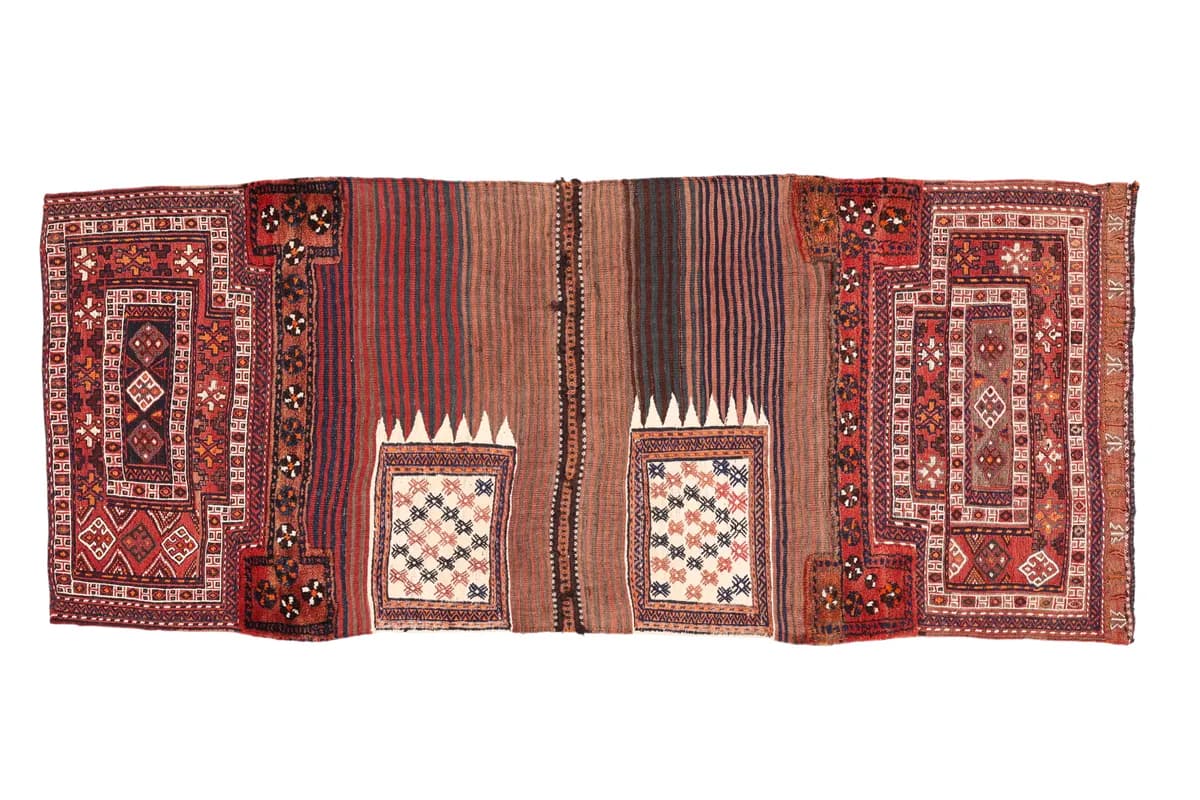
Khorasan
344 × 242 cm
6.000 €



515 €
Incl. VAT
In Stock · Ready to Ship
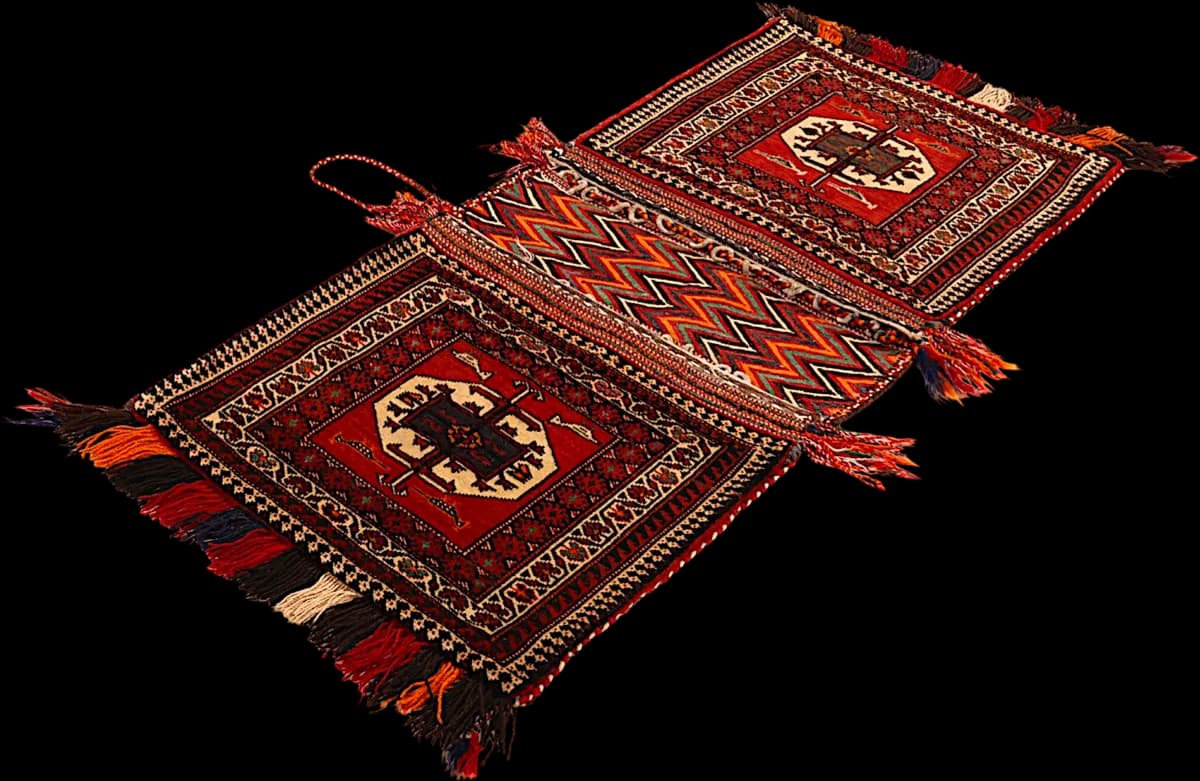
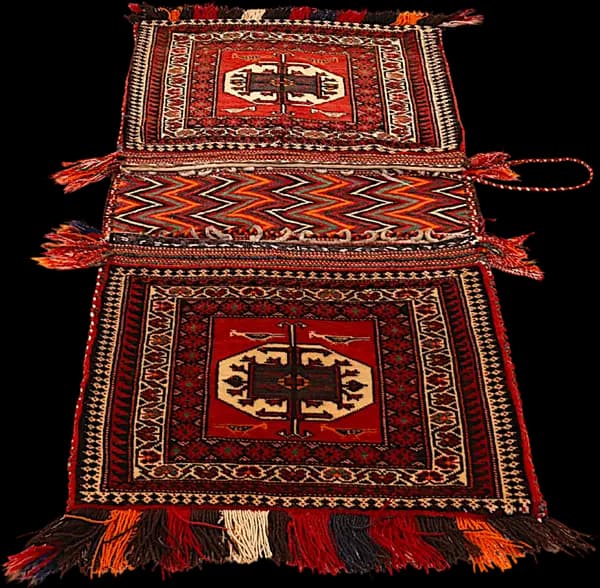
This is a khorjin, a pair of nomadic bag faces from Khorasan in northeastern Iran, also known by its old capital as Meshed, 133 x 66 cm (4'4" x 2'2"). Khorasan's looms are known for grand medallion carpets in red and blue; here that vocabulary sits on a saddle bag small enough to travel, its two faces still joined as woven.
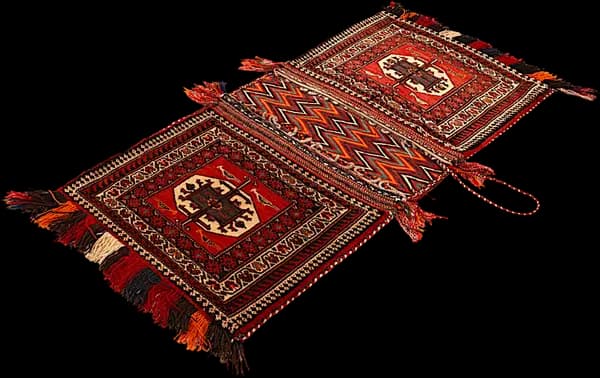
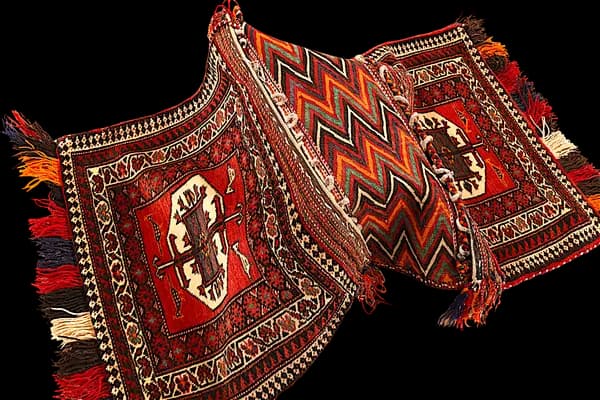
A deep brick red covers both faces, each centred on a hexagonal medallion outlined in ivory around a dark brown-black core. The two panels mirror each other precisely, held by a narrow cream border of small floral and geometric motifs. Between them runs the closure strip: a bold chevron of orange, teal, rust and cream, flat and ribbed against the soft pile either side. Fringes carry the same colours through, in rust, cream, navy and ochre.
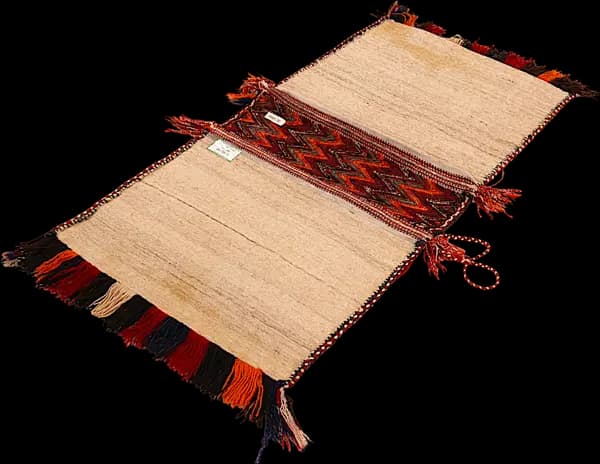
Both faces are hand-knotted in hand-spun wool on a cotton warp, at 128,000 to 160,000 knots per square metre, close enough to hold the medallion's outline crisp at this small scale. The strip joining them is flat-woven rather than knotted, built up in wide bands of colour, which is why it reads as a different textile against the pile either side. A weaver knotted the two faces separately, from memory, then wove the join by hand to unite them.
At 133 x 66 cm, this suits a hallway console or a study wall, seen up close rather than crossed on foot. Against pale walls, the brick red holds its warmth, and the zigzag strip is the first thing any eye finds. The wool pile stays dense and firm at this scale. Light crossing the ribbed band shifts its rust, teal and ochre through the day.
Qashqai rugs are woven by the Qashqai confederacy, a Turkic nomadic people who migrate seasonally through the Zagros Mountains of Fars Province, southwestern Iran. Constructed entirely from wool, pile, warp, and weft from the tribe's own flocks, these are among the finest nomadic rugs produced in Iran, with bold geometric diamond medallions and rich, saturated natural dyes.
Stylised animals, birds, flowers, and tribal symbols are woven freehand from memory, no cartoon or pattern paper is used. The lanolin-rich wool from Qashqai grazing routes produces a distinctive natural sheen. Characteristic red or brown dyed wefts and barber-pole selvages are reliable identifiers.
Traditional weave
At 133 × 66 cm (0.88 m²) this is a small rug. It works beside a bed, in a reading corner, in front of a fireplace or as a mat by a door. It does not furnish a room; it makes a point in one.
Yes, knotted by hand — knot by knot on a loom, not machine-made. The density is 128,000 to 160,000 knots per square metre; across 0.88 m² that is roughly 110,000 to 140,000 individual knots, every one of them tied by hand.
Hand-spun wool still carries its own lanolin, which keeps liquid sitting on the surface for a moment: blot quickly, with clear water and a light cloth, working inwards and without rubbing. Otherwise regular vacuuming along the pile is enough. Turn the rug once or twice a year so light and footfall reach it evenly.
We are in the Hamburg Speicherstadt. Come and see this rug in daylight, or write to us — a person answers.
Certificate included verifying origin, materials, and craftsmanship.
Ref: 429582