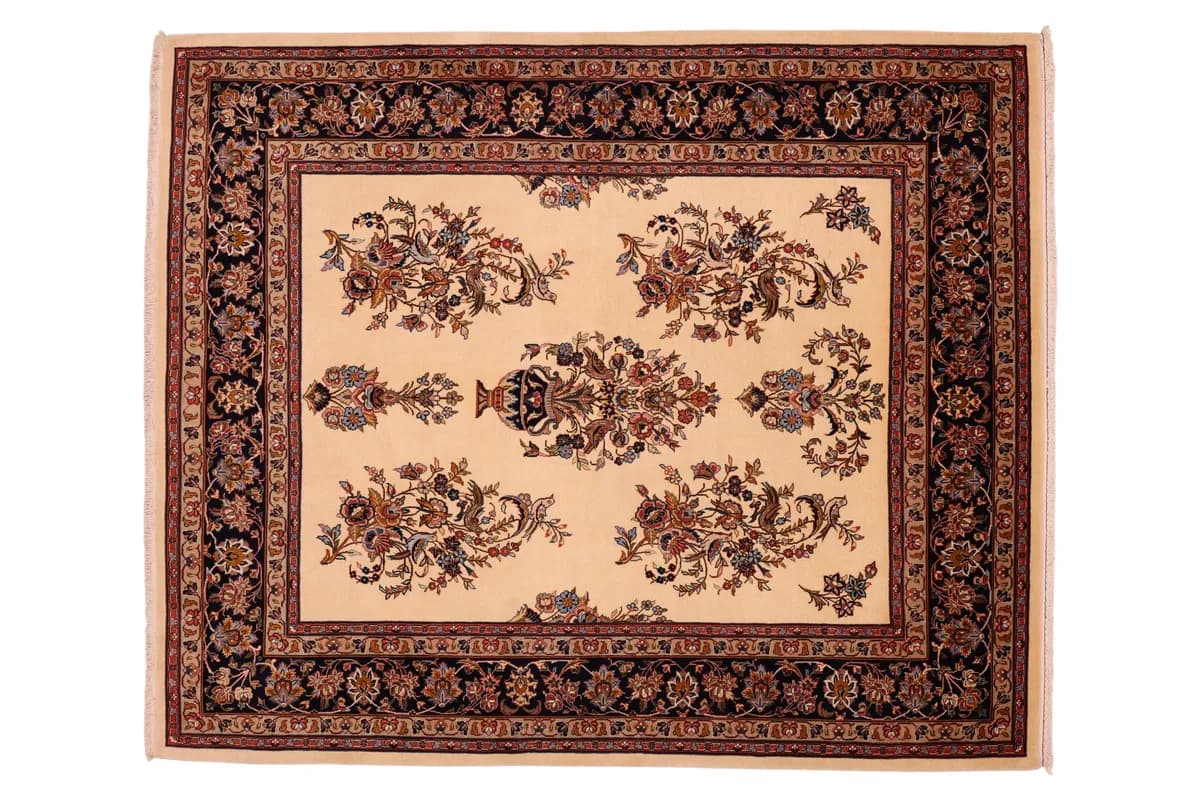
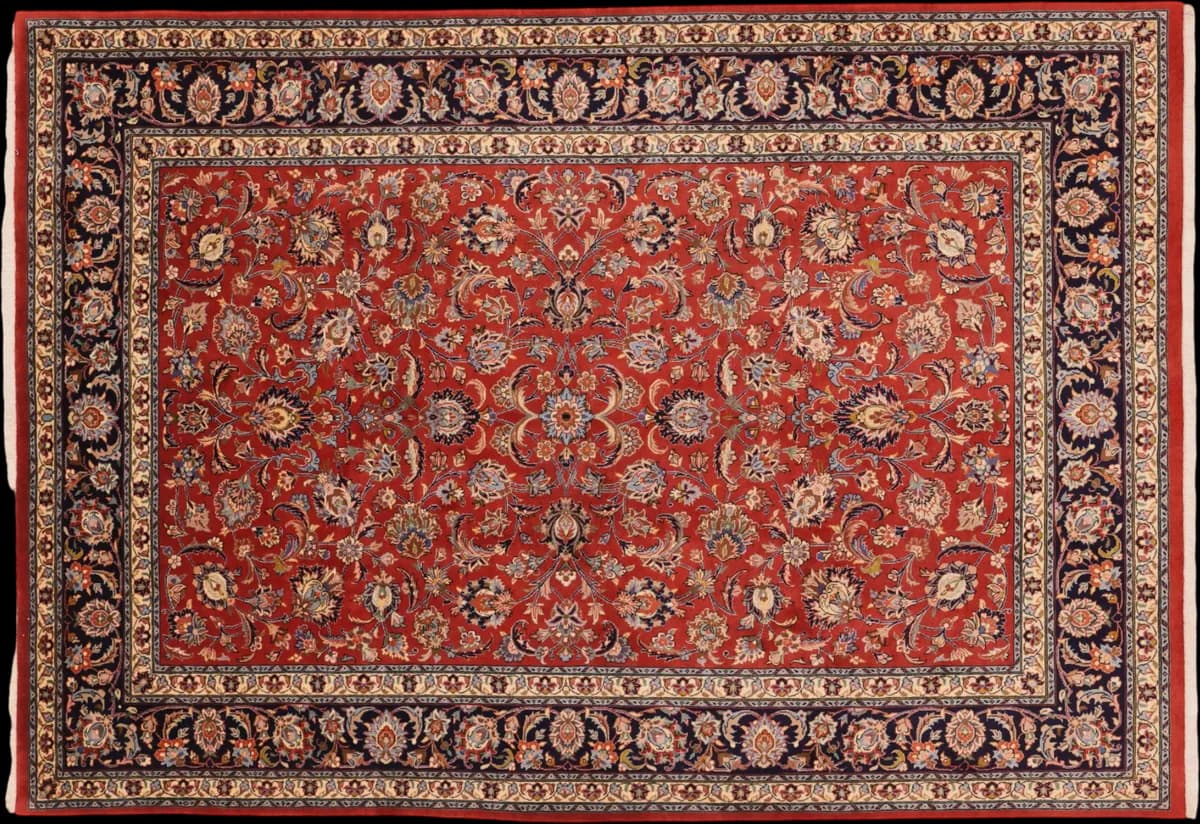
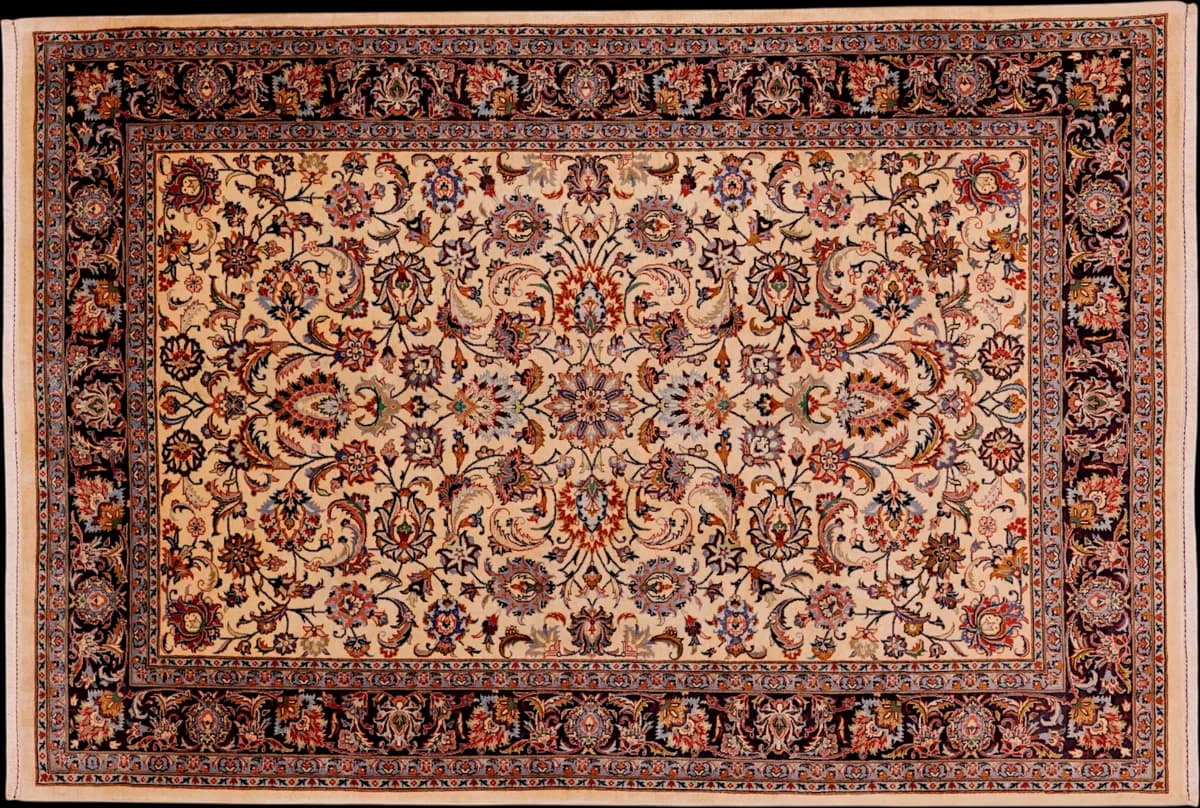
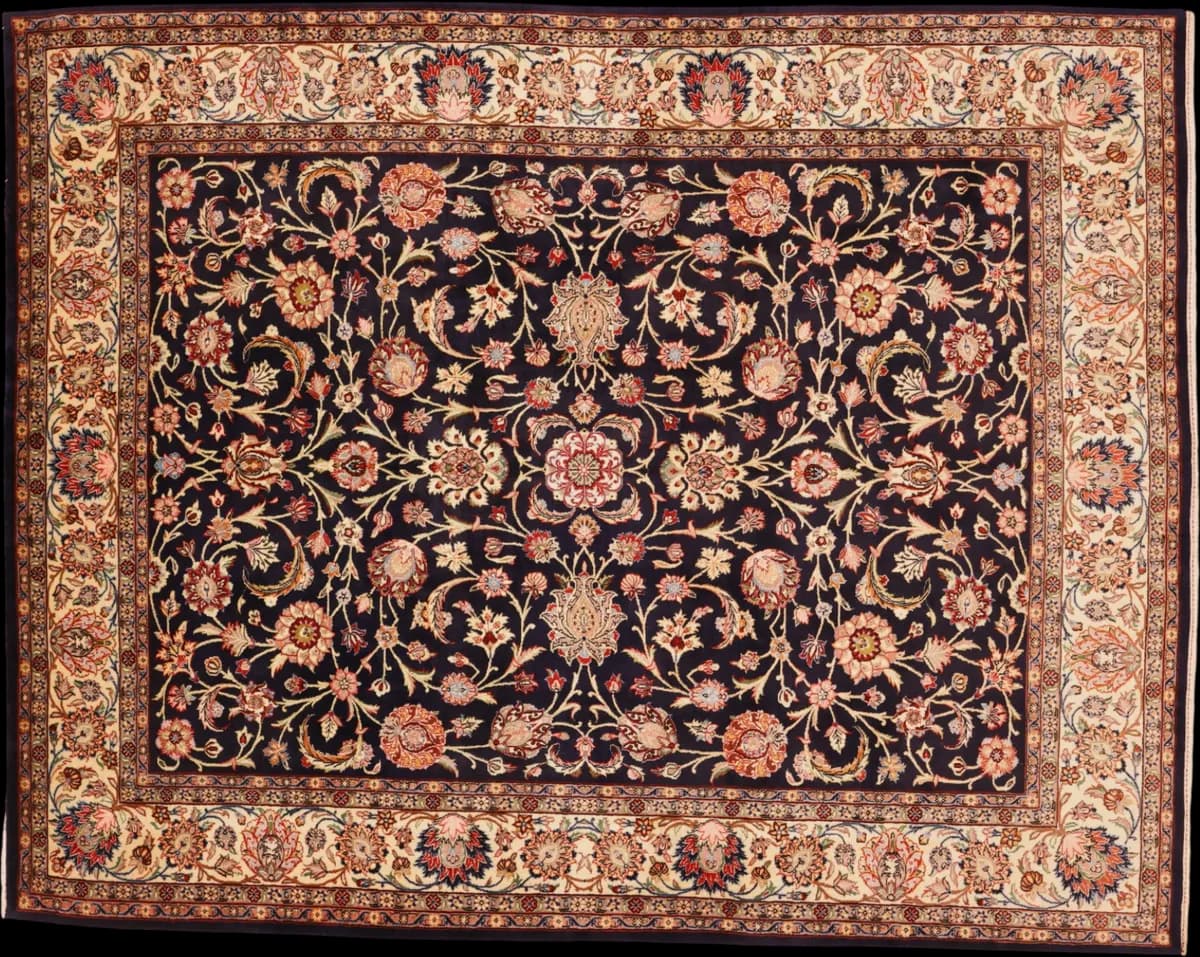
Khorasan
345 × 245 cm
6.600 €






1.650 €
Incl. VAT
In Stock · Ready to Ship
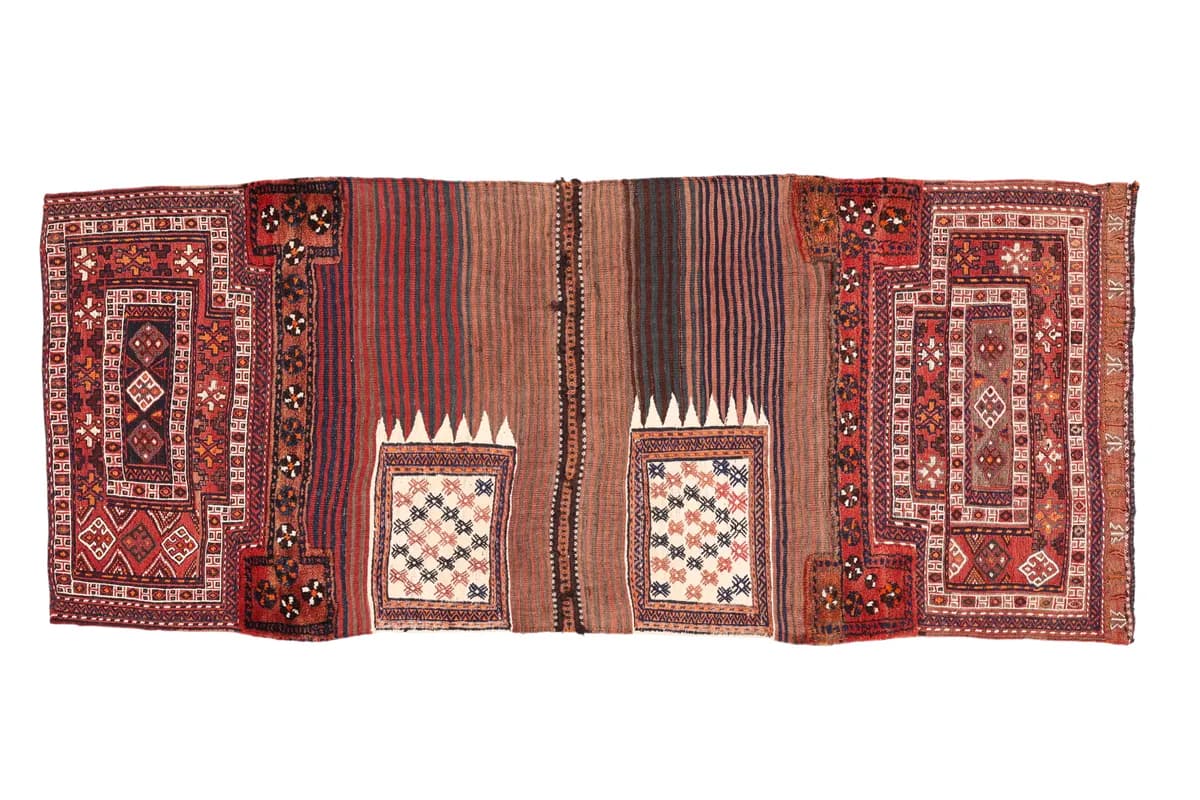
This is a khorjin, a nomadic double saddlebag, 242 x 100 cm (7'11" x 3'3"), from the weaving region of Khorasan in northeast Persia, also spelled Khorassan. Khorasan is best known for large medallion carpets with Herati-inspired patterns and a palette that balances strong red with deep blue. Here that same grand vocabulary has been put to a far smaller, working purpose.
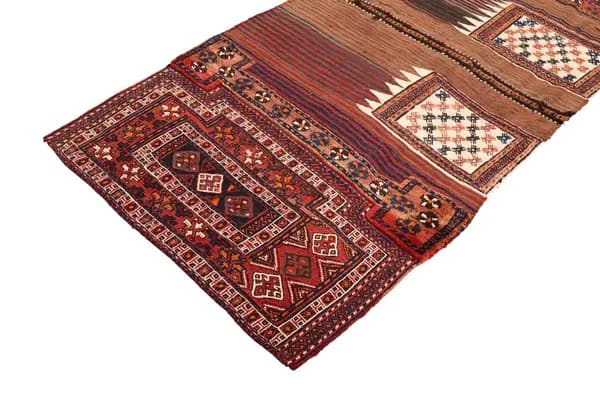
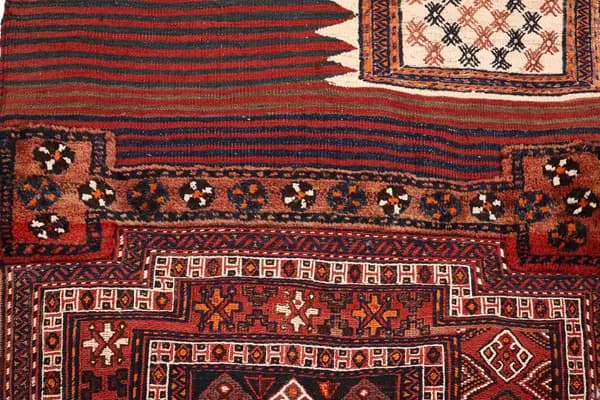
The overall impression is a deep brick red, broken at the centre by sandy brown stripes. Two knotted panels sit at either end, each carrying a stacked column of navy diamond medallions on a red ground. Between them runs a wide flatwoven strip in stripes, set with ivory diamond-lattice squares edged in a sawtooth line, so the panels read almost like pockets stitched onto the surface. A narrow red border of white-outlined rosettes frames the knotted ends, framed in turn by a dark blue geometric step pattern.
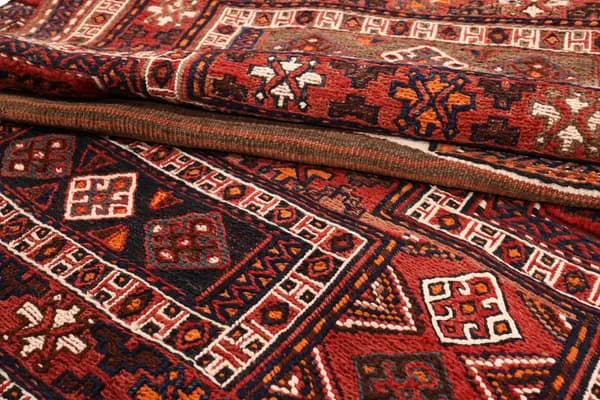
The two bag faces are hand-knotted in wool, hand-spun rather than machine-spun, on a cotton warp, which gives the medallions their firm edge and short, even pile. The centre section is not knotted but flatwoven, strip by strip, which is why the diamond-lattice squares sit flat and graphic rather than raised, closer to woven cloth than pile carpet. At six millimetres the whole piece stays thin and pliable, built for carrying rather than display, forty to sixty years old and still sound.
This piece suits a hallway or landing, laid flat or hung on a wall so the two bag faces read as a pair. The brick red warms a pale floor and holds its own against dark furniture; the ivory lattice panels lift a corridor with little daylight. Underfoot, the knotted ends are dense and firm, the flatwoven centre flatter and smoother. Through the day, the rust-orange accents keep catching the light differently.
Qashqai rugs are woven by the Qashqai confederacy, a Turkic nomadic people who migrate seasonally through the Zagros Mountains of Fars Province, southwestern Iran. Constructed entirely from wool, pile, warp, and weft from the tribe's own flocks, these are among the finest nomadic rugs produced in Iran, with bold geometric diamond medallions and rich, saturated natural dyes.
Stylised animals, birds, flowers, and tribal symbols are woven freehand from memory, no cartoon or pattern paper is used. The lanolin-rich wool from Qashqai grazing routes produces a distinctive natural sheen. Characteristic red or brown dyed wefts and barber-pole selvages are reliable identifiers.
Traditional craftsmanship
At 242 × 100 cm (2.42 m²) this is a runner. It belongs in a hallway, an entrance, on a landing or lengthways beside a bed. It is too narrow for the middle of a room.
No — this piece is hand-woven, not knotted. A flatweave has no pile: the pattern comes from warp and weft alone. That makes it thin, light and usable on both sides, and it is a technique in its own right rather than a simpler version of a knotted rug.
Vacuum regularly, ideally along the weave and without a rotating brush. A flatweave can be turned over, which spreads the wear — flip it once or twice a year. Blot spills at once with clear water and a light cloth, working inwards, and never rub.
We are in the Hamburg Speicherstadt. Come and see this rug in daylight, or write to us — a person answers.
Certificate included verifying origin, materials, and craftsmanship.
Ref: 562041