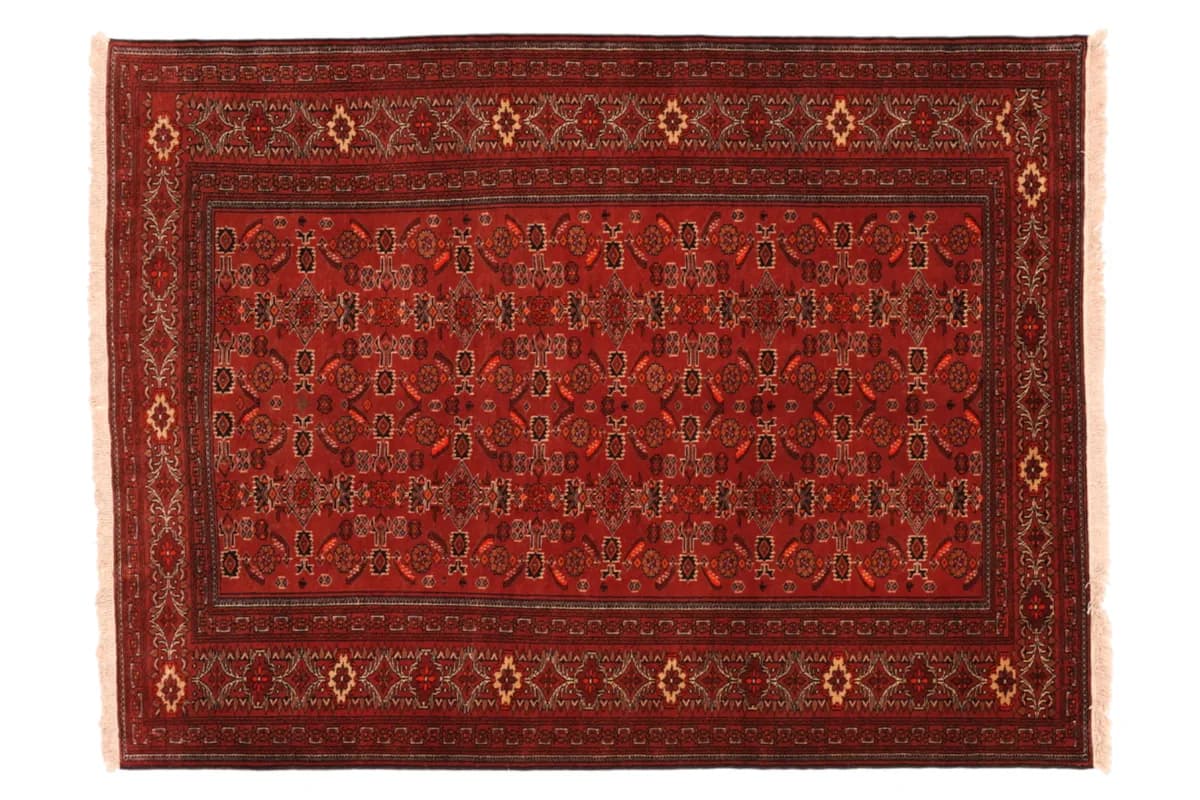
Turkaman
163 × 123 cm
2.040 €







730 €
Incl. VAT
In Stock · Ready to Ship
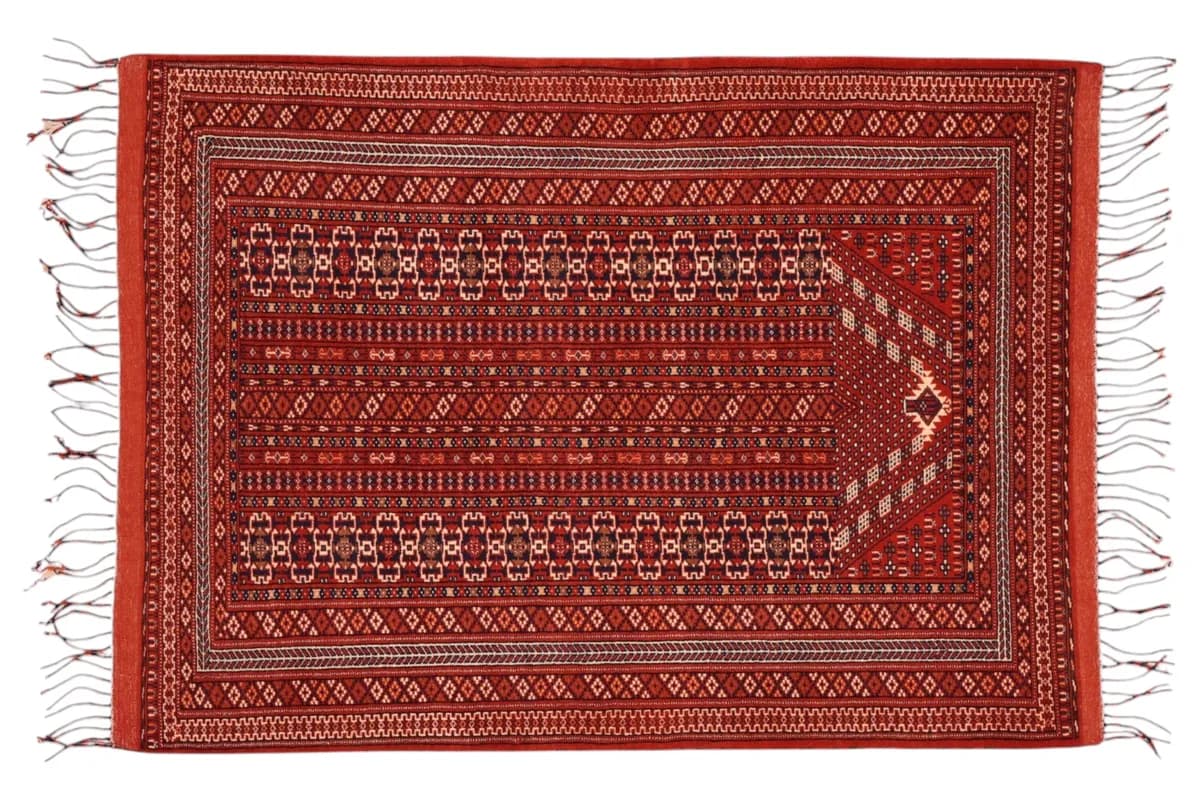
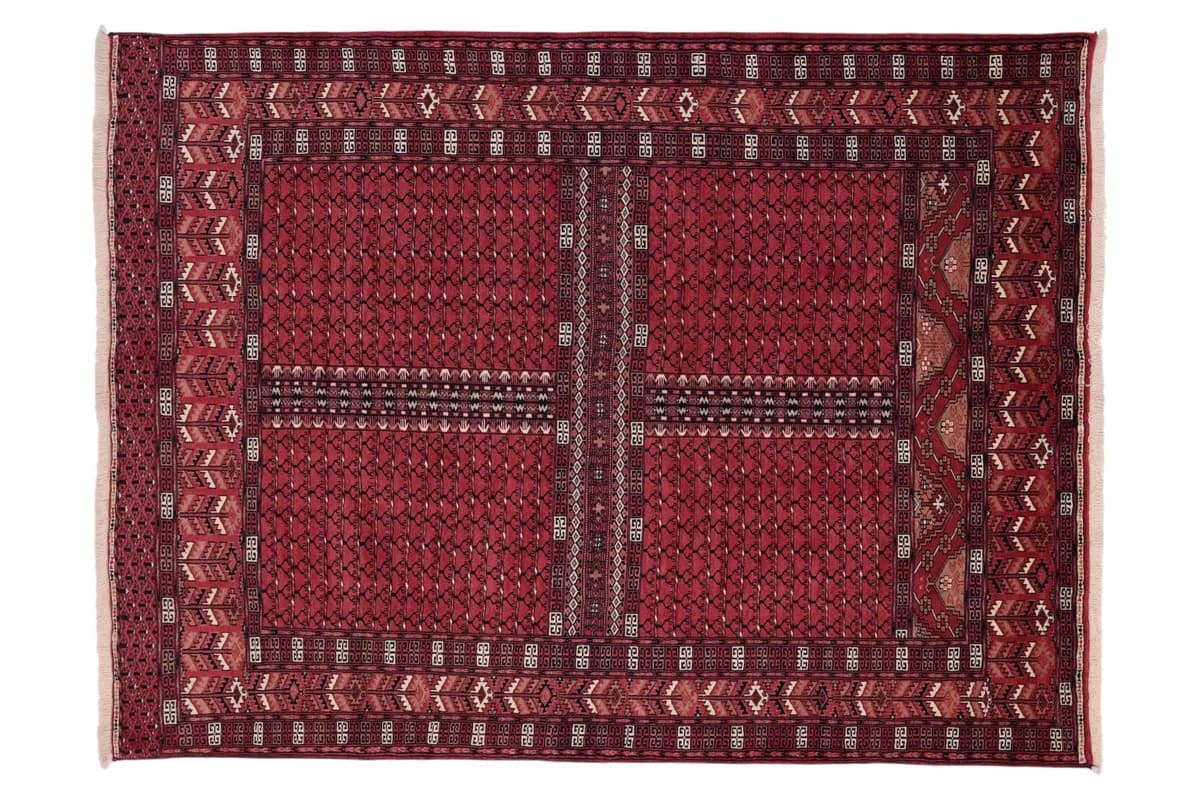
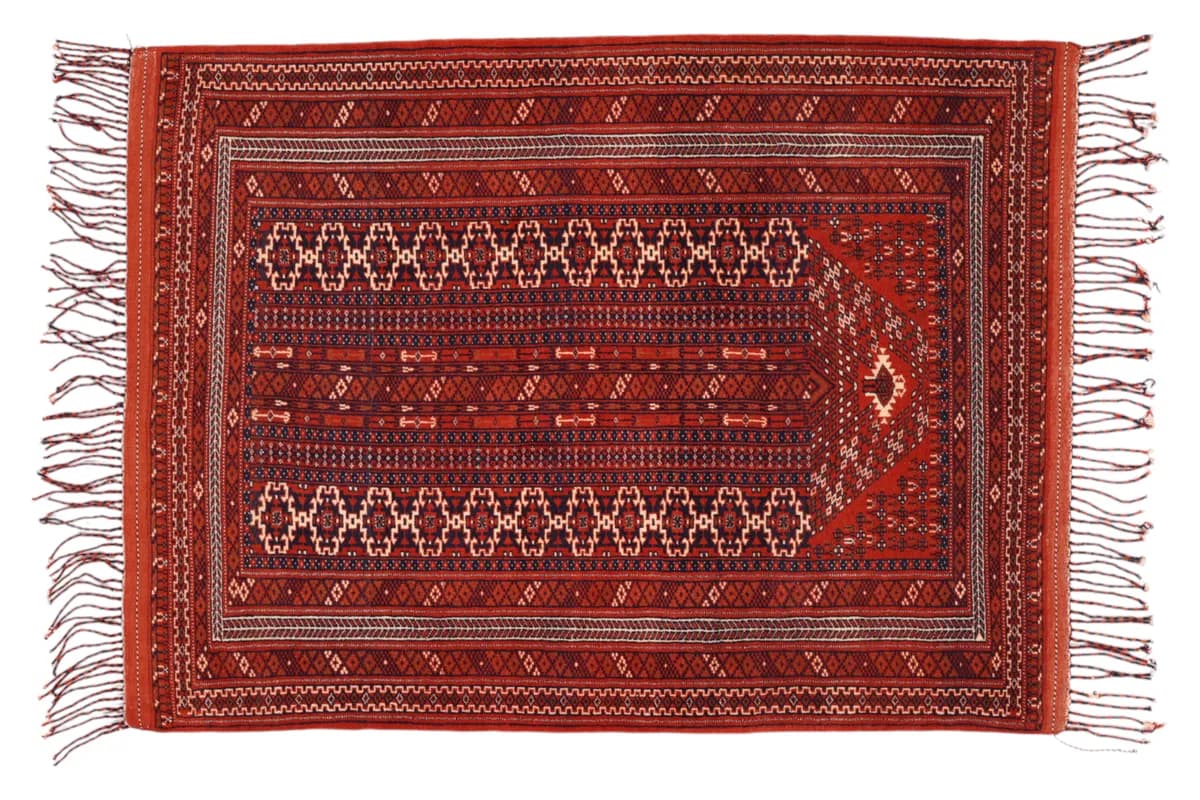
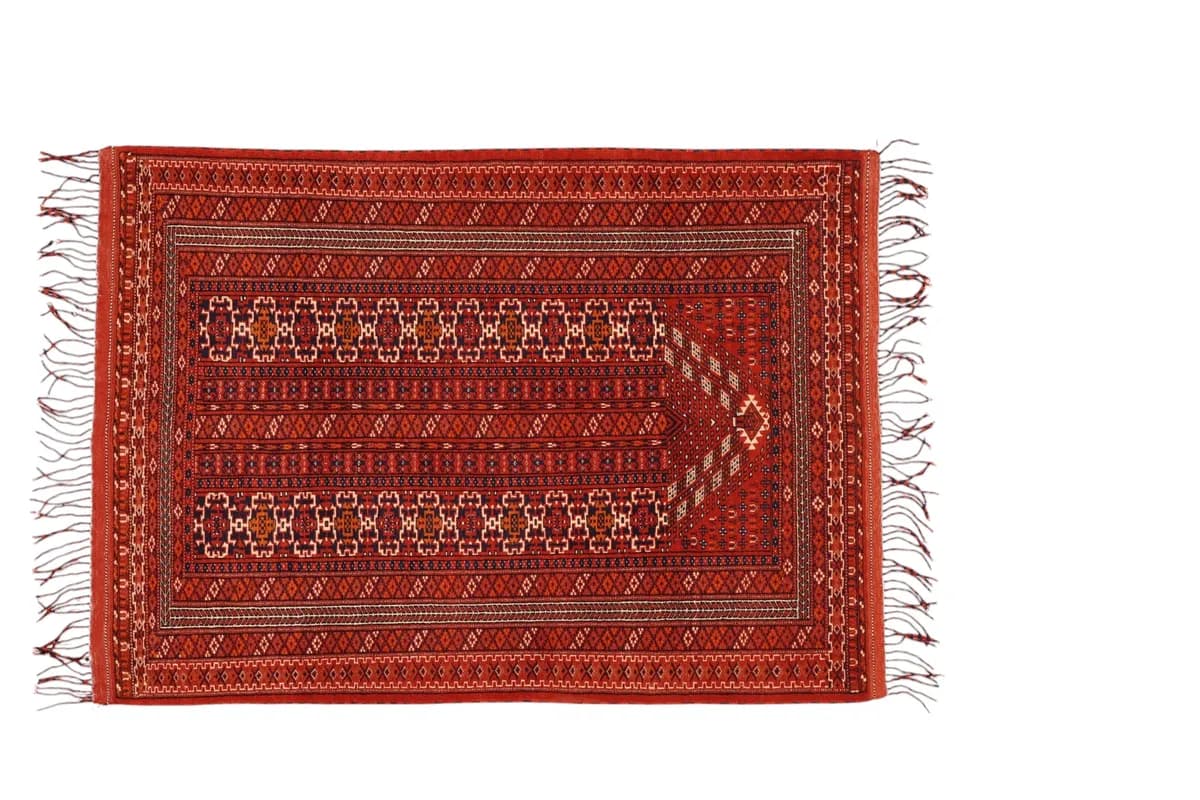
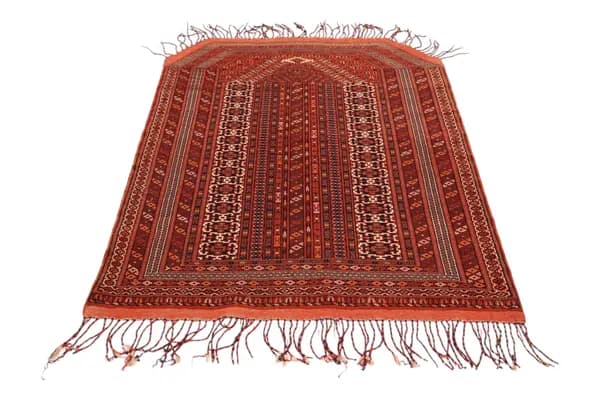
This is a Turkoman rug, hand-knotted in the Turkoman weaving tradition of Iran, measuring 141 x 108 cm (4'7" x 3'6"). Turkoman weavers — also written Turkmen — are best known for the repeating gul medallions that cover their rugs edge to edge on a deep red ground, each gul a mark of clan identity, knotted from memory rather than from any drawn plan. This piece takes a different course.
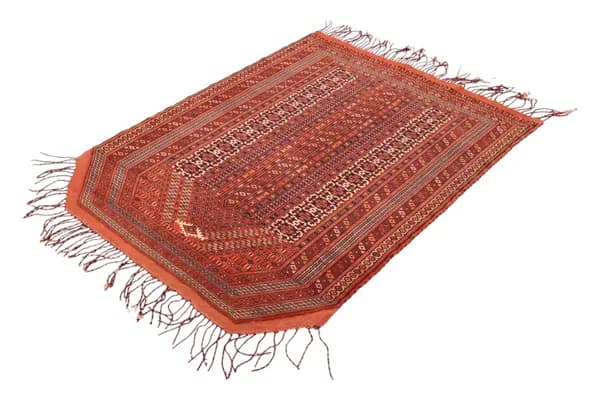
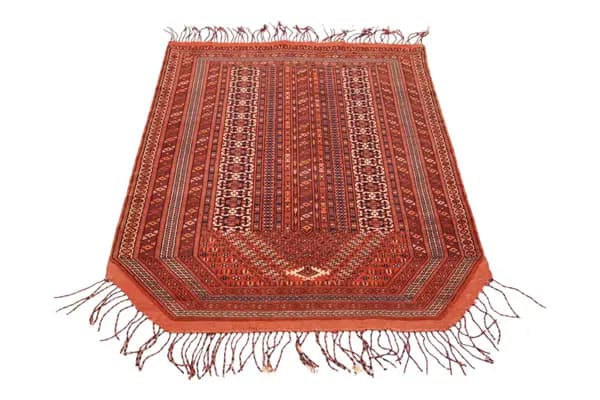
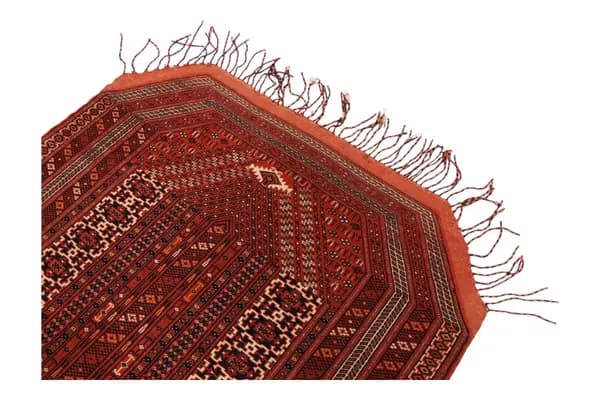
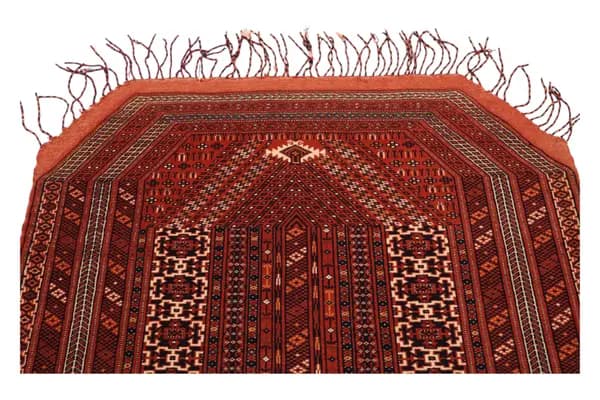
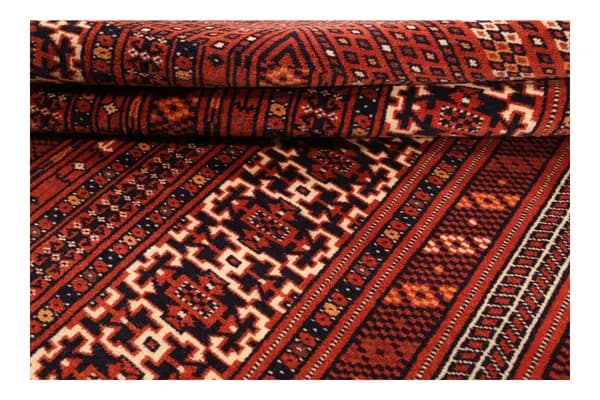
A deep rust-red ground carries the eye toward one end, where the field draws itself into an elongated hexagonal shape — a prayer niche, or mihrab, built from concentric horizontal bands. Ivory diamond-lattice panels alternate with narrower rust bands filled with tiny geometric motifs, the whole tapering steadily to a point marked by a small diamond medallion. Dark navy-black accents sharpen the lattice octagons, and scattered touches of orange and mustard warm the ivory ground, while a soft grey-green guard stripe runs quietly near the border. A wide rust-terracotta border, framed by several narrow geometric guard stripes, closes the design without breaking from its tone.
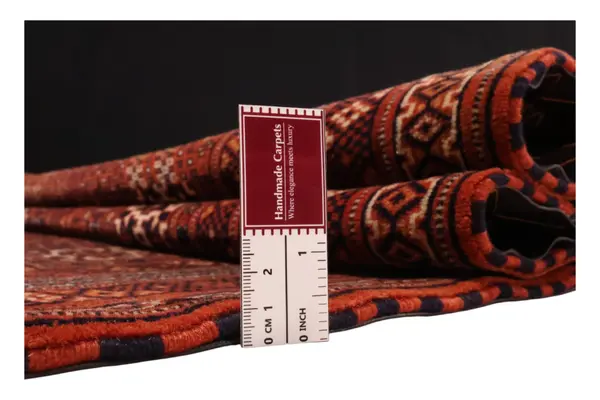
The rug is knotted by hand in wool spun by hand, on a cotton warp, at a density of between 441,000 and 500,000 knots per square metre — fine enough that the lattice bands hold their edges and the niche narrows cleanly to its point rather than blurring into the rust ground around it. The pile is clipped to 6 millimetres, close enough to keep the surface flat and tightly banded, so the geometry reads with the precision of a drawing rather than the softness of a deep pile. For a rug this size, that density still means weeks of close, concentrated work at the loom, band by band, to keep the niche true.
This is a rug for a small, well-used spot: a study floor, the space by a front door, or a hallway landing, somewhere that needs to hold its own underfoot every day. The rust ground sits comfortably against dark wood or pale floorboards alike, and the ivory lattice keeps the design bright even where daylight is thin. The pile is dense and firm rather than deep, so it takes daily footfall well and asks for no special care. What stays with you is the shape itself — that pointed niche narrowing to its small medallion, catching the light a little differently morning and evening, an unusually architectural read for a Turkoman rug that most often simply repeats.
More on Turkmen rugs: origin, making and how to recognise a genuine piece
Exceptionally fine weave
At 141 × 108 cm (1.52 m²) this is a small rug. It works beside a bed, in a reading corner, in front of a fireplace or as a mat by a door. It does not furnish a room; it makes a point in one.
Yes, knotted by hand — knot by knot on a loom, not machine-made. The density is 441,000 to 500,000 knots per square metre; across 1.52 m² that is roughly 670,000 to 760,000 individual knots, every one of them tied by hand.
Hand-spun wool still carries its own lanolin, which keeps liquid sitting on the surface for a moment: blot quickly, with clear water and a light cloth, working inwards and without rubbing. Otherwise regular vacuuming along the pile is enough. Turn the rug once or twice a year so light and footfall reach it evenly.
We are in the Hamburg Speicherstadt. Come and see this rug in daylight, or write to us — a person answers.
Certificate included verifying origin, materials, and craftsmanship.
Ref: 260974