Turkaman
140 × 103 cm
691 €
658 €
Incl. VAT
In Stock · Ready to Ship
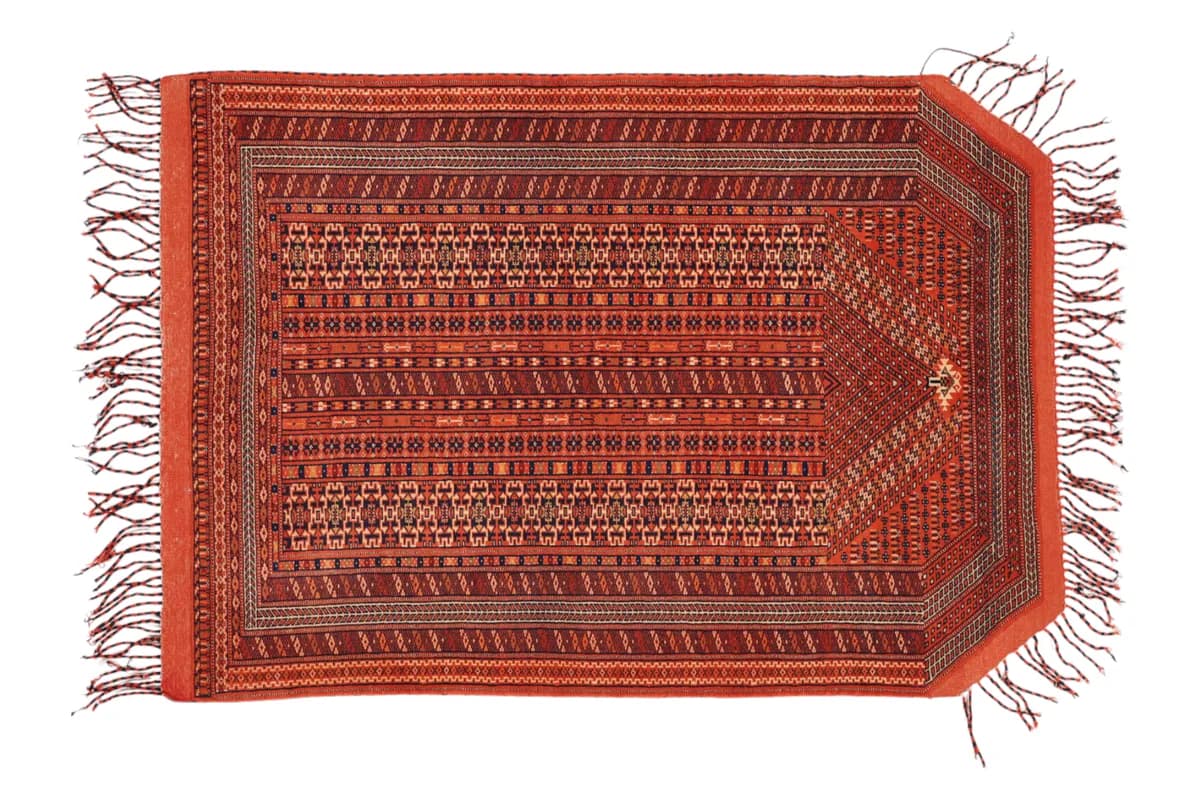
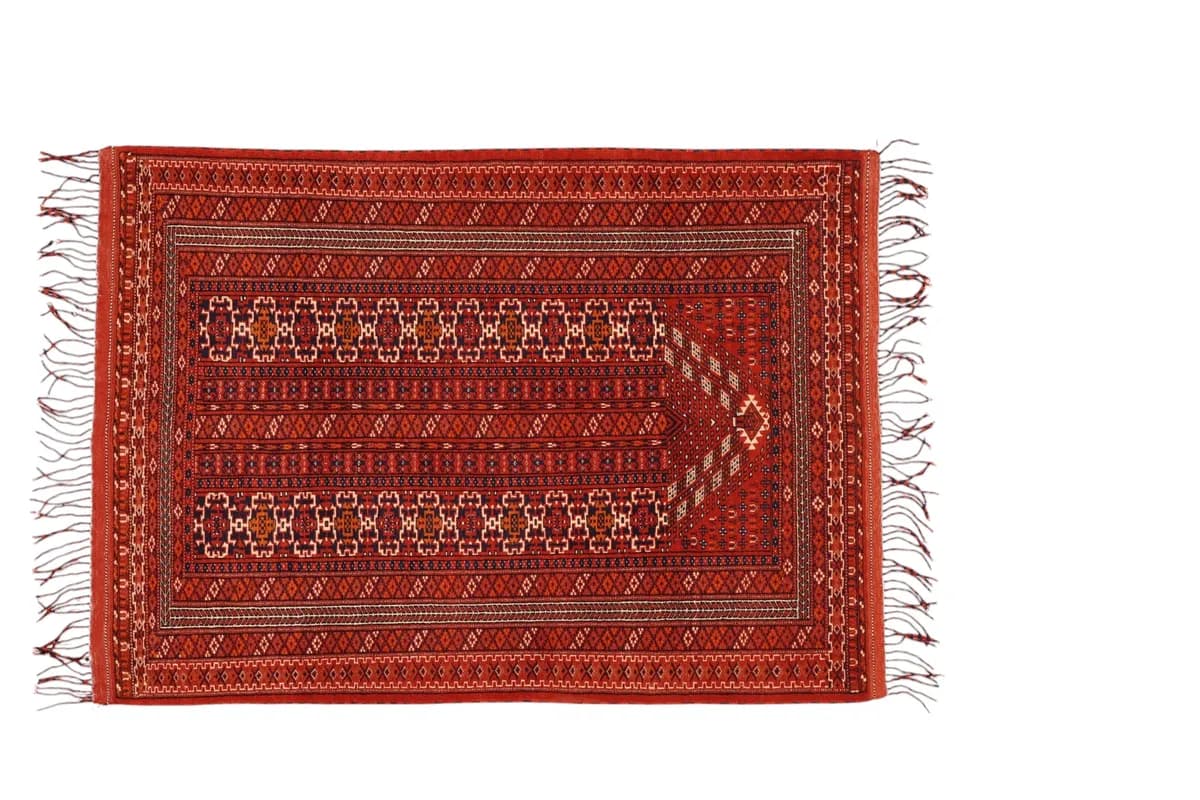
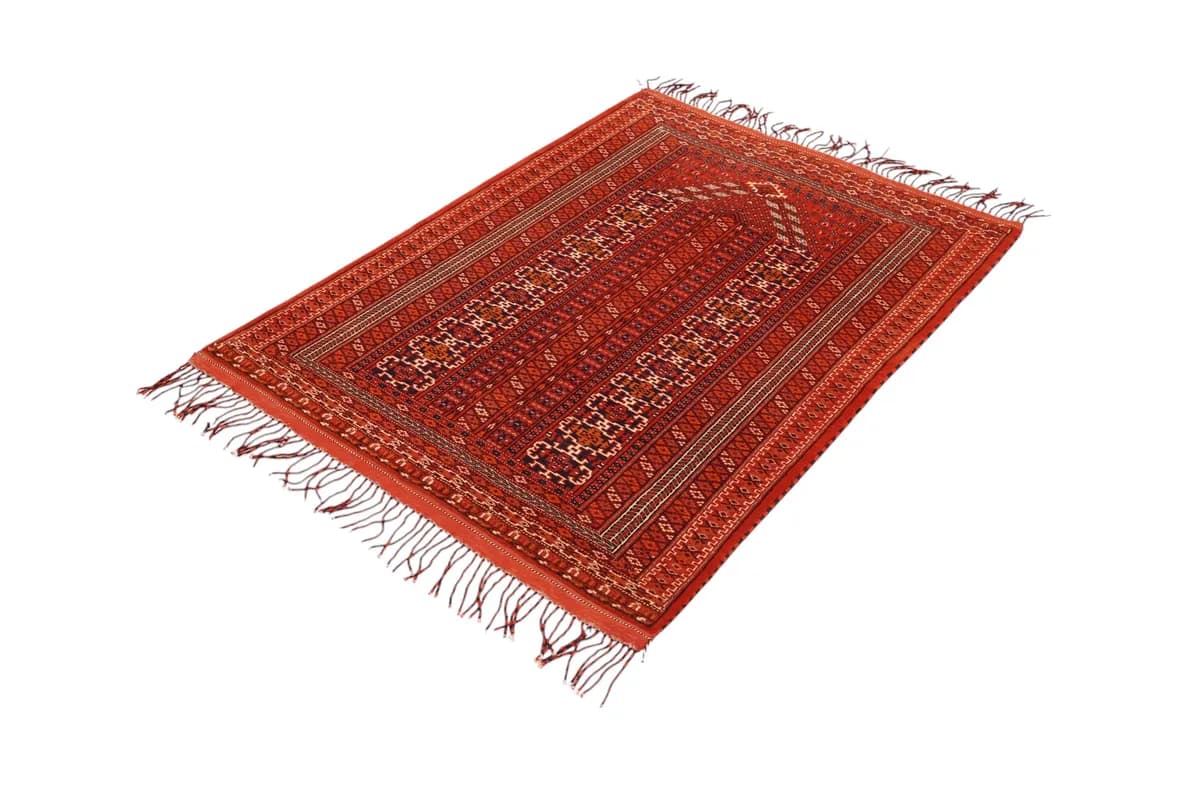
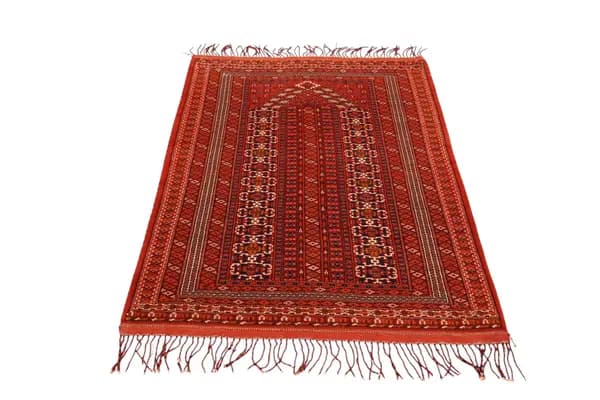
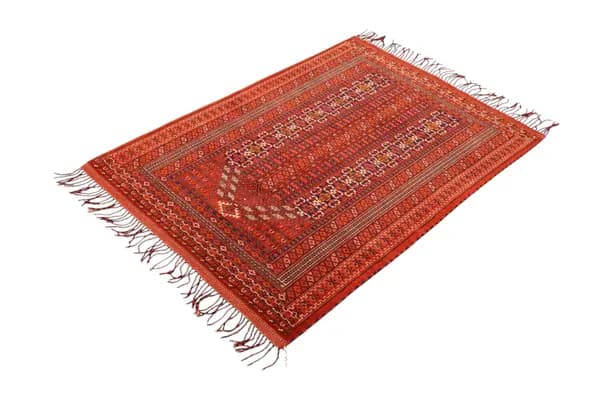
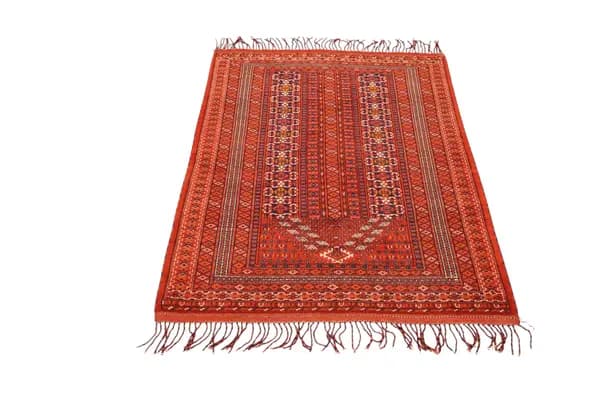
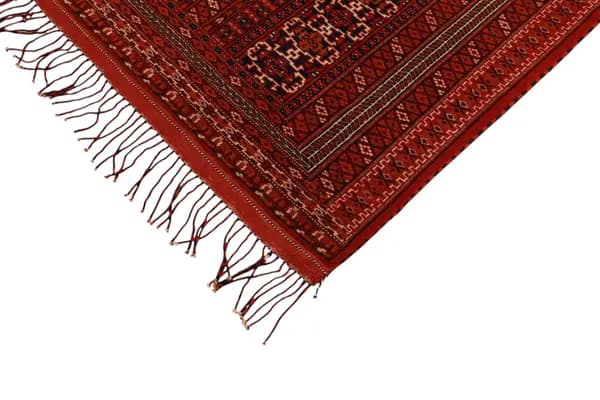
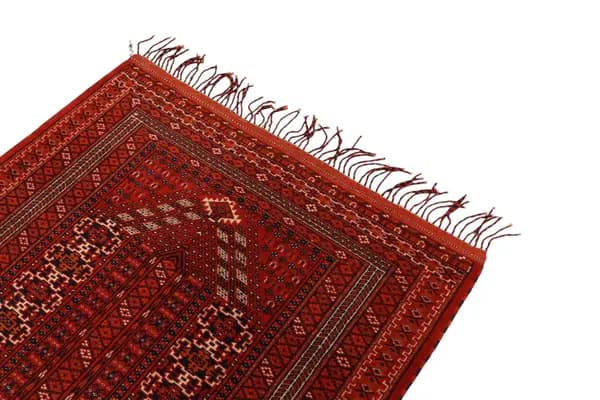
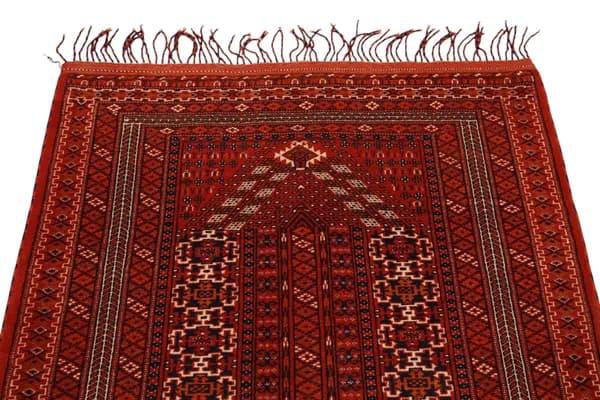
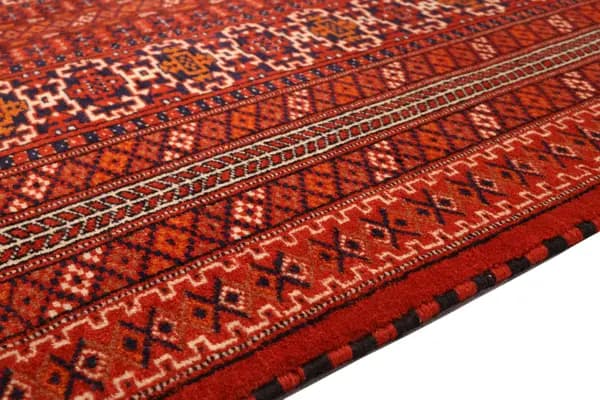
A Turkmen prayer rug, known in the trade as a Mehrabi for the mihrab niche at its centre, measuring 136 x 101 cm (4'5" x 3'4"). Turkmen weavings, made by nomadic clans across Central Asia and into eastern Iran, are recognised everywhere by their repeating gul medallions, tribal emblems unique to each clan, set on a deep red ground. This piece was woven in Iran by weavers of Turkmen, also written Turkoman, descent, and it carries that inheritance in full.
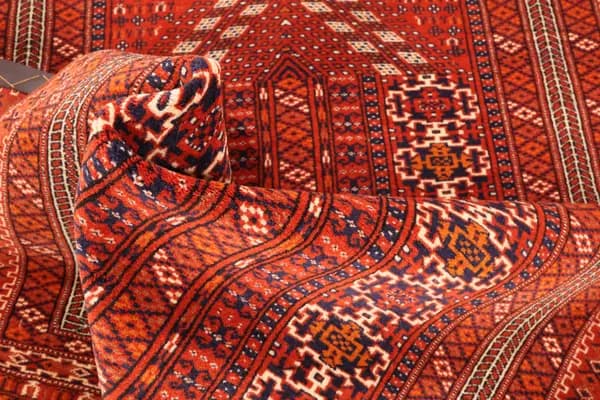
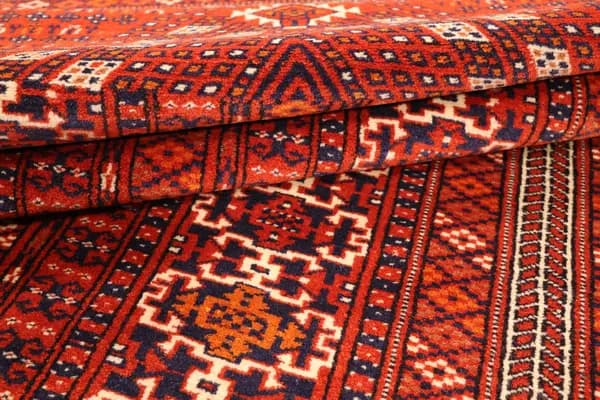
A deep brick red fills the field, and against it the mihrab opens as an arrow pointing right, its point built not from a single motif but from tight horizontal bands of stepped diamond guls in navy and ivory. Where the arrow converges, a small ivory diamond sits at the apex, the one quiet moment in an otherwise busy field. Multiple narrow border stripes, alternating red, ivory diamonds and navy geometry, frame the niche and together make up close to a fifth of the rug's width, holding the pattern in like a tight architectural surround.
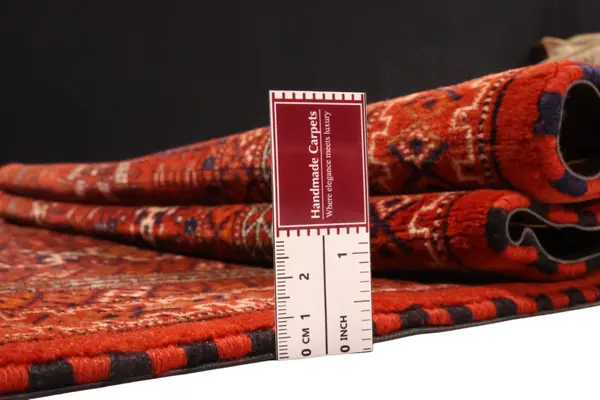
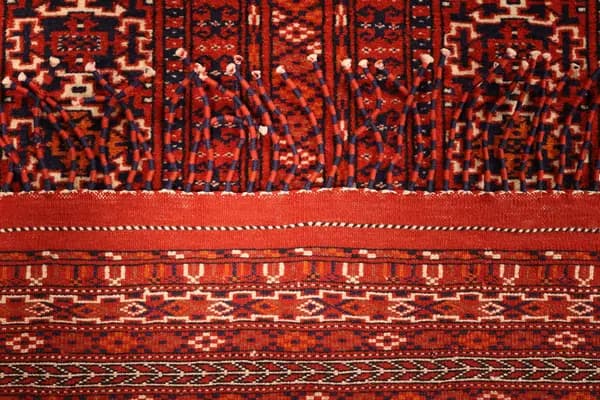
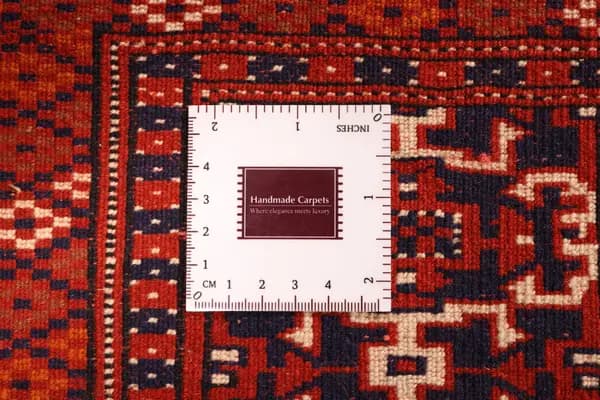
The warp is cotton, which keeps the rug stable and true to shape, while the pile is hand-spun wool, giving the surface its slightly uneven, matte, hand-worked character rather than a machine-even finish. At 441,000 to 500,000 knots per square metre, the knotting is dense enough to hold the stepped edges of each gul sharp and distinct rather than blurring into the next band, and at a pile height of just 6 mm the surface stays low and tight, with the faint ribbed texture typical of tribal looms. That density is also what gives Turkmen rugs their name for wearing well over decades of use.
At just over a metre deep, this is a rug for a hallway, a landing, or beside a bed, somewhere it will be seen and stepped on daily rather than admired from across a room. The brick red holds its own against dark wood floors or furniture and needs no help from daylight to read as warm. Underfoot it is firm and close, built for a spot that gets crossed often rather than one that asks to be spared. Move a lamp across it in the evening and the navy and ivory bands of the niche seem to shift and resettle, the small ivory diamond at the point staying still while everything around it quietly moves.
More on Turkmen rugs: origin, making and how to recognise a genuine piece
Exceptionally fine weave
At 136 × 101 cm (1.37 m²) this is a small rug. It works beside a bed, in a reading corner, in front of a fireplace or as a mat by a door. It does not furnish a room; it makes a point in one.
Yes, knotted by hand — knot by knot on a loom, not machine-made. The density is 441,000 to 500,000 knots per square metre; across 1.37 m² that is roughly 610,000 to 690,000 individual knots, every one of them tied by hand.
Hand-spun wool still carries its own lanolin, which keeps liquid sitting on the surface for a moment: blot quickly, with clear water and a light cloth, working inwards and without rubbing. Otherwise regular vacuuming along the pile is enough. Turn the rug once or twice a year so light and footfall reach it evenly.
We are in the Hamburg Speicherstadt. Come and see this rug in daylight, or write to us — a person answers.
Certificate included verifying origin, materials, and craftsmanship.
Ref: 396721