Belutsch
230 × 135 cm
1.785 €
371 €
Incl. VAT
In Stock · Ready to Ship
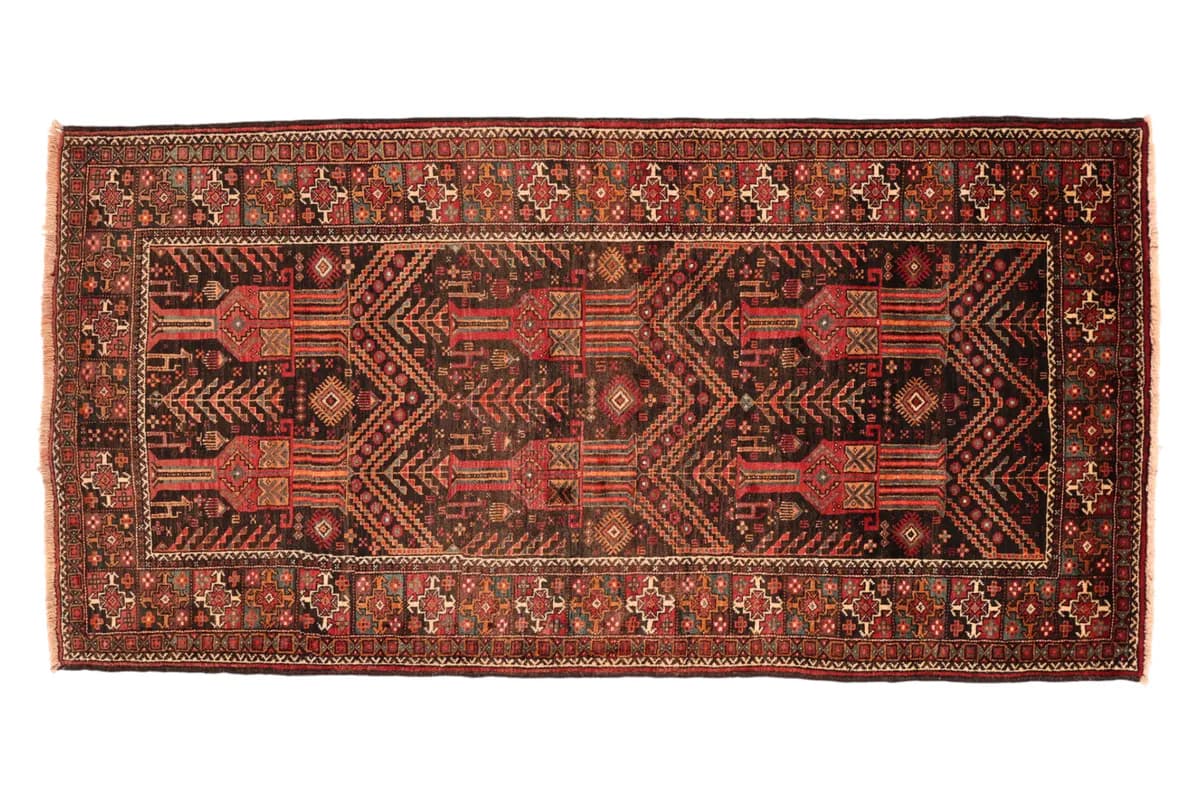
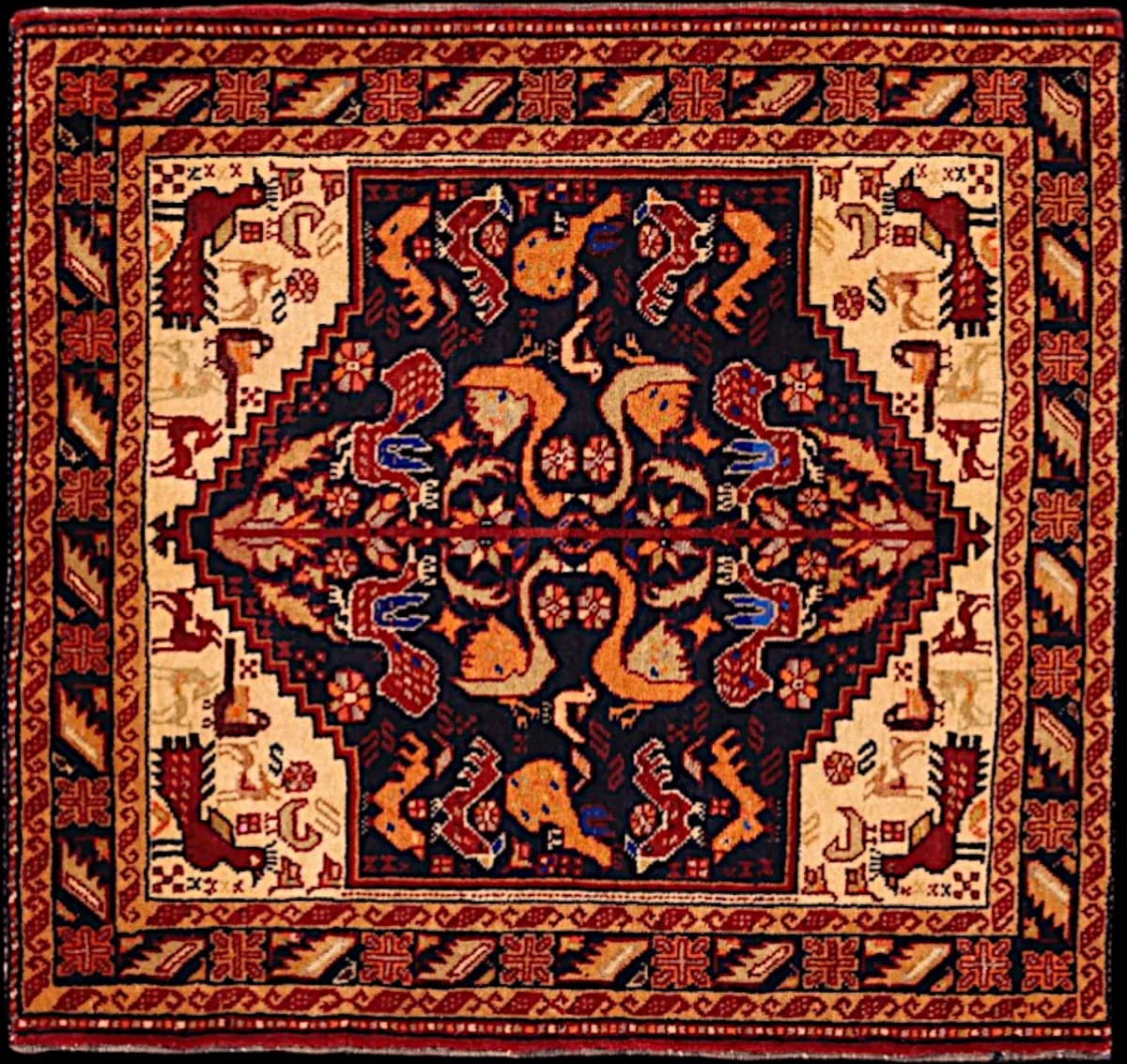
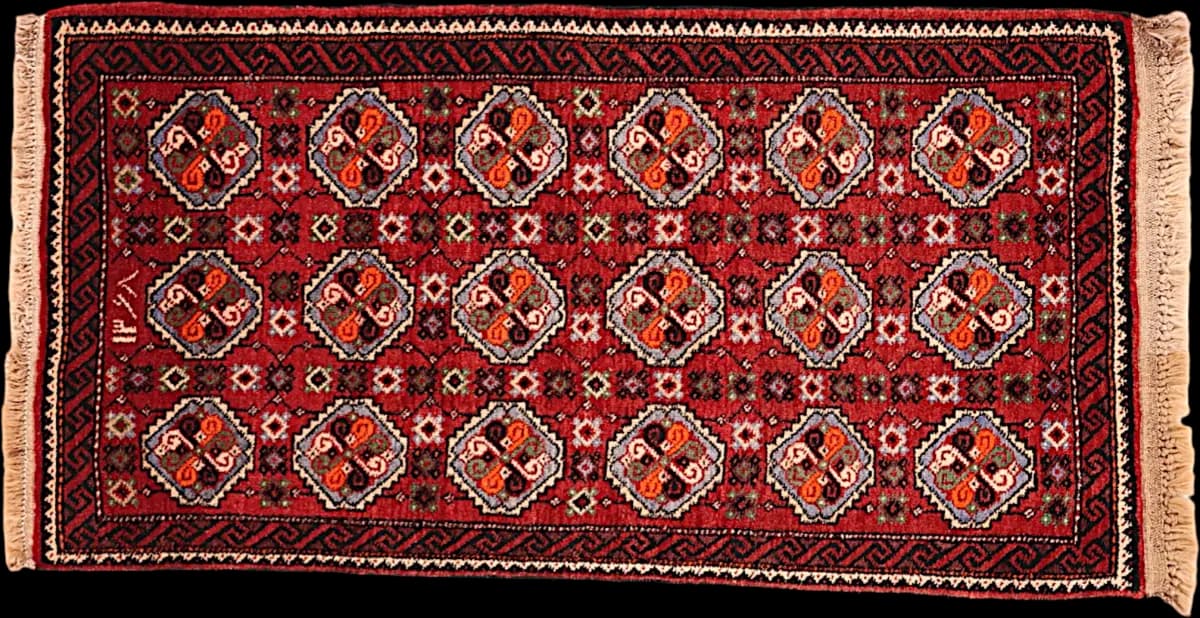
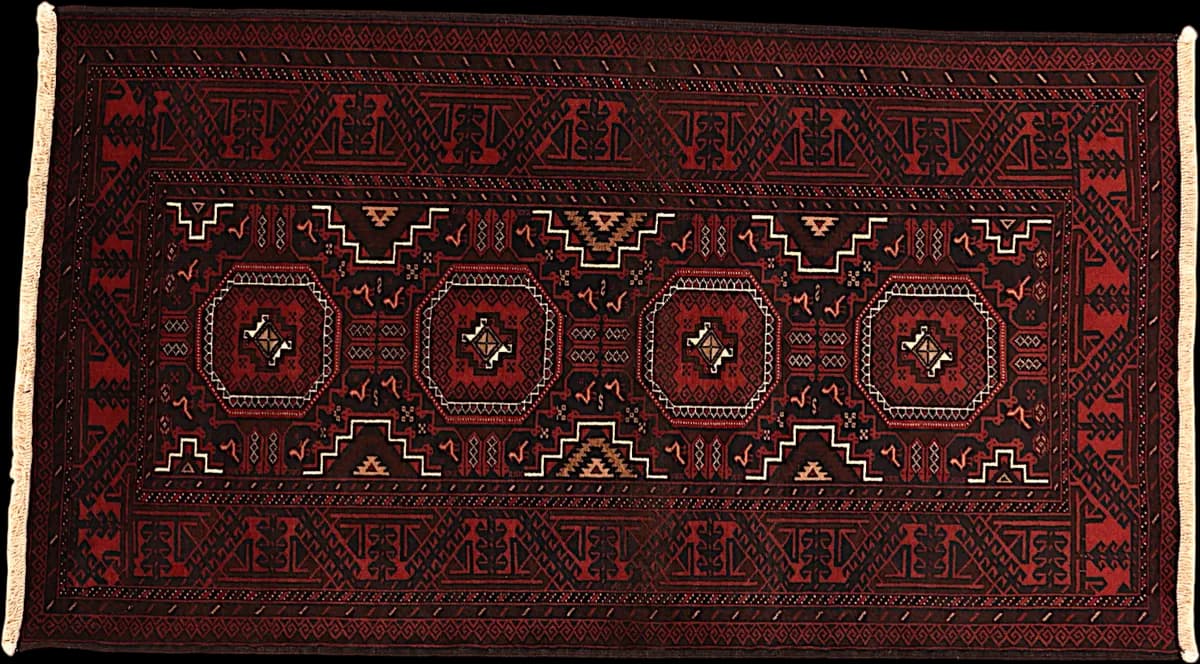
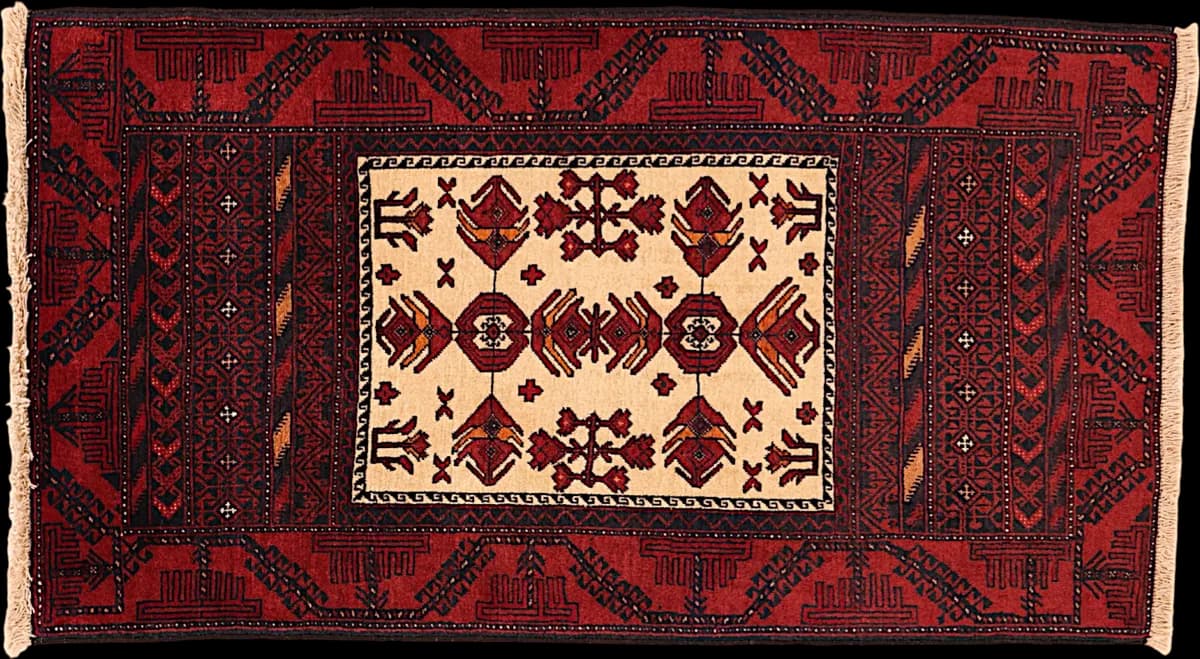
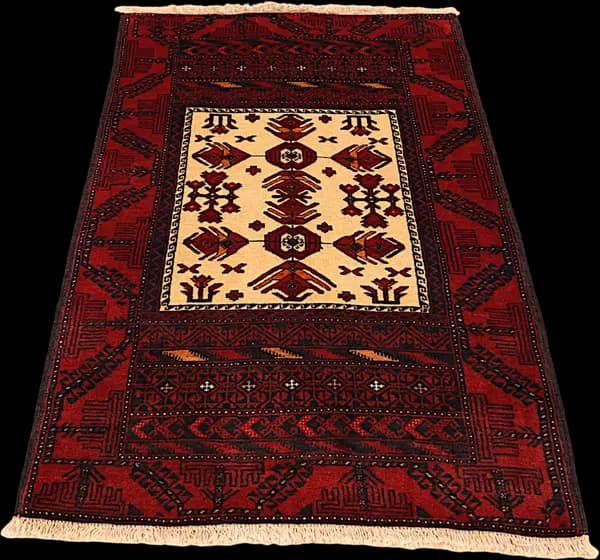
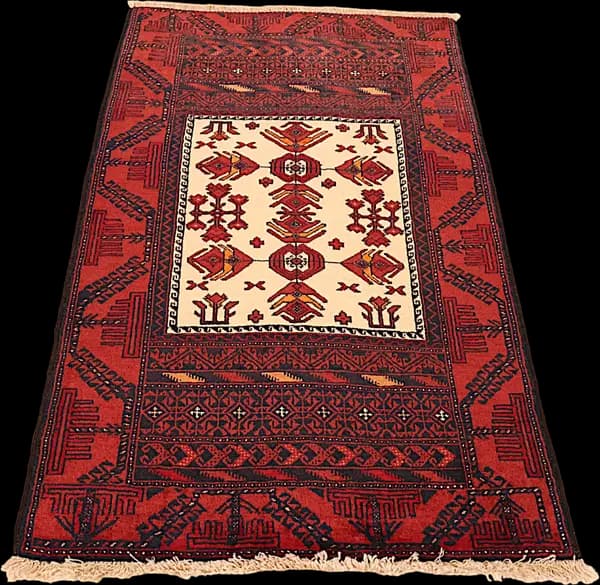
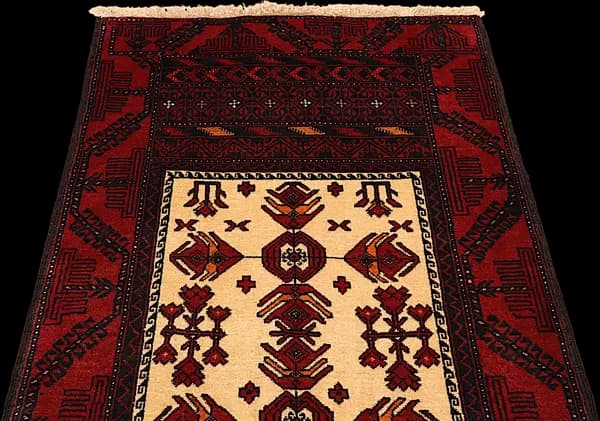
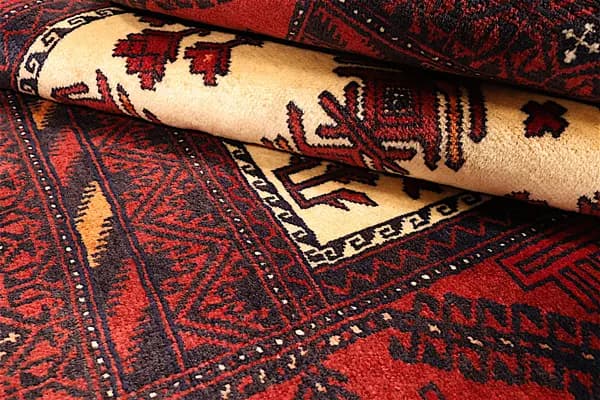
This is a Baluch, a tribal weaving from the borderlands of south-eastern Iran, measuring 153 x 85 cm (5'0" x 2'9"). Baluch rugs are known above all for their earthy, dark palette — deep reds and indigo carried almost to the edge of the field — and for geometric patterns knotted from memory rather than drawn on paper. This piece takes that same tribal vocabulary and turns its ground ivory instead of dark, which is not how the type is usually seen.
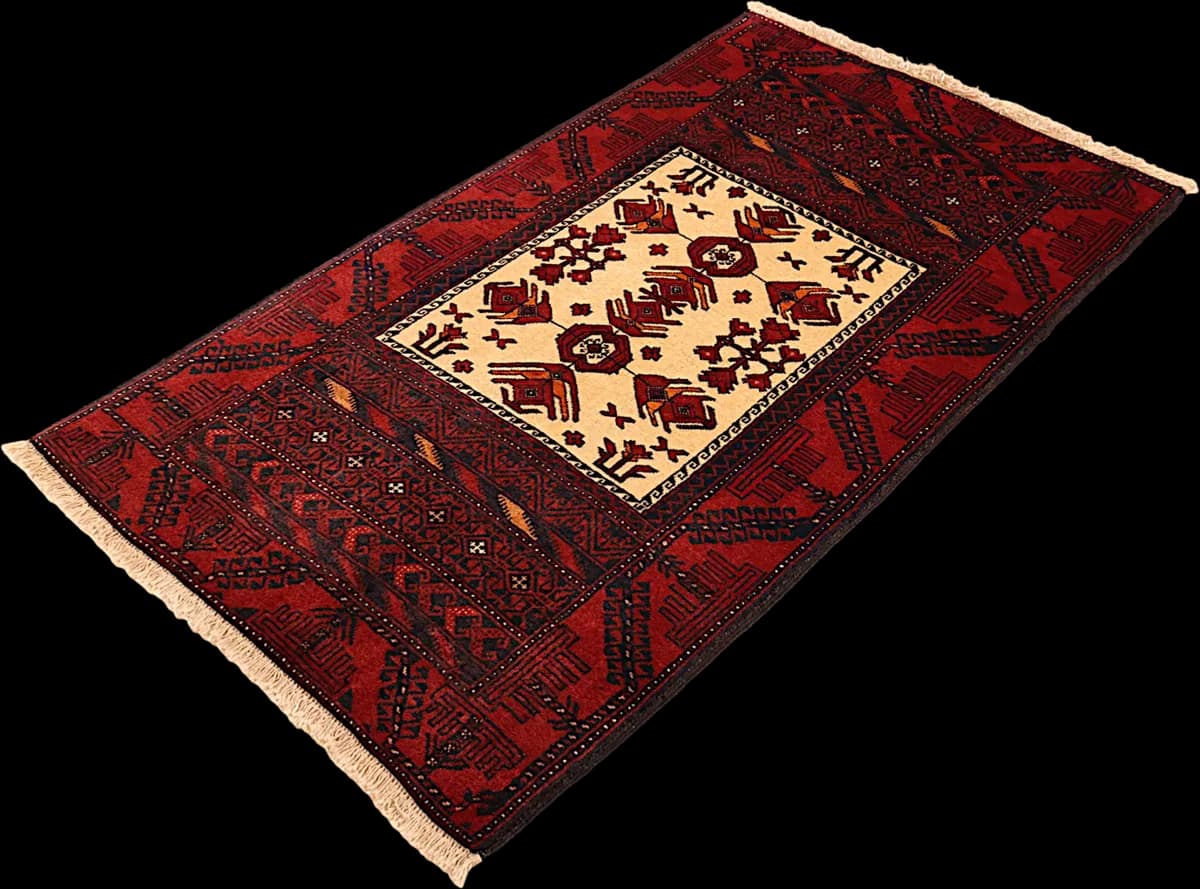
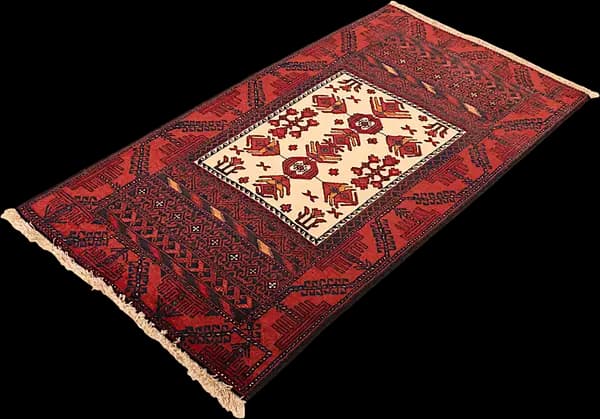
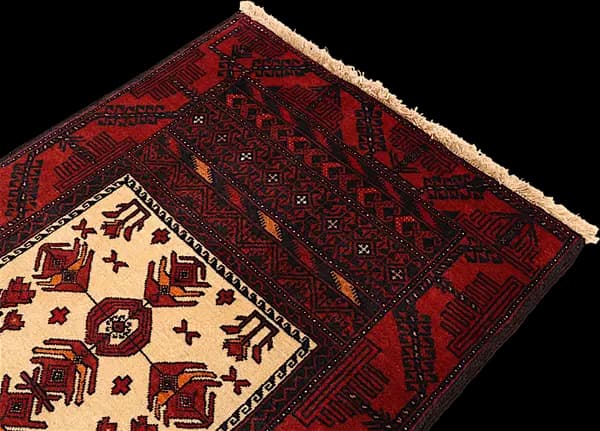
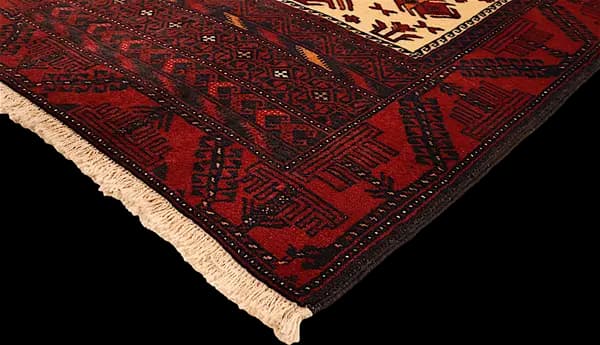
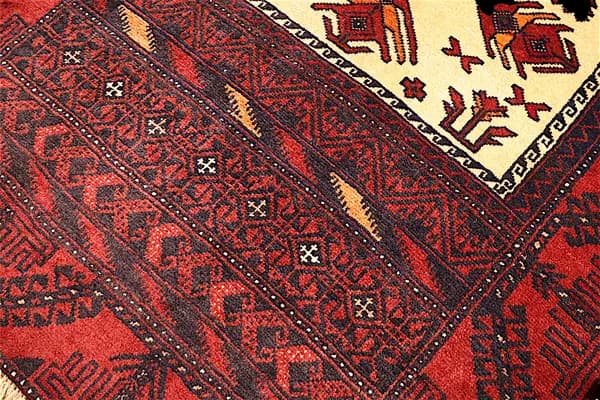
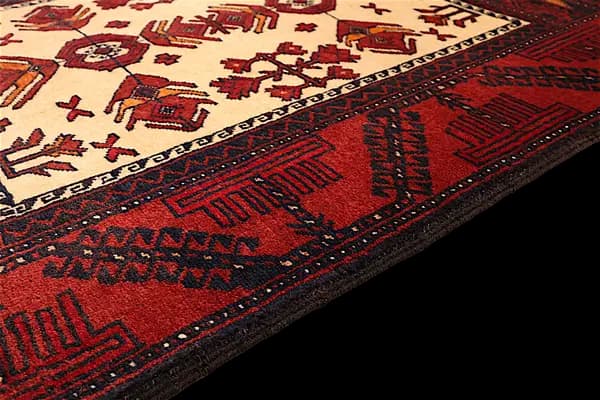
The field opens bright and pale, a cream so clear it reads almost as light against the weight of colour around it. Set into it, a stylised tree rises at the centre, flanked by hooked octagonal medallions mirrored above and below, with small cross-shaped florets scattered loosely across the remaining ground. Around all this runs a border unusually wide for its type, built up from several stacked bands of navy latch-hook and comb motifs on brick red, taking a full third of the rug's width and holding the pale field the way a dark frame holds a light drawing. The contrast is the whole point: elsewhere in Baluch weaving the field itself carries this depth of colour, and here it has been kept back for the border alone.
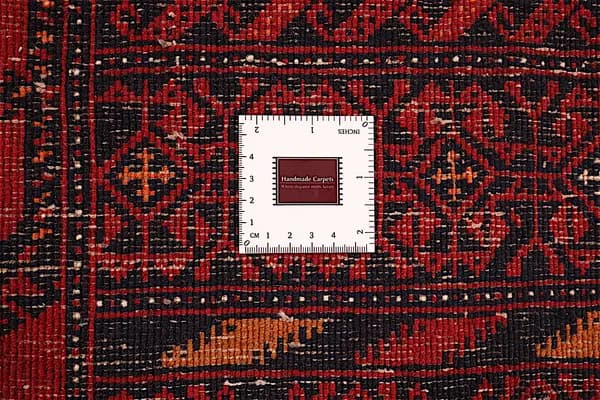
The wool is hand-spun rather than machine-spun, which gives the pile its faintly ribbed, textured surface rather than a flat, uniform one — you can see the hand in it, not just the pattern. At 128,000 to 160,000 knots per square metre this is an open, workmanlike density for a tribal rug, well suited to bold angular motifs like the tree and medallions, which read clearly at this scale in a way that finer, more crowded knotting would blur. Twenty to forty years of use have not dulled the ivory ground, which still sits bright and clean against the darker wool around it.
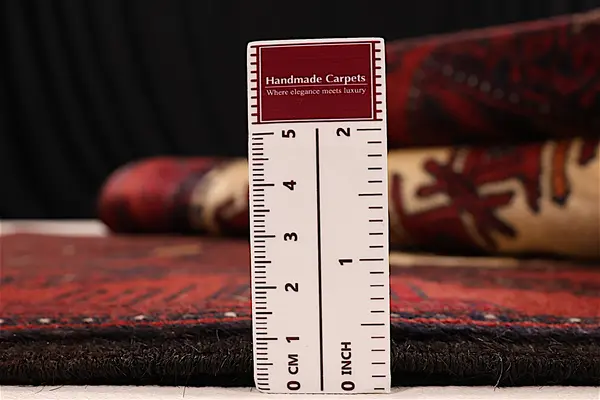
At this size the rug suits a hallway, a landing, or the floor beside a bed, somewhere it is seen close rather than crossed constantly. The ivory field will lift a dark-floored hallway with no daylight of its own, catching what light there is rather than absorbing it the way an all-dark Baluch would. Underfoot the pile is dense and firm at 6 mm, wool that has already been walked on for decades and asks to keep being walked on rather than kept for best. Morning light catches the brick red border first, then settles into the pale centre, and it is that centre — the one part of the rug quietly doing something its own tradition does not usually do — that you keep noticing.
More on Baluch rugs: origin, making and how to recognise a genuine piece
Traditional weave
At 153 × 85 cm (1.30 m²) this is a small rug. It works beside a bed, in a reading corner, in front of a fireplace or as a mat by a door. It does not furnish a room; it makes a point in one.
Yes, knotted by hand — knot by knot on a loom, not machine-made. The density is 128,000 to 160,000 knots per square metre; across 1.30 m² that is roughly 170,000 to 210,000 individual knots, every one of them tied by hand.
Hand-spun wool still carries its own lanolin, which keeps liquid sitting on the surface for a moment: blot quickly, with clear water and a light cloth, working inwards and without rubbing. Otherwise regular vacuuming along the pile is enough. Turn the rug once or twice a year so light and footfall reach it evenly.
We are in the Hamburg Speicherstadt. Come and see this rug in daylight, or write to us — a person answers.
Certificate included verifying origin, materials, and craftsmanship.
Ref: 208205