Belutsch
250 × 126 cm
1.276 €





1.785 €
Incl. VAT
In Stock · Ready to Ship
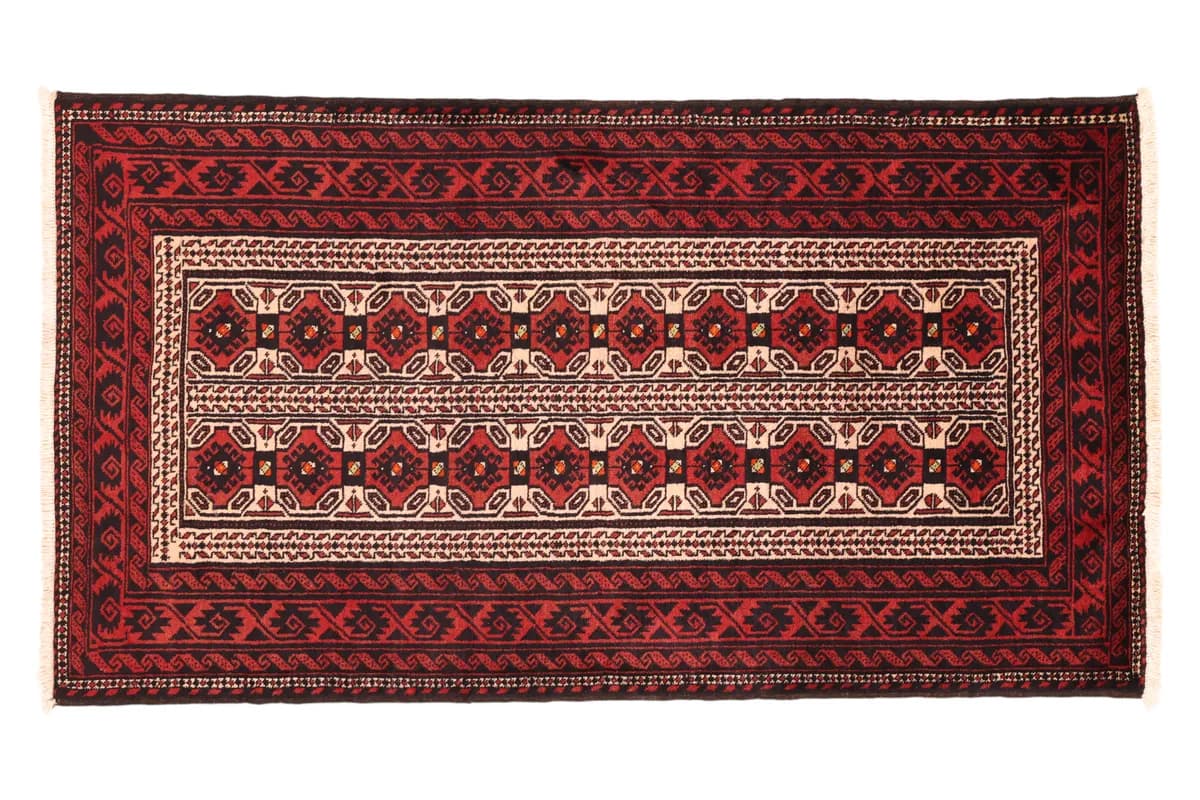
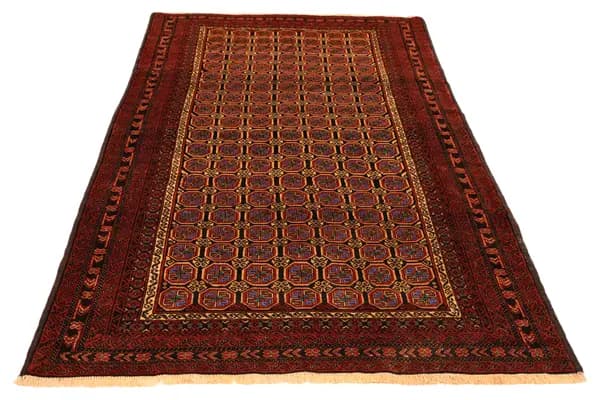
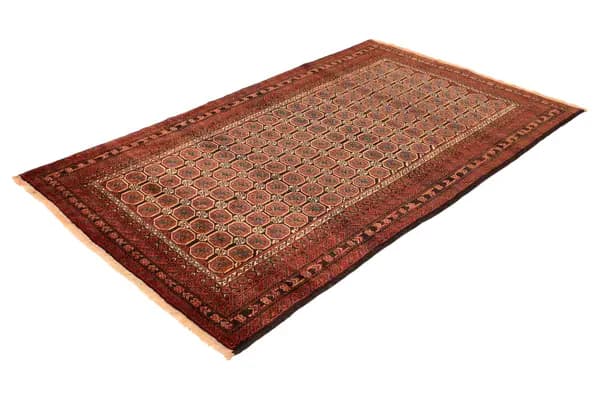
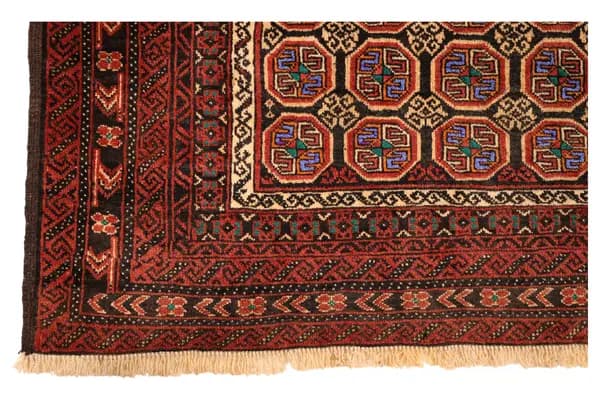
A Baluch rug, hand-knotted in the tribal borderlands of southeastern Iran, 230 x 135 cm (7'7" x 4'5"). The type is known for bold geometric patterning in deep, earthy colour, often built around prayer-niche layouts. This piece belongs to the classic octagon-gul family of Baluch and Turkoman-related weaving, but it departs from the norm in one striking way: the ground is a pale ivory rather than the dark red or brown these designs are almost always set on.
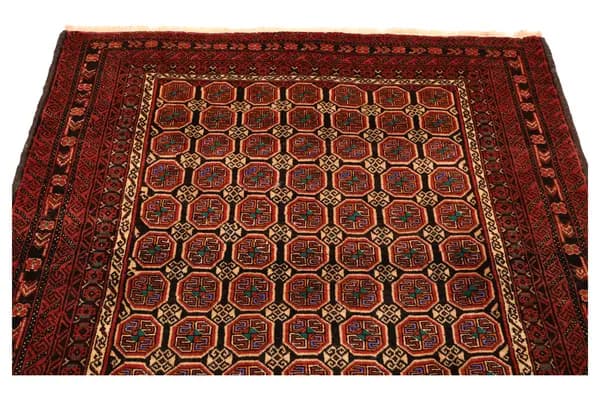
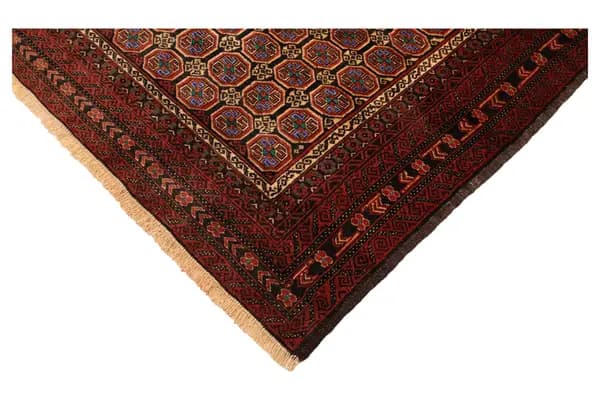
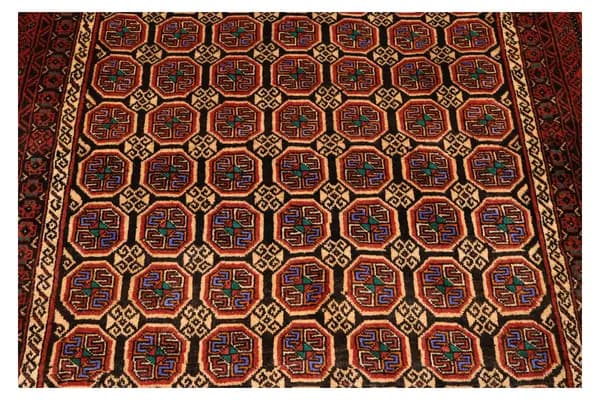
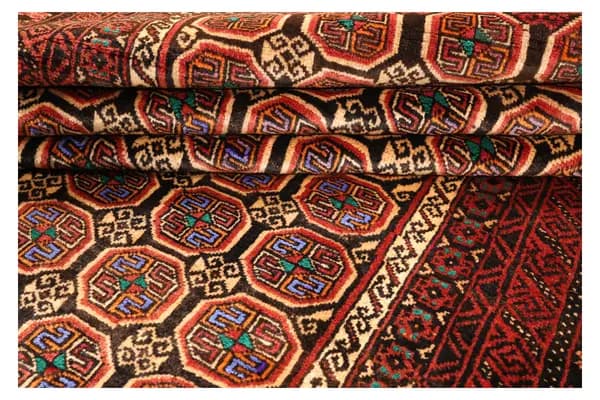
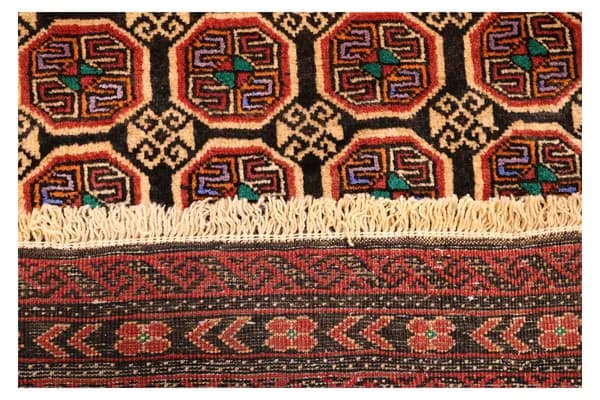
The first impression is of that ivory field itself, open and even, before the eye settles into the pattern lying across it. A dense, all-over lattice of small octagon guls repeats edge to edge, each one holding its own geometric star, in deep madder red, dark navy-black, and touches of blue, green and rust. There is no medallion, no single focal point, only the steady rhythm of the grid. A wide brick-red border closes the field, framed by narrower navy-black guard stripes carrying small floral and hook motifs, and against the pale ground that border reads with unusual clarity.
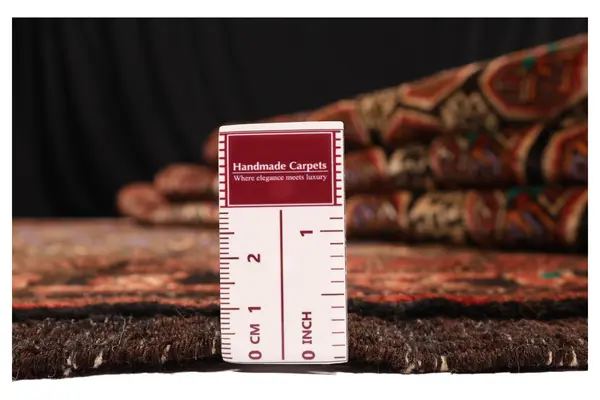
The wool is hand-spun and knotted onto a cotton warp, at a density of 128,000 to 160,000 knots per square metre, a solid, workmanlike count for a piece made on a portable loom rather than a fixed workshop frame. That hand-spinning is what gives the surface its slight ribbing and its low, even, matte pile, wool with a bit of irregularity still in the thread. On the usual dark ground this gul-repeat pattern reads as dense and close; on ivory, woven twenty to forty years ago by a weaver working from memory, the same lattice opens out and reads as crisp, graphic geometry instead.
A rug this size suits a bedroom, laid beside the bed, or a quieter corner of a living room rather than a main traffic path. The ivory field will lift a room with darker furniture or a plain floor, and the reds and navy hold their own without darkening it. Underfoot it is dense, flat and firm, sturdy enough for daily use rather than display, and the low pile lets the pattern stay sharp underfoot as well as to the eye. In shifting daylight the ivory ground keeps catching the red and indigo of the guls anew.
More on Baluch rugs: origin, making and how to recognise a genuine piece
Traditional weave
At 230 × 135 cm (3.11 m²) this is a medium rug. It works in front of a sofa, in front of a bed or in a study. It is too small for a dining table — there you want about 80 cm of clearance so a chair does not tip over the edge when pushed back.
Yes, knotted by hand — knot by knot on a loom, not machine-made. The density is 128,000 to 160,000 knots per square metre; across 3.11 m² that is roughly 400,000 to 500,000 individual knots, every one of them tied by hand.
Hand-spun wool still carries its own lanolin, which keeps liquid sitting on the surface for a moment: blot quickly, with clear water and a light cloth, working inwards and without rubbing. Otherwise regular vacuuming along the pile is enough. Turn the rug once or twice a year so light and footfall reach it evenly.
We are in the Hamburg Speicherstadt. Come and see this rug in daylight, or write to us — a person answers.
Certificate included verifying origin, materials, and craftsmanship.
Ref: 211636