ExclusiveSigned
Rafsanjan | Sherkat-e Farsh
301 × 201 cm
10.650 €






6.750 €
Incl. VAT
In Stock · Ready to Ship
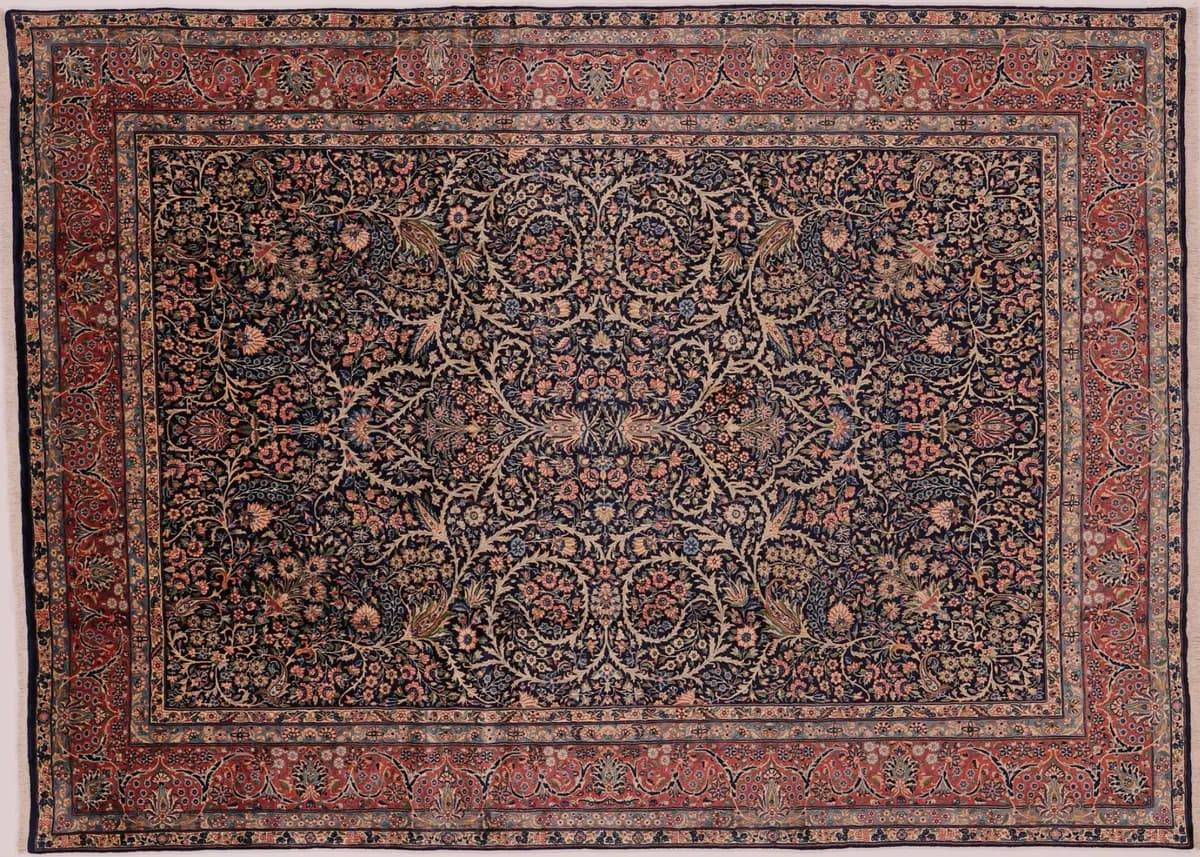
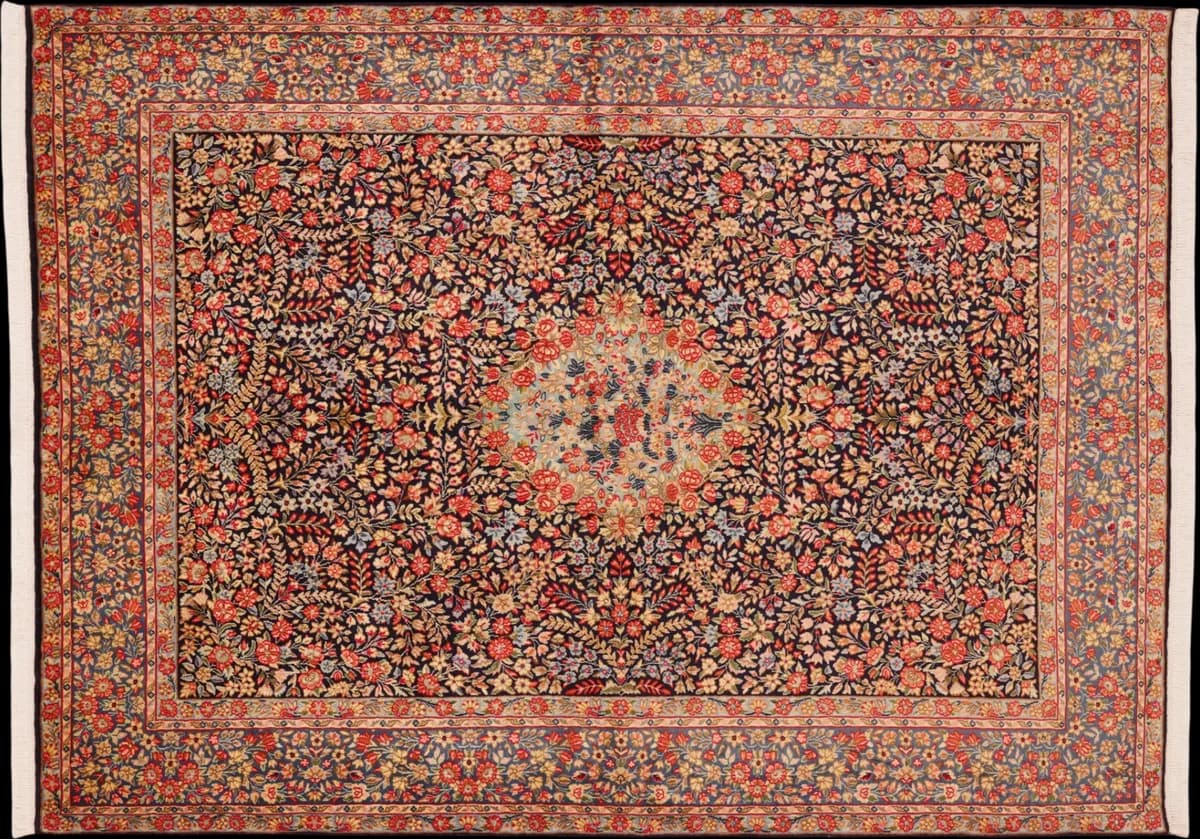
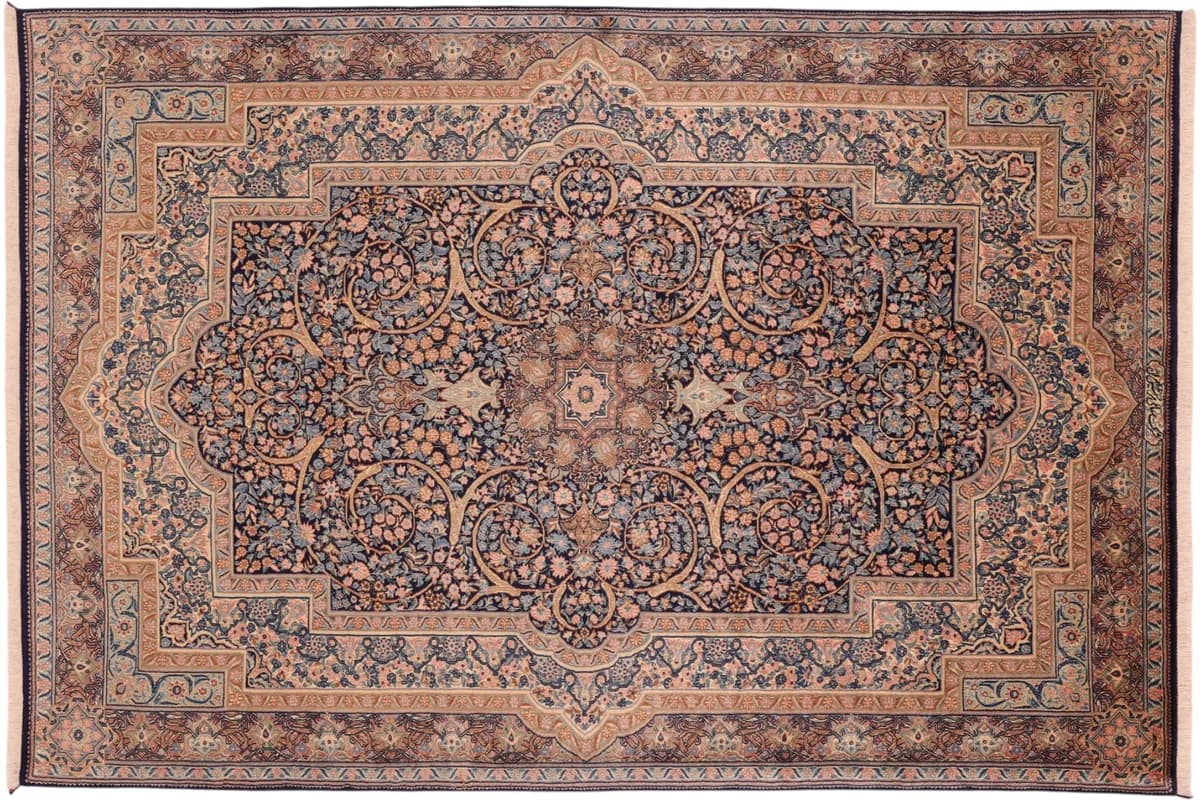
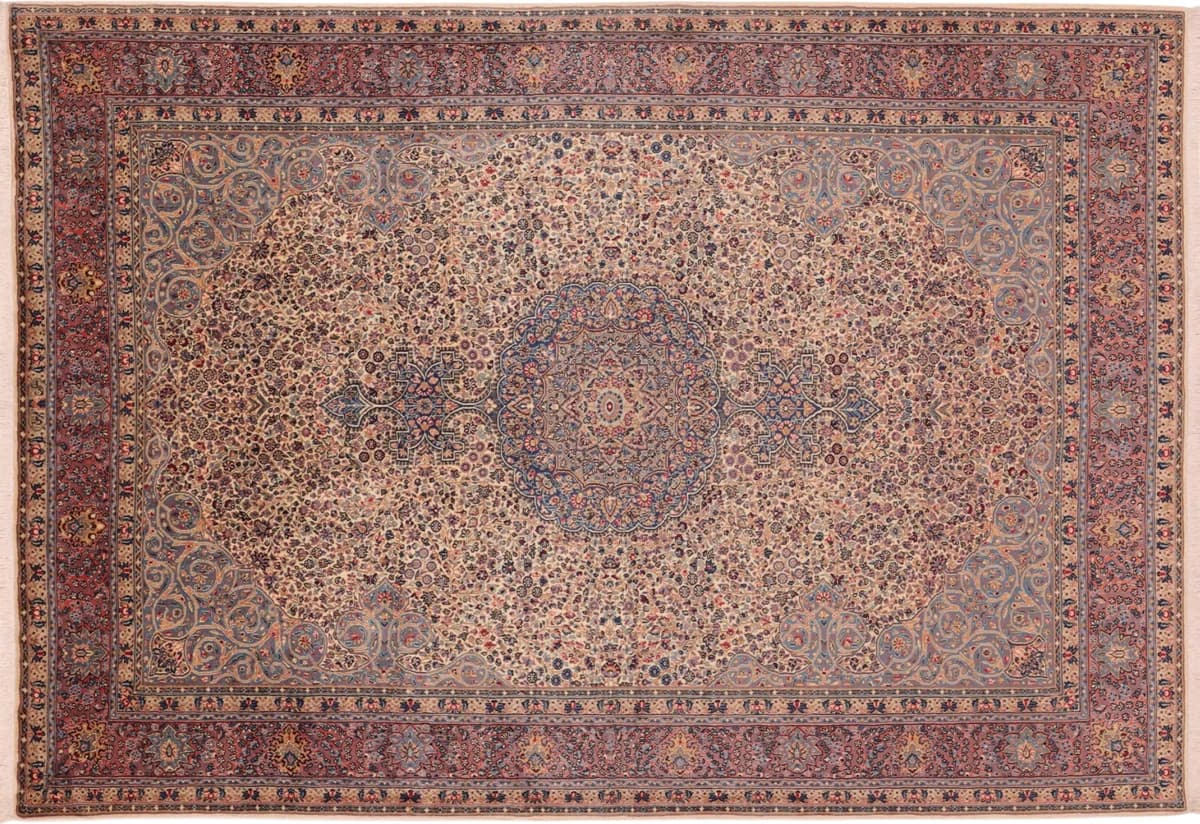
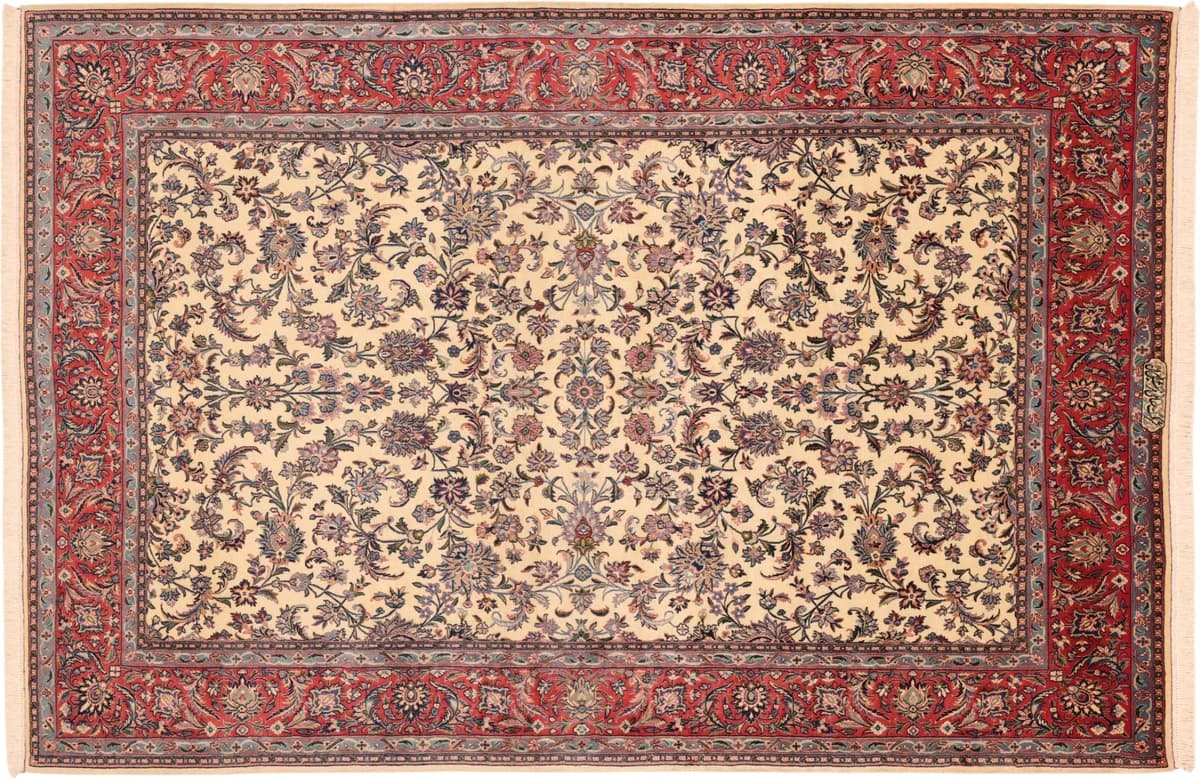
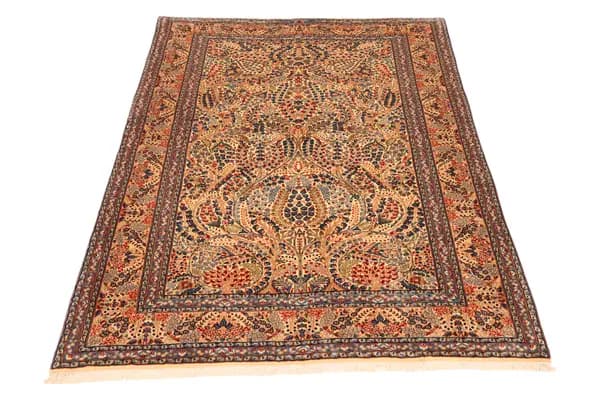
A Rafsanjan, from the wider Kerman weaving region of south-eastern Iran, 203 x 137 cm (6'8" x 4'6"). Kerman rugs are usually built around a medallion, drawn with the fine floral vocabulary the region is known for; this one keeps the vocabulary but drops the medallion, letting the flowers cover the whole field instead.
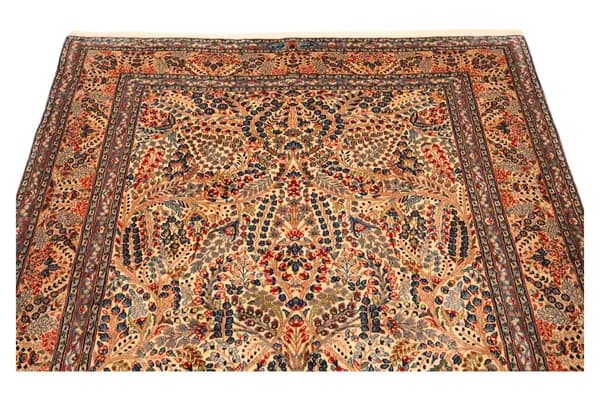
The field is ivory, and it is filled edge to edge with a dense lattice of floral vines, paisley leaf forms curling off them in navy, brick red, sage green, dusty blue-grey and tan. There is no medallion to gather the eye, and no obvious repeat either: the stems sweep and interlock so that the whole field reads as one continuous vine rather than a pattern stamped out in units. A multi-band border in navy, red and ivory, patterned with small florals and diagonals, holds the field in place without competing with it.
Drawing curves like these, rather than the more geometric grid a medallion layout allows, calls for a fine knot. This piece was hand-knotted at 501,000 to 640,000 knots per square metre, in handspun wool on a cotton warp, at the Sherkat Farsh workshop, whose signature it carries. That density is what lets a stem bend smoothly instead of stepping, and it is a level of work that takes a weaver months rather than weeks to complete. The pile is kept short, at 12 mm, so the drawing stays crisp underfoot rather than softening into the wool.
A rug this size sits well in a bedroom, under a chair group, or in a smaller seating corner of a living room rather than under a large dining table. The ivory field lifts a room with limited daylight and holds its own against darker furniture, while the red and navy in the vine keep it from ever looking flat or plain. Underfoot it is dense and firm despite the softness of the handspun wool, built for a room that is actually used rather than kept for show. As the light in the room shifts through the day, the curling vine catches it differently from one hour to the next, and it is the sort of detail an owner keeps noticing rather than one that fades with familiarity.
More on Rafsanjan rugs: origin, making and how to recognise a genuine piece
Exceptionally fine weave
At 203 × 137 cm (2.78 m²) this is a medium rug. It works in front of a sofa, in front of a bed or in a study. It is too small for a dining table — there you want about 80 cm of clearance so a chair does not tip over the edge when pushed back.
Yes, knotted by hand — knot by knot on a loom, not machine-made. The density is 501,000 to 640,000 knots per square metre; across 2.78 m² that is roughly 1.4 to 1.8 million individual knots, every one of them tied by hand.
Hand-spun wool still carries its own lanolin, which keeps liquid sitting on the surface for a moment: blot quickly, with clear water and a light cloth, working inwards and without rubbing. Otherwise regular vacuuming along the pile is enough. Turn the rug once or twice a year so light and footfall reach it evenly.
We are in the Hamburg Speicherstadt. Come and see this rug in daylight, or write to us — a person answers.
Certificate included verifying origin, materials, and craftsmanship.
Ref: 216249