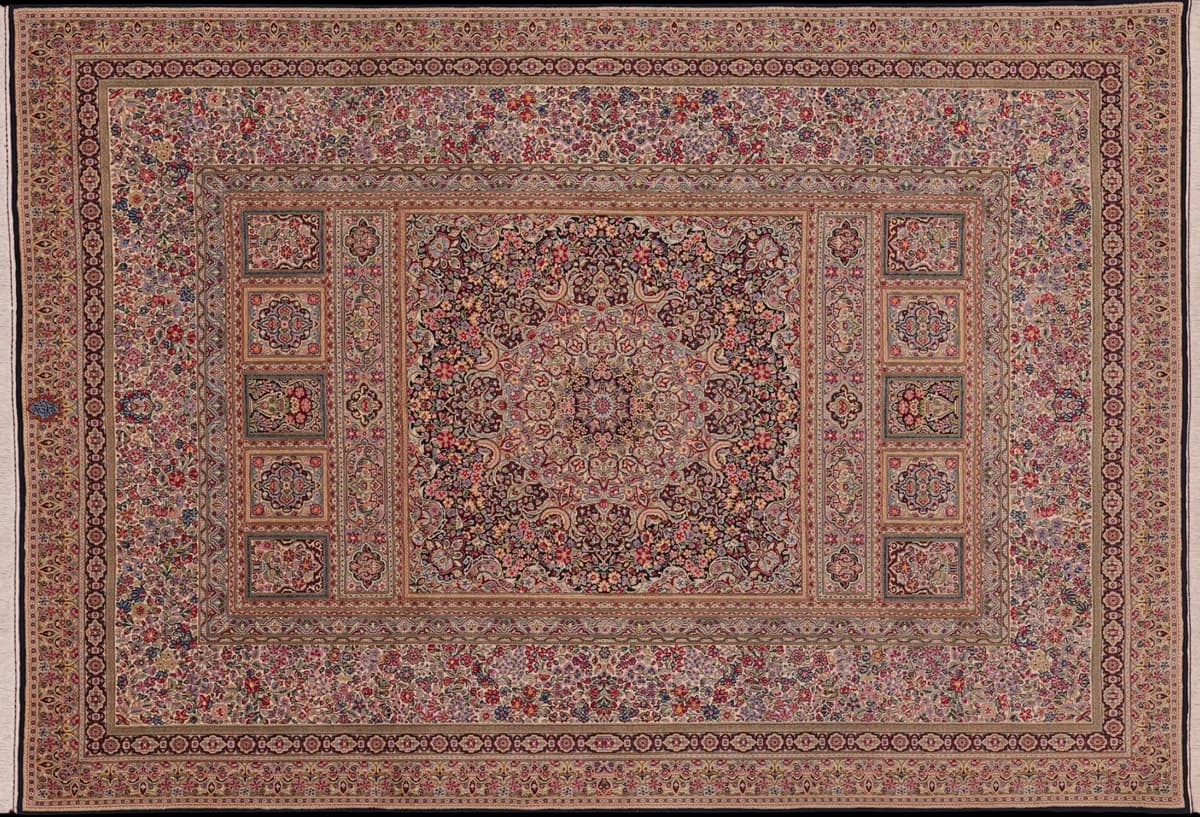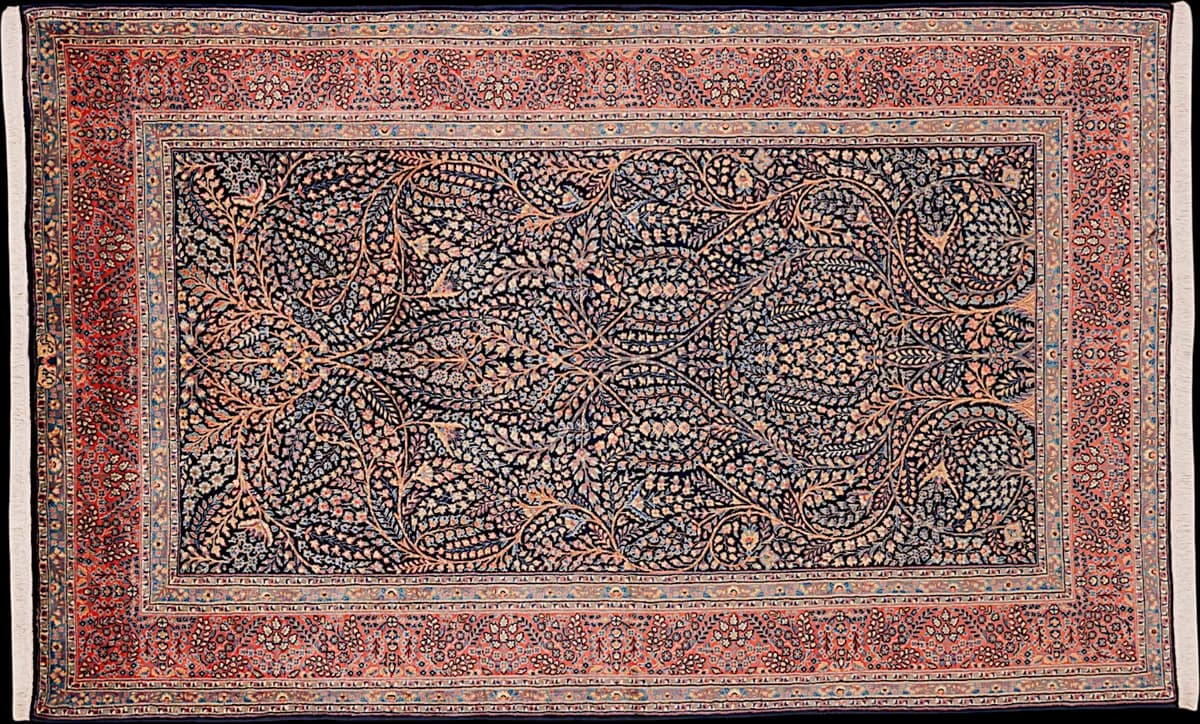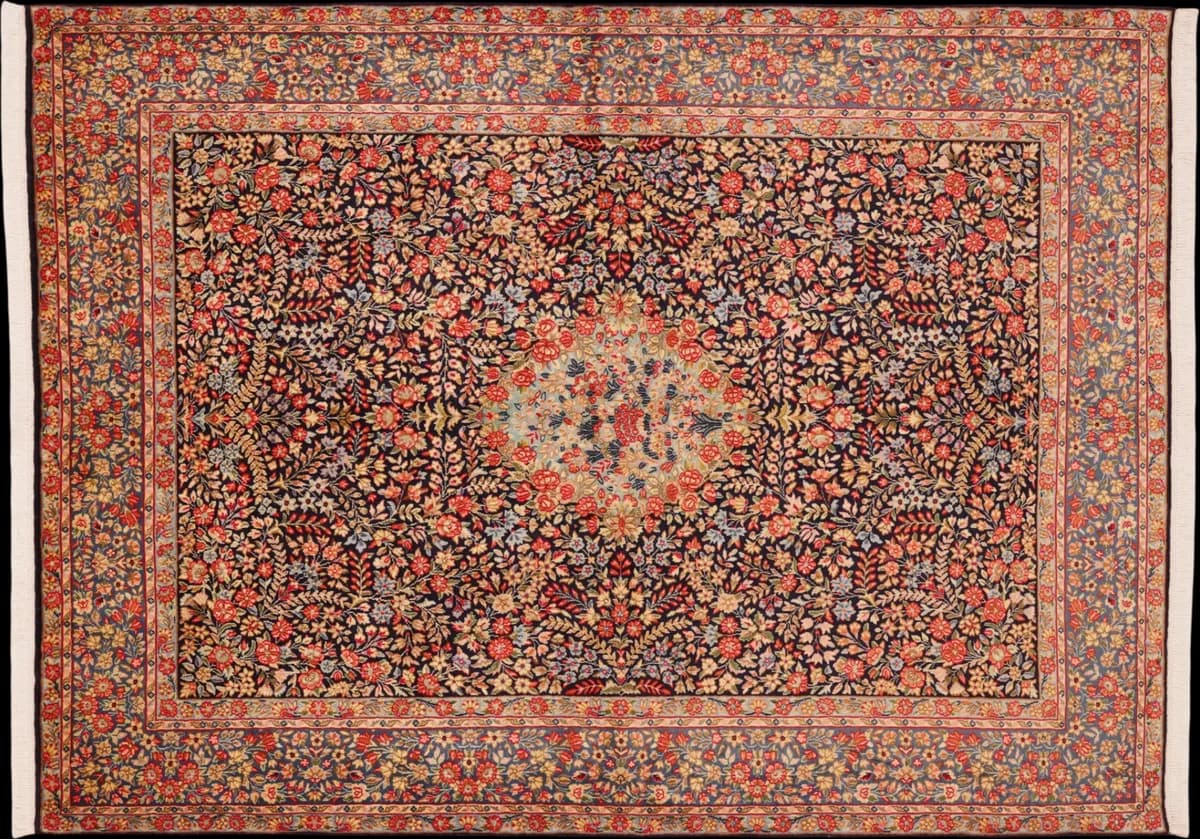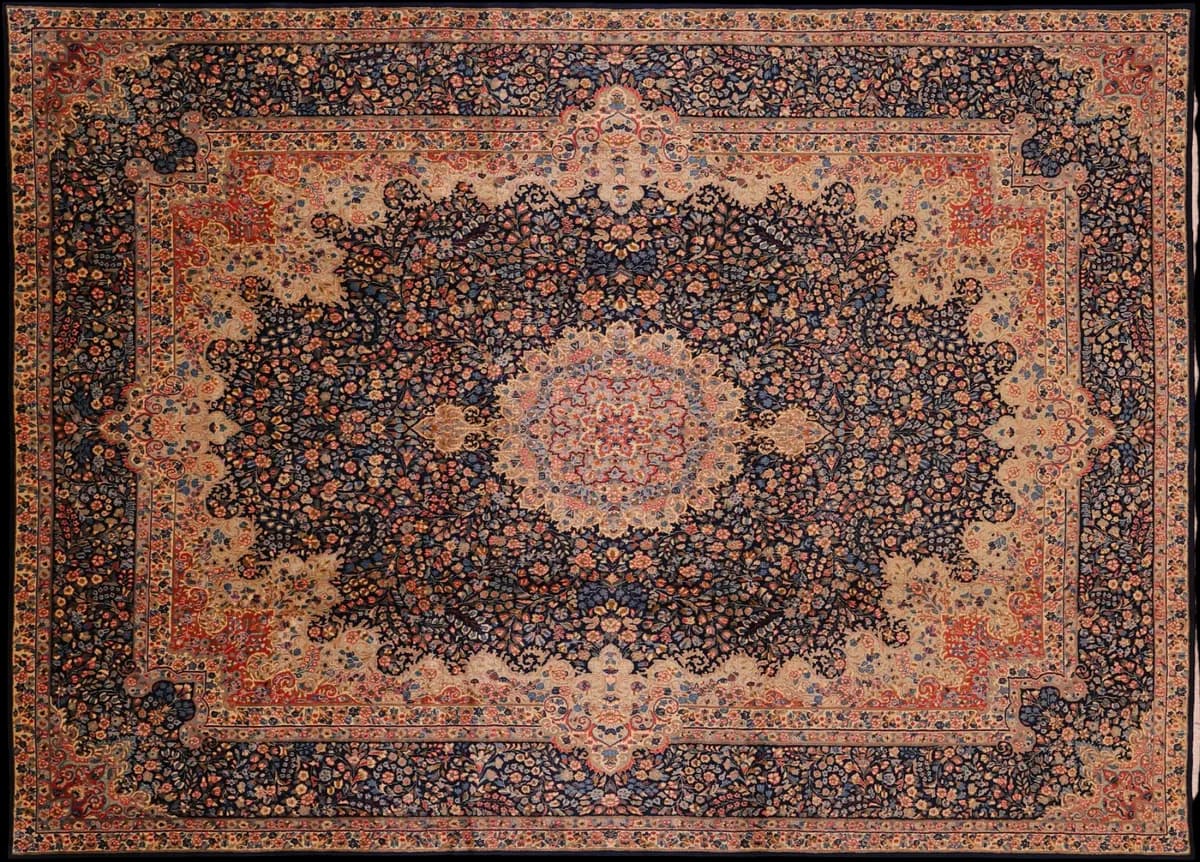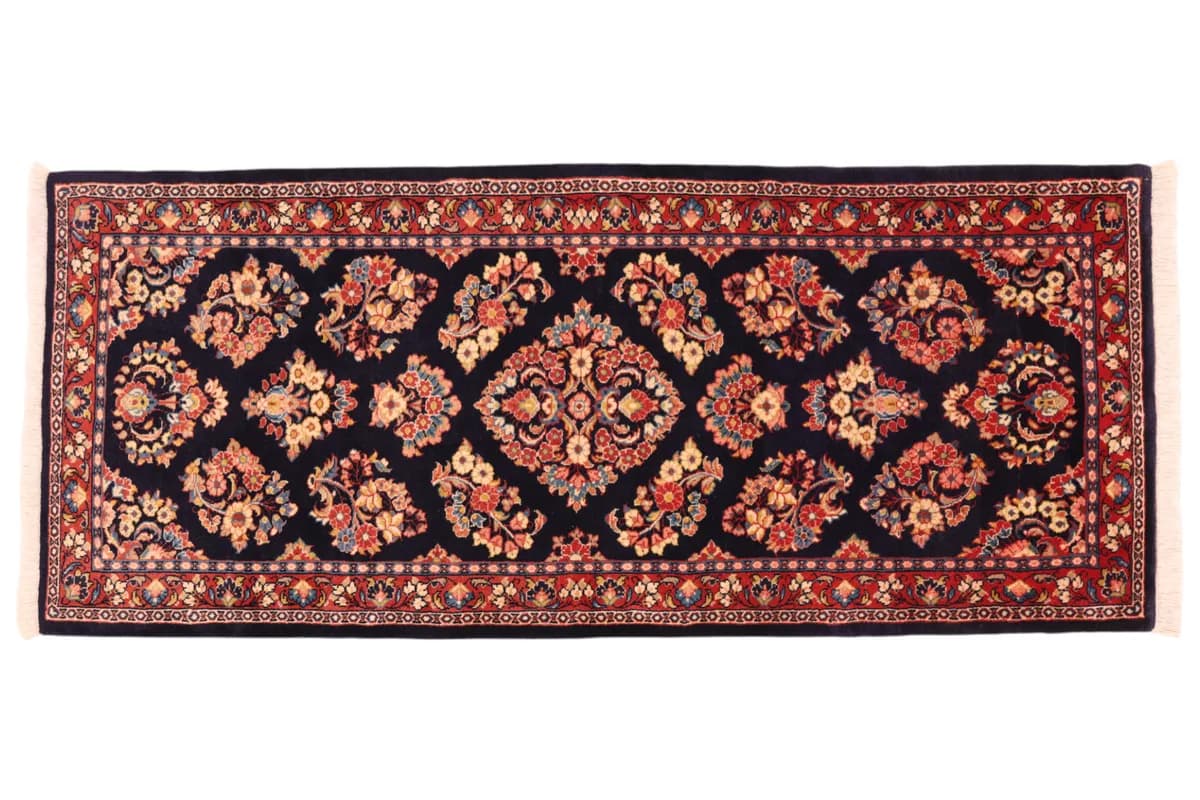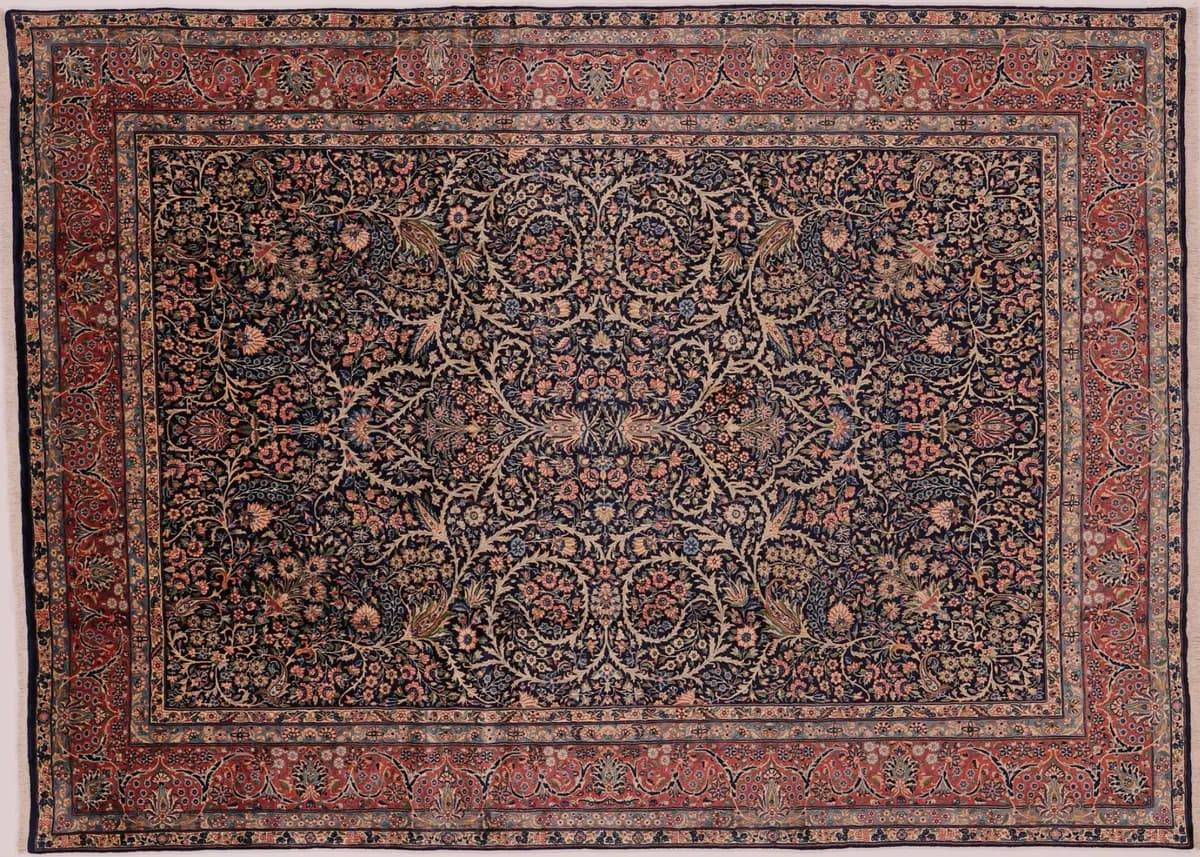
The Kerman tradition
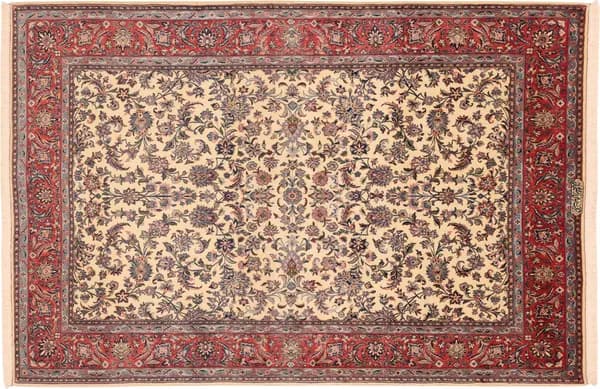
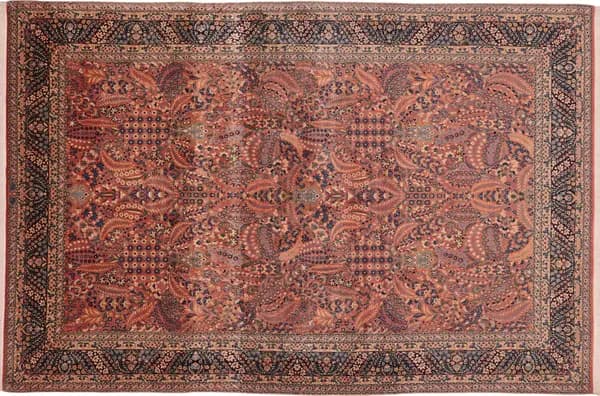
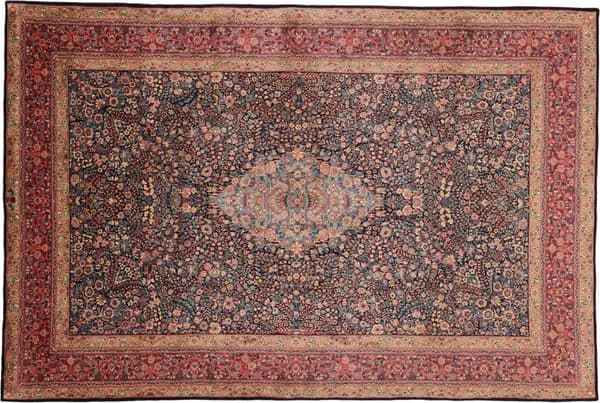
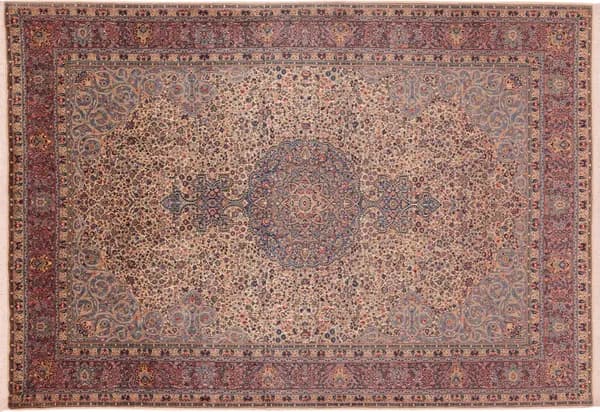
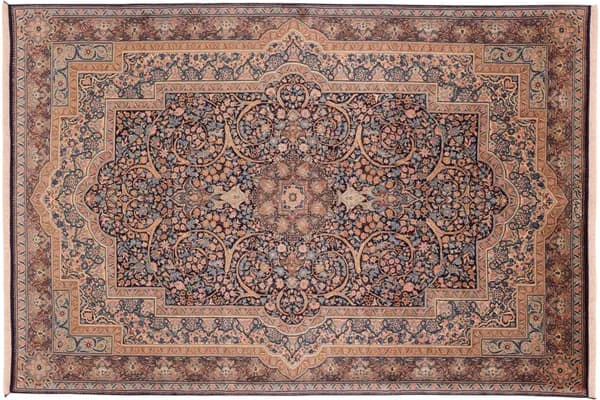
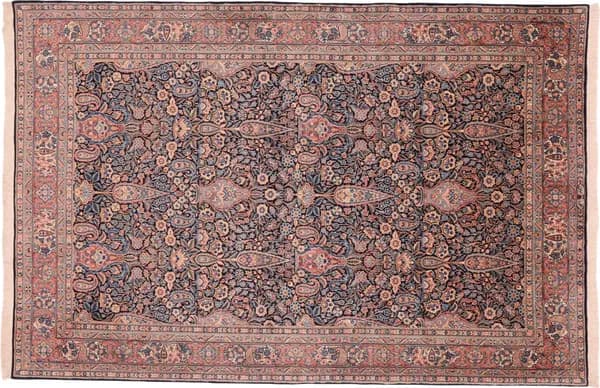
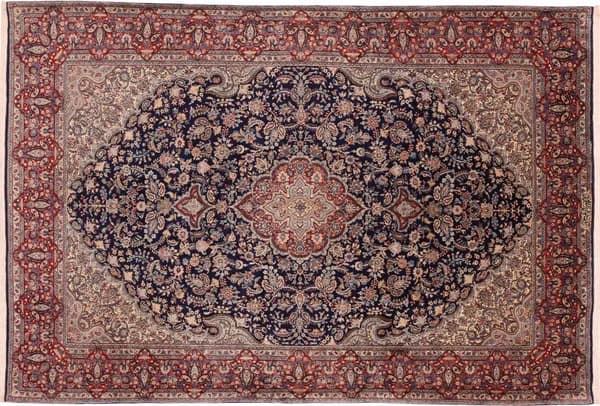
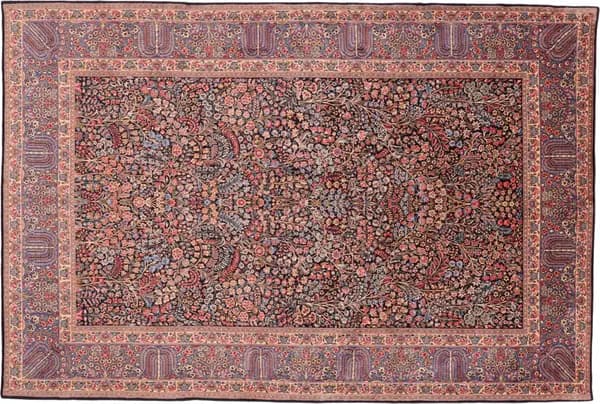
Kerman is one of the great rug provinces of Persia, and its handwriting is unmistakable: floral patterns, curving vines, balanced compositions with a clear preference for the decorative. Where the Kurdish and nomadic types work angular, everything here is rounded.
Rafsanjan belongs to that landscape. The town is internationally best known for its pistachios, but it lies in the middle of the Kerman weaving country and shares its vocabulary.
For a room that means a Rafsanjan reads more formal than a village or tribal rug. It suits rooms with a certain order — a seating group, a dining table, framed pictures — and less a deliberately raw interior.
What 620,000 knots mean
Around 620,000 knots per square metre is a great deal. For comparison: a Heriz manages with 90,000, a Kurdish village weaving with 150,000. Only at this order of magnitude can curving vines be drawn without visible steps at the edges.
The density has a second effect that matters more day to day: a densely knotted pile stands more upright and lays over less under footfall. On large surfaces walked on daily, the image therefore stays even for longer.
The price of that is working time. A square metre with 620,000 knots costs many times what a coarse village knotting needs — and that is where the difference in shop price between otherwise comparable rugs comes from.
- Floral, curving drawing instead of geometric edges.
- Around 620,000 knots — finer than most village types.
- Cotton warp with light, smooth fringes.
- Generous formats up to over eight square metres.
- Predominantly all-over fields, medallion less often.
Which room a Rafsanjan suits
The range of formats covers a good deal: a piece of around three square metres sits in front of a sofa, one over six carries a whole seating group or a dining table with the chairs pushed back.
Because many pieces are all-over and have no centre, they tolerate furniture better than a medallion rug. A sofa covering a third takes nothing from the composition.
The formal, floral character is a stylistic decision. In a classically furnished room it looks self-evident; in a very pared-back one it can read as too decorative.
Care
Vacuum along the pile, without a rotating brush.
Blot spills at once with clear water and a light cloth, from the outside in, without rubbing.
On large formats turn the rug once or twice a year. It is the most effective single step, because otherwise the window side fades visibly faster over the years.
Rafsanjan or Ravar?
Both belong to the Kerman weaving landscape and share its floral hand. The difference lies in reputation and in scale.
| Criterion | Rafsanjan | Ravar |
|---|---|---|
| Province | Kerman | Kerman |
| Design language | floral, decorative | floral, more finely drawn |
| Knot density | around 620,000 / m² | typically 321,000–380,000 / m² |
| Typical size | 3 – 8 m² | usually smaller |
| Recognition | less established in the market | a classical name of the region |
Common questions
Where is Rafsanjan?
In Kerman province in south-eastern Iran. The town is internationally best known for its pistachios, but it lies in one of the great rug landscapes of the country and shares its floral vocabulary.
Is a Rafsanjan the same as a Kerman?
It belongs to the same weaving landscape. Kerman is the province and the better-known trade name; Rafsanjan names the town more precisely. Design language and construction are very similar.
Why is the knot density so high?
Because the floral patterns of the Kerman tradition demand it. Curving vines can only be drawn without visible steps at the edges from about half a million knots. With coarse knotting the same drawing would turn angular and restless.
Does a Rafsanjan suit a dining table?
Yes, the larger formats are made for it. What matters is the clearance of around 80 centimetres beyond the table edge, so a chair does not tip over the edge when pushed back.
Does it fit a modern interior?
The floral, formal character sets a classical accent. In a room with quiet modern furniture that can be attractive, but it reads considerably more decorative than a geometric tribal weaving. Anyone seeking restraint is better served by the modern nomadic lines.