ExclusiveSigned
Kerman Rafsanjan | Sherkat-e Farsh
229 × 141 cm
6.300 €
25.500 €
Incl. VAT
In Stock · Ready to Ship
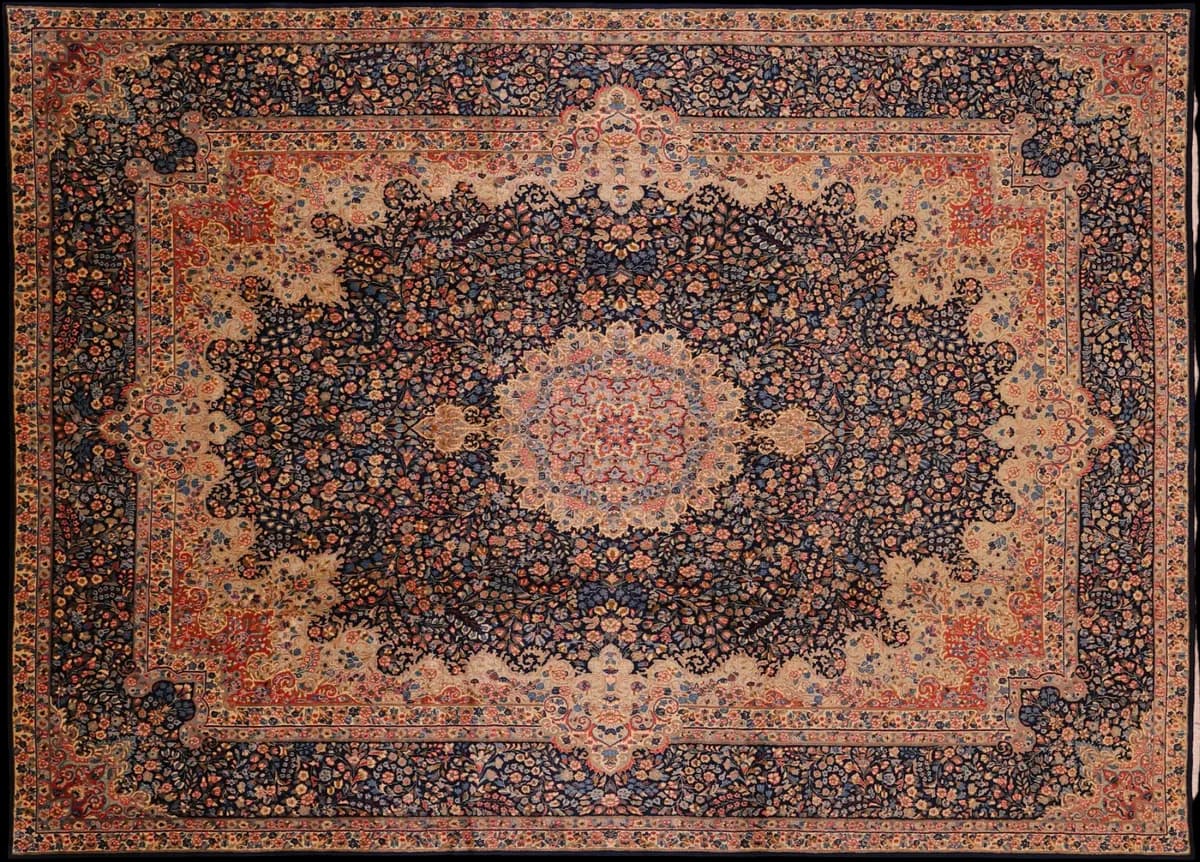
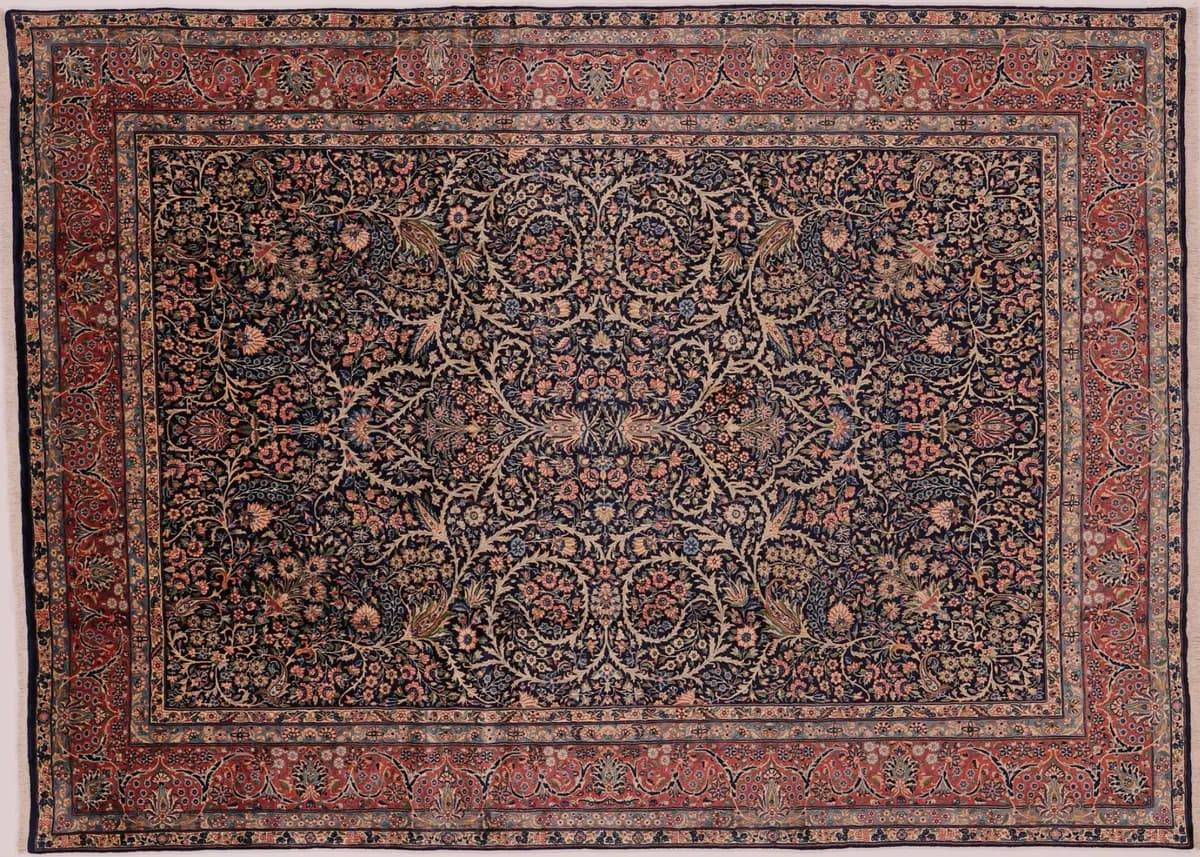
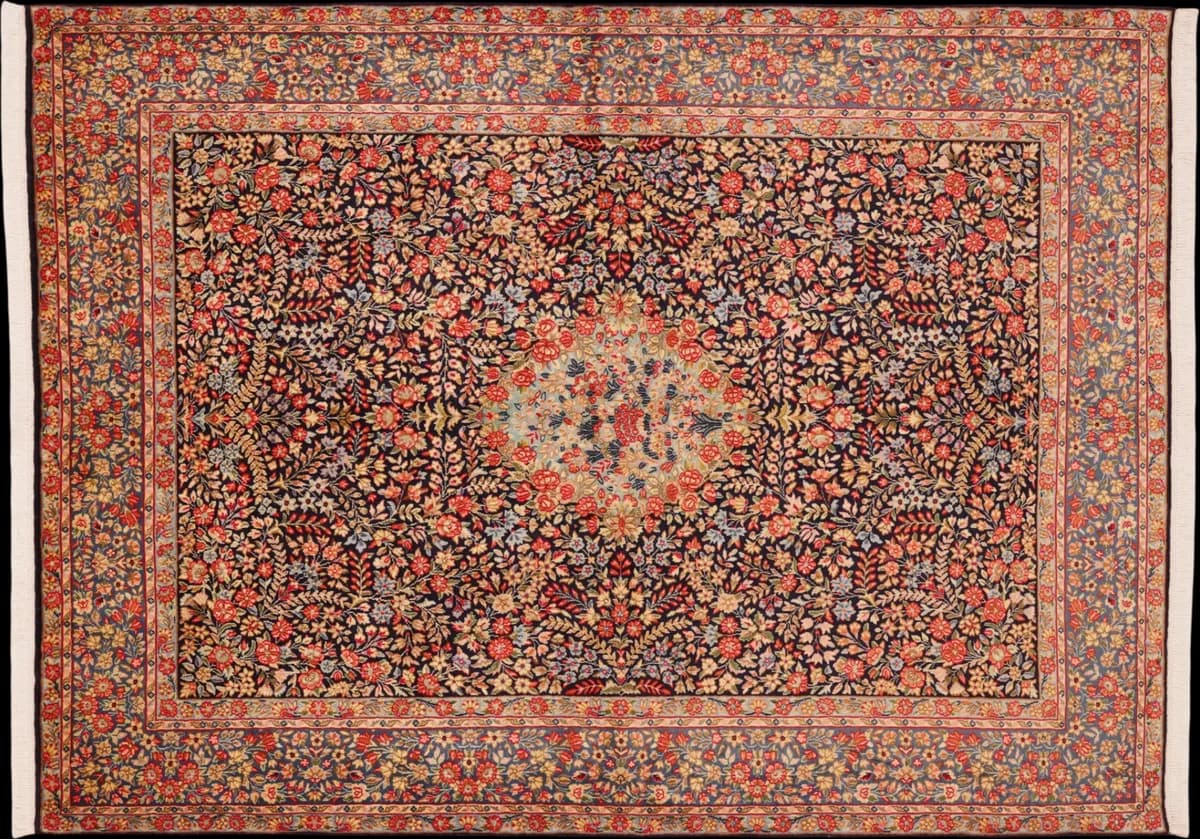
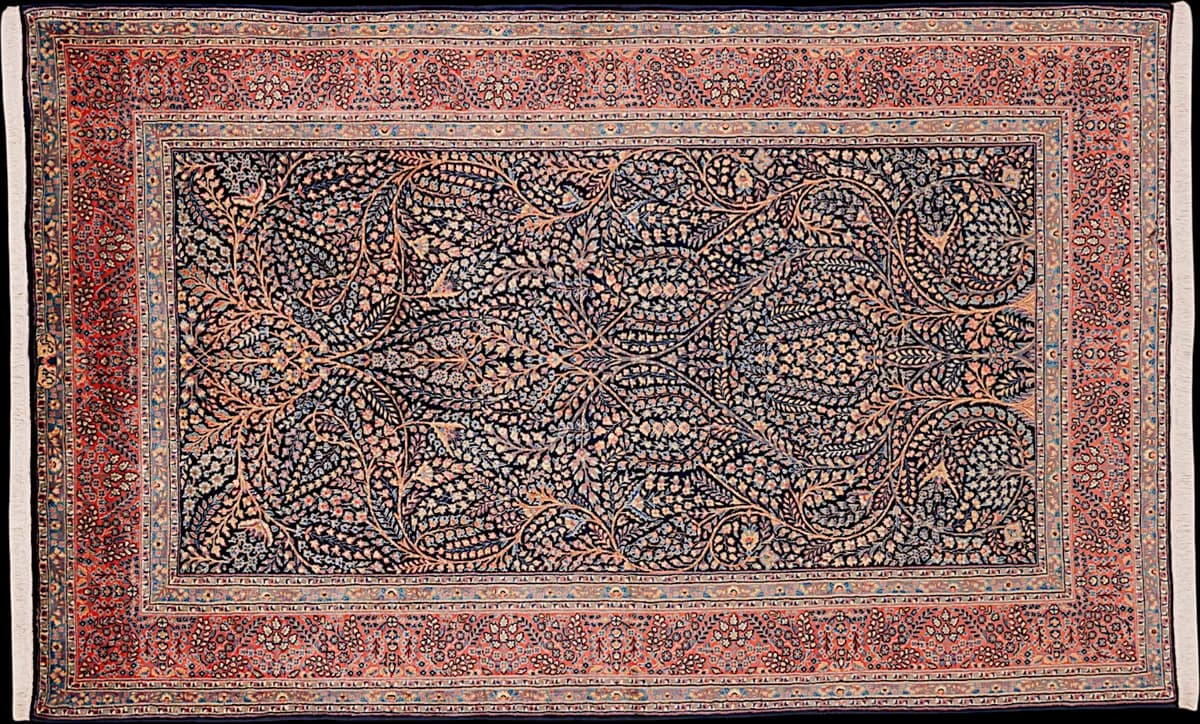
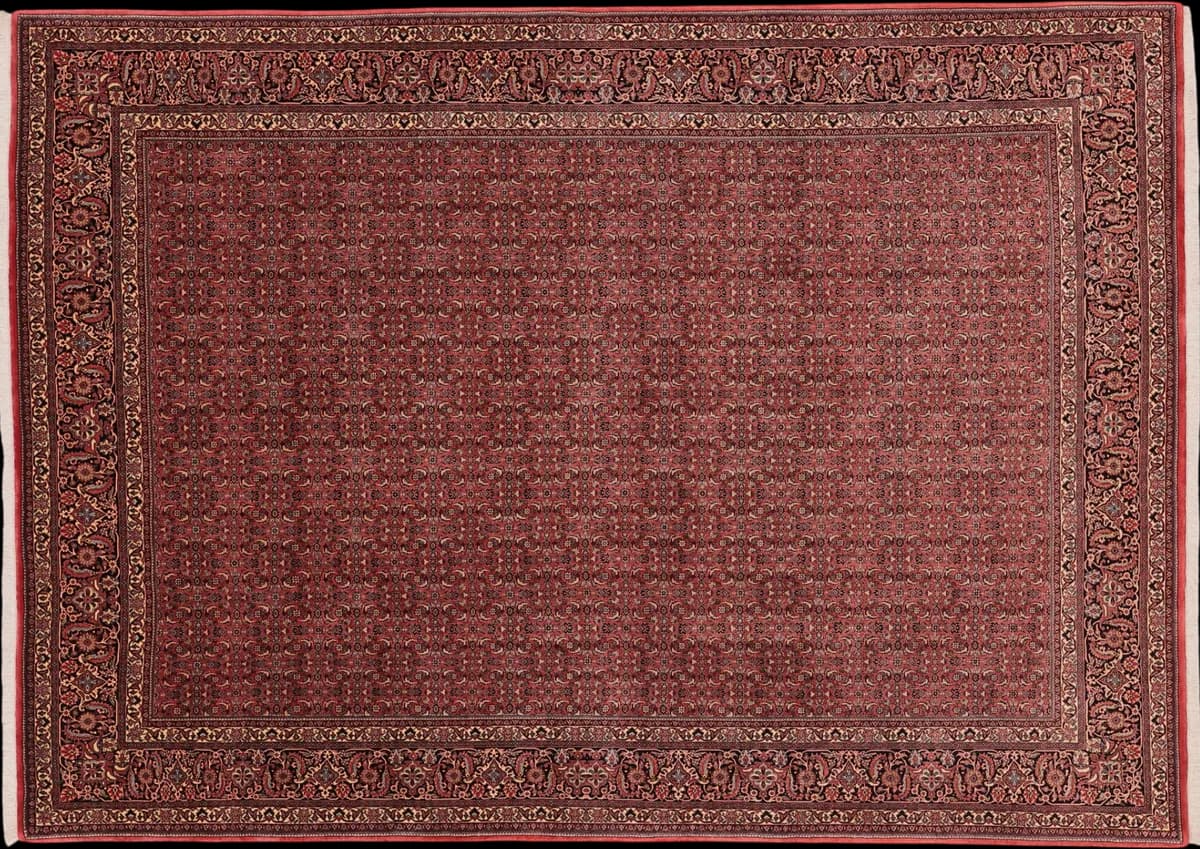
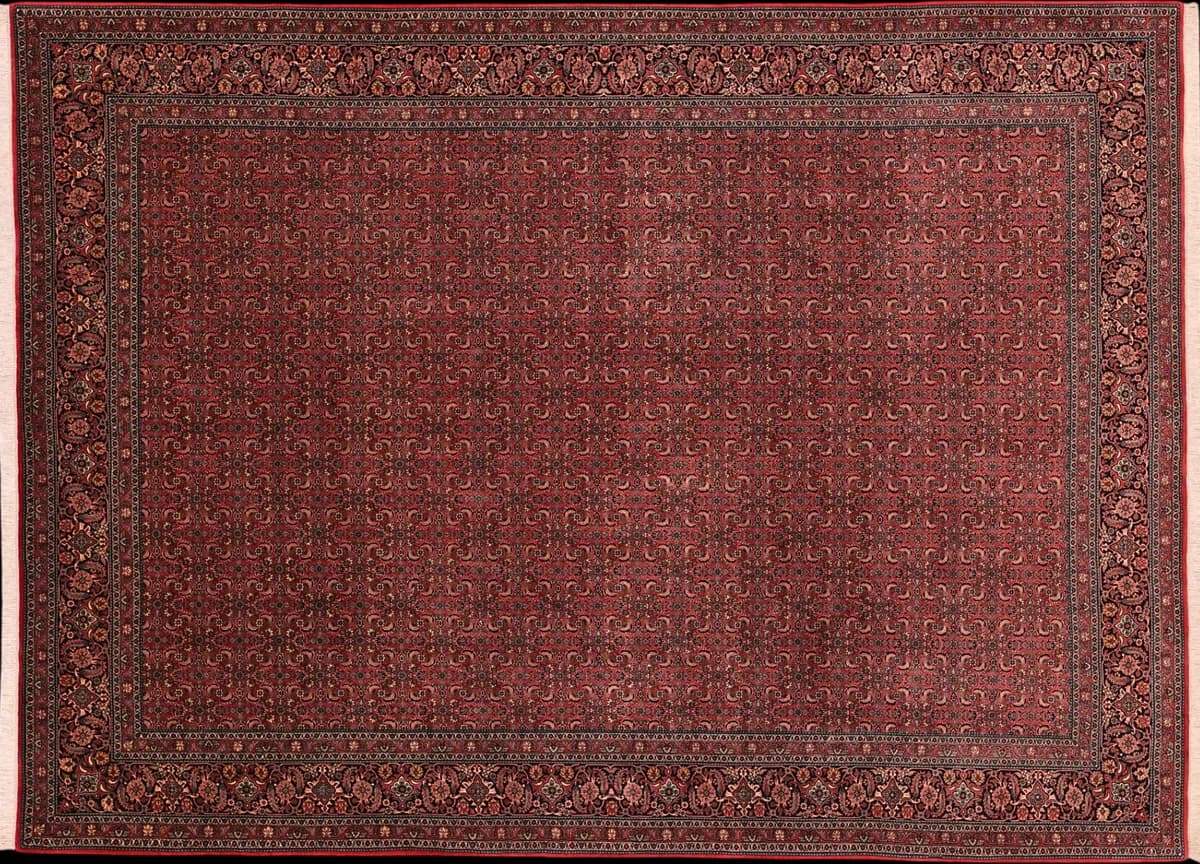
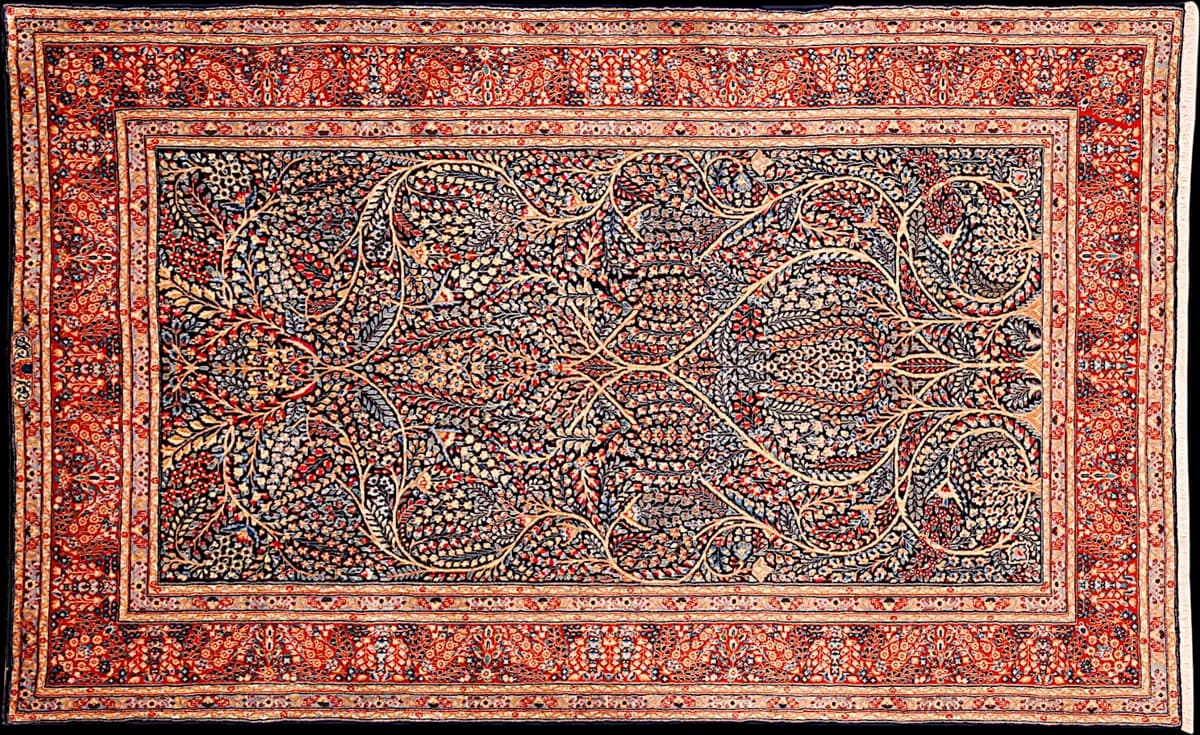
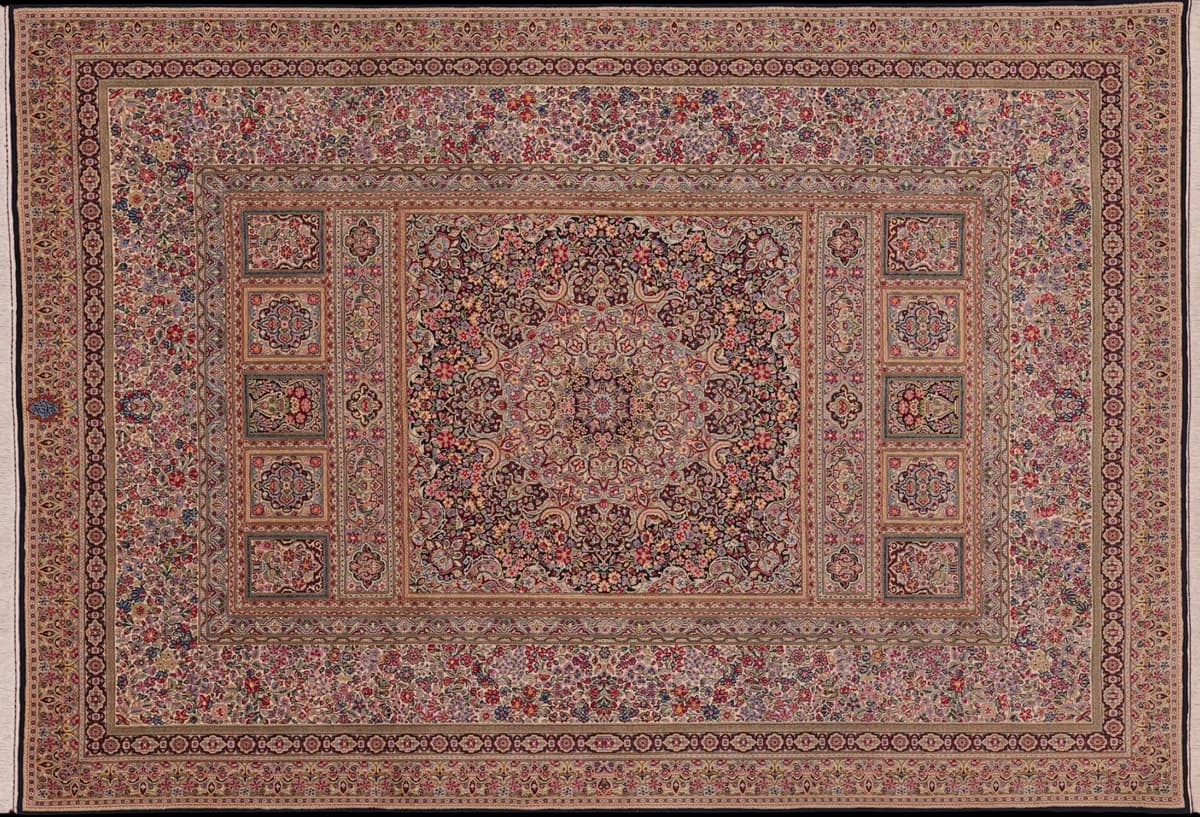
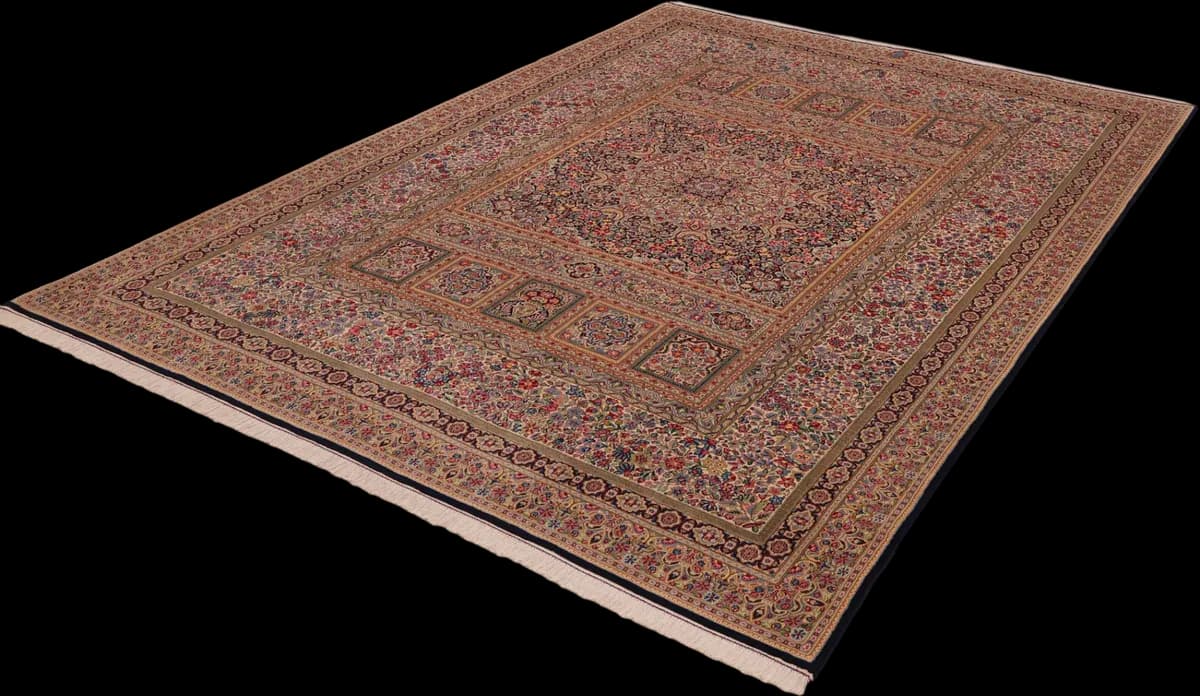
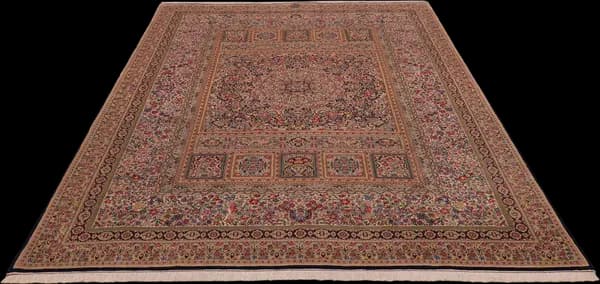
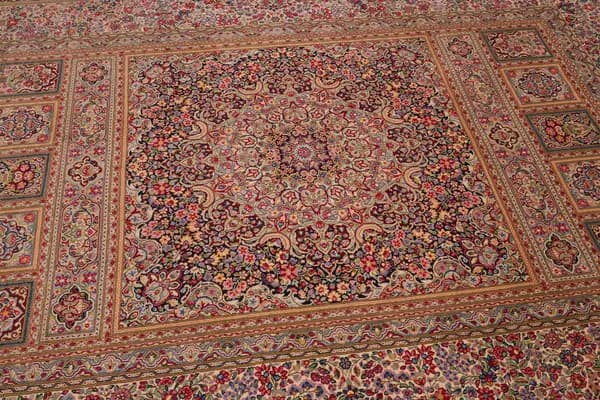
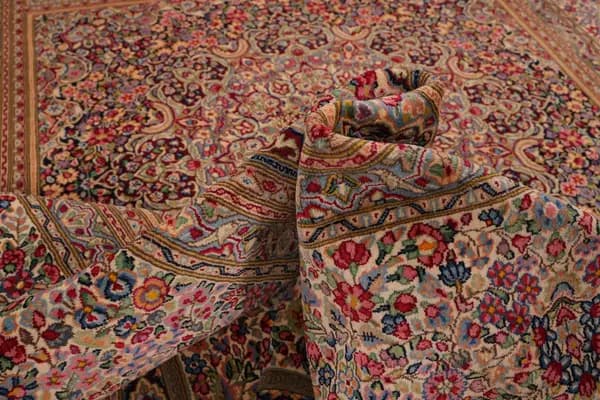
A Rafsanjan carpet, from the wider Kerman weaving region of south-eastern Iran, in a generous 304 x 211 cm (10'0" x 6'11"). Kerman rugs are prized for refined floral drawing and a classical, formal presence, and Rafsanjan shares that inheritance while adding its own structure: rather than one continuous field around the medallion, this piece is built like a set of framed compartments, closer to architecture than to a single sweeping garden.
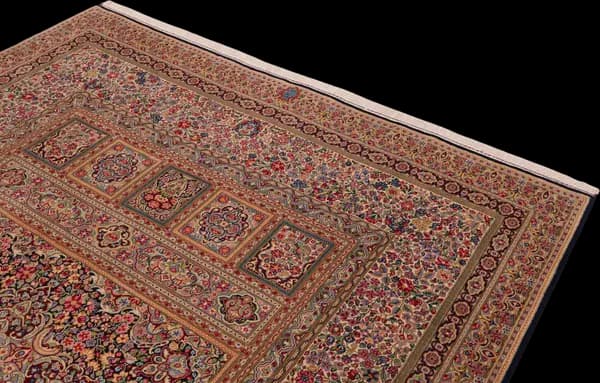
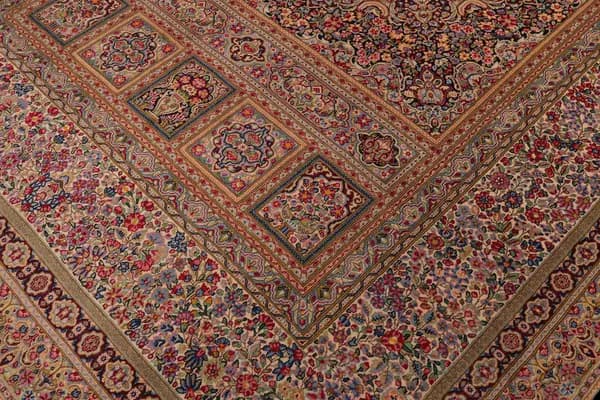
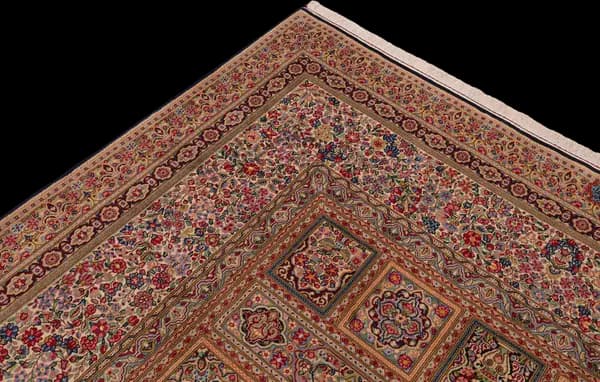
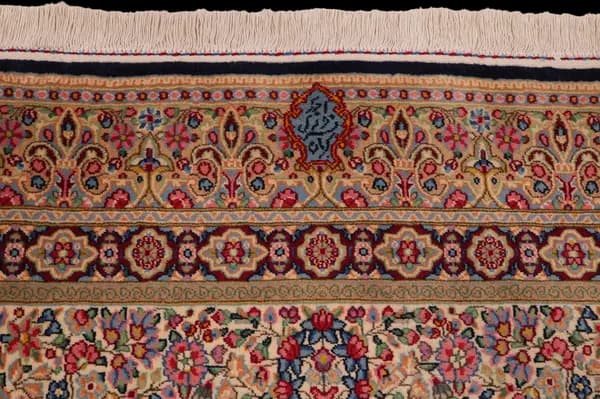
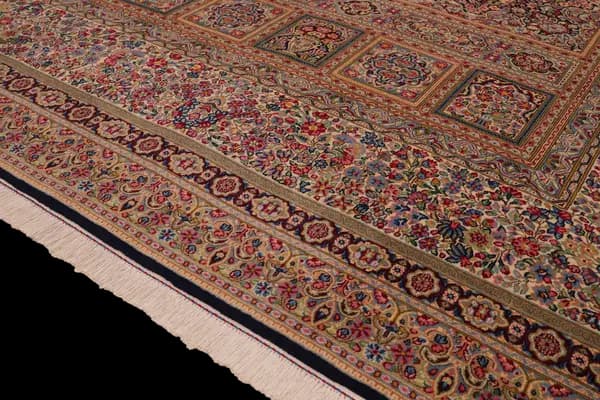
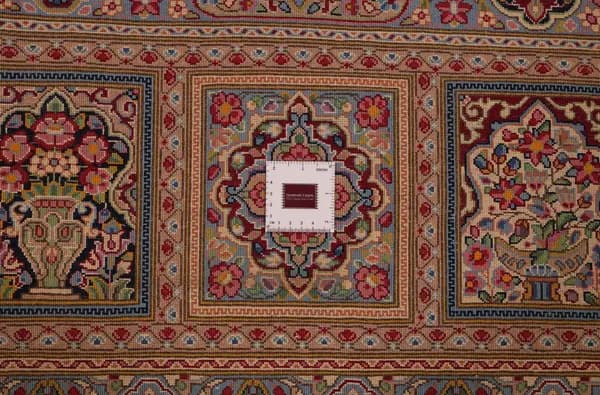
The first impression is a dense medallion glowing jewel-bright against a deep wine-red ground, its pendants reaching toward the ends of the field. Around it runs a wide ivory panel, and here the design breaks from the expected: instead of open floral ground, the ivory is divided into a grid of small squares and rectangles, each holding its own miniature medallion in navy, camel, sage and dusty rose. A broad wine-brown border closes the composition, packed with floral rosettes and sprays, held in check by pale ivory guard bands on either side.
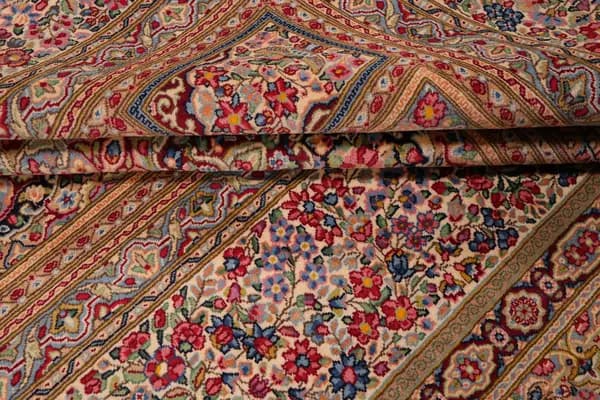
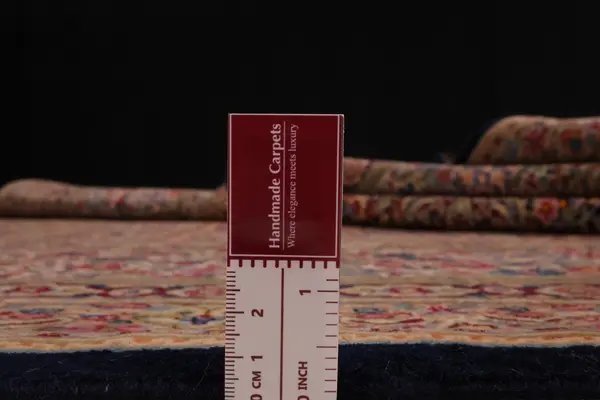
That grid of small, separately drawn medallions is only possible at real density, and this rug carries 501,000 to 640,000 knots per square metre, tied by hand over a cotton warp. Each little compartment needed its own precise, individually resolved motif rather than a repeating pattern, which is a slower and more exacting way to fill a border field. The pile itself is hand-spun wool, kept low at 12 mm, so the wool takes on a crispness usually associated with finer materials, with a light sheen across the surface. The piece is signed by the Frouzi workshop, whose name marks it as the specific work of that atelier rather than an anonymous production.
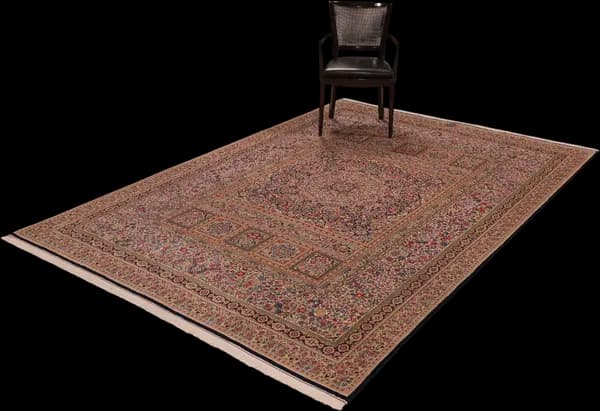
At this size the rug belongs under a dining table or across a formal seating group in a living or dining room, where its architecture reads clearly from a distance rather than being lost underfoot. The wine-red ground holds its own against dark wood or leather furniture, while the ivory compartments keep the whole design from feeling heavy, lifting the room even in evening light. Underfoot it is dense and firm, built for a room that sees regular use rather than one to be kept for best. Watch it through the day and the small medallions in the ivory panel catch the light differently as the sun moves, each one asking to be looked at in turn.
More on Rafsanjan rugs: origin, making and how to recognise a genuine piece
Exceptionally fine weave
At 304 × 211 cm (6.41 m²) this is a large rug. It sits under a seating group with the front legs of sofa and chairs on it, or under a dining table for four. A table for six wants about 80 cm of clearance all round, and needs more.
Yes, knotted by hand — knot by knot on a loom, not machine-made. The density is 501,000 to 640,000 knots per square metre; across 6.41 m² that is roughly 3.2 to 4.1 million individual knots, every one of them tied by hand.
Hand-spun wool still carries its own lanolin, which keeps liquid sitting on the surface for a moment: blot quickly, with clear water and a light cloth, working inwards and without rubbing. Otherwise regular vacuuming along the pile is enough. Turn the rug once or twice a year so light and footfall reach it evenly.
We are in the Hamburg Speicherstadt. Come and see this rug in daylight, or write to us — a person answers.
Certificate included verifying origin, materials, and craftsmanship.
Ref: 924676