Exclusive
Rafsanjan | Sherkat-e Farsh
337 × 242 cm
13.500 €







6.300 €
Incl. VAT
In Stock · Ready to Ship
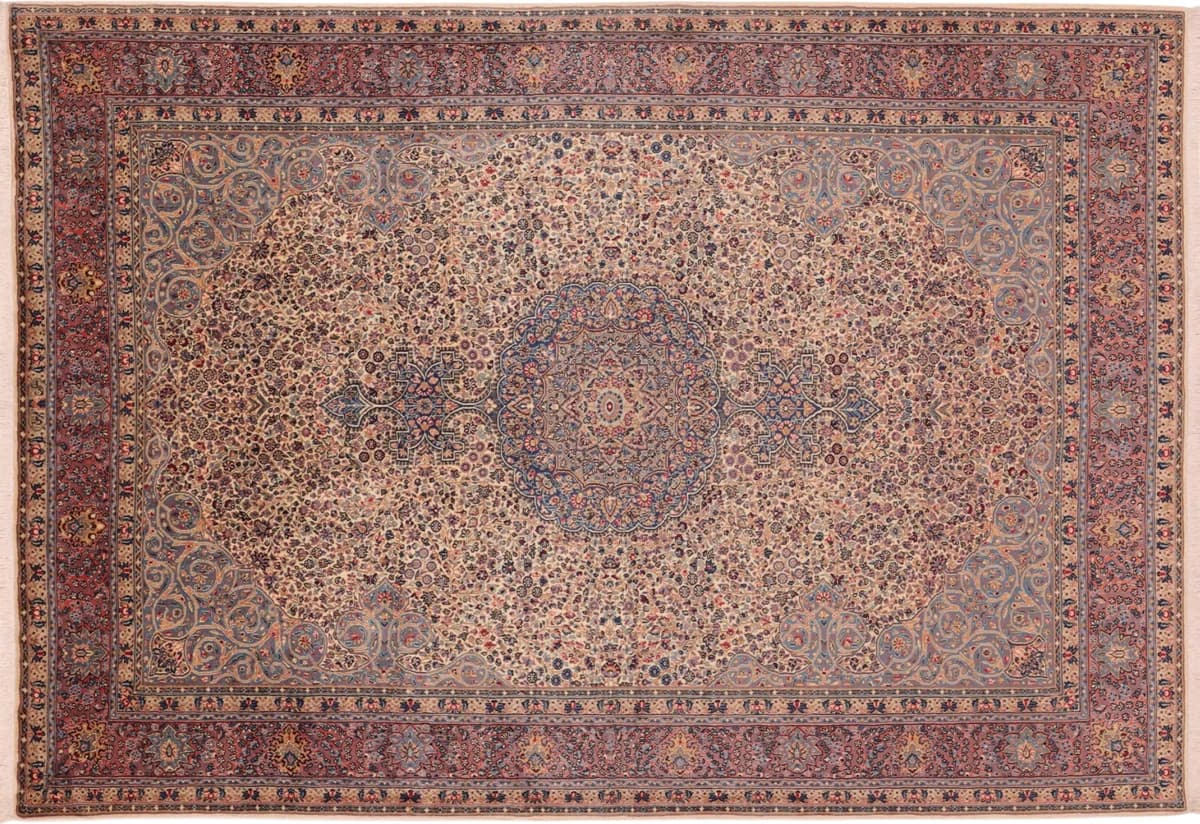
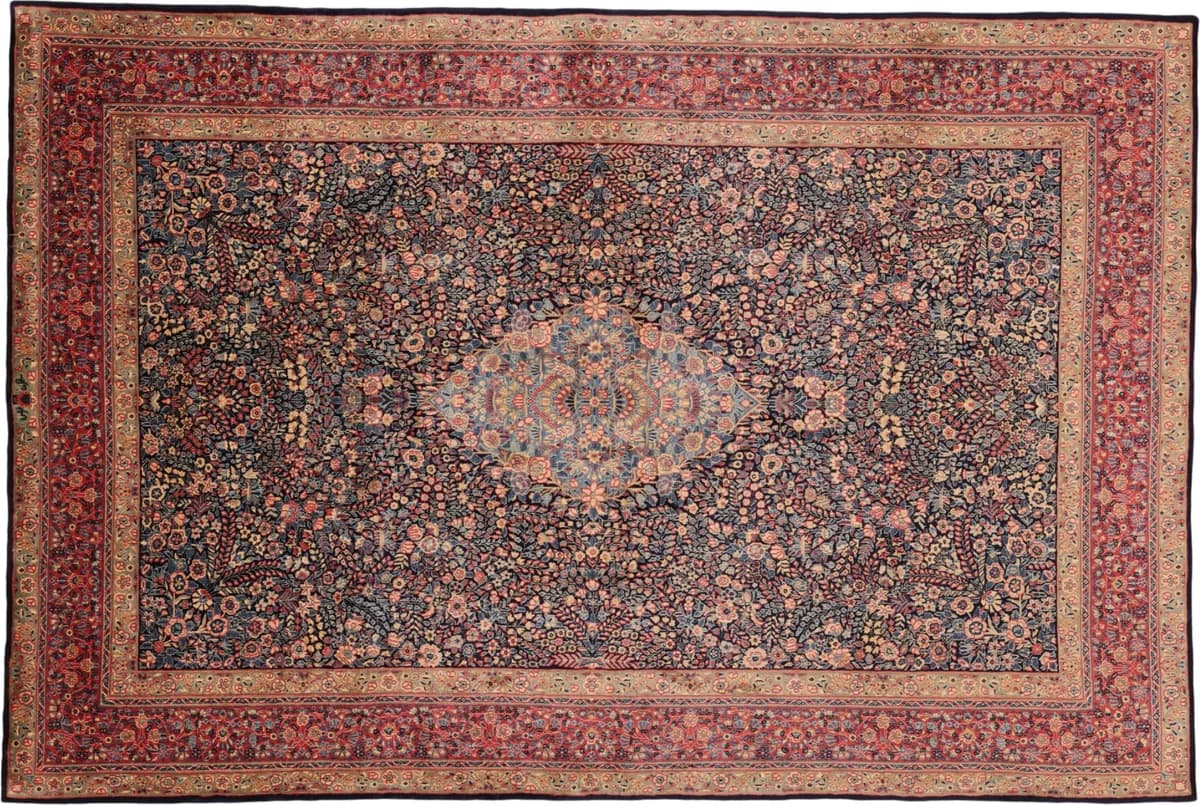
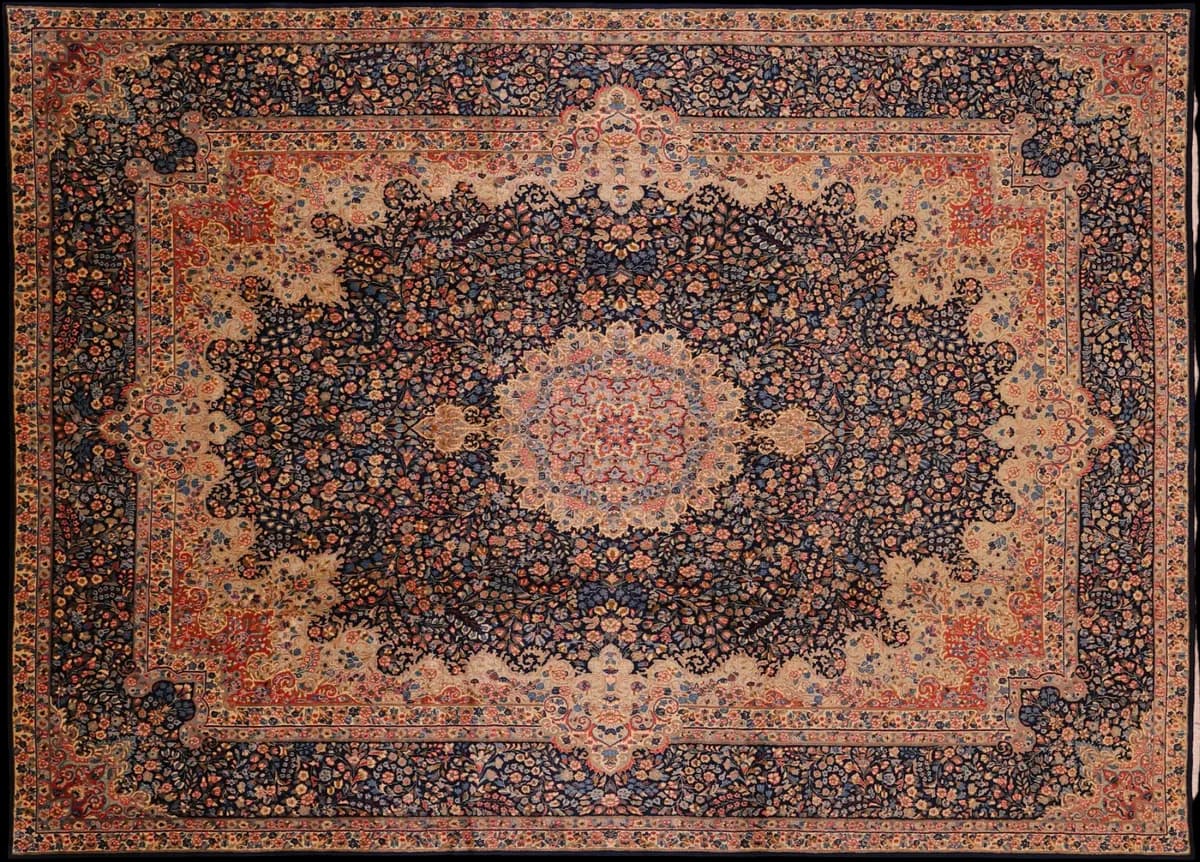
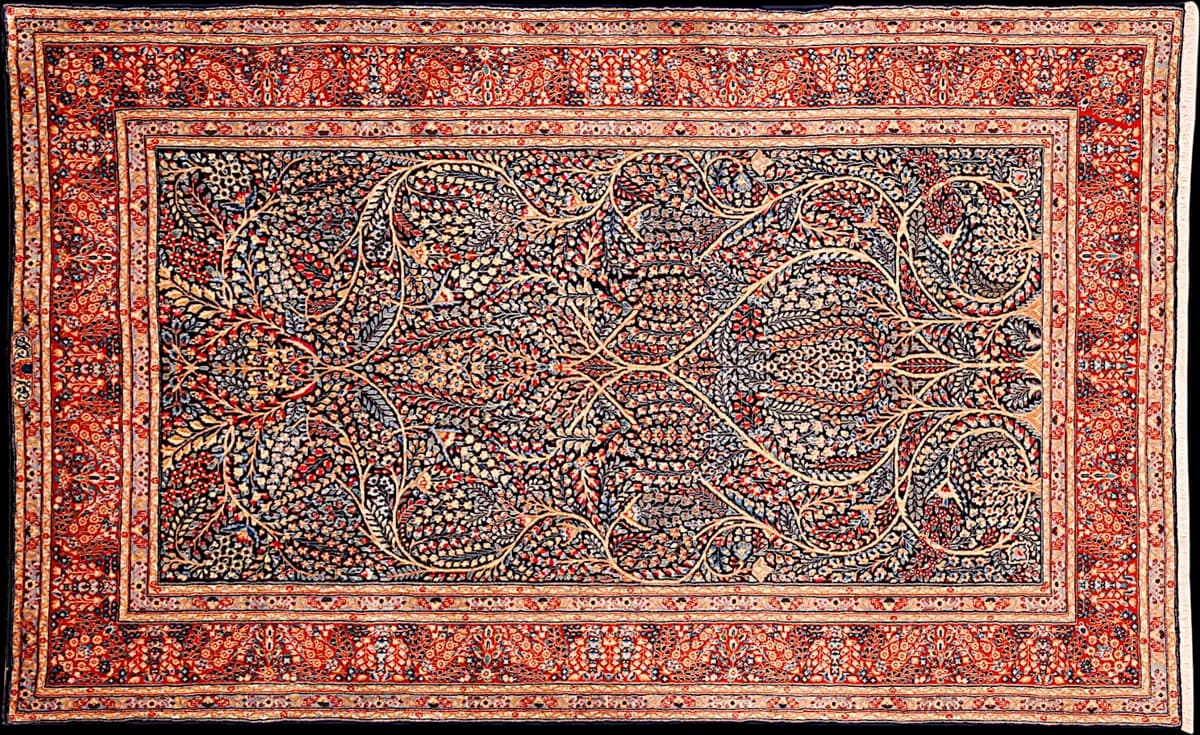
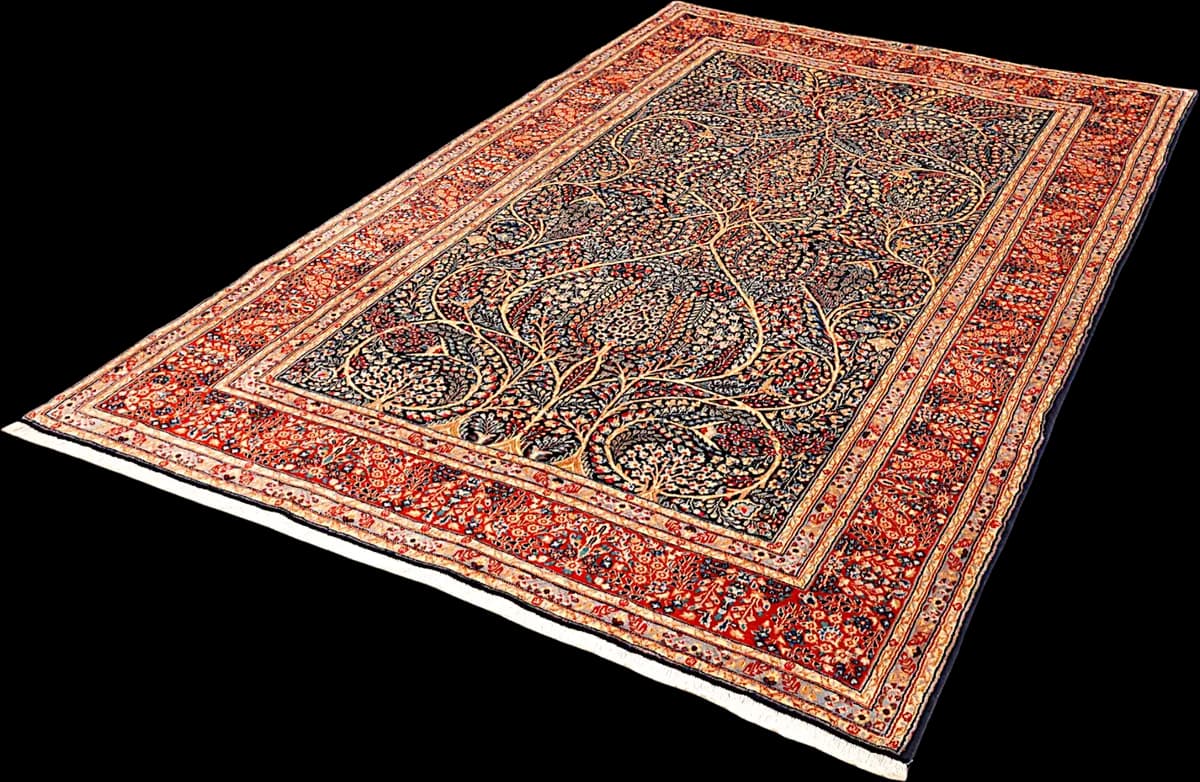
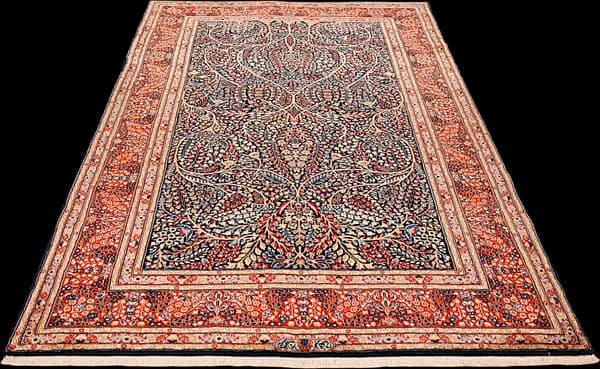
This is a Rafsanjan, a rug from the wider Kerman weaving region of Iran, sized 229 x 141 cm (7'6" x 4'8"). Kerman rugs are known for their classical Persian elegance and refined floral drawing, and Rafsanjan carries that same aesthetic with its own regional hand, favouring balance and generous, decorative fields over any single dramatic motif. What sets this particular piece apart is how far it pushes that floral tradition towards density rather than openness.
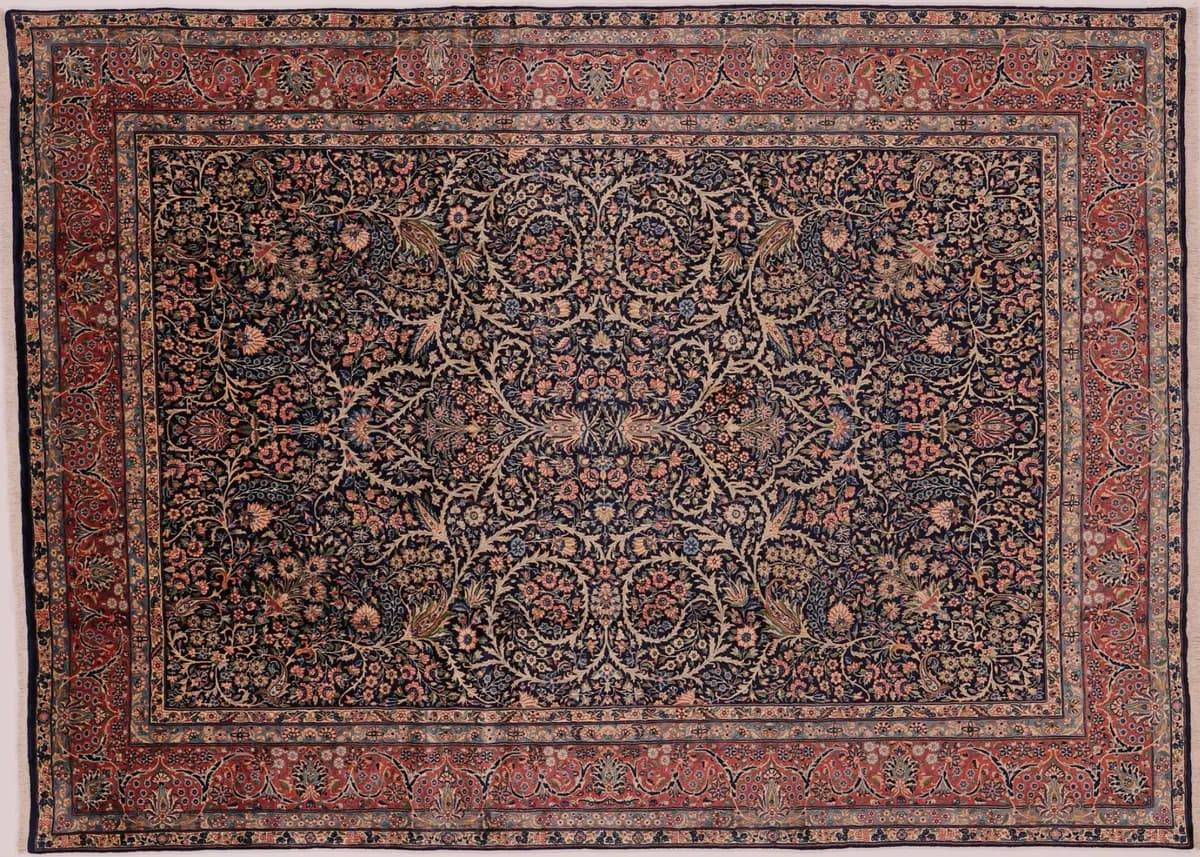
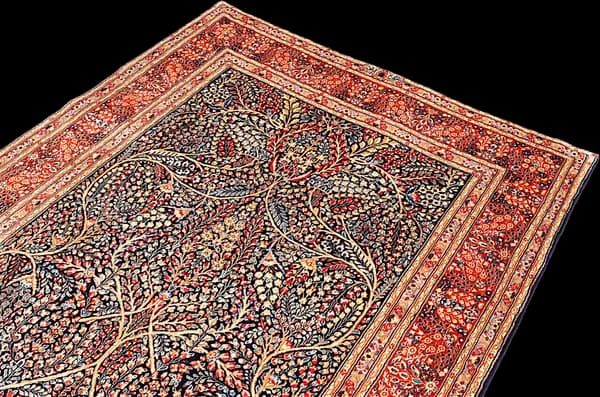
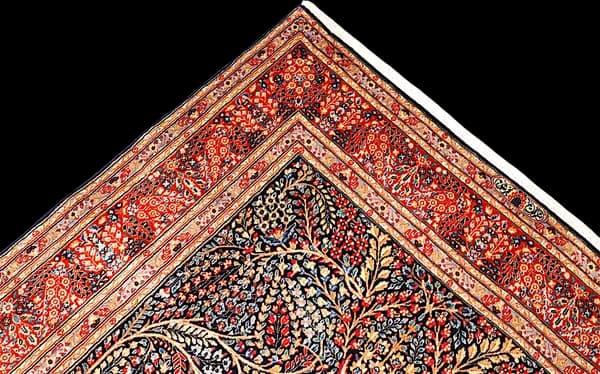
The field is a deep navy blue, and it is worked so thoroughly with interlacing floral vines that the ground colour is almost lost beneath them, ivory scrolls and flowerheads crowding edge to edge with no medallion to anchor them. Slate-blue, dusty rose and coral touches surface throughout, catching the eye as it moves across the trellis. A broad rust-red floral border holds the field in check, its own vine pattern echoing the one inside, and several narrow ivory and dark guard stripes tighten the frame further, together making up close to a fifth of the rug's width.
The pile is hand-spun wool, knotted by hand onto a cotton warp, and it is this that lets the drawing stay so fine despite how packed the field is: hand-spun yarn varies slightly in thickness from knot to knot, but at a density of 501,000 to 640,000 knots per square metre the weaver could still resolve each small flowerhead and curling stem without the pattern blurring into itself. That density, sustained across the whole field rather than reserved for a medallion, is months of steady work, produced under the Sherkat Farsh workshop and signed as theirs.
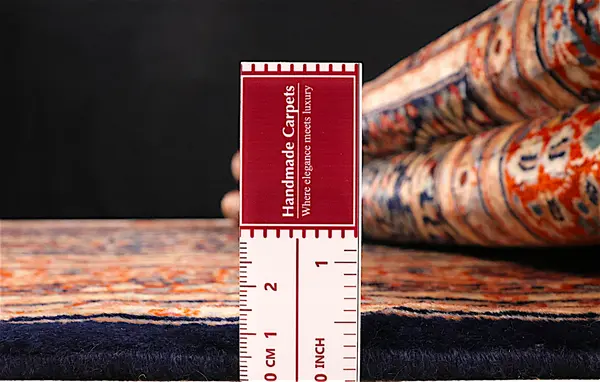
A rug this size suits a bedroom or a quieter seating corner rather than a large dining spread, and the navy ground will hold its own against dark furniture while still lifting a pale floor with its rust-red border. Underfoot the 12 mm pile is short, even and firm, built for daily use rather than careful preservation. As daylight crosses it through the day, the density of the pattern means the surface never quite settles into one reading, and that quiet shifting is what stays interesting long after the room around it has become familiar.
More on Rafsanjan rugs: origin, making and how to recognise a genuine piece
Exceptionally fine weave
At 229 × 141 cm (3.23 m²) this is a medium rug. It works in front of a sofa, in front of a bed or in a study. It is too small for a dining table — there you want about 80 cm of clearance so a chair does not tip over the edge when pushed back.
Yes, knotted by hand — knot by knot on a loom, not machine-made. The density is 501,000 to 640,000 knots per square metre; across 3.23 m² that is roughly 1.6 to 2.1 million individual knots, every one of them tied by hand.
Hand-spun wool still carries its own lanolin, which keeps liquid sitting on the surface for a moment: blot quickly, with clear water and a light cloth, working inwards and without rubbing. Otherwise regular vacuuming along the pile is enough. Turn the rug once or twice a year so light and footfall reach it evenly.
We are in the Hamburg Speicherstadt. Come and see this rug in daylight, or write to us — a person answers.
Certificate included verifying origin, materials, and craftsmanship.
Ref: 980280