Loribaft
294 × 80 cm
2.085 €
960 €
Incl. VAT
In Stock · Ready to Ship
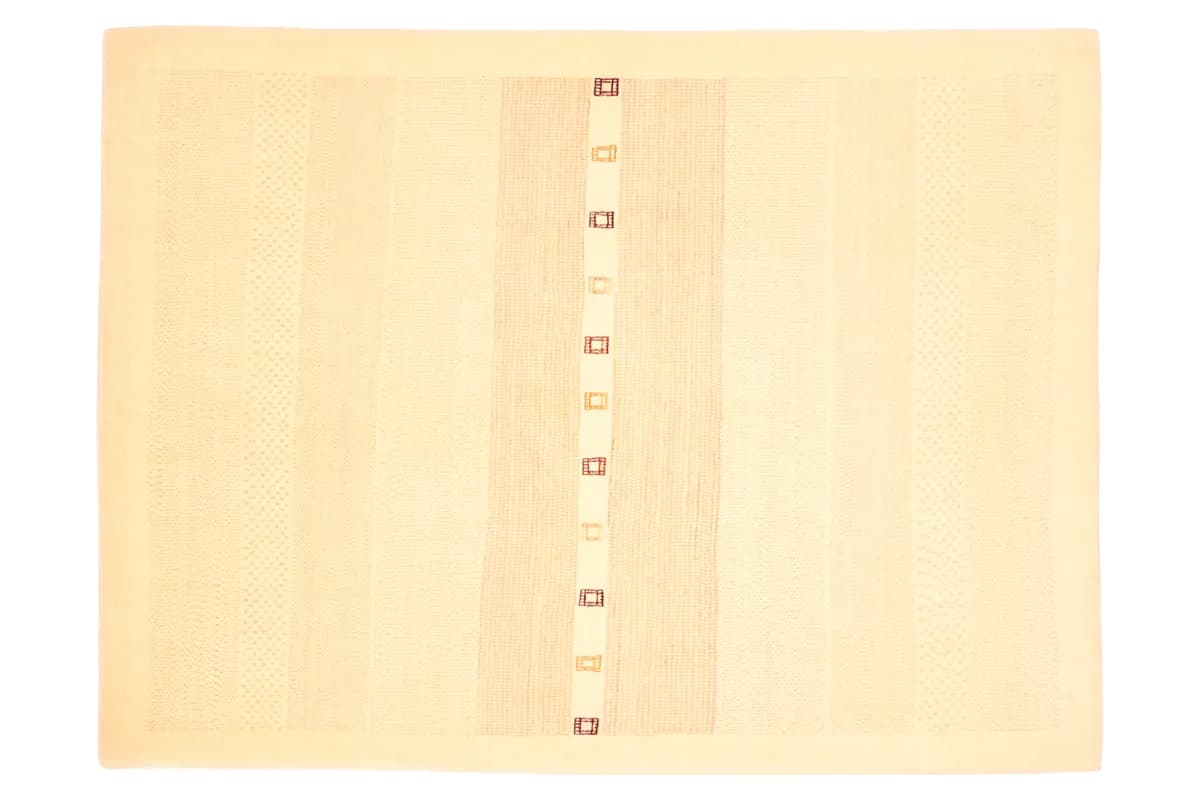
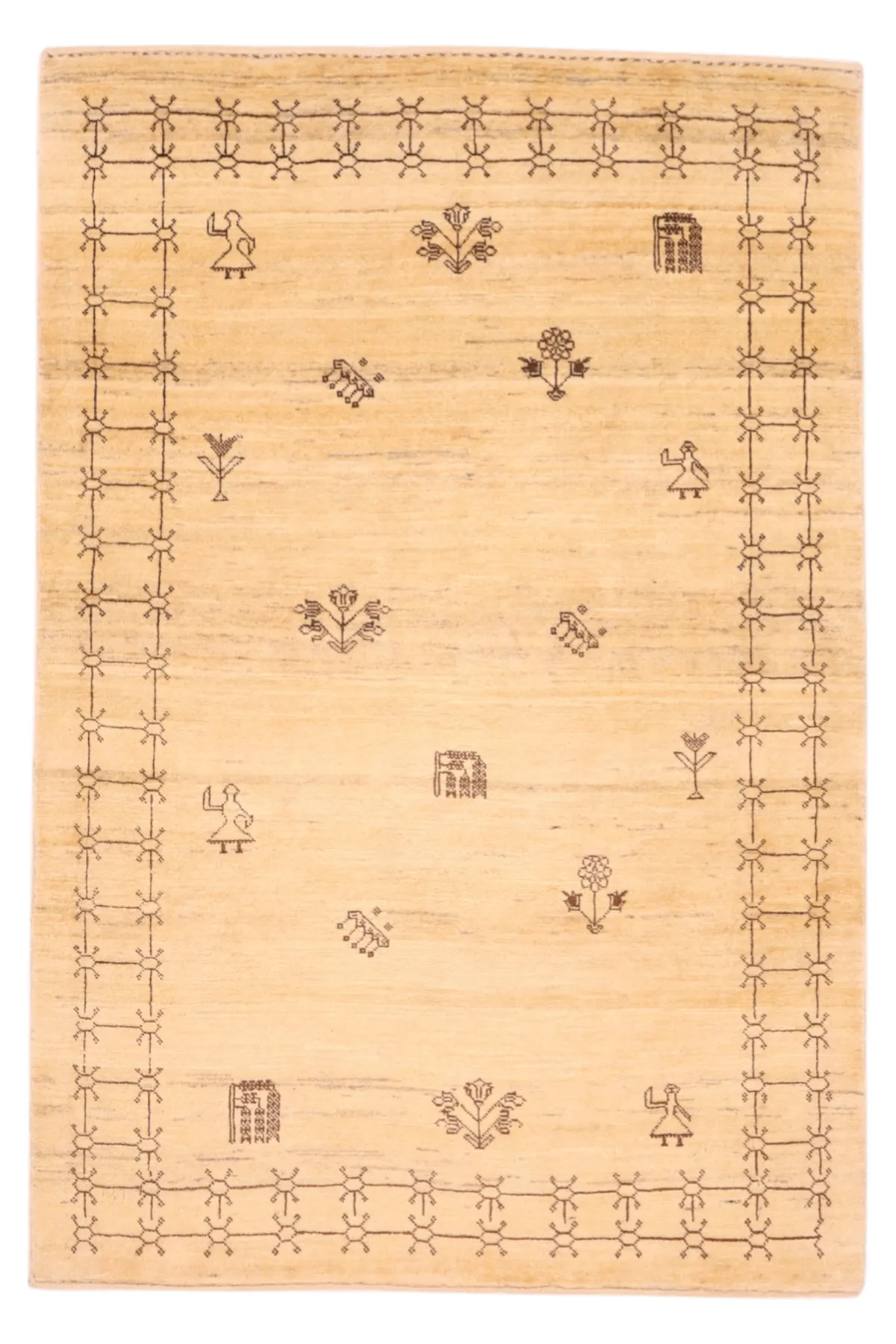
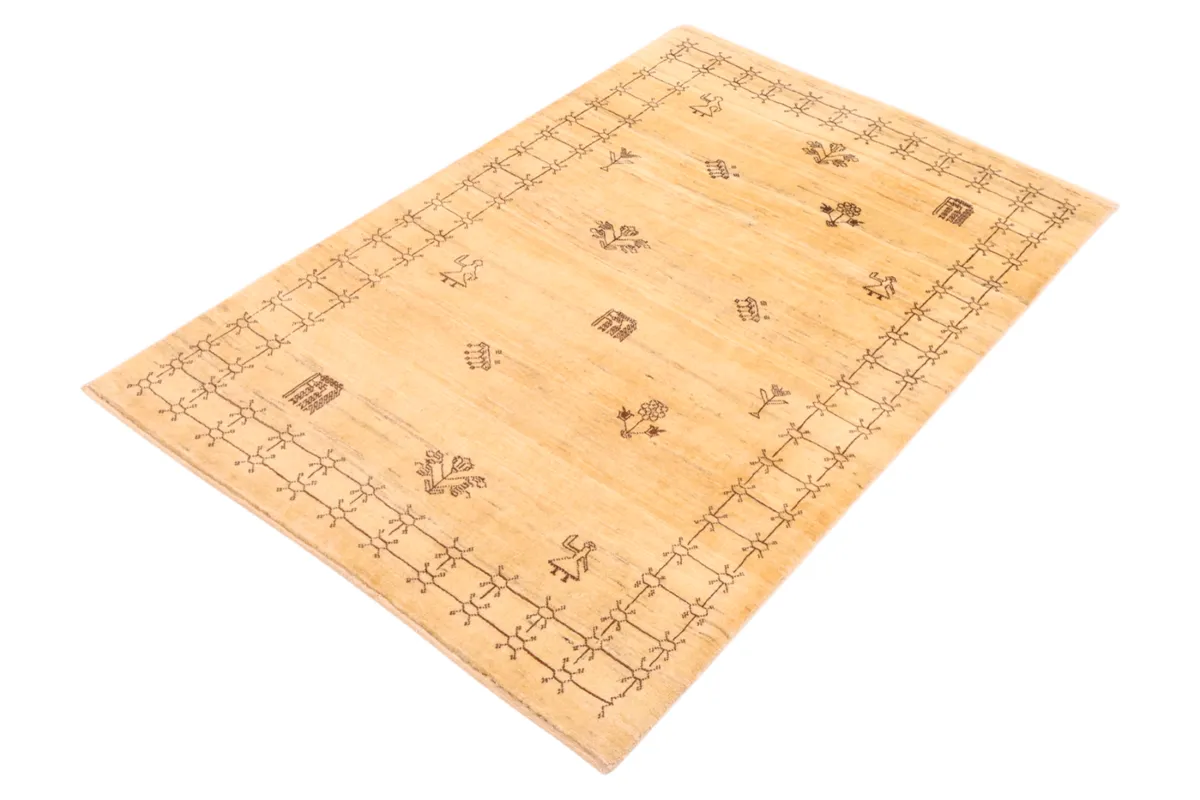
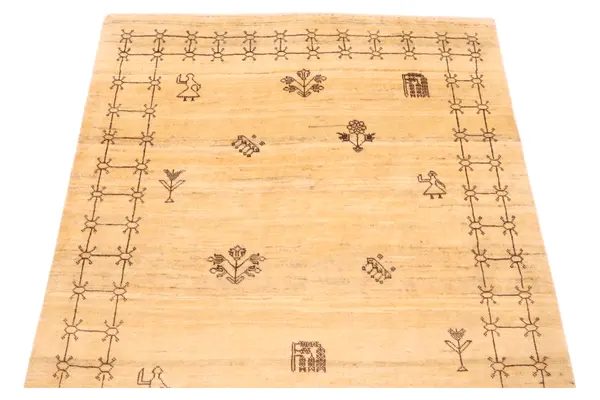
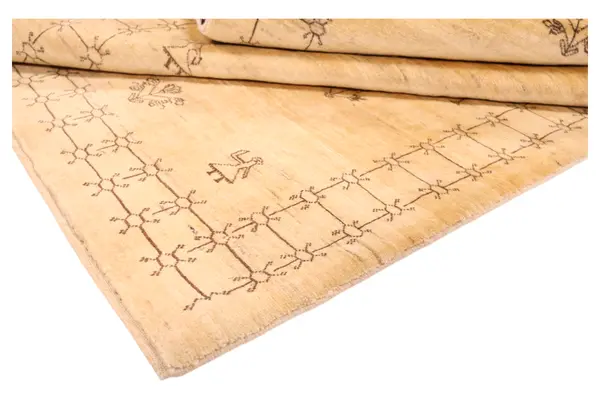
A tribal rug from the Qashqai confederacy of southern Iran, from the Kashkuli group that weavers and dealers alike consider the finest expression of Qashqai work, 150 x 101 cm (4'11" x 3'4"). Kashkuli pieces are prized for a knotting finer than most tribal weaving attempts, paired with a design sense that reaches toward something more composed. This one uses that skill in an unexpected way.
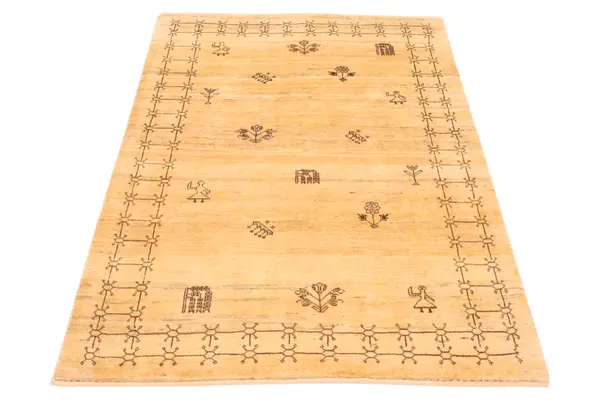
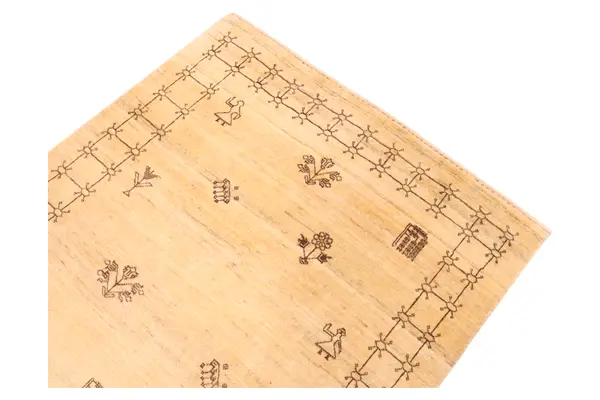
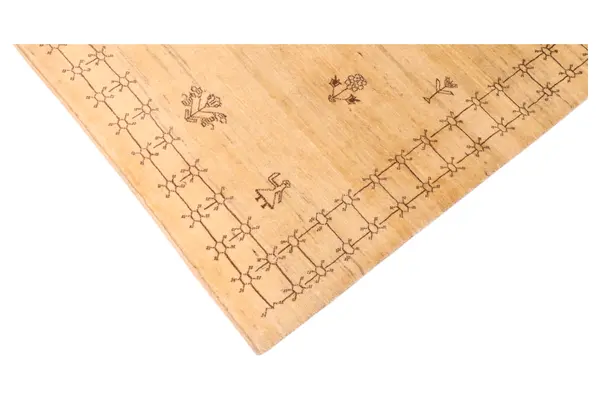
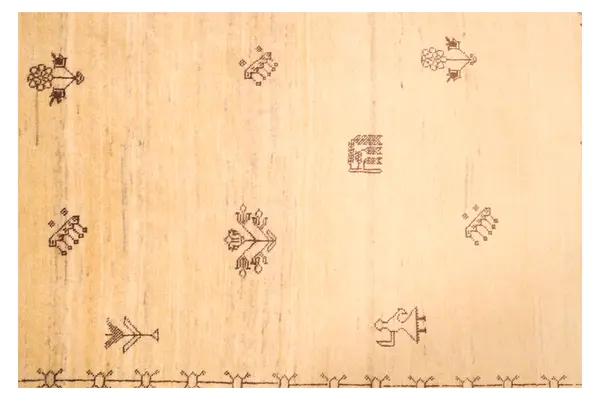
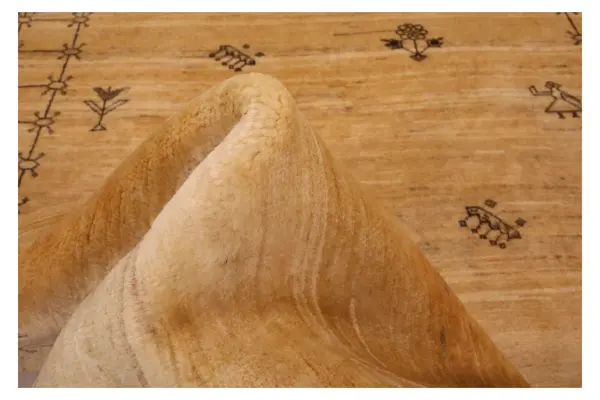
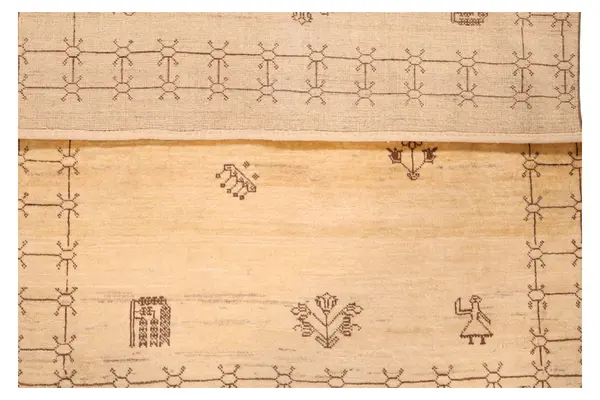
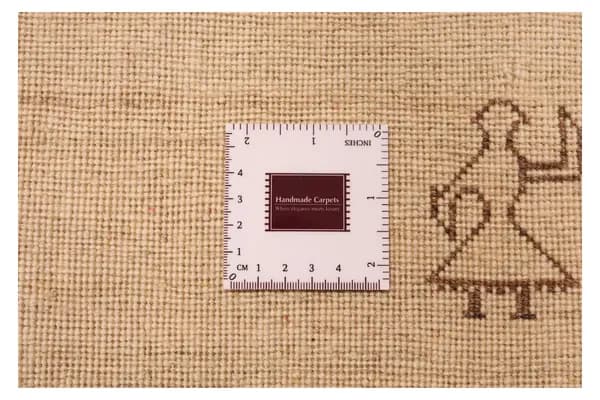
The field is a creamy sand beige, left almost bare rather than filled, and it is this openness that strikes you first. Across it sit small figures drawn in dark chocolate brown: dancing people with one arm raised, trees, flowers, and comb-like forms that read as houses or looms. Nothing repeats in a grid, nothing anchors a centre — the figures simply occupy the space the way memory does, one thing recalled after another. A narrow lattice border of linked rosettes closes the field, its brown kept close in tone to the ground so that the border frames without shouting.
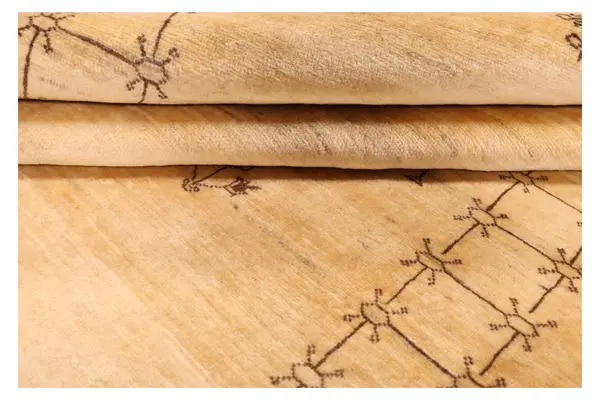
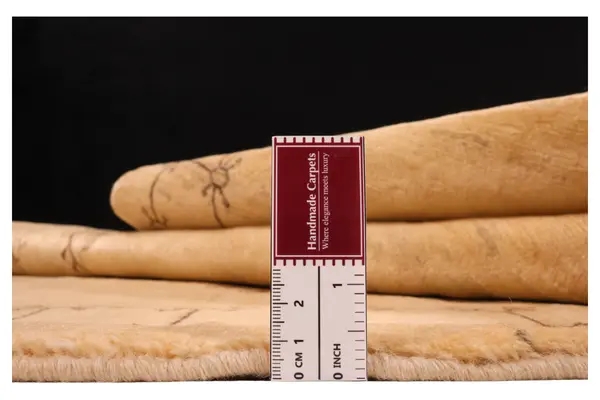
The wool is hand-spun, on a natural wool warp, and knotted by hand to a density of 201,000 to 250,000 knots per square metre — fine work for a piece made on a portable loom without a drawn plan. That fineness is usually spent on covering a field with dense medallion work; here it is spent on precision at a small scale, on figures a few centimetres high that still hold their gesture. Hand-spinning gives the yarn slight irregularities of thickness, which is why the colour breathes rather than sitting flat, and the 12 mm pile keeps enough depth that the brown linework sits slightly proud of the field rather than merely printed on it.
At this size the rug belongs somewhere small and often seen — a hallway, beside a bed, on the floor of a study or by a doorway where a larger rug would be wrong. The sand ground lifts a dim hallway and reads warm against pale floorboards or dark wood alike, and the figures give a passer-by something to notice each time rather than a pattern the eye stops registering. Underfoot it is dense enough for a well-used corner of the house, not a piece to be protected. Morning or lamp light catches the raised pile of the brown linework and the small dancing figures seem, briefly, to move.
More on Lori-Kashkouli rugs: origin, making and how to recognise a genuine piece
Fine quality weave
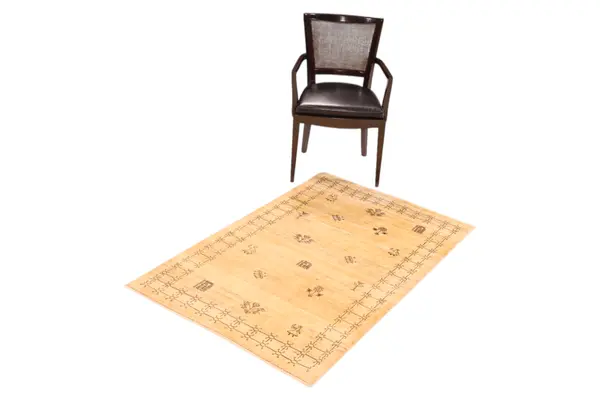
At 150 × 101 cm (1.52 m²) this is a small rug. It works beside a bed, in a reading corner, in front of a fireplace or as a mat by a door. It does not furnish a room; it makes a point in one.
Yes, knotted by hand — knot by knot on a loom, not machine-made. The density is 201,000 to 250,000 knots per square metre; across 1.52 m² that is roughly 300,000 to 380,000 individual knots, every one of them tied by hand.
Hand-spun wool still carries its own lanolin, which keeps liquid sitting on the surface for a moment: blot quickly, with clear water and a light cloth, working inwards and without rubbing. Otherwise regular vacuuming along the pile is enough. Turn the rug once or twice a year so light and footfall reach it evenly.
We are in the Hamburg Speicherstadt. Come and see this rug in daylight, or write to us — a person answers.
Certificate included verifying origin, materials, and craftsmanship.
Ref: 358969