Belutsch
176 × 95 cm
476 €







993 €
Incl. VAT
In Stock · Ready to Ship
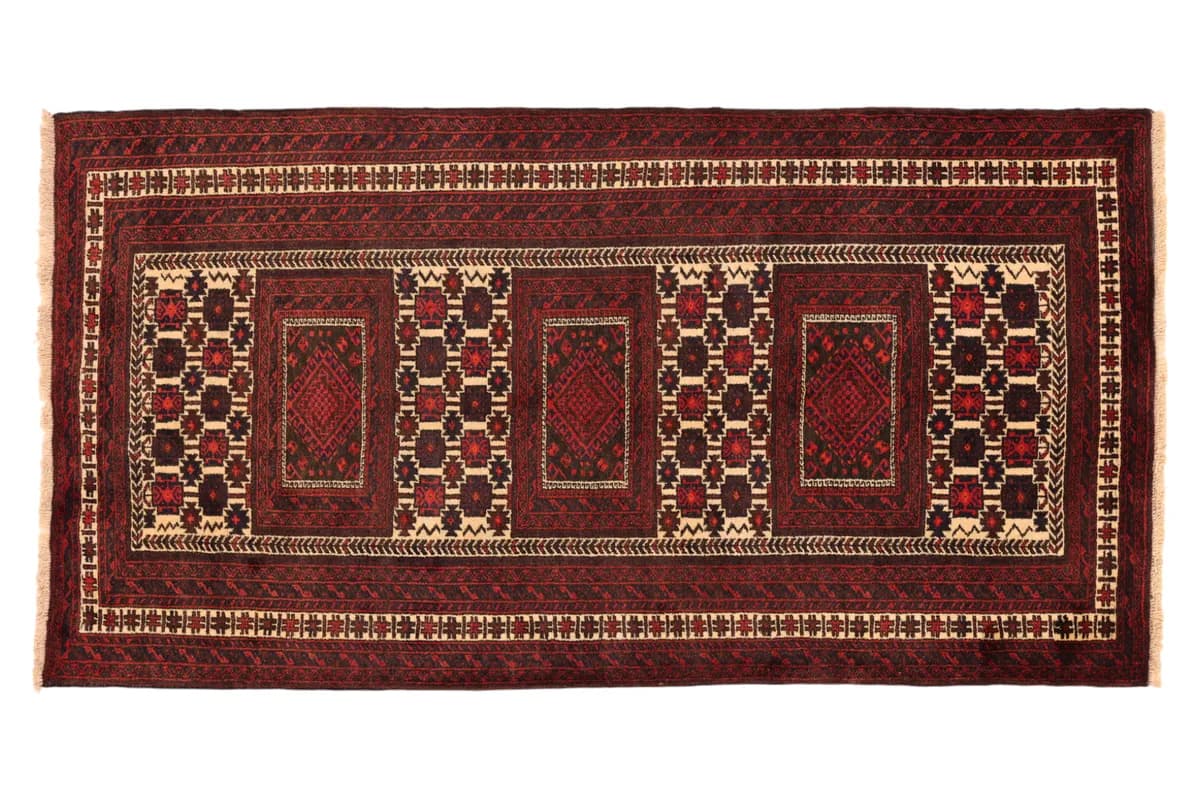
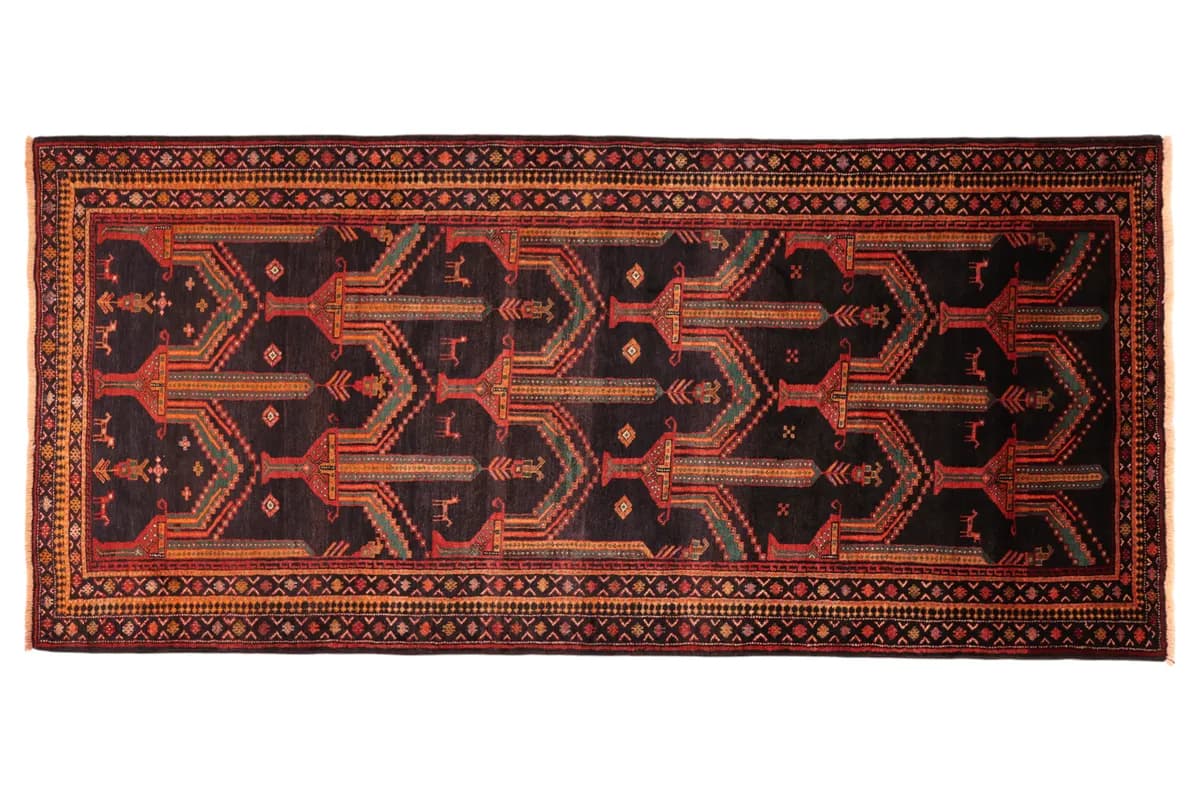
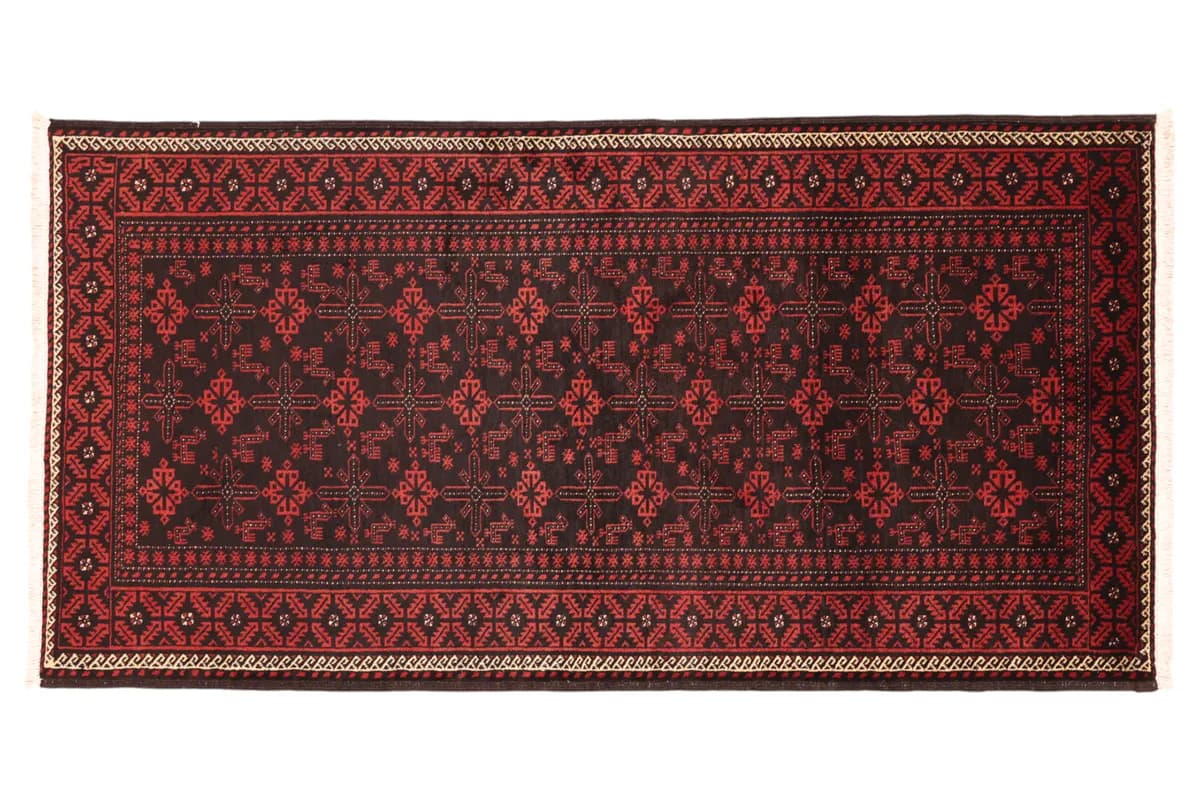
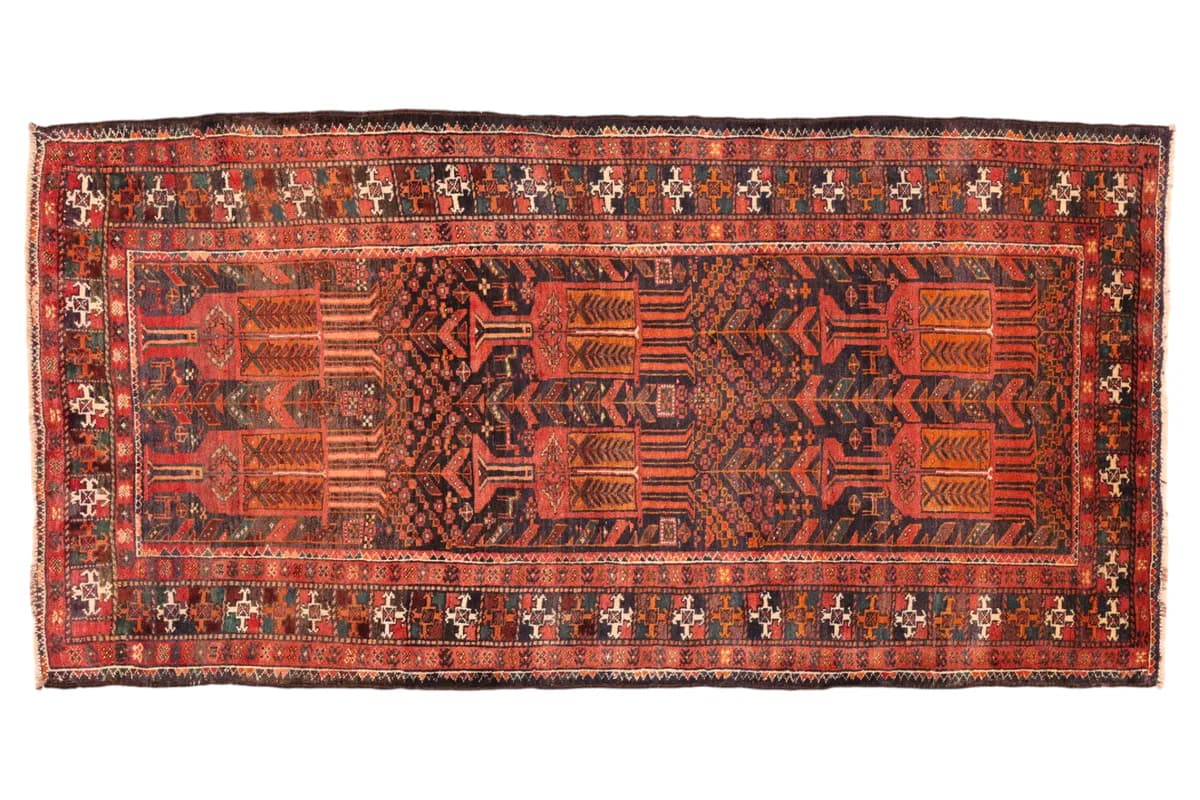
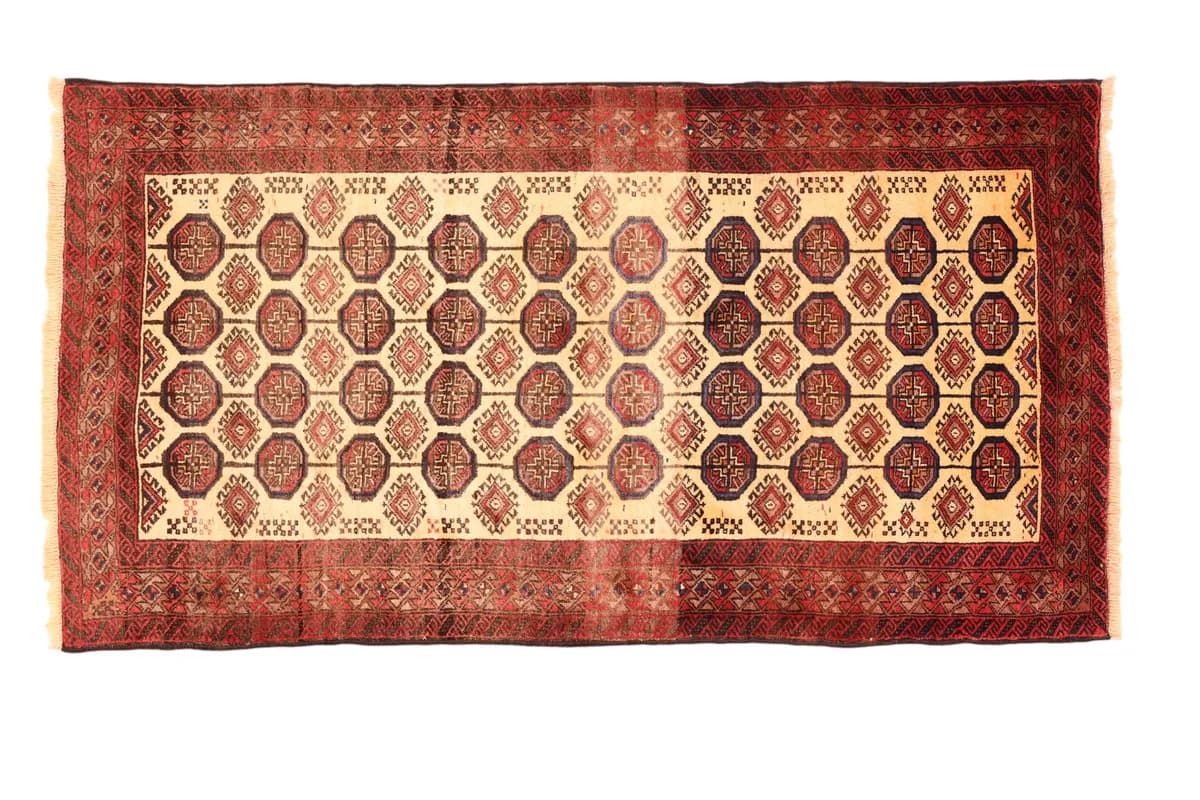
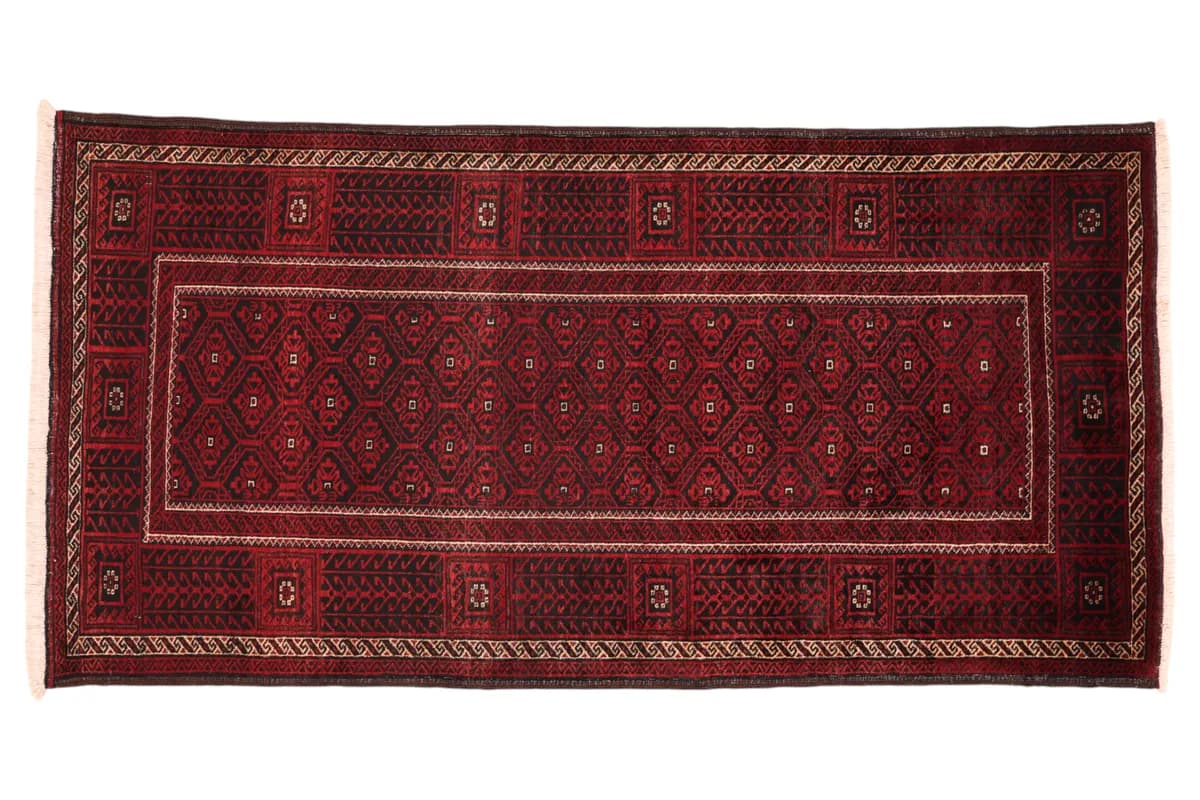
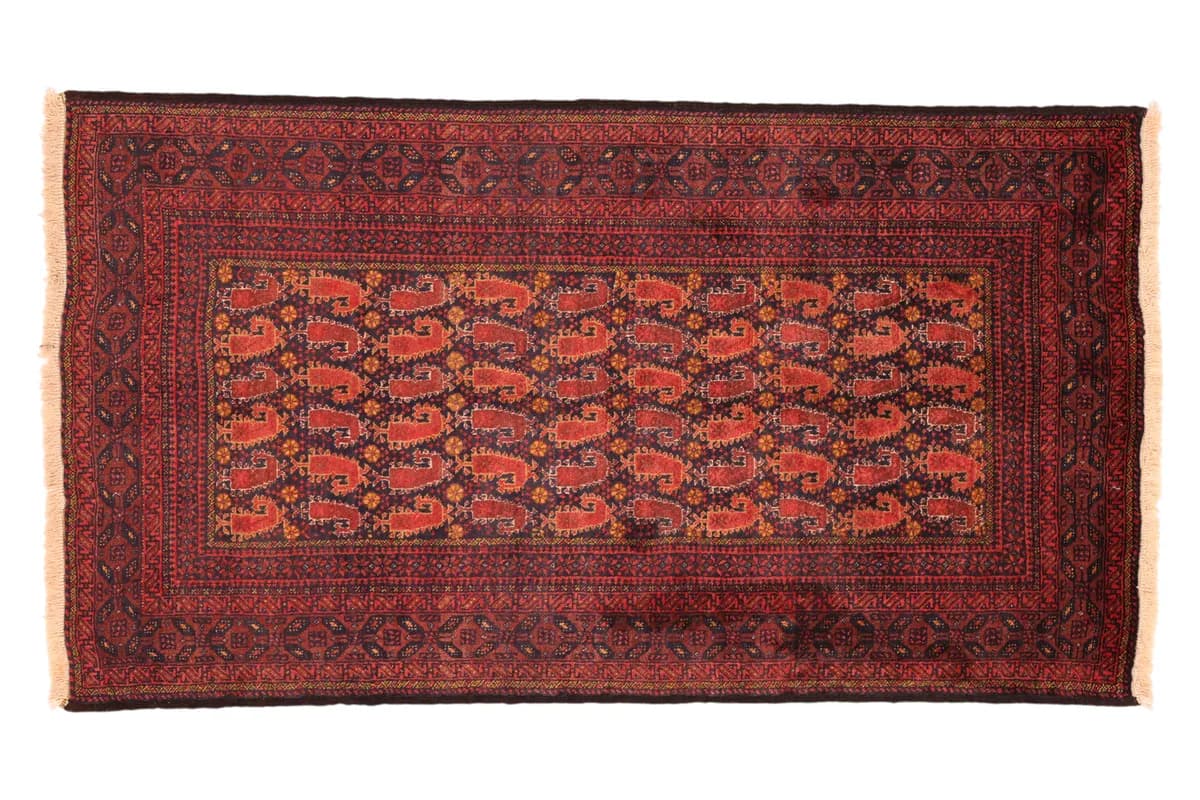
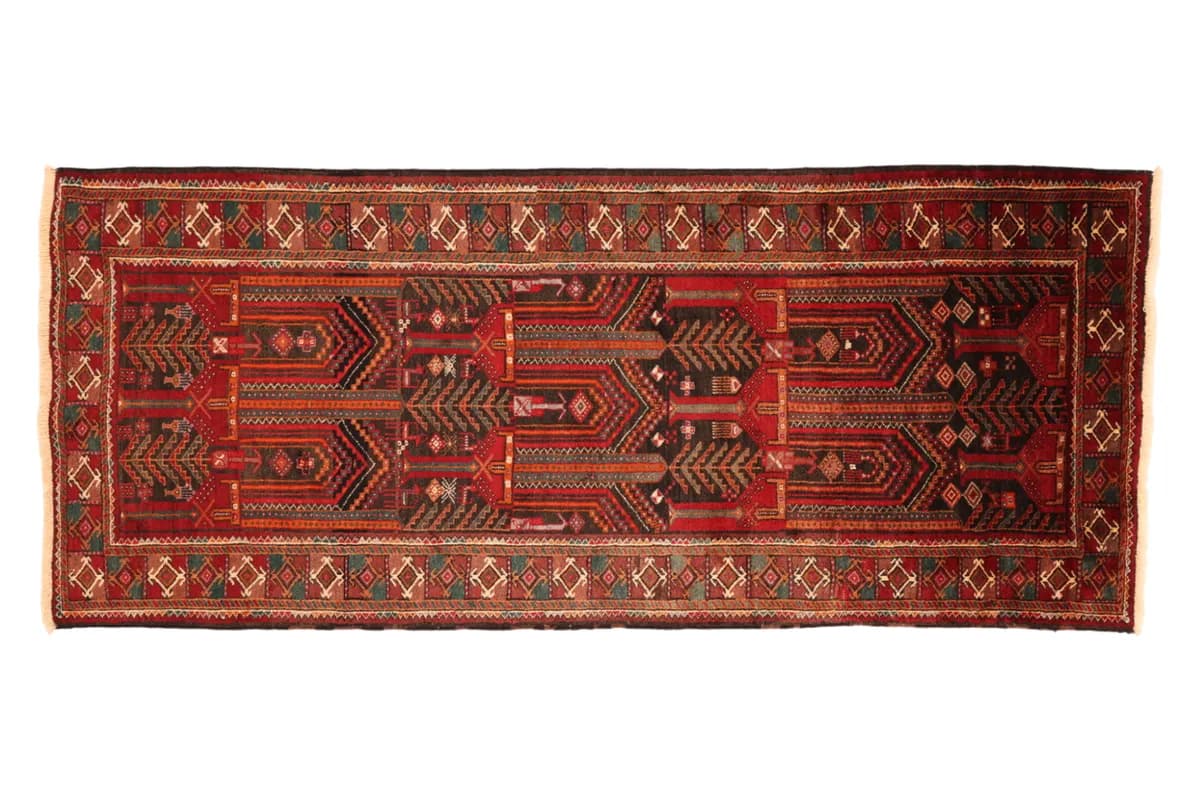
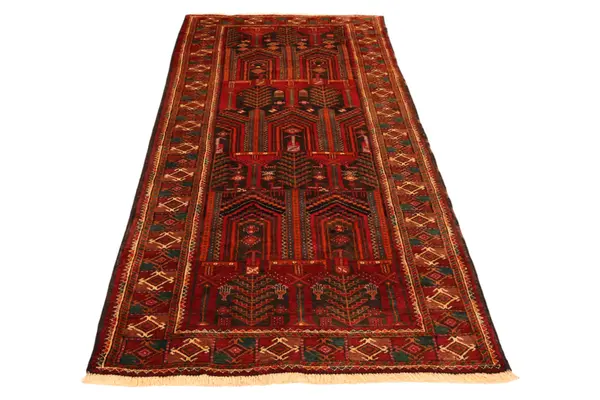
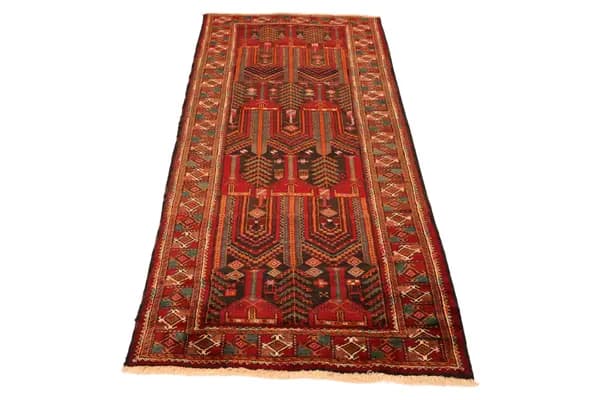
A Baluch runner, a tribal weaving from the border country of southeastern Iran, 271 x 111 cm (8'11" x 3'8"). The type — also written Baluchi — is known for deep red and indigo grounds, boldly angular geometry, and prayer-niche layouts carried in the memory of the weaver rather than on paper. This piece keeps the colour and the boldness but sets them into something more unusual: not a single mihrab but a running chain of medallions, one after another down the length of the rug.
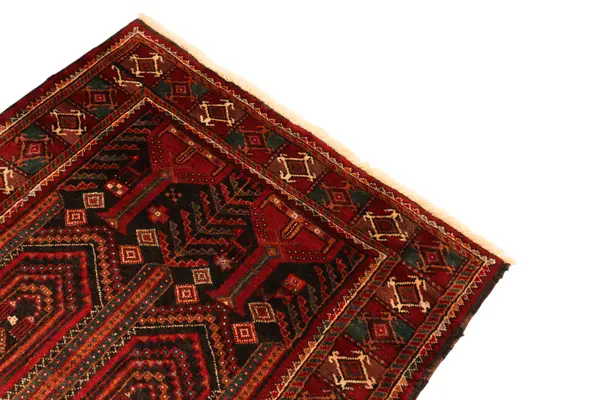
The field reads as a procession. Large diamond medallions in deep red and near-black alternate down the runner, each one packed with small stepped chevrons and tree-like tribal devices, so the eye moves panel by panel rather than settling on one centre. Rust orange, teal, cream, dusty rose and camel surface inside the diamonds as small accents against the darker grounds. A wide border of small lozenges in cream, rust, teal and camel sits on a dark red-brown ground, taking up close to a fifth of the width and holding the chain firmly inside its frame.
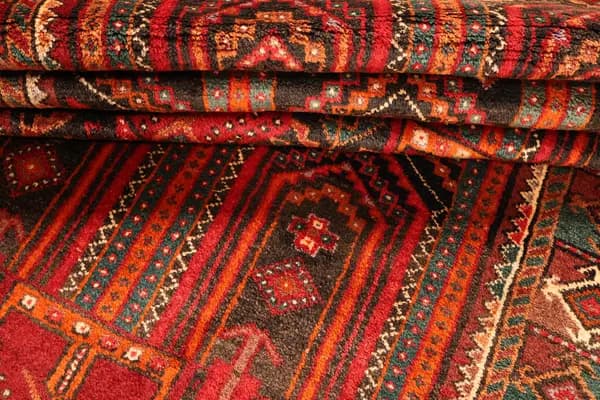
This was knotted from memory on a portable loom, without a drawn plan, and that is why the panels vary rather than repeat exactly — each diamond is drawn slightly differently, which is what gives the chain its rhythm instead of a mechanical pattern. The wool is handspun before knotting, so the yarn itself carries small irregularities in thickness, catching the light unevenly across the pile and giving the surface a warmth no machine-spun wool has. At 128,000 to 160,000 knots per square metre, the knotting is open enough that the geometry stays bold and graphic rather than fine-lined, which suits this design exactly.
At 111 cm this is a hallway or landing piece, long enough to run the length of a passage and narrow enough to leave room to pass. The deep red and near-black hold their colour under artificial light, so they lift a hallway that gets little daylight rather than fading into it, and they sit comfortably against dark furniture or stone flooring. The pile is dense and firm underfoot, a weave built for a floor that gets crossed many times a day rather than protected. Walking its length, the medallions change slightly from one to the next, and that small variation is what keeps you looking.
More on Baluch rugs: origin, making and how to recognise a genuine piece
Traditional weave
At 271 × 111 cm (3.01 m²) this is a runner. It belongs in a hallway, an entrance, on a landing or lengthways beside a bed. It is too narrow for the middle of a room.
Yes, knotted by hand — knot by knot on a loom, not machine-made. The density is 128,000 to 160,000 knots per square metre; across 3.01 m² that is roughly 390,000 to 480,000 individual knots, every one of them tied by hand.
Hand-spun wool still carries its own lanolin, which keeps liquid sitting on the surface for a moment: blot quickly, with clear water and a light cloth, working inwards and without rubbing. Otherwise regular vacuuming along the pile is enough. Turn the rug once or twice a year so light and footfall reach it evenly.
We are in the Hamburg Speicherstadt. Come and see this rug in daylight, or write to us — a person answers.
Certificate included verifying origin, materials, and craftsmanship.
Ref: 588229